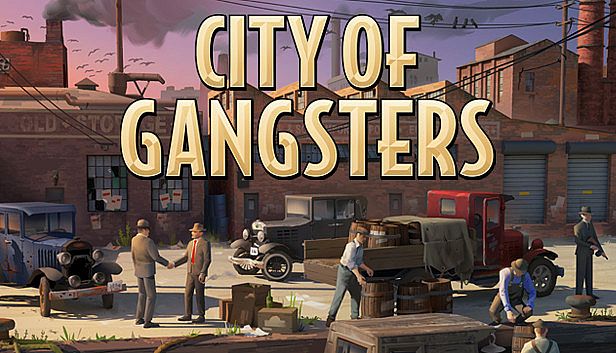











































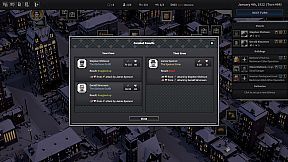

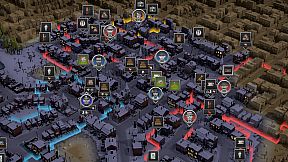

City of Gangsters is a strategy simulation game set during the Prohibition era in 1920s America. Players build and expand a criminal enterprise focused on illegal alcohol production and distribution while navigating social networks, crew management, and rival pressures in a turn-based format.
Gameplay
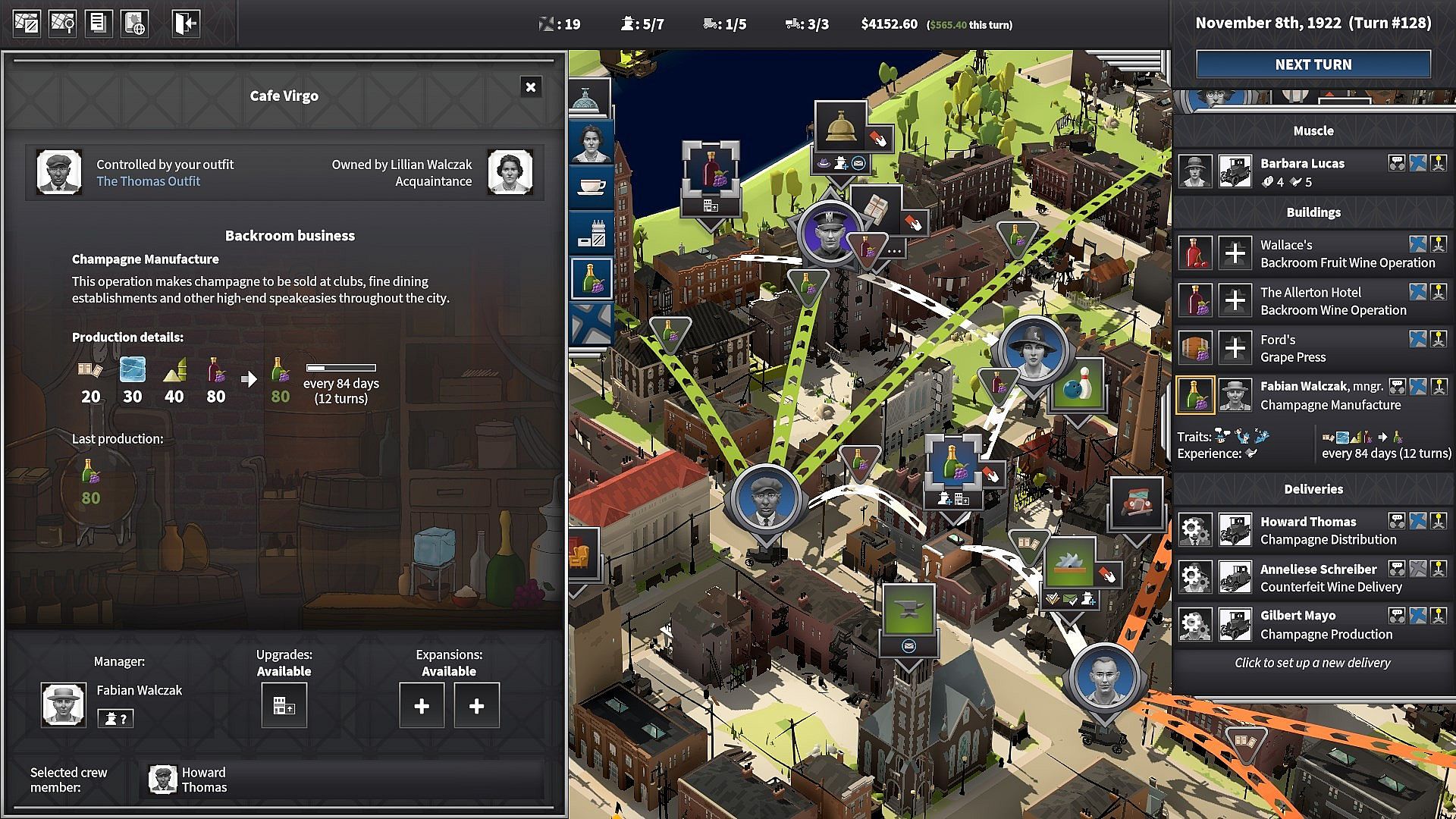
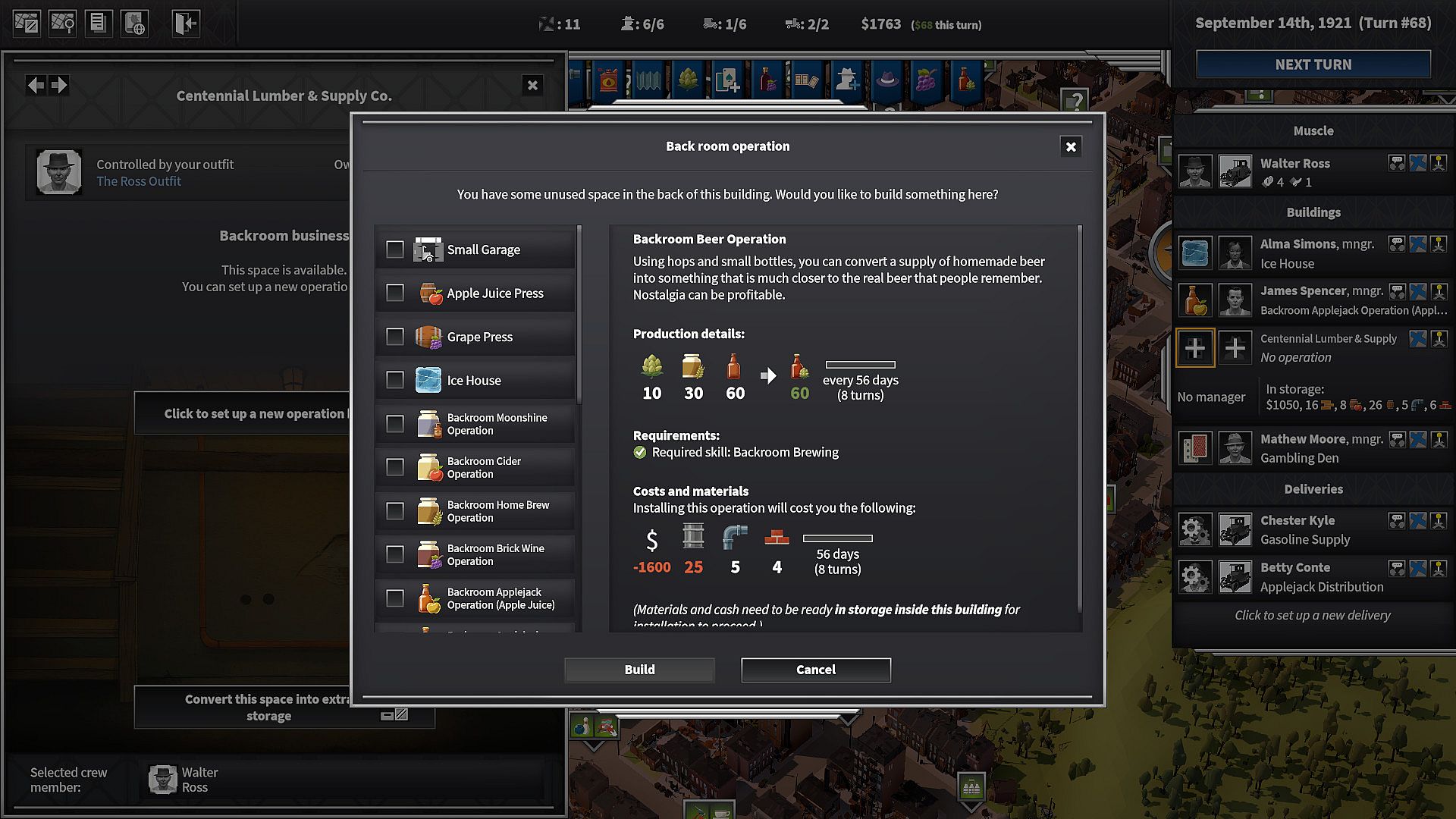
The core loop centers on starting with basic resources and scaling operations through production facilities like stills and distilleries. Players source raw materials, refine recipes for higher-value drinks, and handle logistics to move goods to speakeasies or direct customers. Supply chains require careful planning to balance costs, availability, and demand across neighborhoods.
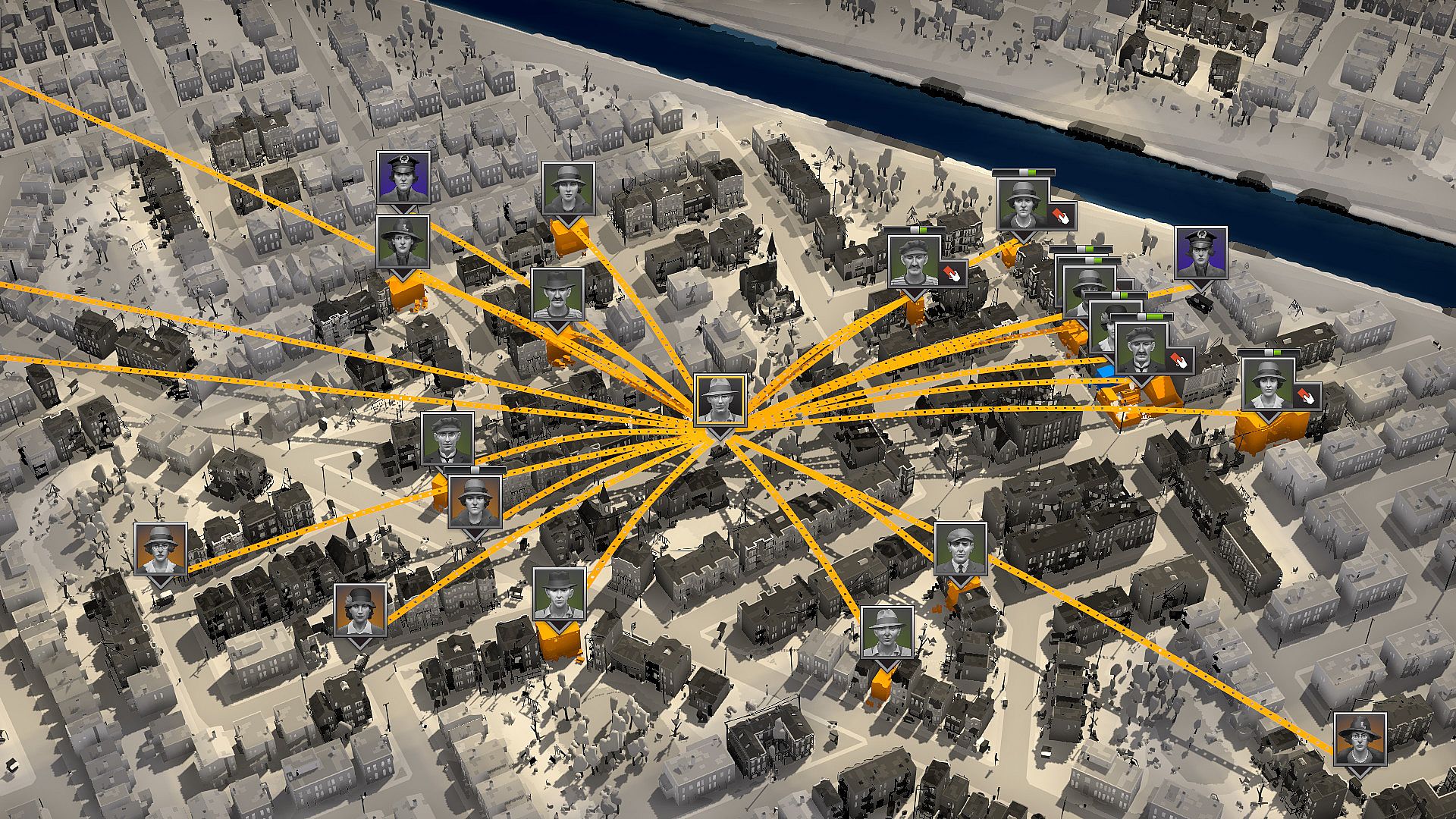
Social connections form a key system. Building relationships through favors, introductions, and personal interactions unlocks better trading partners, police bribes, and new opportunities. Actions toward individuals or groups create lasting effects, as family ties and reputations influence future dealings.
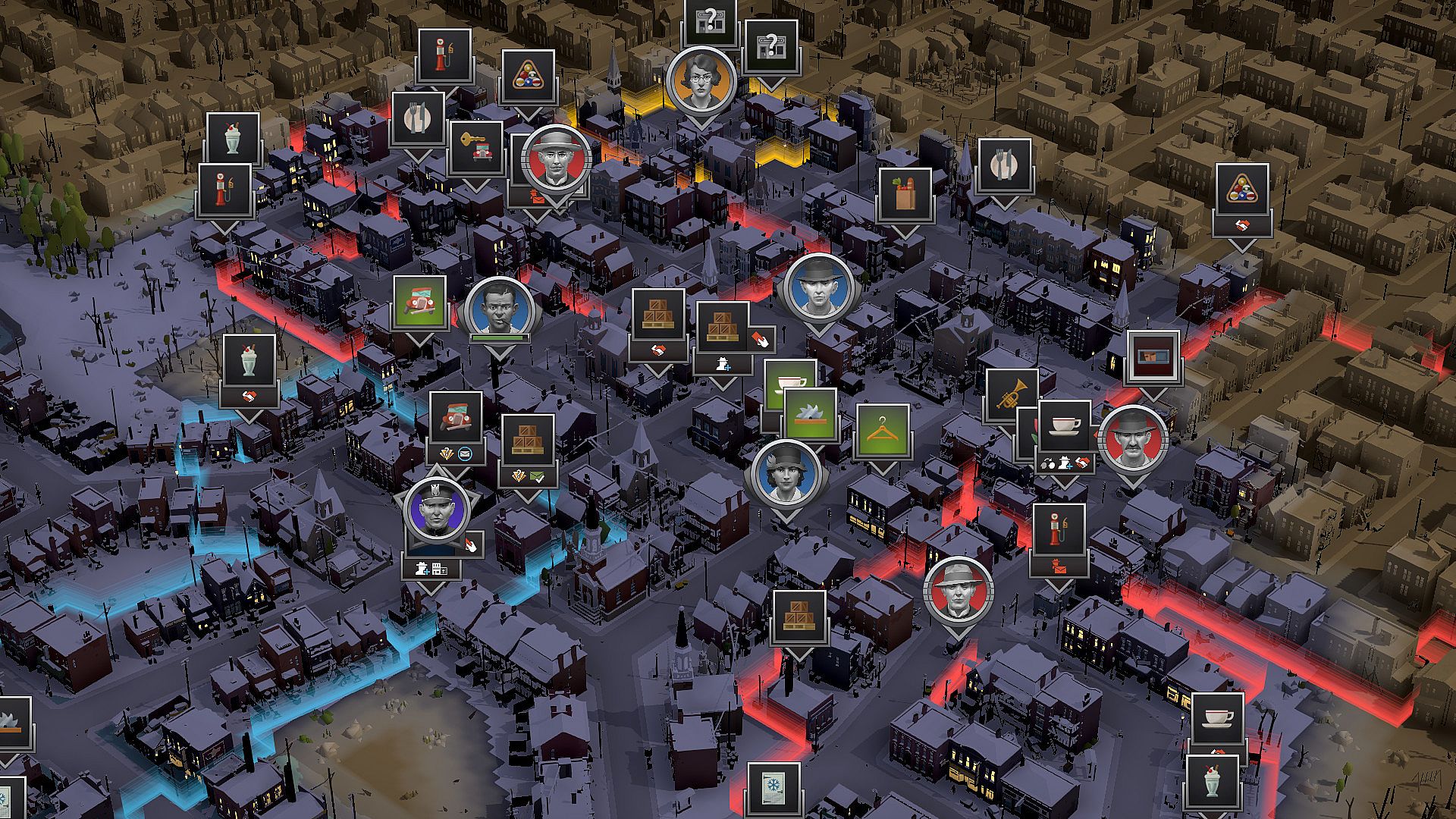
Crew recruitment and oversight add depth. Players hire and organize personnel for deliveries, protection, and expansion tasks while maintaining pay and equipment. Territory control expands influence, generating steady income and opening further sites for growth. The game runs on weekly turns, with the campaign window limited to the Prohibition years ending in 1933.
Game Modes
City of Gangsters offers a single-player experience built around map selection and starting conditions. Players choose from available city layouts, customize their character's background and traits, and begin operations with procedural elements that vary each run. Replayability comes from different maps and seeds that alter resource placement and neighborhood dynamics.
The structure emphasizes sandbox-style management without separate campaign or competitive modes. Each session focuses on long-term empire building through incremental decisions on production, networking, and expansion until the historical cutoff point.
Key Mechanics and Systems
Production chains involve sourcing ingredients, upgrading techniques for premium products, and smuggling options for imported stock. Distribution networks link distilleries to outlets while accounting for risks from authorities and competitors.
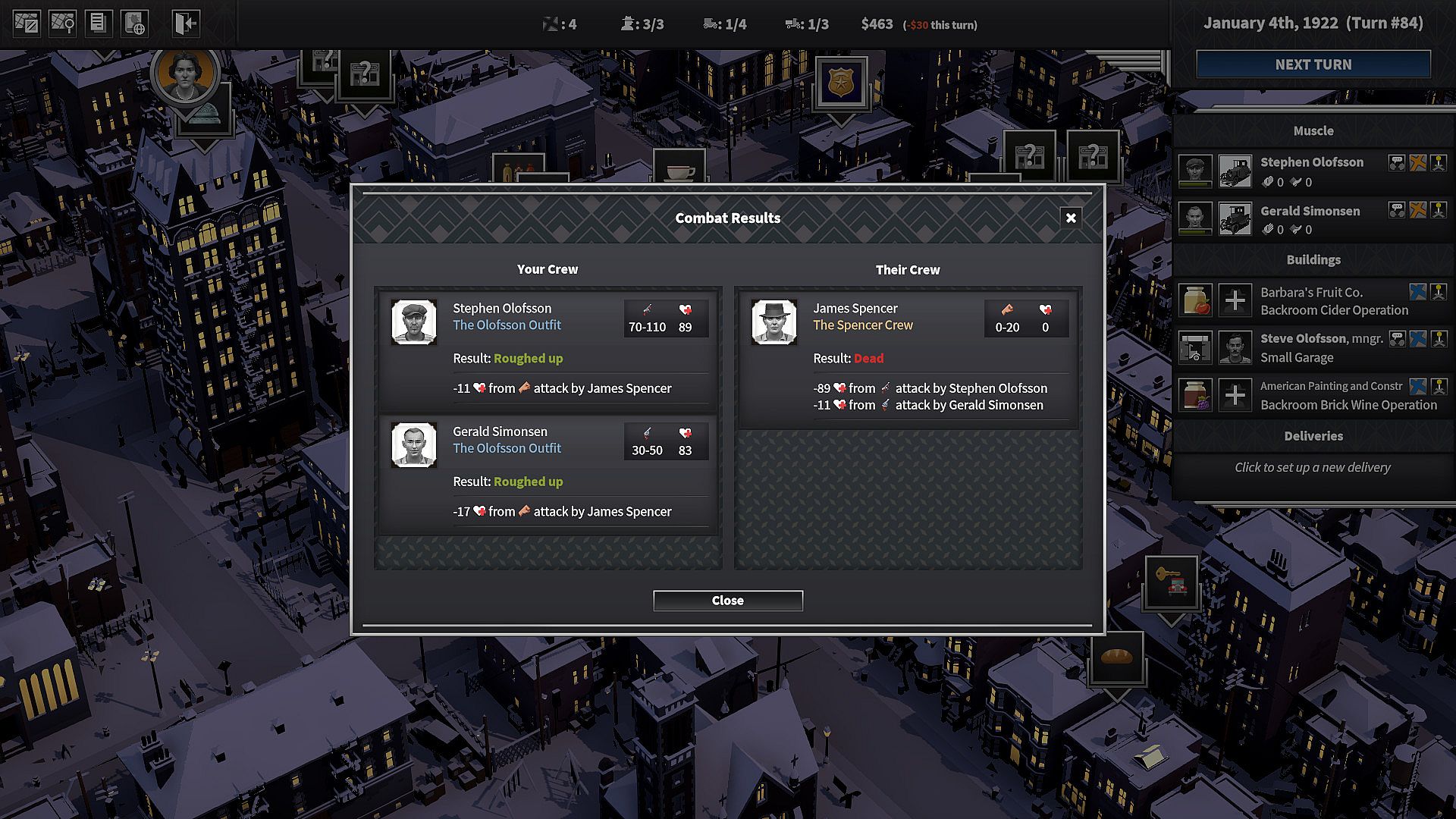
Rival interactions occur through territorial disputes and indirect actions rather than direct tactical combat. Players manage threats by strengthening alliances, extorting businesses, or leveraging crew for targeted responses. The emphasis remains on economic efficiency and relationship management over combat resolution.
Character ethnicity and traits influence initial connections and production specialties, encouraging varied strategies across playthroughs. Resource distribution and debt collection further tie into the black-market economy where trust and favors carry significant weight.
Is It Worth Playing?
City of Gangsters appeals to players who enjoy detailed management simulations with economic and social layers. Its turn-based structure supports deliberate planning of supply lines and networks, suiting those interested in tycoon-style progression during a unique historical setting.
Reception stands at Mostly Positive based on over 1,300 reviews, with praise for the atmosphere, connection mechanics, and production depth alongside notes on occasional interface frustrations and learning curve for automation. The game receives ongoing availability through its original release with optional expansions that add content like new maps and mechanics.
It suits fans of strategy simulations who prioritize logistics and relationship systems over action or real-time elements. Those seeking a focused Prohibition-era business empire builder will find consistent depth in the core systems.