






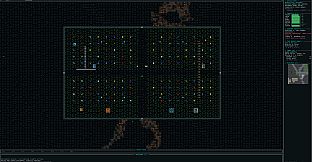
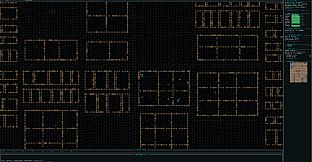
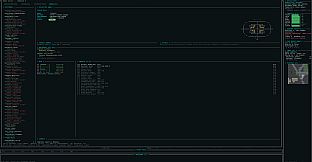
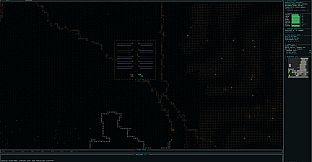
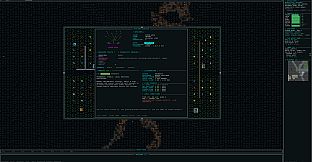
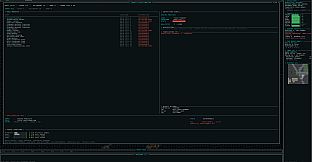
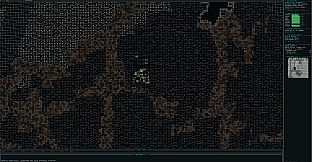
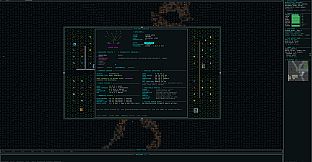
Calcination is a simulation roguelike set in a post-apocalyptic world where players control an environmental restoration machine tasked with reviving dead soil through plant cultivation and infrastructure building.
Gameplay
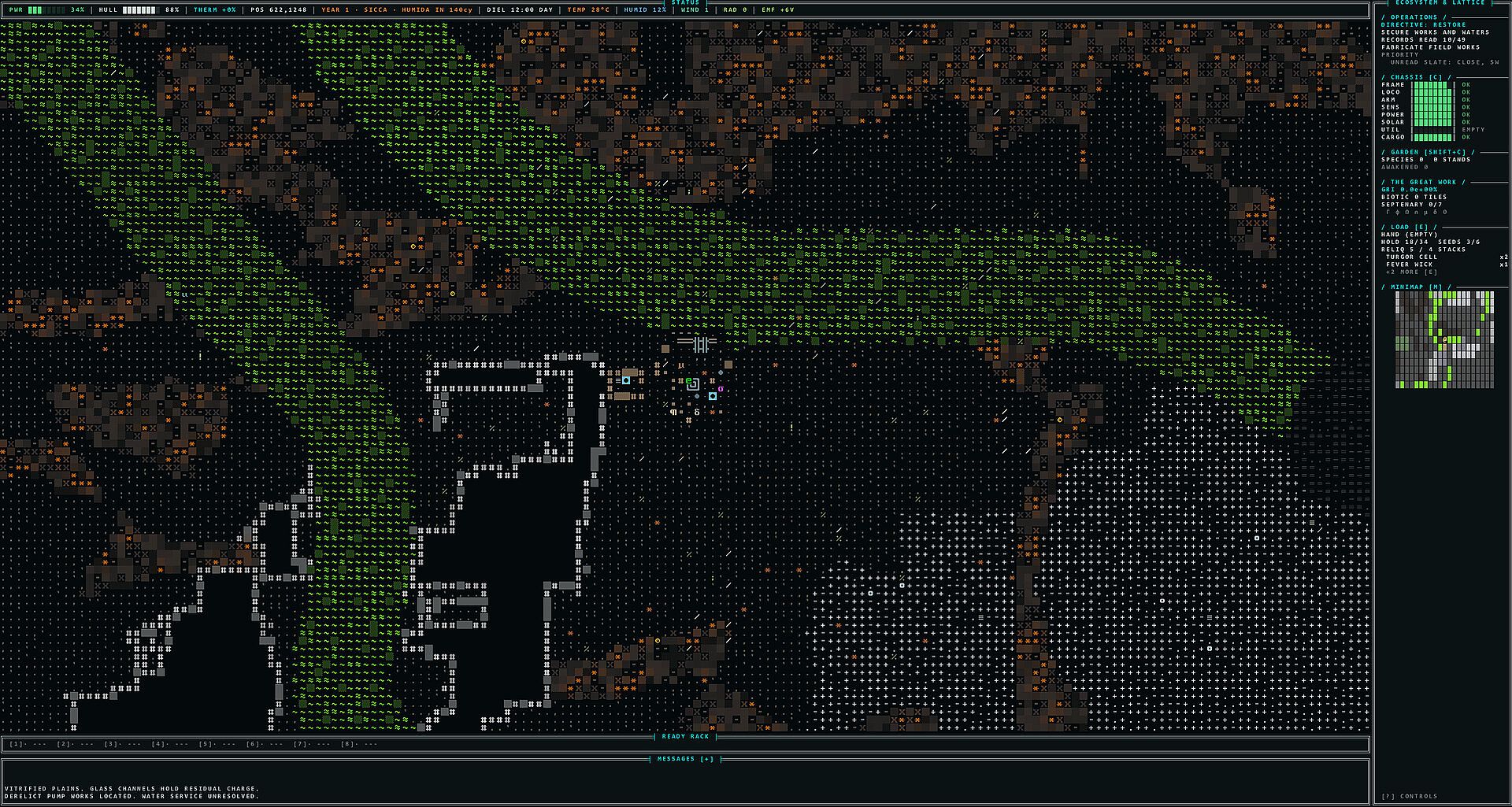
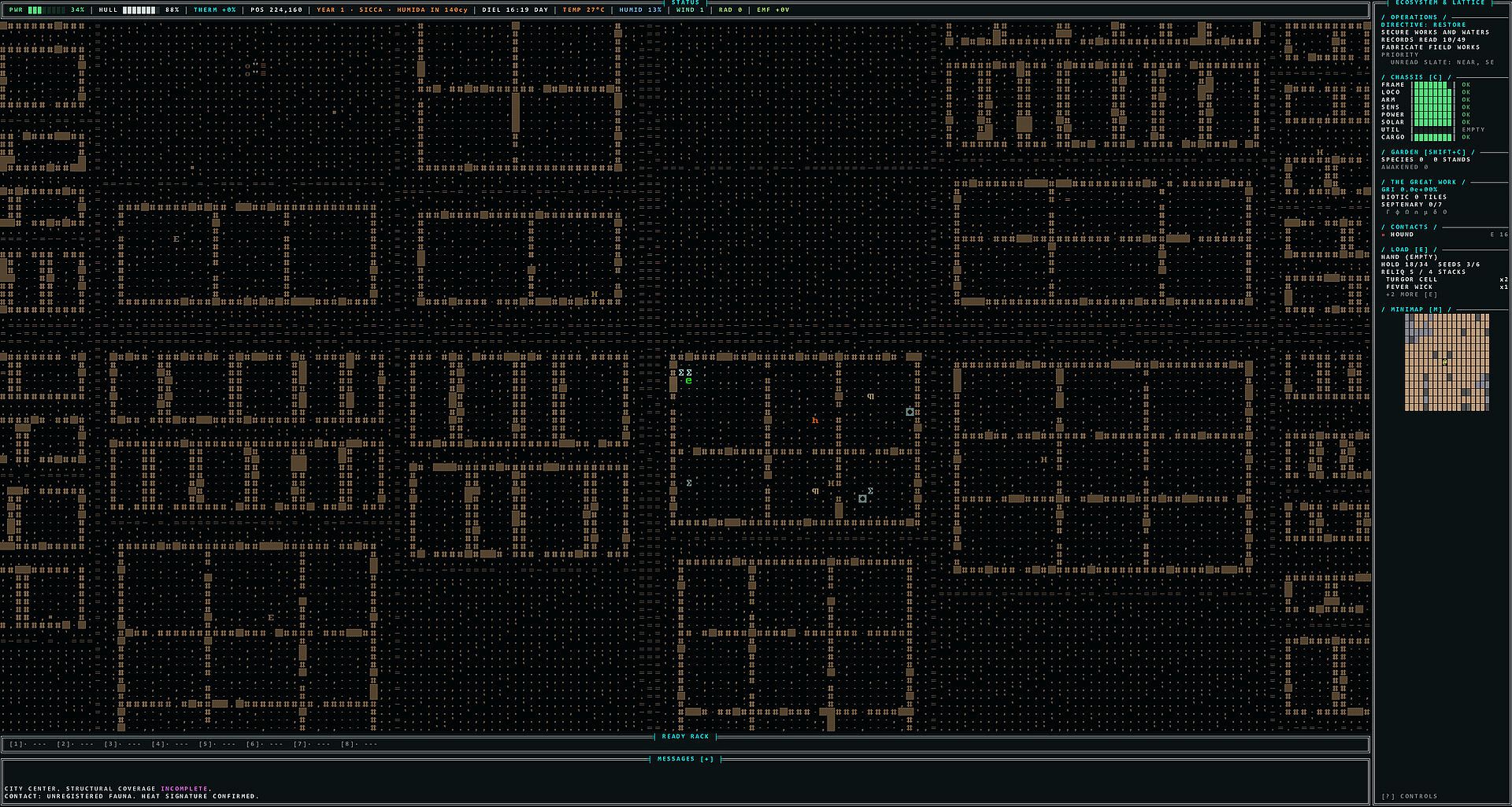
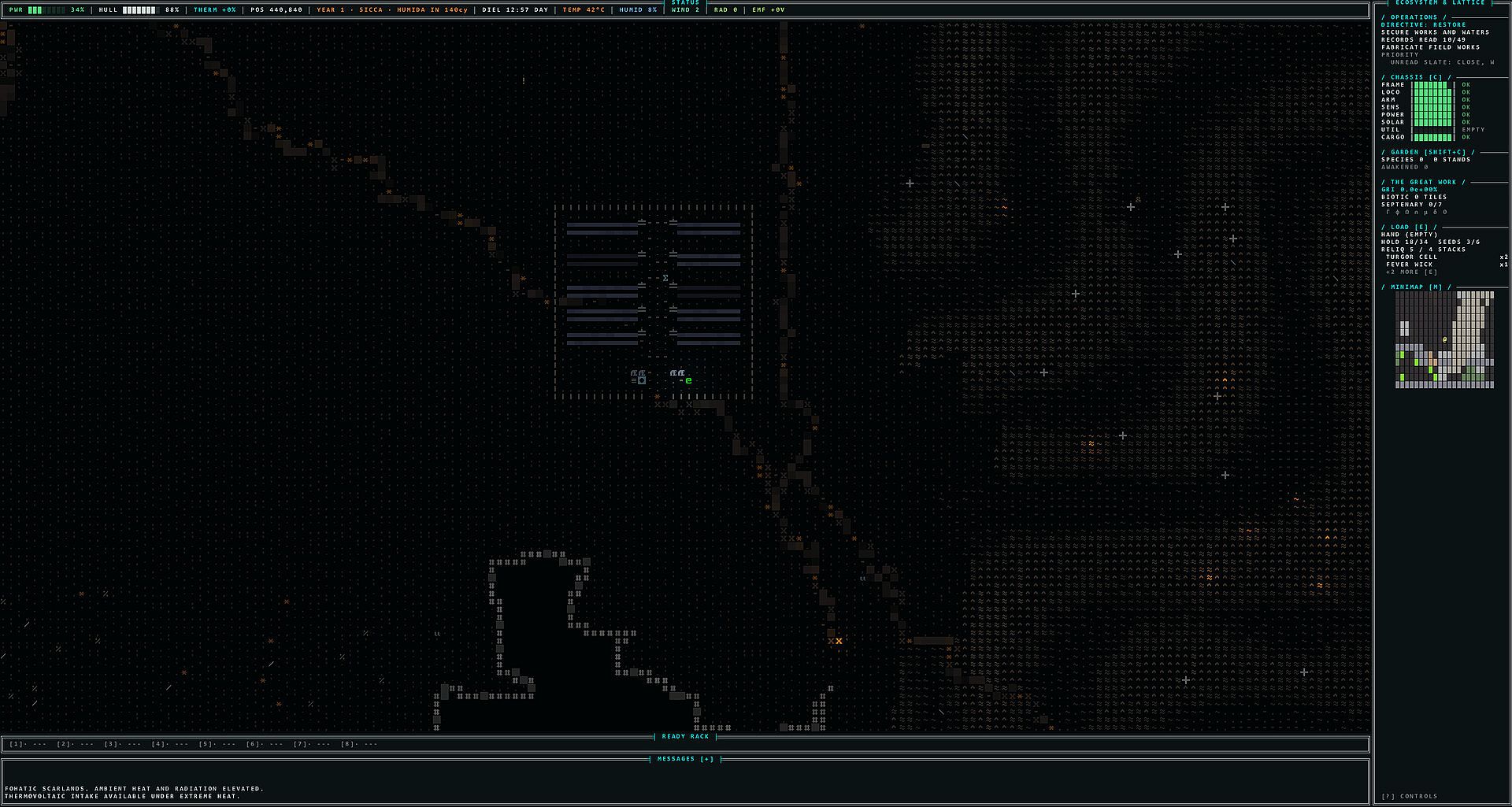
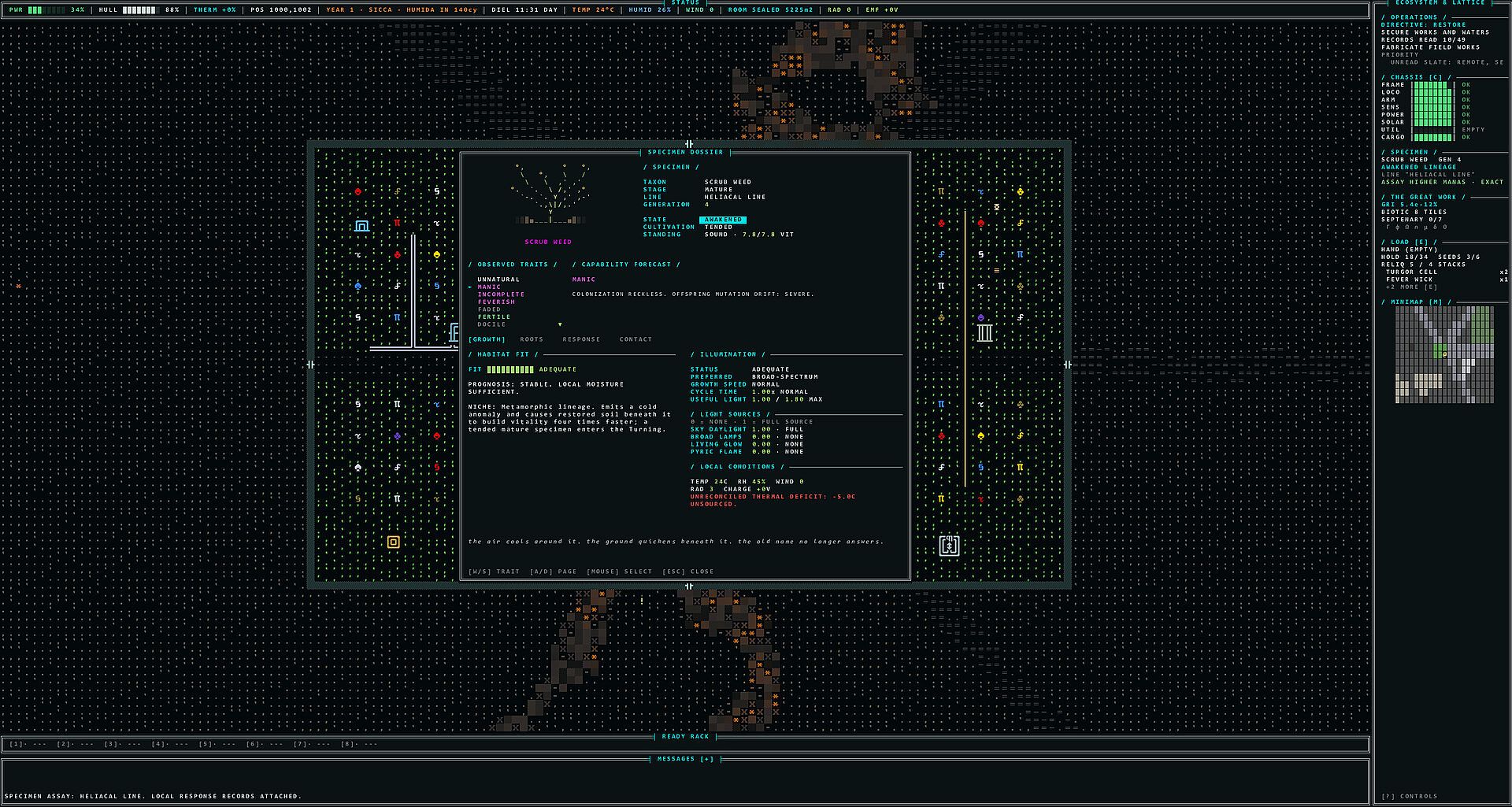
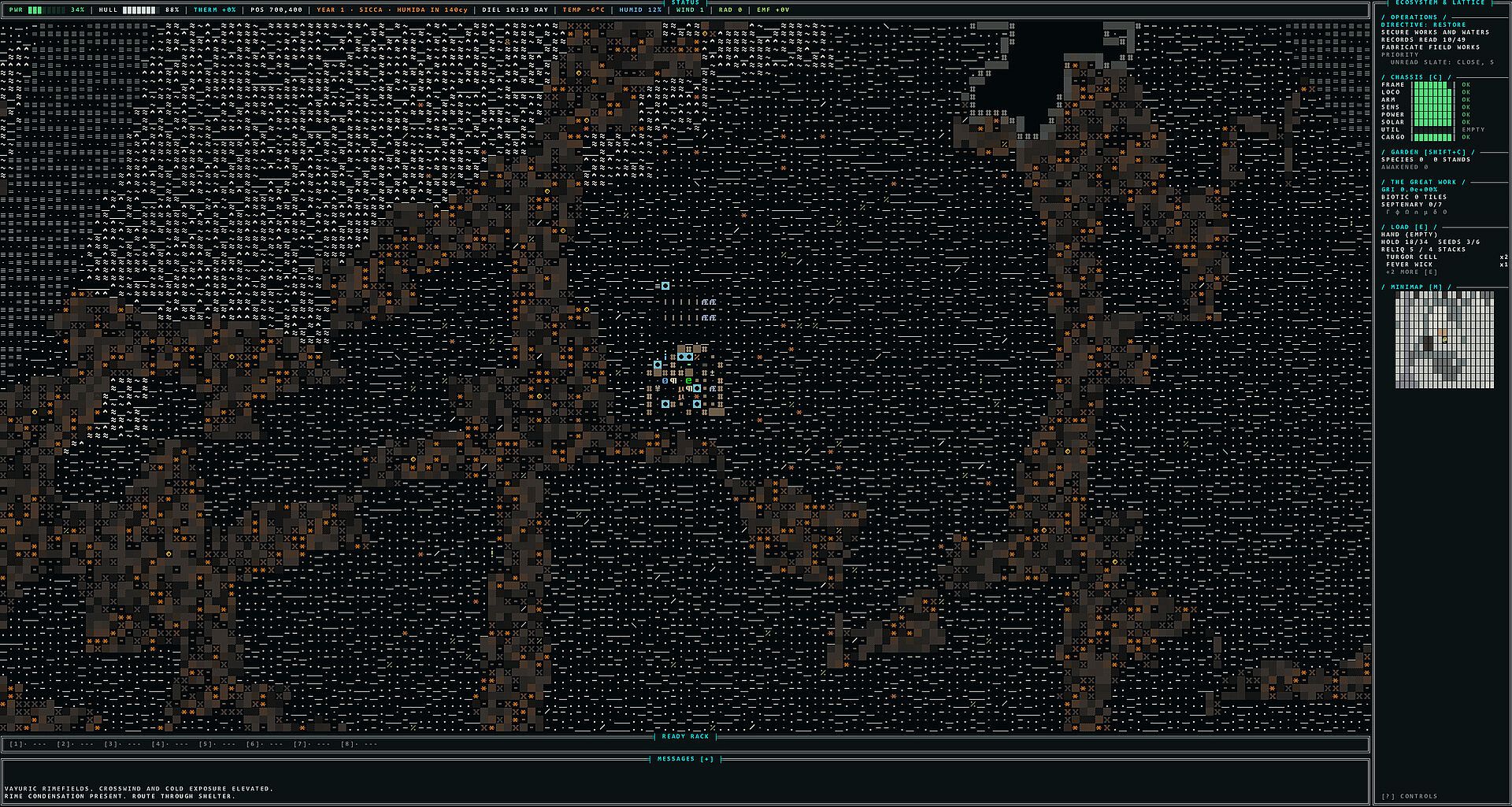
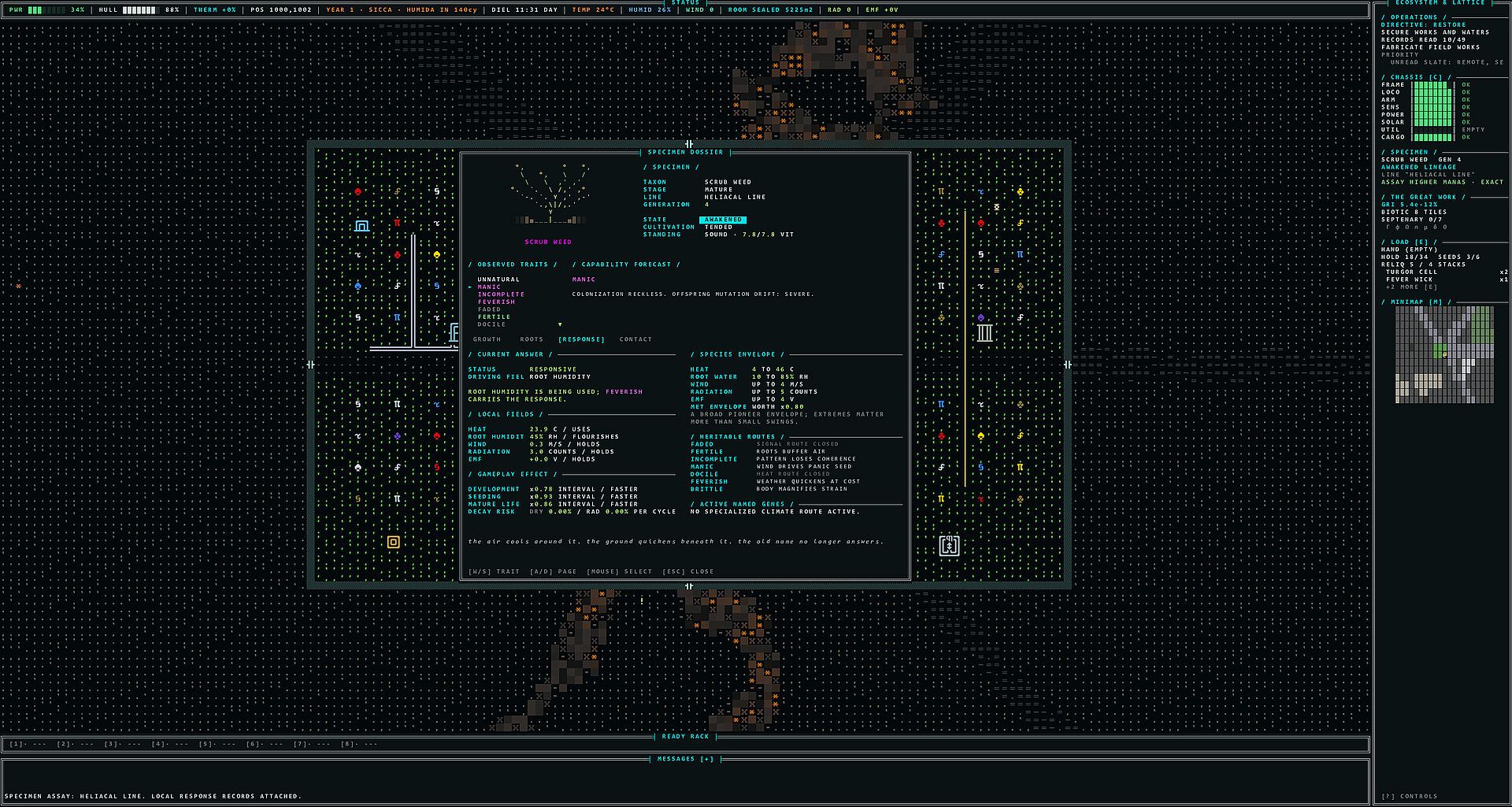
The core loop centers on exploration of a procedurally generated wasteland filled with ash dunes, salt flats, ruined cities, and other transformed regions. Players salvage materials from debris and industrial sites, then use those resources to craft tools, structures, and soil amendments. Plant breeding forms another key pillar, with each specimen carrying inheritable genetics that influence growth, resilience, and responses to environmental factors such as heat, moisture, radiation, wind, and electromagnetic charge.
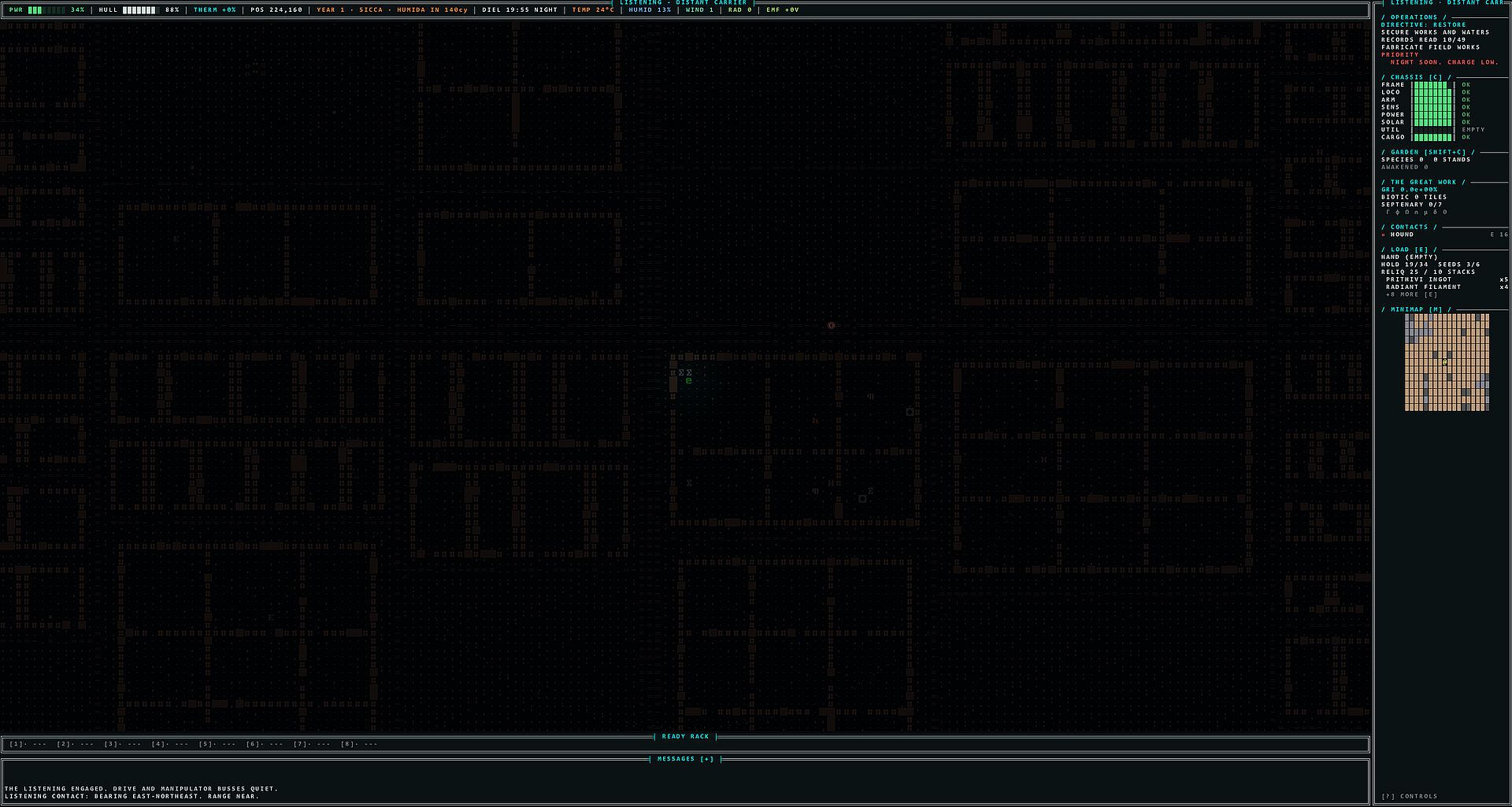
Time management adds depth because movement advances the clock in minutes while standby periods advance days, seasons, or years. This allows plants to mature, spread, or die naturally while soil recovers and machinery operates autonomously. Sensor upgrades help map invisible environmental fields, locate resources, and avoid or interact with creatures that follow their own cycles of activity.
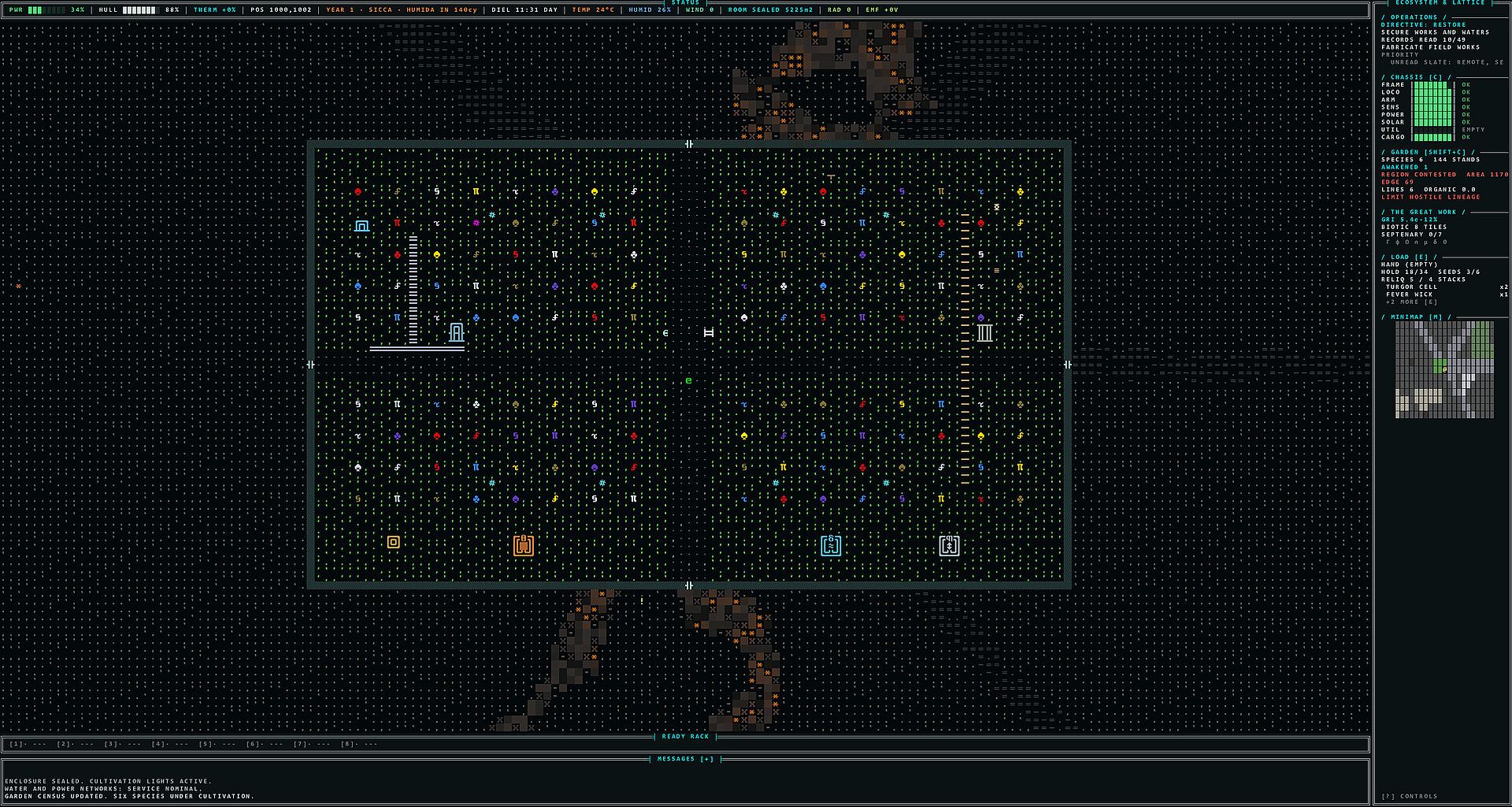
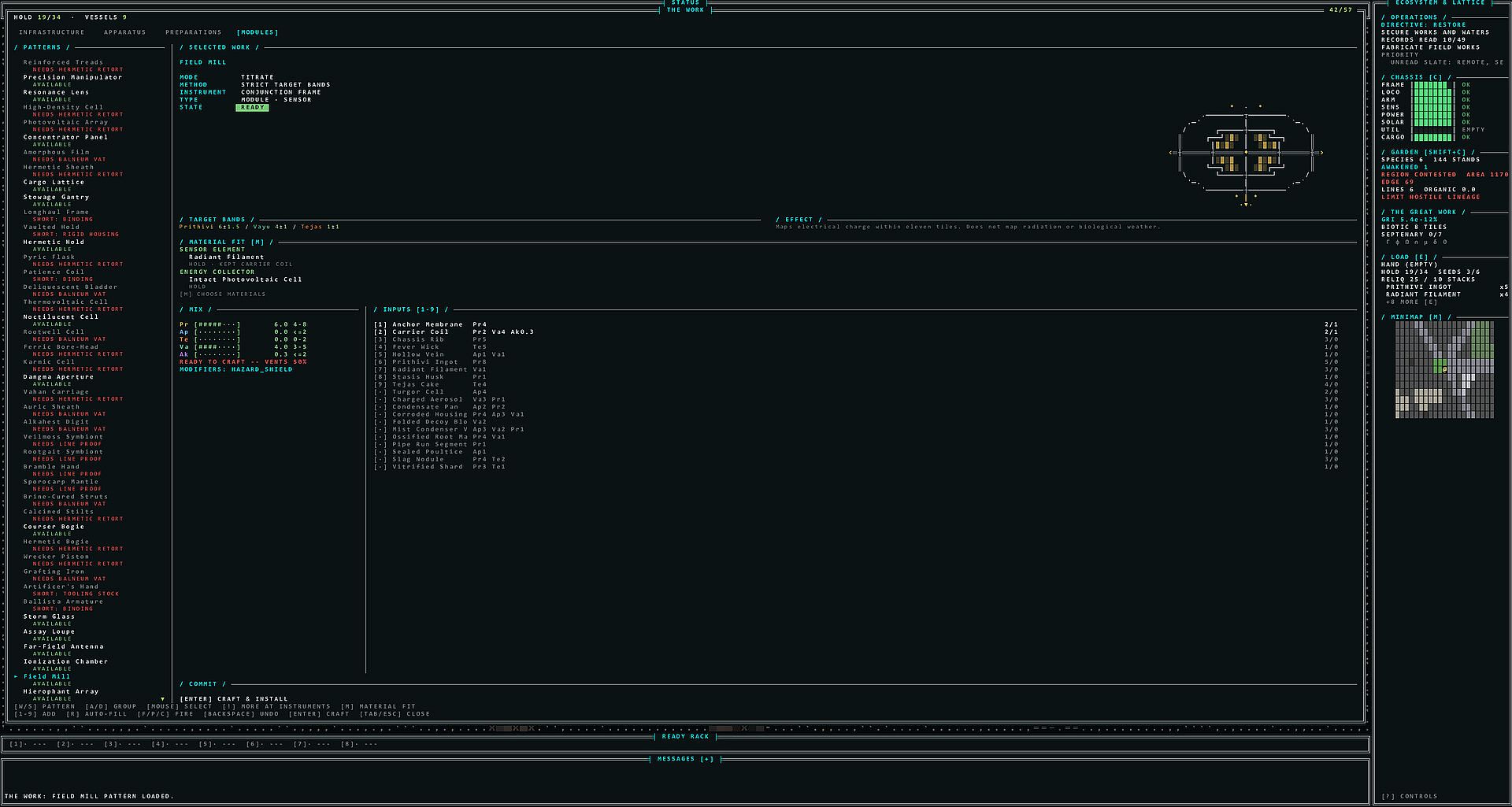
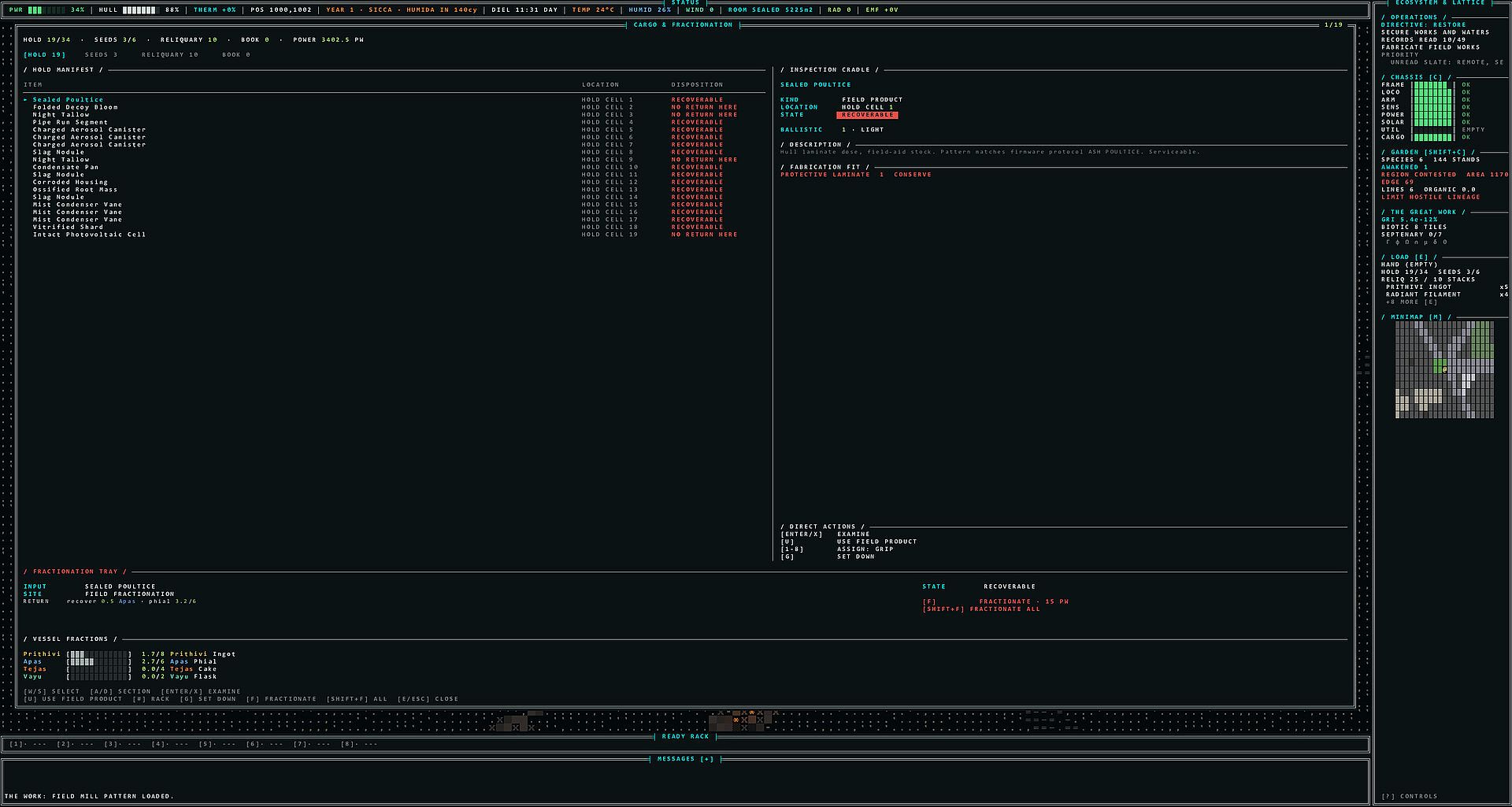
Chassis maintenance requires attention to power consumption and damage from extreme conditions. Players service parts with elemental mixtures and install modules that expand capabilities for fieldwork or specialized cultivation. Building enclosed habitats with walls, lights, pipes, and utility networks creates microclimates that support different plant species based on placement and design.
Game Modes
Calcination operates as a single-player experience with traditional roguelike structure. Procedural generation shapes each run through the wasteland, while decisions around plant lineages, habitat layouts, and resource allocation determine long-term outcomes. The open-world format encourages repeated expeditions that feed back into garden development, with time progression creating opportunities for passive growth during extended waits.
Core systems remain consistent across play sessions, emphasizing careful observation and incremental progress over direct confrontation. Salvage, construction, and breeding mechanics integrate into a unified loop where knowledge gained from one area supports expansion in others.
Exploration and Survival Systems
Travel across varied terrain reveals laboratories, seed vaults, and settlements that offer distinct resources and risks. Environmental conditions fluctuate regionally, requiring upgrades to navigate safely and identify hidden elements. Interaction with anomalies and creatures relies on observation and thrown objects rather than combat, preserving resources for cultivation priorities.
Records from the past provide context on the catastrophe that ended humanity, while instruments deliver measurable data on soil, genetics, and conditions. Experimentation uncovers patterns that guide future decisions in garden expansion and machine upgrades.
Is It Worth Playing?
Calcination suits players interested in deliberate simulation gameplay that rewards patience and systems thinking. Its Early Access status means the experience focuses on mid-game systems including overworld travel, crafting, plant genetics, weather, and combat, with further development planned for end-game loops and additional polish. The single-player roguelike format delivers a self-contained loop of exploration, building, and ecological management without multiplayer elements. Those drawn to plant breeding, habitat design, and long-term environmental restoration will find the mechanics align closely with the described systems, while the current state supports meaningful progress for interested participants willing to engage with an evolving title.











