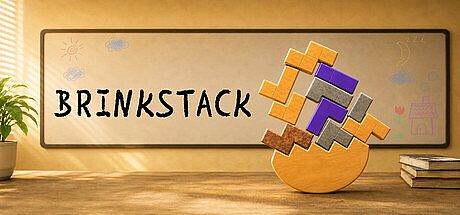


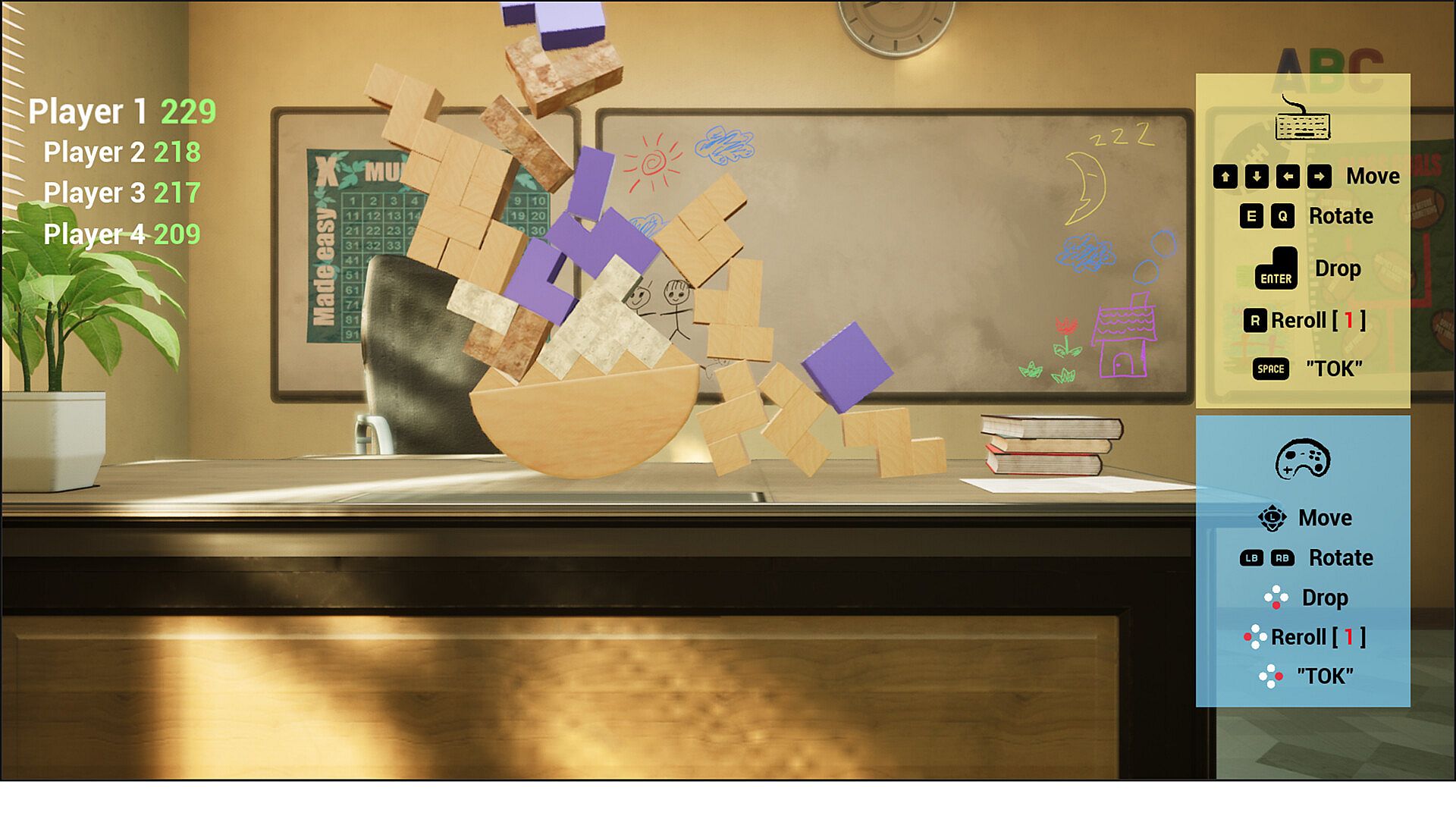
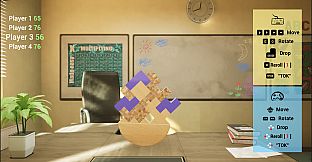
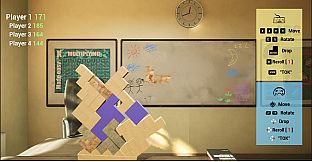
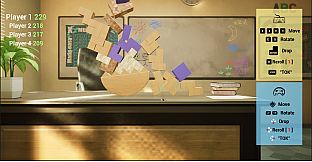
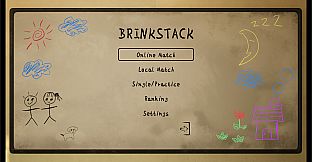
BRINKSTACK is a turn-based physics stacking game in the indie casual simulation genre. Players build upward on an unstable semicircular base while managing the risk of collapse with each placement. The core loop revolves around positioning blocks carefully, observing how the structure settles under weight, and choosing the next move based on balance and material properties.
Gameplay
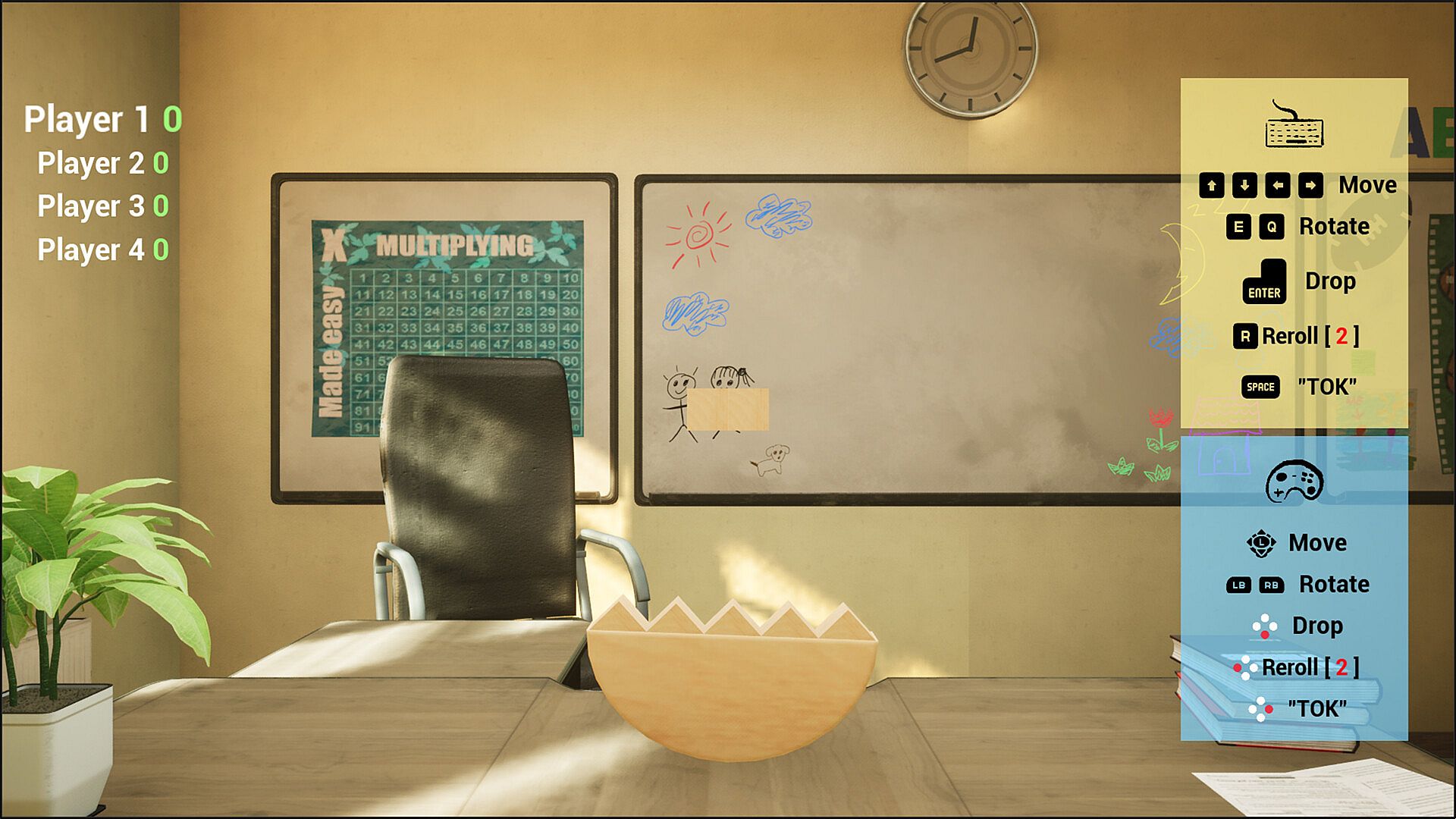
The foundation in BRINKSTACK rocks with every added piece. A block that appears stable can shift the entire stack, which means angle, balance, and the timing of placement determine success. Players move and rotate the active block freely before committing. A light tap can adjust position slightly, and a limited number of replacements allows for corrections when a choice looks risky. Once placed, the block joins the physical simulation, and any resulting movement can propagate through the whole structure.
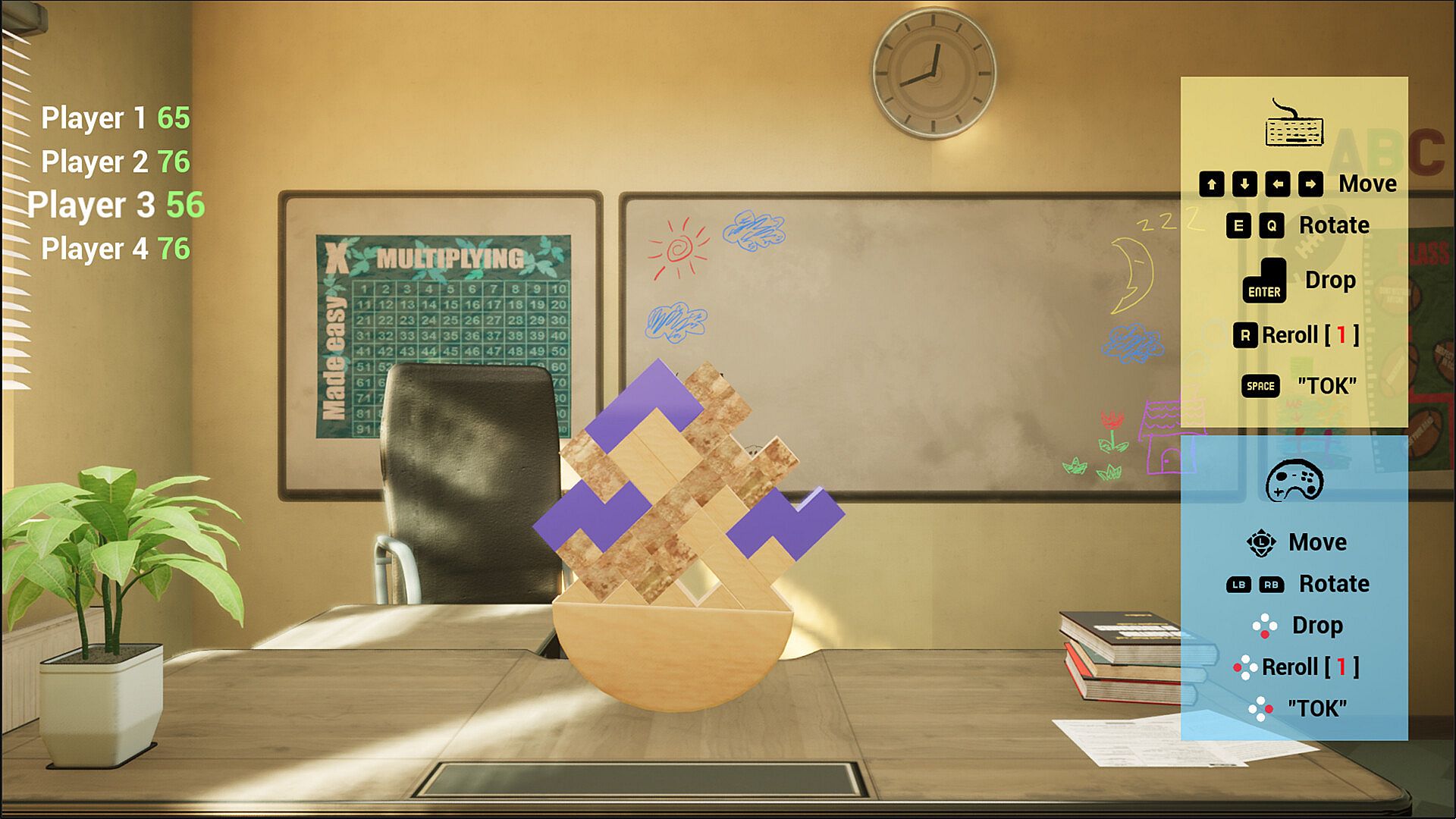
Materials introduce variety to each puzzle. Wood, metal, stone, and plastic differ in weight and friction. Reading the current stack and matching a block's properties to a safe spot becomes essential for survival. The semicircular base adds constant instability, so even small decisions carry consequences for height and stability.
Game Modes
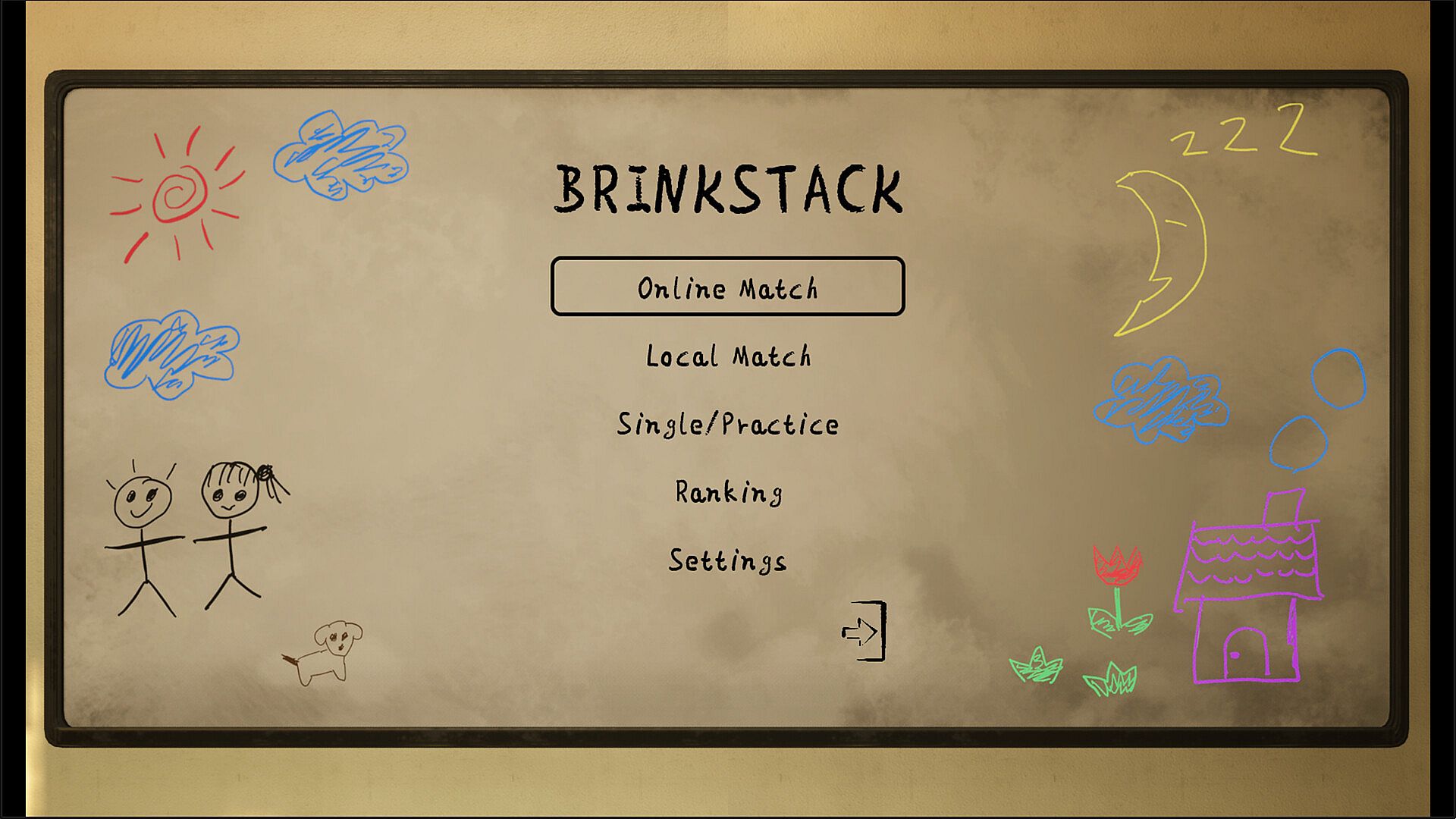
Single Play lets players focus on personal bests in height and score without opponents. The mode emphasizes repeated attempts to improve stacking technique and push further before collapse.
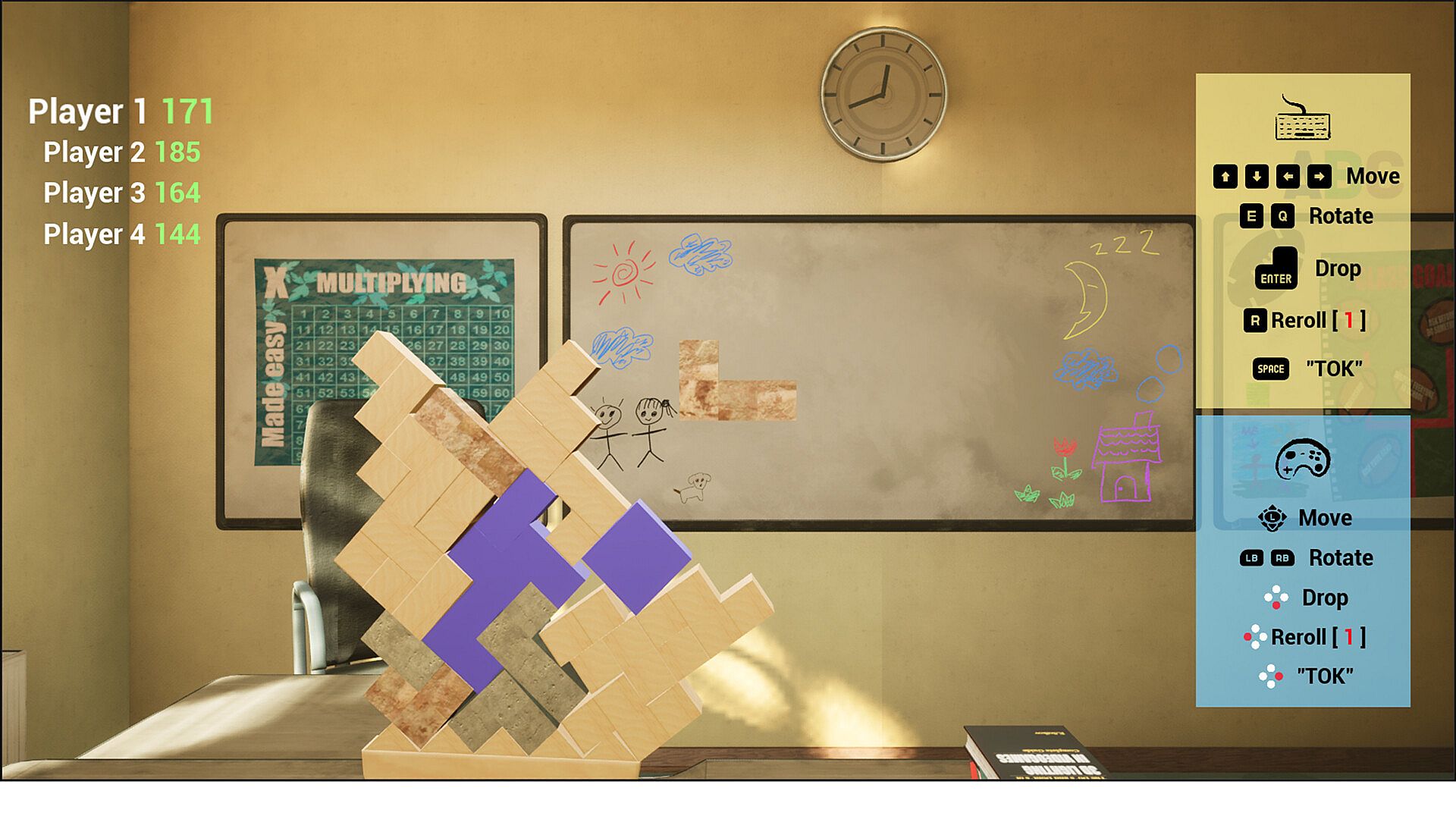
Local Matches support two to four players sharing one screen in turn-based competition. Each participant adds a block in sequence, and the tension builds as the stack grows taller and more precarious.
Online options include Steam Quick Match for facing a random opponent or Private Match for inviting a friend. These modes maintain the same turn-based rules while allowing remote play.
Scoring and Winning Conditions
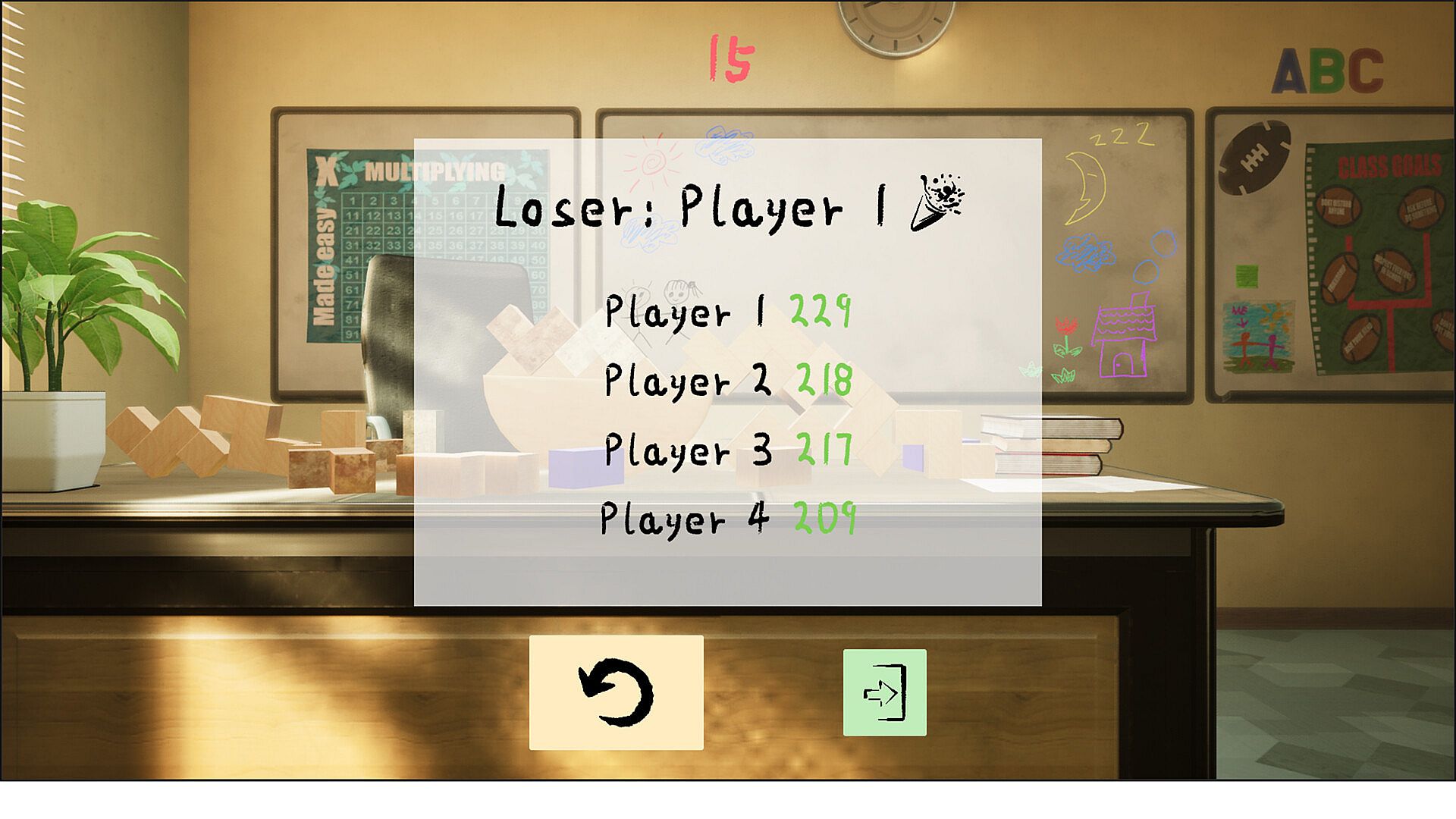
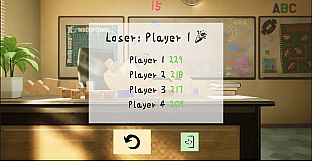
Weight, height, and base tilt factor into individual scores across all modes. In single play these elements track progress and personal records. Multiplayer changes the focus entirely. Score does not determine the winner. The player whose placement causes the stack to collapse loses, which shifts strategy toward safe placements that force opponents into riskier positions.
This setup rewards observation of the current structure and anticipation of how different materials will interact with existing blocks. Players must weigh immediate safety against the pressure to build higher than rivals.
Is It Worth Playing?
BRINKSTACK suits players who enjoy deliberate puzzle solving combined with light physics simulation. The turn-based pace allows time to study the stack and experiment with placements, making it accessible for casual sessions yet deep enough for repeated attempts at higher scores.
Those who prefer competitive local or online play will find the multiplayer rules create clear tension without requiring fast reflexes. The emphasis on avoiding collapse rather than chasing points encourages thoughtful risk management that feels distinct from typical stacking or building games.
Single Play provides a solid solo experience for improving personal technique, while the multiplayer options add social layers through shared screen or remote matches. The game appeals most to fans of indie physics puzzles who value precision and observation over action or narrative elements.