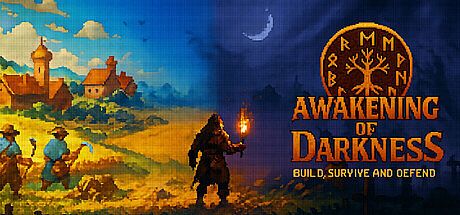



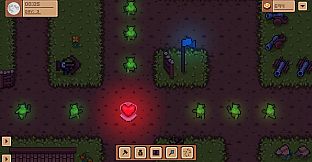

Awakening of Darkness: Build, Survive and Defend is a 2D top-down survival strategy game developed for PC. It blends city building, tower defense, and roguelike mechanics around a strict day-night cycle that shapes every session.
Gameplay
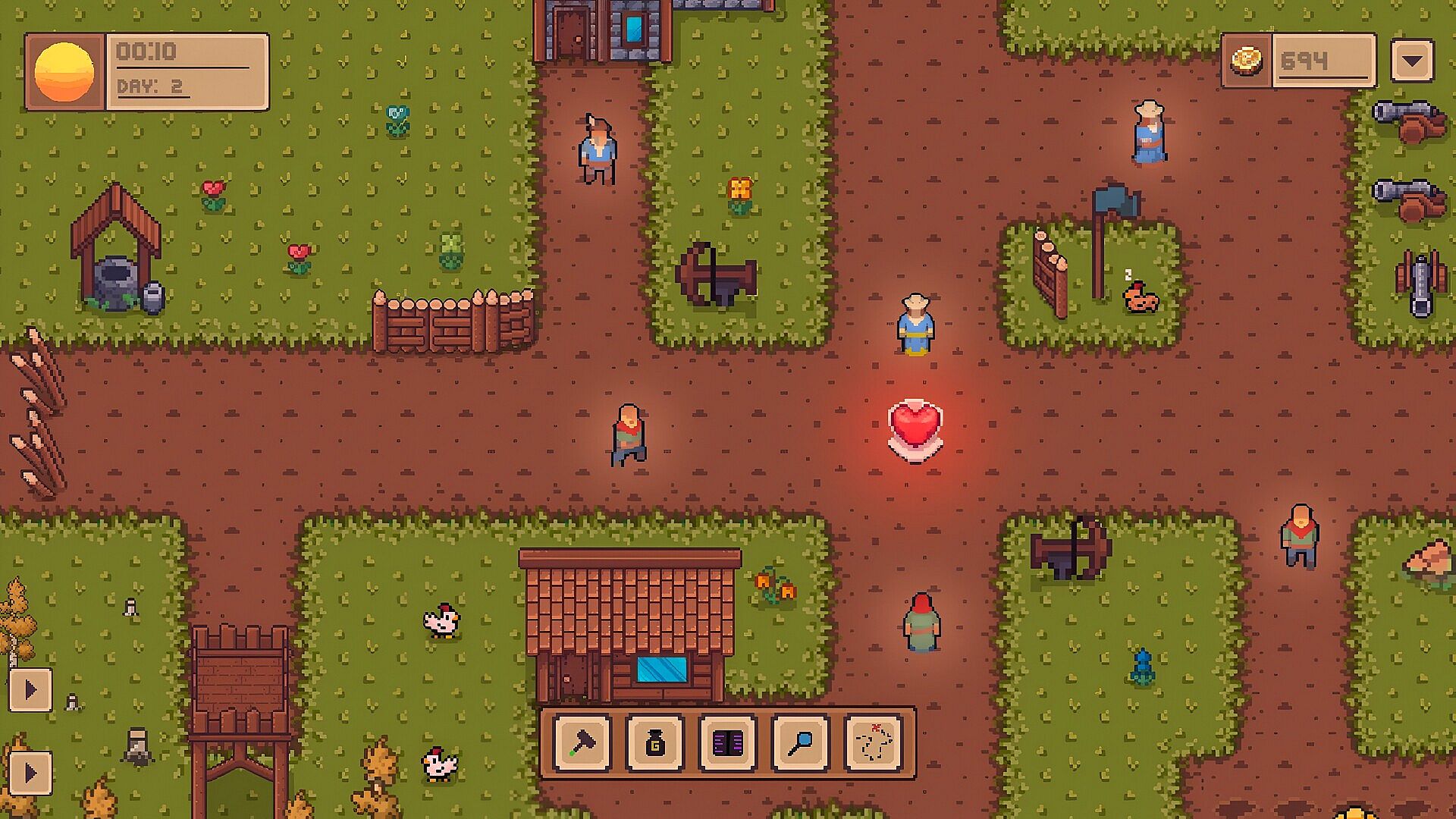
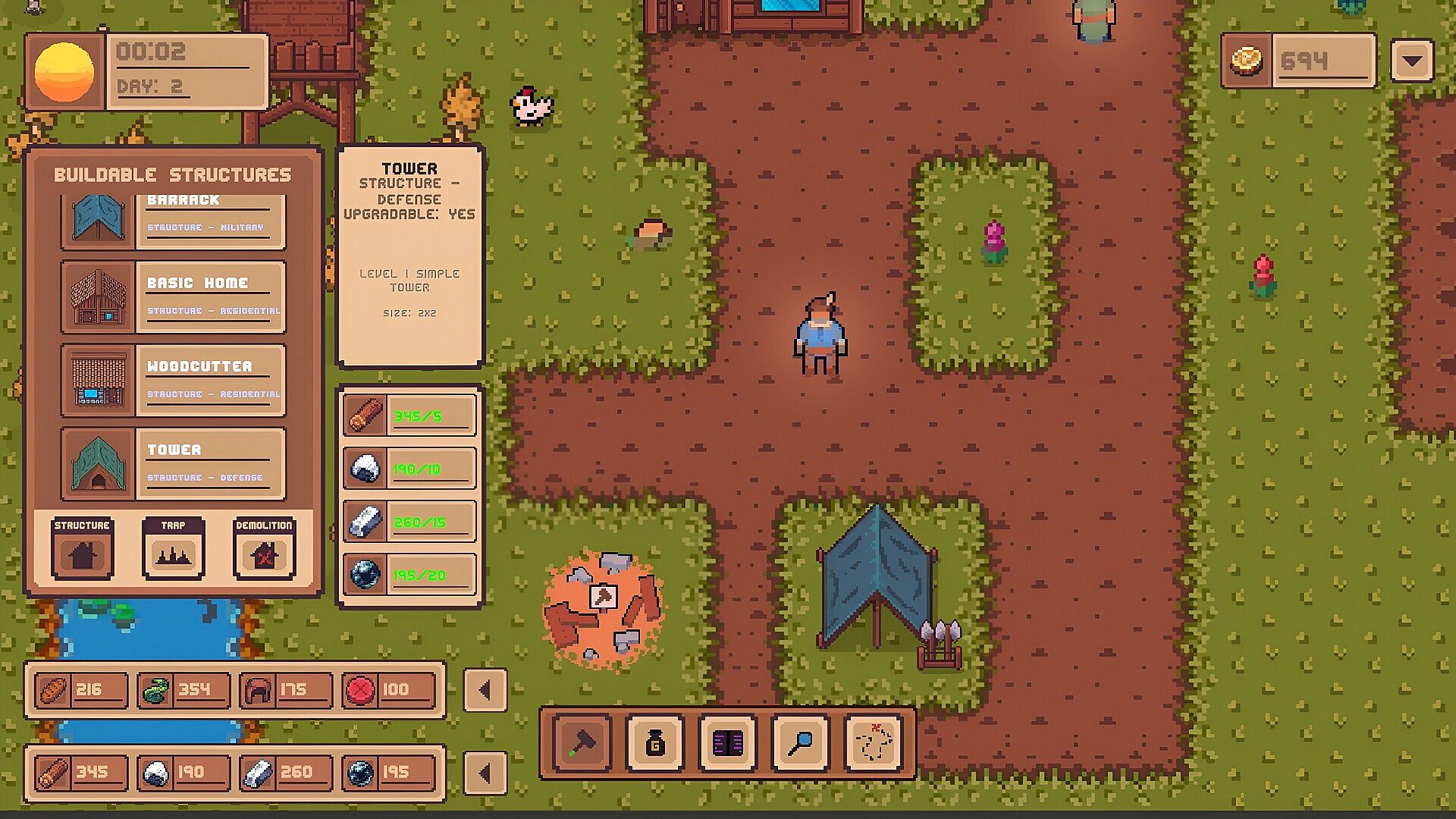
The core loop divides time into two distinct phases. Daylight hours provide a finite window for expansion. Players gather resources such as wood and stone, assign villagers to specialized tasks, and construct production buildings alongside defensive structures. Lumberyards and quarries form the foundation, while later additions support advanced crafting and stronger fortifications. Every building placement and villager assignment directly affects how well the settlement withstands the coming threats.
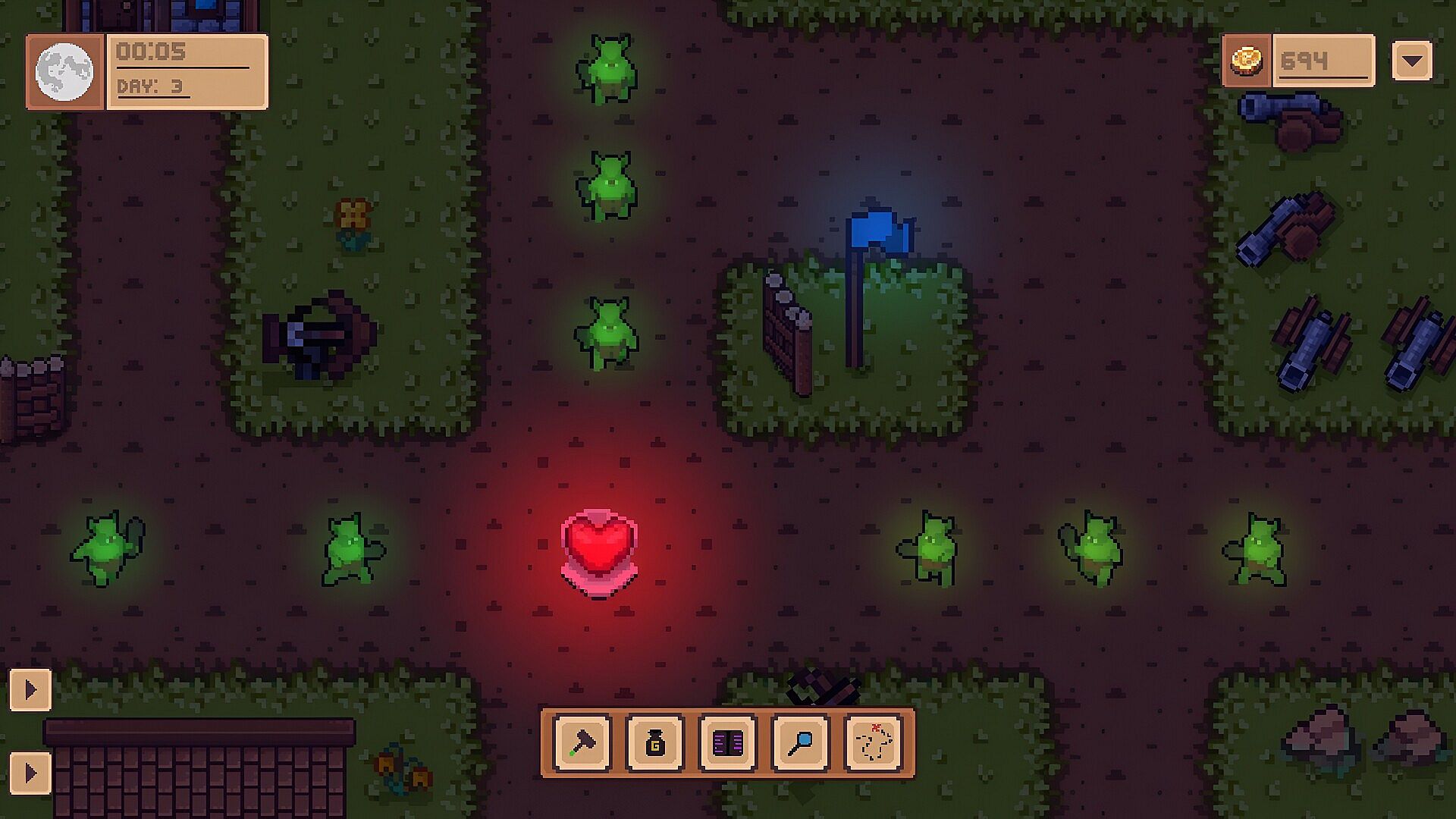
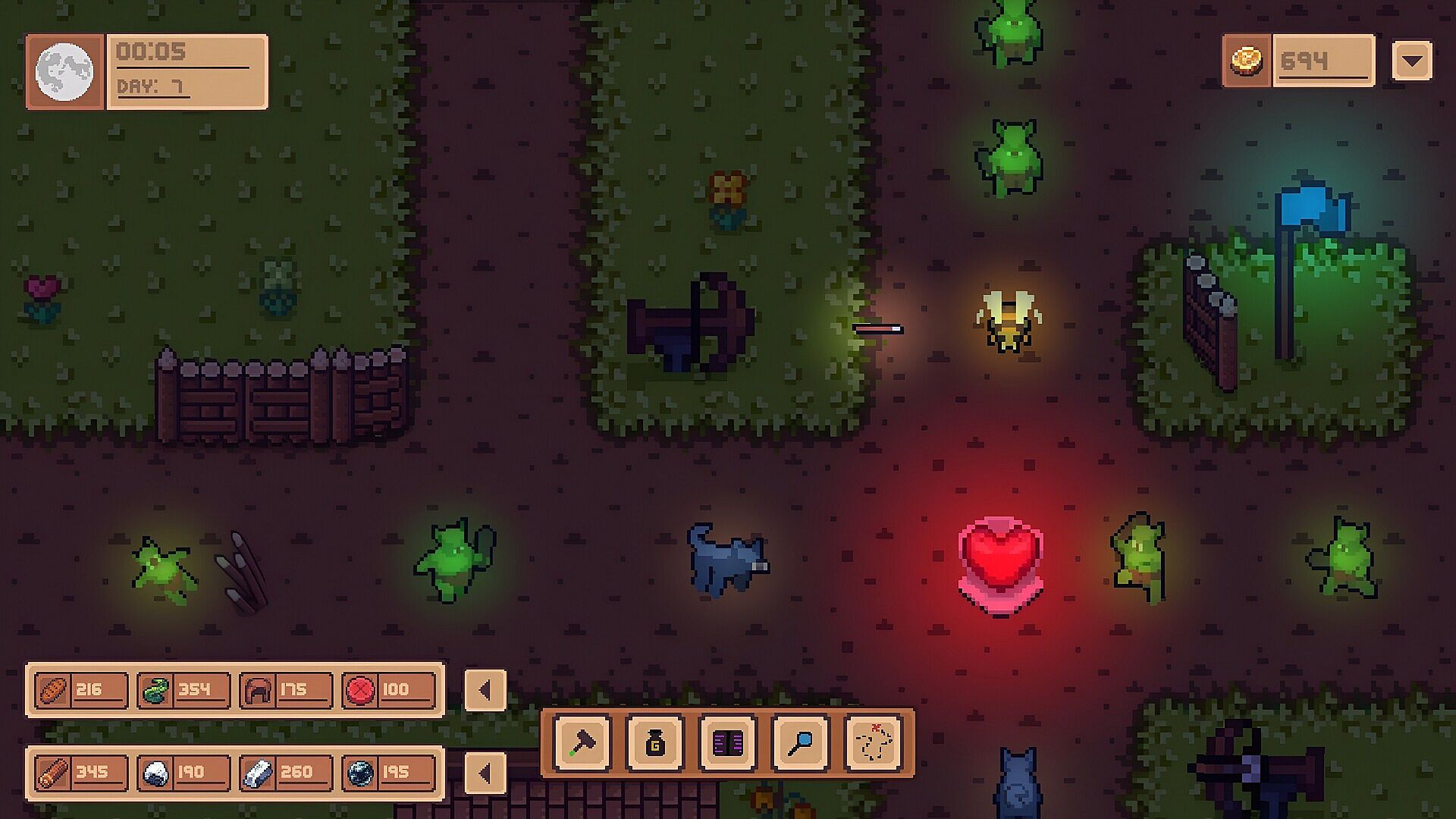
Nighttime shifts focus entirely to defense. Waves of enemies emerge and increase in strength with each passing cycle. Towers must be positioned for optimal coverage, traps placed along likely paths, and real-time adjustments made as attack patterns evolve. There is no pause button during these sequences, so decisions about resource allocation earlier in the day determine survival odds. The tension builds as nights grow longer and more intense.
Procedural generation ensures variety across attempts. Maps, resource distributions, and enemy compositions change with each new run. This forces adaptation rather than reliance on a single fixed strategy. When a village falls, the run ends, yet accumulated knowledge carries forward through a system of permanent upgrades that enhance structures, gathering speed, and defensive capabilities in subsequent efforts.
Game Modes
The game operates as a single-player experience centered on repeated survival runs. Each attempt begins on a fresh procedurally generated map where players must balance economic growth against defensive preparation. There are no separate multiplayer or co-op options, keeping the focus on individual planning and execution.
Runs emphasize roguelike progression. Failures teach lessons about timing, placement, and prioritization, while successful upgrades create a sense of steady advancement across multiple attempts. The structure rewards experimentation with different building orders and defensive layouts rather than following one predetermined path.
Strategic Depth and Progression
Success hinges on managing limited daylight hours effectively. Players weigh whether to prioritize resource output, expand the village footprint, or invest early in defensive towers. Villager assignments add another layer, as sending too many gatherers leaves construction lagging, while overcommitting to building leaves supplies short.
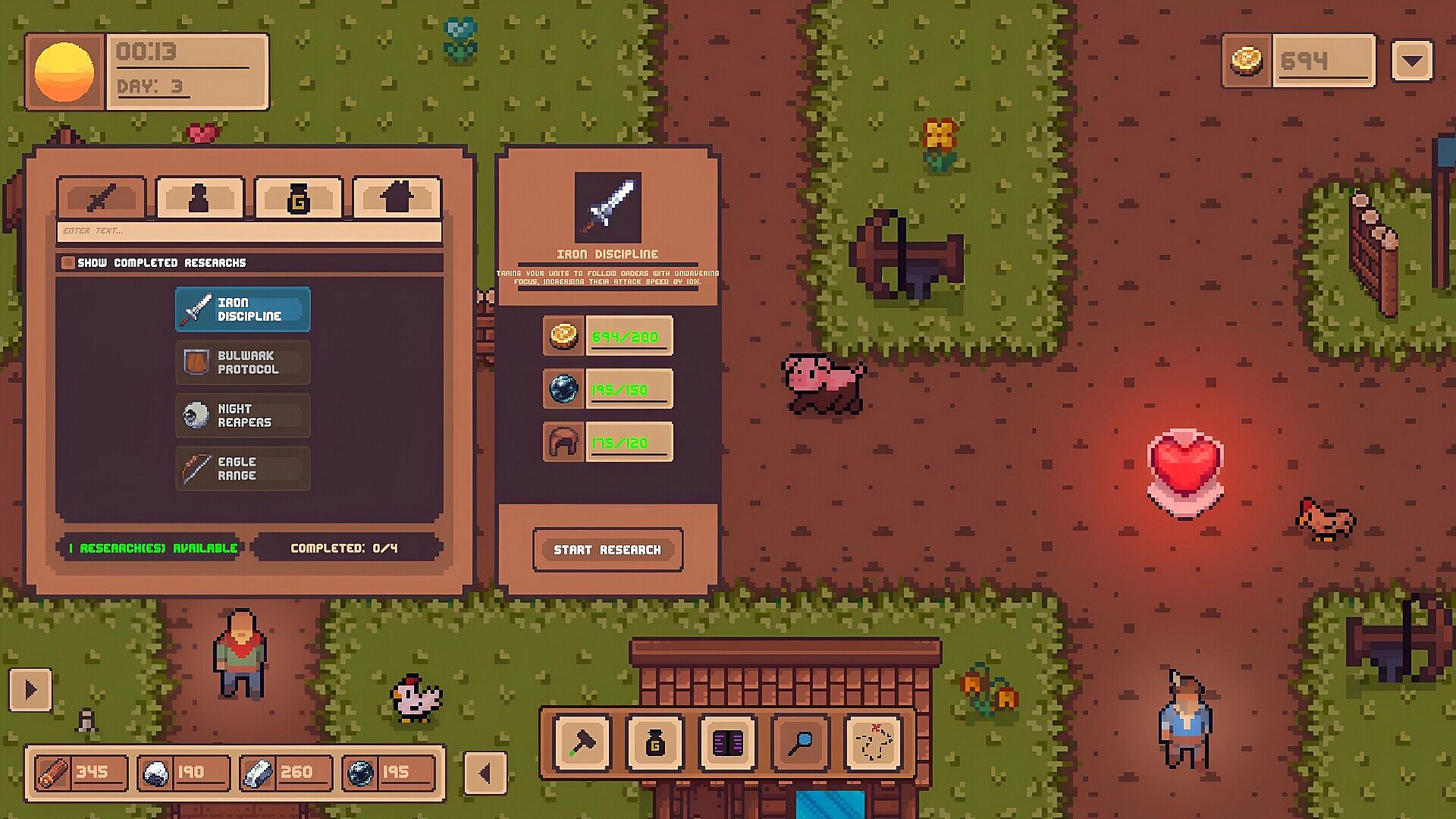
The upgrade system provides meaningful long-term incentives. Unlocks improve core systems such as resource efficiency or tower performance, making later runs feel more capable without removing the challenge of adapting to new map layouts. This creates a loop where each defeat contributes to future competence.
Real-time defensive phases test quick thinking. Enemy waves do not follow static routes, so repositioning or reinforcing weak points becomes necessary mid-battle. The combination of pre-planned builds and reactive adjustments gives the game its distinctive rhythm.
Is It Worth Playing?
The game targets players who enjoy deliberate planning paired with high-stakes defense sequences. Its single-player roguelike structure suits those comfortable with repeated attempts and incremental improvement rather than one-and-done campaigns.
Because the title remains in development with no released version or player reviews available at this time, any assessment rests on the described systems. The day-night tension, resource trade-offs, and persistent upgrades form a focused package for fans of strategy and survival genres. Those who appreciate tower defense elements integrated into a broader building loop may find the mechanics rewarding once the game reaches full release.