


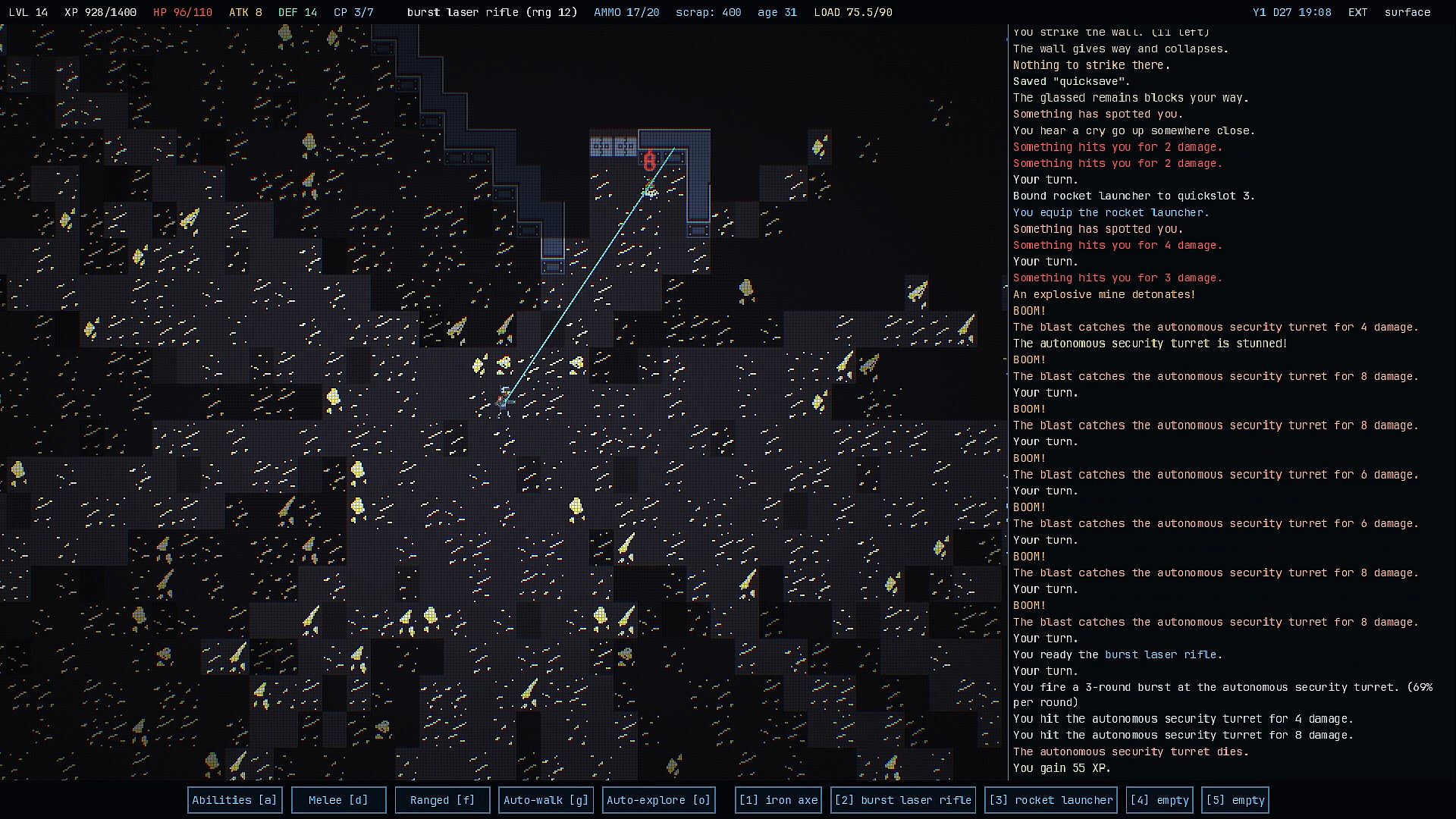
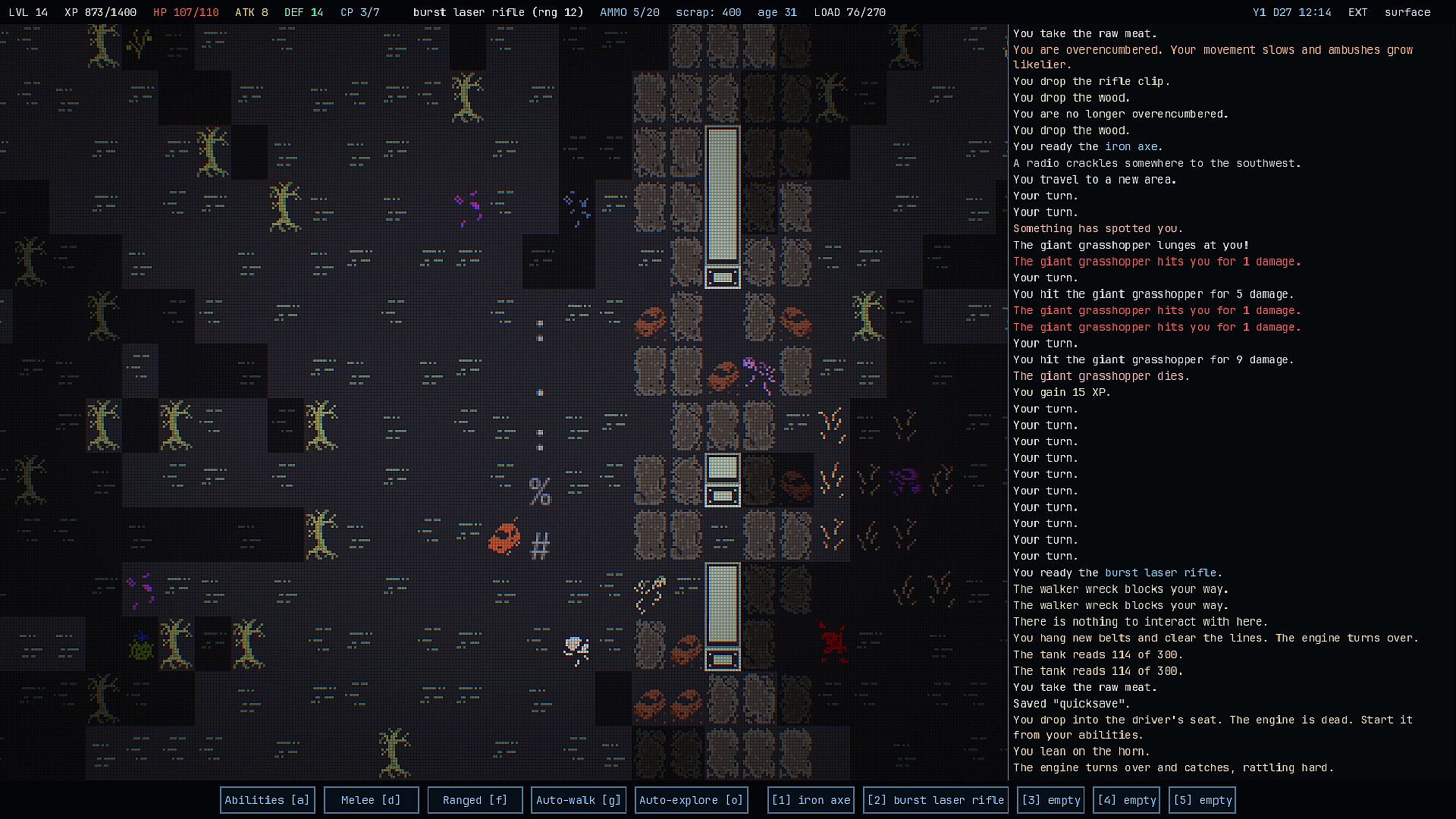
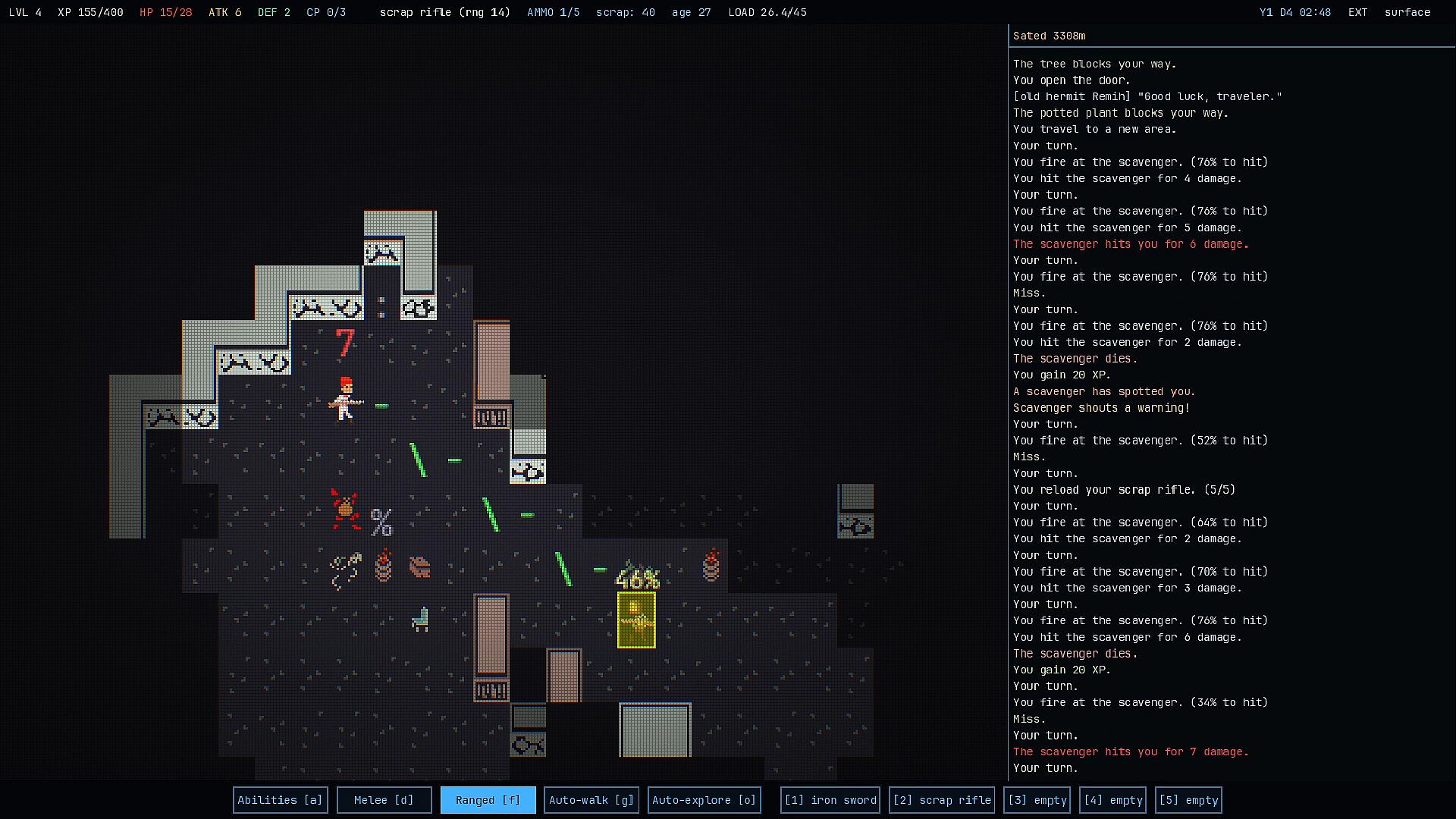
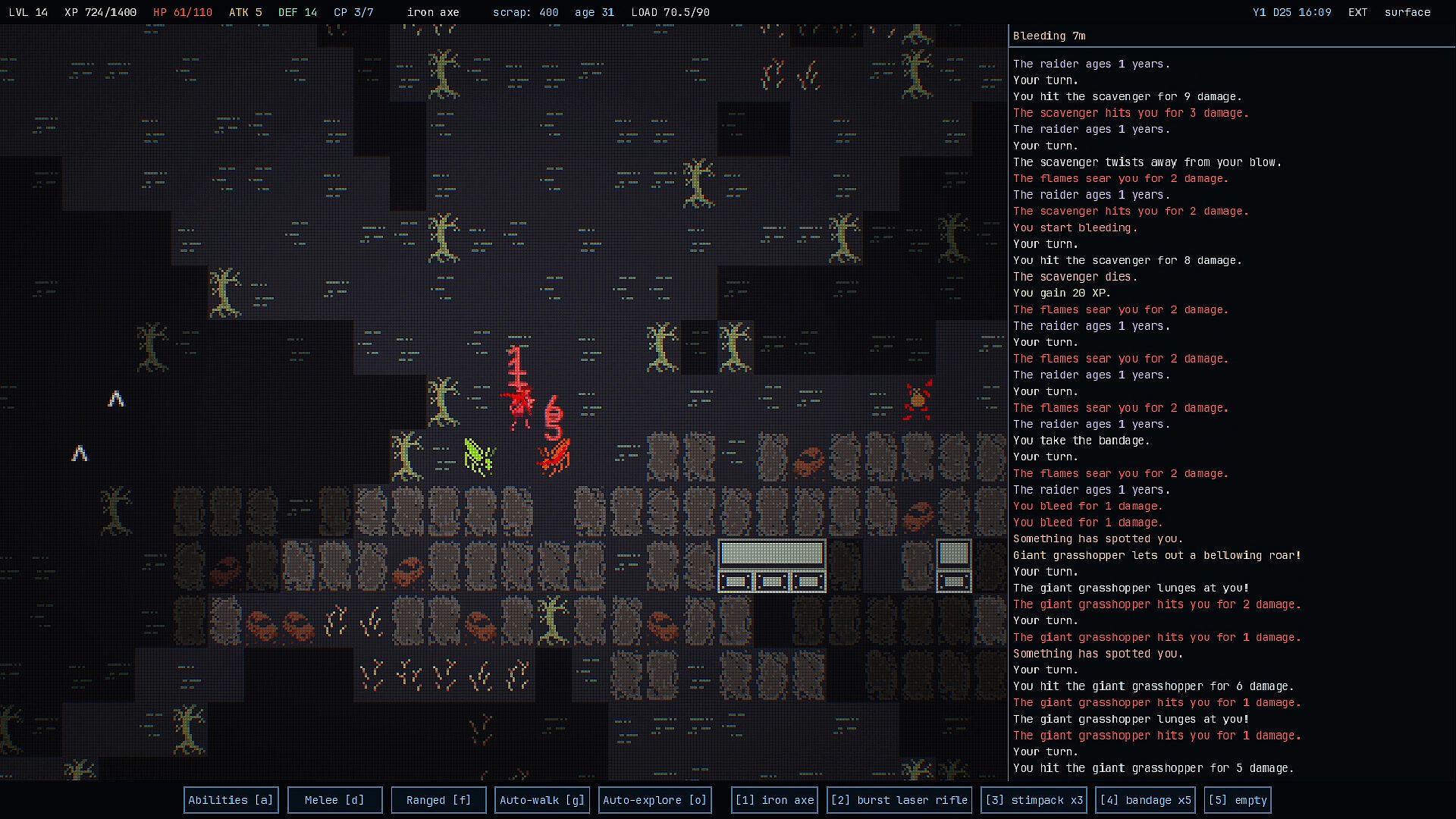
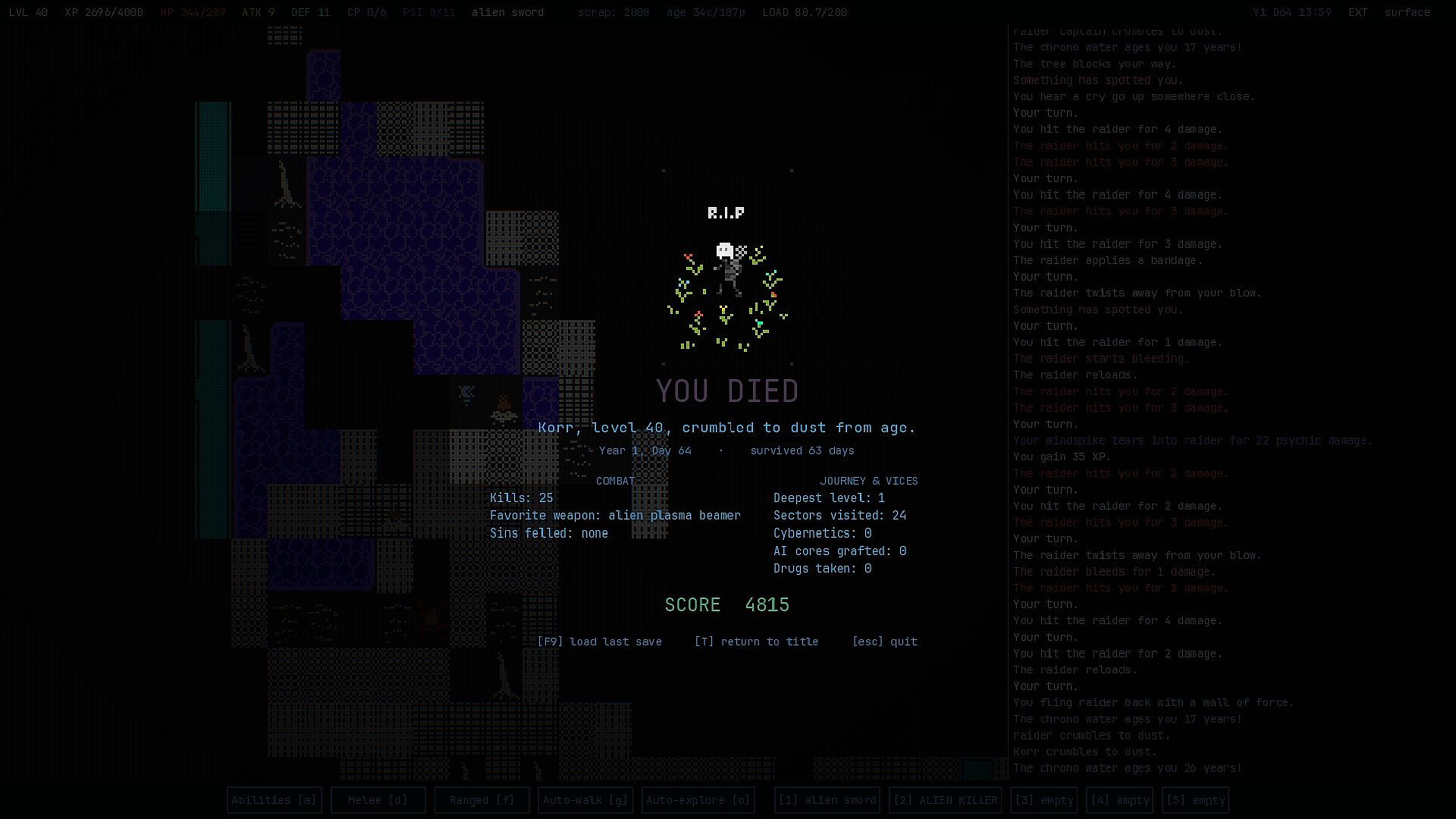
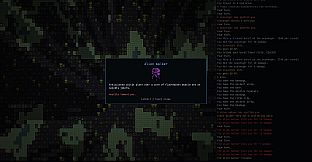
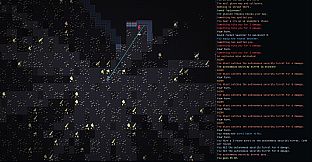
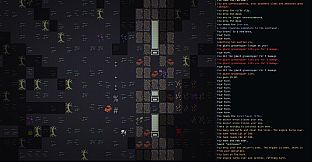
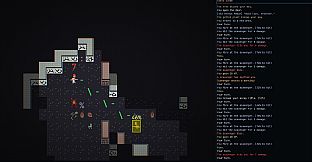
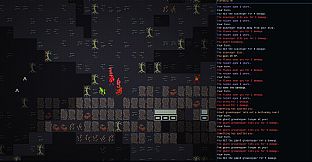
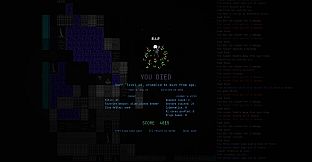
Arcostate is a singleplayer sci-fi roguelike that combines RPG elements, simulation mechanics, and adventure exploration on a ruined Earth. Players control one character who awakens with no memories in a hostile world marked by ancient technological ruins and ongoing dangers. The game emphasizes turn-based decisions, resource management, and emergent interactions across a persistent world.
Gameplay
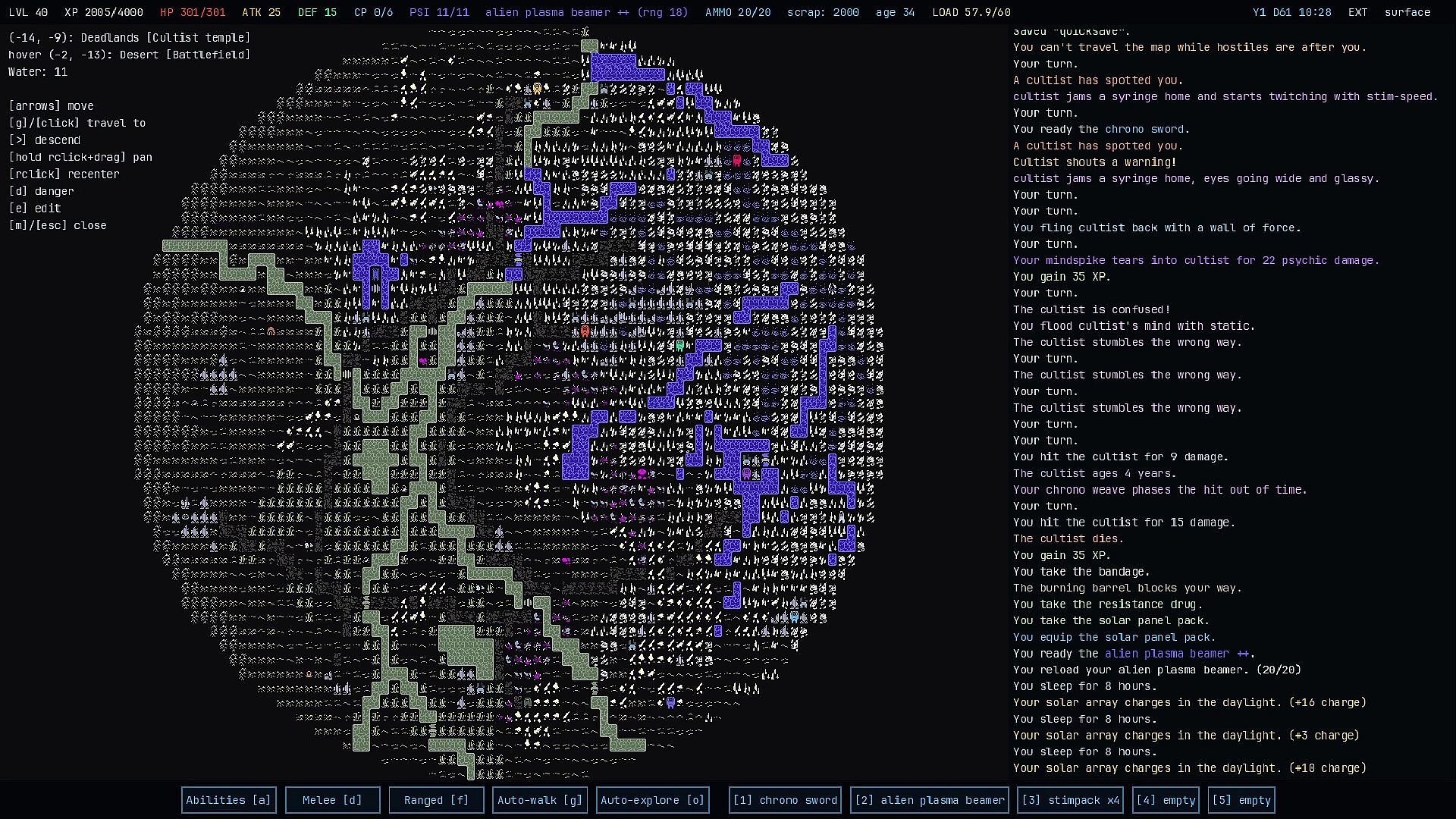
Core play revolves around exploration and survival on an overworld map divided into sectors. Travel reveals hand-authored sites alongside procedural ones, including caves that grow more hazardous with depth. A derelict monorail system allows underground movement via a rideable car, while a salvaged vehicle supports surface travel. Random encounters occur during movement, and a bounty board offers repeatable contracts for hunting targets.
Day and night cycles influence conditions, while character aging alters stats over time. Weather adds further variables to planning. Building begins with land deeds that let players claim sectors and construct walls, floors, doors, windows, and furnishings. Underground expansion is possible through digging. Resources come from felling trees, mining rock, and salvaging materials, which feed into crafting at personal workstations. A home terminal supports hiring guards and shopkeepers.
NPCs follow daily schedules that create living routines. A faction system tracks grudges and witness reactions to player actions. Companions and pets can join, while enemy groups exhibit squad behavior and call for allies. Cybernetics appear on NPCs as well, and augments can be recovered from defeated foes.
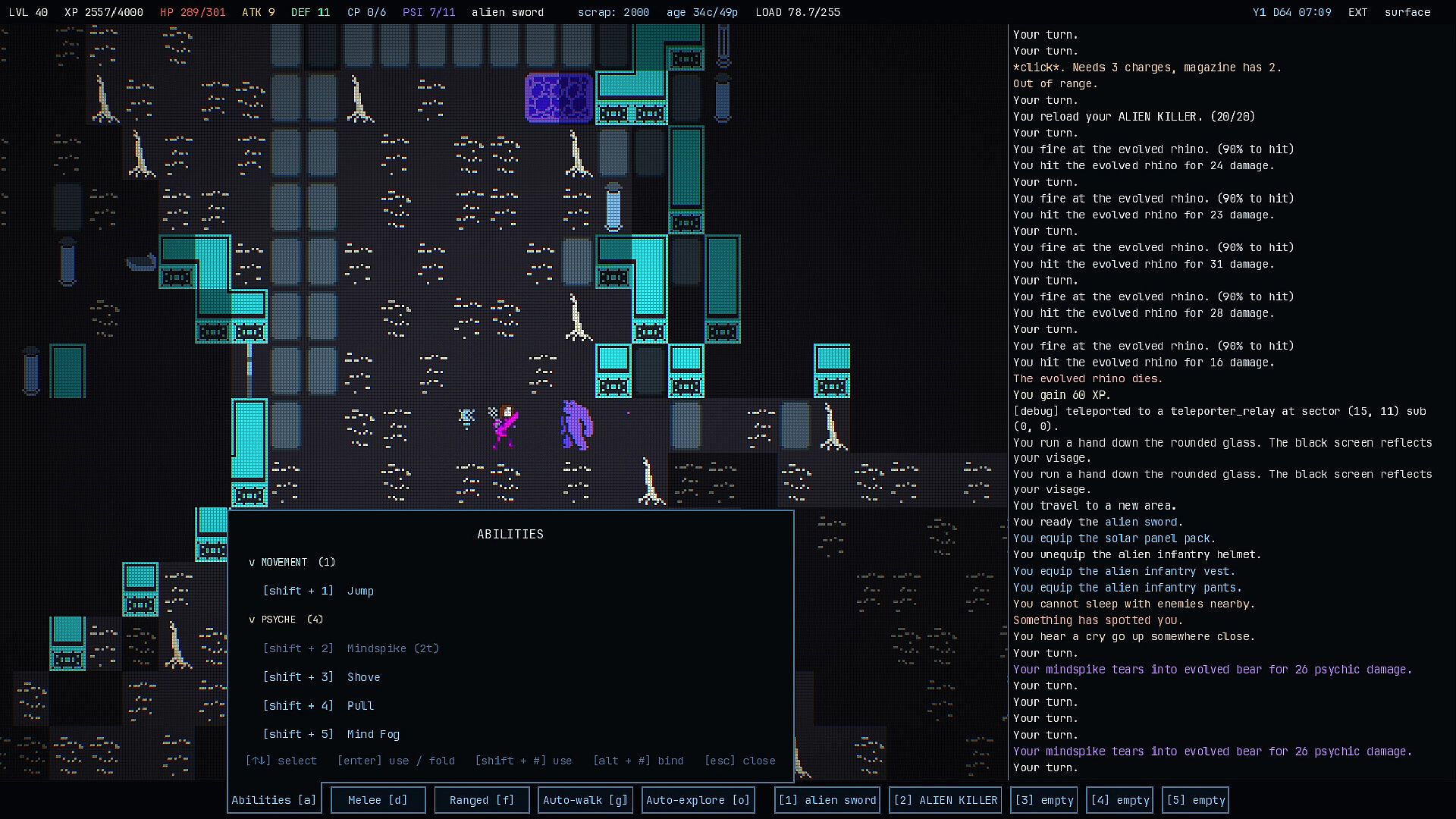
Character creation uses a points system across six attributes and category-based skills that improve through use. Cybernetics install under a compute-power limit, and psychic abilities advance via a skill tree. Appearance and age are customizable, with stats shaping descriptive text. The player sprite updates dynamically to reflect equipped items and visual choices.
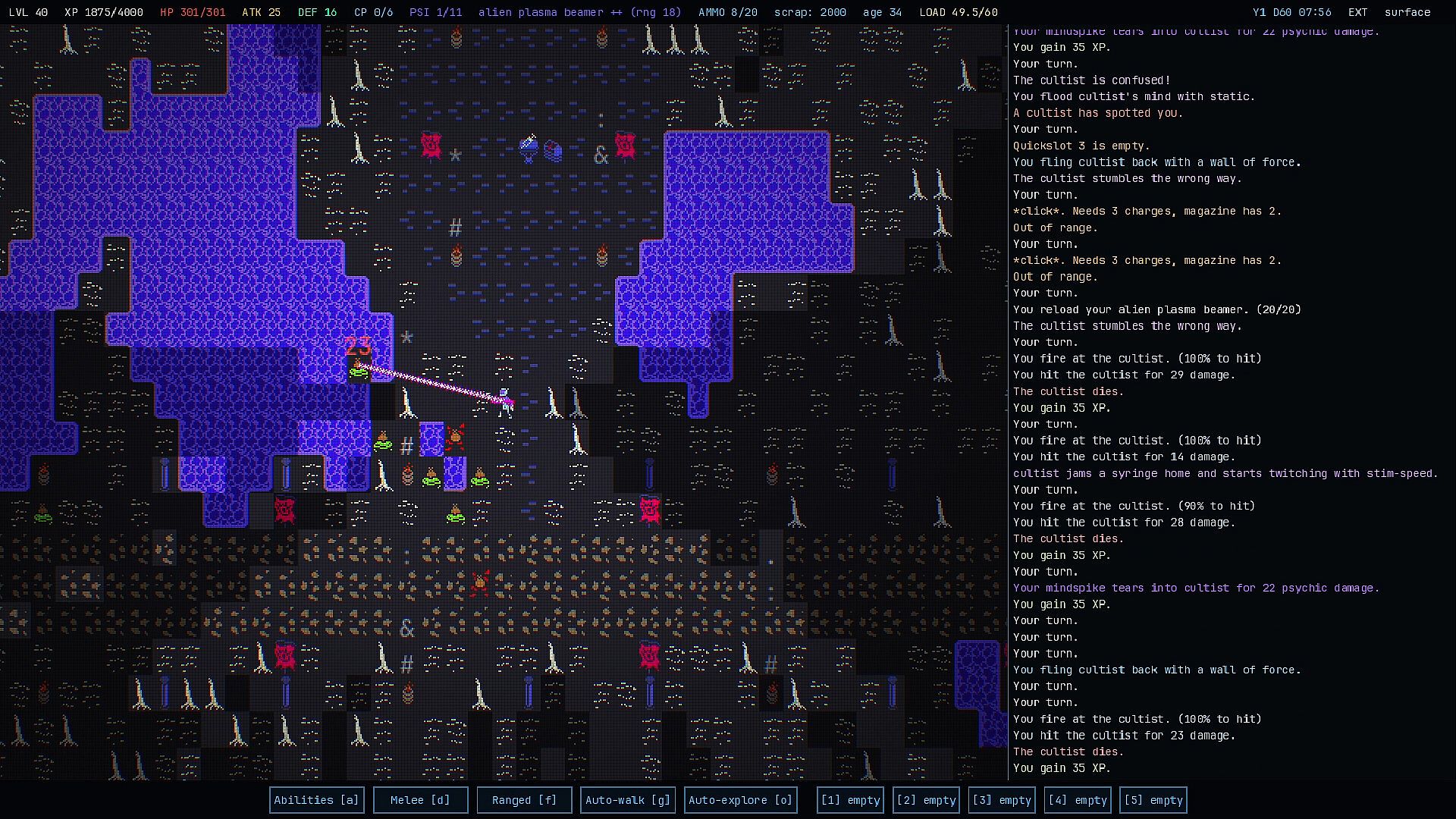
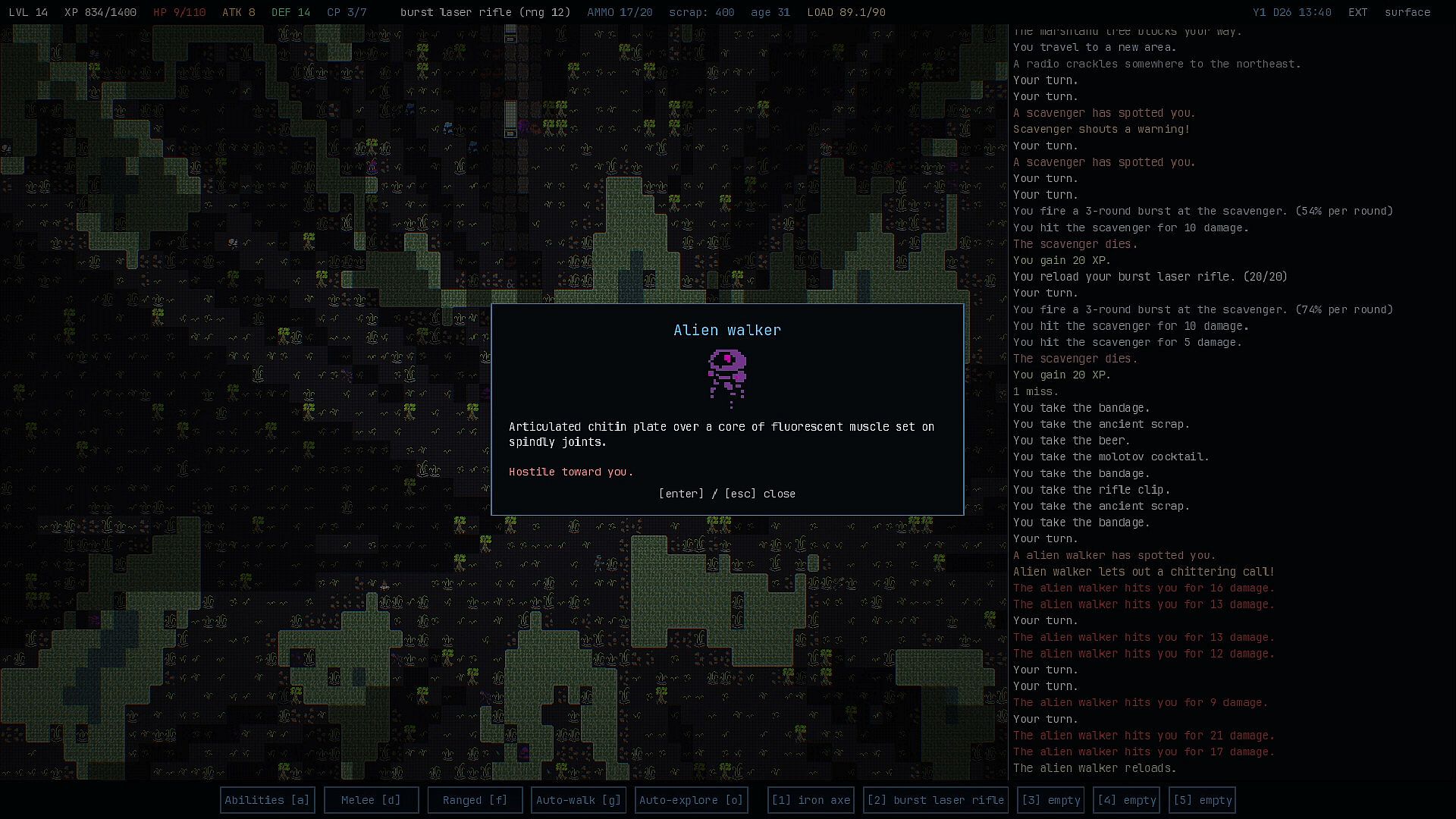
Combat occurs in tactical turns. Armor provides percentage damage reduction, while weapons deal dice-based damage. Momentum physics lets entities be pushed, affecting travel distance and impact damage. Stealth involves crouching to avoid sightlines based on each NPC's perception. Over 400 items exist, covering weapons, armor, consumables, cybernetics, mods, ammunition, crafting materials, valuables, and gadgets. Drug crafting includes a toxicity system that manages buffs, overdoses, and withdrawals. Inventory tracks encumbrance, and a codex catalogs discovered items and creatures permanently.
Game Modes
Two distinct modes shape the experience. Classic mode enforces true permadeath, aligning with traditional roguelike rules where each run stands alone. Roleplaying mode permits free saving and loading, supporting extended playthroughs and experimentation without permanent loss.
Both modes share the same underlying systems for world state, character progression, and interactions. The choice affects only how death and progress are handled, allowing players to select the approach that matches their preferred risk level.
World and Systems
The setting depicts a post-cataclysm Earth where advanced technology lingers amid ruins. A prominent blue dome in the south represents Aathman, the last arcology, which serves as a defended hub against wasteland threats. Exploration uncovers evidence of humanity's past ambitions and the events that caused planetary ruin.
Simulation depth appears in NPC routines, faction dynamics, and environmental factors. Procedural generation mixes with authored content to vary each play session while maintaining consistent world rules. The paper-doll sprite system layers clothing and weapons visibly on the player and humanoid NPCs, enhancing visual feedback during equipment changes.
Is It Worth Playing?
Arcostate suits players who enjoy deep singleplayer roguelikes with strong simulation and customization layers. Its blend of turn-based tactics, building, and character systems rewards careful planning and repeated attempts. The game remains in active early development, with ongoing updates addressing bugs and expanding features. Those drawn to persistent worlds, emergent NPC behavior, and flexible character builds will find substantial systems to engage with already. Availability on PC through direct download supports immediate access for those interested in following its progress toward a planned demo.