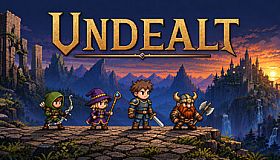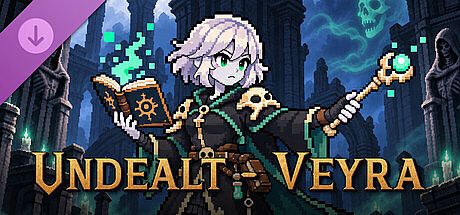


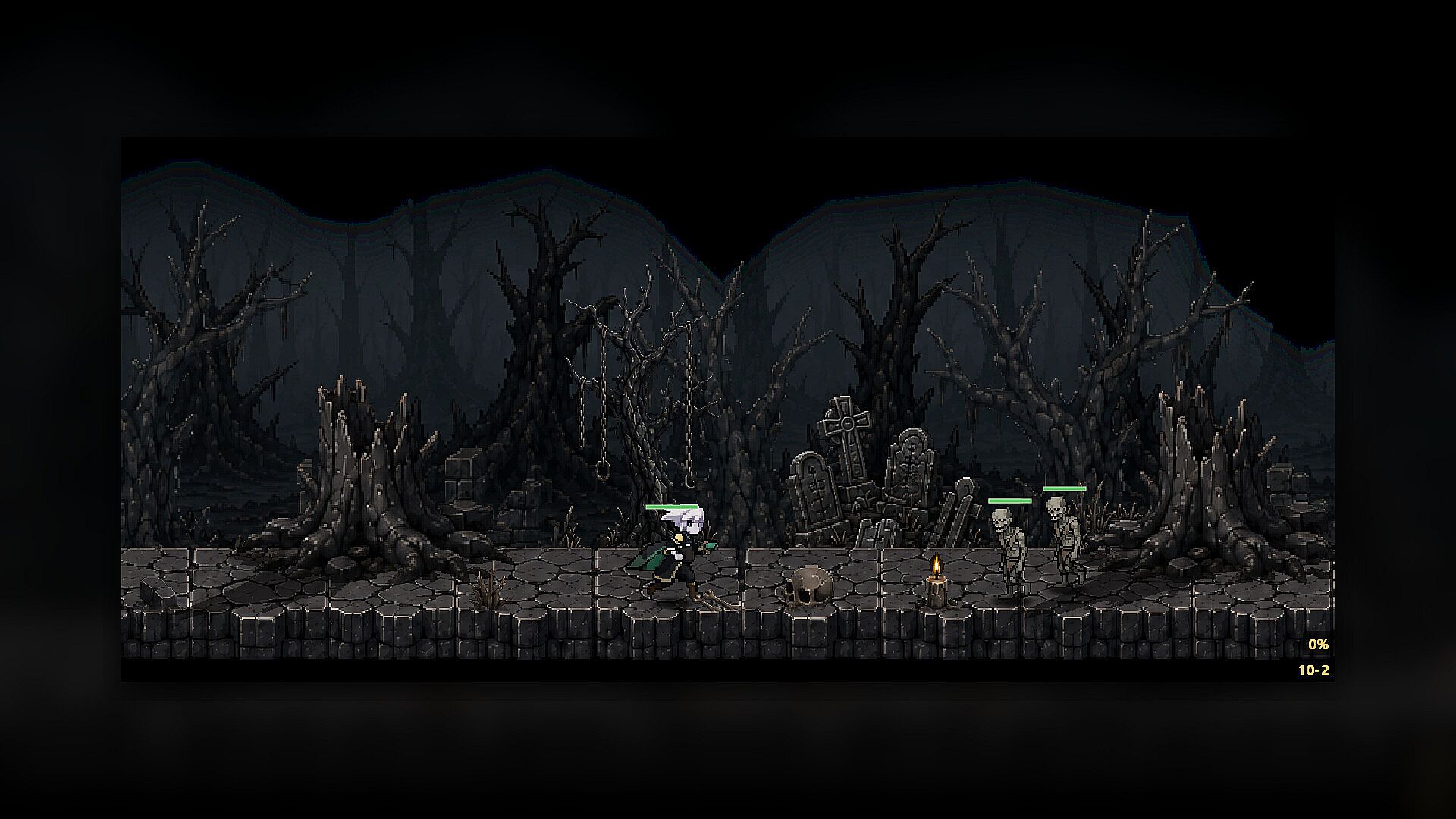
Undealt is a free-to-play idle RPG for PC in which a party of four heroes handles combat automatically while the game runs in a small window on the desktop. Players manage equipment, forging, skills and special cards between sessions, then return to collect loot and adjust the party. The base game includes four starting heroes, and the Undealt - Veyra DLC adds a fifth option: the Necromancer Veyra.
Gameplay
Combat resolves without player input once a formation and targets are set. Heroes use six elements that interact through strengths and weaknesses, and every fight factors in range, accuracy, evasion and critical hits. Veyra joins as a fully playable Necromancer who summons skeletons and reanimates defeated enemies as temporary allies. These allies inherit a level based on hers but steadily lose a percentage of their maximum life over time, so they serve only short, high-impact roles. A dedicated skill tree lets players improve the minions' brief existence without turning them into permanent party members. All heroes level through auto-battles and spend earned points in personal skill trees that remain fixed once allocated.
Loot drops from enemies across eleven regions, each containing nine stages that end in a boss. An endless ninth stage in every region loops after the first clear and scales in difficulty, providing the main long-term farming loop. Equipment spans more than 1,500 pieces across ten or more types and six rarities, with the rarest drops being exceptionally uncommon. Players equip eight slots per hero and store excess items in an unlimited bag. A forge consumes materials with visible success odds that improve when matching materials are used. Fifty-plus potions and foods activate automatically according to rules set by the player.
Fifty-four cards alter core combat rules, such as attacks that chain to additional targets or shields that trigger on demand. Cards drop face down and require an Oracle to reveal them at a memory cost. A hand of five cards can be held for the party, and matching suits provide reinforcement. Rare cards and high-rarity gear become Steam inventory items that persist across saves and can be traded on the community market.
Game Modes
The core experience centers on region progression. Each of the eleven regions offers nine stages with a boss at the end. Completing a region's ninth stage once unlocks an endless loop of that stage that continues to increase in level, serving as the primary place to leave the game running unattended. Between stages the party returns to a city hub that includes a guild for opening the world map, a blacksmith whose stock refreshes regularly, an alchemist, a merchant and the Oracle who reads cards. No separate competitive or multiplayer modes exist; the game remains strictly single-player with all progression saved locally or through Steam Cloud.
Progression and Customization
Each hero follows an independent skill tree purchased with points earned from leveling. Points stay allocated permanently, so long-term play rewards consistent investment in a chosen path. The city hub provides regular access to new gear and consumables, while the card system introduces rule changes that can be combined across the party. Veyra's addition expands options for players who want temporary summoned support rather than only permanent party members. The entire base game is free, and the four starting heroes form a complete party capable of reaching the end content.
Is It Worth Playing?
Undealt suits players who enjoy idle or background RPGs that require only occasional management of loot, forging and skills. The auto-battle system and desktop-window format allow the game to run alongside other activities, with meaningful returns when the player checks in. Veyra expands the roster with a distinct Necromancer playstyle focused on short-lived summoned allies and a supporting skill tree. The base game releases free to play with no paid boosts to experience, gold or time, and the DLC unlocks only the additional hero. With no user reviews available ahead of the November 2026 launch, suitability depends on preference for hands-off combat, loot-driven progression and rule-altering cards rather than direct control or competitive multiplayer.