


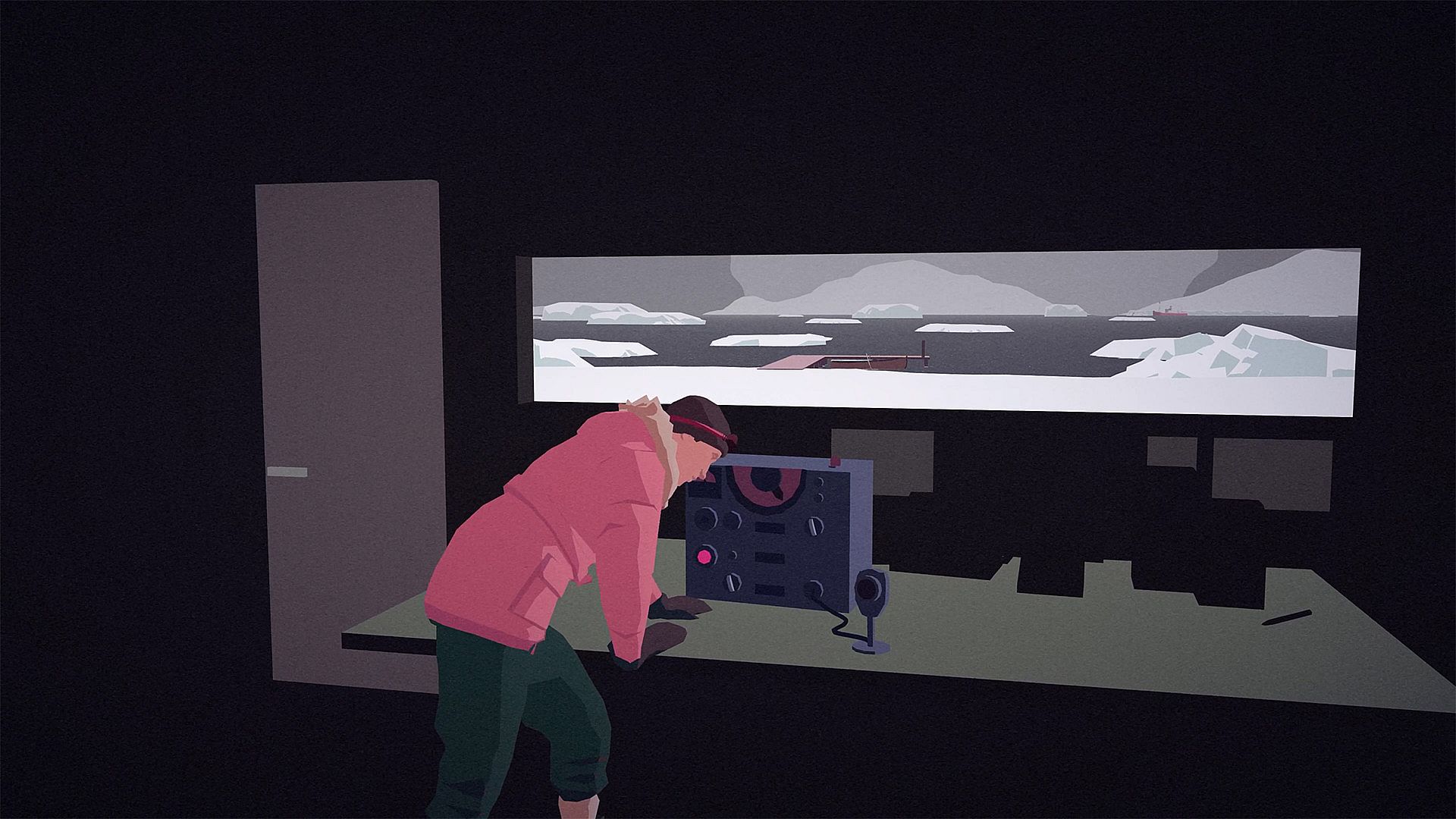

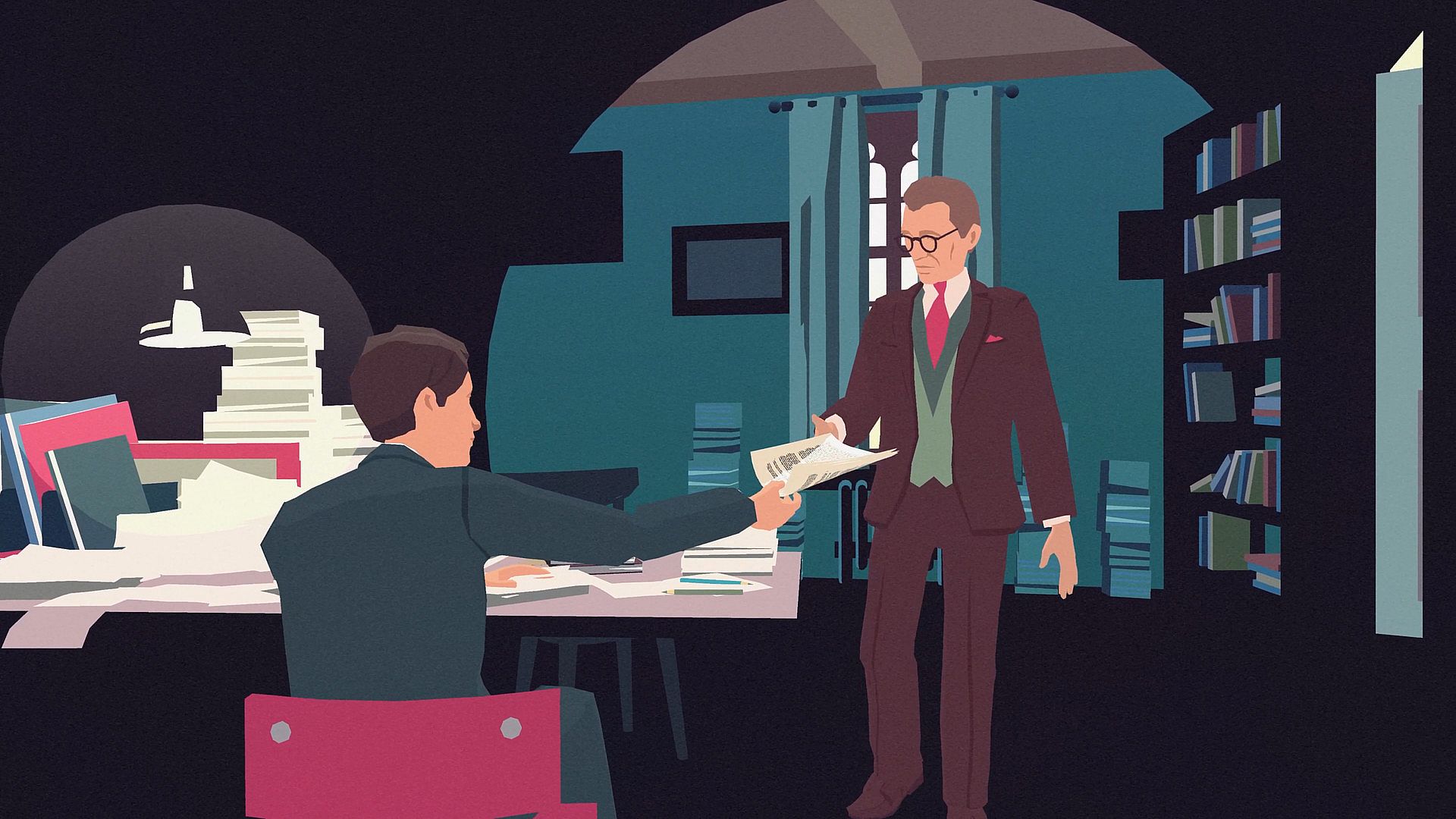




South of the Circle is a single-player narrative adventure game centered on a Cambridge academic named Peter who becomes stranded in Antarctica amid Cold War tensions. The experience unfolds through a linear story that interweaves survival in a frozen landscape with flashbacks to his academic life and relationship with fellow lecturer Clara. Players guide Peter through this tale of personal choices, career pressures, and emotional consequences without branching paths or multiple endings.
Gameplay
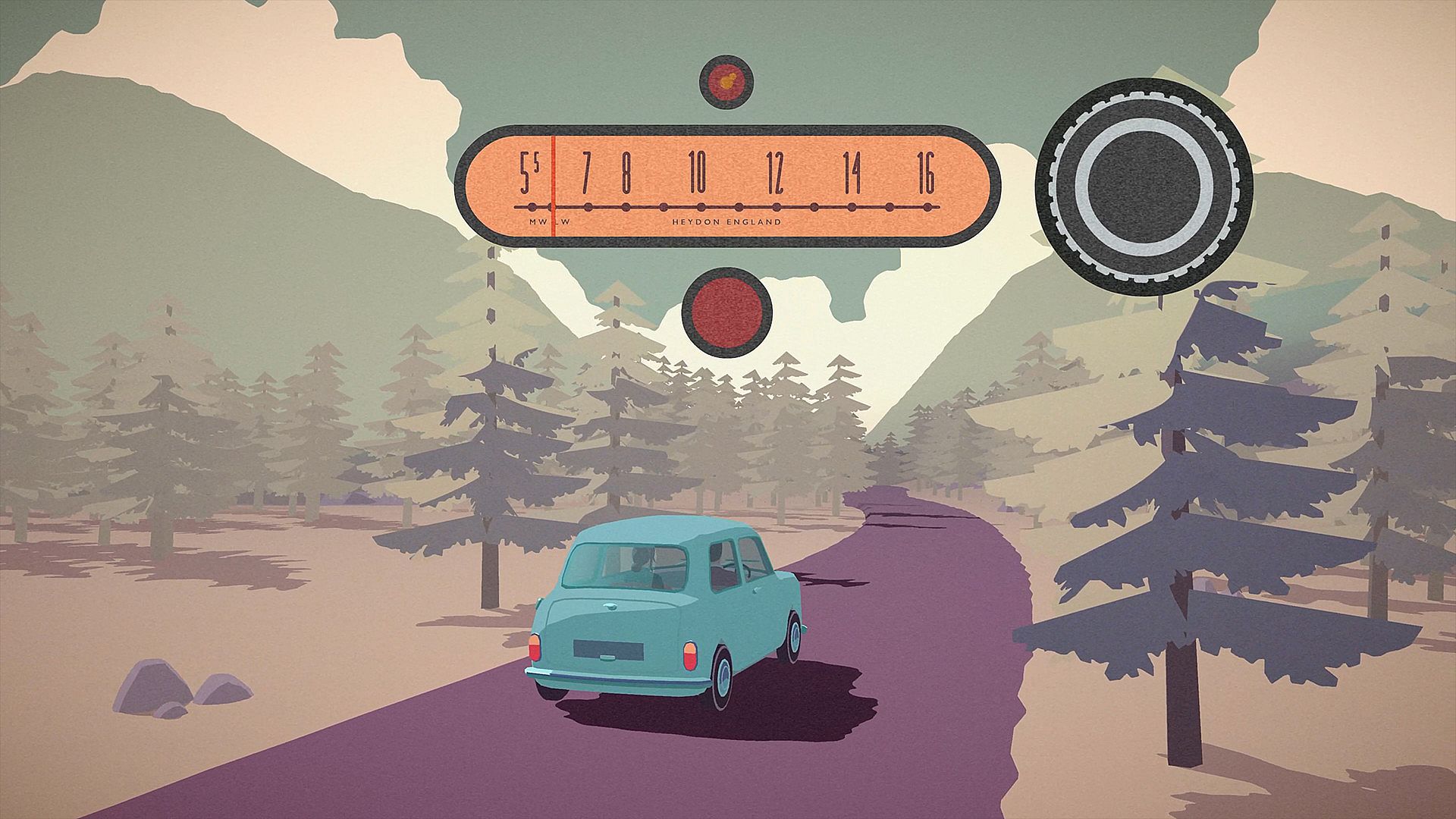
The core loop revolves around exploration on foot across Antarctic terrain, occasional short vehicle segments, and extensive dialogue sequences. Movement feels deliberate as Peter navigates icy environments while interacting with sparse objects that advance the narrative. Most time passes in conversations where responses are selected via emotion symbols rather than explicit text options, creating uncertainty about exact wording until delivered. This system emphasizes the protagonist's internal state over traditional dialogue trees. The presentation blends cinematic framing with interactive elements, supported by an original score that underscores shifting moods across past and present scenes.
Progression follows a fixed sequence of events, with the environment and character interactions revealing layers of backstory. Survival elements appear through environmental hazards and isolation, yet they serve the story rather than introduce resource management or combat. The short overall length encourages focused play sessions that highlight the weight of promises made in career and personal life.
Game Modes
The game operates exclusively in single-player format with no multiplayer components or alternative modes. All content delivers through one continuous campaign that players complete from start to finish in a linear fashion. There are no selectable difficulties, side activities, or replay incentives beyond revisiting the story for personal reflection.
Story and Themes
The narrative examines the intersection of professional ambitions and romantic commitments against a backdrop of geopolitical strain. Flashbacks to Cambridge reveal how decisions accumulate over time, while present-day Antarctic sequences test resilience and memory. Themes of regret, love, and the illusion of control emerge naturally through character exchanges and environmental storytelling. The Cold War setting adds historical texture without turning the focus away from intimate human drama.
Is It Worth Playing?
This title suits players who prioritize emotional storytelling and atmospheric presentation over mechanical complexity or extended playtime. The focused single-player structure delivers a complete experience in a few hours, making it accessible for those seeking a contemplative session rather than ongoing engagement. Reception highlights its strength in blending visual novel elements with light exploration, though the minimal interaction may not appeal to those expecting deeper systems. Availability on PC aligns with the original soundtrack release, which features 22 tracks composed by Ed Critchley to accompany the full emotional range of the journey. Those drawn to intimate, memory-driven tales will find the package rewarding for its cohesive artistic vision.