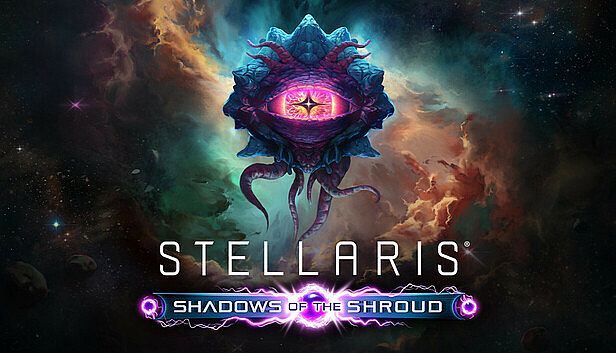












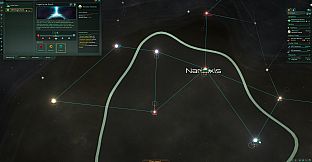
Stellaris: Shadows of the Shroud é uma grande expansão para o simulador de estratégia grandiosa Stellaris no PC. Ela traz uma reformulação completa do caminho de ascensão psiônica, permitindo que os jogadores tomem decisões morais, formem alianças com patronos de outros mundos e lidem com a ameaça constante de aniquilação enquanto expandem seu império pelo espaço.
Gameplay
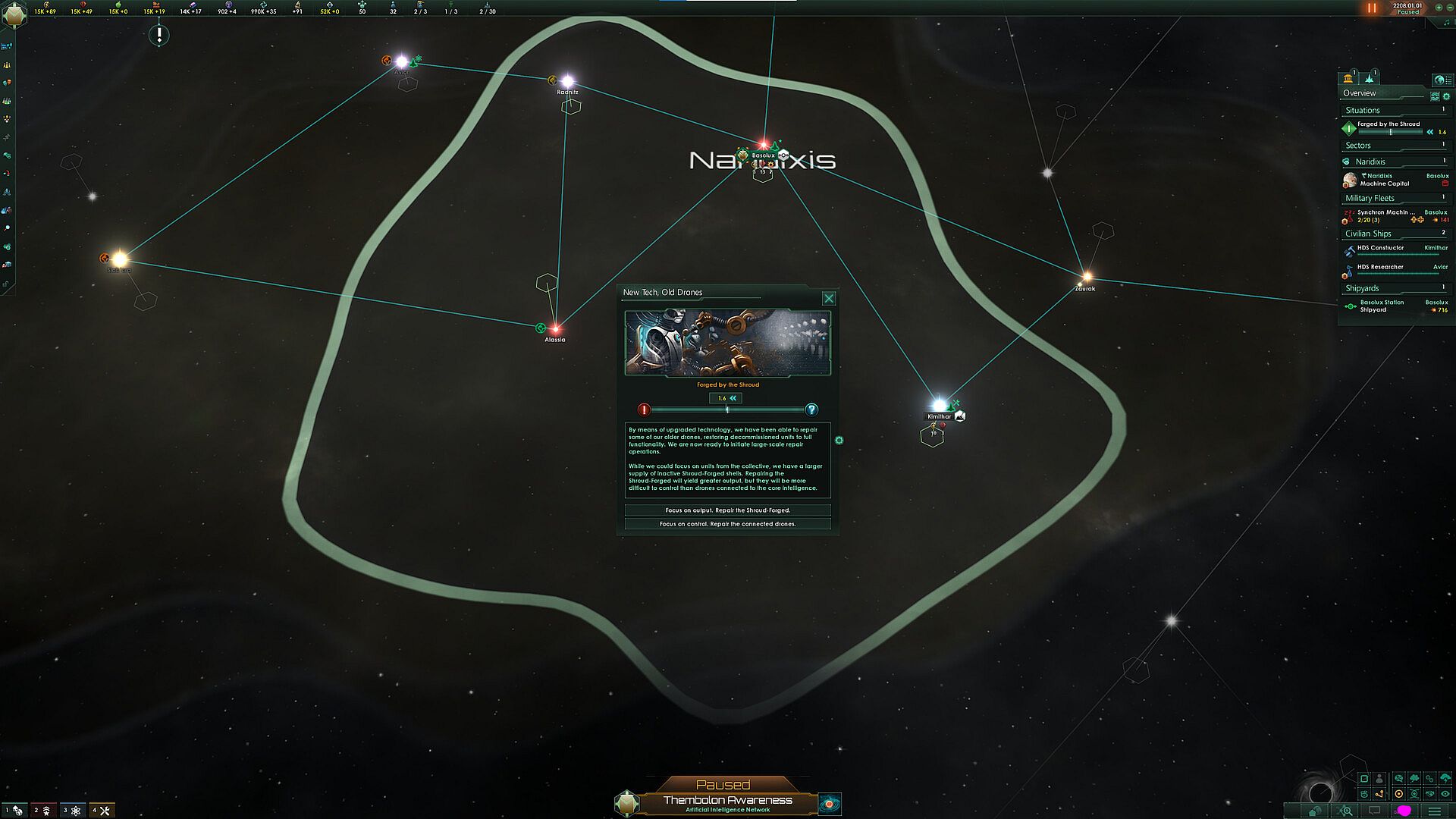
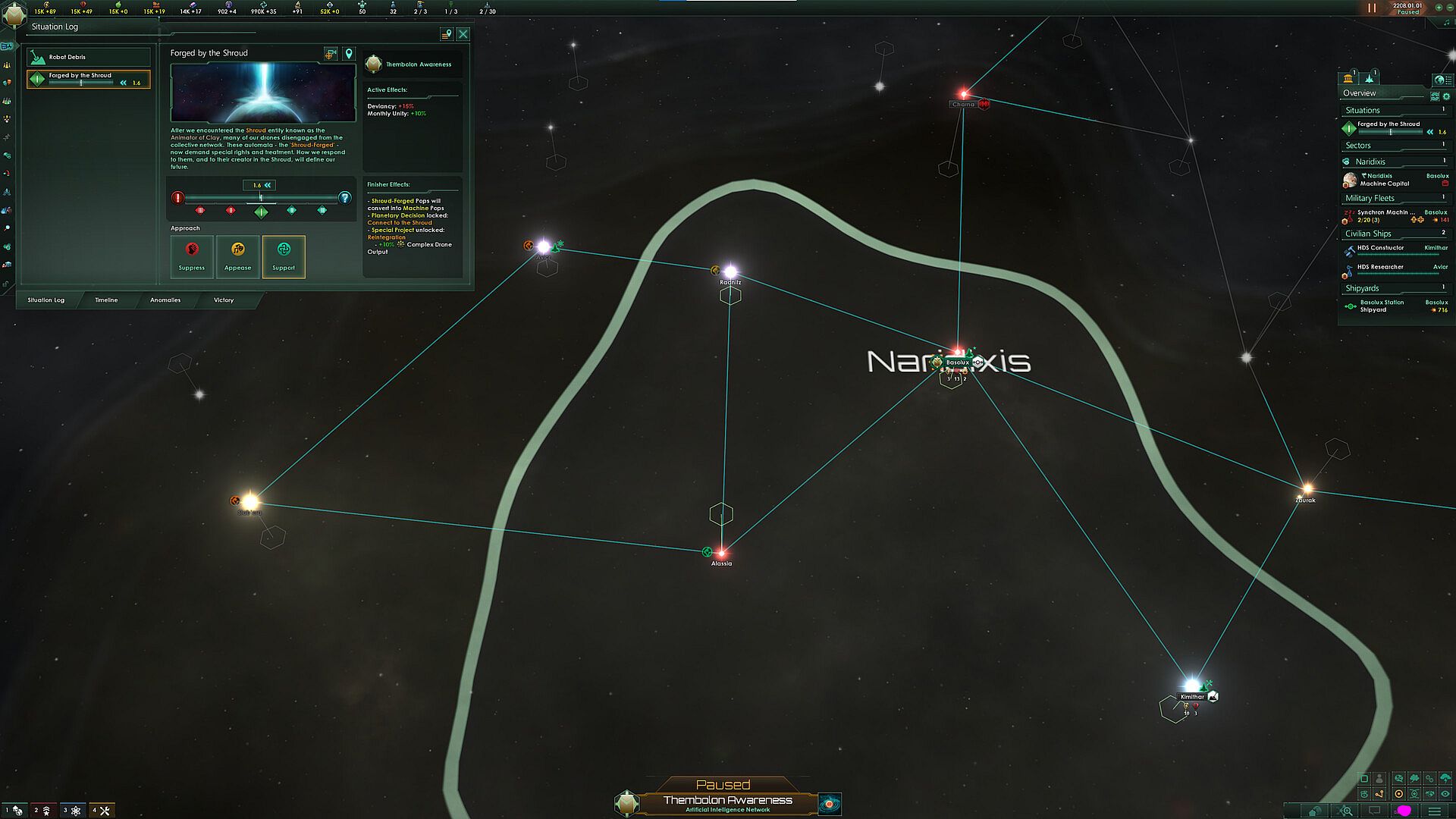
O ciclo principal gira em torno da gestão do império, exploração, diplomacia e guerra, agora aprofundados por mecânicas psiônicas que se desenvolvem de forma progressiva. A invasão do Véu acontece em três etapas, nas quais as escolhas do jogador definem a direção espiritual do império e seu nível de conexão com determinados patronos. Após a invasão, um Painel do Véu dedicado permite acompanhar visualmente os níveis de sintonia, liberando bônus específicos à medida que o alinhamento com cada patrono se fortalece.
Auras psiônicas estendem a influência do império para os sistemas vizinhos, afetando aliados e rivais, a menos que sejam neutralizadas pela Enclave dos Guardiões da Mente. O Fim do Ciclo ganha um tratamento expandido que permite adiar suas consequências totais enquanto o jogador extrai vantagens adicionais do pacto. Novas origens, cívicas e formas de governo são integradas diretamente à criação e ao desenvolvimento do império, alterando tradições e cadeias de eventos ligadas ao tema psiônico.
Modos de Jogo
Shadows of the Shroud funciona dentro dos sistemas já estabelecidos de um jogador e multijogador de Stellaris, sem introduzir modos separados. A situação do Véu em três etapas e o sistema de sintonia adicionam camadas de decisão às campanhas tradicionais, nas quais os jogadores equilibram expansão, alocação de recursos e riscos de longo prazo ao longo de centenas de anos no jogo. As sessões multijogador ganham novas variáveis por meio dos efeitos de aura e dos alinhamentos com patronos, que podem alterar alianças ou gerar conflitos entre impérios controlados por humanos.
Essas adições reforçam a profundidade estratégica tanto no modo solo, onde eventos narrativos e a gestão de auras se desenrolam em sessões longas, quanto em jogos em grupo, onde as escolhas psiônicas de um império podem impactar mapas galácticos compartilhados. A expansão mantém o foco do jogo base nos elementos 4X, ao mesmo tempo em que adiciona a progressão psiônica tanto em partidas salvas quanto em novas campanhas.
Novos Sistemas e Conteúdo
A mecânica de sintonia recompensa escolhas consistentes ao longo das etapas da situação, concedendo benefícios crescentes que aumentam conforme o foco no patrono. Os jogadores podem seguir múltiplos patronos secundários ao lado de um principal, criando builds variadas que influenciam forças militares, econômicas ou diplomáticas. O Fim do Ciclo reformulado introduz decisões de tempo que trocam poder imediato por riscos maiores no fim do jogo.
O conteúdo adicional inclui eventos inéditos ligados às escolhas morais e de aliança, além de novos designs de naves, retratos e formas de governo que suportam estilos de jogo psiônicos. Esses elementos se combinam com as reformulações anteriores de ascensão para formar uma trilogia completa de caminhos para impérios sintéticos, biológicos e, agora, psiônicos.
Vale a Pena Jogar?
A recepção da expansão é mista, com avaliações de usuários no Steam mostrando 41% de aprovação em mais de 300 análises. Problemas de desempenho foram destacados como prioridade para correções futuras. Para jogadores já investidos em Stellaris que apreciam a rota psiônica ou buscam maior peso narrativo nas escolhas de ascensão, a reformulação oferece novos sistemas relevantes e variedade de repetição por meio da sintonia com patronos e das interações de aura.
Quem não se sente atraído por mecânicas psiônicas ou é sensível a problemas de estabilidade no lançamento pode considerar o jogo base suficiente sem esta adição. A expansão é indicada para fãs dedicados de estratégia que se sentem à vontade com campanhas longas e trocas complexas, em vez de sessões casuais.