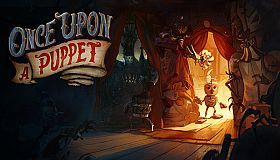



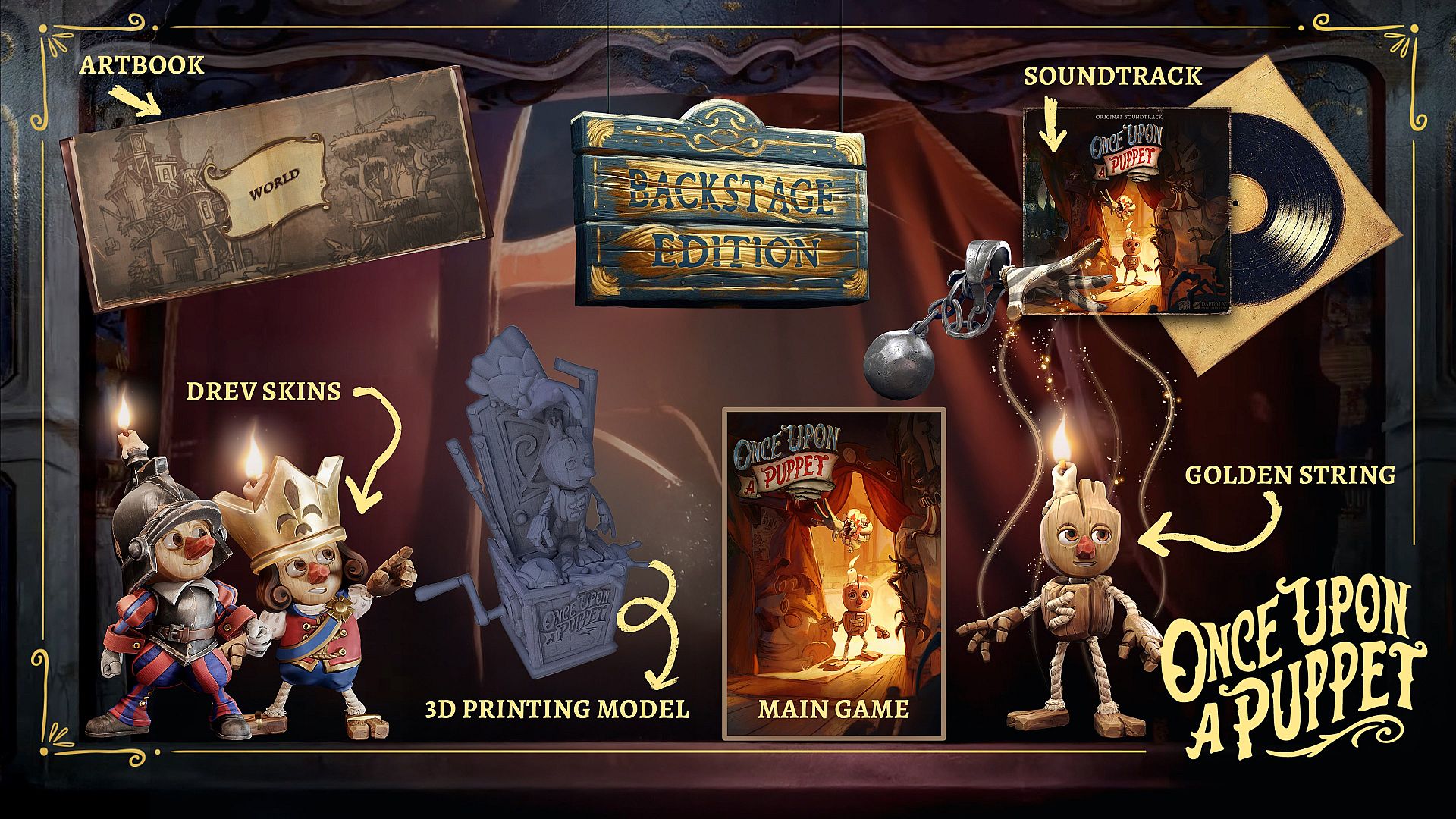
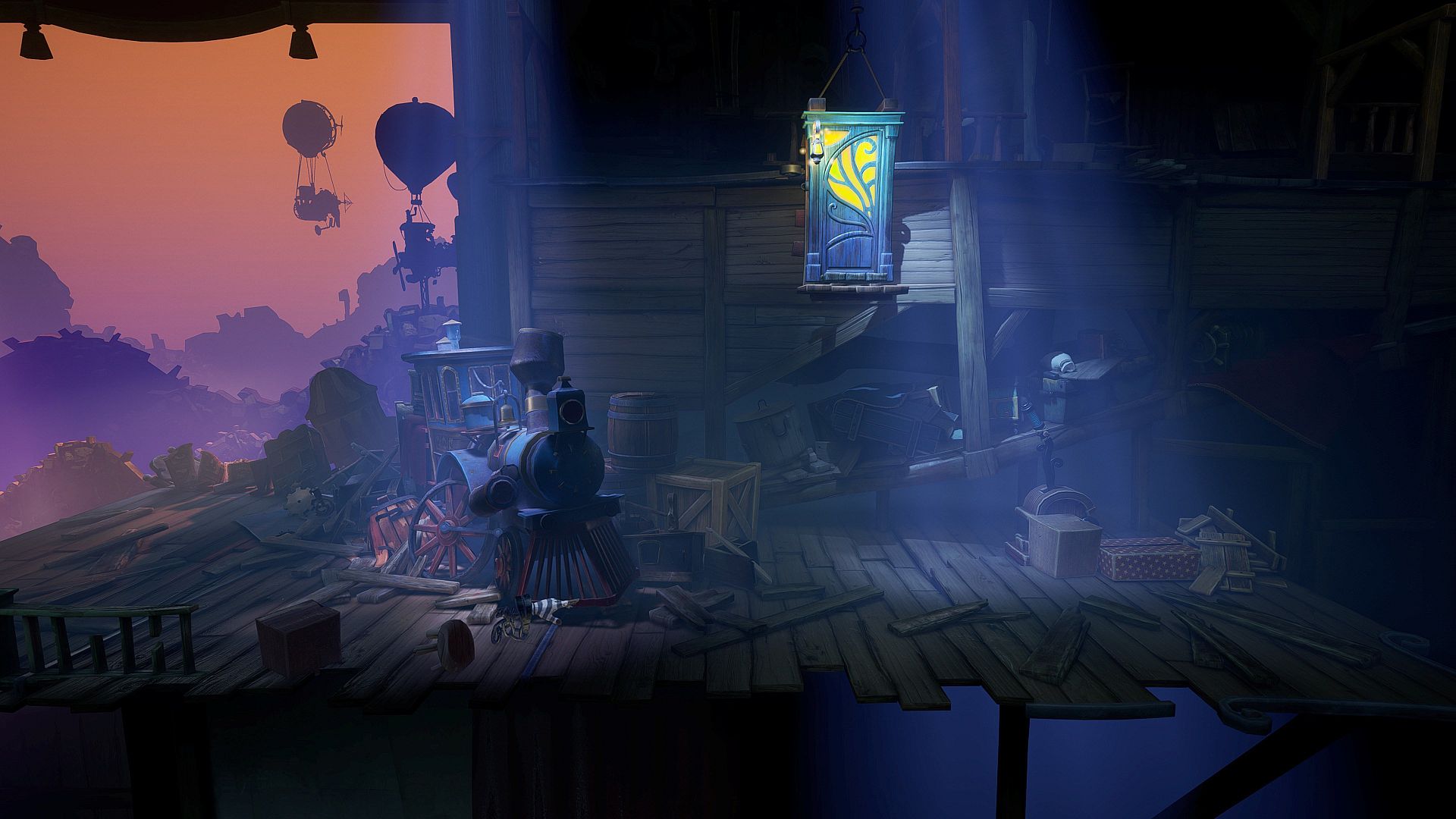
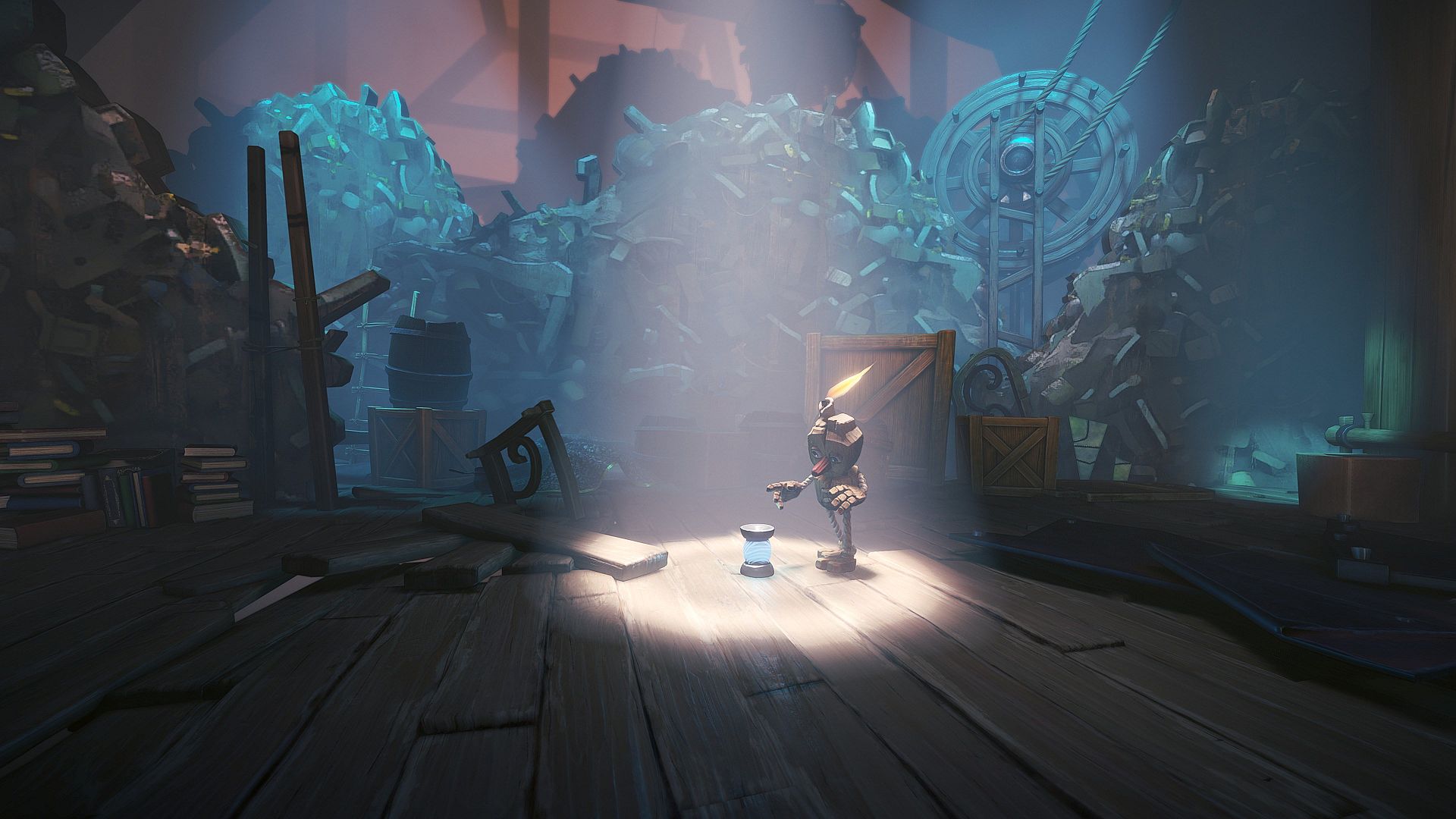
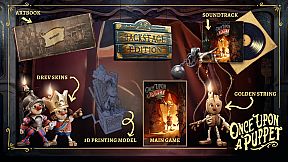
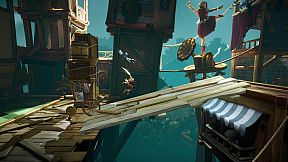
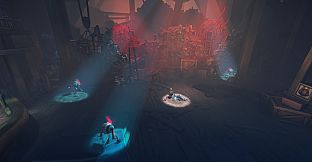
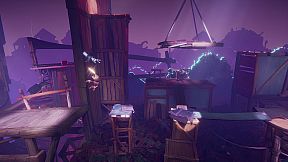
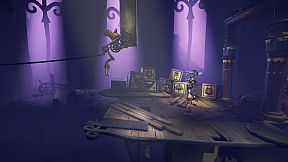
Once Upon a Puppet is a 2.5D puzzle-platformer that places players in control of two characters bound together by magical strings. The game follows stagehand Nieve and her puppet companion Drev as they navigate a theatrical kingdom divided between the polished Frontstage and the discarded Understage below. Released on Xbox Series X|S in April 2025, it emphasizes coordinated movement and environmental interaction over traditional combat.
Gameplay
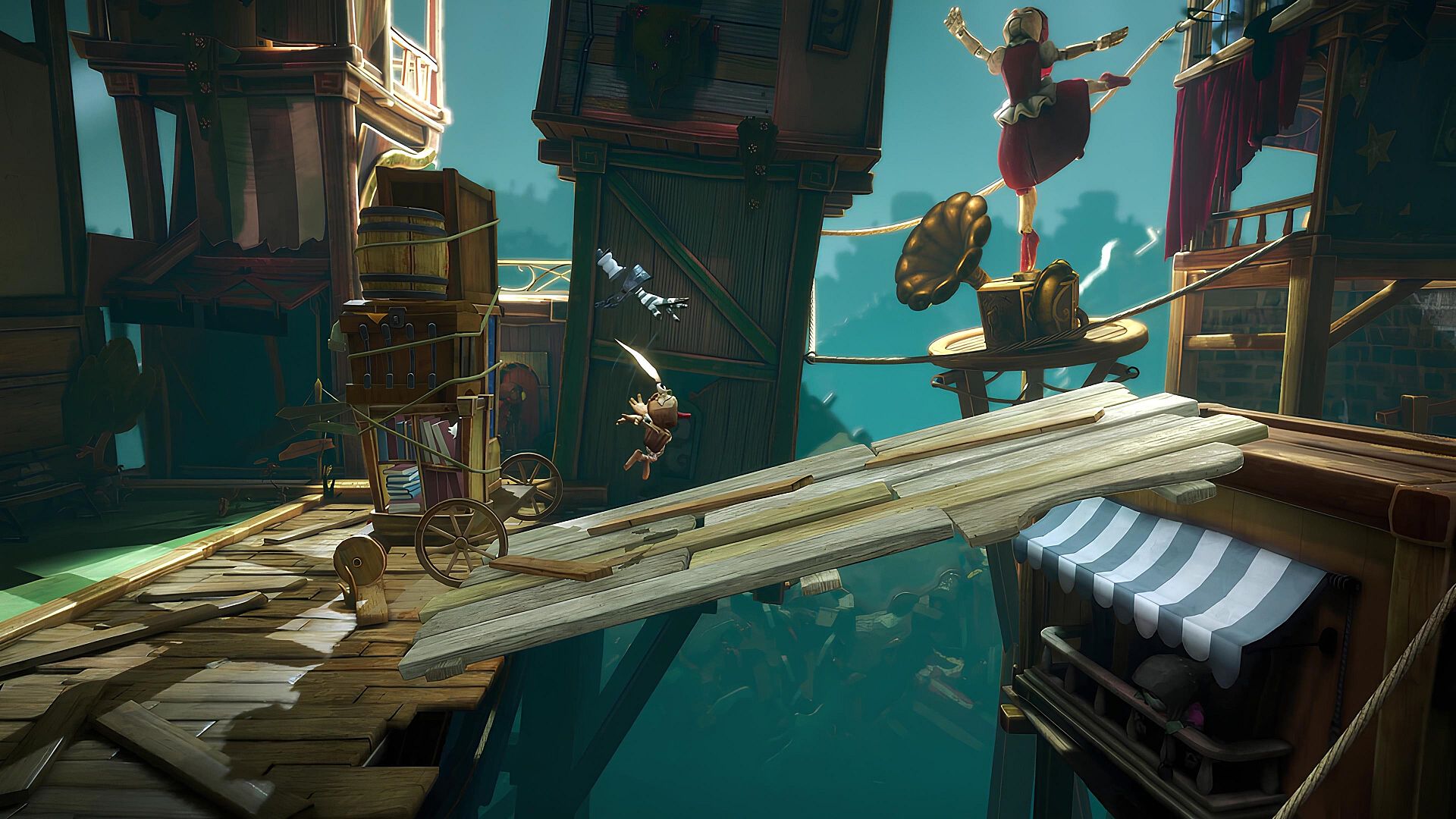
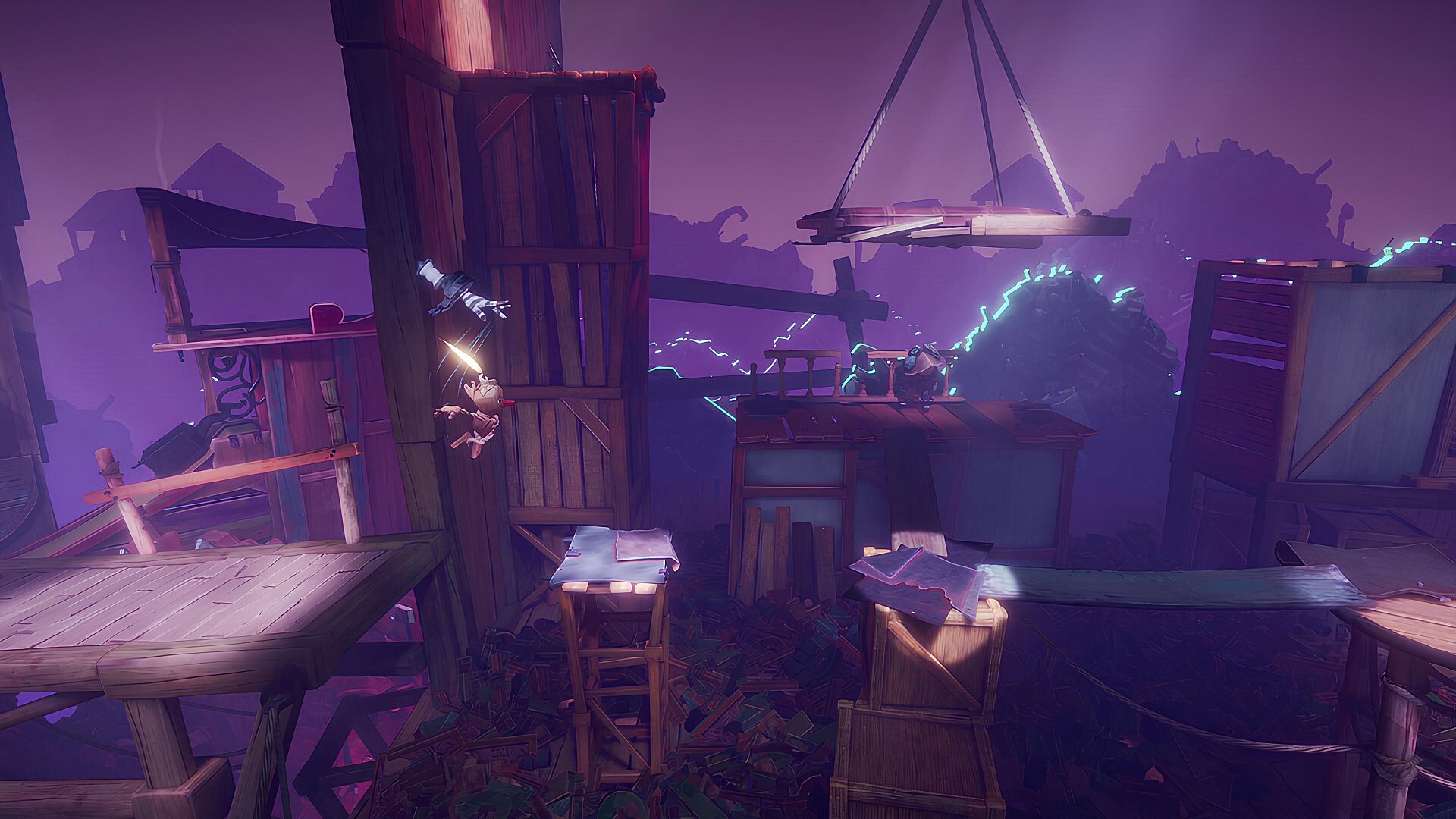
Players direct Drev with the left analog stick and trigger while controlling Nieve with the right stick and trigger. This dual-input system requires simultaneous management of both figures, creating tension during traversal and puzzle sequences. Early sections focus on basic running and jumping, with later chapters introducing abilities unlocked through collectible spools. These include double jumps, gliding, slingshot launches across gaps, grappling hooks, and bow projectiles for interacting with distant objects.
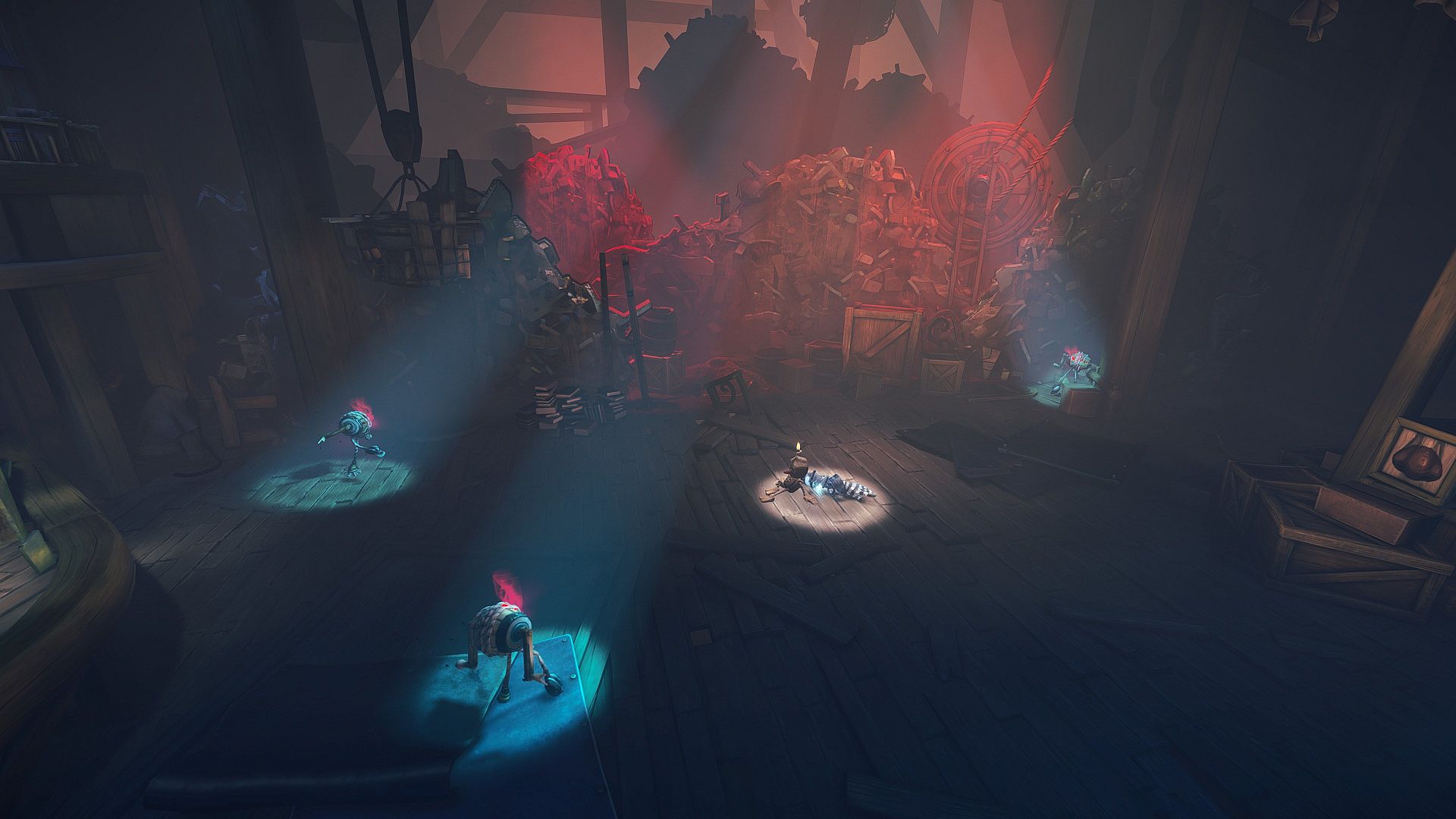
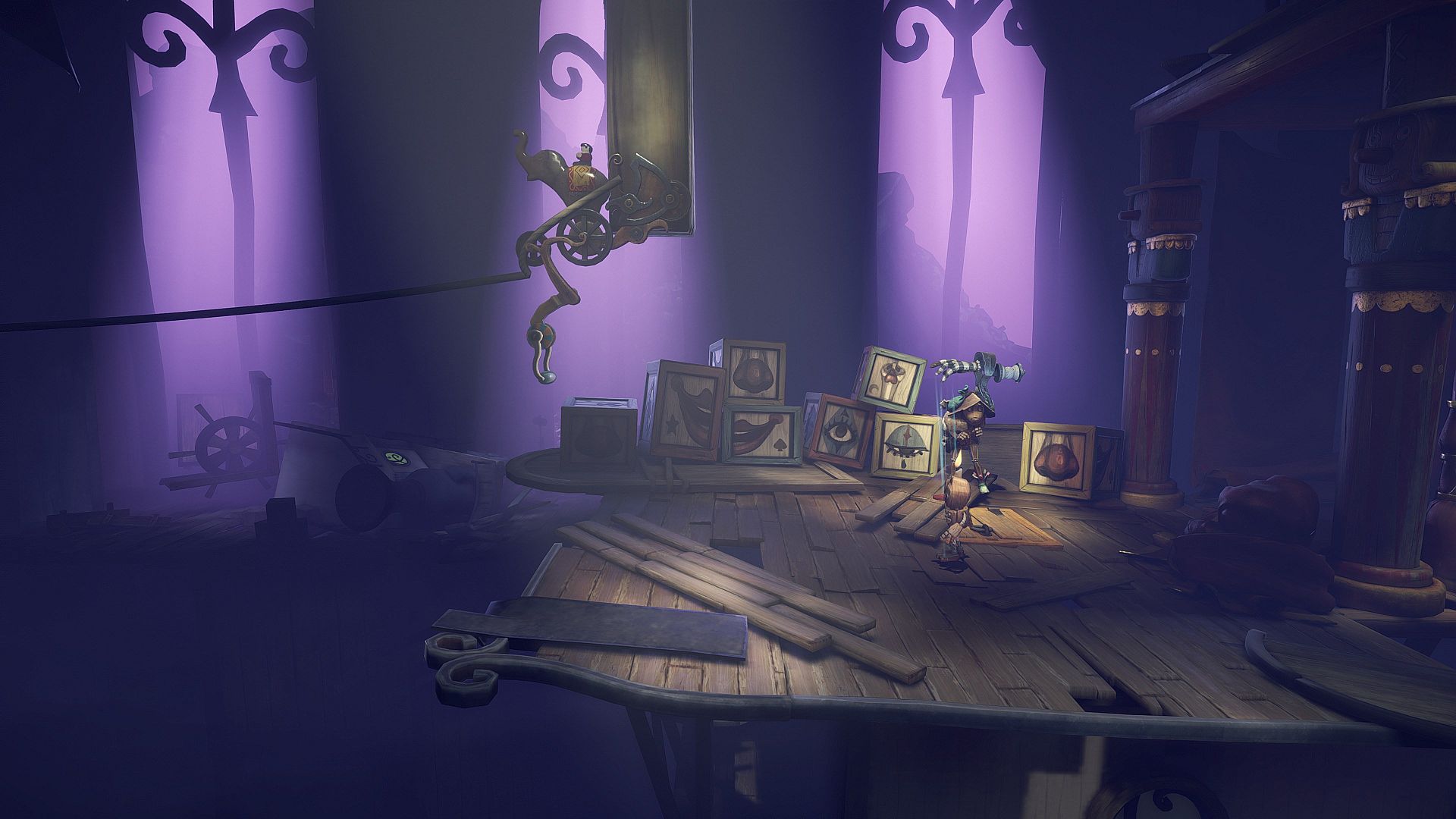
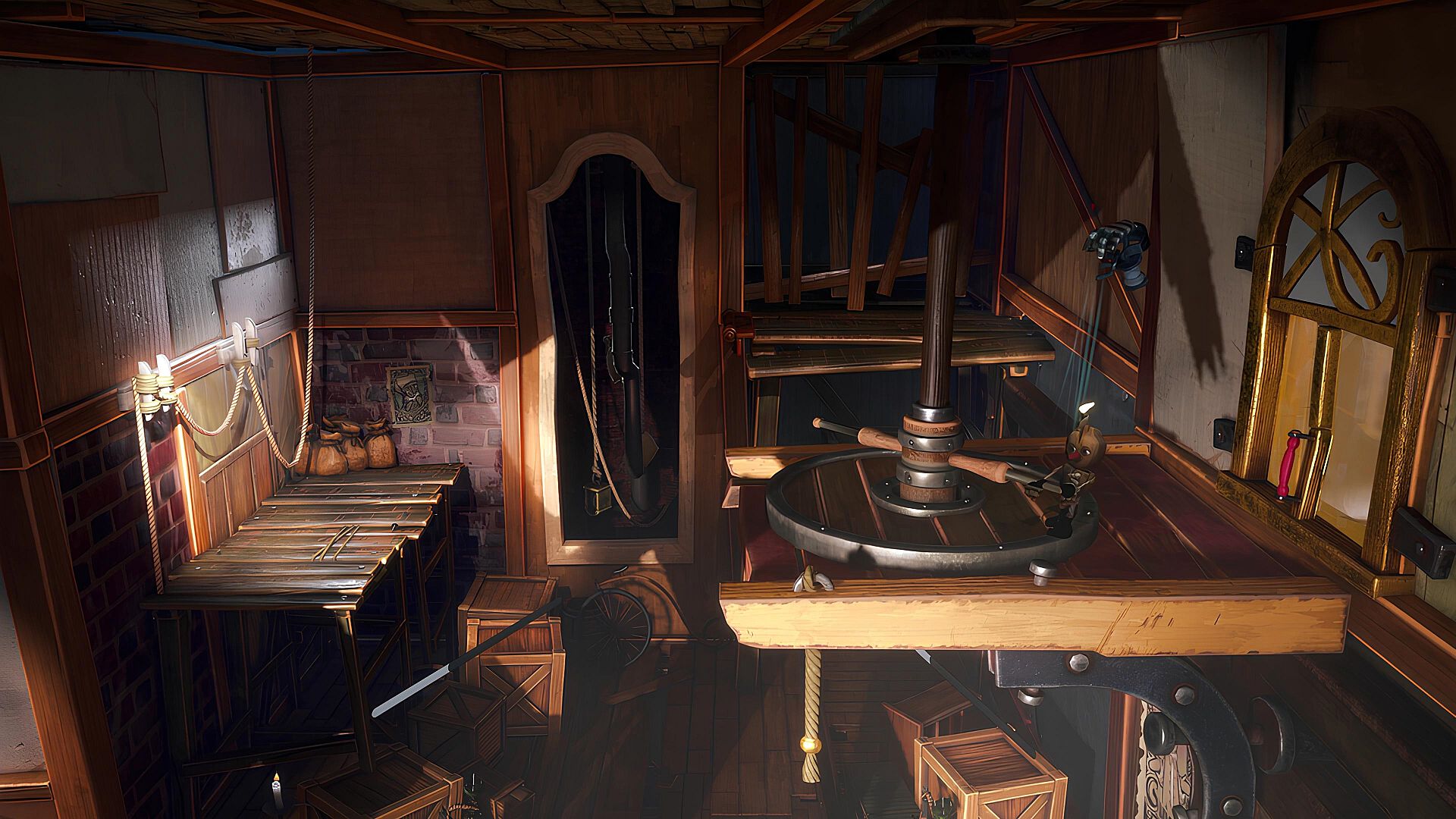
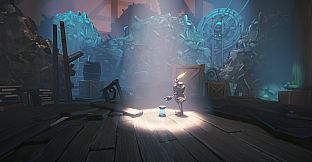
Puzzles center on manipulating props, backdrops, levers, and stage elements to progress or reconstruct scenes. Larger challenges called fractured stages task players with positioning statues, adjusting lights, and rearranging scenery to reveal hidden paths or story details. Platforming sections involve precise timing to cross moving platforms or avoid lethal pools of stagefright, a black substance that instantly ends attempts. Combat remains minimal, limited to occasional projectile use against enemies that players can often bypass through careful positioning.
The experience unfolds across nine chapters that gradually layer new mechanics. Progression feels steady as each section tests recently acquired tools in combination with prior ones. Collectibles such as stained-glass shards and hidden props encourage exploration within the linear structure, though the core loop stays focused on puzzle resolution and forward movement.
Game Modes
Once Upon a Puppet offers a single-player campaign with no separate multiplayer or competitive modes. The entire experience consists of a linear story progression divided into chapters that players complete in sequence. There are no selectable difficulty settings, challenge arenas, or post-game content beyond collecting remaining items during the main journey.
Progression relies on story-driven levels that blend platforming and puzzle elements without branching paths or alternative routes. Players advance by solving environmental challenges and reaching the end of each chapter, with checkpoints that allow retries after falls or hazards. The absence of additional modes keeps the focus entirely on the core dual-character mechanics and narrative delivery.
The Theatrical Setting
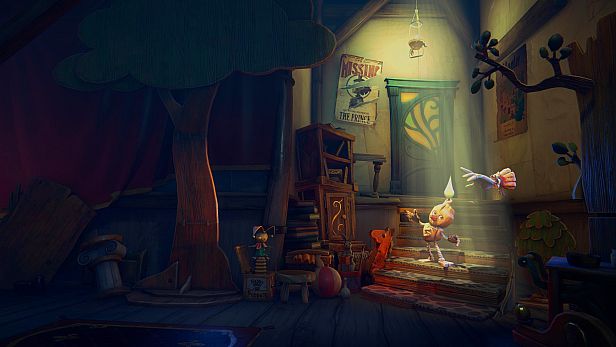
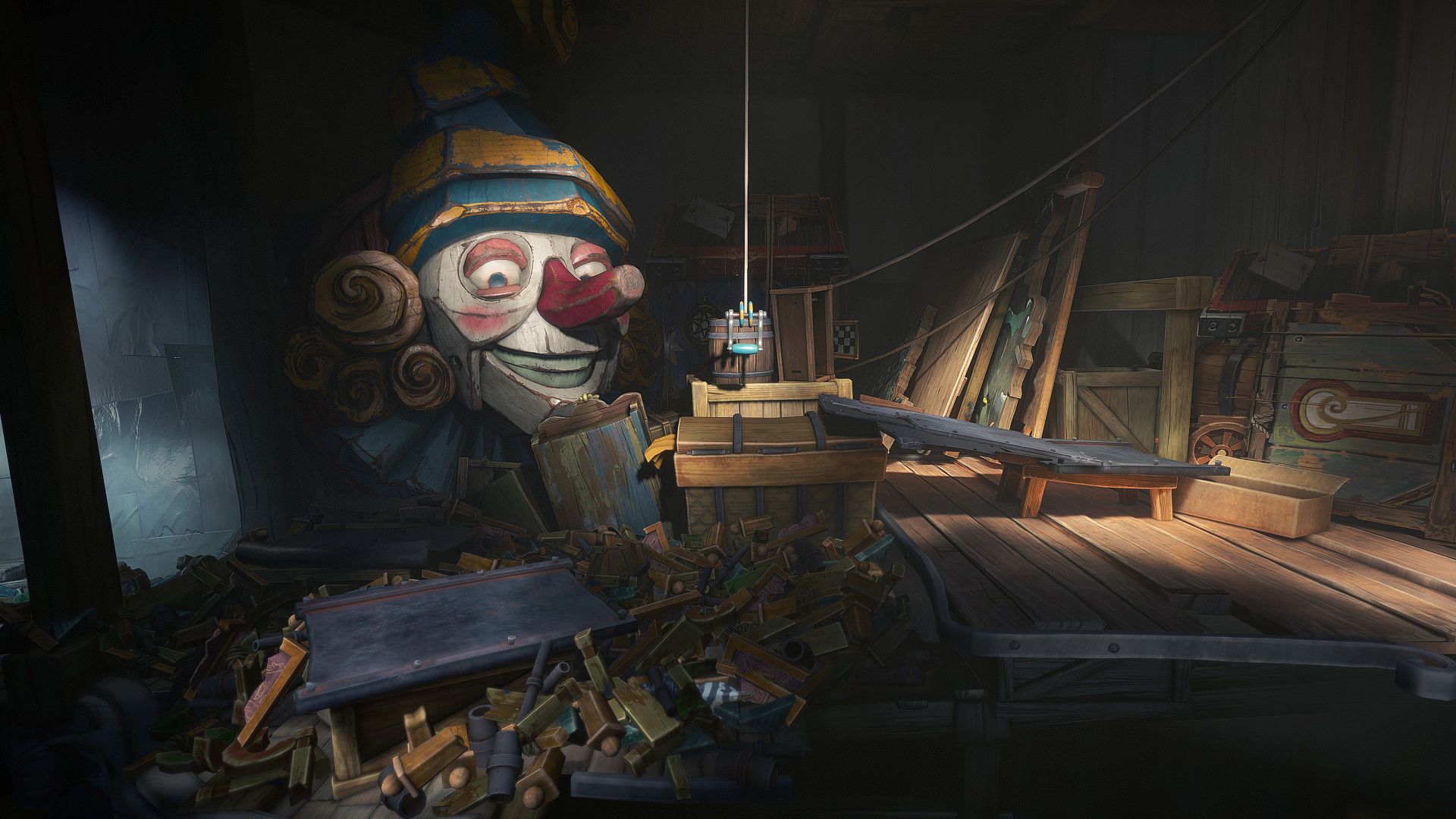
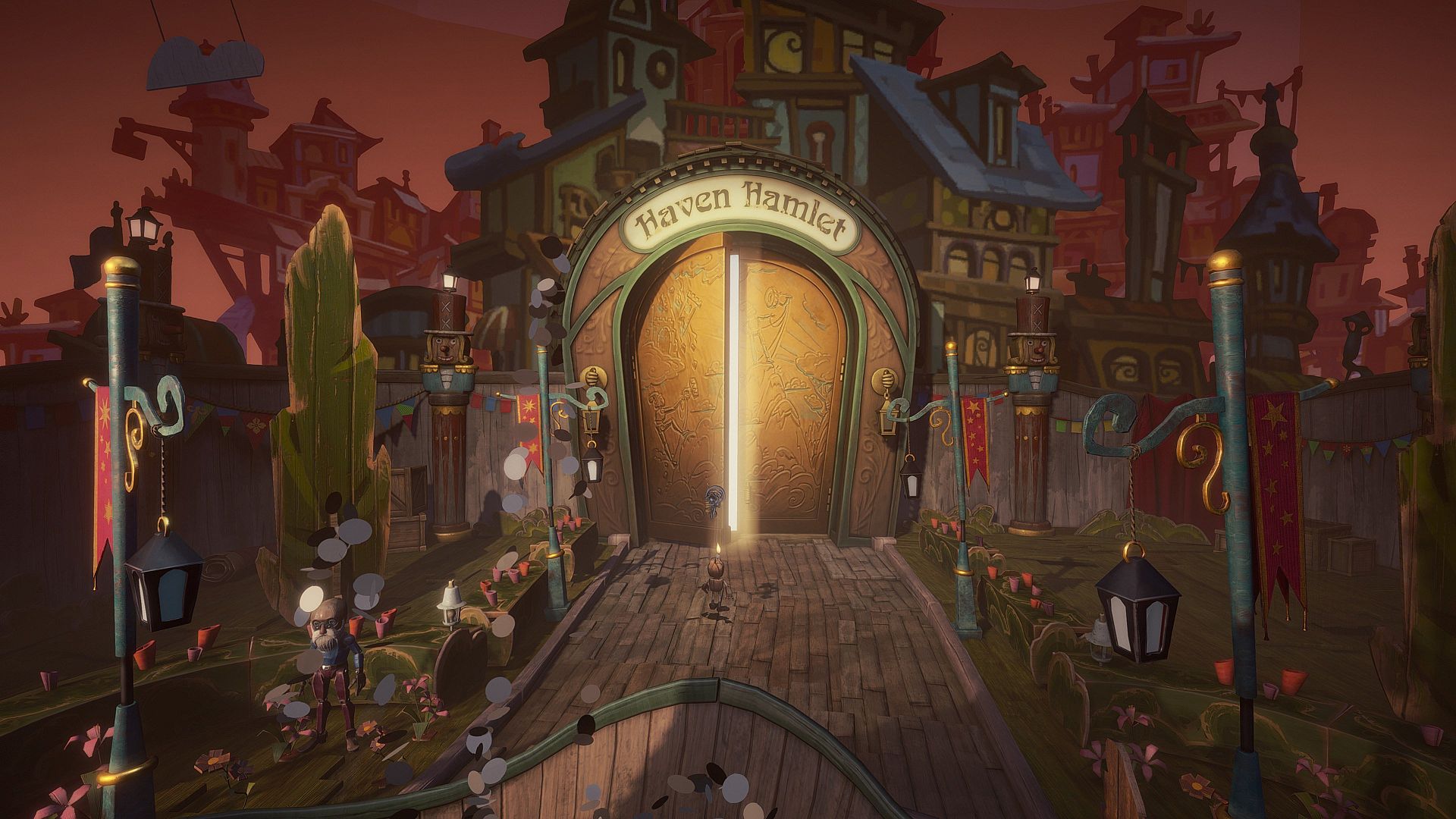
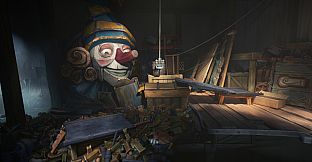
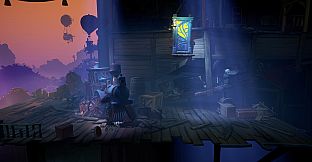
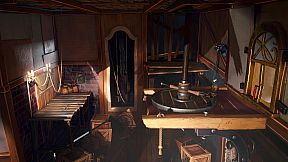
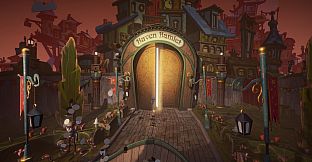
The game builds its world around stagecraft and performance motifs. Environments shift between pristine theatrical sets and the cluttered, broken remnants of the Understage, where discarded puppets and stagehands linger. Background details reinforce the theme through layered cardboard scenery, spotlights, and props that players actively rearrange during puzzles.
Dialogue from a cast of supporting characters expands on the kingdom's history and the protagonists' personal struggles. Nieve grapples with self-doubt after her exile, while Drev pursues ambitious acting dreams despite his naive outlook. Their intertwined fates drive the central conflict against a heartbroken ruler who oversees the divide between the two realms.
Is It Worth Playing?
Once Upon a Puppet suits players who enjoy deliberate puzzle-platformers with unique control schemes and atmospheric presentation. The dual-character mechanics provide a distinctive twist on standard side-scrolling action, rewarding coordination during traversal and object manipulation. Its short length, typically completed in five to ten hours, makes it accessible for those seeking a contained experience rather than extended campaigns.
Reception has been mixed, with praise for the stylized art direction, heartfelt story beats, and inventive use of puppetry themes alongside criticism of floaty jumping physics and occasional technical issues. Those drawn to narrative-driven adventures similar to other indie platformers may find the theatrical framing and character dynamics engaging enough to overlook minor control imprecisions. On Xbox Series X|S the game runs at a consistent pace suitable for focused play sessions.