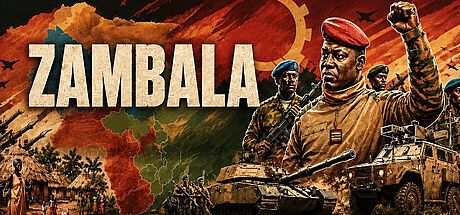


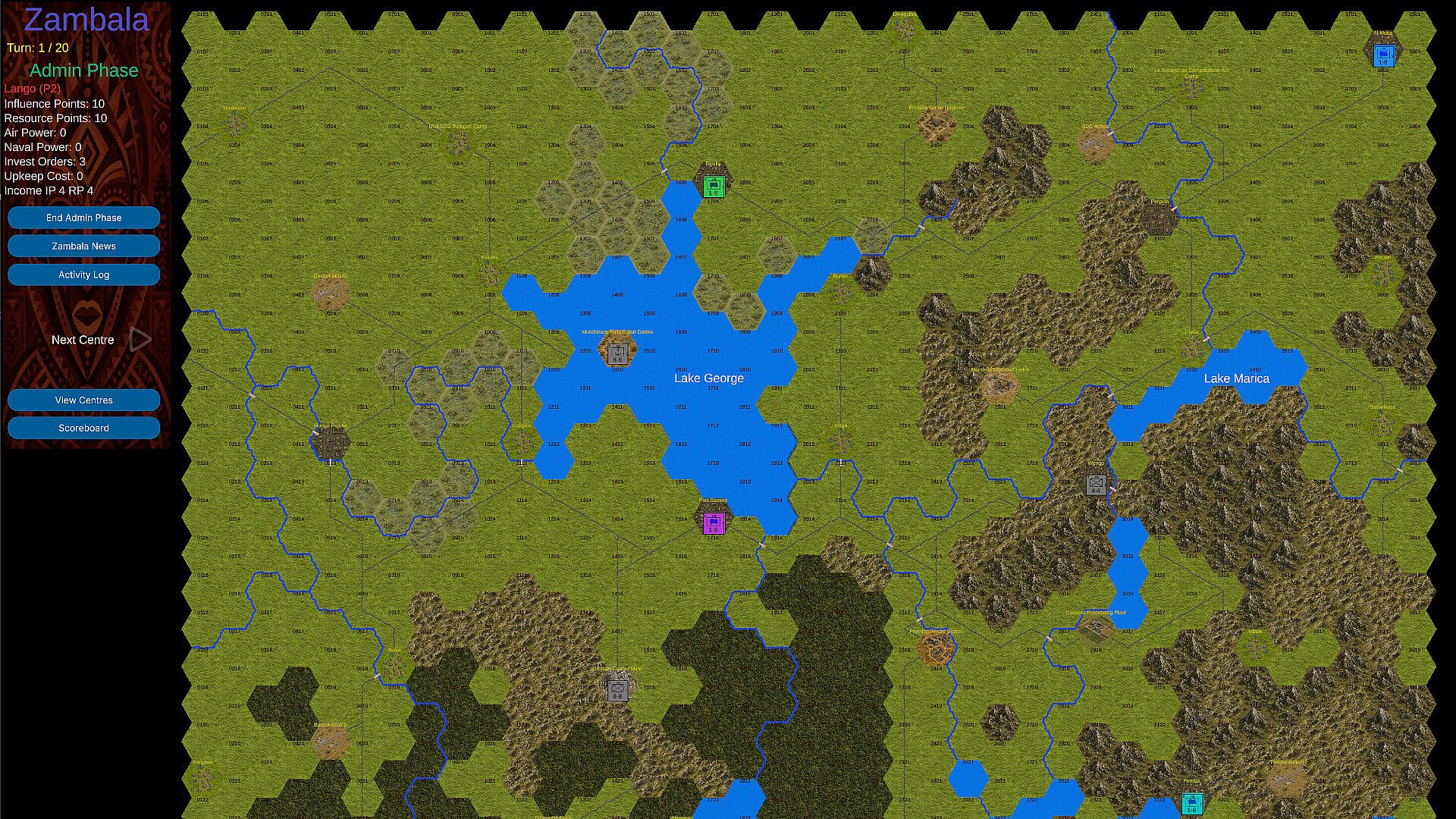
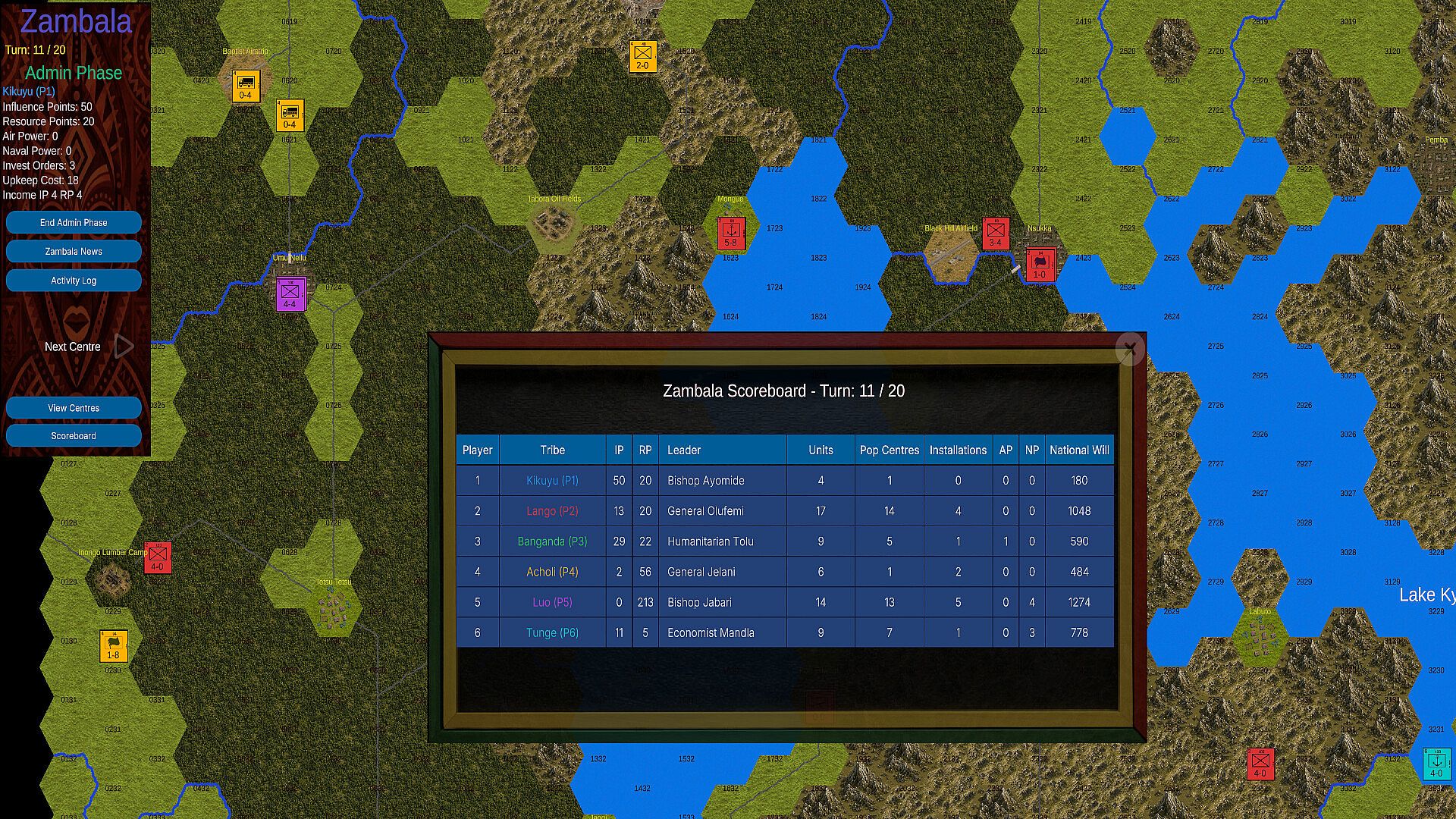
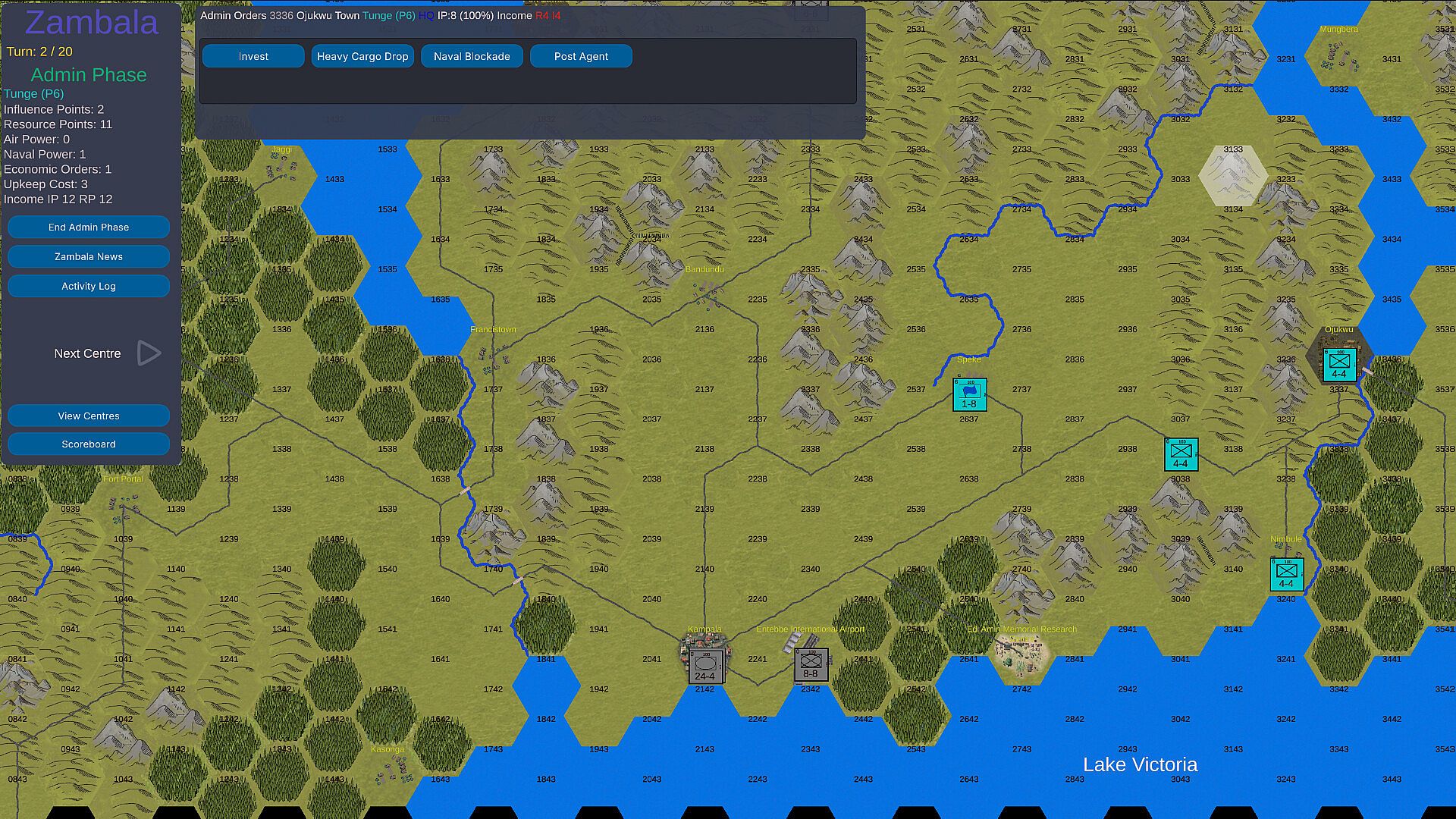
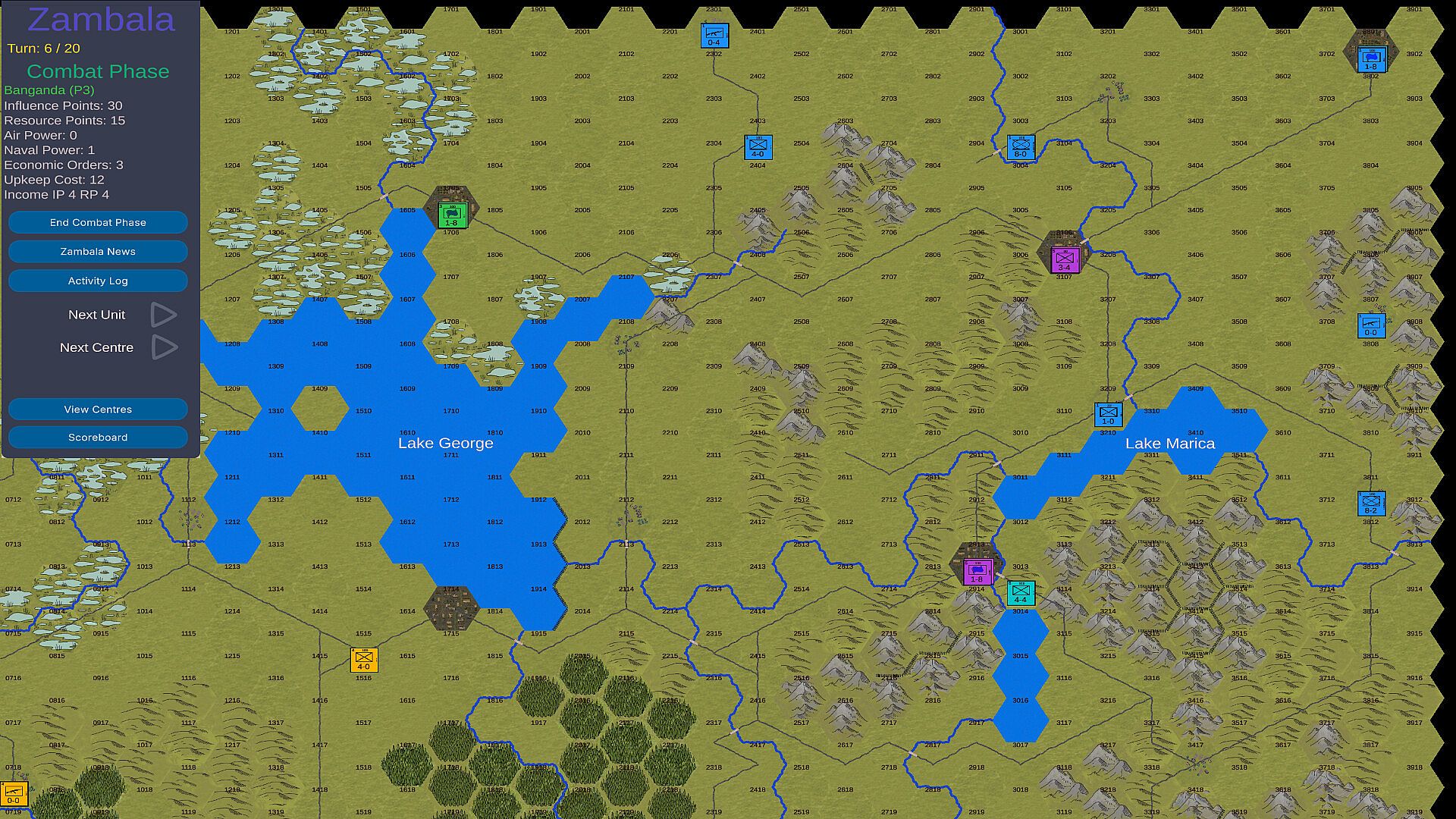
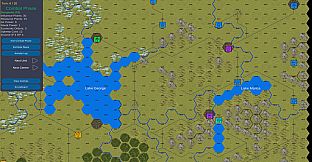
Zambala stands as a single-player turn-based hex strategy game focused on war, politics, and espionage within a modern fictional African nation edging toward civil war. Players command one of six rival warlords across a detailed map featuring lakes, jungles, and contested cities, where decisions involve army movements, official bribes, and enemy asset sabotage.
Gameplay
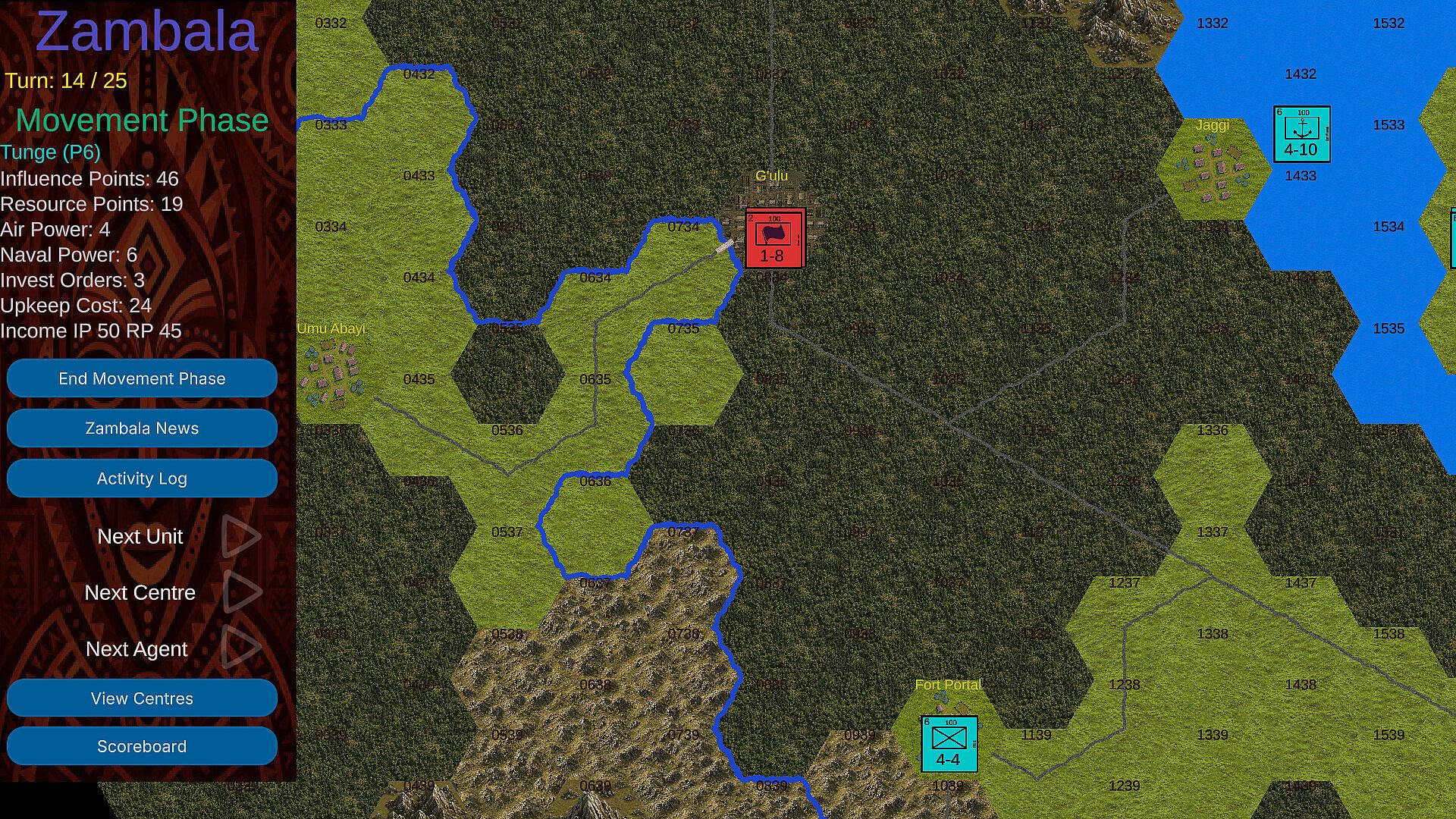
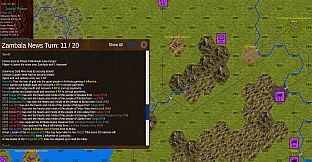
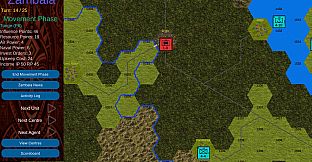
The core loop centers on capturing facilities to generate income while investing influence to secure population support. Agents handle assassinations and internal subversion of rival groups. Military coordination spans infantry, tanks, artillery, naval flotillas, and paratroopers divided across four operational phases. Each faction operates under a named Leader Unit that serves as the player's direct avatar on the map.
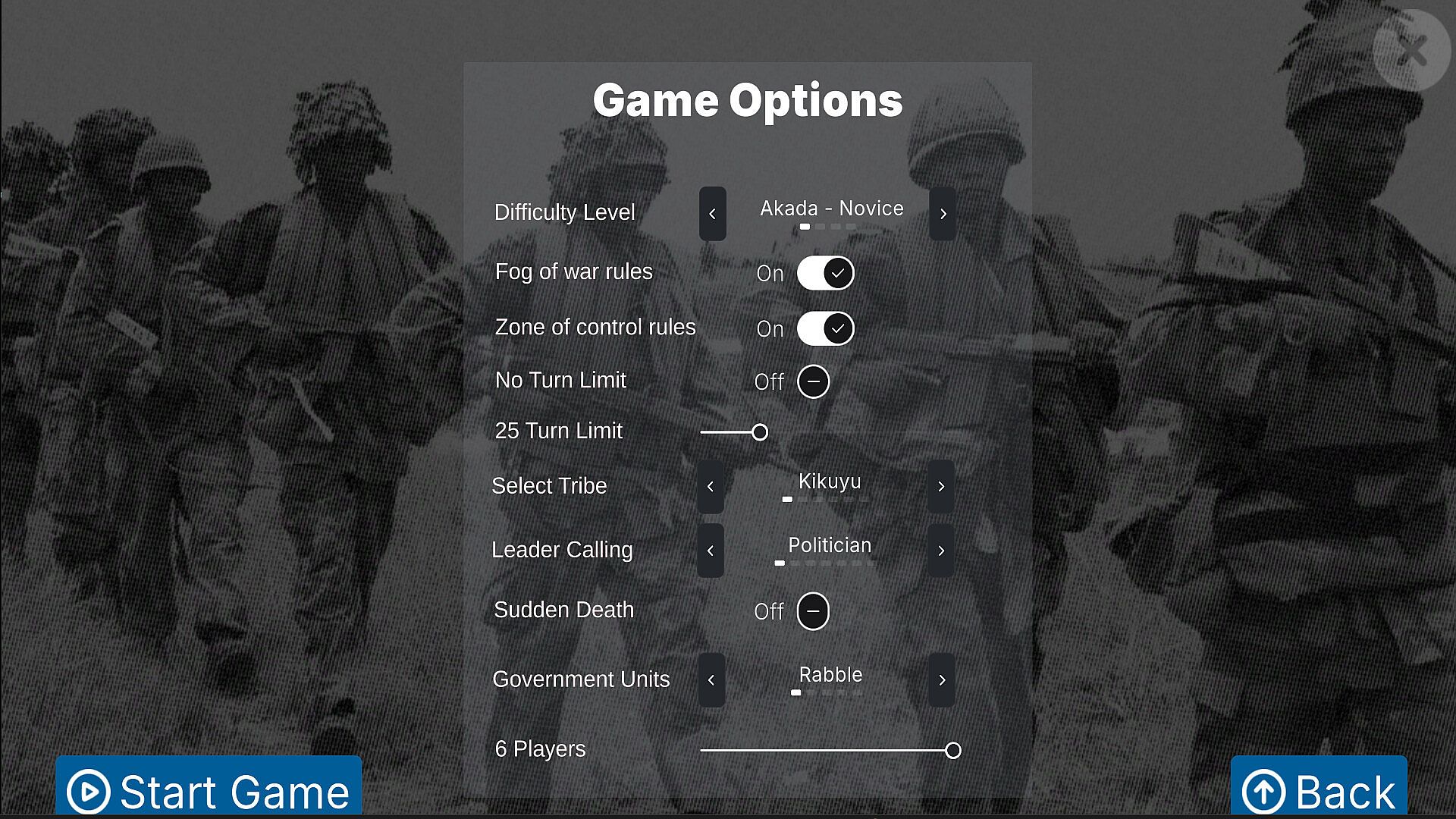
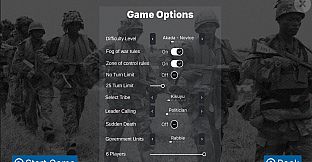
Vocations define campaign direction and available tools. Options include the Politician for influence dominance in population centers, the Bishop for legitimacy and Influence Points, the General for enhanced stacked army performance, the Diplomat for international aid in resources and power projection, the Economist for steady Resource Points, the Humanitarian for manpower growth through local support, and the Cartel Boss for an initial free agent plus extra population center income. Balance between military seizures and political retention determines long-term control, with every choice affecting global perception and available options such as mine repairs or new unit deployments.
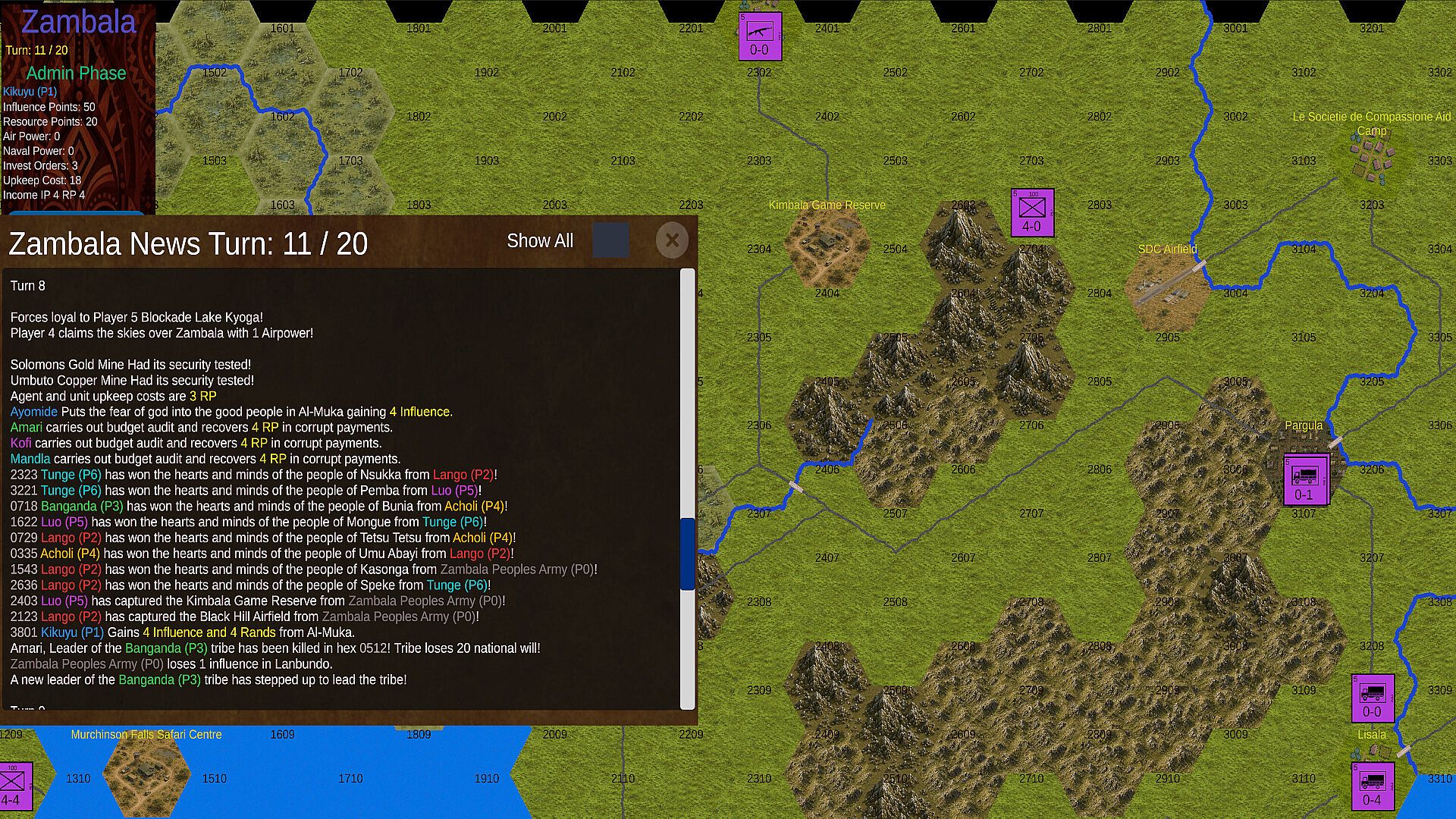
AI opponents feature distinct personality traits that generate shifting alliances, rivalries, and hate scores, creating varied playthroughs without repetition.
Game Modes
The experience remains strictly single-player, with the full campaign built around outmaneuvering five computer-controlled factions in the civil war setting. No separate multiplayer or co-op options exist. The structure emphasizes one continuous campaign where AI behaviors and map interactions produce different outcomes each time, driven by the emergent relationship web among leaders.
Factions and Strategic Depth
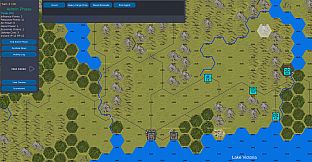
Six warlords compete for control, each tied to a specific vocation that alters starting advantages and progression paths. Military units operate alongside espionage tools, requiring players to weigh direct confrontation against indirect weakening of opponents. The map's varied terrain influences movement and facility value, while population centers serve dual roles in income and influence accumulation. Decisions accumulate across turns, shaping resource flows and diplomatic leverage without fixed victory conditions beyond territorial and political dominance.
Is It Worth Playing?
The game suits enthusiasts of turn-based strategy titles that integrate military tactics with political and espionage layers in a single-player format. Its emphasis on vocation choices and AI-driven variability supports repeated campaigns for those who value emergent outcomes over scripted events. With a planned release in December 2026 and no current player data available, interest depends on preference for hex-grid systems and balanced sword-and-ballot mechanics on PC. Those drawn to indie strategy experiences with named leader avatars and multi-phase operations will find the described systems align closely with that style.