




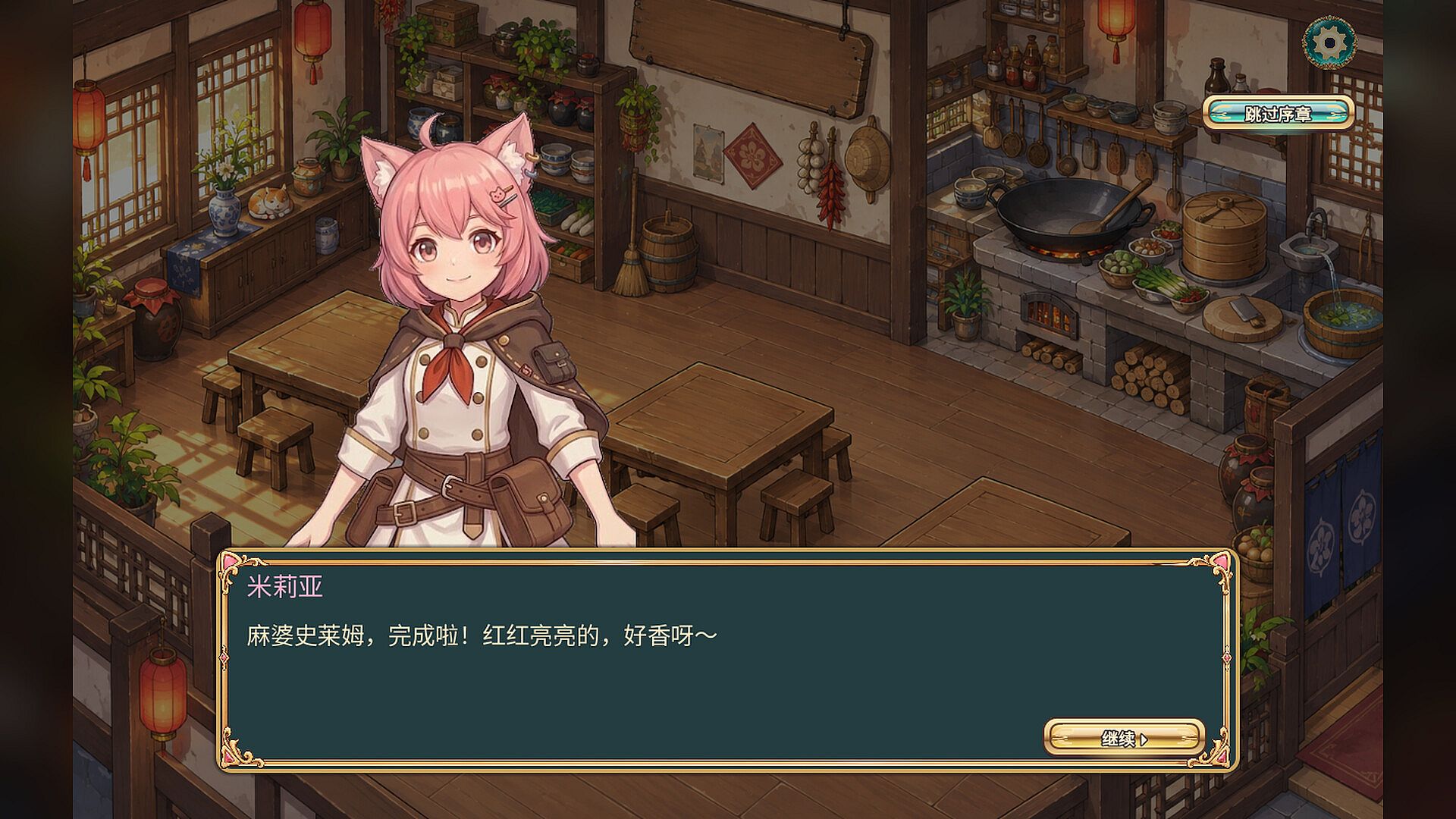


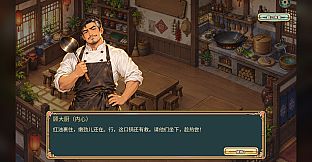

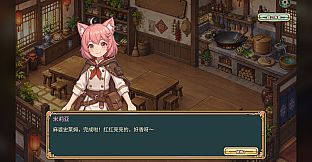


Wok in Another World is an indie action simulation game that combines top-down hack-and-slash combat with restaurant management. Players control a catgirl named Milia who runs a diner on the magical continent of Essoln, where local cooking methods for monster meat are limited to boiling or burning. The story follows Chef Gu, a 40-year-old master of Chinese cuisine, who wakes up in this new body and sets out to introduce proper techniques using real ingredients and methods.
Gameplay
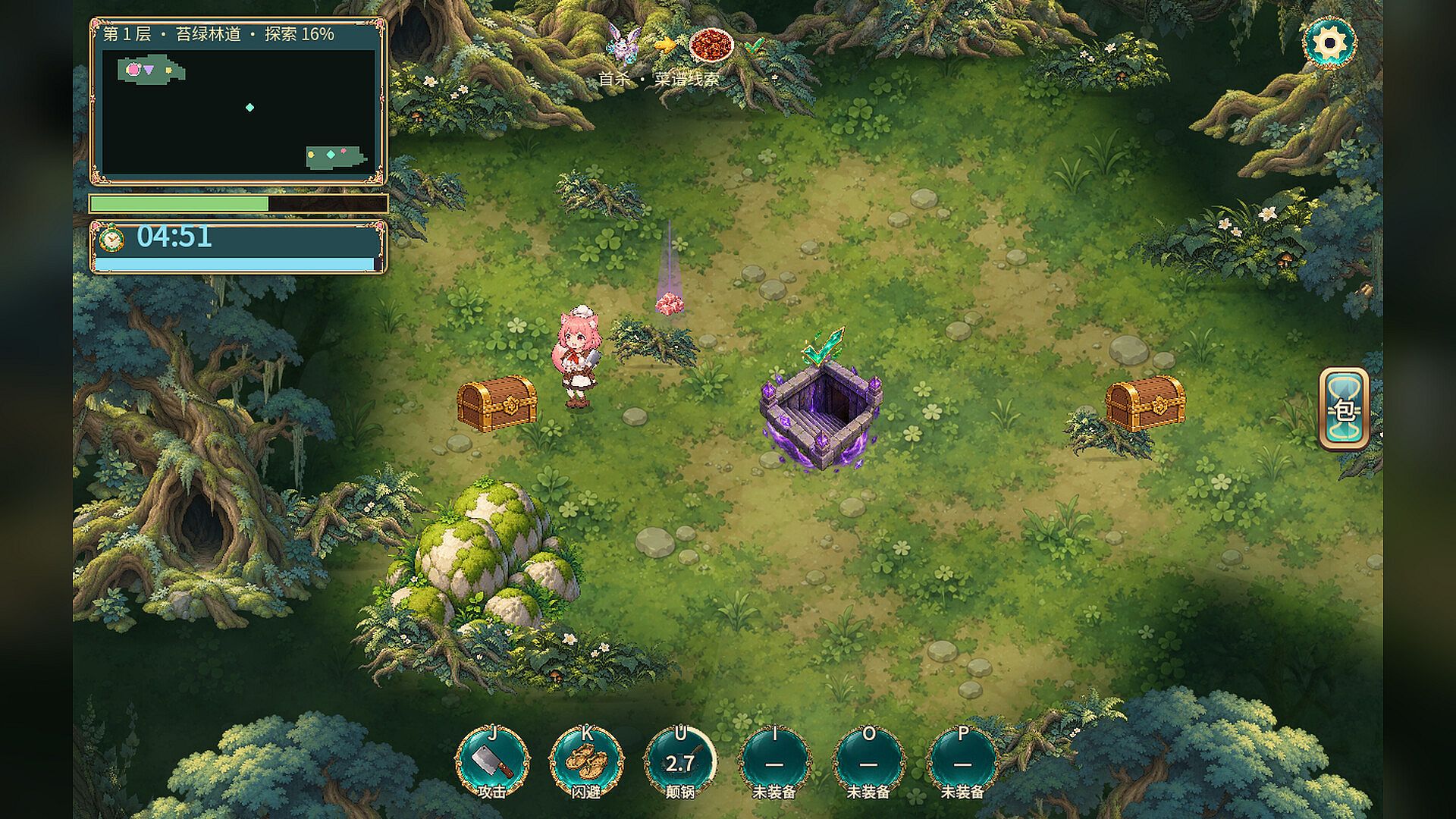
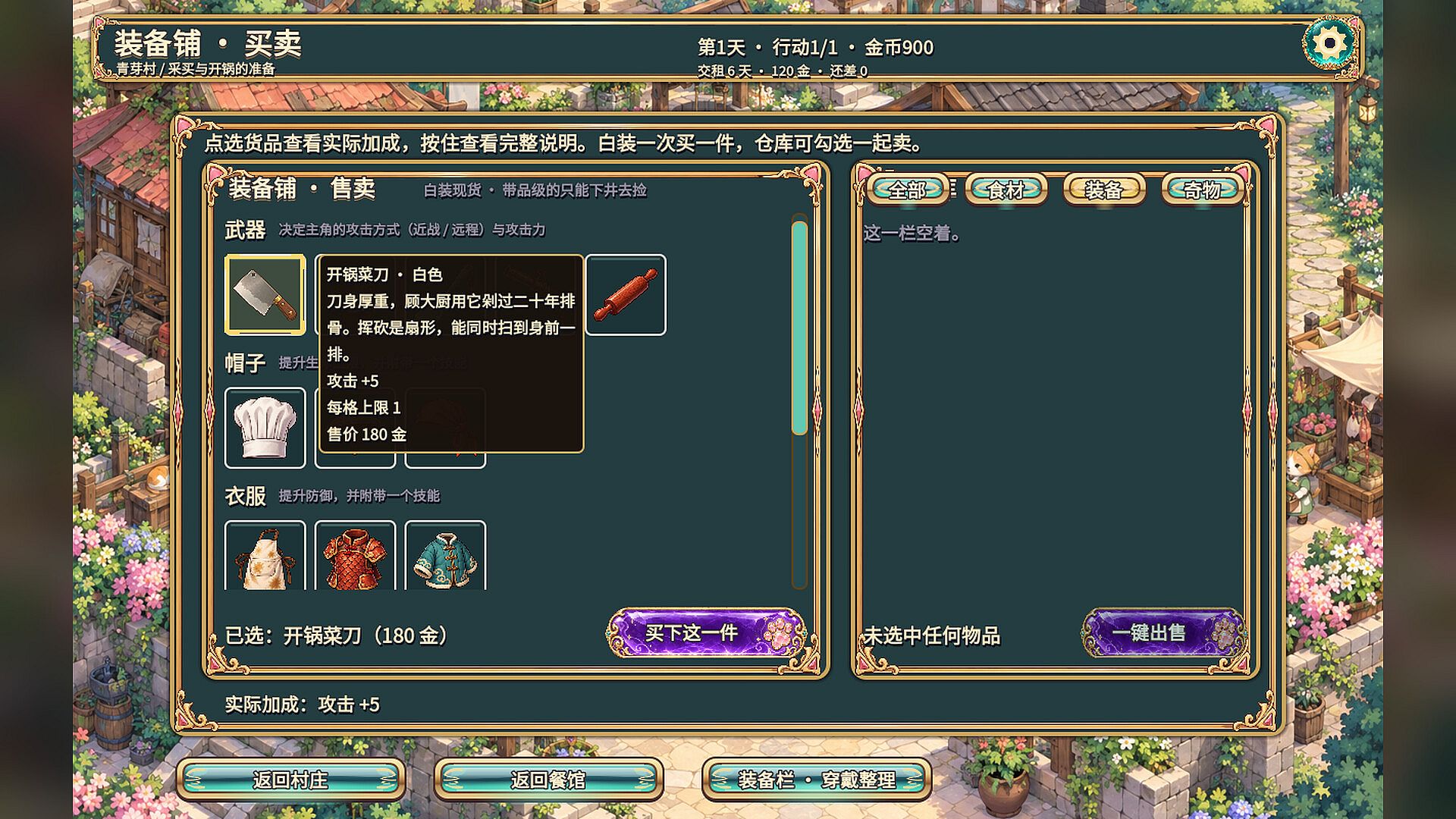
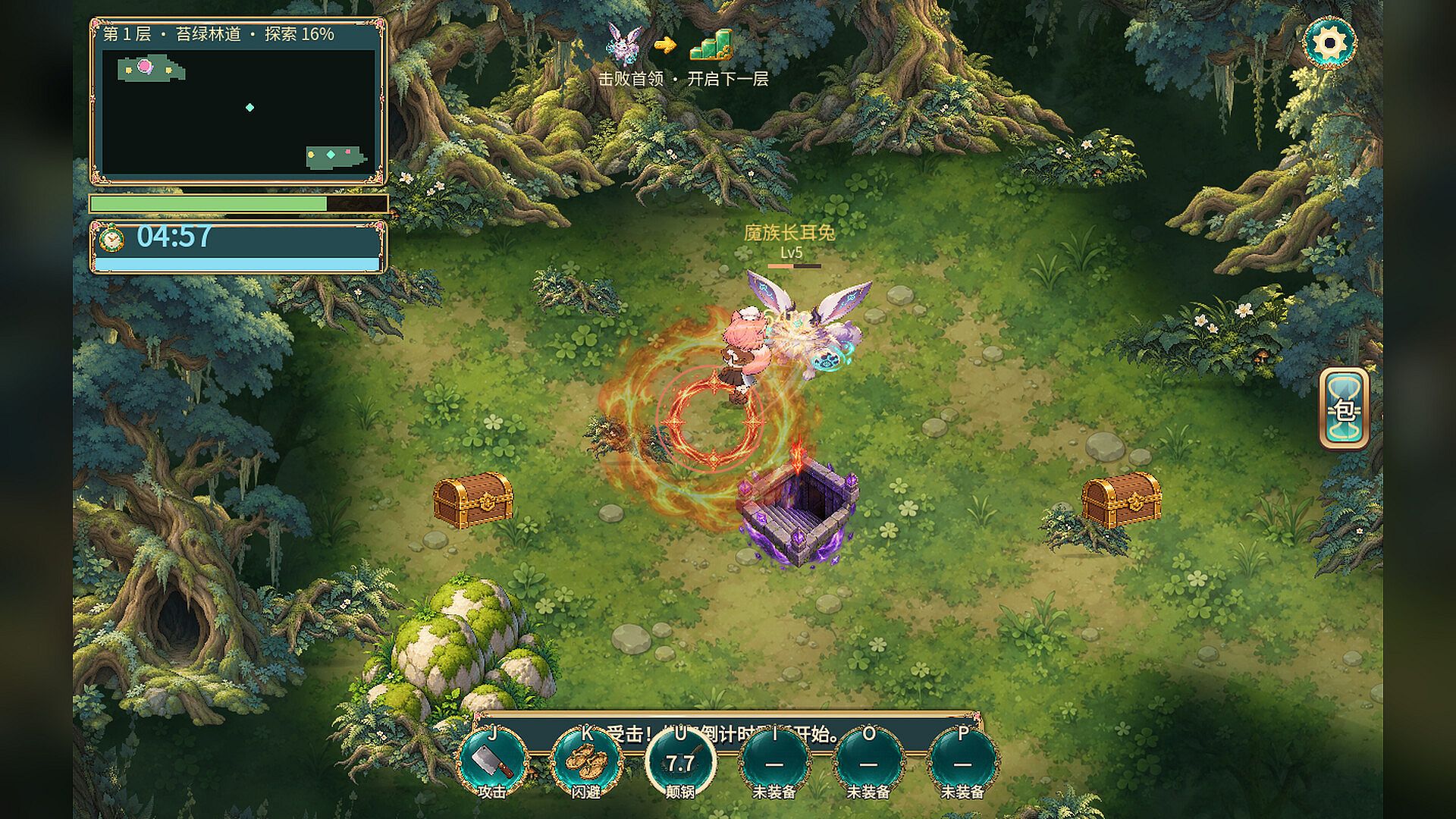
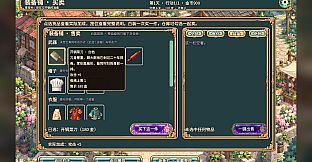
The core experience splits between dungeon runs and diner operations. In the dungeons, combat uses cooking tools as weapons. Cleaver combos handle close-range strikes, frying-pan smashes deliver heavy hits, and spinning spatulas create area attacks. Players perform catgirl combat rolls to dodge monster wind-ups before countering. Successful runs involve cracking chests, raiding spice piles, and harvesting monster drops before reaching the exit. Falling in the dungeon means losing the collected haul. Room layouts shift with every attempt, and deeper levels bring tougher monsters along with rarer ingredients. Gear swaps happen mid-fight, as hats, outfits, and shoes each provide a skill that can be changed on the spot when better pieces are found.
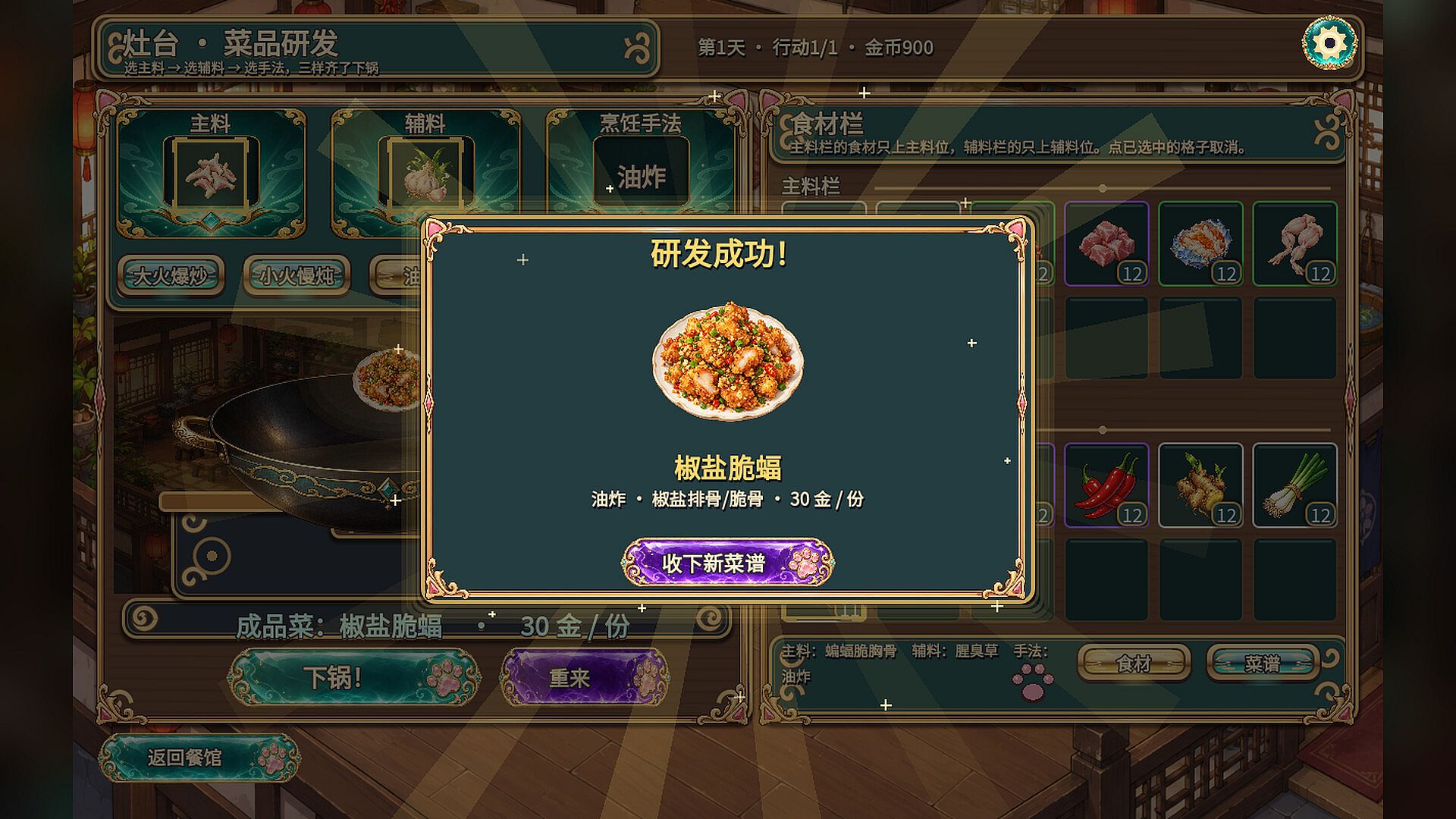
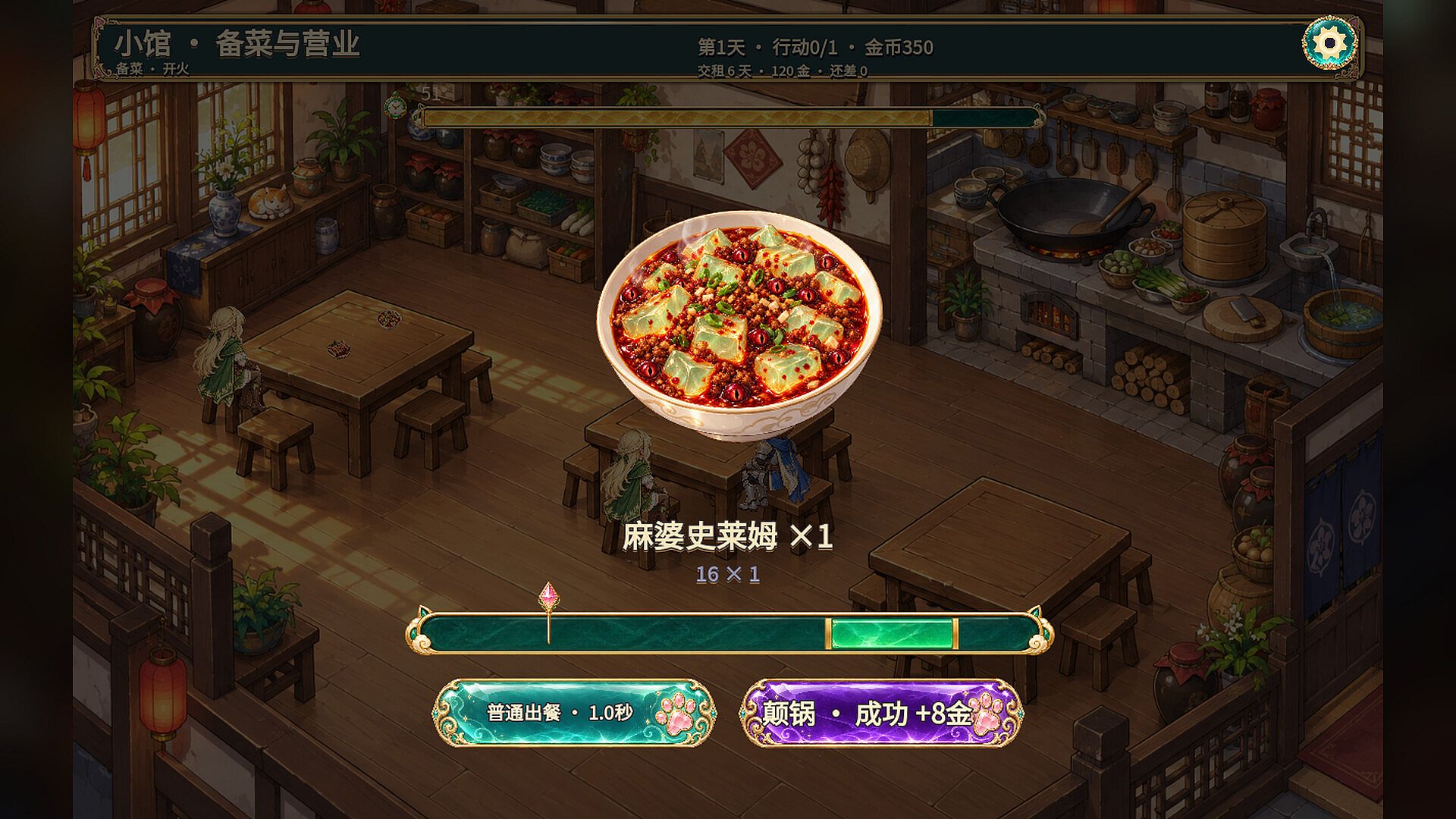
Back at the diner, the focus turns to recipe research and service. Main ingredients combine with side ingredients and cooking methods to create signature dishes from monster parts. Mistakes produce Monster Stew that still sells to customers. Otherworld spices such as the One-Eyed Pepper and Star Anise Blossom require specific knowledge to use correctly. Management stays straightforward with prep work, menu setup, and opening for service. A wok-toss quick-time event determines premium pricing and tips from demanding gourmets. Progress involves paying rent, purchasing the building, and expanding the space into a larger restaurant.
Game Modes
The game operates as a single-player loop without separate named modes. Players enter shifting dungeons to gather ingredients through combat and exploration. Extraction returns them to the village for recipe development and diner service. Upgrades to gear and facilities follow successful runs, allowing deeper dungeon access on subsequent attempts. This cycle repeats with increasing challenge from layout changes and monster difficulty.
Core Loop and Progression
Each cycle starts with dungeon dives for resources. Extraction brings those materials to the village for recipe testing and menu additions. Service at the diner generates income through customer satisfaction and tips. Profits fund gear improvements and diner expansions. The process encourages repeated runs because dungeon layouts and ingredient availability change, while better equipment opens access to stronger monsters and rarer spices. Simple management elements keep the diner side accessible, focusing on preparation and service timing rather than complex systems.
Is It Worth Playing?
This title suits players who enjoy blending action combat with light simulation elements. The unique premise of a grumpy chef in a catgirl body teaching advanced cooking in a world that only knows basic monster preparation provides a clear hook. Combat feels responsive through weapon variety and dodge mechanics, while diner service adds steady progression through recipe discovery and business growth. The roguelike structure of shifting dungeons rewards experimentation with builds and ingredient combinations. Those who like short, repeatable sessions that mix fighting and management will find the loop engaging. Availability on PC makes it accessible for anyone interested in indie titles that merge genres without heavy complexity.