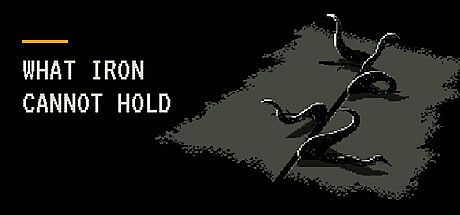


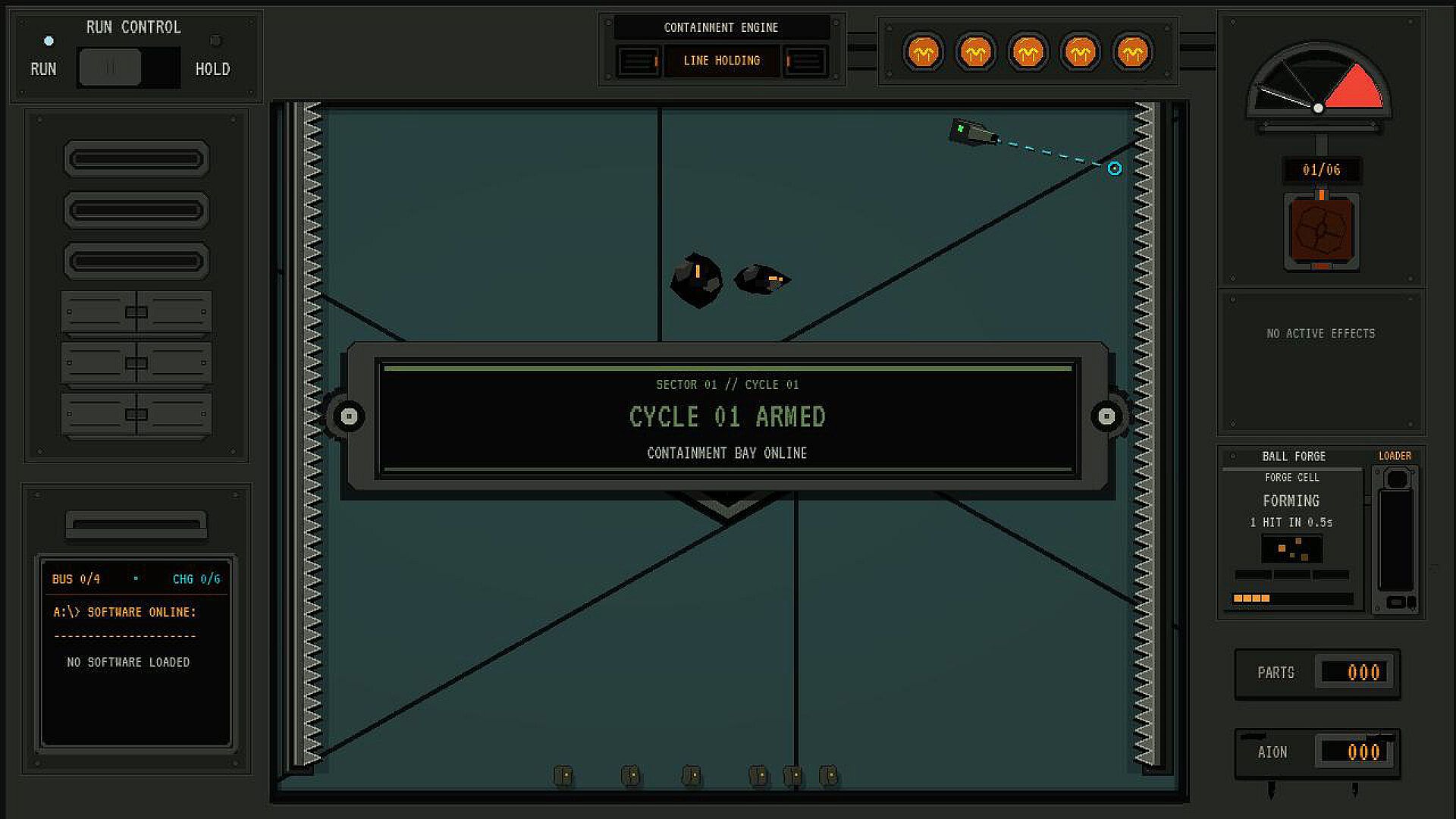
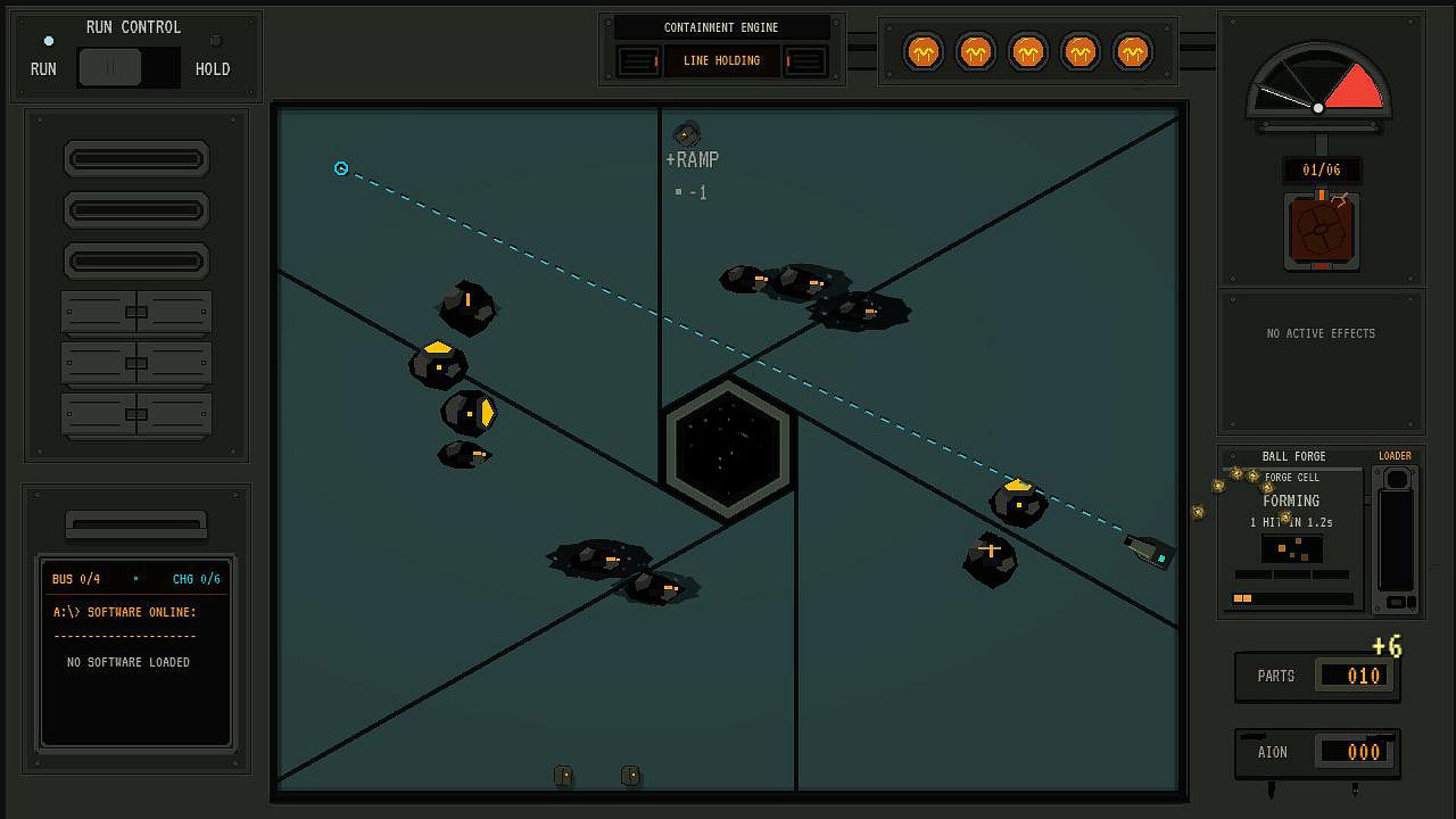
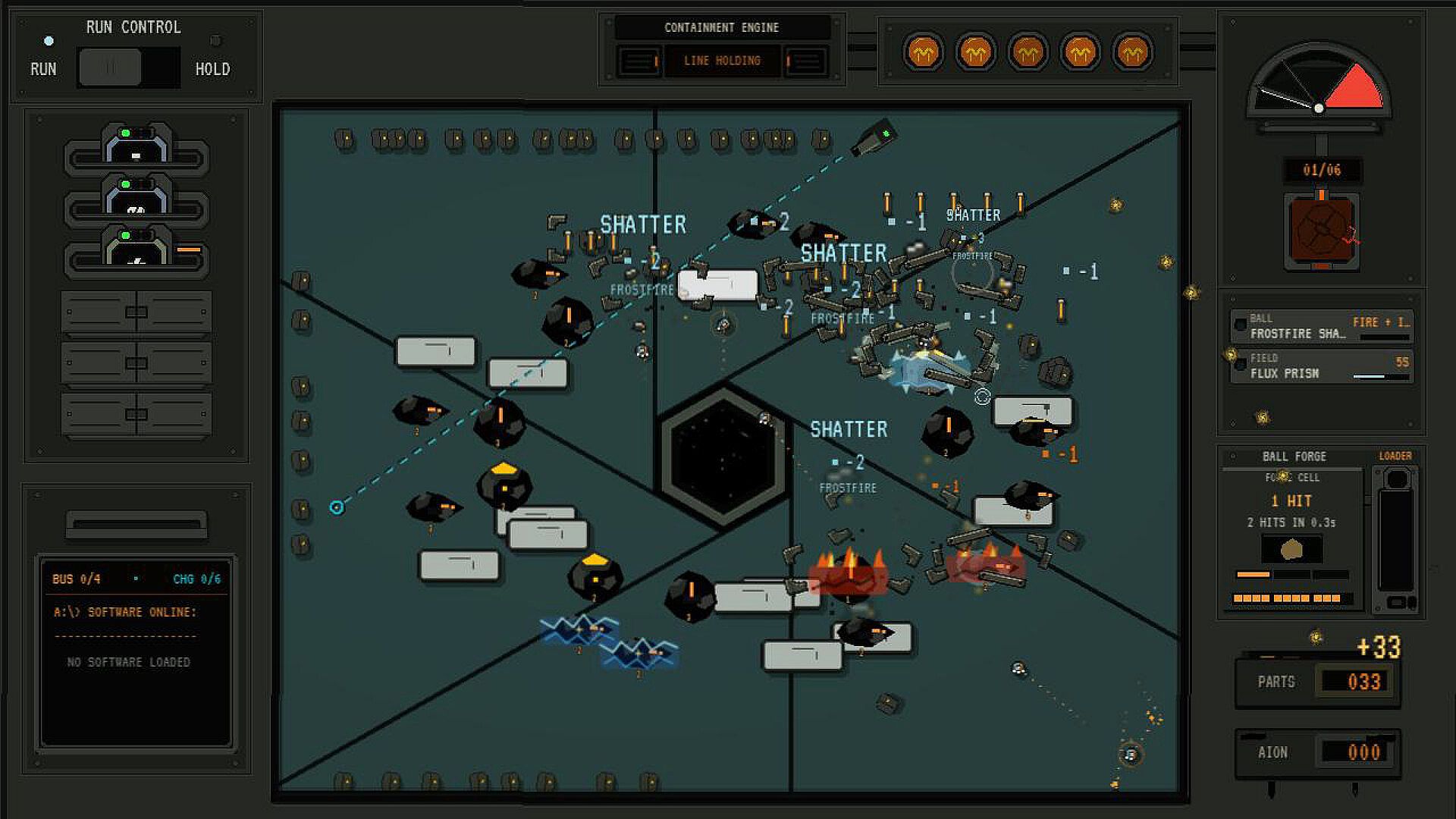
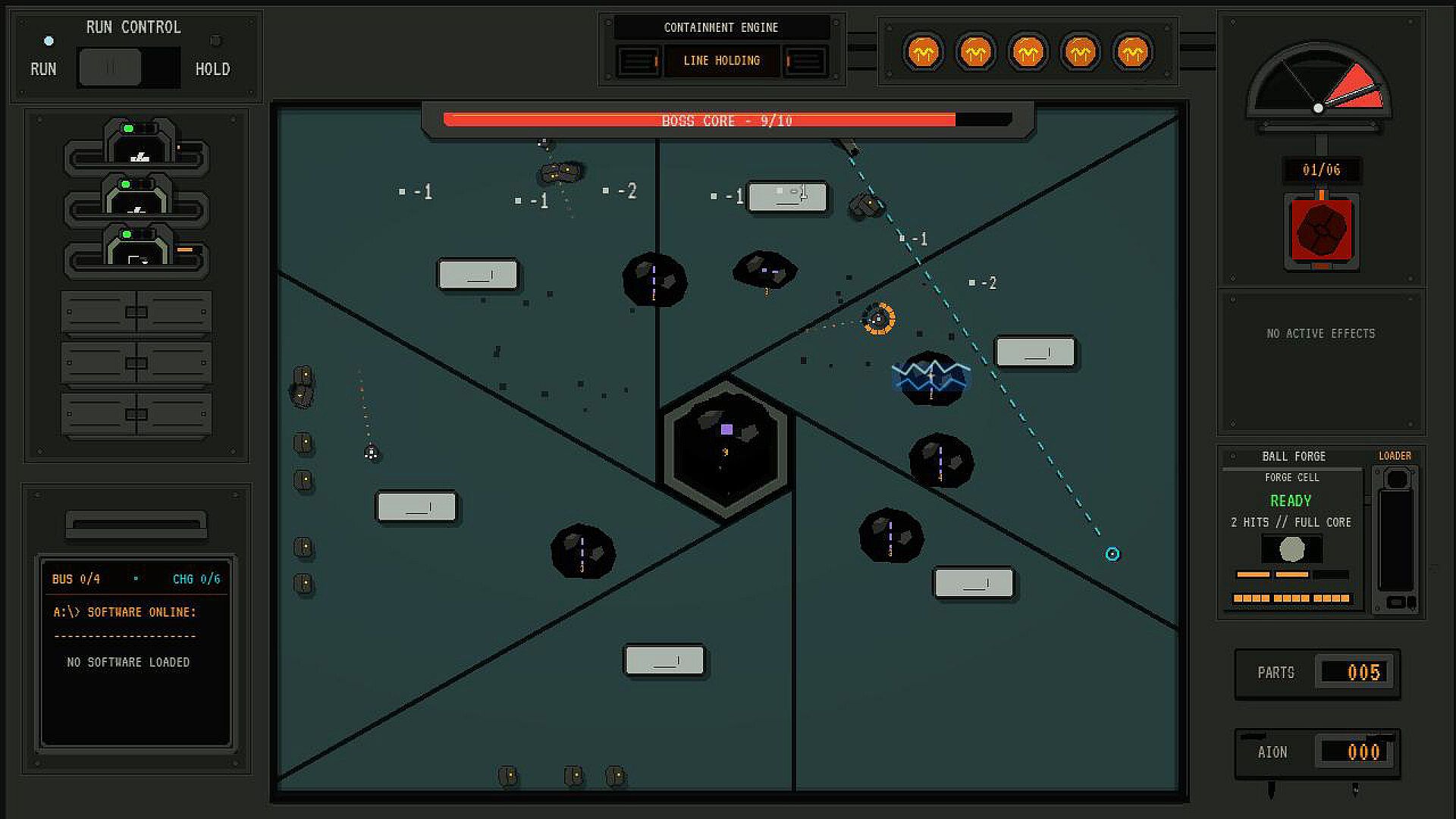
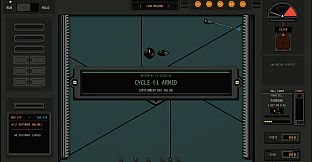
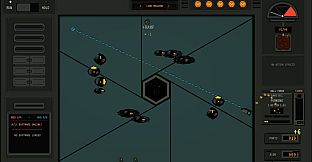
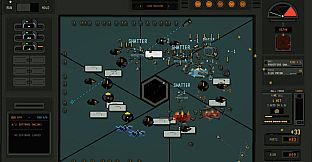
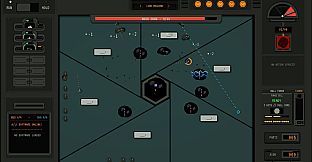
What Iron Cannot Hold is an action indie game built around containment and survival in a sealed arena. Players control a launcher on the perimeter of a circular space while firing projectiles that rebound off walls and obstacles. The core loop centers on managing limited ammunition that degrades over time against waves of black shapes emerging from breaches in reality.
Gameplay
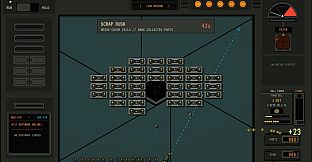
The arena operates on a full 360-degree plane where positioning the launcher determines shot angles and rebound paths. Each projectile serves as both offense and a tool for controlling space, with timing and bank shots becoming essential as threats multiply and shift positions. Balls lose effectiveness after repeated use, forcing constant decisions about when to reinforce or replace them amid spreading incursions.
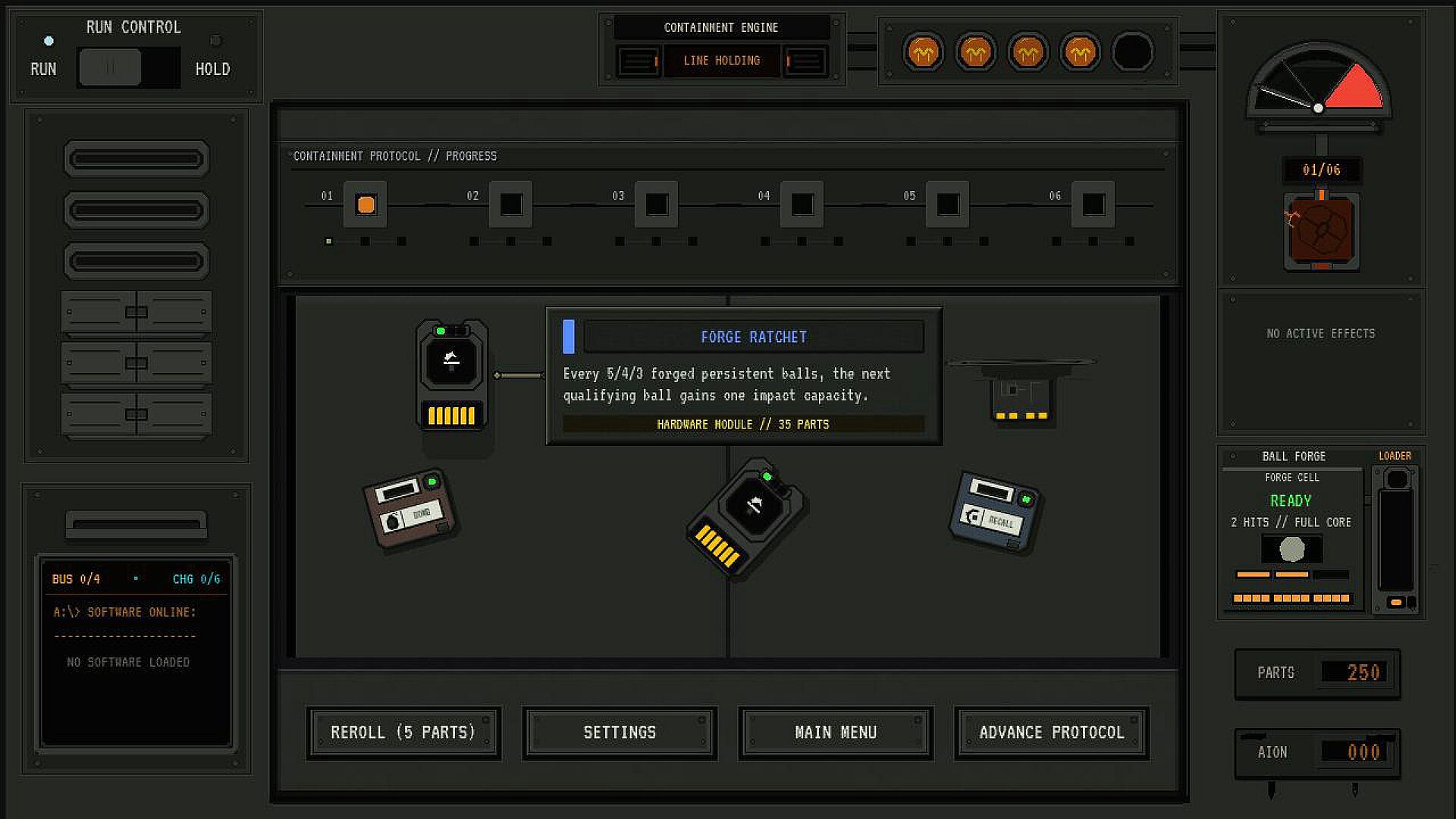
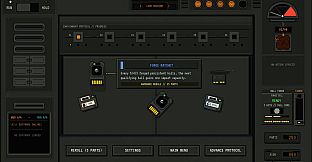
Between runs, salvaged parts attach directly to the central machine. These additions enable new effects such as area ignition, temporary freezes on moving targets, or electrical chains that jump between clustered enemies. Builds emphasize specific rebound patterns, explosive cascades, or recovery systems that convert near-misses into forward momentum. The machine grows more capable with each upgrade yet never eliminates the underlying pressure from the other side of the breach.
Game Modes
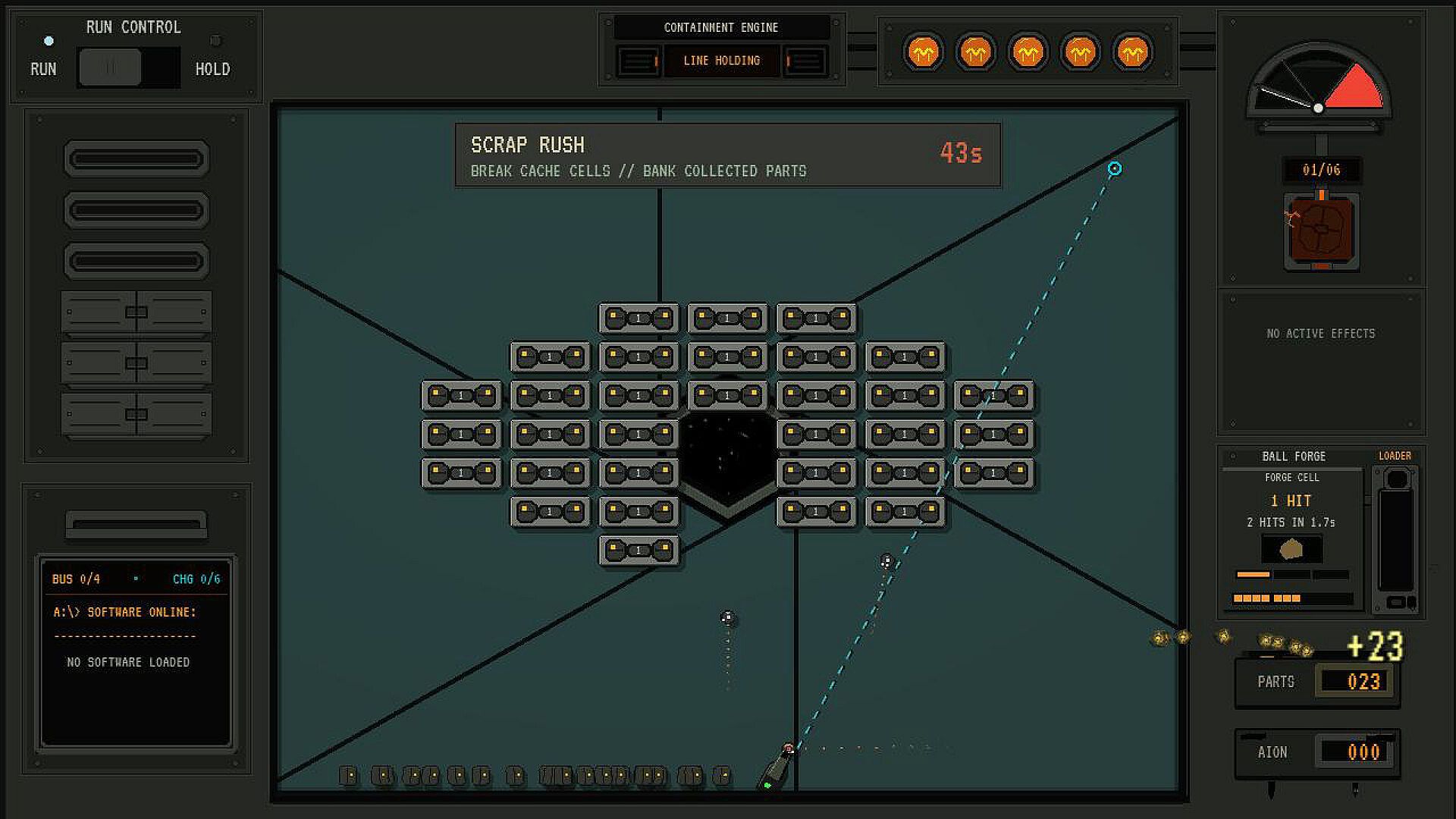
The primary experience follows a containment protocol divided into sectors. Each sector introduces distinct enemy behaviors and machine strain levels, culminating in a central boss encounter that forces direct confrontation. Random incidents interrupt standard cycles, presenting timed salvage opportunities, direct confrontations, negotiated exchanges, or altered rule sets that change how projectiles and positioning function.
Overclock serves as an extended challenge variant. It removes the standard endpoint and tracks how far the containment holds under sustained pressure. Progress carries forward through banked resources and permanent machine modifications, allowing repeated attempts with accumulated advantages while Khaos adapts based on prior performance.
Progression and Encounters
Success requires closing six seals across the protocol. Failure triggers a final interaction where the system analyzes the run and presents limited options before quarantine activates. These choices include resource retention, hardware copies, or seed replication for the next attempt. The structure rewards observation of enemy patterns and machine limits rather than raw speed.
Hostile elements form shifting ecologies per sector, with bosses that occupy the arena center and demand precise multi-angle fire. Incidents add variety without replacing the rebound-focused combat, keeping the emphasis on spatial control and resource management inside the fixed boundaries.
Is It Worth Playing?
This title suits players who enjoy precise aiming and iterative roguelite runs where each attempt reveals more about optimal paths and upgrades. The singleplayer focus keeps attention on mechanical mastery and adaptation to changing conditions rather than external competition. Those drawn to contained arena combat with persistent progression across failures will find consistent depth in the rebound systems and build experimentation. Availability on PC makes it accessible for sessions that reward careful positioning and long-term planning over quick matches.