


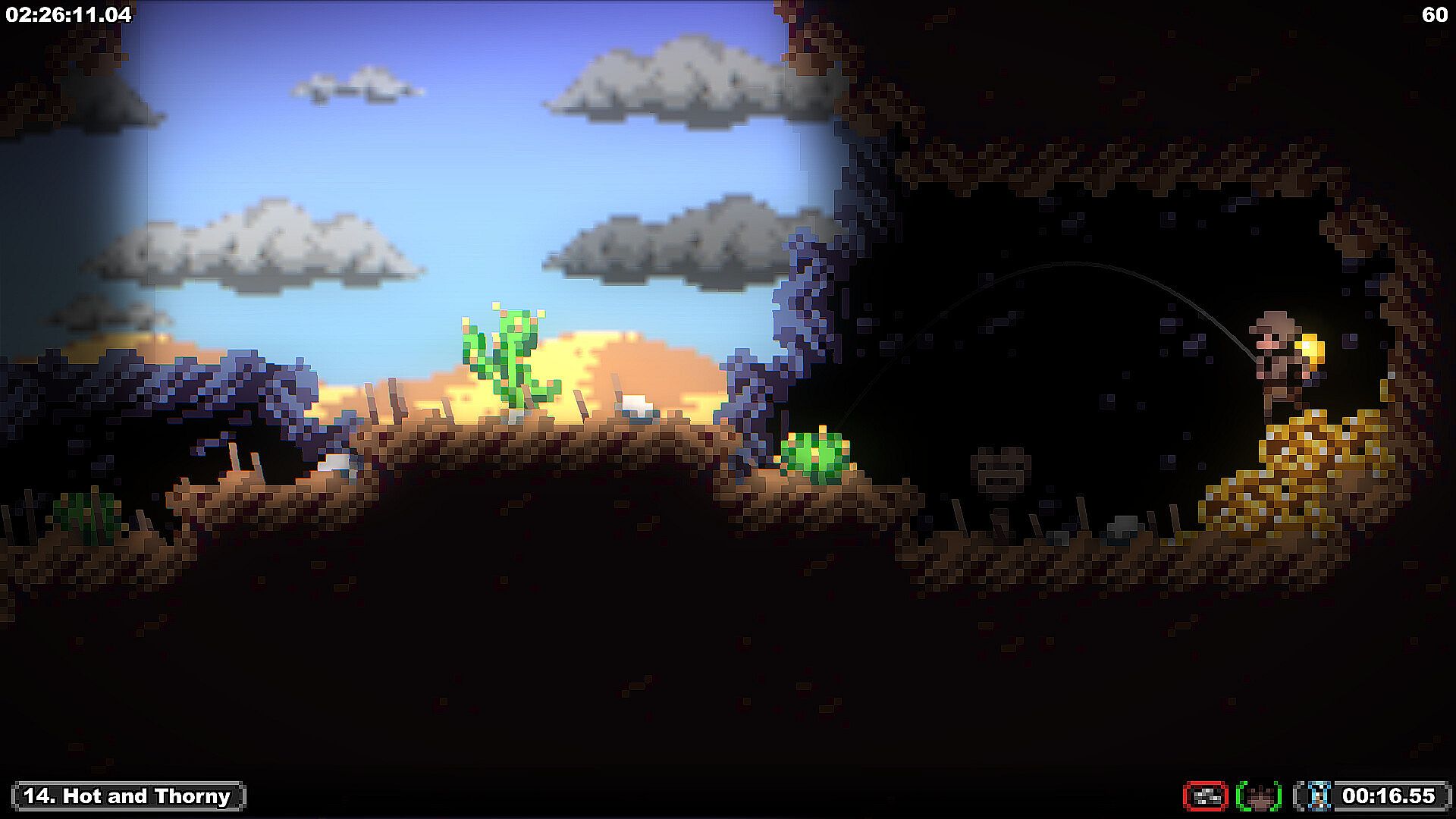
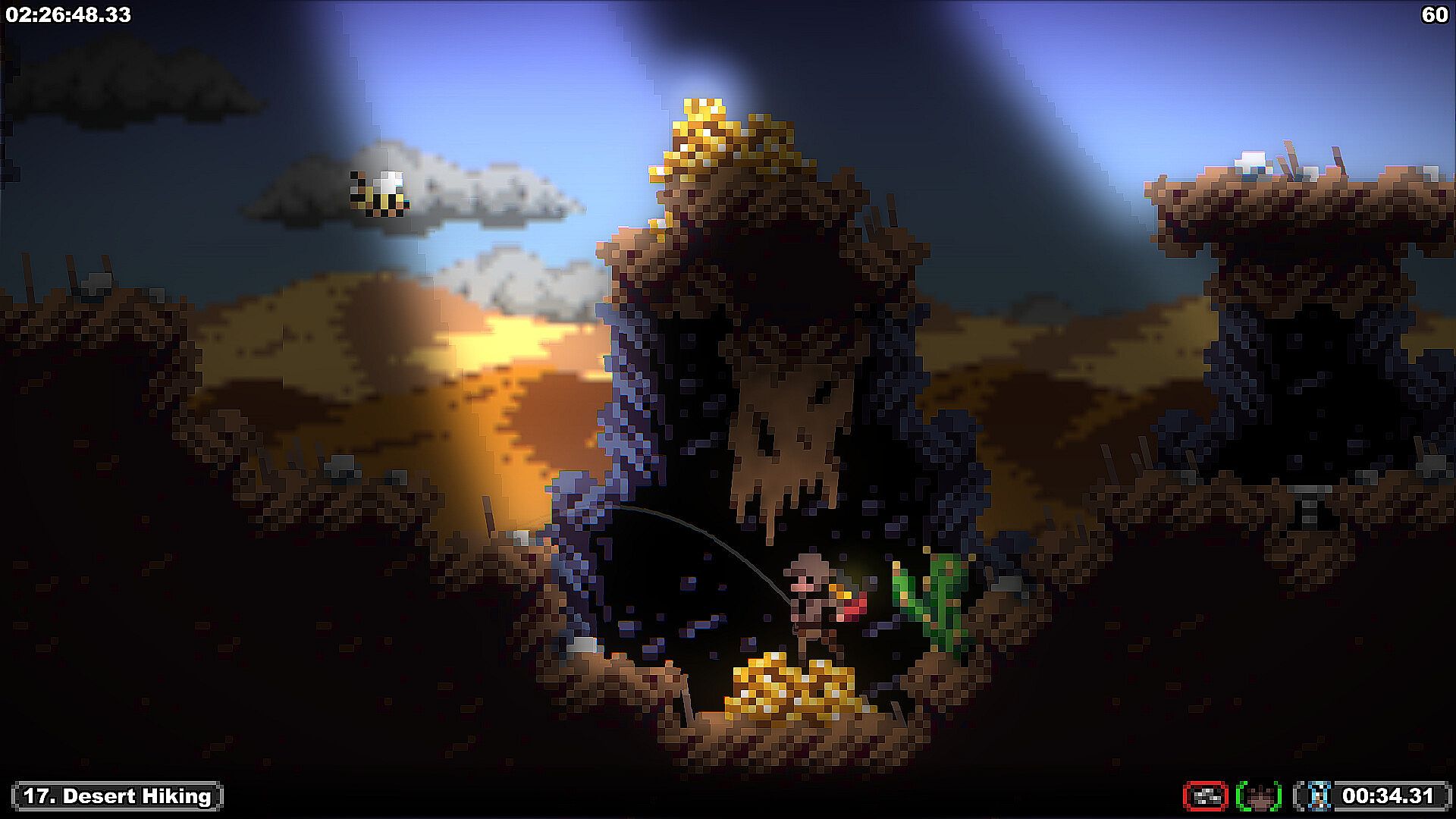
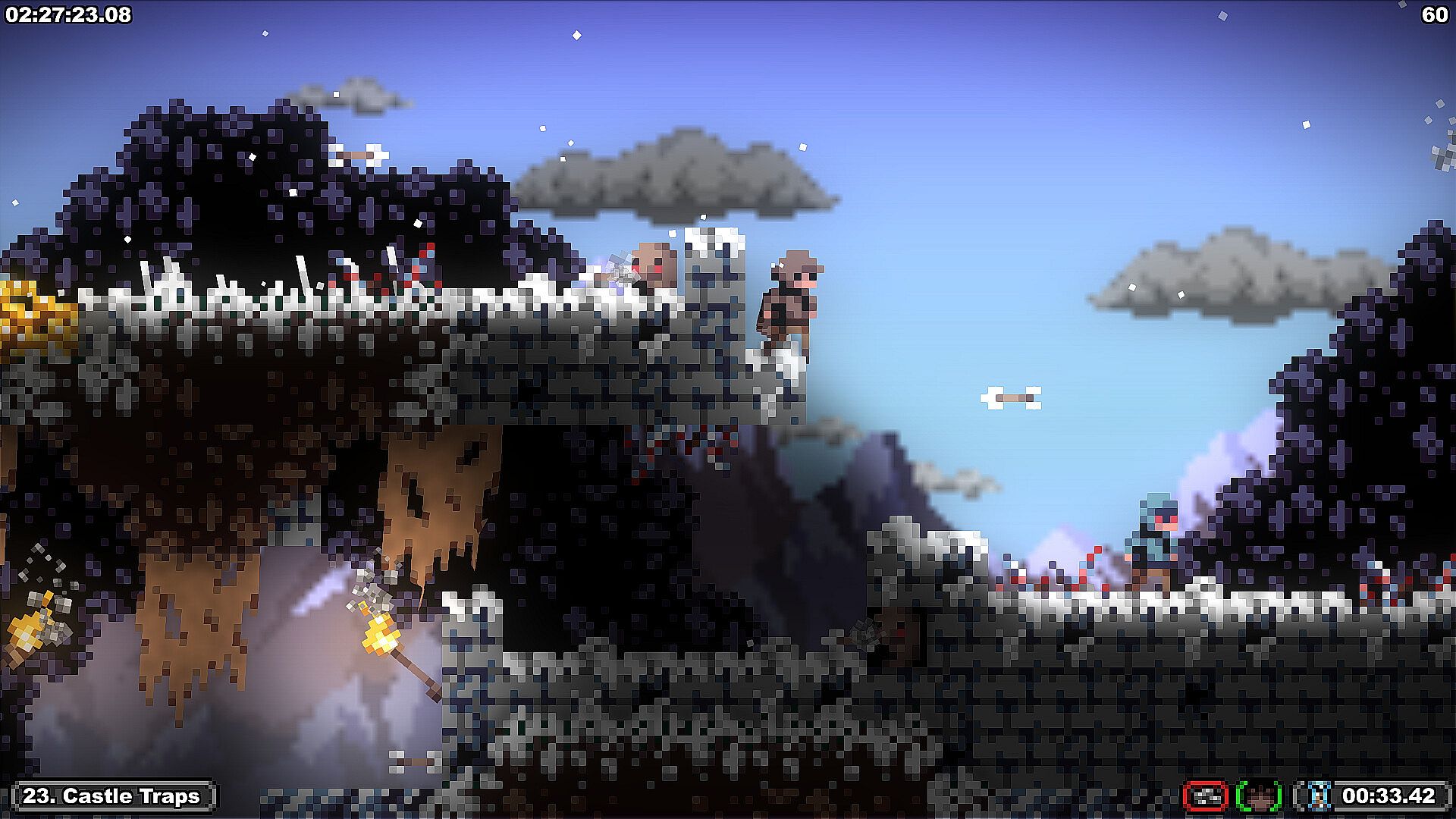
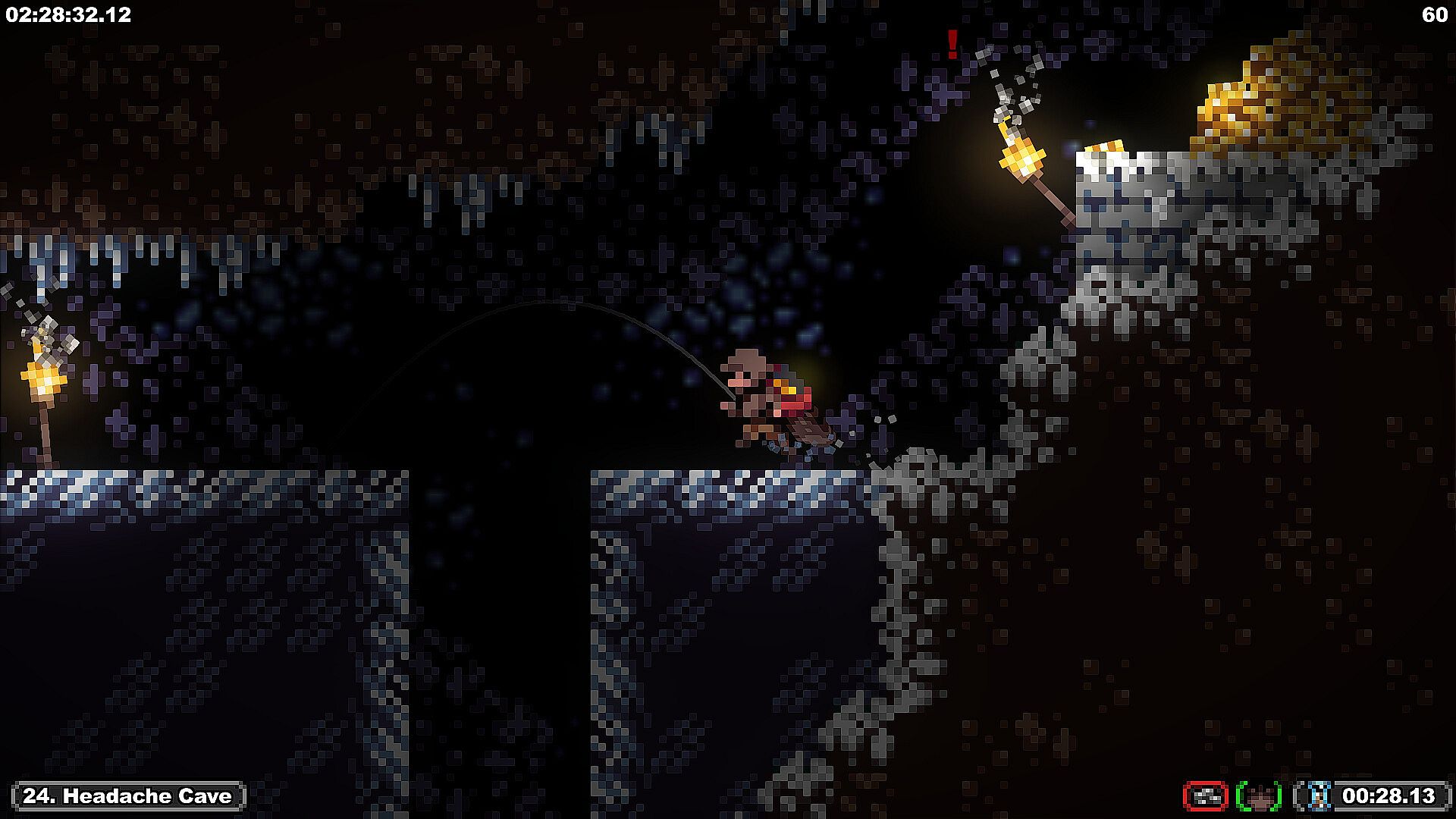
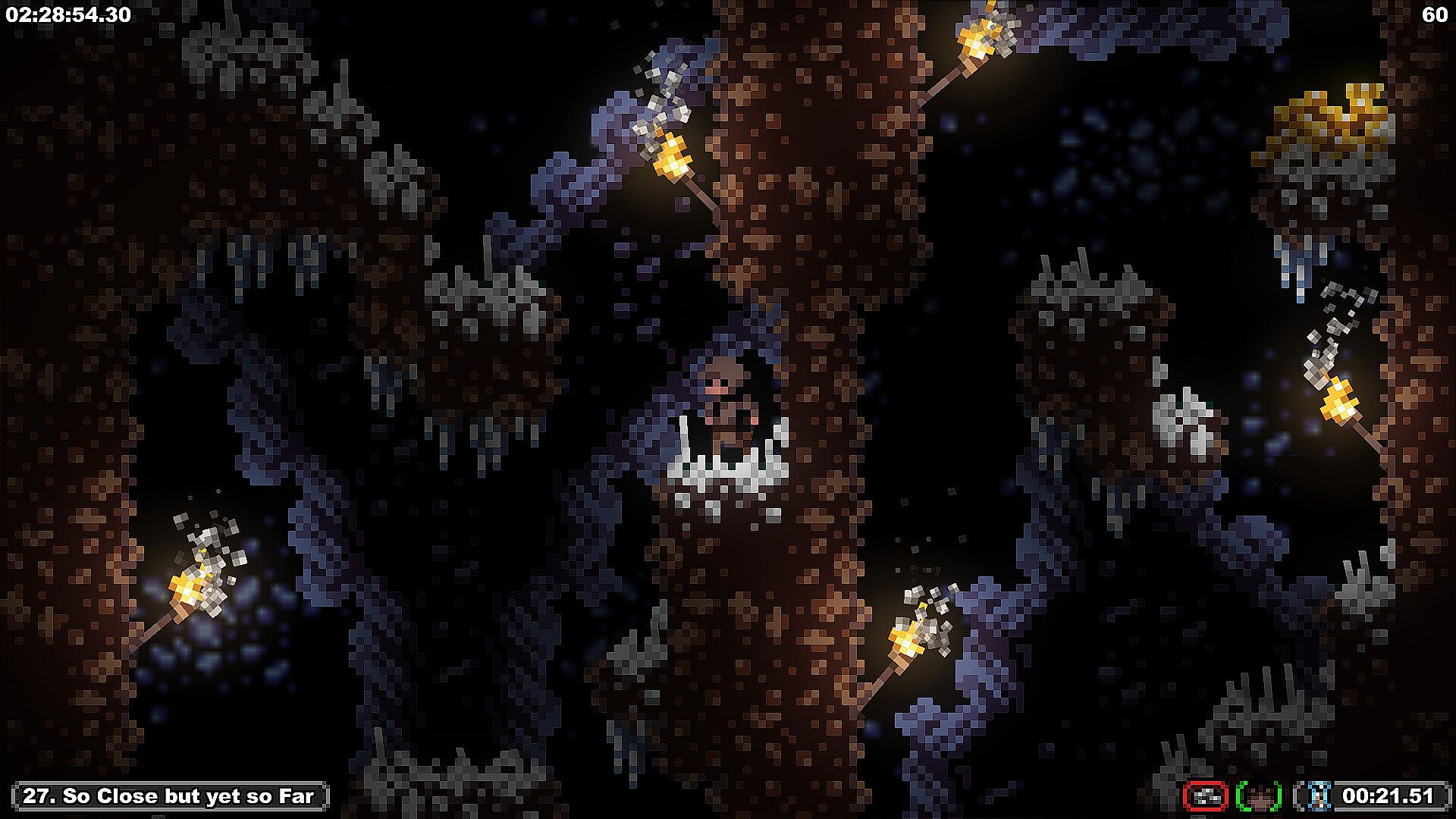




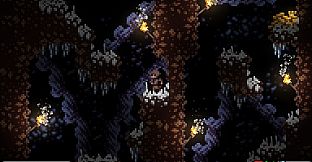
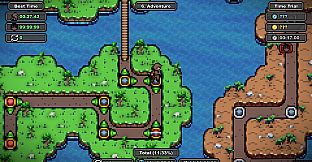
Trouble Thief is an action indie adventure game for PC in which players take on the role of a thief navigating a series of self-contained levels focused on retrieval and escape. The core premise involves entering each stage, securing loot, and returning it safely without complications, though the execution demands precision and repeated attempts to master the timing and positioning required.
Gameplay
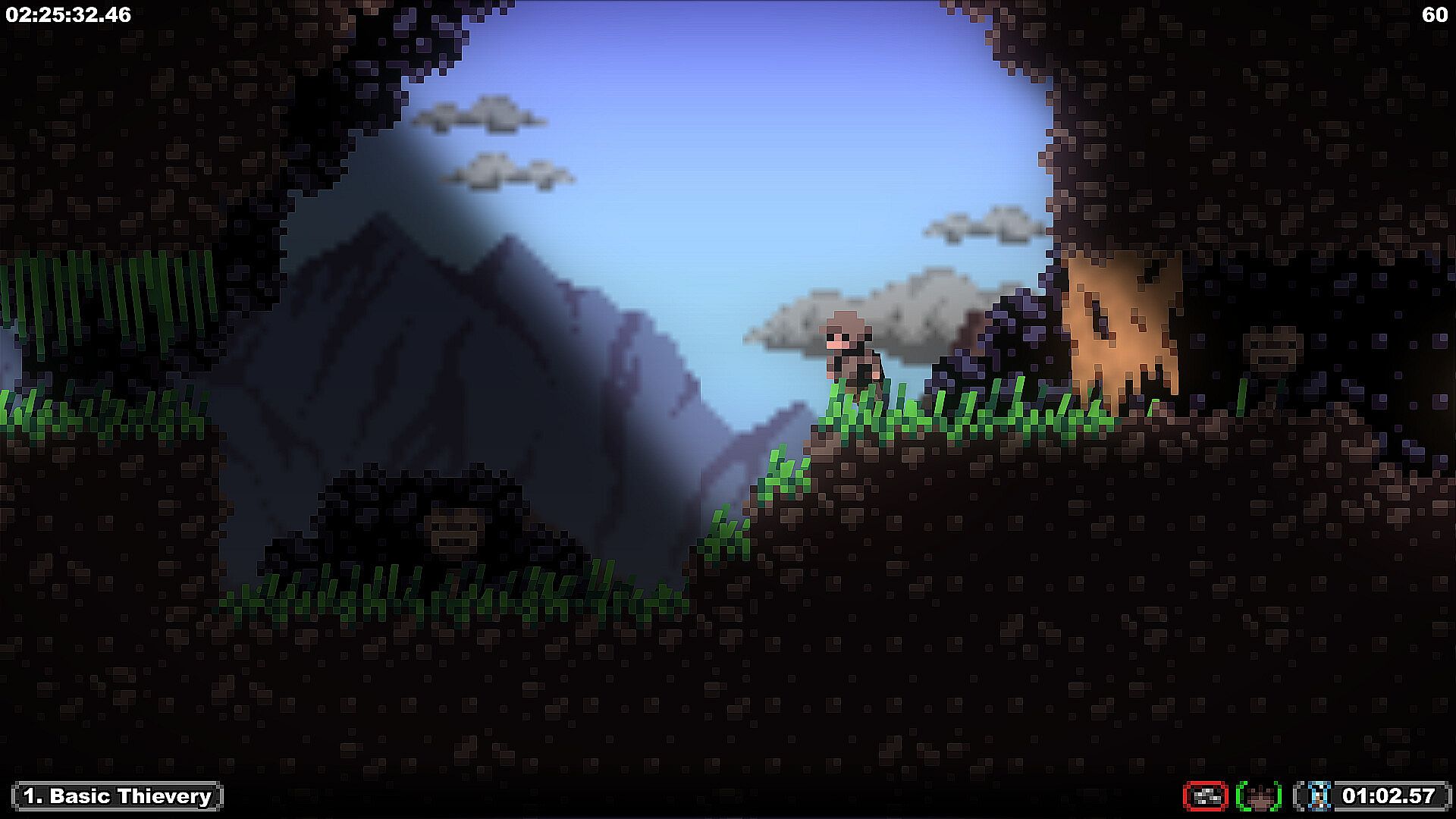
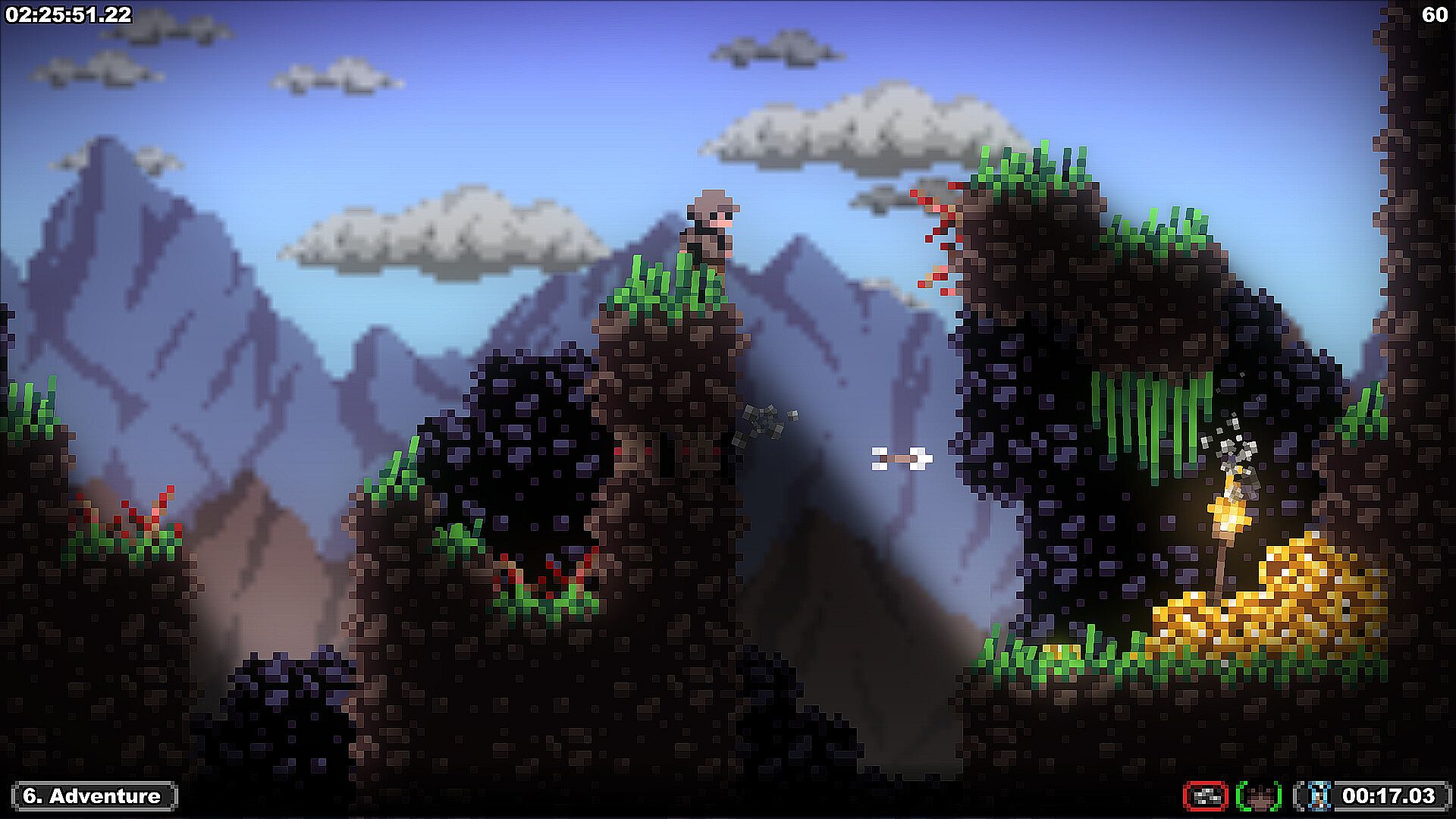
The central loop revolves around moving through thirty distinct levels while collecting items and transporting them back to designated safe zones. Success depends on careful navigation rather than combat or complex puzzles, with every action contributing to the overall time spent on a stage. The movement system stands out for its deliberate weight, where the character responds with noticeable inertia that rewards players who anticipate momentum shifts and plan routes accordingly. This physical feel turns simple traversal into a test of control, as small errors in timing or direction can cascade into longer runs or failed attempts.
Levels emphasize efficiency above all else. Players must identify optimal paths for grabbing loot and retreating, often balancing speed against the risk of missing the safe zone or triggering unintended setbacks. The design encourages experimentation across multiple playthroughs, with each attempt building familiarity with layout quirks and movement quirks. Because the experience stays strictly single player, attention remains fixed on personal performance without external variables.
Game Modes
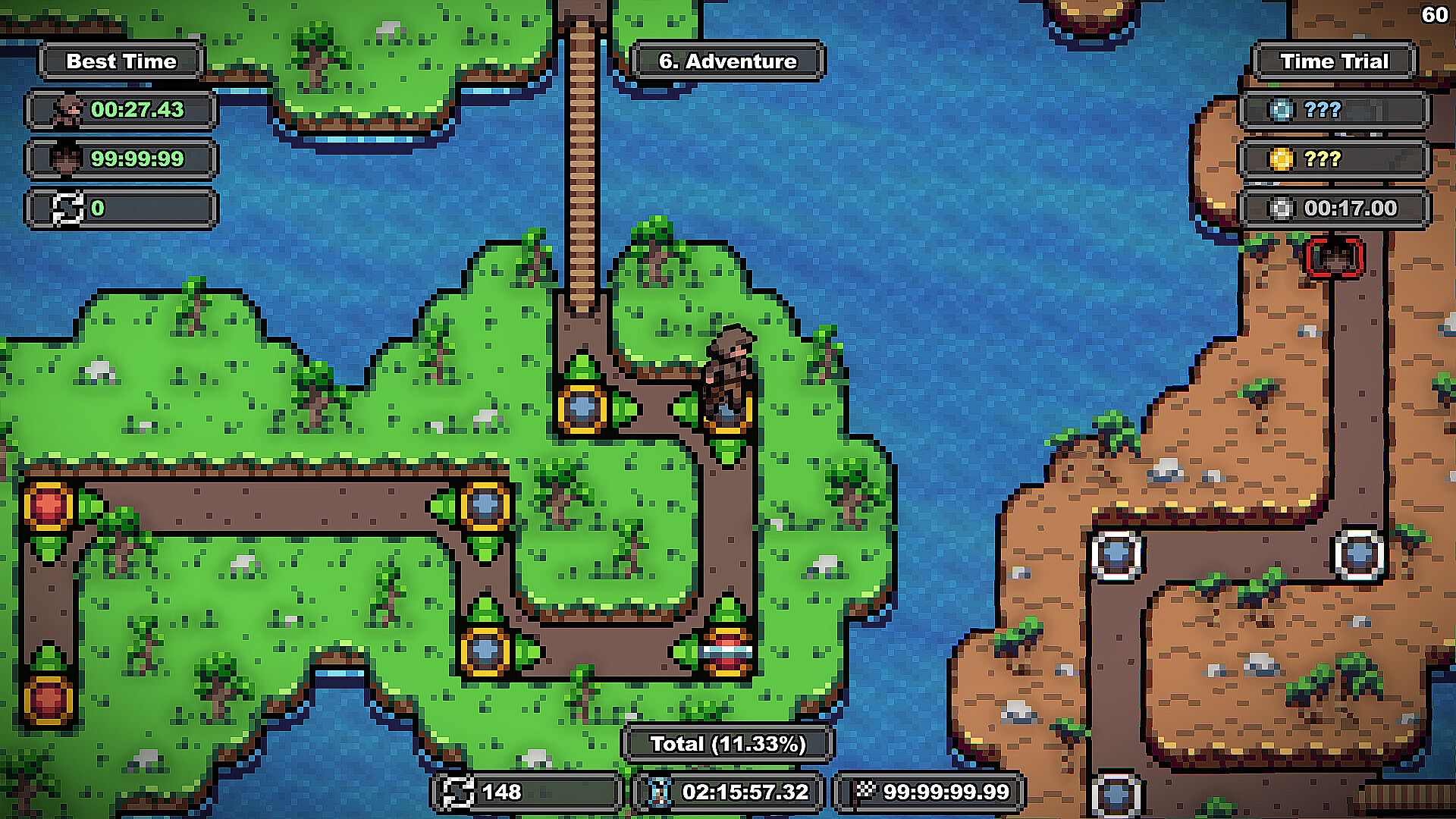
Each of the thirty levels incorporates built-in time trials that track completion speed and push players toward faster clears on subsequent runs. These trials serve as the primary benchmark for improvement, turning every stage into a personal record to beat. Complementing the timed element is a no-hit challenge that requires finishing without sustaining any damage, adding a layer of defensive awareness to the otherwise offensive focus on collection.
These two challenge types operate alongside the standard playthrough, allowing players to tackle them in any order or combination once the base level is cleared. The emphasis stays on individual mastery rather than branching narratives or alternate objectives, keeping the structure straightforward yet demanding. No additional modes beyond these integrated challenges appear in the design.
Level Structure and Progression
Progression follows a linear sequence through the thirty levels, each presenting fresh layouts that test the same core skills in new configurations. Early stages introduce basic movement and collection patterns, while later ones layer tighter spaces and more intricate routes that exploit the heavy movement physics. The consistent goal of loot retrieval and safe return provides a clear throughline, even as environmental details shift to maintain engagement.
Because the game prioritizes speed and precision over story elements or character development, levels function primarily as skill checkpoints. Players revisit stages repeatedly to shave seconds off times or achieve clean no-hit runs, creating natural replay value without requiring external incentives. The compact scope keeps focus narrow and intense.
Is It Worth Playing?
Trouble Thief targets players who enjoy single-player action adventure experiences built around mechanical mastery and personal benchmarks. Its heavy movement and dual challenge system of time trials plus no-hit runs reward those willing to invest time refining routes and execution. The straightforward theft-and-return loop delivers immediate feedback on performance, making it suitable for short sessions or extended optimization runs.
With a planned release in September 2026 and no player reviews available yet, the game remains untested in the wild. Those drawn to indie titles that strip away extraneous features in favor of tight, skill-focused gameplay may find the approach refreshing. It suits individuals who prefer measurable progress through faster clears and flawless attempts over expansive worlds or multiplayer elements. If the described mechanics align with your preferences for deliberate controls and speed-oriented design, it offers a focused alternative to broader adventure games.