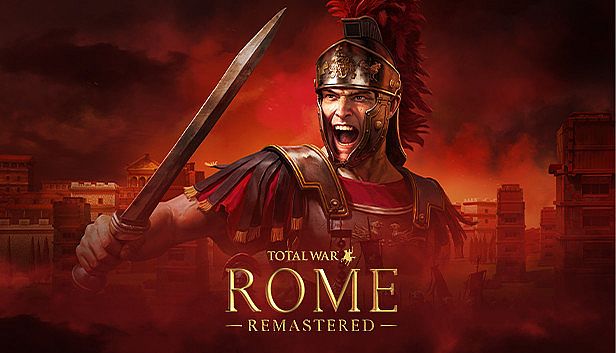















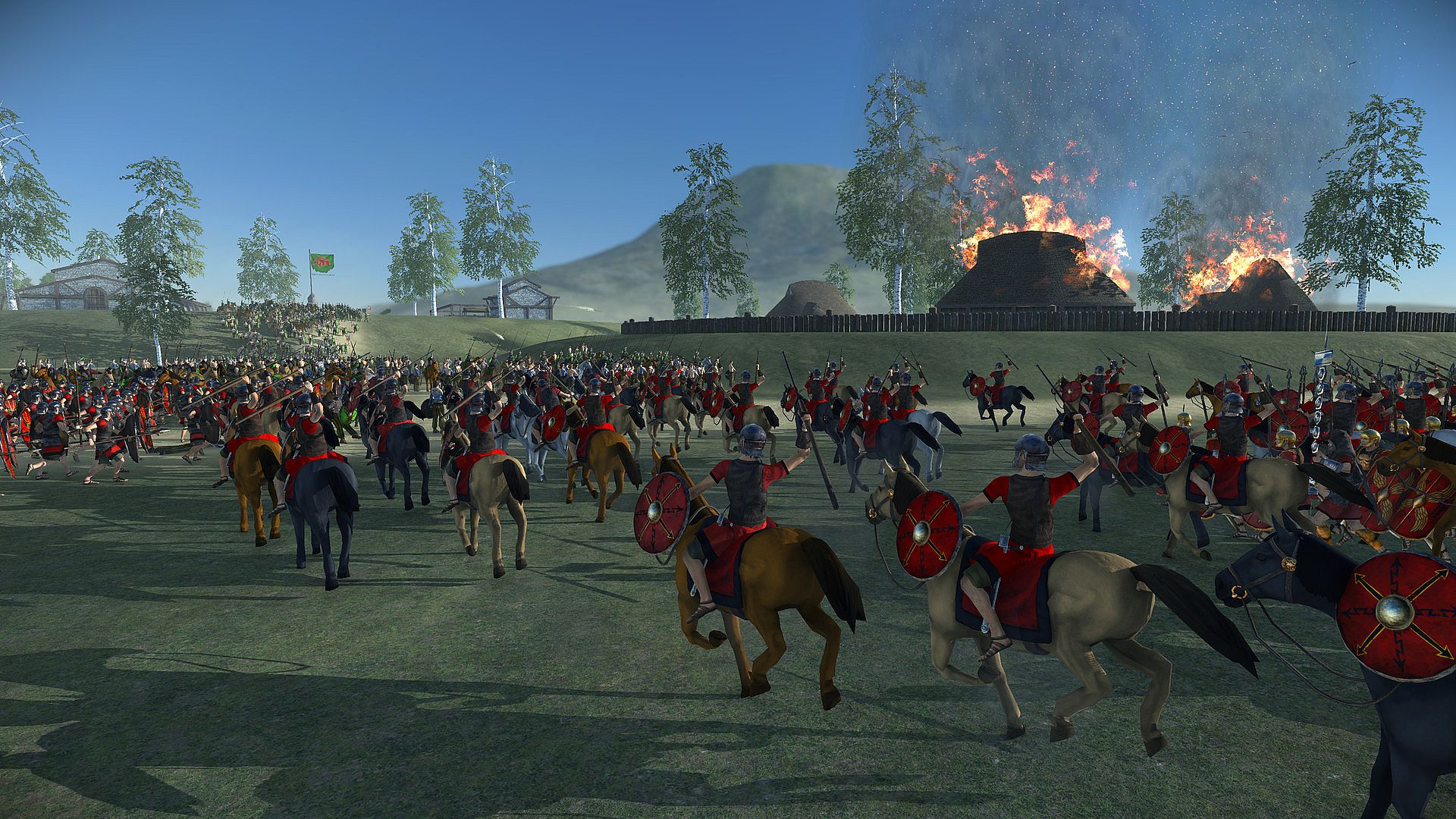
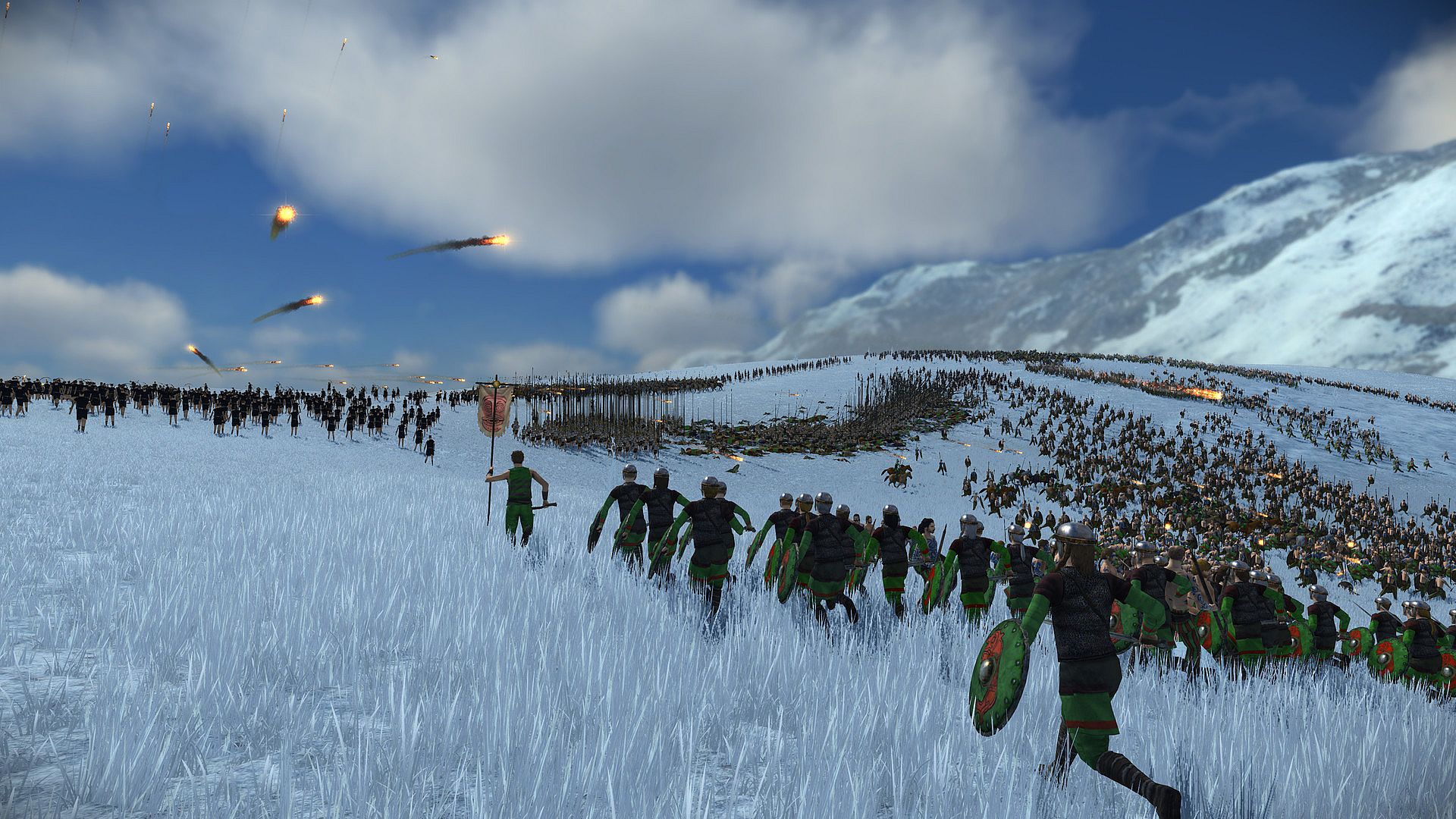
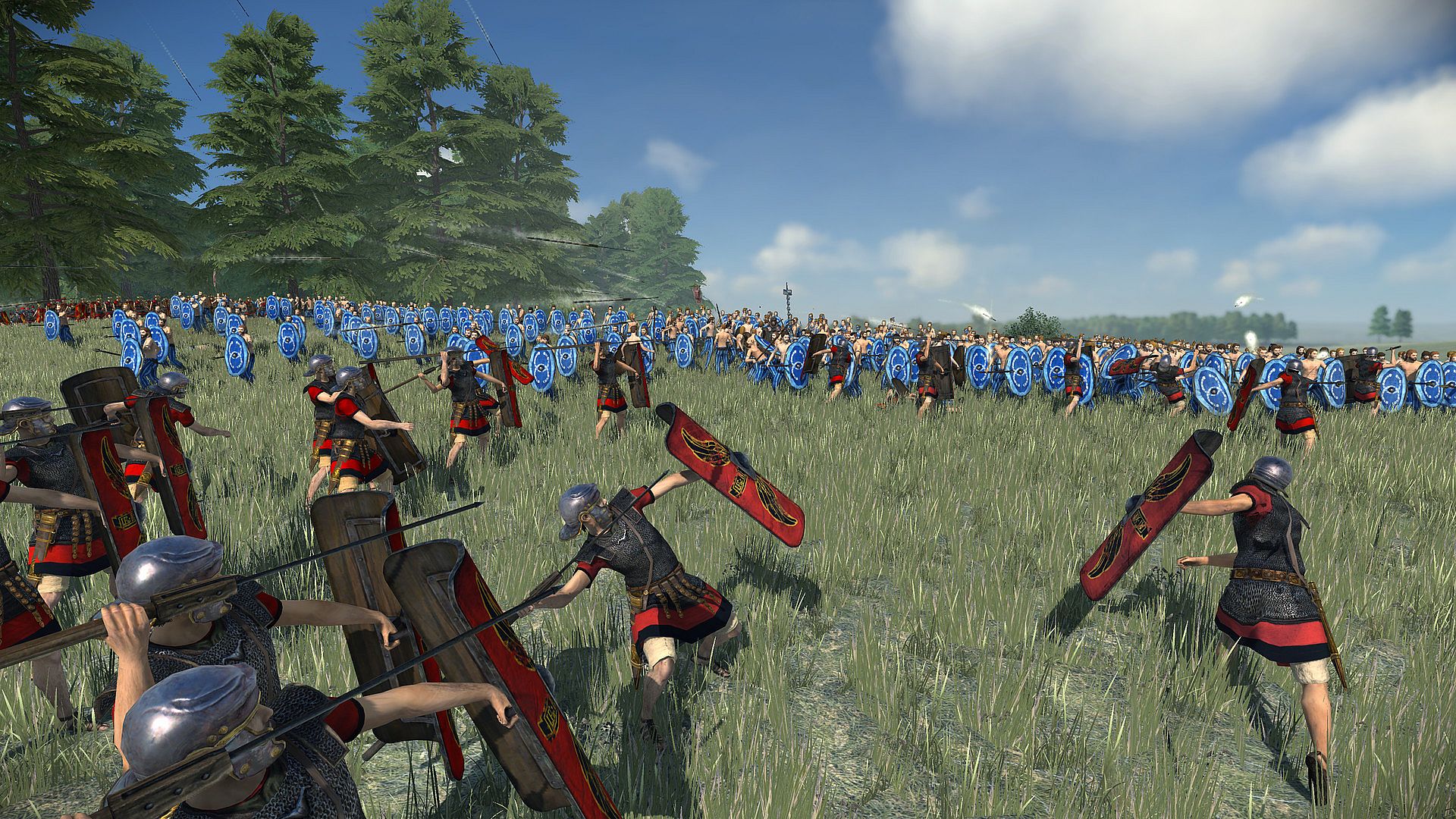
Total War: Rome Remastered is a strategy game set in the ancient world that combines turn-based empire management with real-time battlefield command. Players guide one of many historical factions through campaigns of expansion, diplomacy, and warfare across the Mediterranean and beyond. The remaster preserves the core loop of building settlements, recruiting units, and directing large armies while adding support for higher resolutions and refined controls.
Gameplay
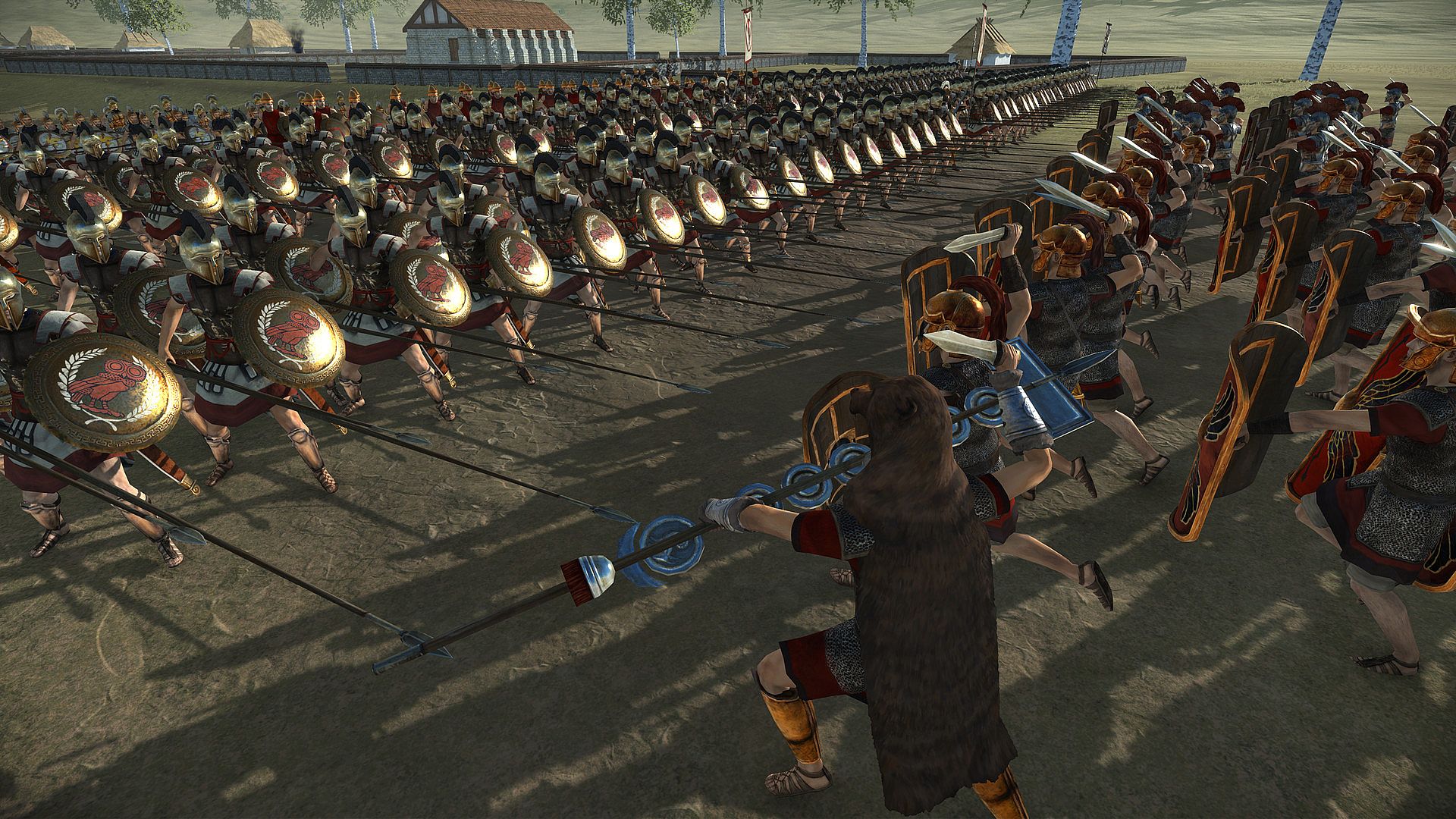
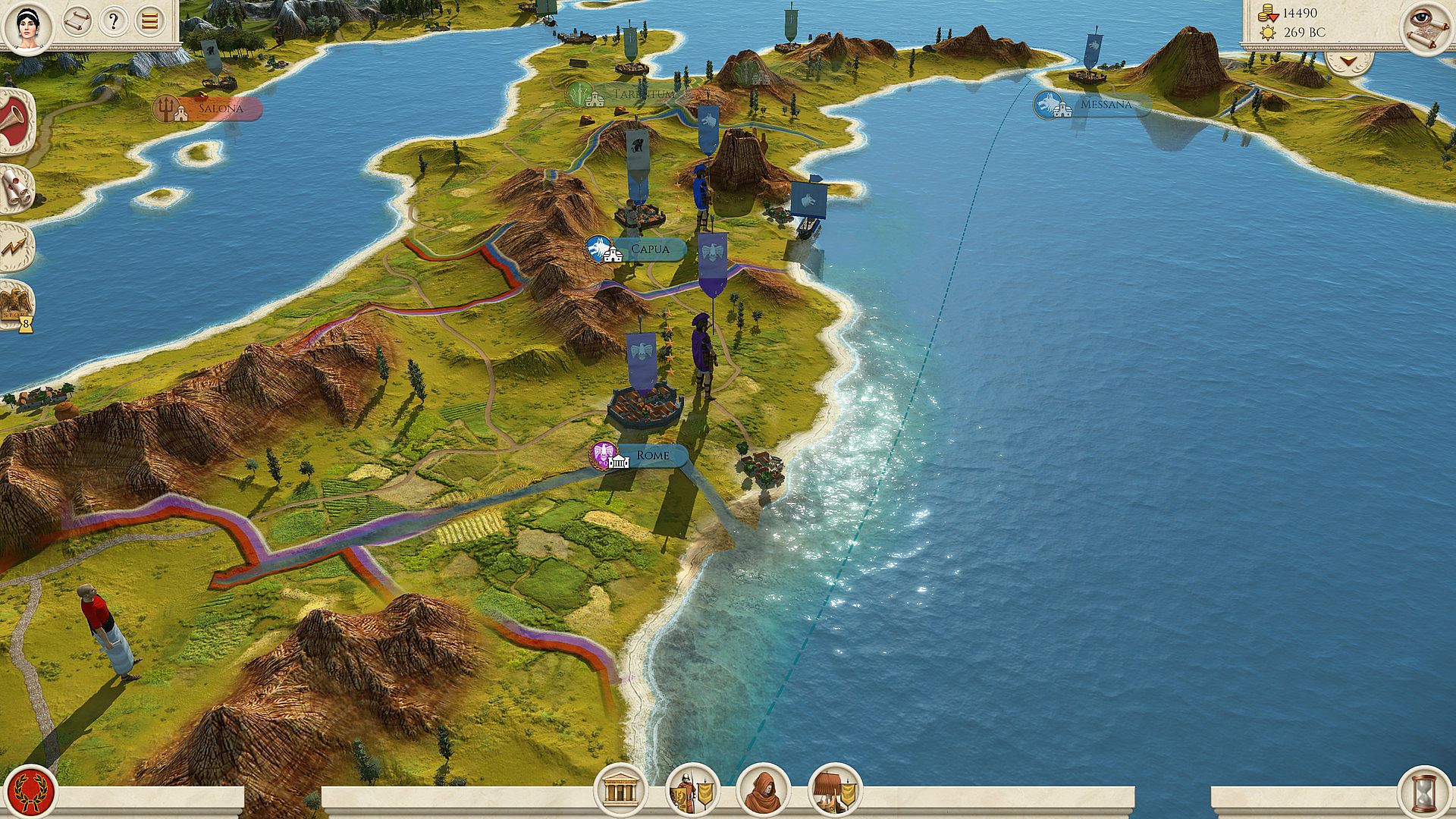
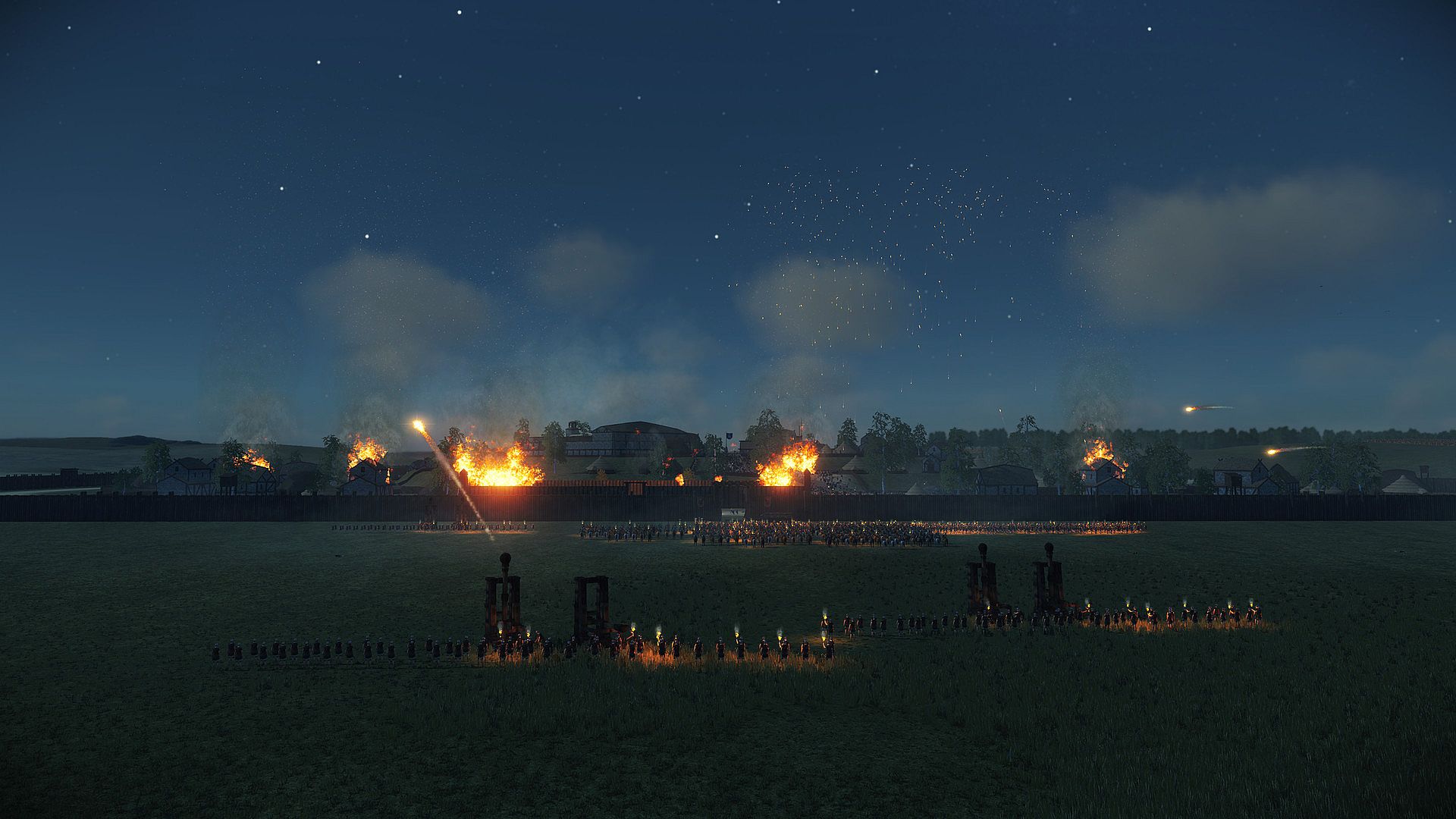
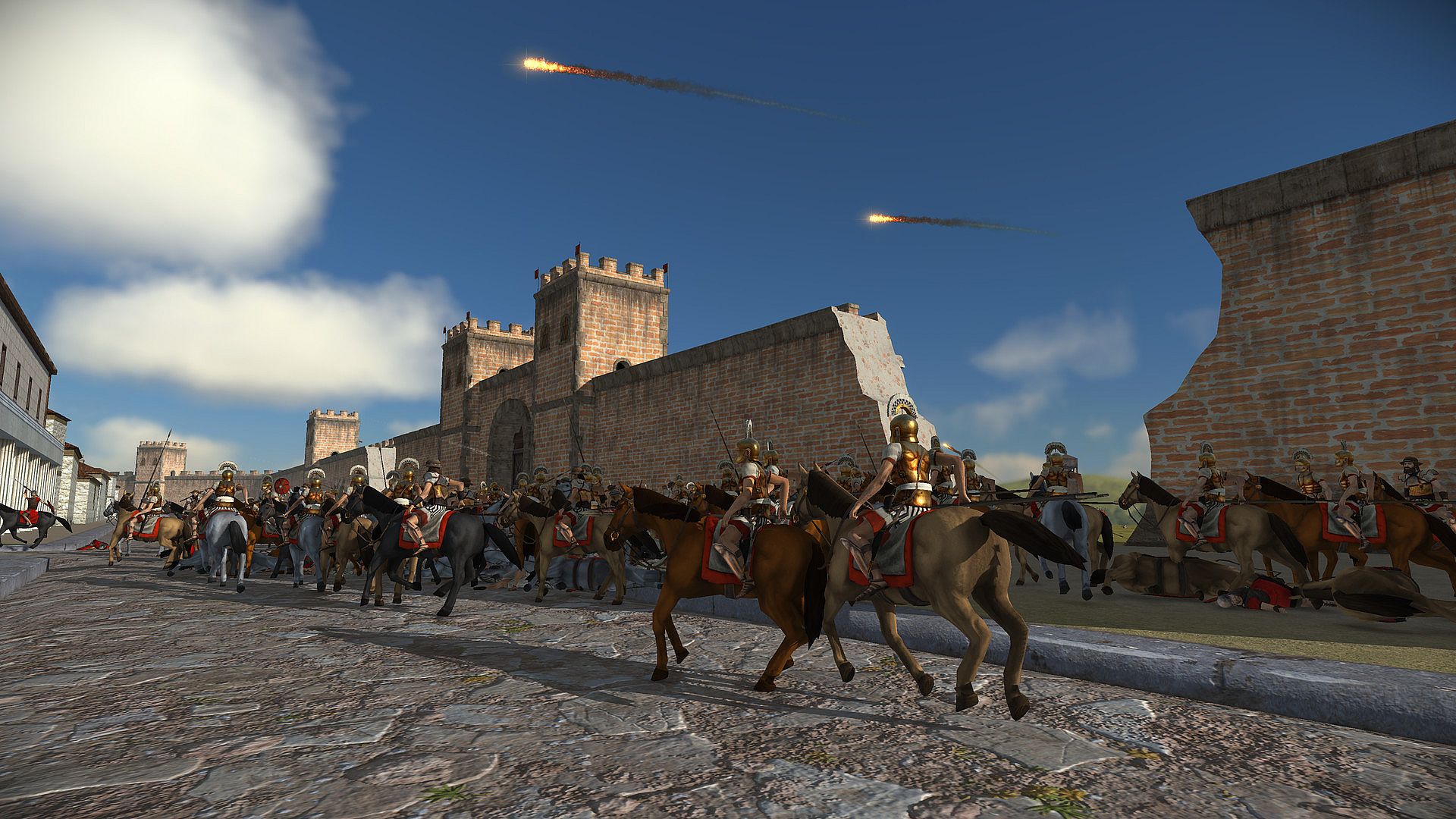
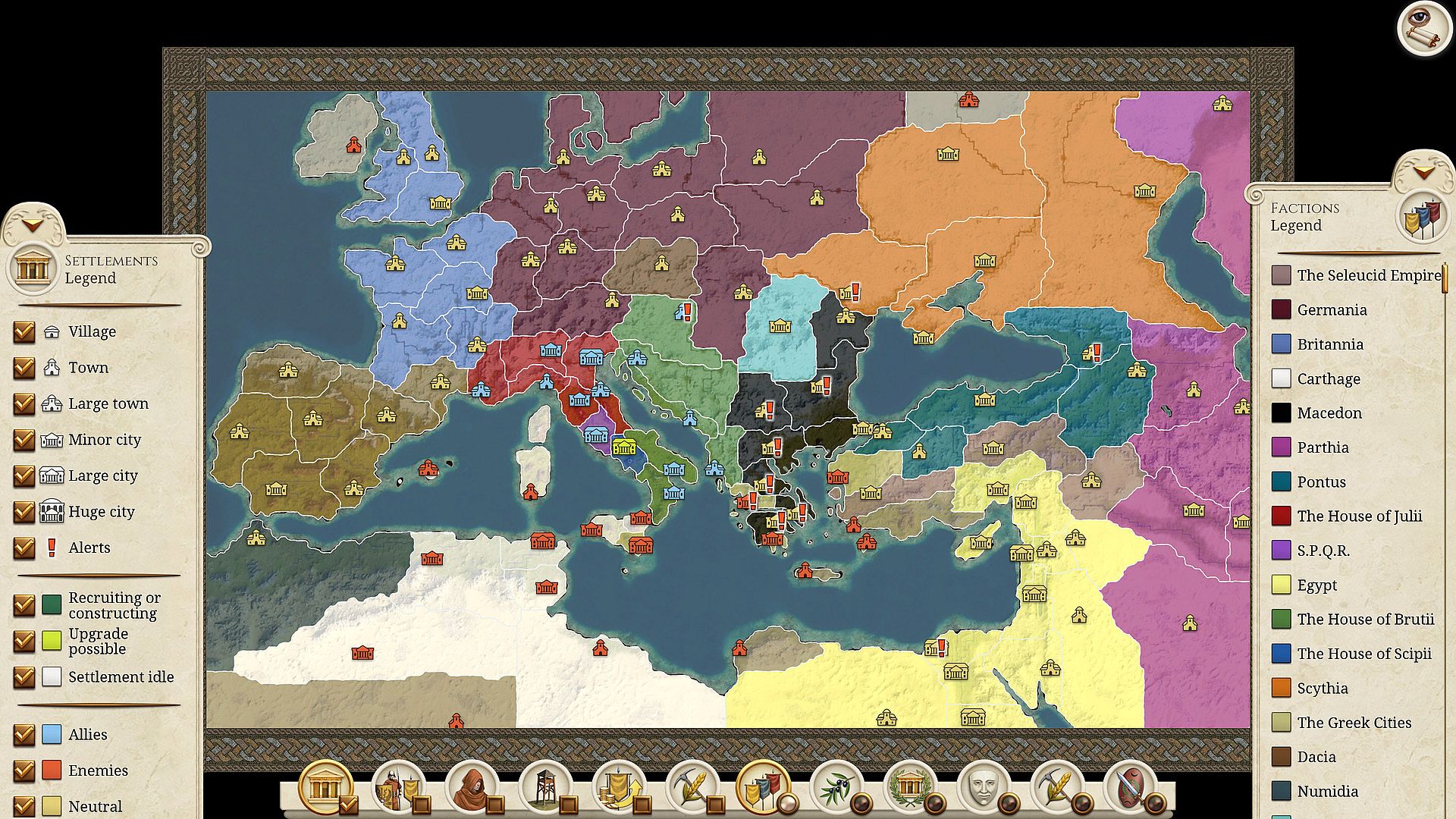
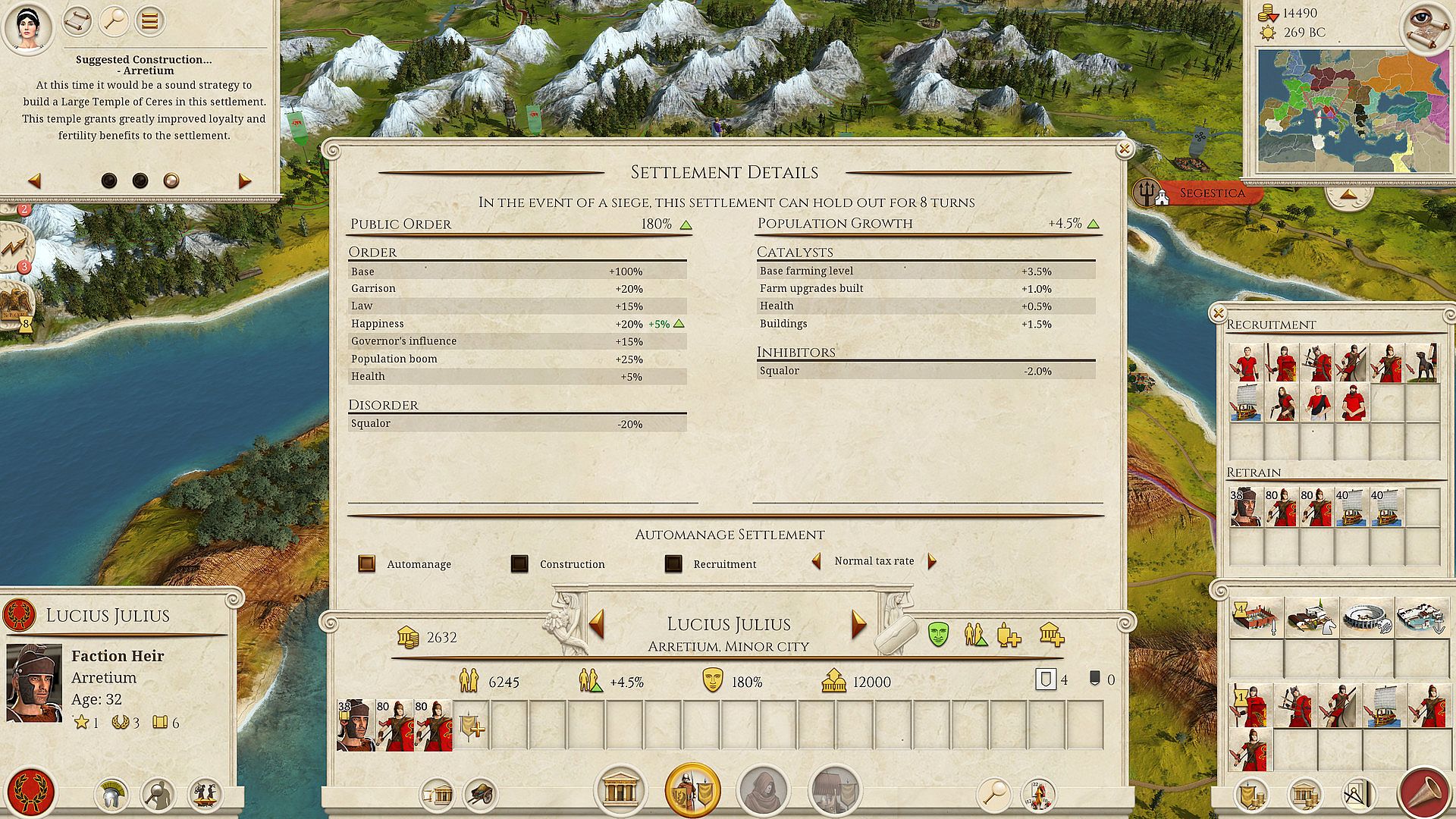
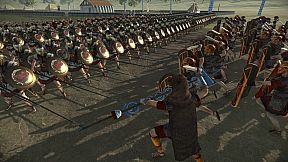
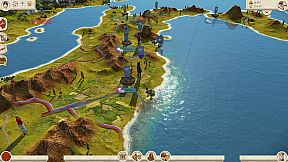
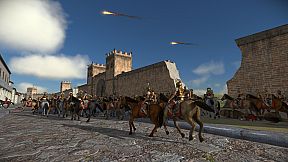
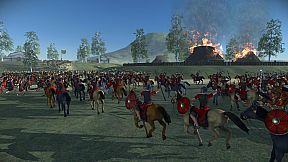
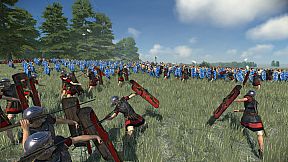
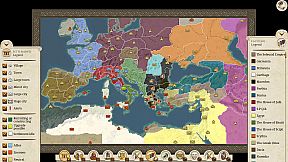
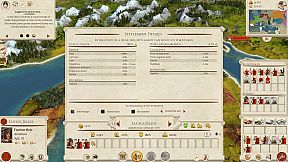
The experience centers on a grand campaign where decisions on the map influence the outcome of battles. Armies move across provinces, engage in sieges or open-field fights, and return to the strategic layer for further planning. Economy relies on trade routes, taxes, and resource control, with agents handling espionage, diplomacy, and now commerce through the added merchant type. Merchants establish links between regions, secure resources, and undermine competitors to boost faction income. Battles unfold in real time with formations, terrain advantages, and unit abilities determining victory. The remaster introduces a tactical map overlay, range indicators, and improved camera movement that includes rotation and extended zoom during both campaign and combat phases.
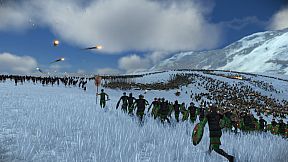
Diplomacy and internal security receive visual aids through heat maps and icon systems that highlight relations and threats. Armies can grow larger than in the original release, and previously restricted content opens up broader options for conquest paths. Environmental details such as dust and haze enhance the battlefield atmosphere without altering core tactics.
Game Modes
Campaign mode forms the main single-player structure, incorporating the Alexander and Barbarian Invasion expansions alongside the base Roman era. Players select a faction and pursue long-term objectives across multiple theaters. Battle mode allows direct engagement in custom or scenario fights, testing army compositions without the overhead of the full campaign. Multiplayer supports cross-platform matches between Windows, macOS, and Linux systems, letting participants field any of the available factions against others in real-time combat.
These modes emphasize different aspects of command. Campaign rewards patient planning and adaptation to AI opponents, while battles focus on immediate tactical execution. Multiplayer introduces direct competition with human opponents across operating systems.
Factions and Mechanics
Thirty-eight factions are playable, expanding choices beyond the original three Roman houses to include a wide range of cultures and starting positions. Each brings distinct unit rosters and campaign challenges, from established powers to emerging groups. The merchant agent adds an economic dimension previously unavailable, allowing players to influence global trade networks directly. Mechanics such as army expansion limits and agent deployment integrate with existing systems for diplomacy and province management.
Visual and interface updates support these elements. Remodeled units and buildings appear in higher detail, while campaign maps feature improved models. The changes maintain the historical flavor while making information clearer during play.
Is It Worth Playing?
Recent player feedback shows very positive ratings in the short term, with 85 percent of the latest 109 reviews favorable. Overall reviews stand at mostly positive, reflecting 78 percent approval across more than 8,000 entries. The game runs on Windows, macOS, and Linux with cross-platform multiplayer support and includes Steam Workshop integration for community content.
It suits players who enjoy large-scale strategy with both long-term planning and direct combat control. Those seeking an updated version of classic Total War mechanics will find the remaster delivers refined visuals, additional factions, and quality-of-life improvements without changing the fundamental approach. Availability on multiple platforms broadens access for different hardware setups.