









TIS-100 is a programming puzzle simulation game developed by Zachtronics for the PC. Players take on the role of repairing a fictional parallel computer system by writing code in its assembly language to process data streams through interconnected nodes.
Gameplay
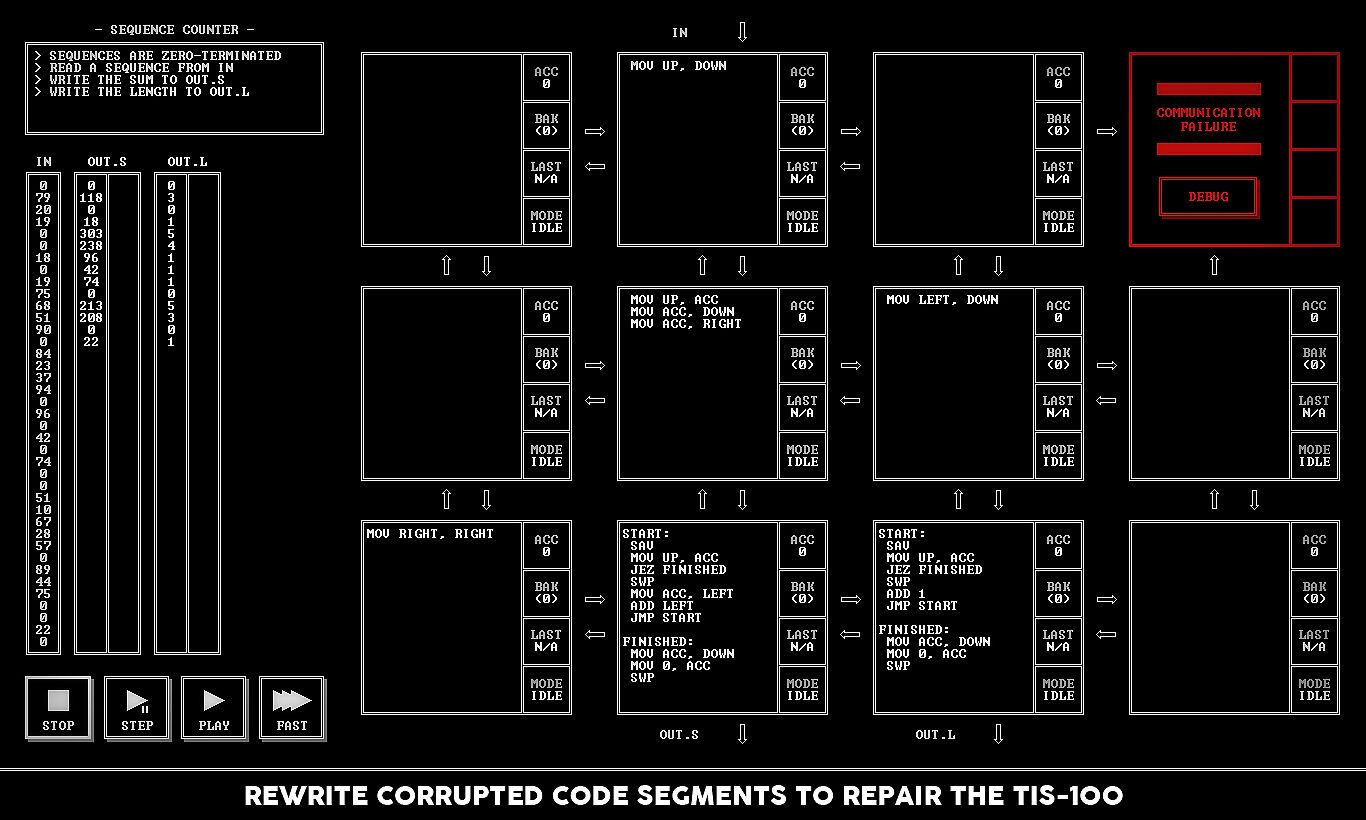
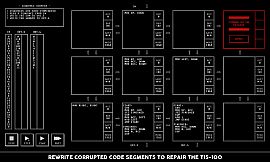
The core loop centers on programming individual nodes in a grid layout. Each node accepts a limited set of instructions that handle basic operations such as moving values, performing arithmetic, and managing data flow between neighboring nodes or input and output terminals. Puzzles present specific input sequences and require matching output results, often involving tasks like amplification, sorting, or conditional routing of numbers.
Solutions must account for the constraints of the architecture, including limited instruction memory per node and the need for synchronization across the system. Optimization plays a key role after an initial working program is created, with metrics tracking execution cycles, total instructions used, and nodes occupied. The game encourages iterative refinement as players test and adjust code in real time.
Game Modes
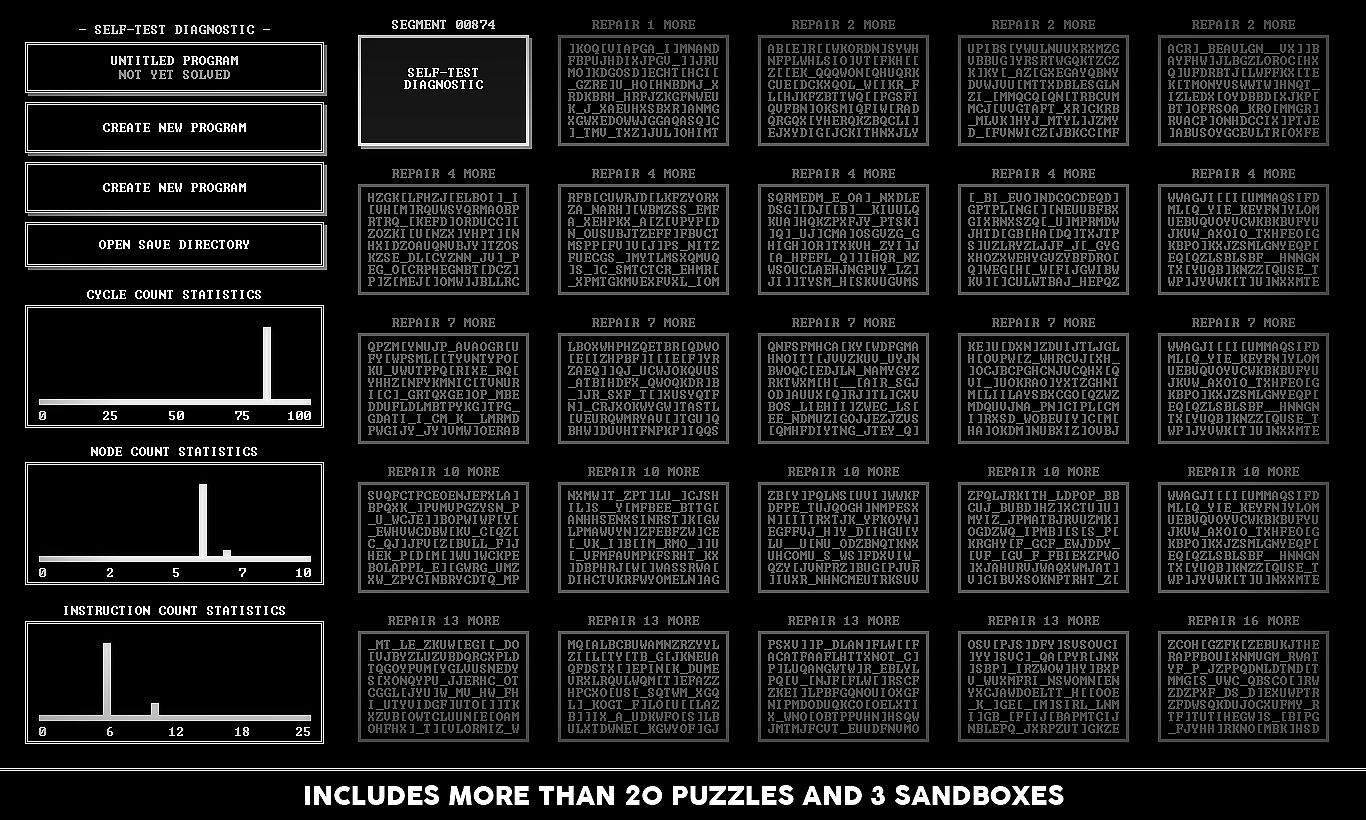
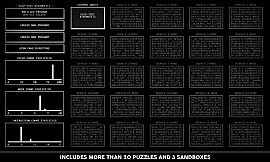
The primary experience consists of a series of more than 45 puzzles that progressively introduce new requirements and node configurations. These puzzles form the main campaign focused on restoring functionality to the system.
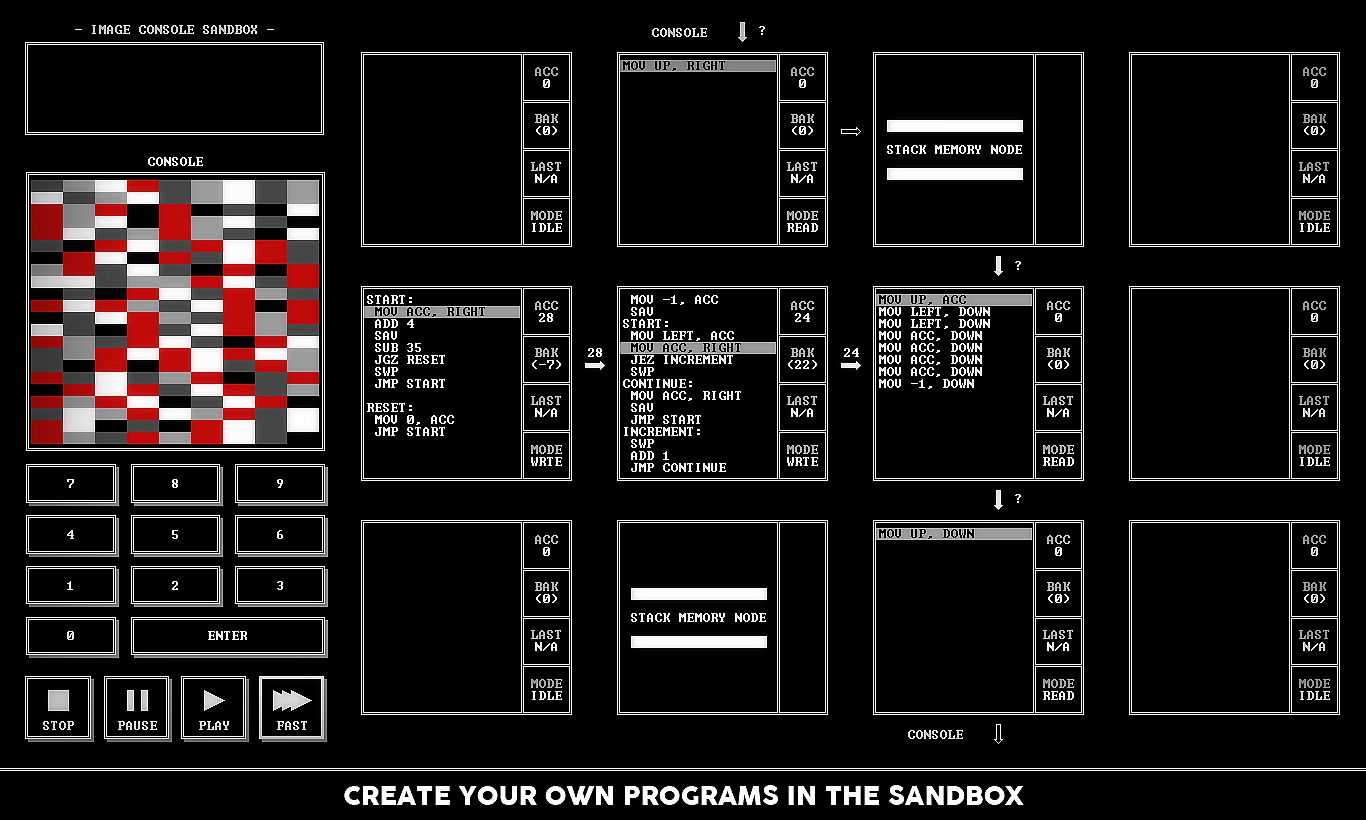
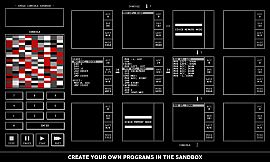
Three dedicated sandboxes allow free-form experimentation. One of these includes a visual console feature that supports the creation of custom interactive programs, effectively enabling players to build simple games or visualizations inside the existing framework. Leaderboard-style comparisons for puzzle solutions extend the challenge beyond single-player completion.
The Reference Manual
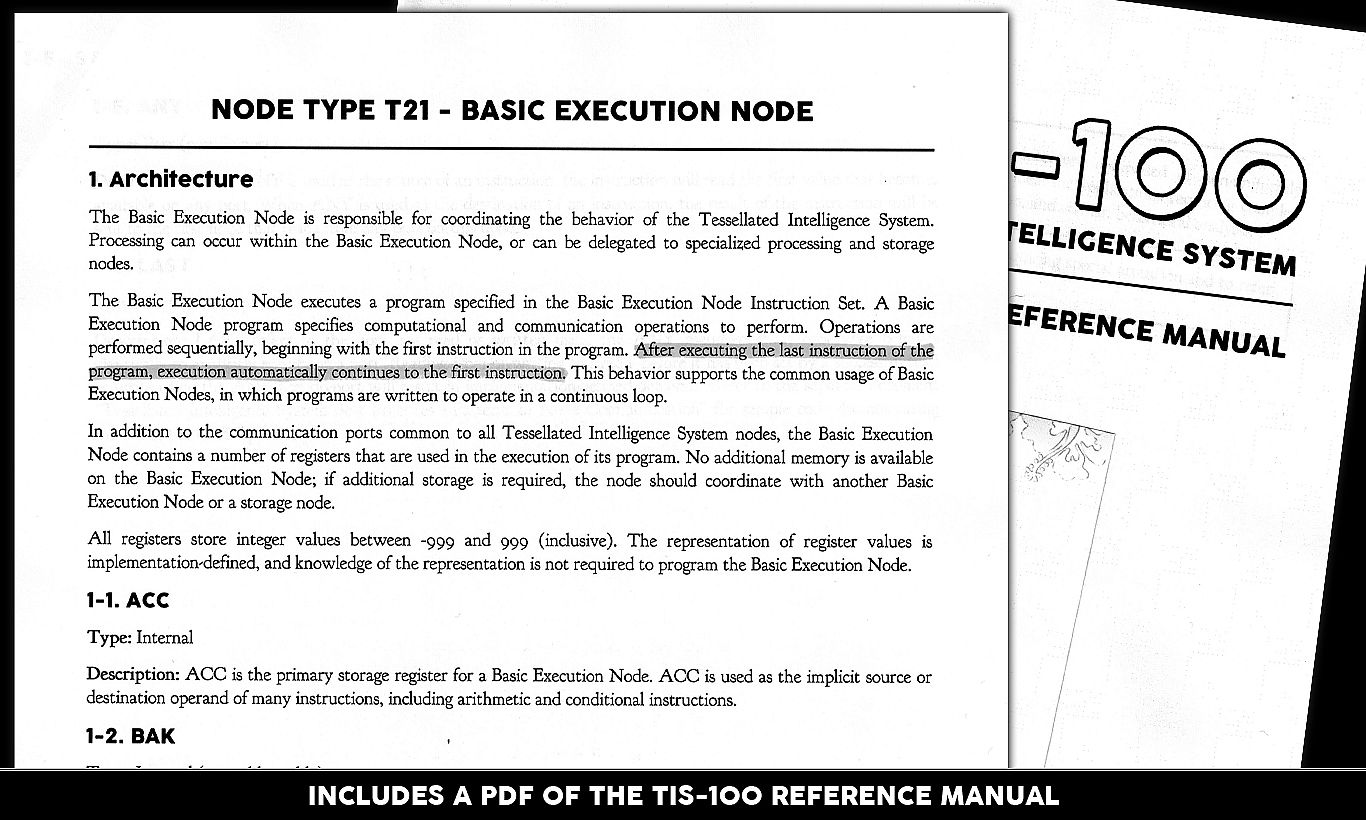
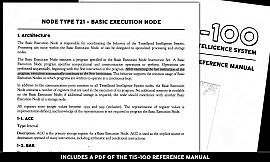
A detailed in-game manual replicates the style of 1980s technical documentation. It explains the full instruction set, node behaviors, and system architecture while serving as the primary learning resource. Players are encouraged to treat the manual as a physical reference during sessions, which reinforces the simulation of working with vintage hardware documentation.
This element ties directly into the game's presentation, blending functional instruction with period-appropriate formatting and terminology that deepens immersion without relying on modern tutorials or hand-holding.
Uncovering the Secrets
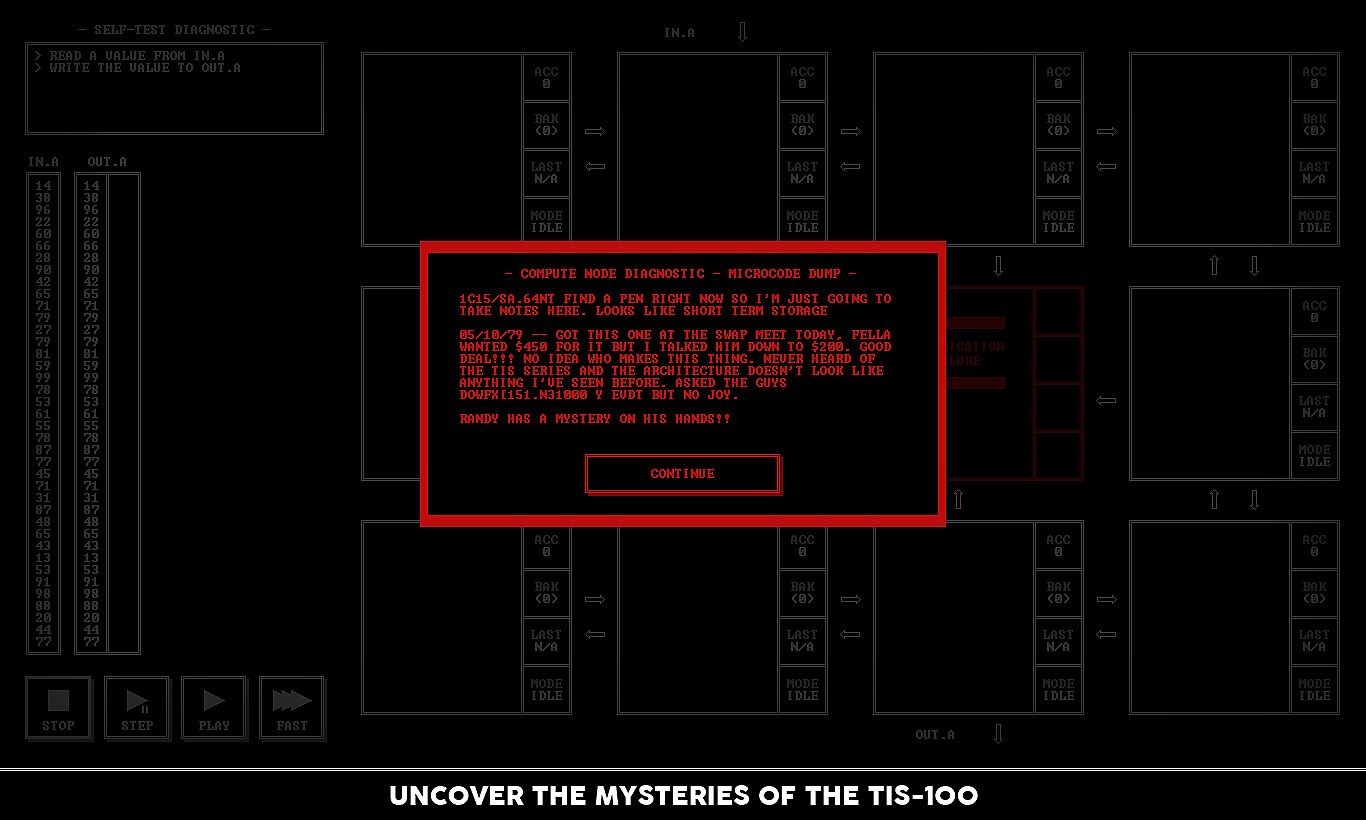
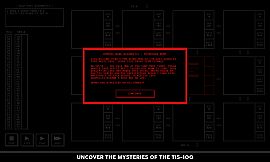
Beyond the technical challenges, the game incorporates a narrative layer revealed through puzzle progression and manual entries. Fragments of information about the TIS-100's origins and intended applications gradually surface, providing context for the corrupted state encountered at the start.
Exploration of these details rewards persistent players who complete multiple puzzles and experiment in the sandboxes, though the focus remains on the programming mechanics rather than extended storytelling sequences.
Is It Worth Playing?
TIS-100 appeals strongly to players interested in logic puzzles and low-level programming concepts. Its open-ended nature supports repeated visits for optimization and custom creation long after the main puzzles are solved. Reception among those who enjoy the genre highlights the satisfaction of mastering the constrained instruction set and achieving efficient solutions.
The game offers no ongoing updates or seasonal content, existing as a complete single-player title since its release. It suits individuals comfortable with trial-and-error coding sessions and benefits from the included manual for self-directed learning. Those seeking fast-paced action or narrative-driven experiences may find the deliberate pace less engaging, while dedicated puzzle solvers often return to refine approaches or explore sandbox possibilities.