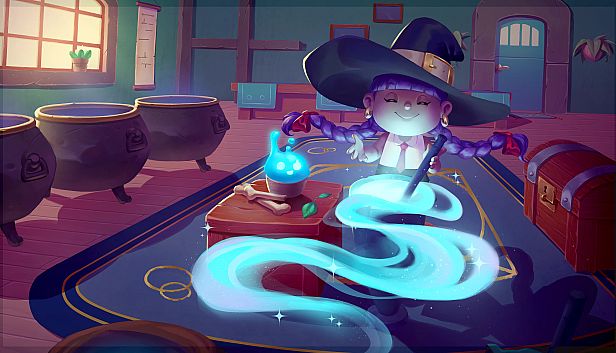



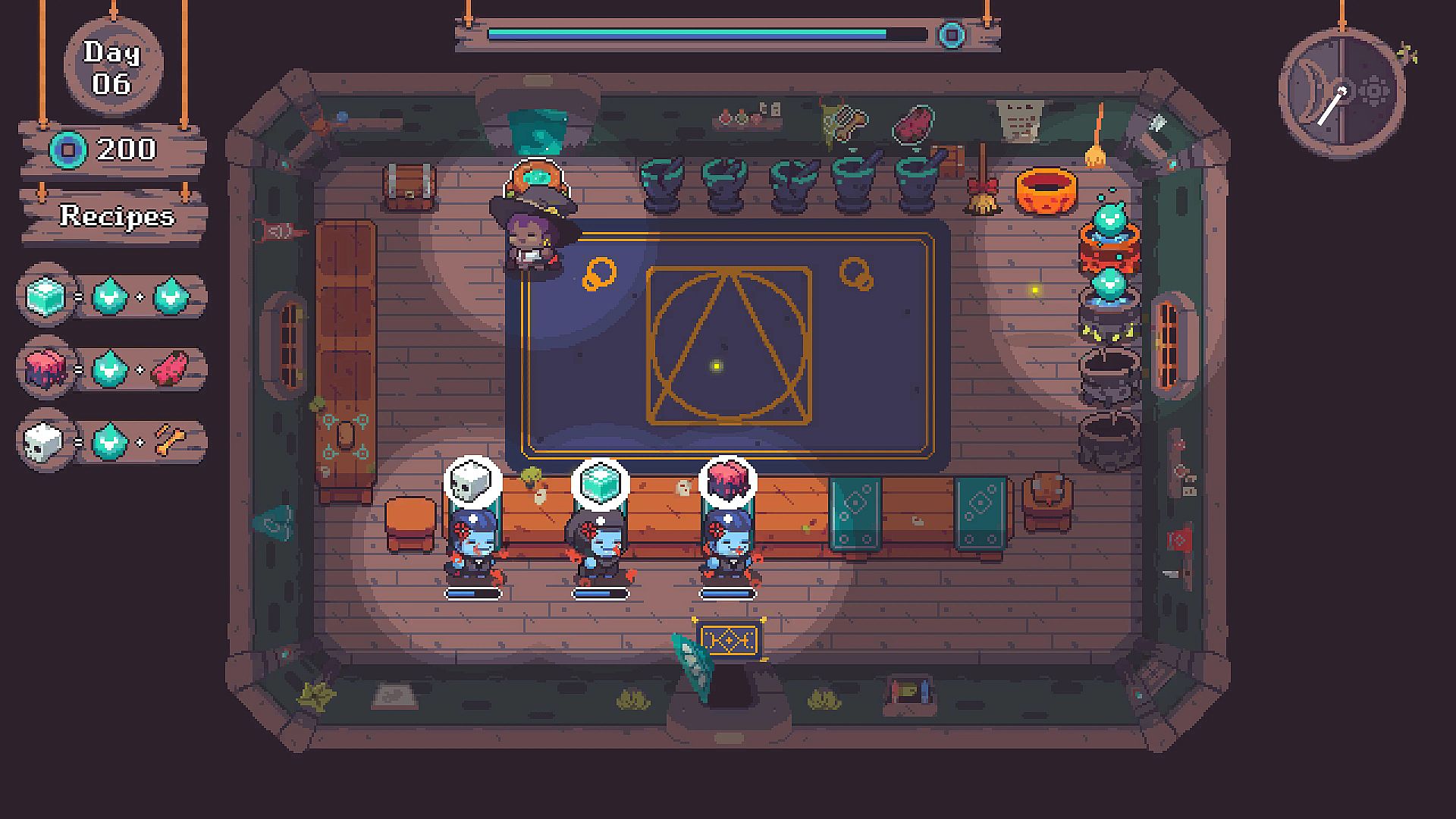
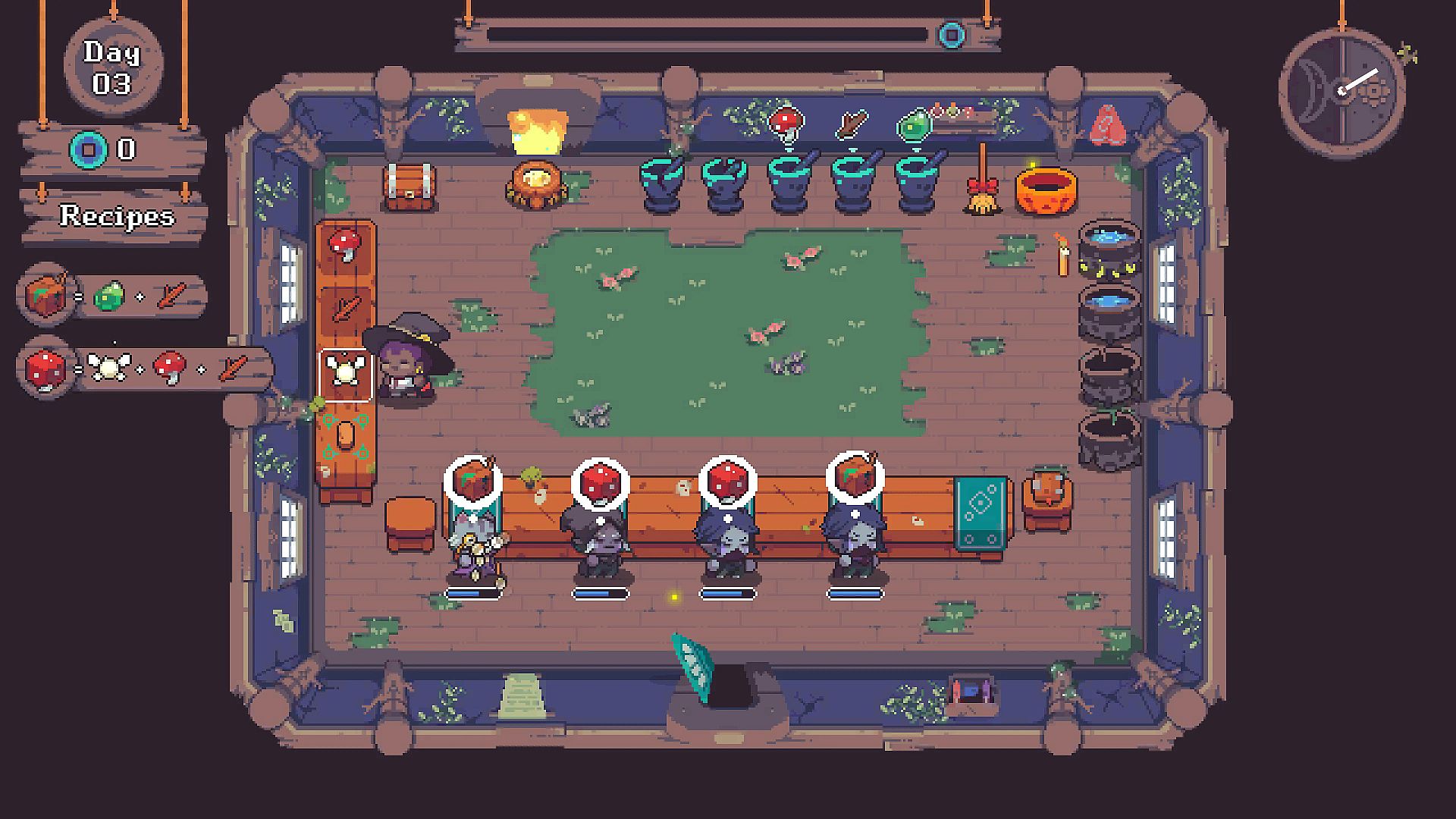
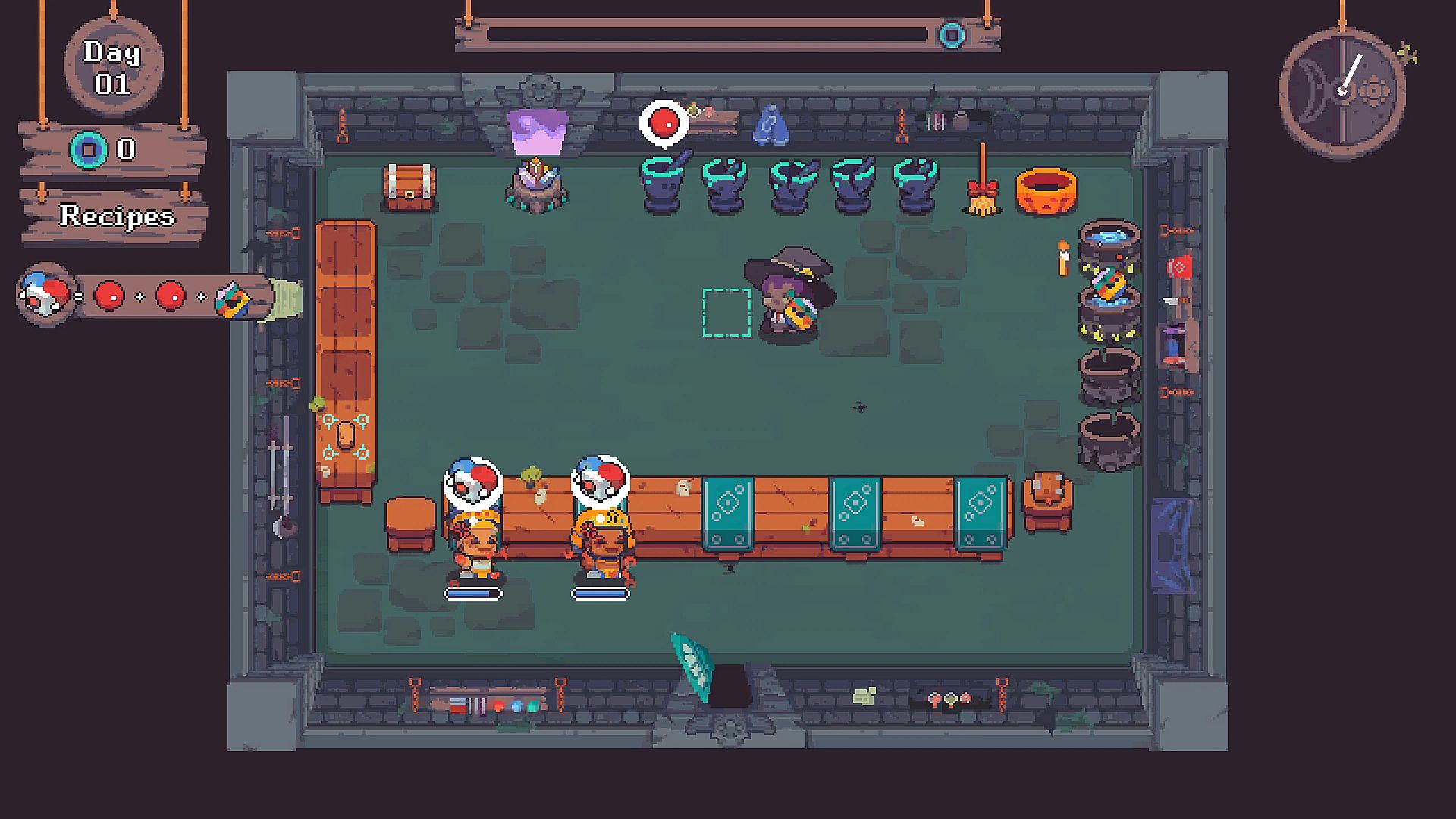
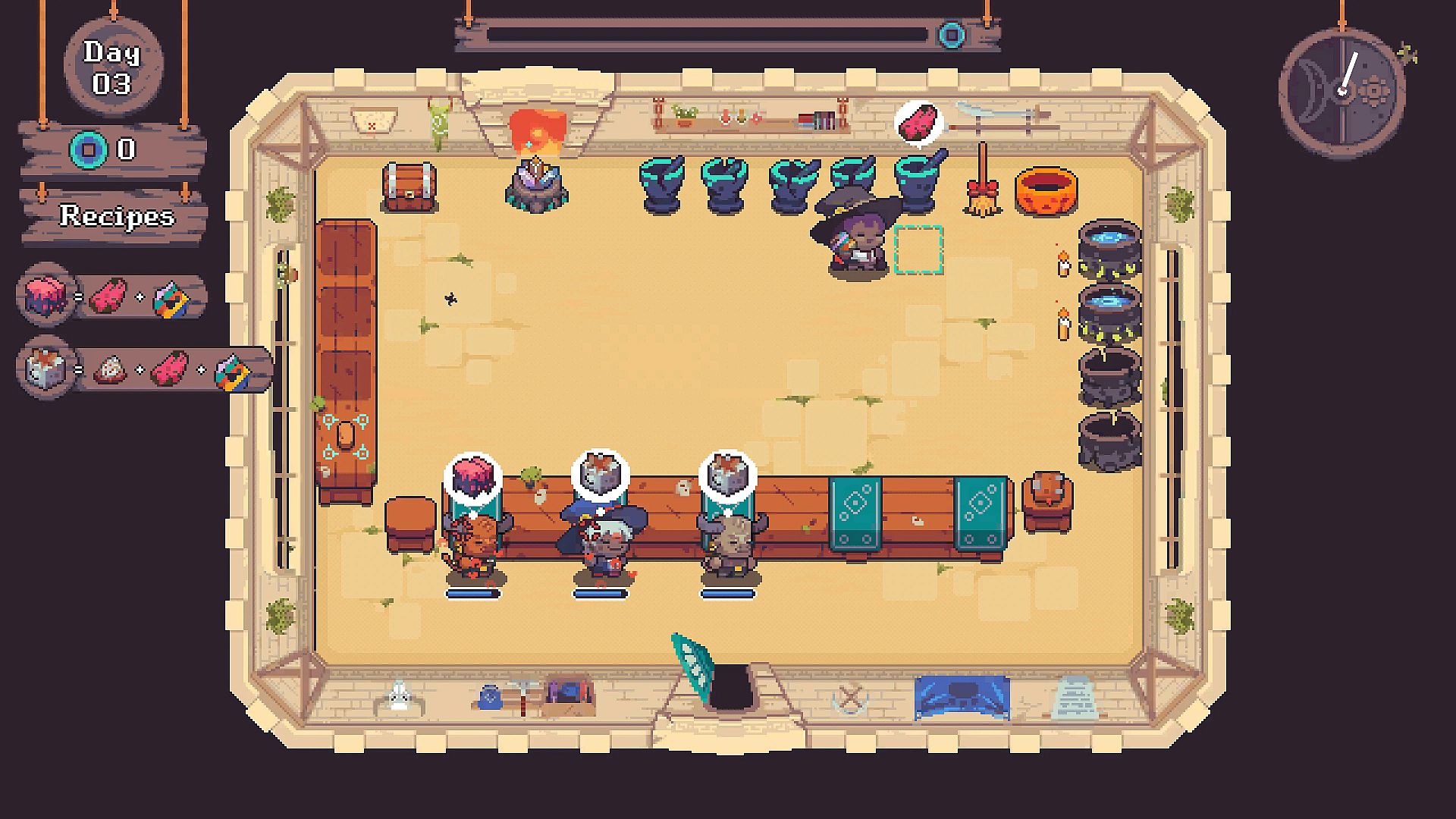
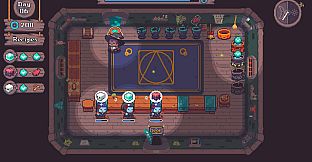
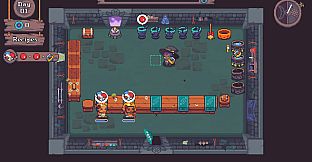
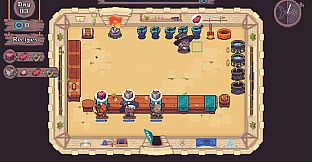
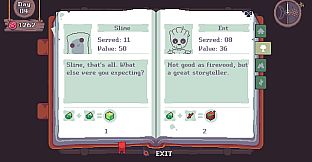
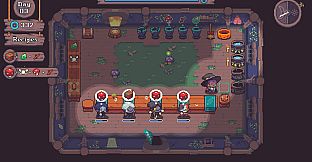
Tiny Witch is an action-infused simulation game that blends casual shop management with precise resource mixing. Players take on the role of a young witch running a magical minion store for demanding dungeon master customers. The core loop revolves around gathering ingredients, processing them through pounding and boiling steps, and assembling the right combinations on an alchemy table to fulfill orders before time runs out.
Gameplay
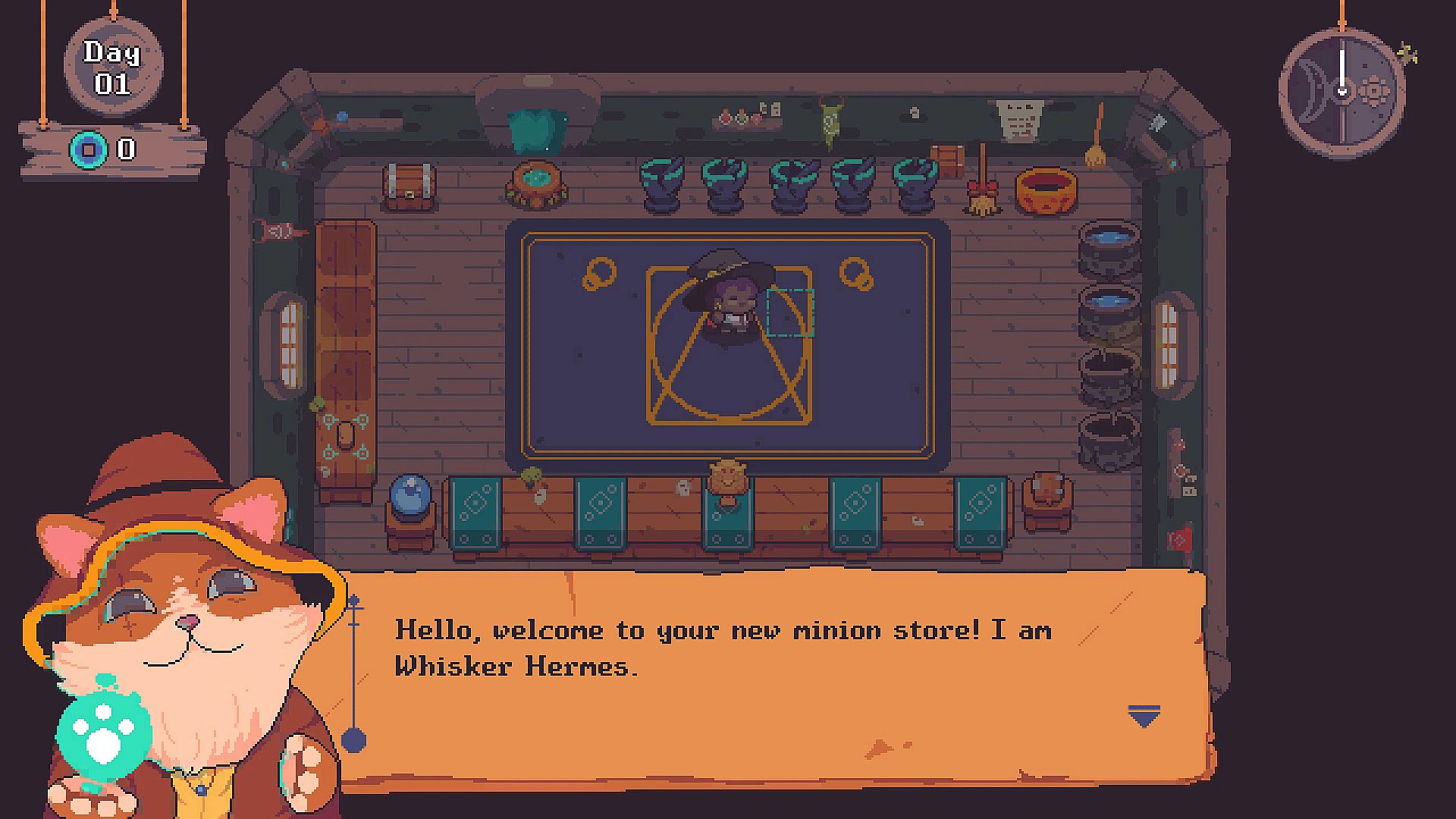
The gameplay centers on efficient production under pressure. Resources go into a pounder for crushing or a cauldron for boiling to create base materials. These then combine on the alchemy table into specific minions requested by customers. Each order has exact requirements, and mistakes lead to unhappy clients who may withhold tips or cause other setbacks. The shop starts basic with limited stations, but upgrades add new equipment, storage options, and processing tools to handle more complex recipes.
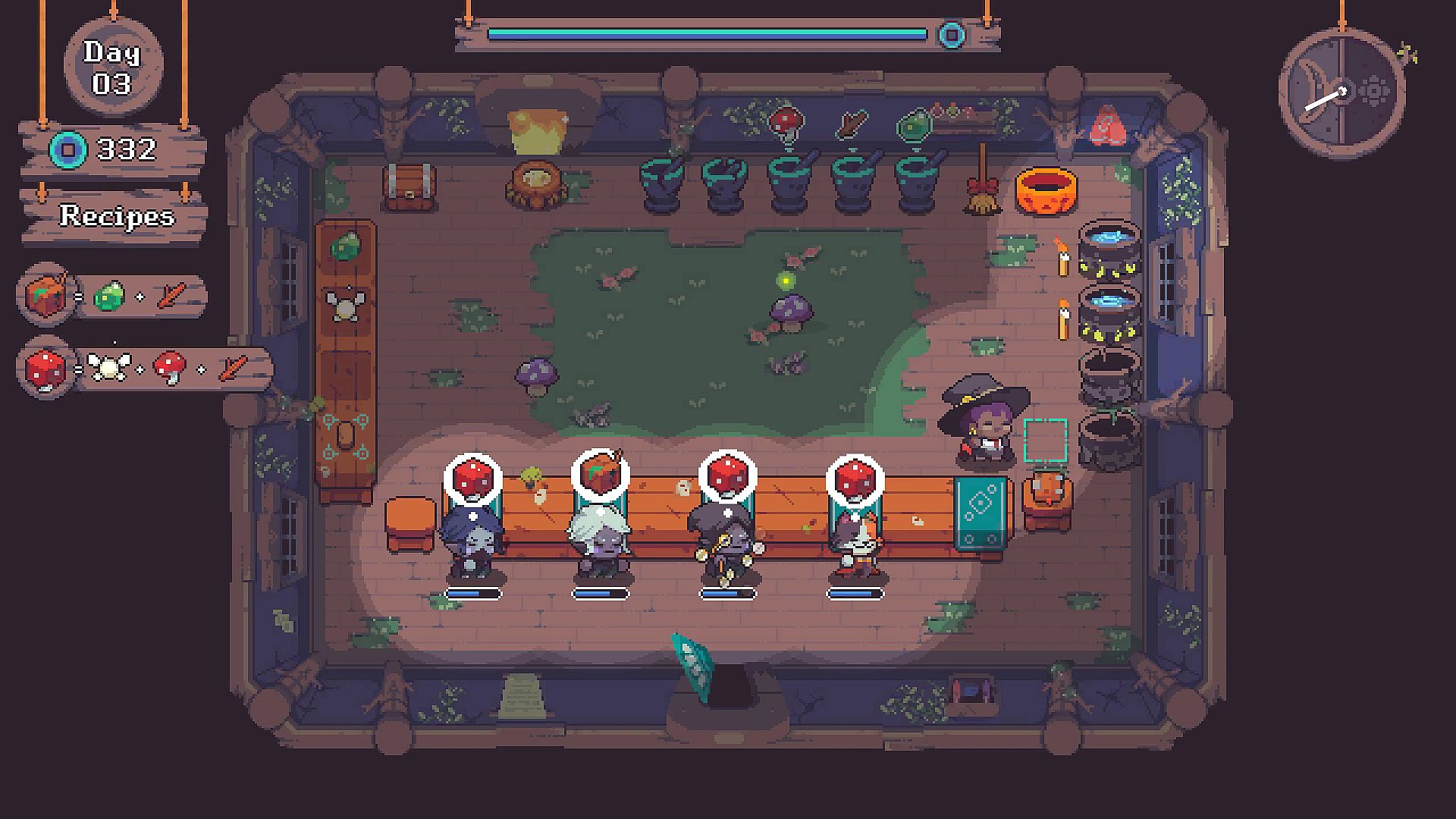
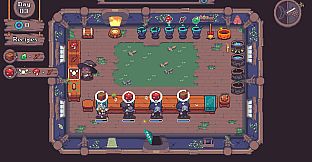
Day and night shifts introduce variety. Night customers often show different moods and expectations compared to daytime visitors, requiring players to adjust pacing and priorities. The setting spans multiple environments including a forest, cave, and desert, each bringing its own visual and atmospheric changes to the shop operations. Expansion involves purchasing better tools and unlocking new recipes through successful service streaks.
Game Modes
Two primary approaches shape each session. Casual play allows relaxed pacing with forgiving timers and fewer penalties for minor errors. Challenge mode tightens the constraints with stricter time limits and higher expectations from every customer. Four distinct levels provide progression, each featuring unique quirks in layout, customer types, or resource availability that alter the mixing workflow.
Shifts alternate between day and night across these levels. This cycle affects customer behavior and tip potential, encouraging players to plan ingredient prep during slower periods. No multiplayer elements exist, keeping the focus on solo management and personal optimization of the production line.
Shop Upgrades and Progression
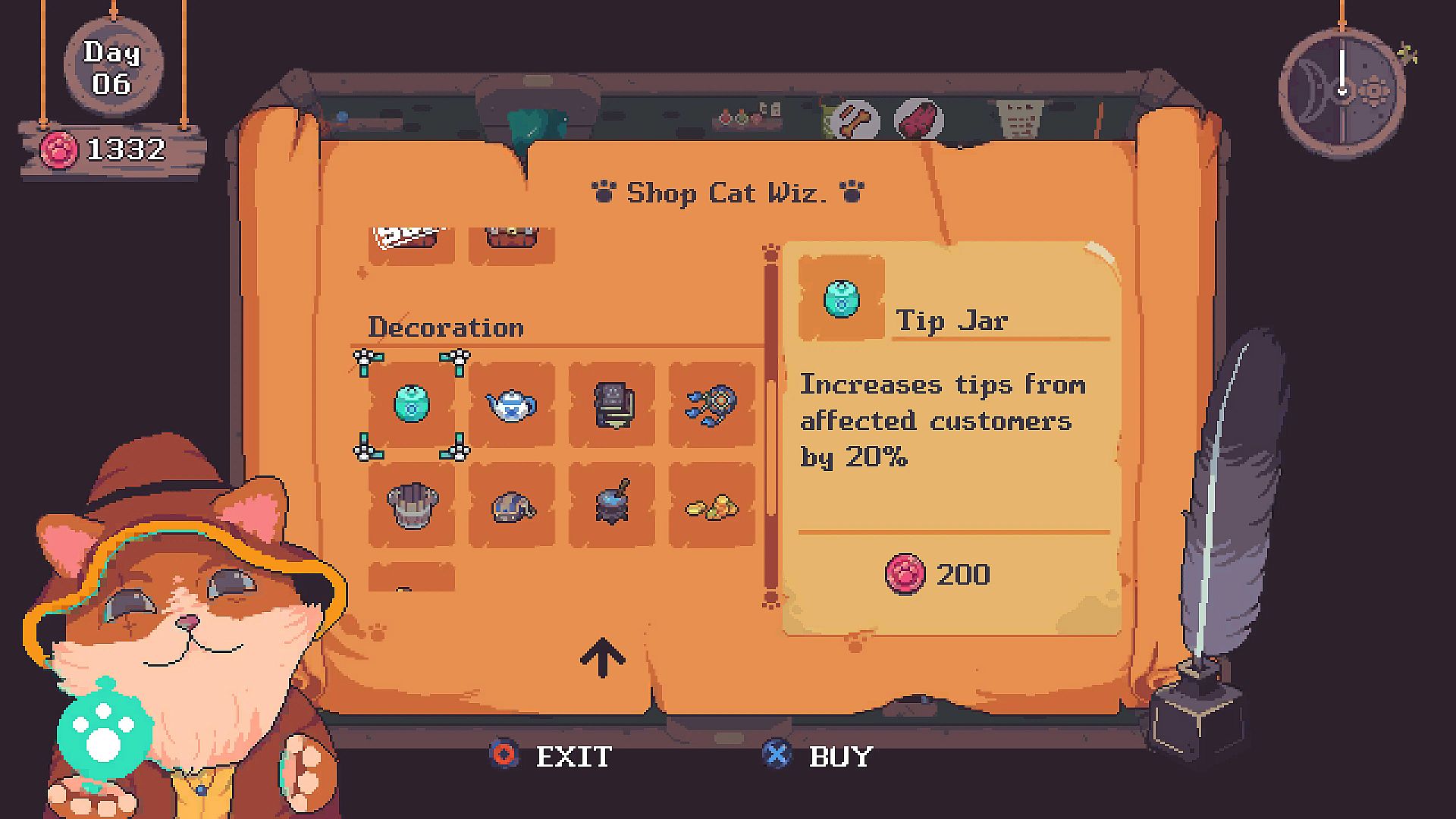
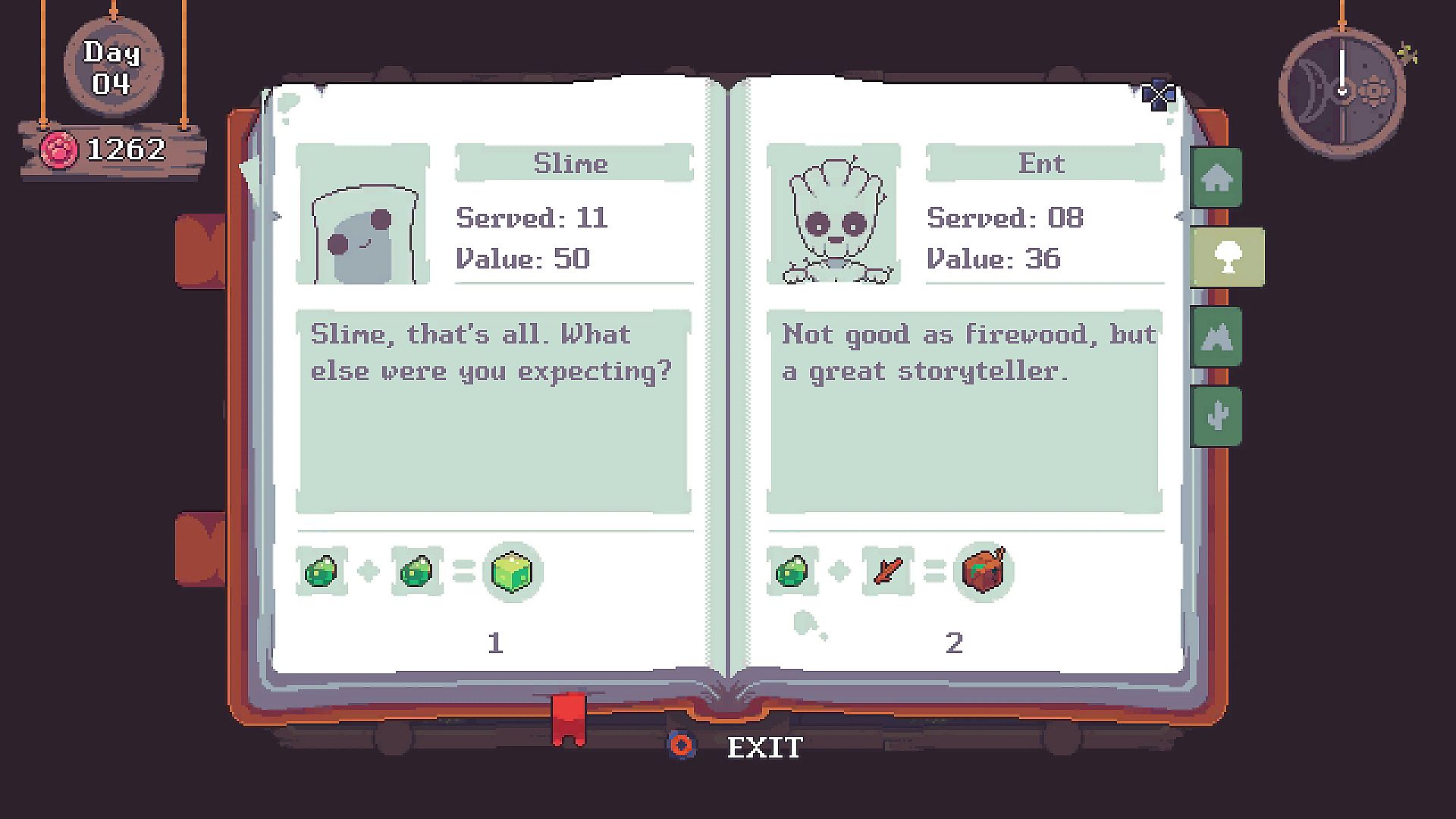
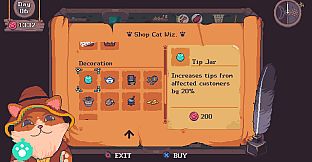
Progress comes through consistent customer satisfaction. Earnings fund improvements like additional cauldrons, mortars, work tables, and decorative items that enhance the store's appeal. Pets and wrapping stations become available later, adding layers to the daily routine without changing the fundamental mixing mechanics. New recipes unlock gradually, expanding the range of minions that can be produced to meet evolving demands.
The system rewards attention to detail. Serving the correct minion on time builds a buffer of goodwill, while repeated successes open access to advanced stations. This creates a steady loop of preparation, execution, and reinvestment that suits short play sessions or longer focused runs.
Is It Worth Playing?
Tiny Witch suits players who enjoy time-management simulations with a light action component in the resource processing. The mix of casual accessibility and optional challenge mode makes it approachable for newcomers while offering depth for those seeking tighter constraints. Sessions typically last a few hours total, making it ideal for completionists or those looking for a compact experience on PS5.
Reception highlights the satisfying rhythm of production and the stress of meeting quirky customer needs. With mostly positive feedback on its core loop and cozy yet demanding shop theme, the game delivers a focused simulation without unnecessary complexity. It fits well for fans of indie casual titles who appreciate precise crafting under time pressure rather than open-ended exploration.