




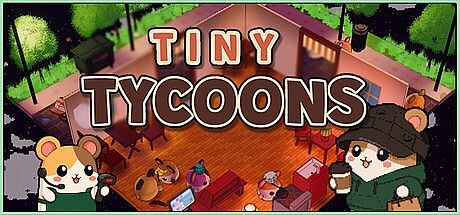


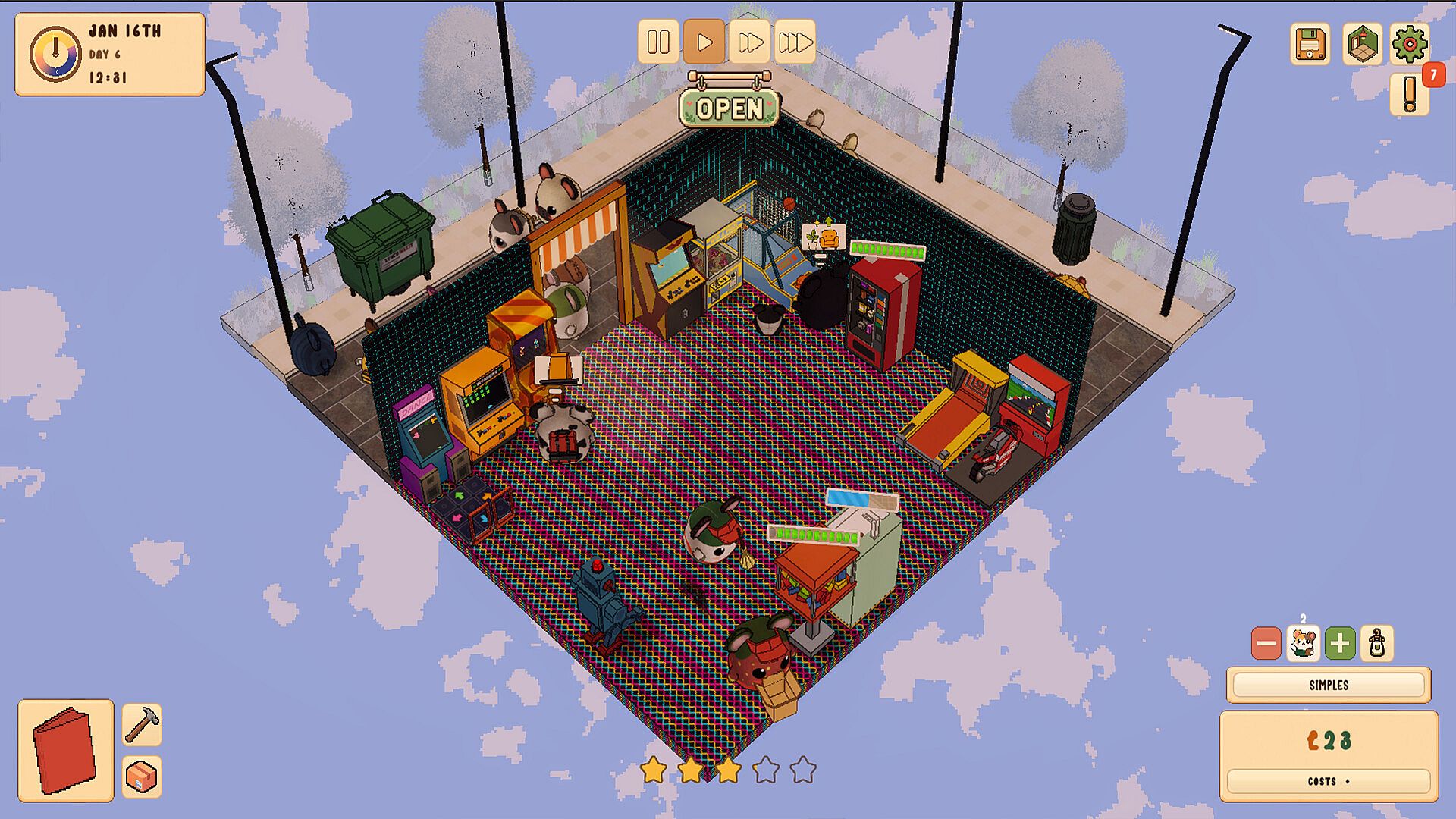
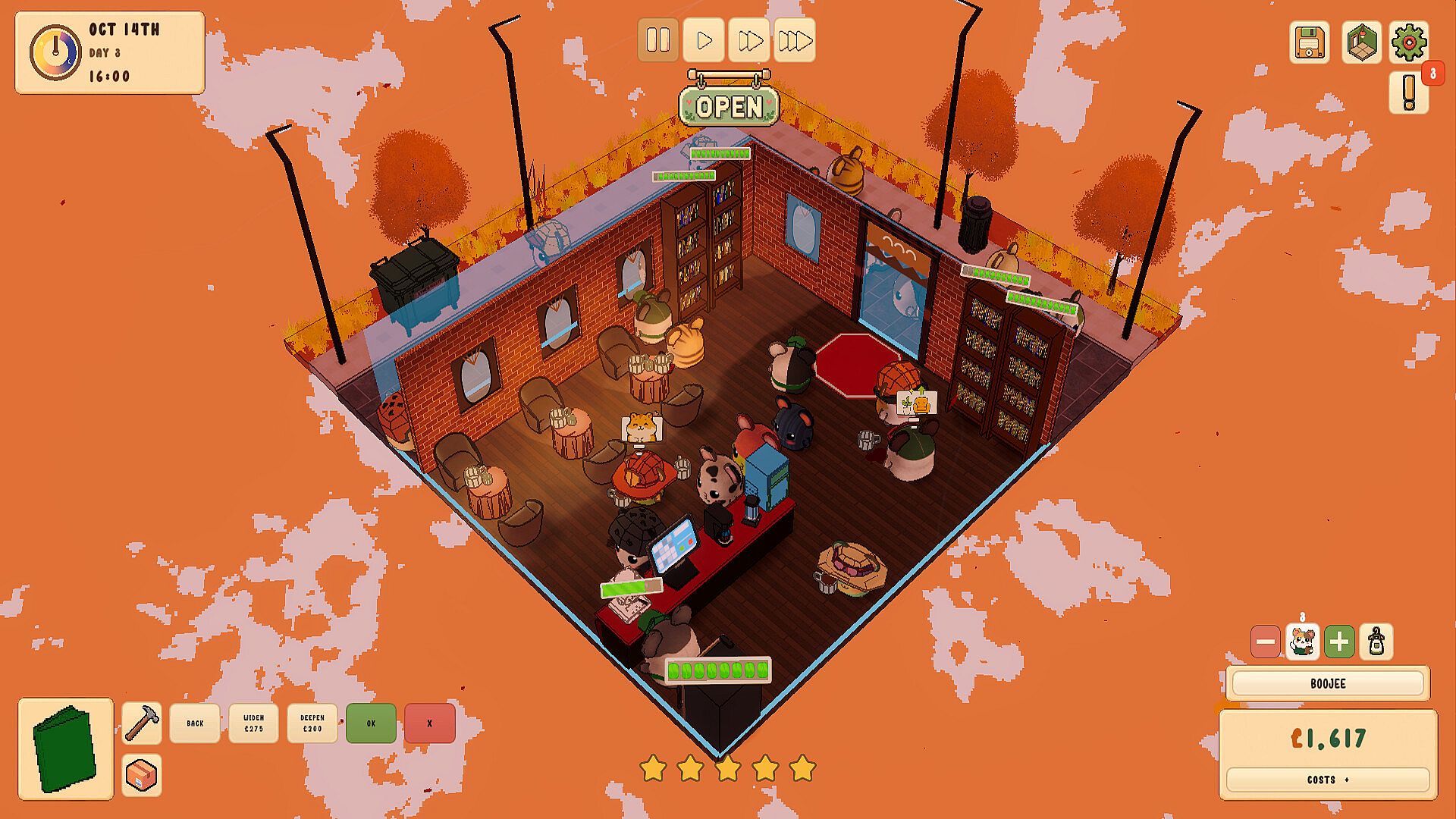
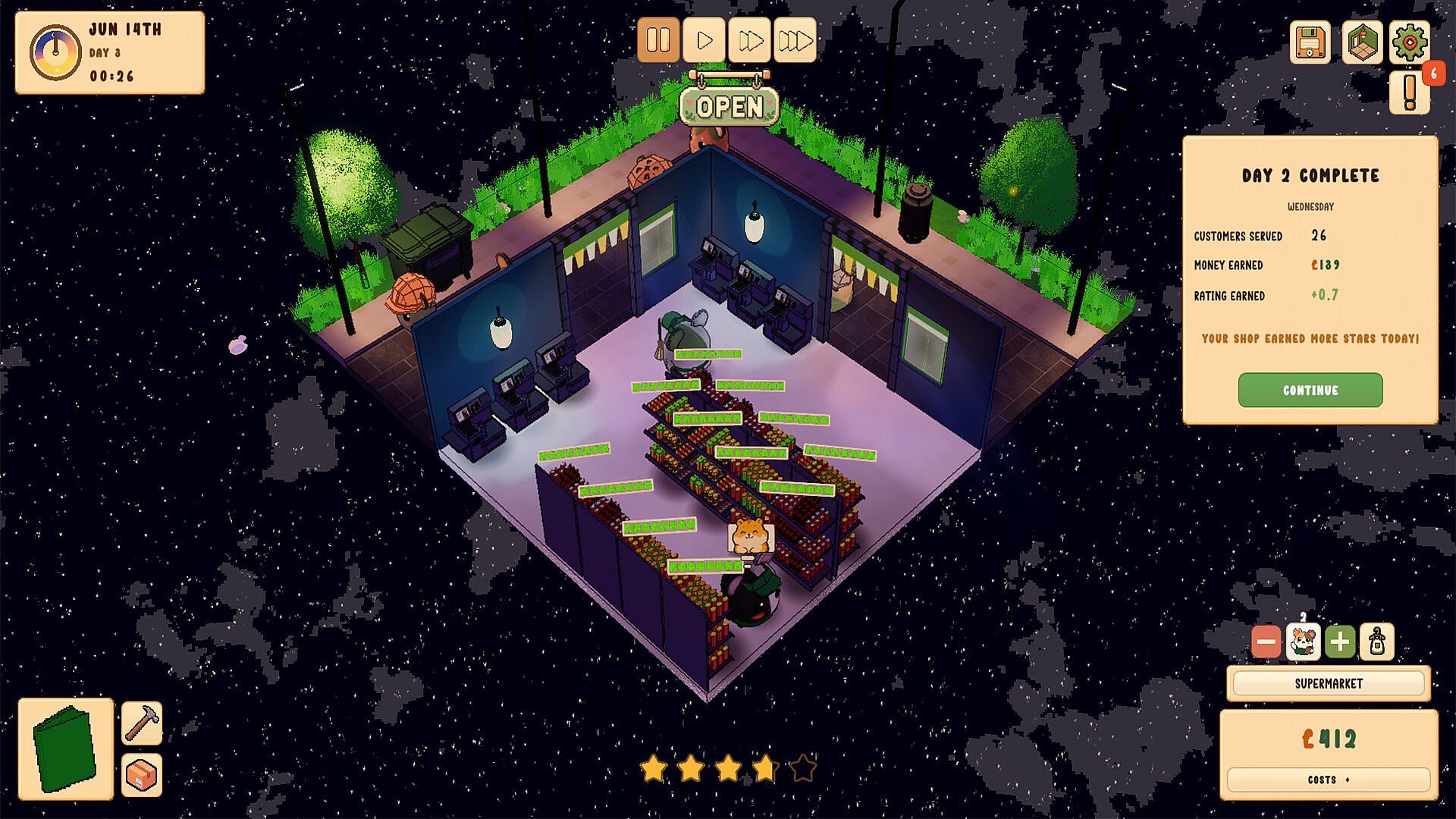
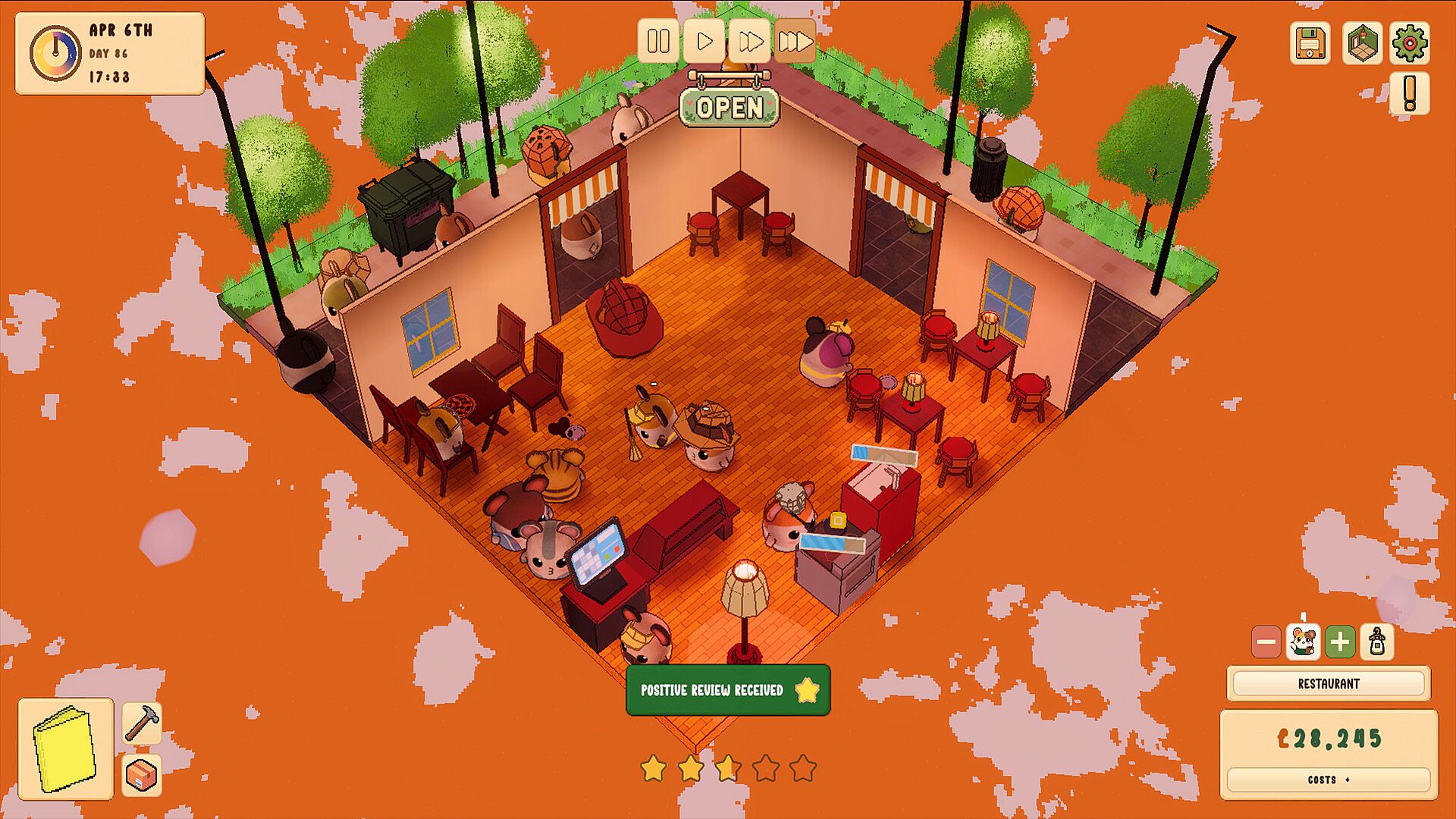
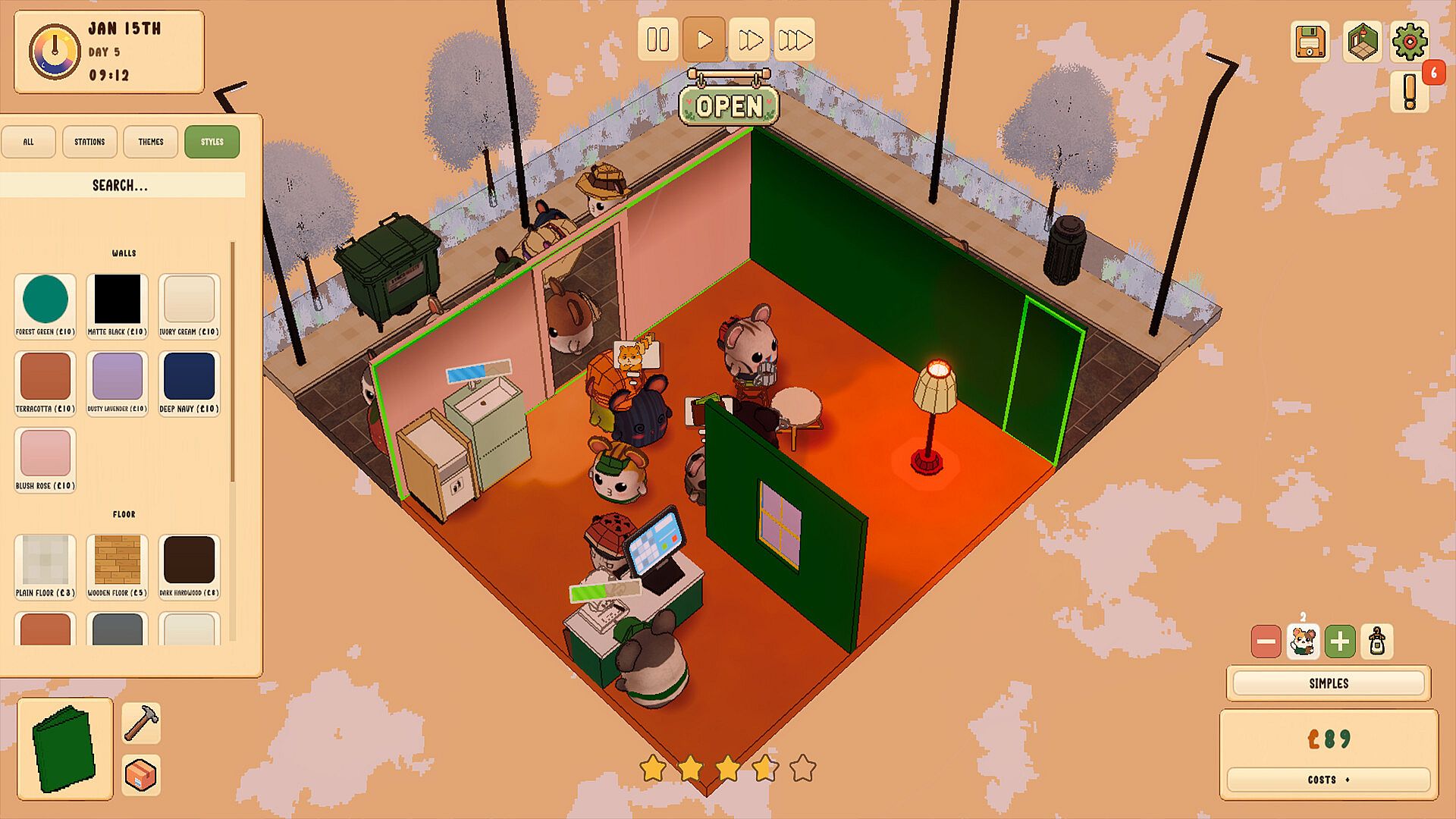
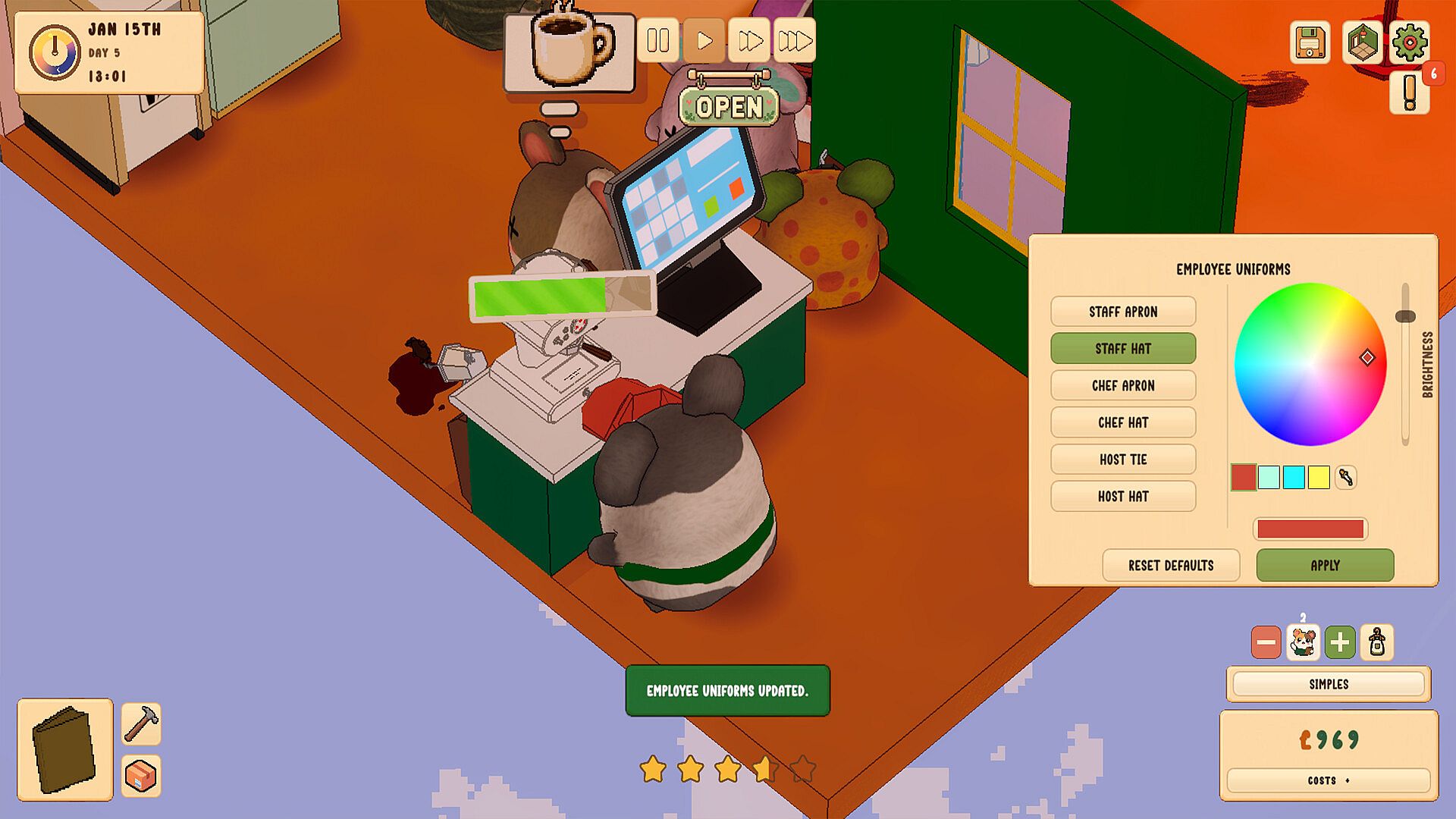
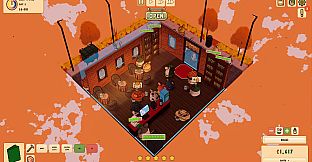
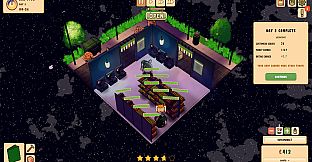
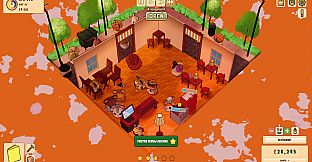
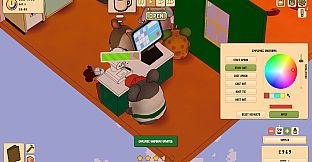
Tiny Tycoons is a cozy management simulation game that blends strategy and casual building elements on PC. Players construct and run small businesses inside rooms populated by a community of hamsters, turning empty spaces into functional spots for eating, shopping, and playing.
Gameplay
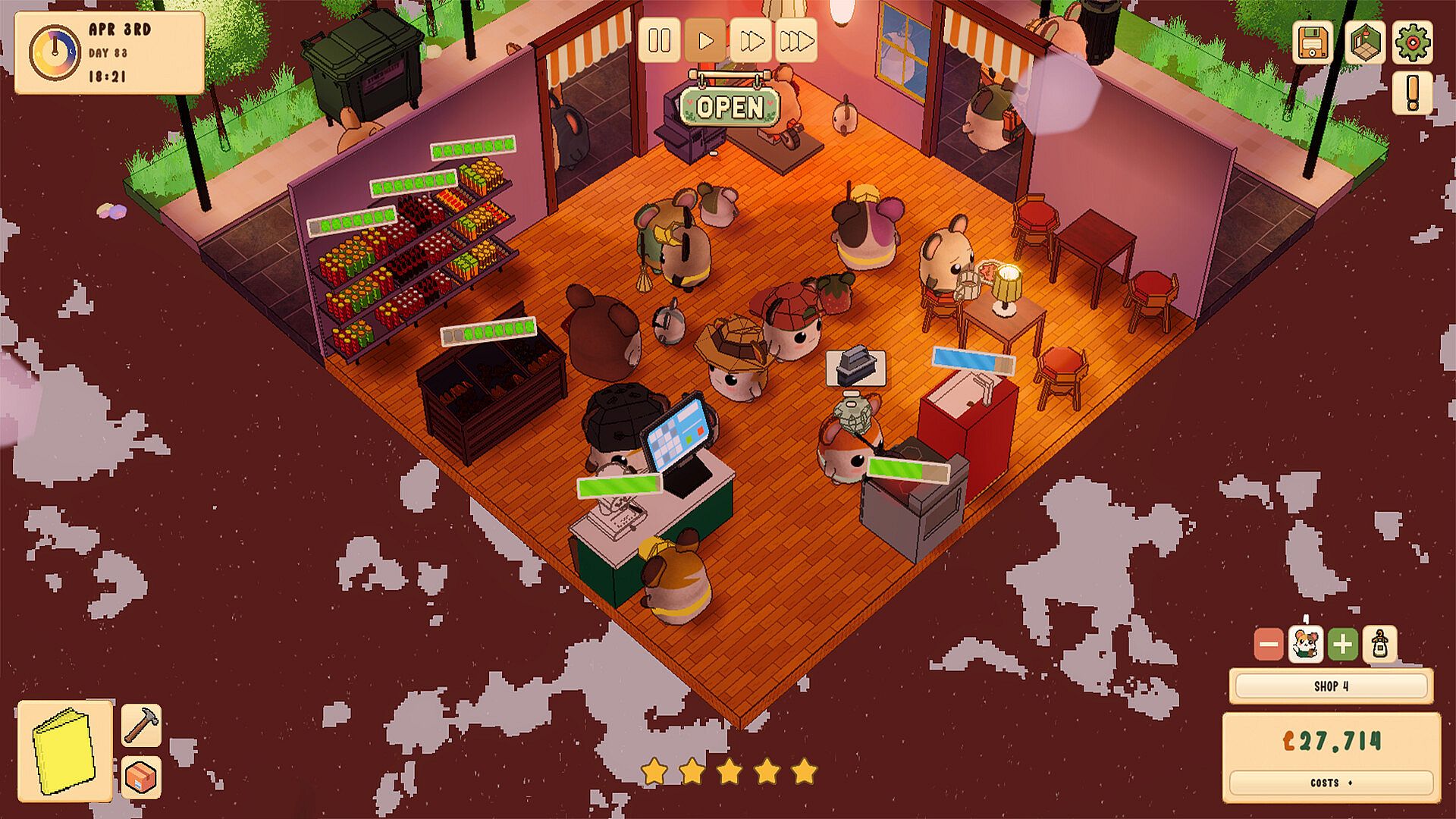
The core loop centers on expanding a single room into a thriving business hub. Players begin with a blank space and hire a small team of hamster staff to operate stations such as tills, shelves, and service counters. Customers arrive steadily, forming queues that require careful monitoring to prevent overcrowding. Staff handle daily operations while players focus on layout decisions, ensuring each station stays staffed and productive.
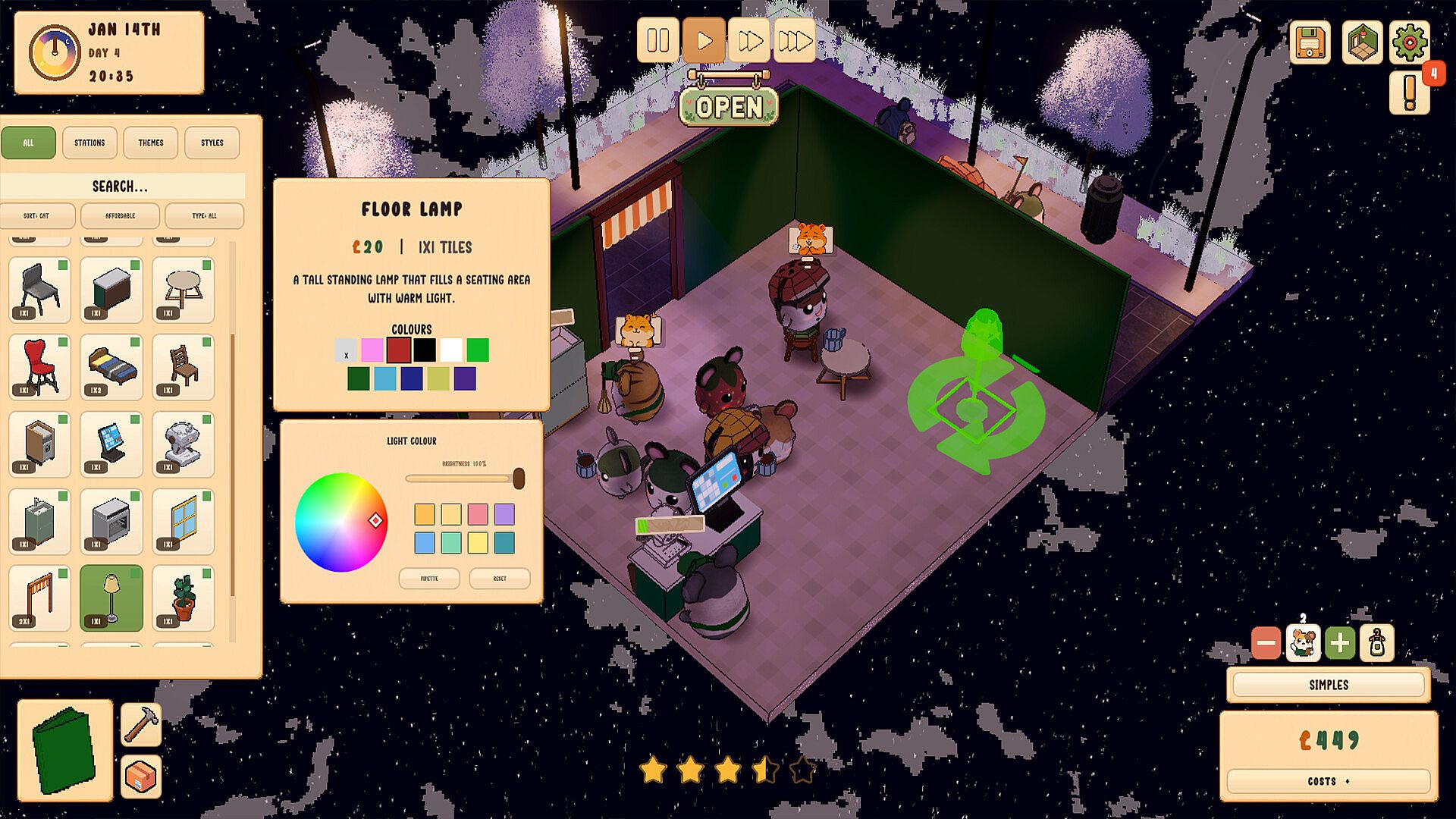
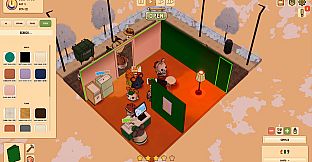
Customization forms a key part of the experience. Every element from floor type and wall paint to individual lamps and chairs can be placed by hand. A room might stay orderly and efficient or grow densely packed with stations, prompting rearrangements or additional hires. Earnings from customer transactions fund further growth, including opening new sections of the building and unlocking fresh business types with their own furniture, products, and equipment needs.
Queue management and staffing balance drive the strategic side. When lines stretch too far, options include hiring another hamster, repositioning furniture, or adding more stations. The process rewards thoughtful planning as businesses scale and new customer flows emerge.
Game Modes
Tiny Tycoons operates as a singleplayer experience focused on progressive building and management. There are no separate named modes, but the gameplay naturally shifts between initial setup phases, steady operation of established rooms, and expansion into additional building areas. Players move at their own pace, experimenting with layouts and business combinations without time pressure or competitive elements.
Building and Progression Systems
Progression ties directly to revenue generation and space expansion. Successful businesses generate funds that unlock larger portions of the building and new business categories. Each type brings distinct requirements for furniture and equipment, encouraging players to redesign rooms multiple times to fit everything efficiently. The emphasis stays on hands-on placement rather than automated systems, giving full control over how stations and customer paths interact.
Staff and customer interactions remain straightforward yet engaging. Hamster employees manage their assigned roles independently once hired, freeing players to adjust the environment. This setup supports repeated play sessions centered on refining operations and exploring different business mixes within the same building.
Is It Worth Playing?
Tiny Tycoons suits players who enjoy relaxed strategy simulations with a focus on creative layout design and incremental growth. The hamster theme adds charm to the management loop without complicating core systems. Those who appreciate casual building games will find satisfaction in rearranging rooms, hiring teams, and watching businesses develop over time. The absence of multiplayer or timed challenges keeps the experience low-pressure and suitable for short or extended sessions. If the idea of managing hamster-run shops appeals, the game delivers a consistent, self-contained simulation built around thoughtful placement and steady expansion.











