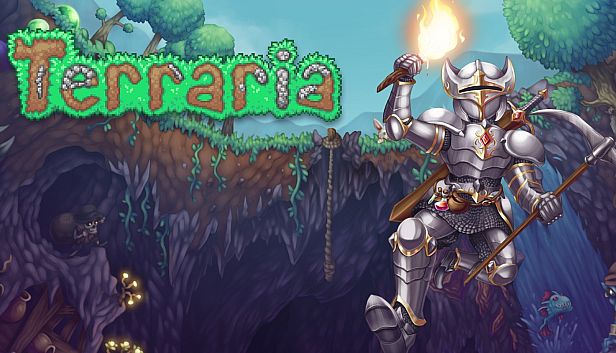


Terraria on Nintendo Switch is a 2D action-adventure sandbox game that blends exploration, combat, crafting, and construction into one cohesive experience. Players begin in a randomly generated world and immediately set to work gathering resources by digging through terrain, fending off enemies, and shaping the environment to suit their needs. The core loop revolves around survival and progression, where simple tools evolve into powerful gear as players uncover new biomes and confront increasingly challenging threats.
Gameplay
The foundation of Terraria lies in its open-ended systems that reward experimentation. Players mine for ores and materials to craft weapons, armor, and tools across four primary playstyles: melee for close-quarters combat, ranged for projectile attacks, magic for spell-based abilities, and summoner for calling minions to fight alongside them. Equipment choices determine effectiveness, allowing flexible builds that adapt as the game advances. Exploration takes players through surface forests, deserts, snow biomes, jungles, and underground layers filled with caverns and hazards. Deeper progression unlocks harder content after defeating key bosses, transforming the world with new enemies and structures. Building serves both practical and creative purposes, from basic shelters to elaborate bases that house NPCs who provide services once housed properly. Combat emphasizes timing and positioning against dozens of enemies and bosses, with events and invasions adding variety to encounters.
Game Modes
World creation offers several difficulty options that alter enemy stats, loot, and overall challenge. Classic mode provides the standard experience with balanced threats. Expert mode increases enemy health and damage while granting special Treasure Bags from bosses. Master mode further escalates difficulty with additional rewards and an extra accessory slot. Journey mode introduces creative tools such as item duplication, time control, and enemy spawn adjustments for a more customizable playthrough. Character creation includes separate difficulty settings like Classic, which drops only coins on death, Mediumcore, which drops all items, and Hardcore, which prevents respawning. Multiplayer supports cooperative play with friends locally or online, where worlds continue running even when some players are absent, and optional PvP can be toggled for team-based or free-for-all matches.
Progression and Content
Early hours focus on establishing a base and gathering basic resources before venturing into the underground. As players defeat bosses such as the Eye of Cthulhu or the Wall of Flesh, the world enters Hardmode with expanded biomes and stronger foes. Endgame content centers on events like the Lunar Events leading to the Moon Lord. Regular updates continue to add items, balance changes, and quality-of-life improvements, with the Nintendo Switch version receiving patches aligned to the latest content releases. Biomes like the Corruption or Crimson introduce unique mechanics and enemies that players must manage or purify. Fishing, mount riding, and accessory combinations further deepen the systems available for long-term engagement.
Is It Worth Playing?
Terraria maintains strong player reception years after release, with consistent praise for its depth and replayability across platforms including the Nintendo Switch. The Switch version supports handheld play at stable frame rates alongside docked performance, making it accessible for portable sessions or shared local multiplayer. Ongoing support through patches and new content keeps the experience fresh for both newcomers and veterans. It appeals most to players who enjoy methodical resource gathering, boss preparation, and world customization without strict time limits or linear storytelling. Those seeking a blend of action combat and creative building will find substantial hours of engagement, particularly in multiplayer where cooperation amplifies the sense of shared discovery and defense against threats.