






Subroutine: Deep Space is a single-player sci-fi visual programming puzzle game set in a derelict exploration ship. Players take on the role of a salvage operator repairing damaged systems by constructing node-based programs that process data streams from the vessel's fractured cores.
Gameplay
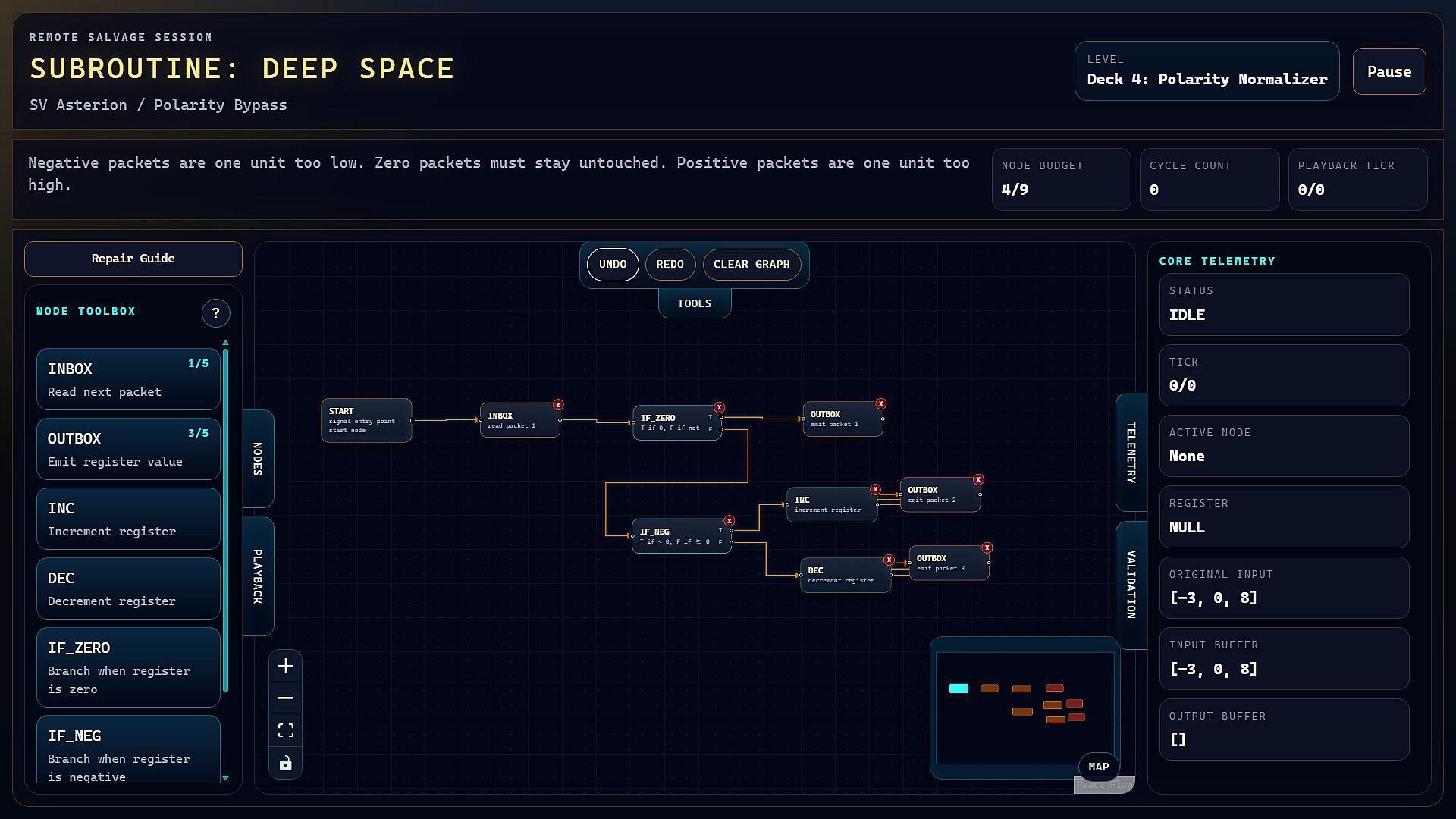
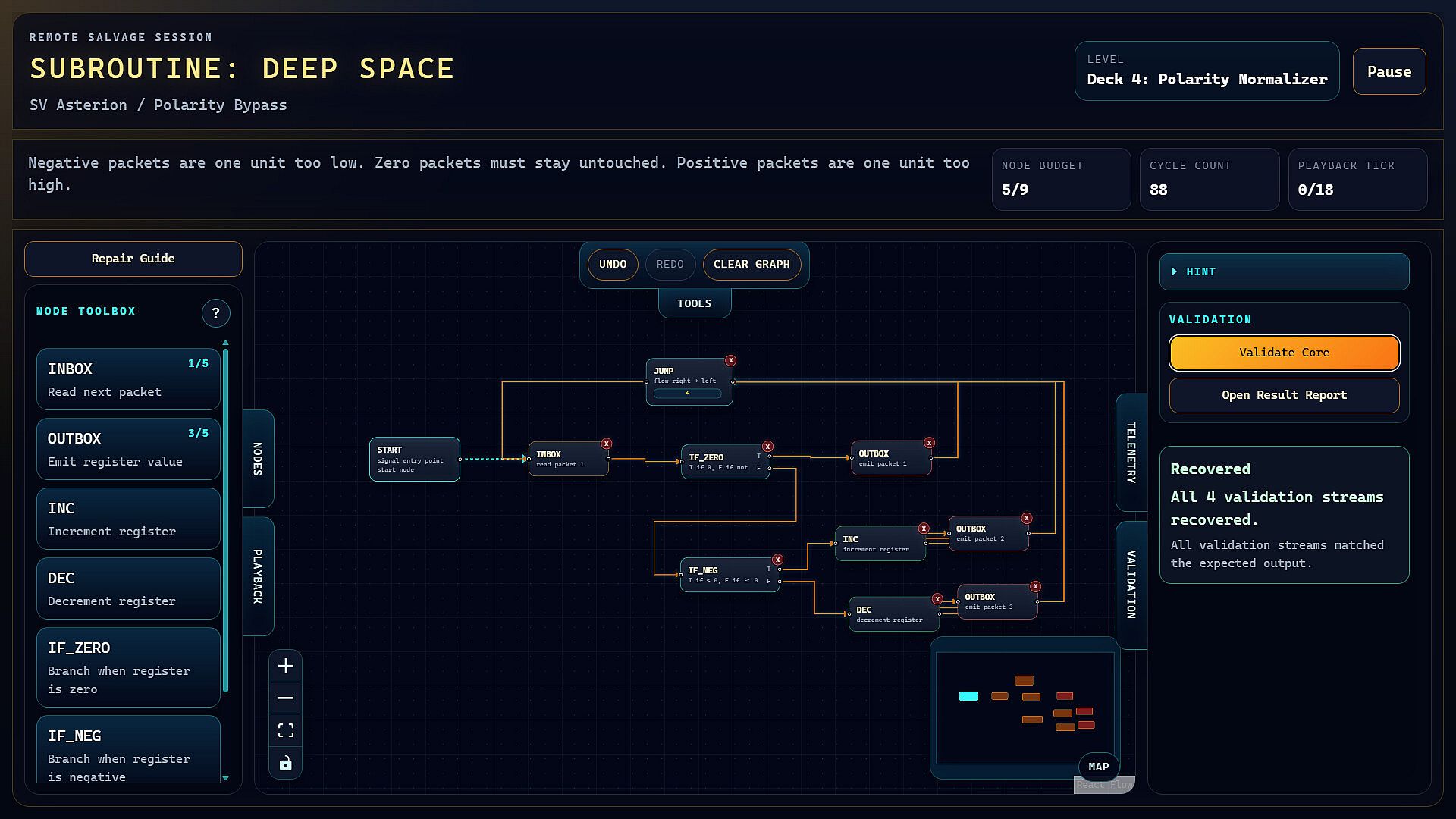
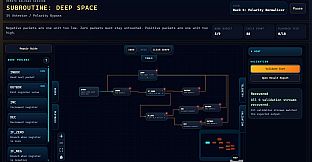
The core loop centers on building executable graphs inside each recovered deck. Every puzzle begins with a protected START node. From there, the toolbox supplies INBOX and OUTBOX nodes to handle incoming and outgoing packet streams, along with memory slots for storing values, arithmetic operations, conditional branches, string manipulation tools, logic gates, and clock nodes for timing-sensitive tasks. Once the graph is wired, players run the program and open the validation panel to test it against both visible example transforms and hidden test streams. Crashes, dropped packets, or exceeded cycle limits leave the core unrepaired.
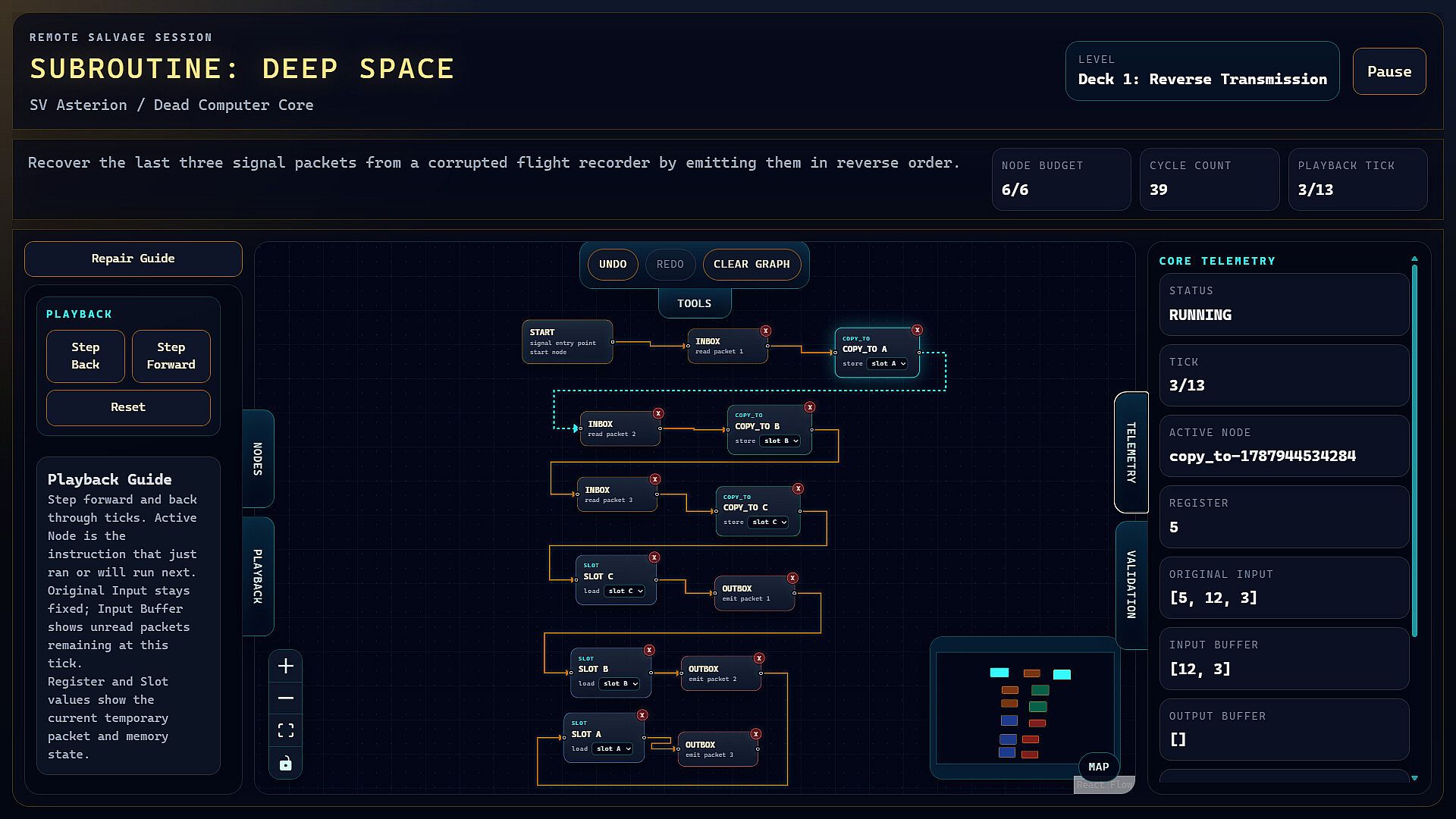
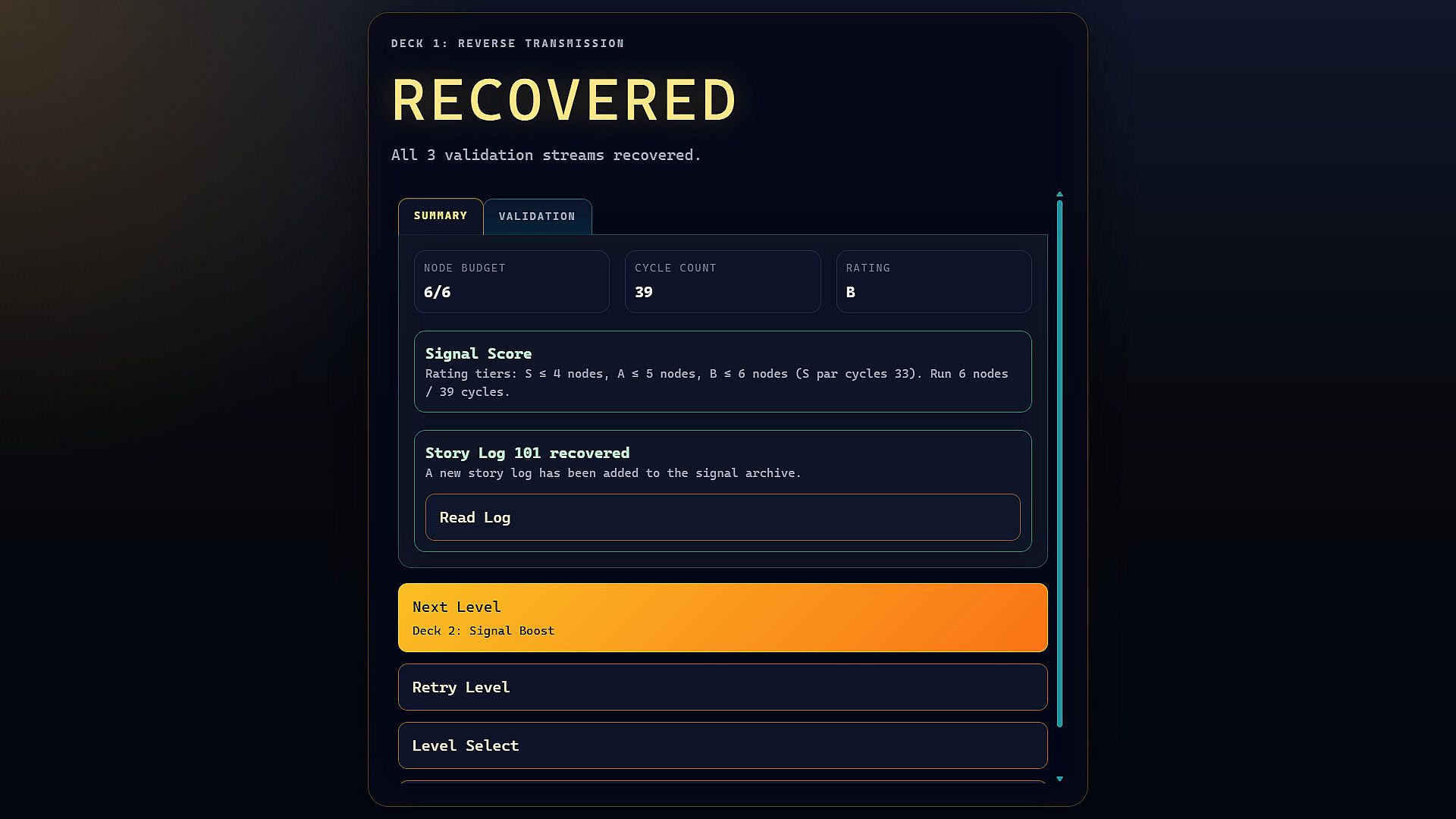
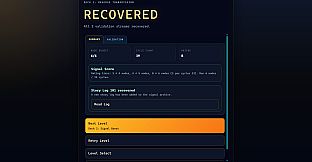
When a solution falls short, the playback debugger lets players step through individual ticks, inspect register and memory states, and trace exactly which node activated at each moment. Each deck imposes a node budget, with START, INBOX, and OUTBOX counting as free while every additional node consumes resources. Inefficient designs fail the cycle cap even if the logic is sound. The objective remains consistent across decks: produce the exact required output stream while using the fewest nodes and cycles possible. Successful repairs unlock the next deck and additional personal logs from the original crew.
Ratings of B, A, or S compare a player's best node count and cycle count against established par values, encouraging return visits to refine solutions. New node types become available as progress advances through the wreck, introducing fresh programming concepts rather than simply increasing puzzle difficulty.
Game Modes
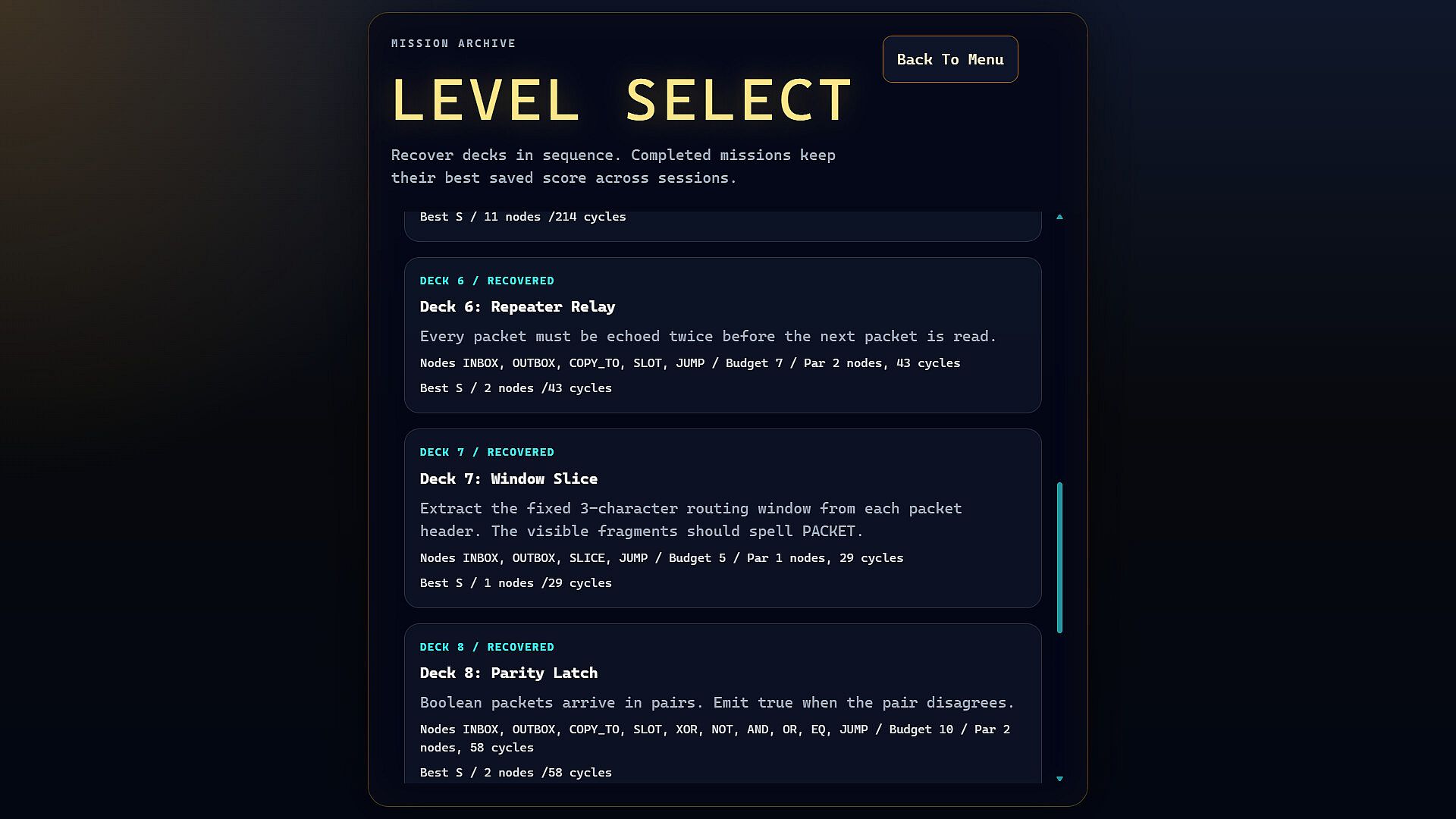
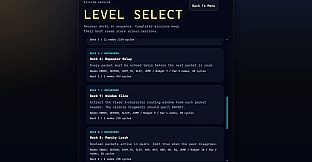
The current Early Access build contains only a single-player campaign structured around sequential deck unlocks and level select for previously solved puzzles. The loop consists of campaign progression, replaying completed decks, and optimizing solutions for higher ratings. No additional game modes are present in this version.
Progress saves locally on the player's PC. The ten decks available include Reverse Transmission, Signal Boost, Calibration Offset, Polarity Normalizer, Parity Ping, Repeater Relay, Window Slice, Parity Latch, Clock Divider, and Authenticated Length. Each features its own briefing, repair guide, and node index entry.
Story and Setting
The narrative unfolds through recovered personal logs from the exploration ship Maximo. In 3022, Andrew Mercer responded to the first confirmed SOS from beyond Earth, despite his wife Evelyn's skepticism about the sudden request for help. The ship never returned, its final transmission another distress call followed by silence. As the salvage operator interfaces with the wreck, the logs reveal how the crew noticed the signal changing during approach, with the pilot's demeanor shifting and the comms officer detecting an unexplained frequency.
Players piece together the expedition's fate while repairing the cores, gradually learning who issued the original call and why the crew answered it.
Is It Worth Playing?
Subroutine: Deep Space suits players who enjoy logic puzzles, optimization challenges, and visual programming mechanics. The Early Access release delivers a focused ten-deck campaign that typically takes a few hours on a first playthrough, with additional time required to chase top ratings. The interface supports full keyboard control with rebindable keys, undo and redo functions, and a node index for reference. Local saves preserve progress across sessions.
Those drawn to tight, rule-based problem solving and iterative refinement will find the core systems rewarding. The sci-fi framing and recovered logs add context without interrupting the puzzle focus. More story content is planned for future updates, but the current build stands on its programming loop and rating system alone.











