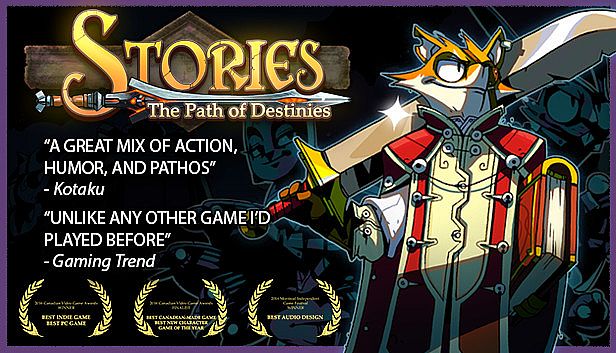














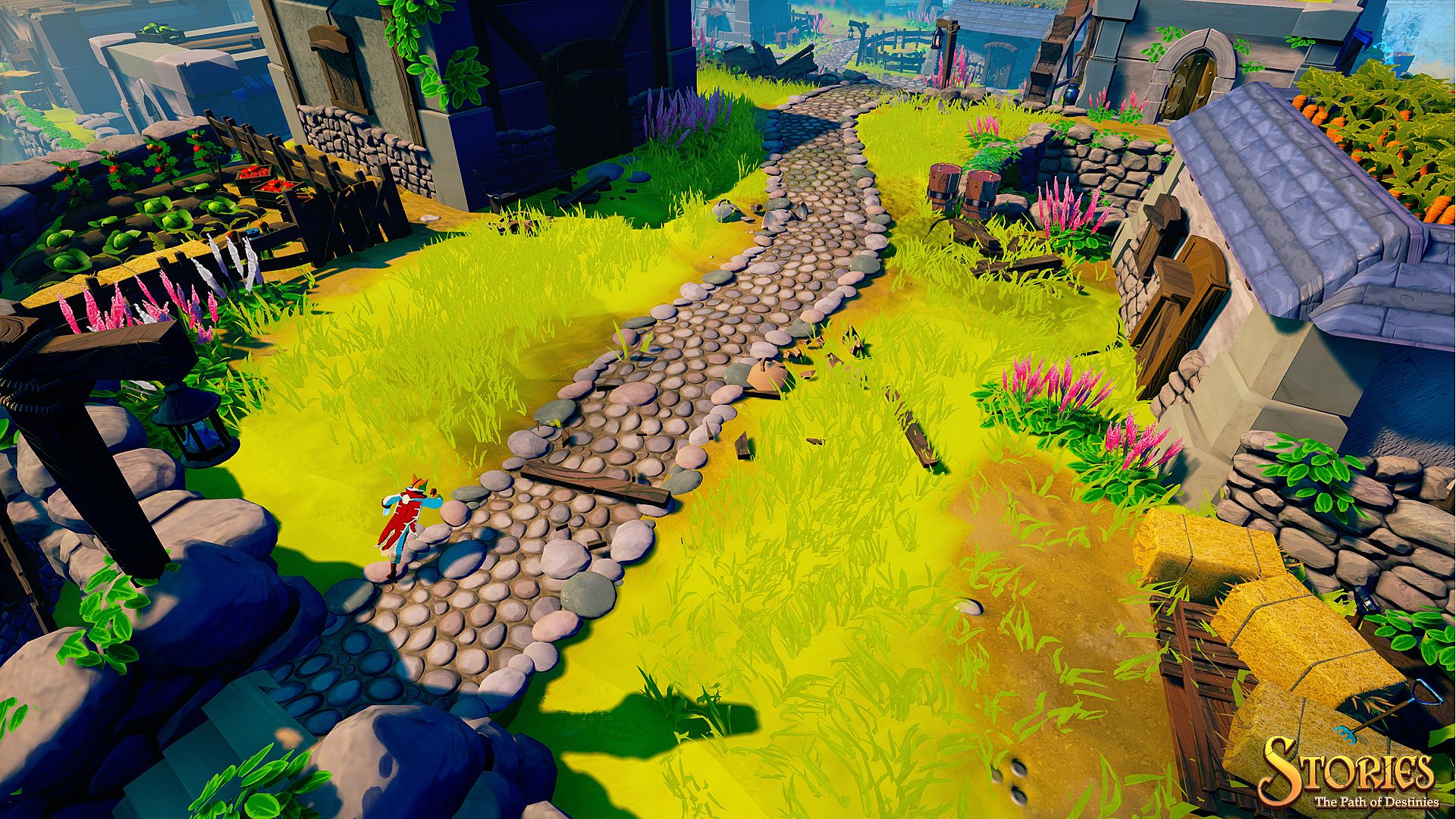
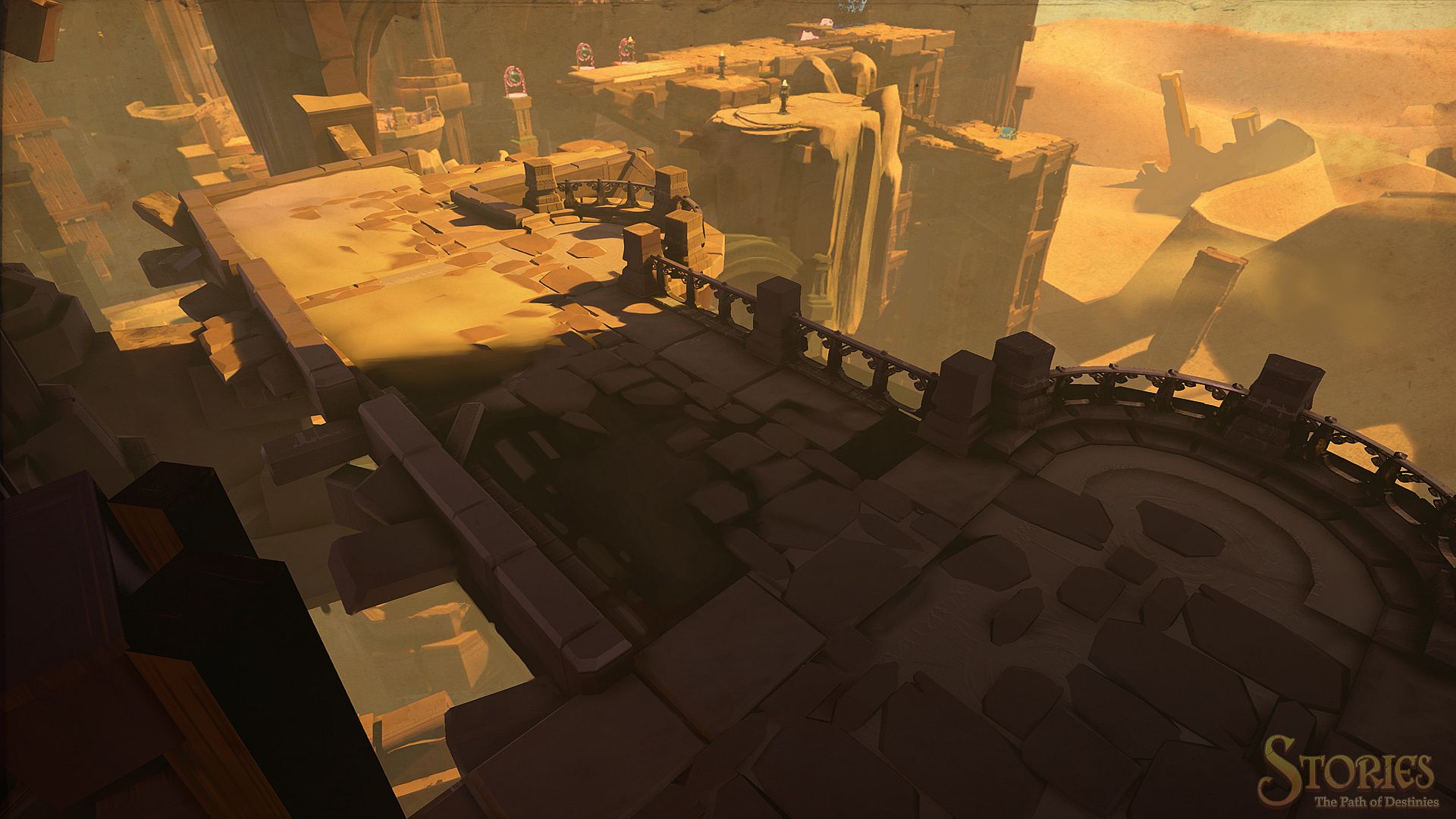
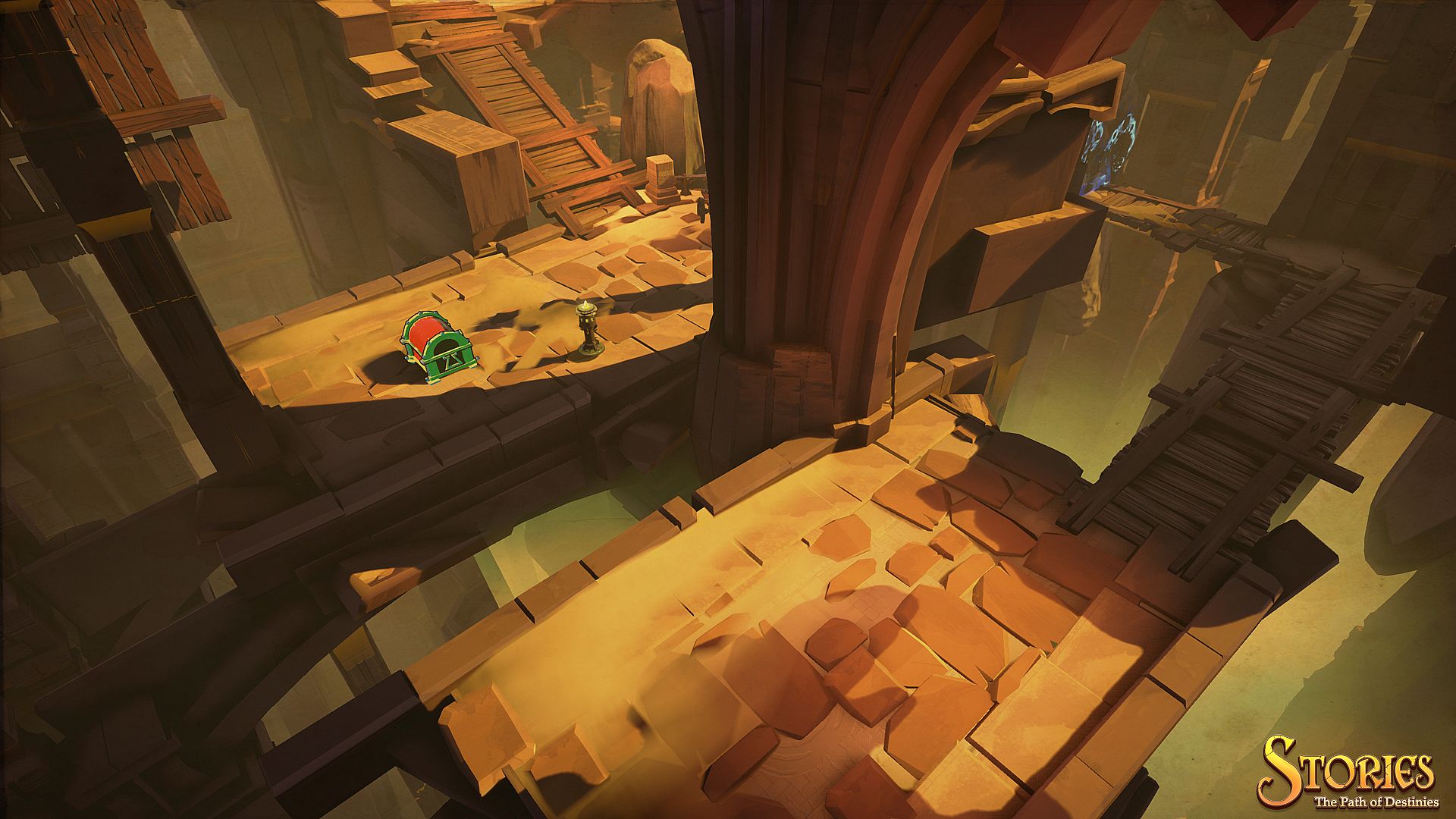
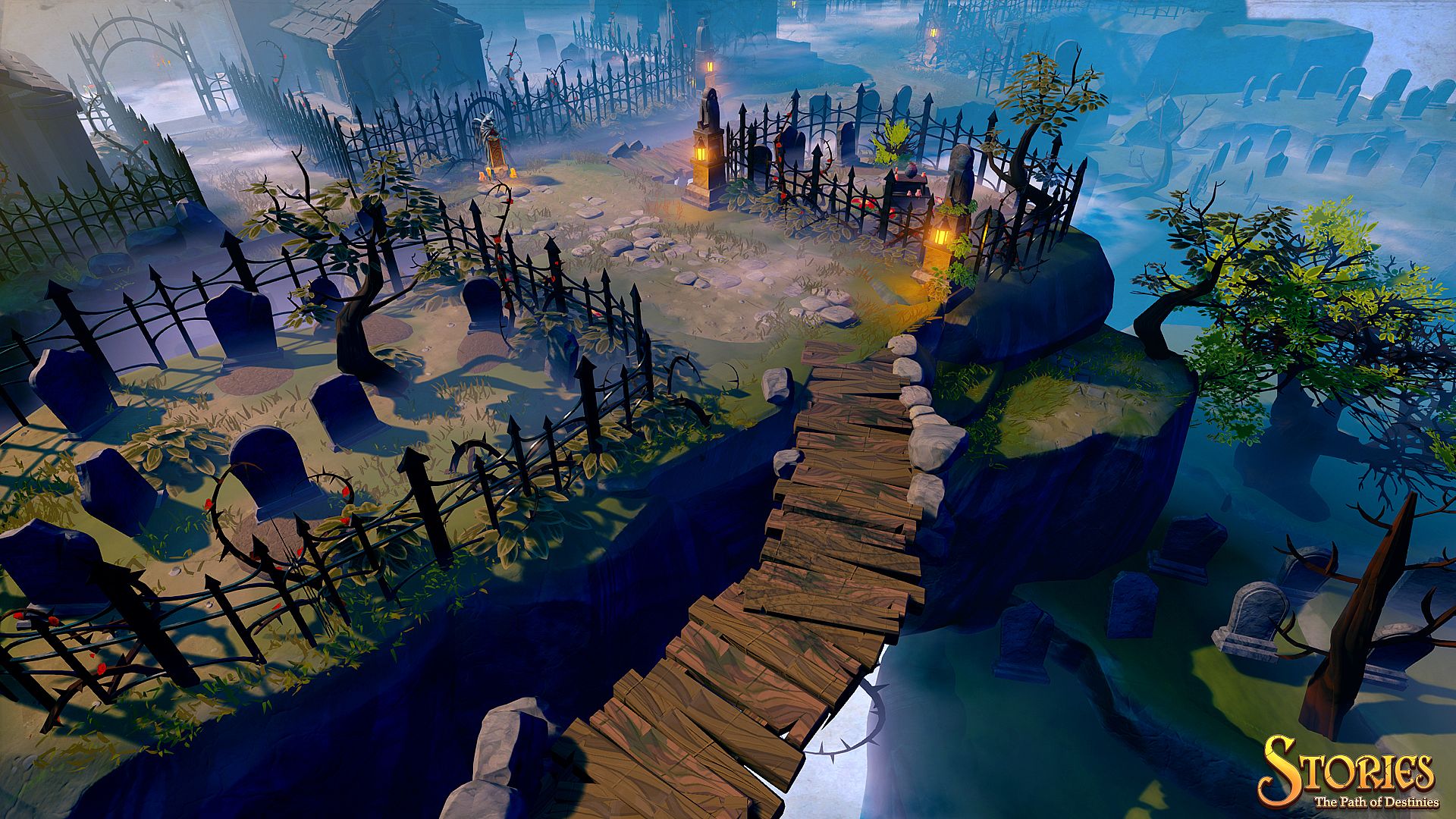
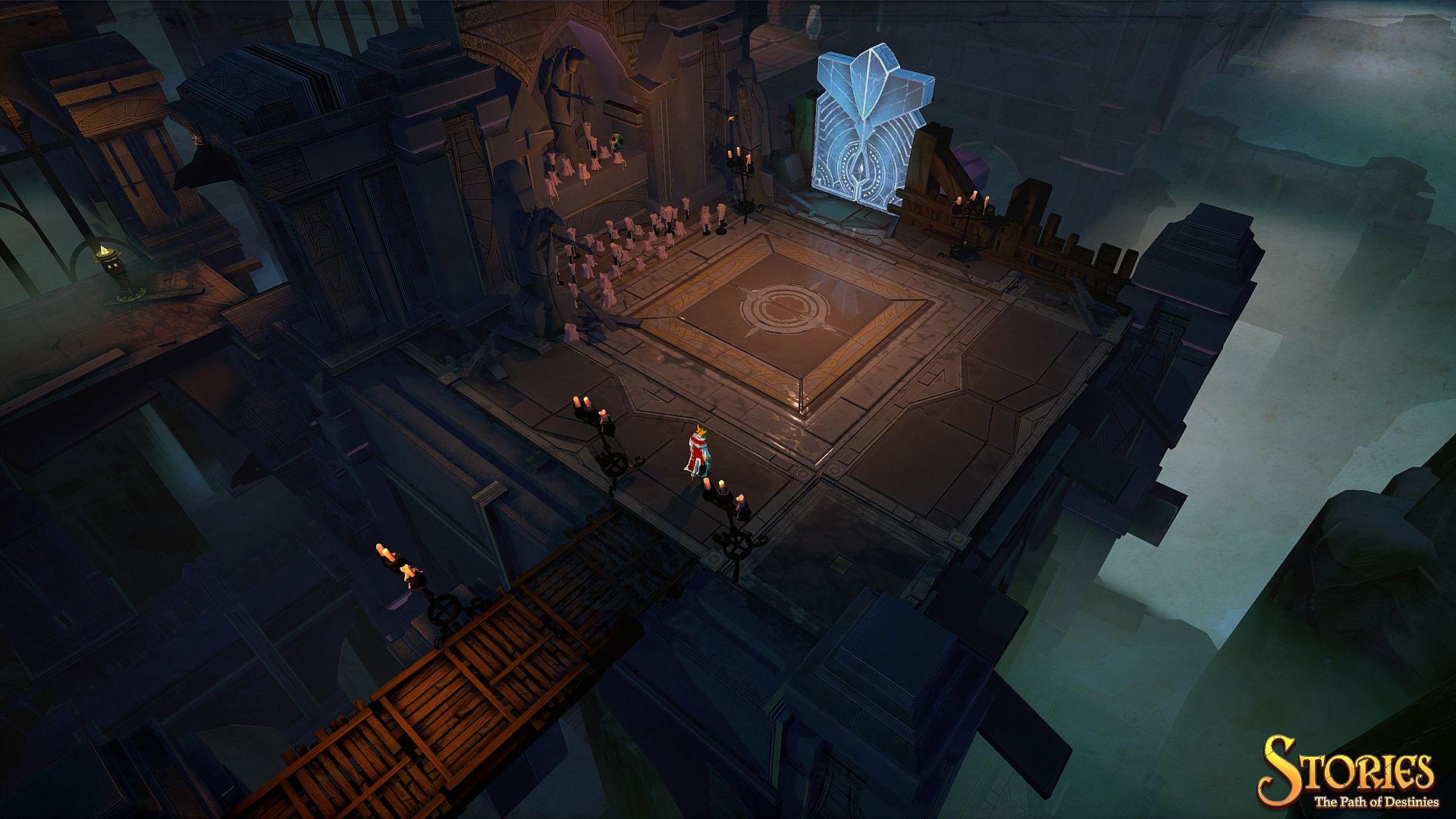
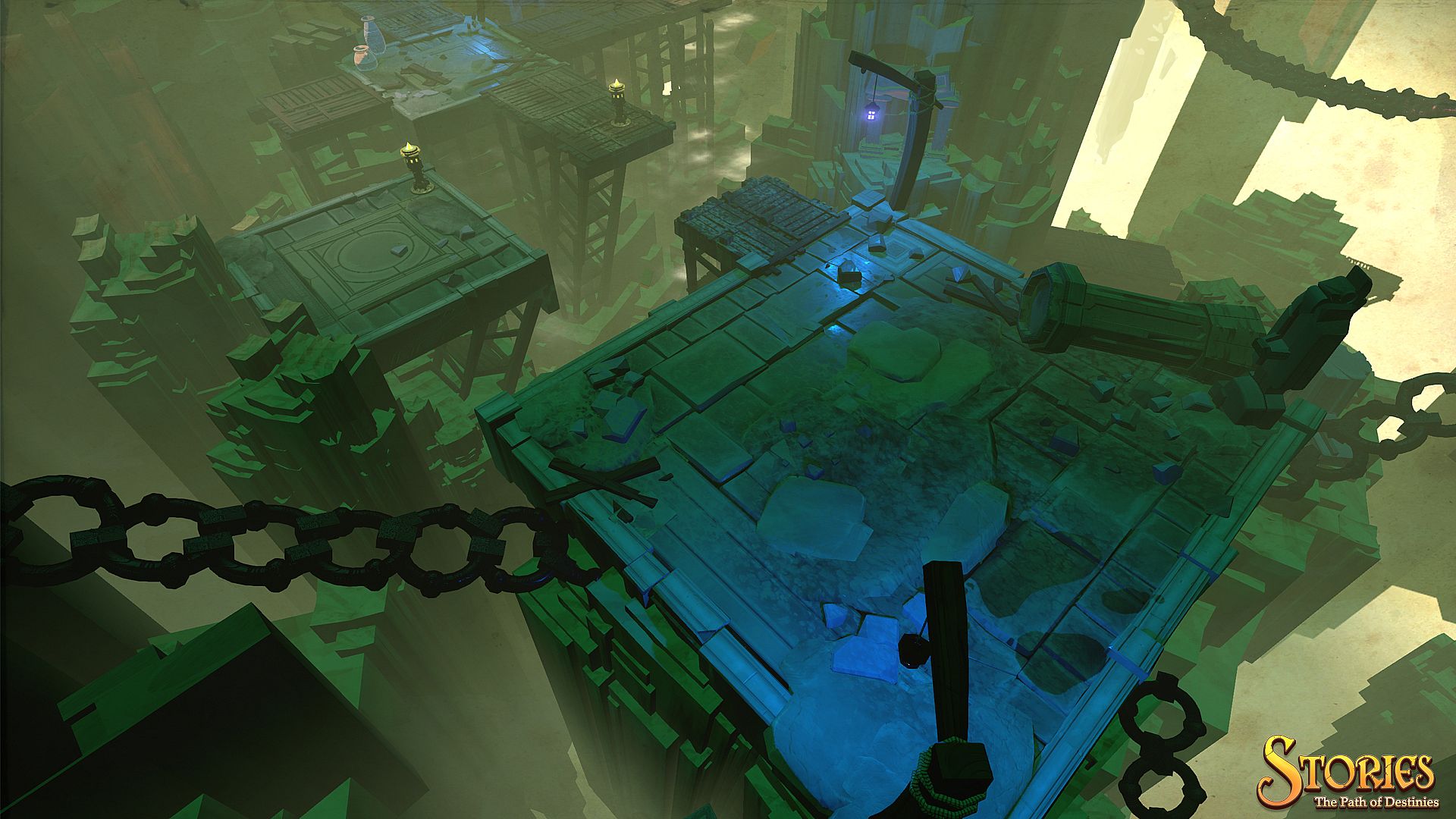
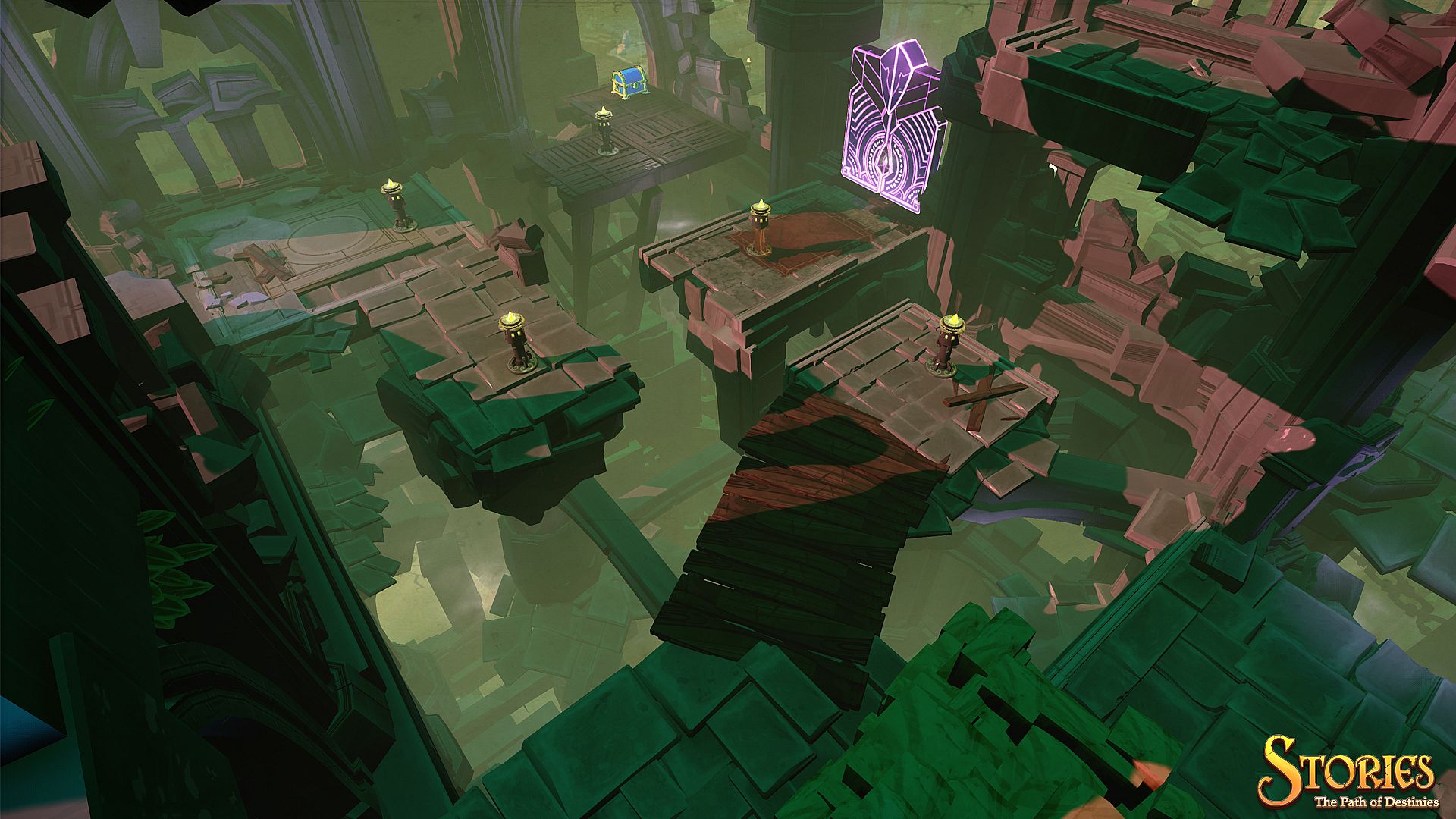
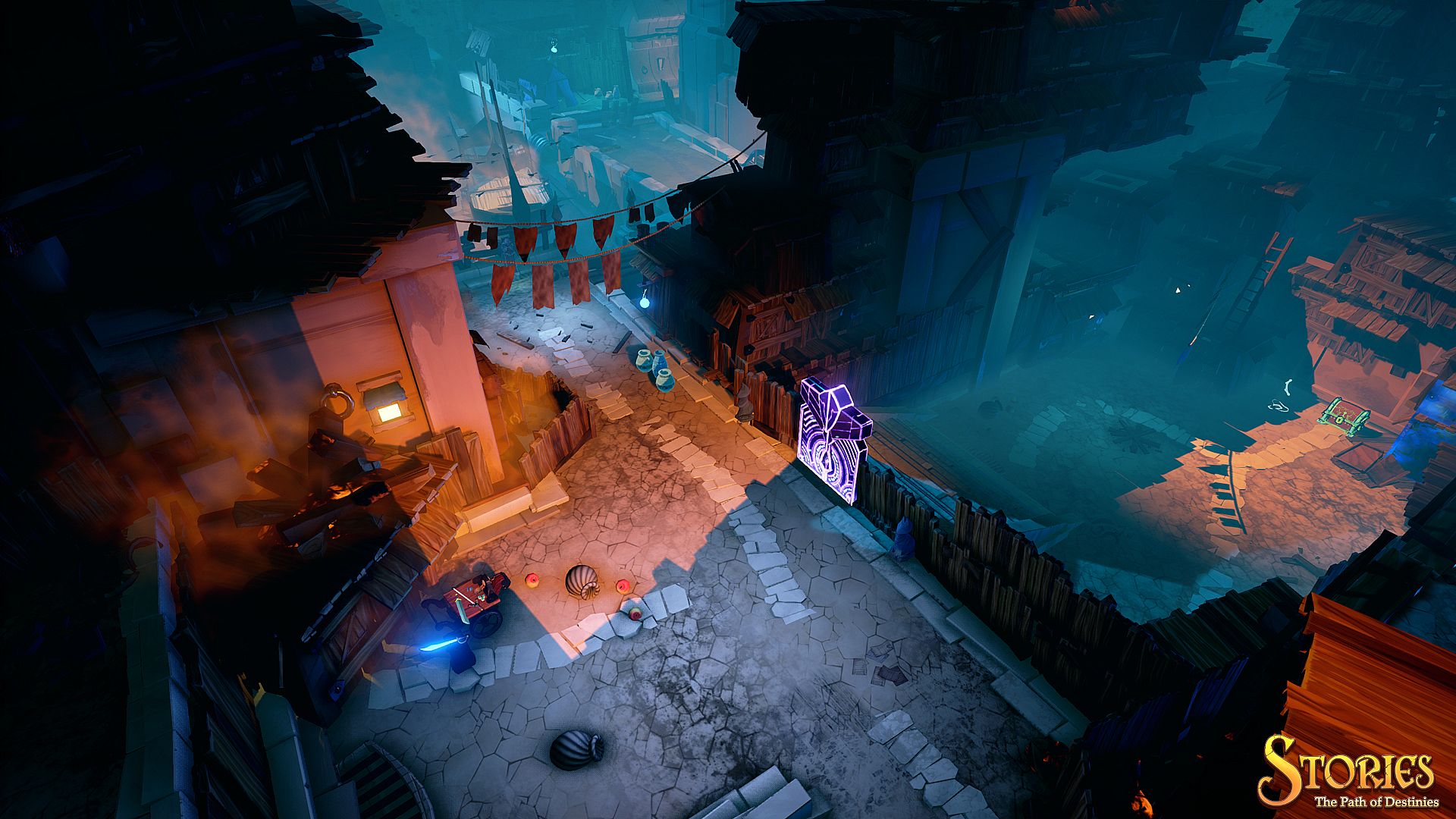
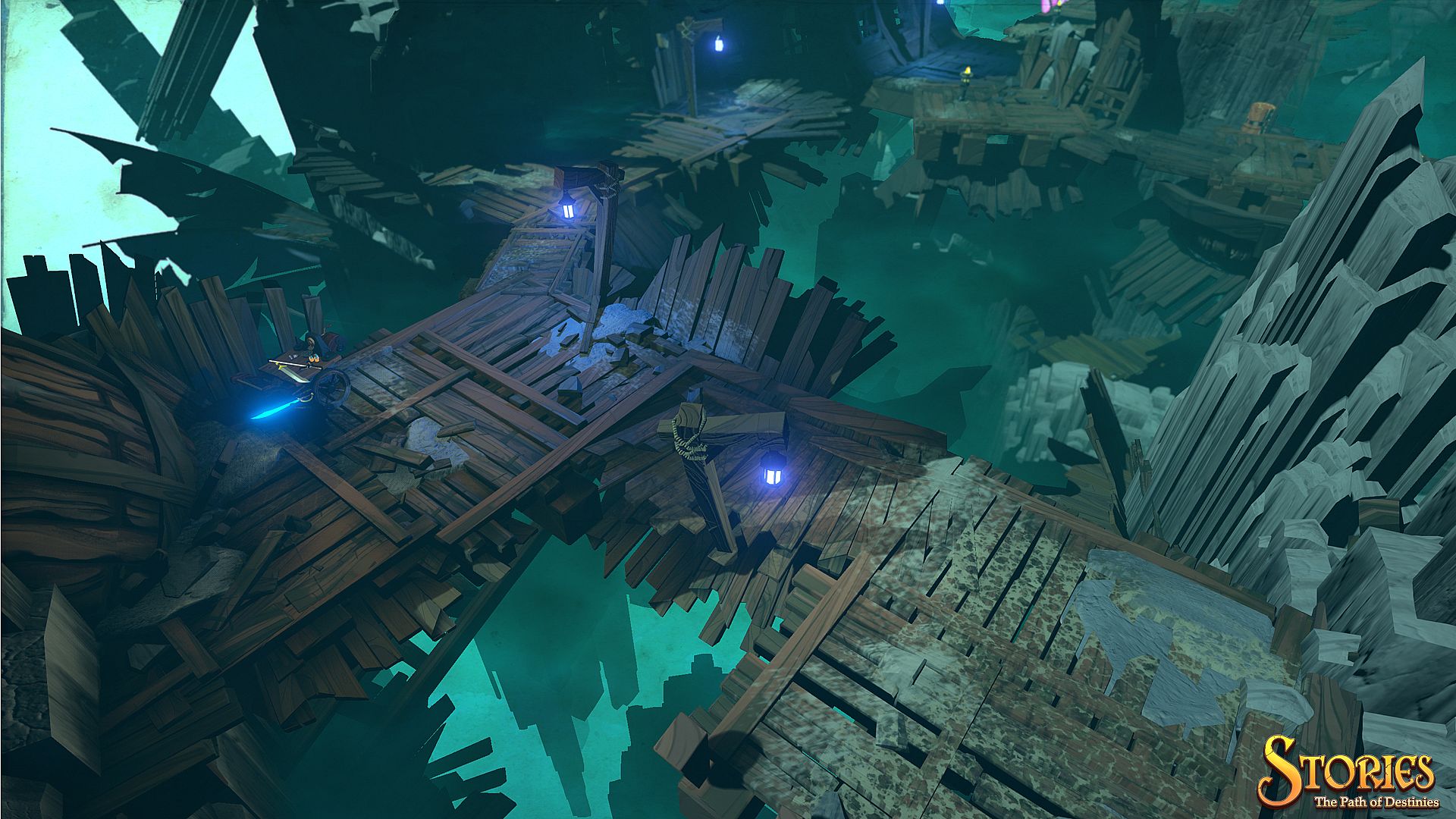
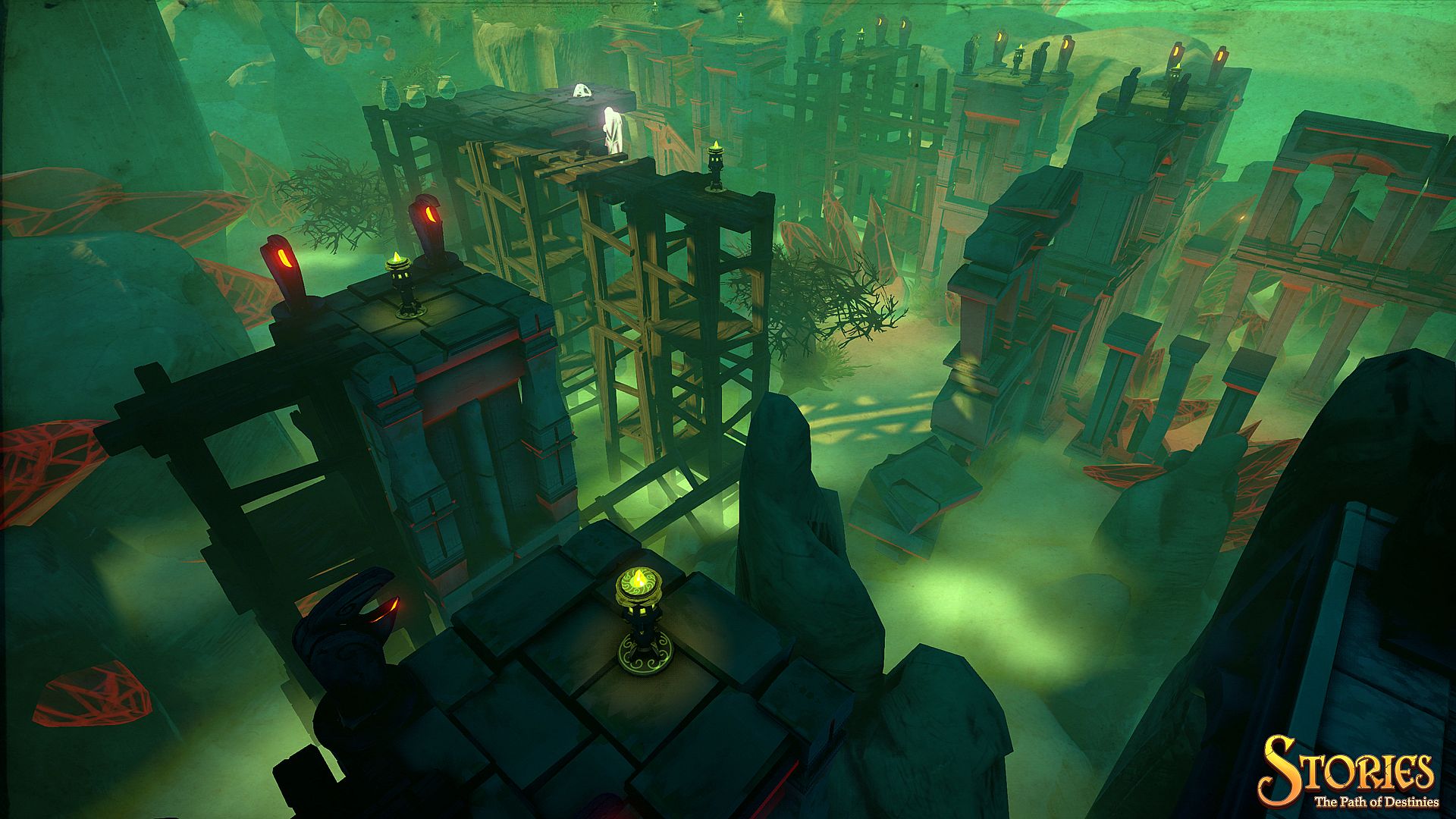
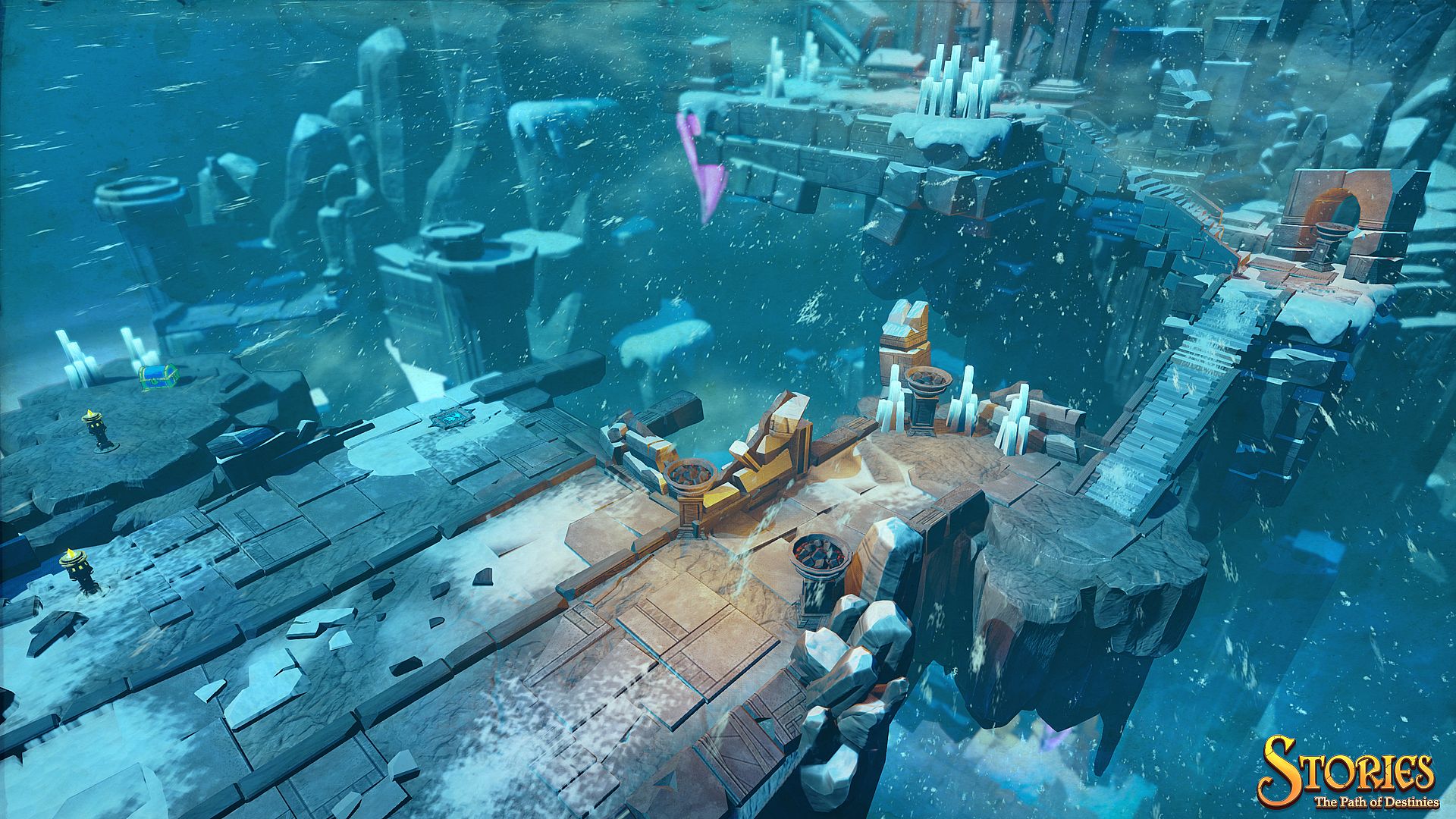
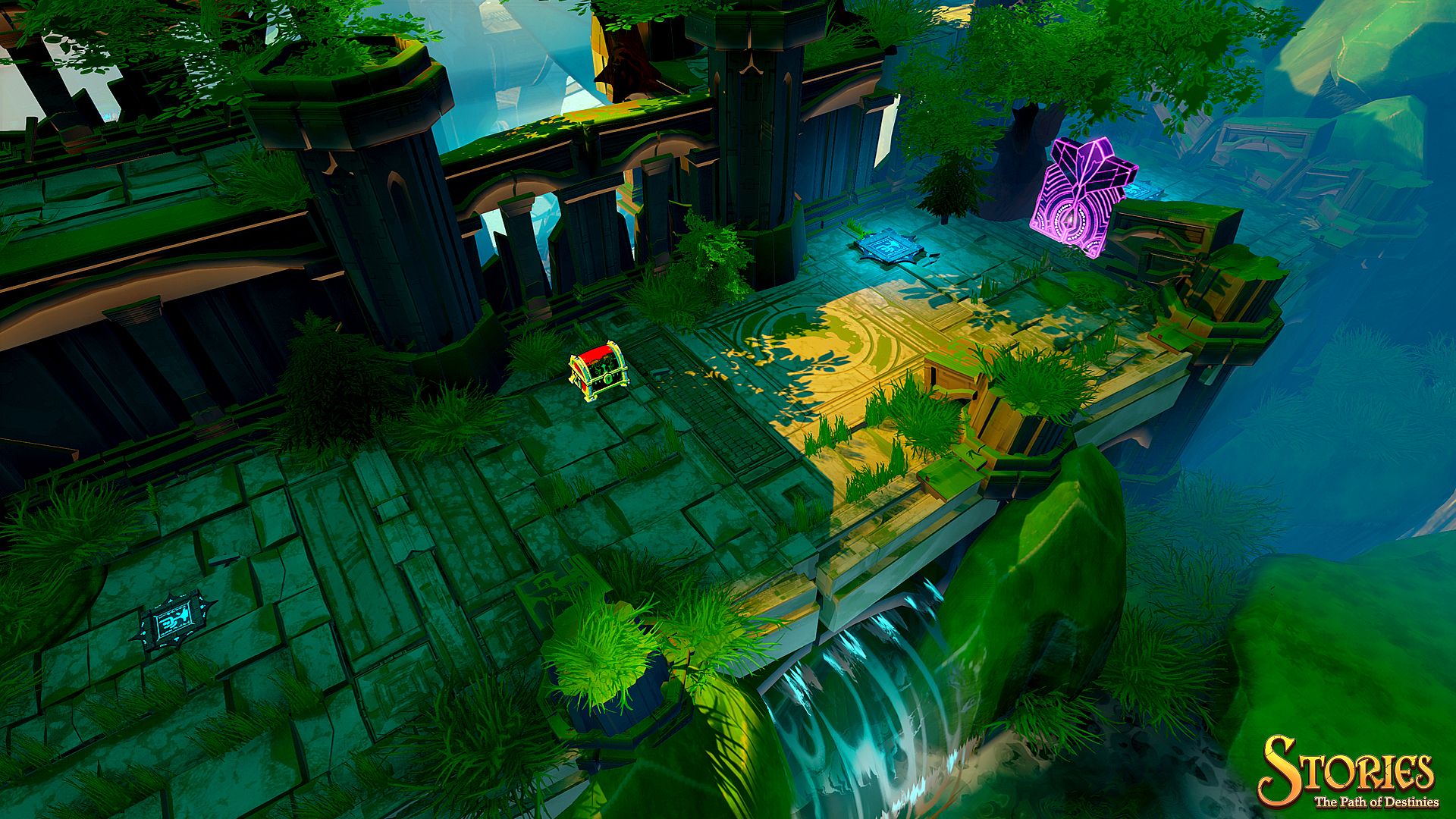
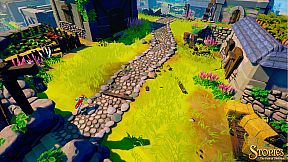
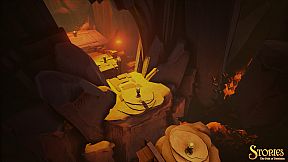
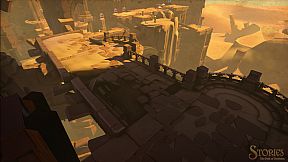
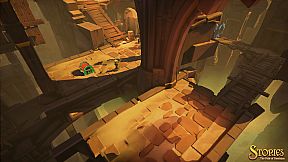
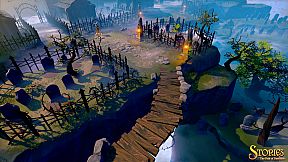
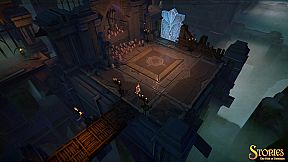
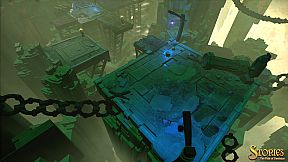
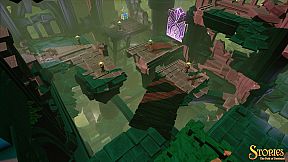
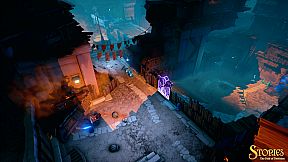
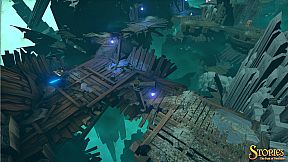
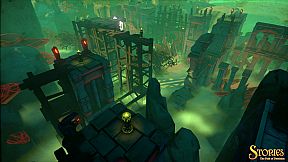
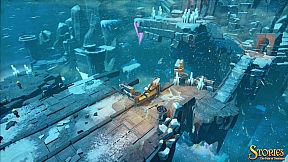
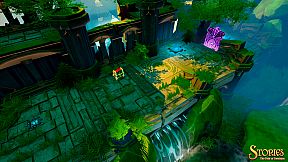
Stories: The Path of Destinies stands as a singleplayer action RPG built around a branching narrative set in a fairytale world of floating islands and airships. Players take control of Reynardo, a former pirate thrust into the role of defender against an emperor and his raven forces. The experience centers on decisions that reshape the tale, supported by fast combat and progression systems that reward experimentation across multiple playthroughs.
Gameplay
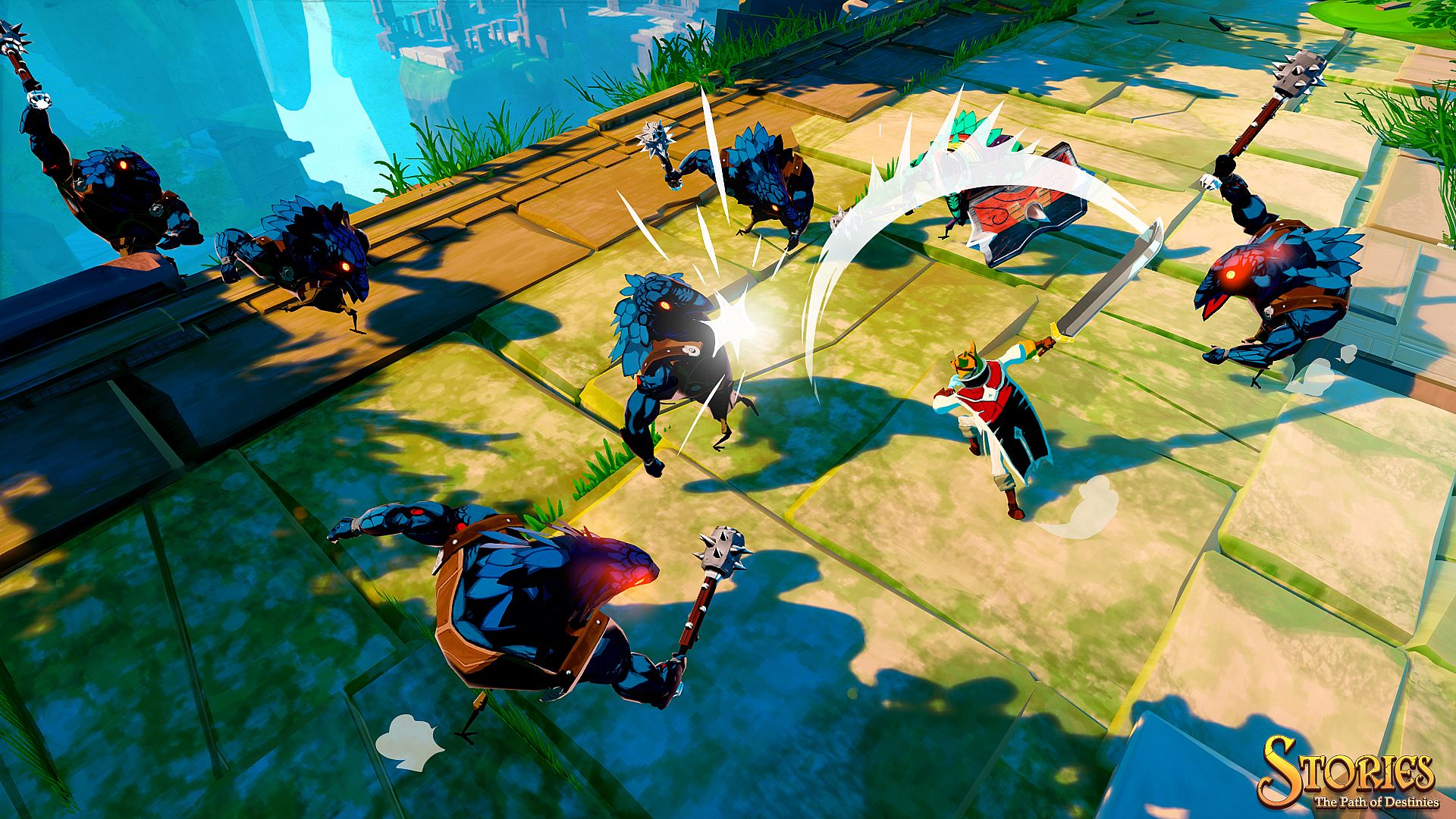
Combat flows through acrobatic sword strikes, grab maneuvers, and special abilities that players unlock via a skill tree. Early abilities focus on basic attacks and movement, while later options introduce tools such as the Hookshot for traversal and Time Mastery for rewinding mistakes. Swords carry magical properties that players craft and upgrade using collected resources, altering damage output and effects during fights. Encounters mix direct clashes with environmental interactions, keeping the pace brisk without relying on complex combos.
Progression ties directly to narrative choices. Each decision opens new paths, some lighthearted and others veering into darker territory. The game tracks these branches through a storybook interface that highlights completed routes and remaining possibilities. Time manipulation allows players to revisit earlier moments, test alternate outcomes, and pursue different endings without starting from scratch. This loop encourages repeated runs to uncover every variation in the central conflict.
Game Modes
The title operates entirely in singleplayer. Its core structure revolves around one continuous campaign that players navigate through repeated attempts at different story branches. No separate competitive or cooperative modes exist. Instead, the design emphasizes replay within the same framework, where each full playthrough reveals fresh dialogue, events, and conclusions based on prior selections. The narrator adapts commentary to reflect the specific sequence of choices made during a session.
Narrative Structure
Choices determine not only the ending but also the tone and content of individual scenes. Light adventure beats can shift abruptly into tense, unsettling sequences depending on the path taken. Certain weapons or allies appear only after specific sacrifices or alliances form earlier in the story. The system avoids linear checkpoints, instead presenting a web of possibilities that players map through trial and error aided by the rewind feature. This approach keeps the focus on consequence and discovery rather than a single fixed plot.
Is It Worth Playing?
Steam user reviews rate the game Very Positive, with 87 percent approval from nearly two thousand submissions. The experience suits players who enjoy action RPG combat paired with meaningful narrative decisions and the ability to explore alternate outcomes in one package. The 2018 engine update to Unreal Engine 4.18 brought improved visuals and performance that still hold up on modern hardware. Low concurrent player numbers reflect its age as a 2016 release, yet the title remains available for those seeking a compact, choice-driven adventure without ongoing seasonal content or multiplayer requirements. Those drawn to storybook aesthetics, dynamic soundtracks that shift with decisions, and skill-based sword combat will find the systems rewarding across several hours of play.