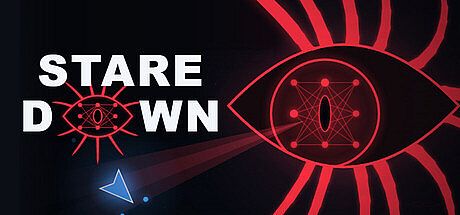


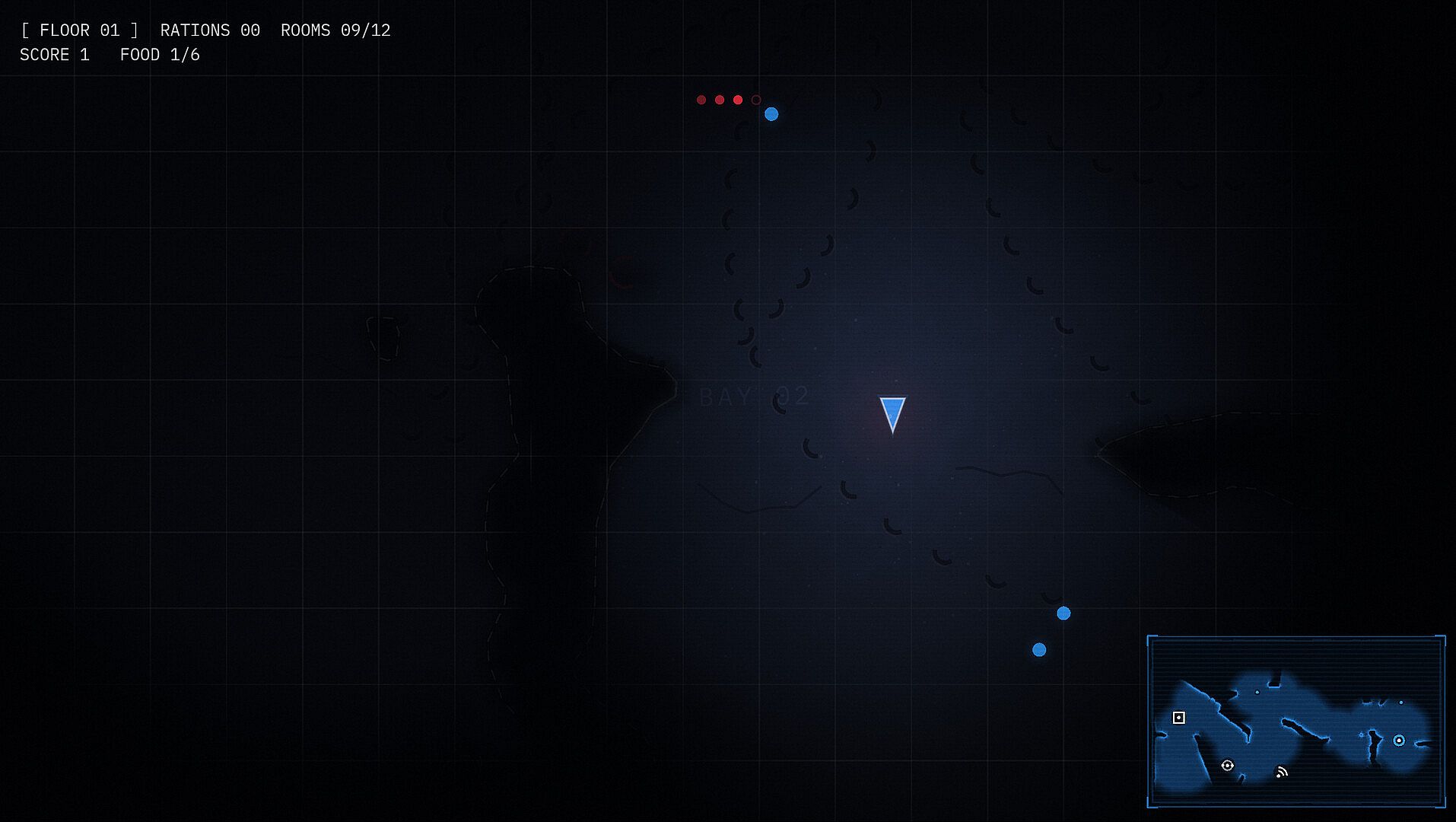
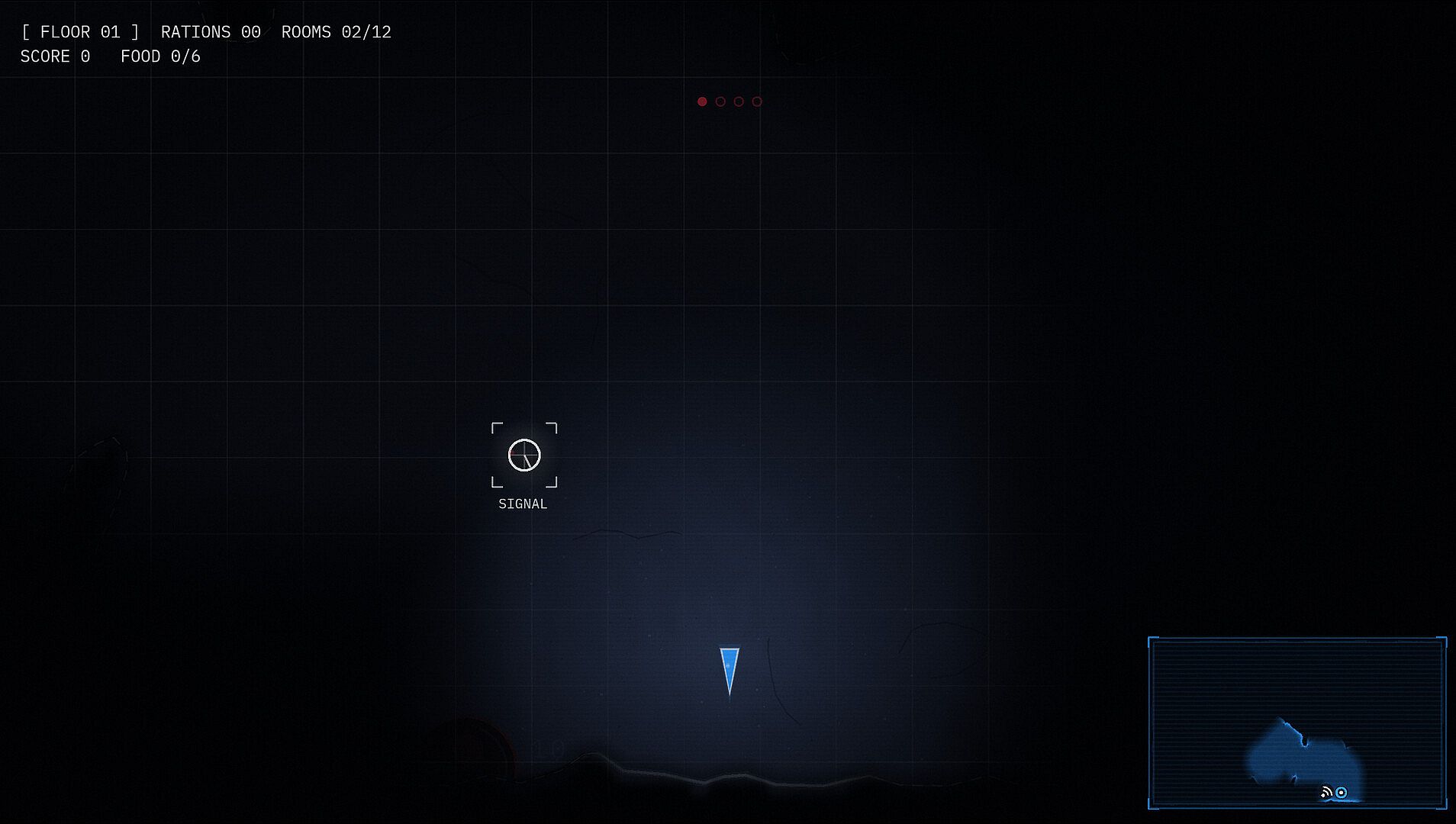
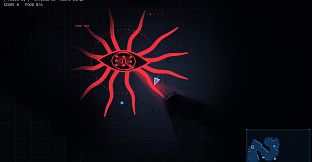
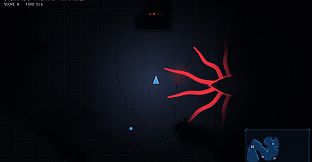
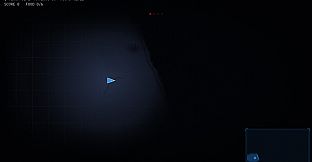
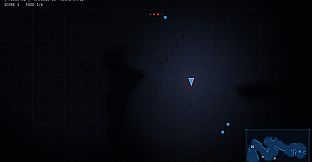
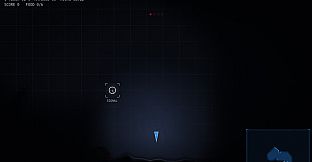
STAREDOWN is a stealth roguelite for PC that places players in the role of a small, hungry creature navigating unseen rooms while evading a learning predator known as OKO. This action indie title emphasizes careful movement, environmental awareness, and adaptation against an opponent that improves its tactics based on observed behavior rather than fixed patterns.
Gameplay
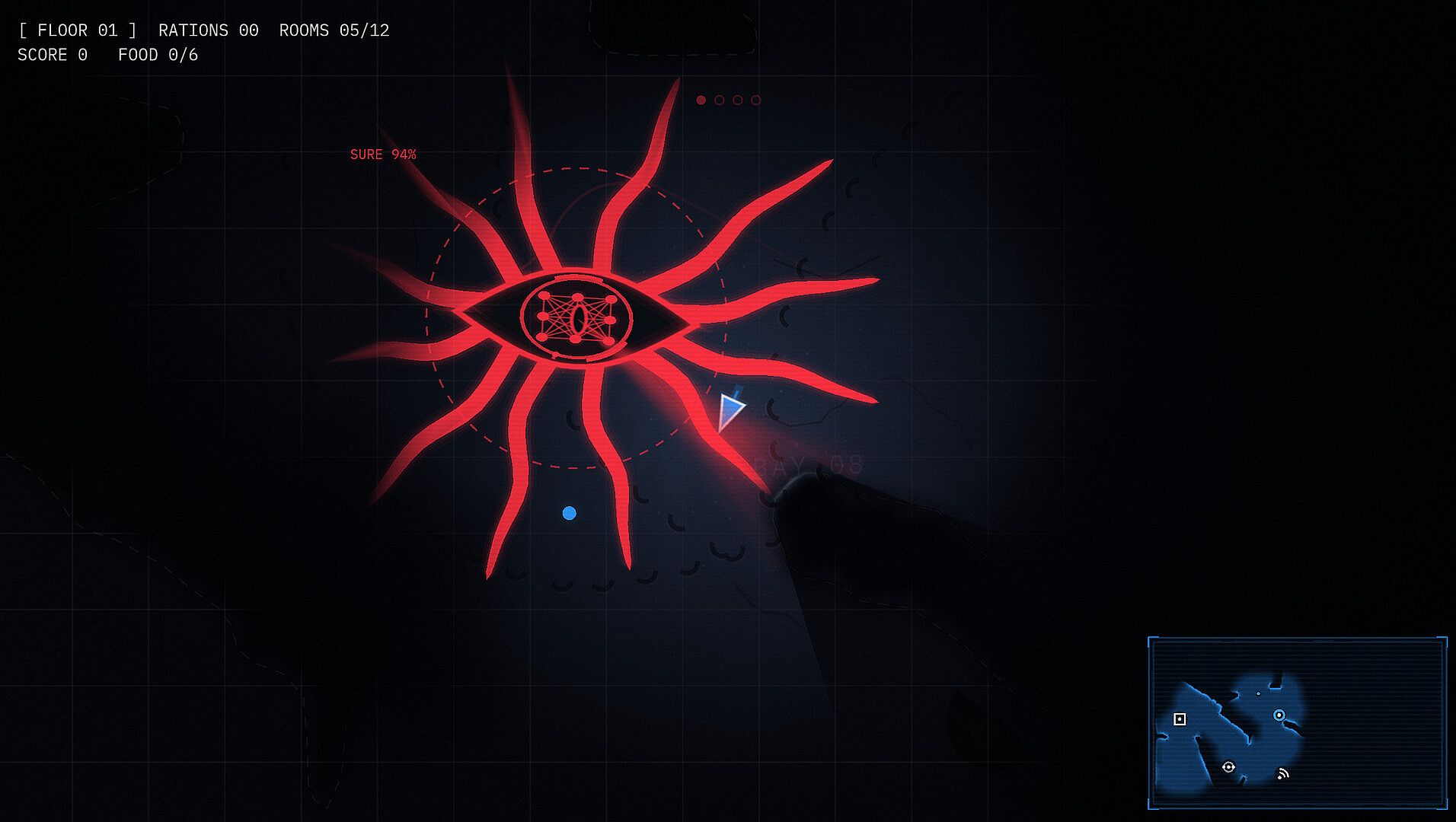
The core loop revolves around short runs where the goal is to gather enough food to progress while avoiding detection. OKO operates as a single neural network controlling a central eye that builds watchtowers and dispatches smaller eyes for scouting. These elements function without direct knowledge of the player's position from the game engine. Instead, OKO relies on line-of-sight through open doorways, sound propagation that changes with room states, and physical marks left by the player that only become known if a patrol passes them.
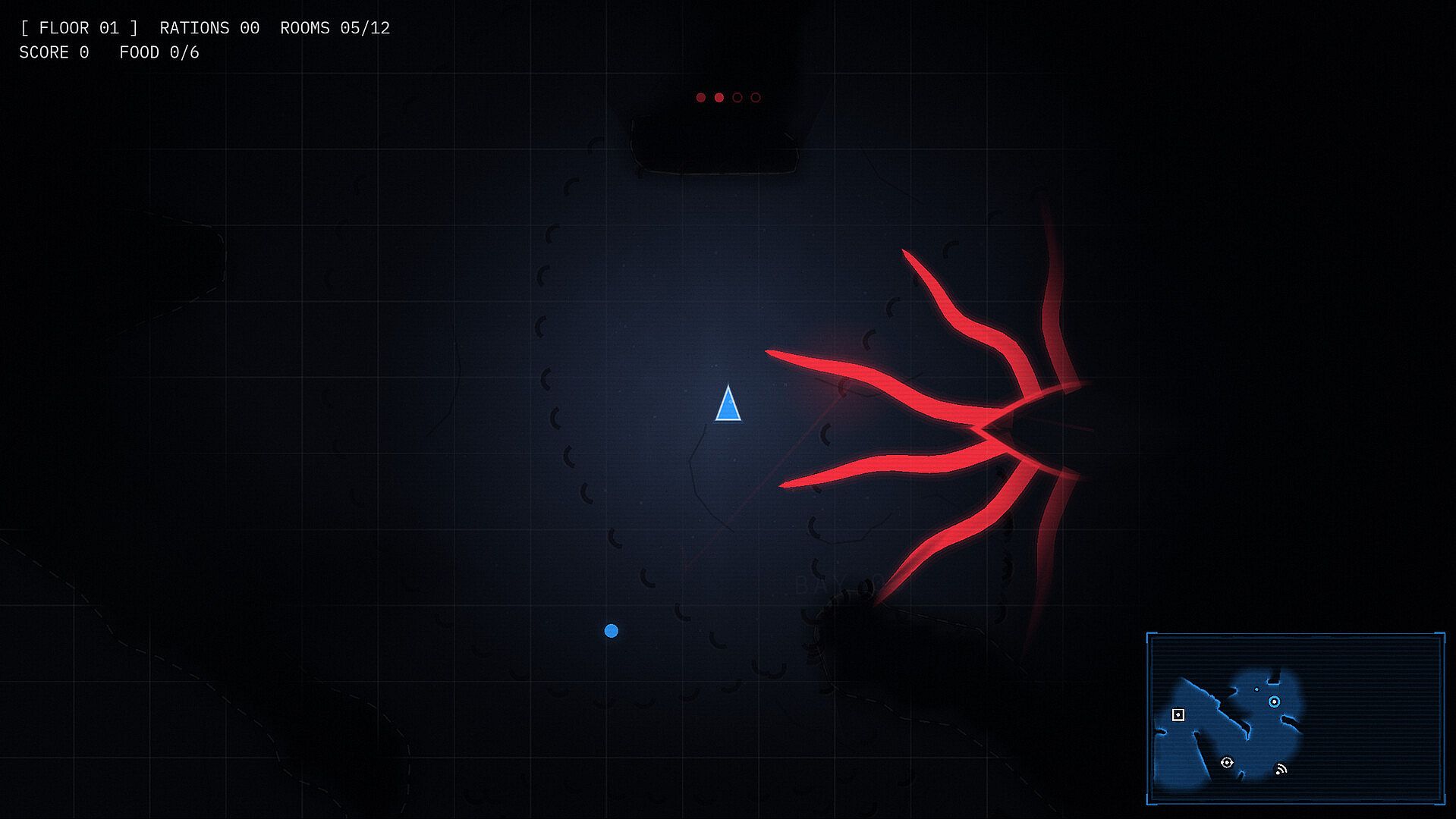
Red light serves as the primary threat. When the beam locks onto the player during movement, it charges for an attack that results in instant death with no health system or retries within a run. Standing still prevents the lock, forcing players to time actions around the eye's blind periods. Smaller eyes can grab and hold the player, requiring a break free that offers a brief window of agency before failure leads to the same outcome.
Habits formed during a run feed directly into OKO's training. Repeated paths or dodges cause the network to anticipate and counter them in real time. This creates a dynamic where early successes can become liabilities later in the same attempt. The system trains locally on player movement data without external inputs or difficulty scaling scripts.
Game Modes
STAREDOWN operates as a single-player experience centered on individual runs that reset upon death. Each attempt generates a fresh instance of OKO with no retained knowledge from prior failures. Players explore procedurally arranged rooms, plan routes around patrols, and descend levels after meeting food quotas.
The structure builds toward a full campaign completion where persistent progress occurs across successful runs. There are no separate multiplayer options or alternate modes listed. The focus remains on the roguelite cycle of learning layouts and adapting to the evolving threat within each isolated session.
Core Mechanics and Systems
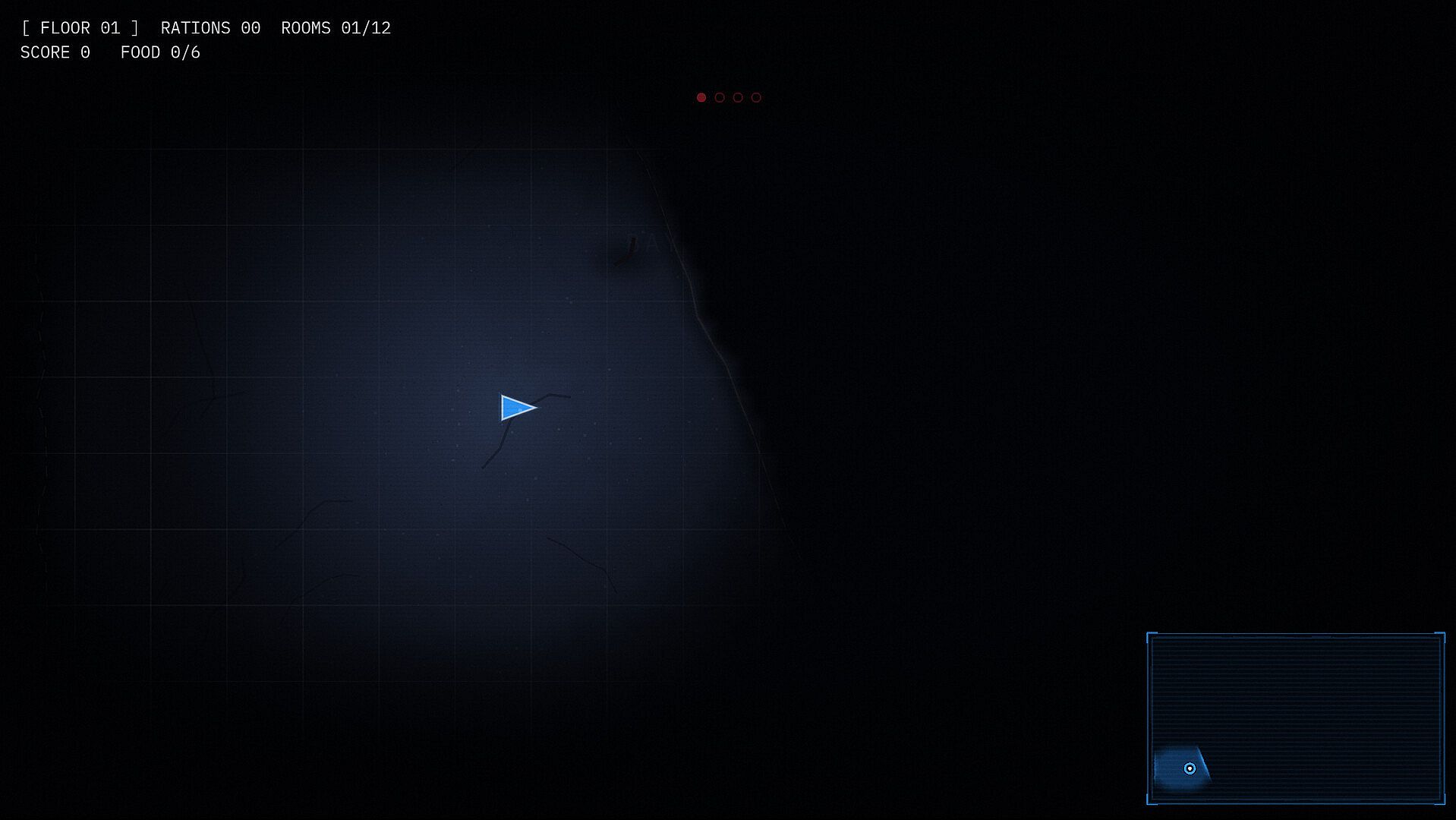
Sound and visibility play critical roles in evasion. Closed rooms dampen audio cues reaching OKO, while open connections allow clearer detection. Towers provide immediate alerts upon spotting the player, contrasting with the delayed information carried back by mobile eyes. This distinction creates tactical choices when encountering scouts.
Marks visible only to the player track movement history but remain hidden from OKO unless discovered through patrols. The neural network aspect ensures that no two runs play identically even in similar layouts, as behavior adapts specifically to the current session's actions. Runs stay concise to encourage repeated attempts without long commitments per failure.
Is It Worth Playing?
STAREDOWN suits players who enjoy stealth games with roguelite elements and a strong emphasis on observation and timing over combat or resource management. The instant-death mechanics and adaptive AI create tension through pattern recognition and disruption of personal habits. Those drawn to titles where the enemy genuinely learns from play will find the neural network system a distinctive feature.
With the game listed as coming soon and no reviews available yet, potential players can assess interest based on the described systems of evasion, sound-based detection, and run-based progression. It appeals particularly to fans of indie action experiences that prioritize mechanical depth in a compact format over expansive narratives or multiplayer features.