






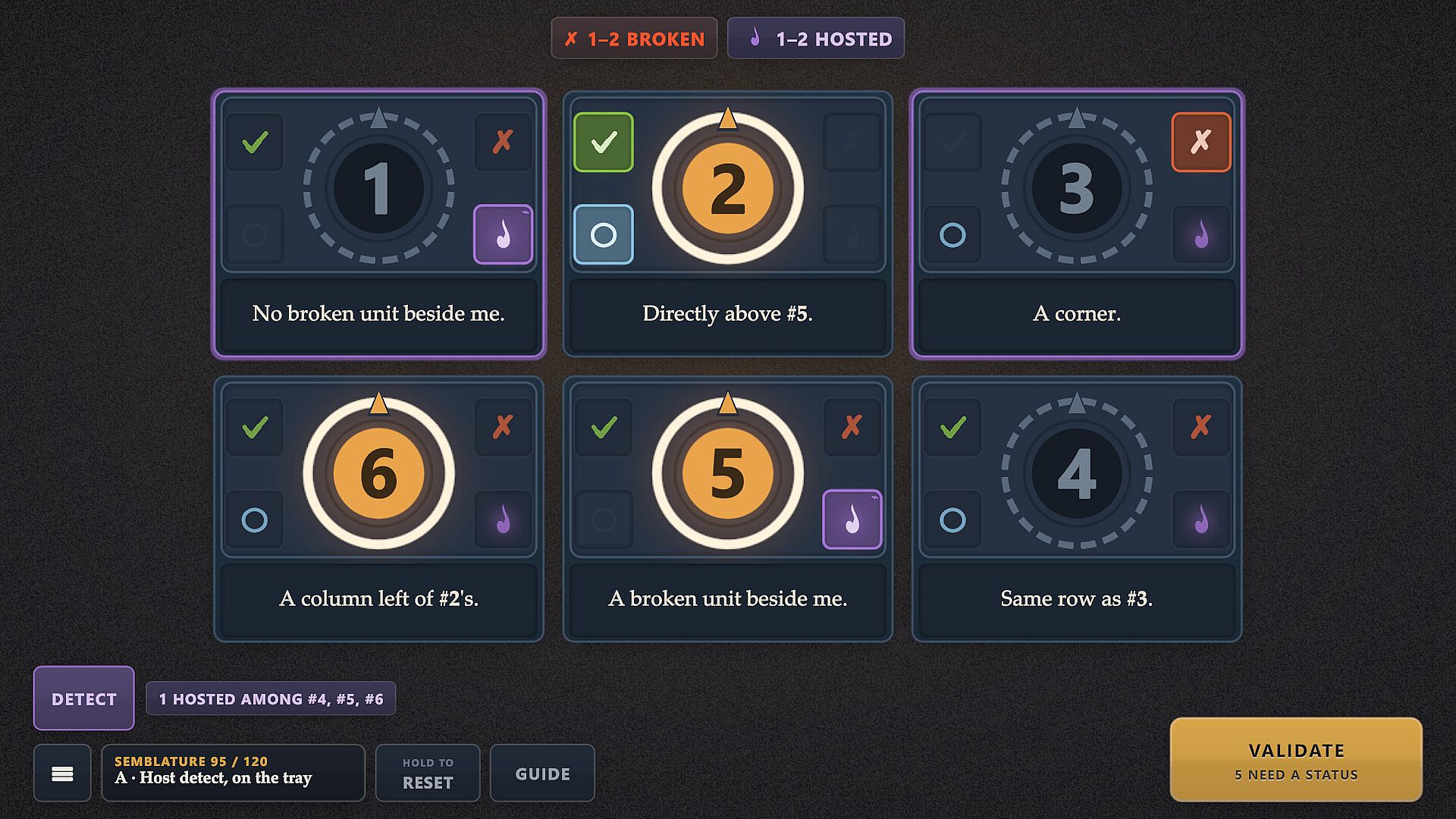
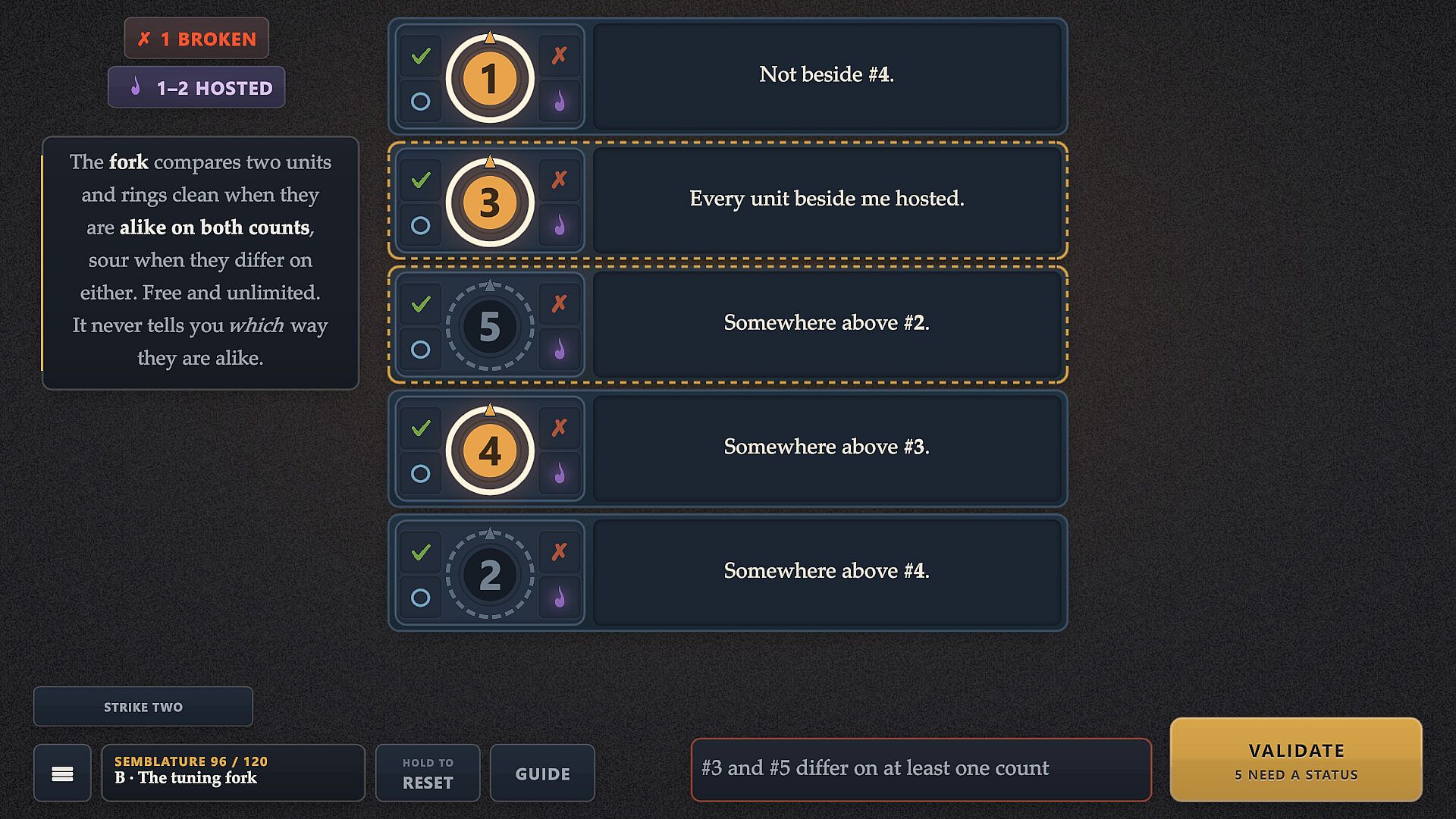
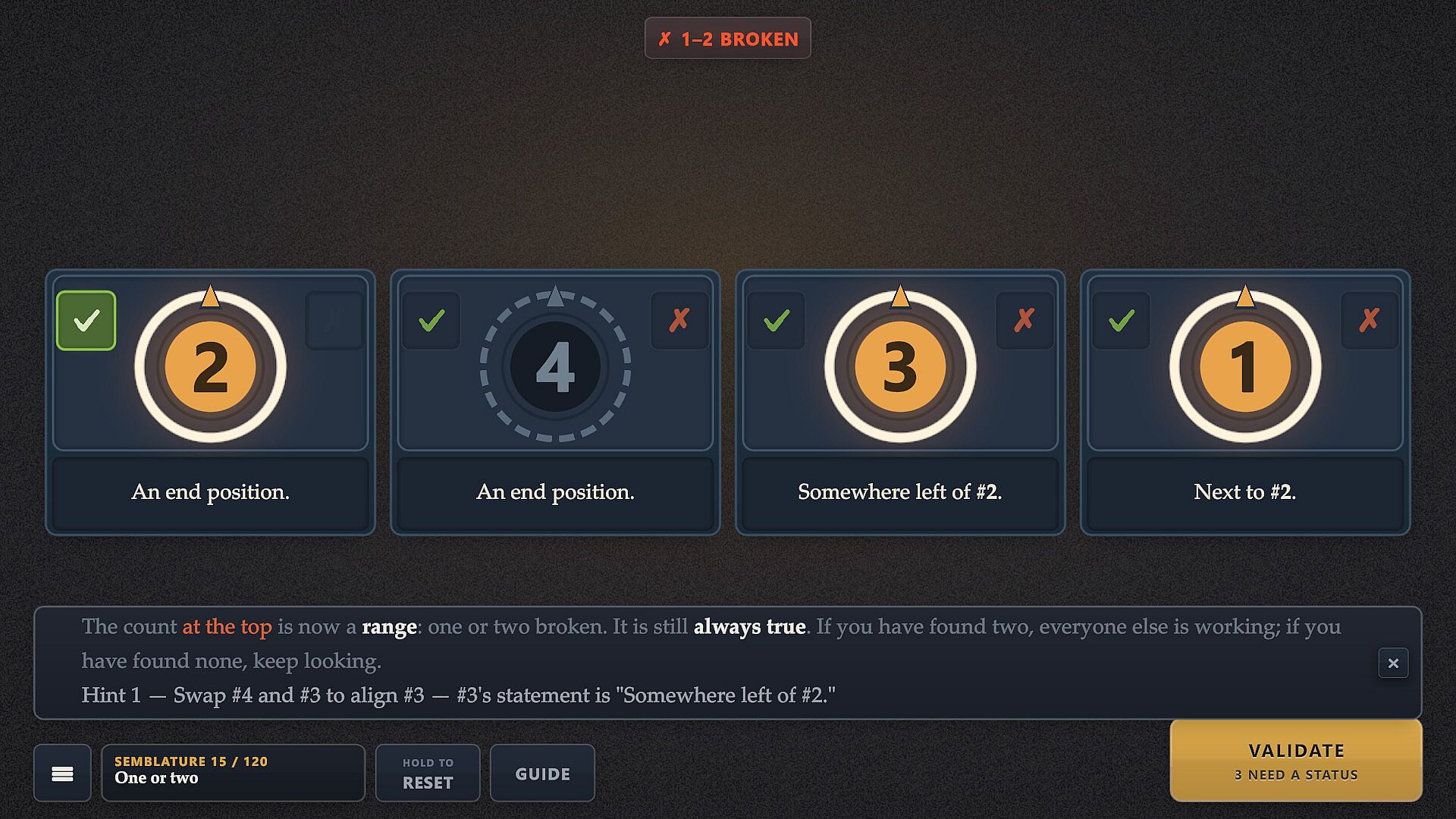
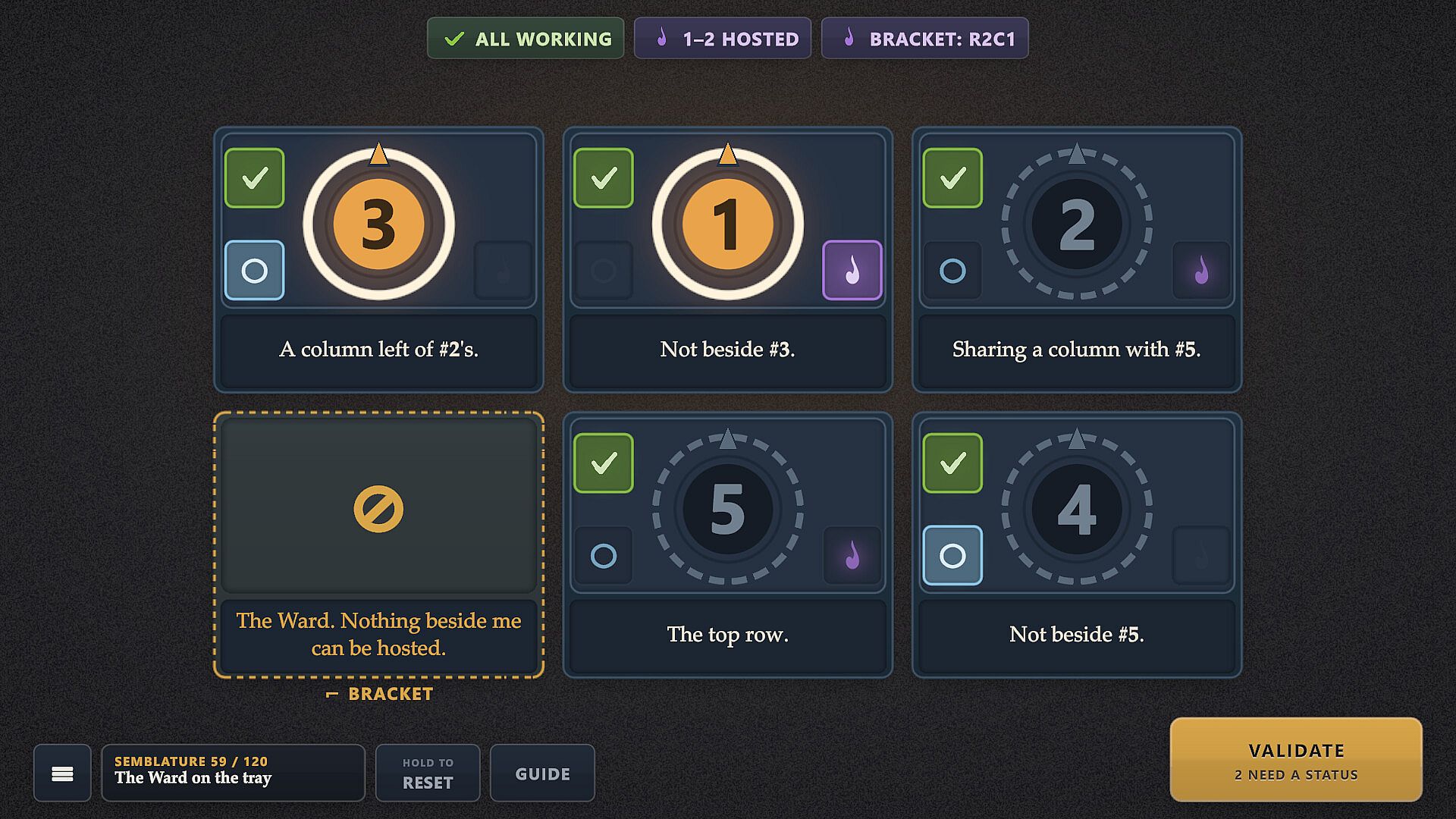
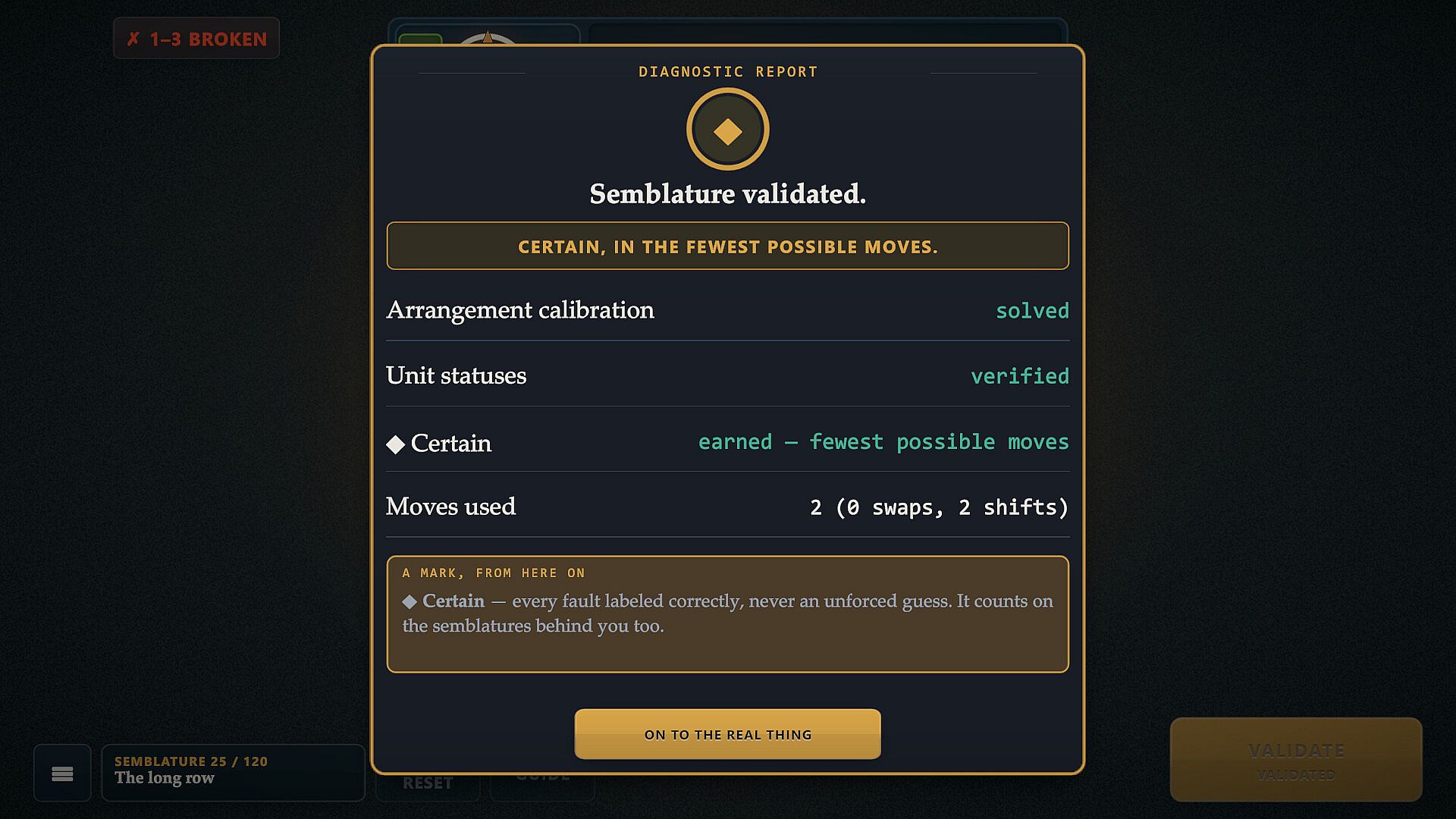





Semblature: A Deduction Game is a single-player deduction puzzle experience in the indie casual genre for PC. Players operate a repair shop that restores magical assemblies known as semblatures, each formed from units that must occupy precise positions to function.
Gameplay
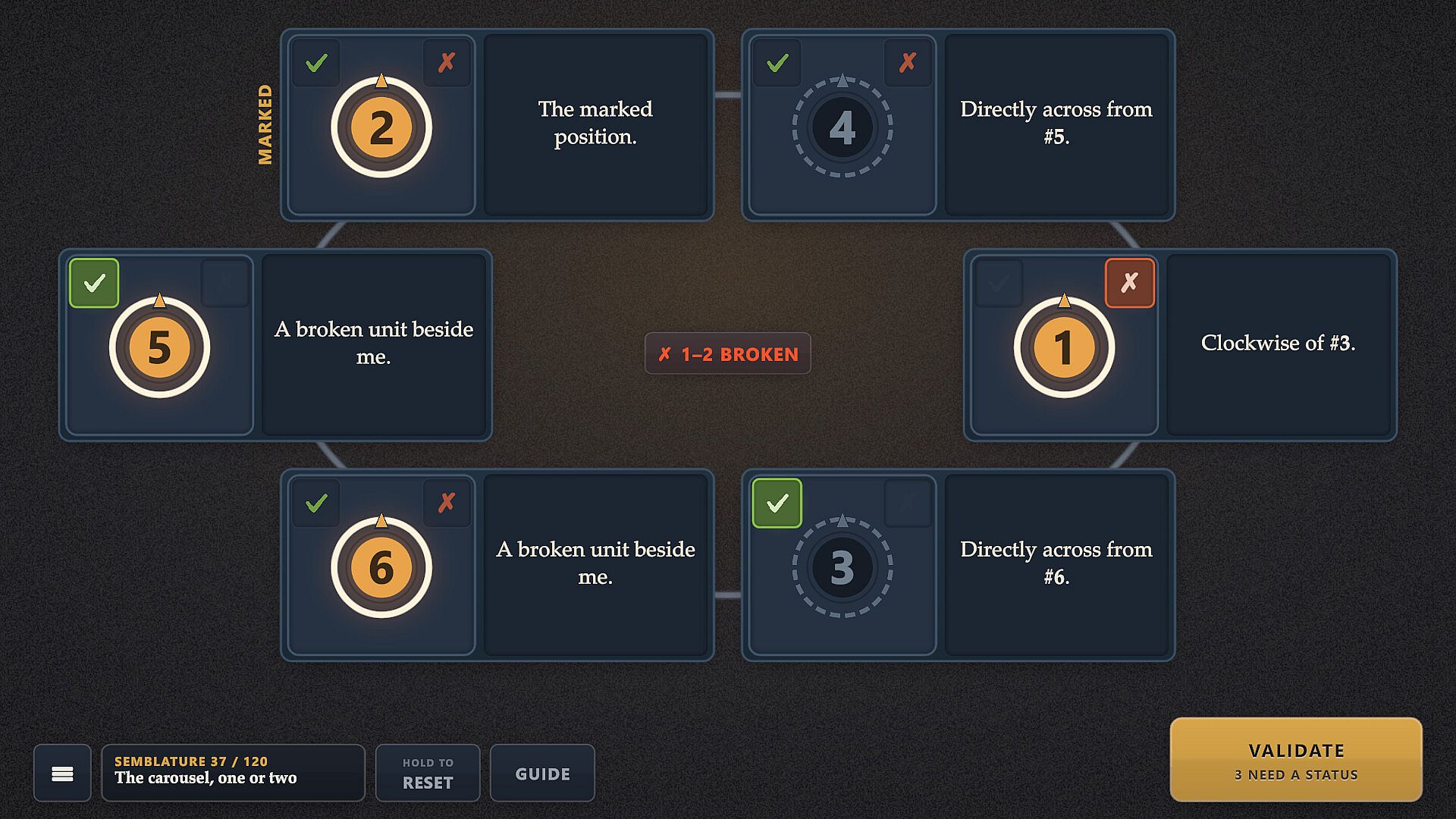
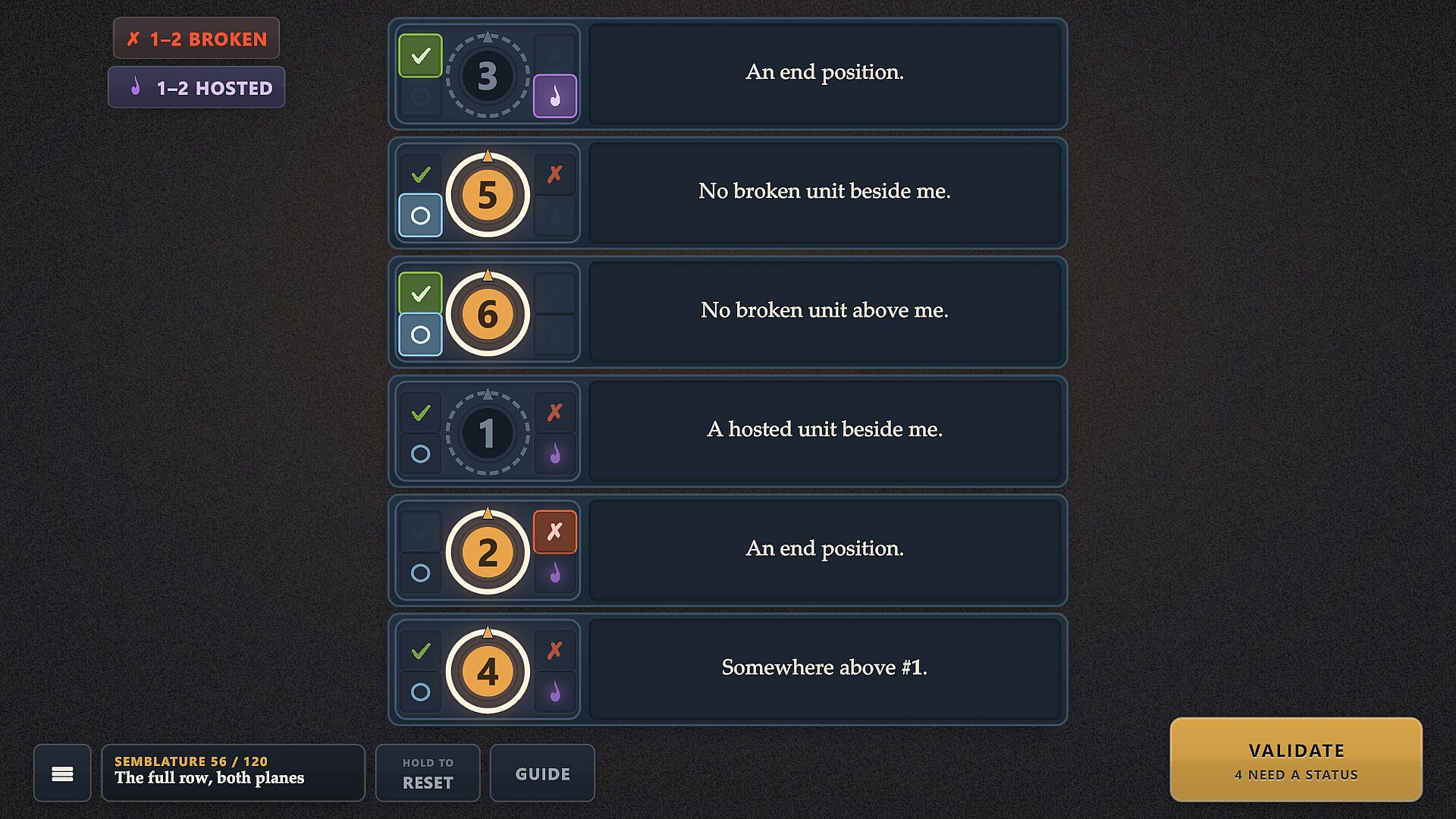
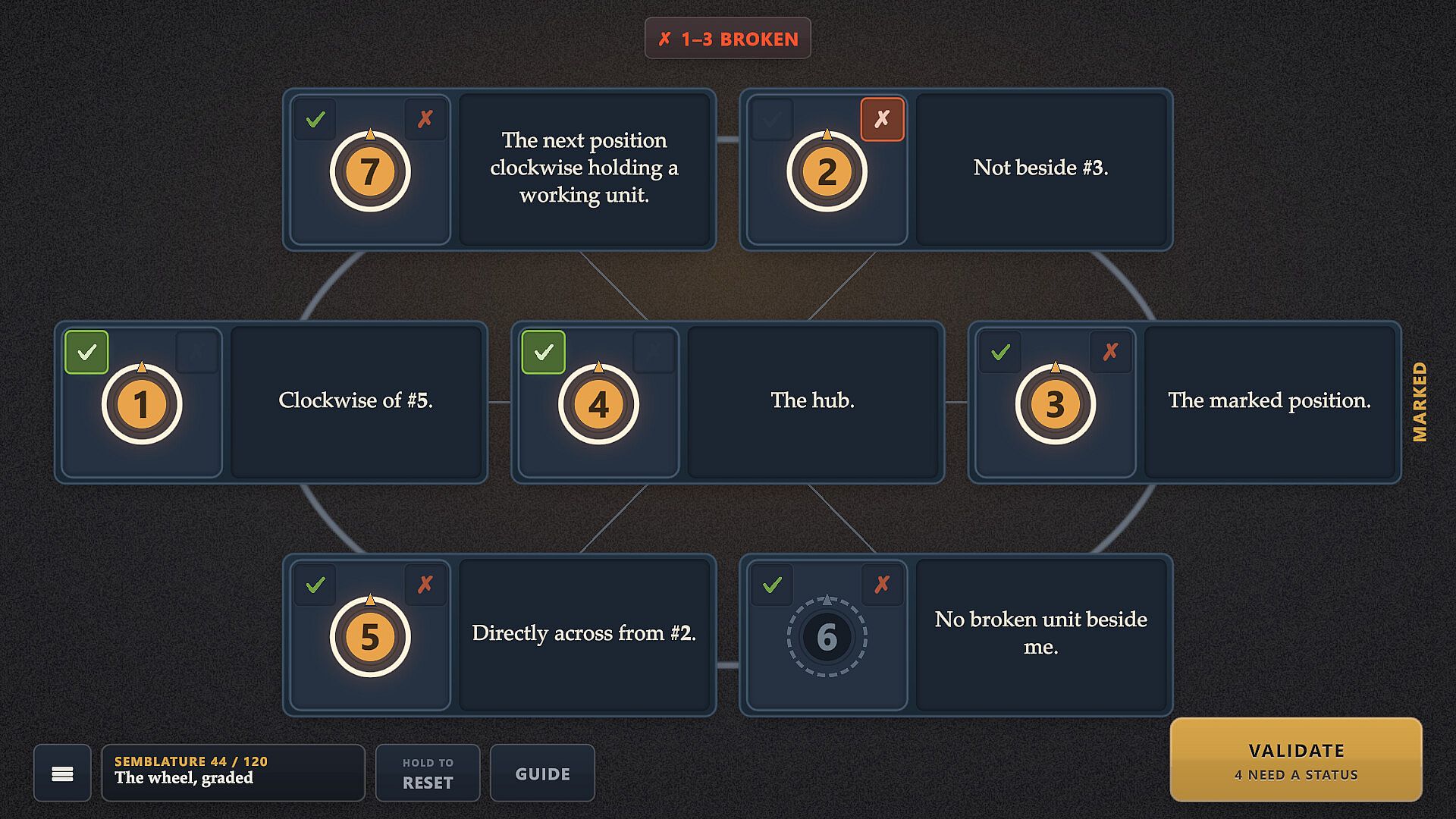
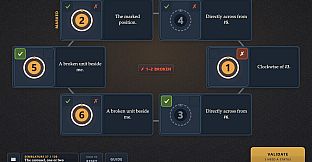
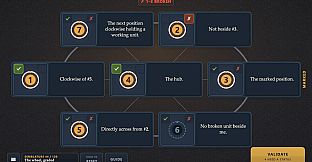
Every puzzle centers on a workbench that supplies initial data about a set of identical-looking units. Each unit carries a statement, and an accompanying light indicates whether that statement holds true in the current arrangement. Broken units invert their actual state, so a functional unit placed correctly will show a false statement until repositioned. Units hosting a Shade follow the opposite pattern: their statement remains accurate while the light displays the reverse. Players examine statements, test arrangements by moving and swapping units, and gather information through those movements themselves. The process builds toward labeling each unit as working or broken and clear or hosted before finalizing the order. No element requires blind guessing because every semblature contains exactly one valid solution supported by the provided information at all times.
Game Modes
The core experience follows a linear main story that guides players through progressively intricate semblatures. A free, unlimited Guide system assists at any point by first directing attention to unused evidence and later supplying explicit next moves when needed. Players who prefer greater challenge can pursue optional marks on later puzzles by completing clean deductions in the minimum number of moves. The most demanding semblatures stand apart for those seeking additional depth. All content remains available without timers, failure states, or progress loss, allowing completion in a single continuous session or across multiple returns.
Story and Atmosphere
A light narrative thread accompanies the puzzles as players restore semblatures and encounter the elusive Shades that inhabit some units. The story serves as an optional layer rather than a requirement, with the deduction challenges remaining the central focus throughout the roughly five-hour main campaign. The overall tone stays relaxed and exploratory, emphasizing thoughtful arrangement over pressure or repetition.
Accessibility and Technical Details
Options at launch include toggles that remove reliance on color for any critical information, disable motion effects, and scale text size. Separate sliders control sound, music, and effects volumes. The 2D presentation runs on modest hardware and supports the Steam Deck without additional configuration.
Is It Worth Playing?
This title suits players who enjoy pure logic deduction without external variables or time limits. The guarantee of a single solution per puzzle, combined with the optional Guide and escalating challenge options, creates a flexible experience that accommodates both newcomers to the genre and those seeking tighter constraints. Accessibility features and the absence of punitive mechanics further support extended sessions focused solely on the puzzles. Those drawn to methodical rearrangement and statement analysis will find consistent depth across the campaign length, while the cozy presentation keeps frustration low even on complex arrangements.











