



















Run Rabbit Run is a 2D action platformer that blends indie sensibilities with simulation elements in its precise movement systems and adventure through perilous stages. Players control a determined bunny focused on reaching carrots while navigating deadly hazards in a side-scrolling environment built around tight timing and momentum management.
Gameplay
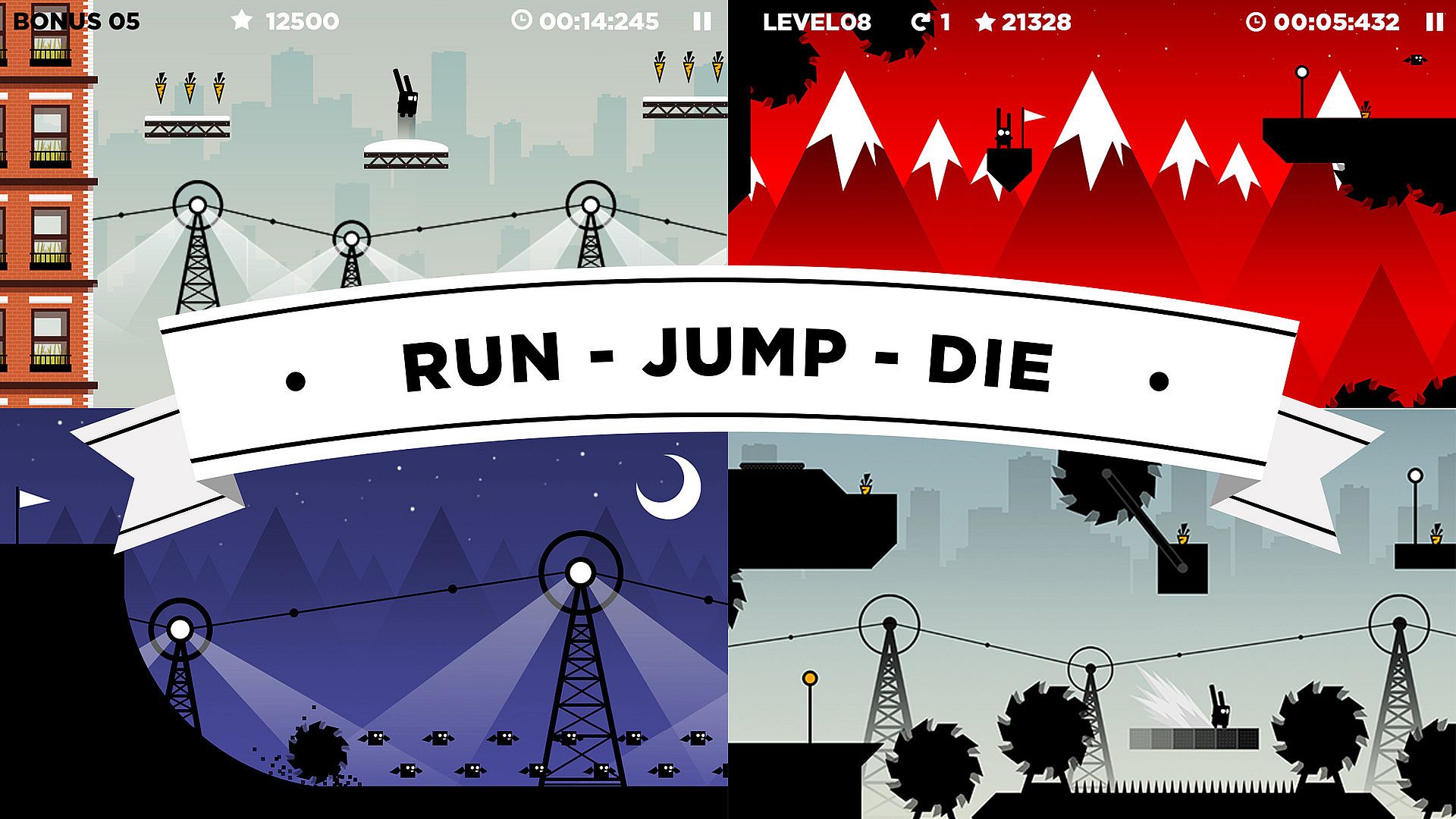
The core loop centers on running and jumping across carefully designed levels filled with spike pits and circular saws of varying sizes and placements. Success depends on mastering velocity and inertia rather than simple button presses. Each jump requires the right speed buildup, yet excess momentum can carry the bunny into hazards, while insufficient speed leaves it short of platforms. This mechanic replaces common features like wall-jumping with mid-air velocity adjustments that demand repeated practice and fine control.
Levels emphasize quick attempts and immediate restarts after failure. The bunny dies frequently, which encourages experimentation with different approaches to the same obstacle layout. A comic book style pictorial intro sets up the story of the carrot-obsessed rabbit, adding light narrative framing without interrupting the action. Responsive controls reward players who learn the exact feel of acceleration and landing precision across increasingly complex sequences.
Stylized silhouetted characters stand out against serene pastel backgrounds that contrast sharply with the lethal red-tinged obstacles. Trees, snow-capped mountains, and cityscapes form the backdrops, creating a calm visual tone that highlights the tension of each run. The game includes 27 Steam achievements that track progress through these challenges.
Game Modes
Run Rabbit Run operates entirely as a single-player experience with no multiplayer components. The main campaign consists of two chapters that escalate in difficulty through structured obstacle courses. Additional secret levels extend the challenge for those who seek extra content beyond the primary path.
Progression flows linearly through each chapter, with levels designed for short, focused sessions that test specific movement skills. Players advance by completing stages without specific branching choices or alternate routes beyond the hidden ones. The structure keeps attention on refining jump timing and momentum rather than exploration or collection mechanics outside the core path to the goal.
Art, Sound, and Presentation
Visual design relies on high-contrast silhouettes and balanced color palettes that keep focus on the platforming action. Backgrounds evoke tranquility through soft pastels, while foreground hazards maintain clear visibility for precise navigation. This approach supports the quickfire nature of the levels without visual clutter.
The soundtrack features live instrumentation across varied styles and moods that shift to match the intensity of each section. Tracks complement the mix of deliberate pacing in calmer moments and urgent drive during demanding sequences, enhancing the overall atmosphere without overpowering the gameplay audio cues.
Is It Worth Playing?
Run Rabbit Run suits players who enjoy high-difficulty 2D platformers that emphasize mechanical mastery over story or variety. Its tuned controls and inertia-based jumping provide a distinct feel compared to more forgiving titles, rewarding persistence with a sense of accomplishment on each cleared stage. The game launched in 2016 and remains available as a compact indie experience with no ongoing seasonal updates or additional content releases.
Reception stands at Mostly Positive based on 39 user reviews, with 79 percent positive feedback highlighting the responsive gameplay and challenge level. Those drawn to Super Meat Boy-style precision and short, replayable stages will find the two chapters and secret levels deliver consistent tension and satisfaction. Casual players seeking relaxed adventures may find the frequent deaths and strict momentum requirements frustrating, while dedicated platformer fans appreciate the focused design and absence of unnecessary complexity.