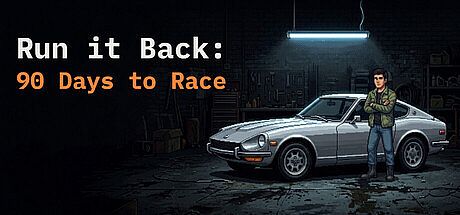


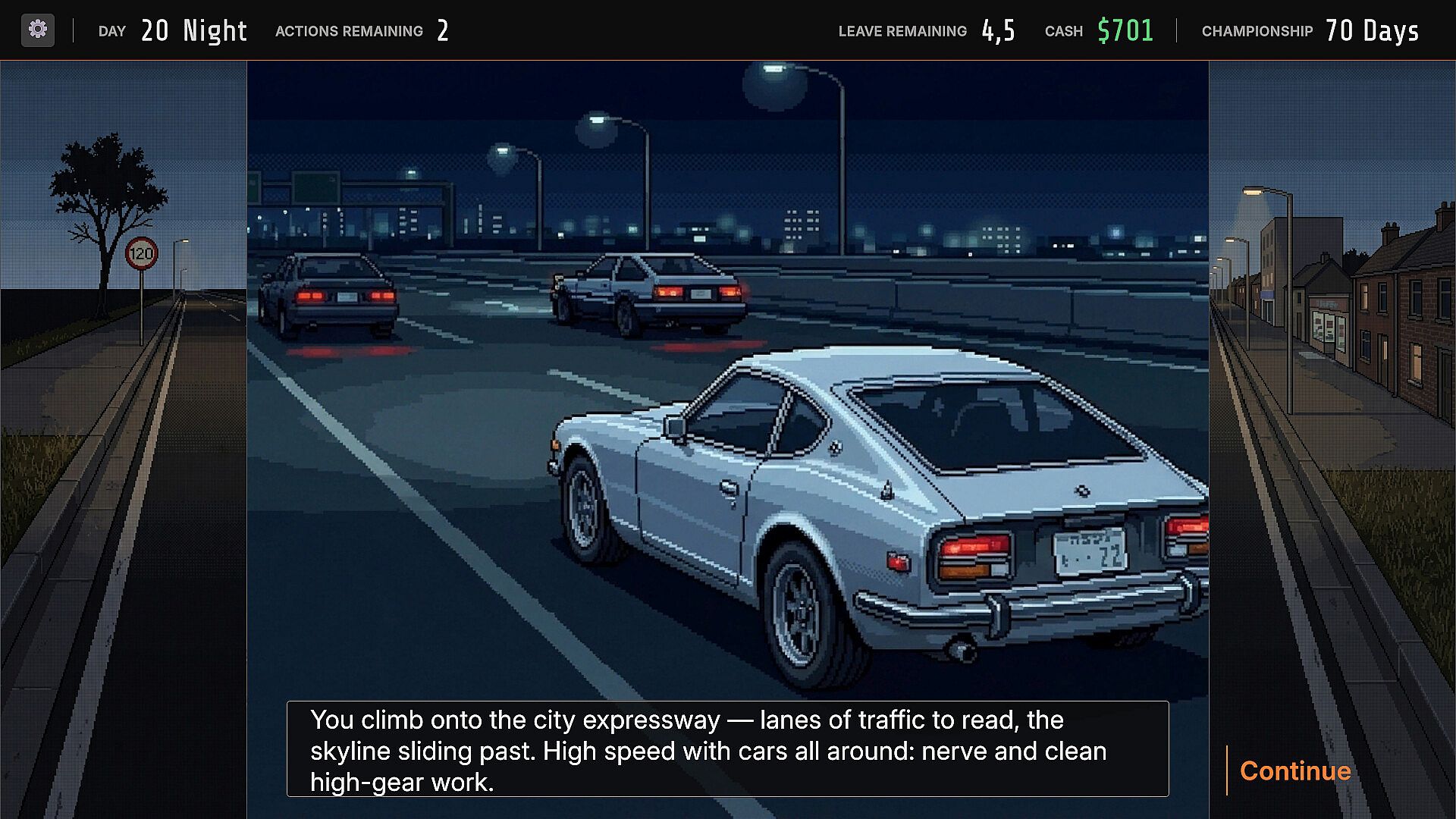
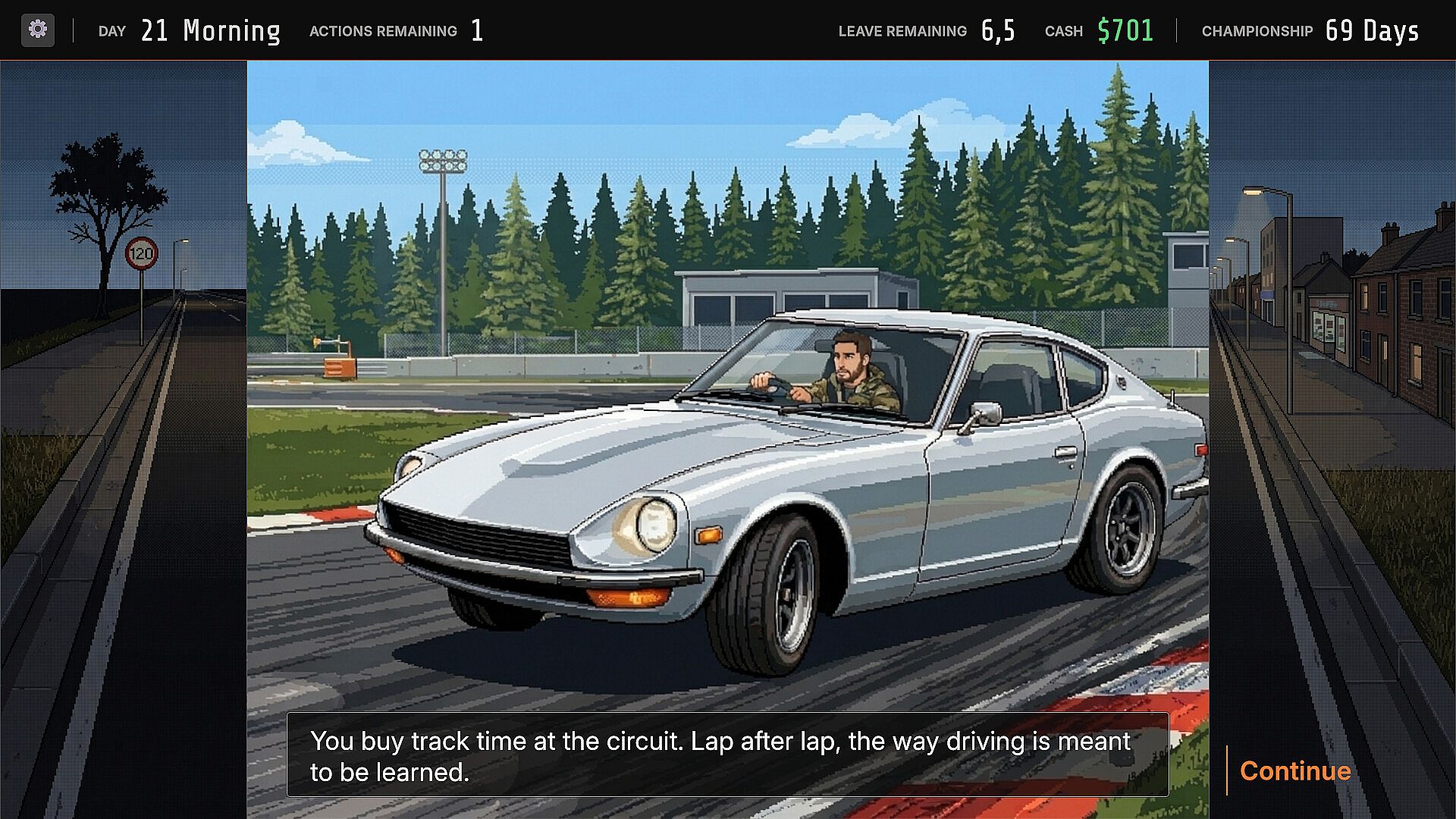
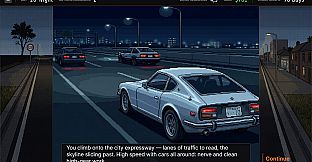
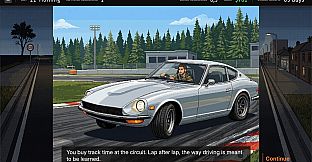
Run It Back: 90 Days to Race is an indie text-based racing career simulation for PC in which players manage a single car and driver over a fixed 90-day period leading to a National Championship. Every decision consumes one of the limited turns, forcing trade-offs between income generation, skill development, vehicle upgrades, and competitive events. The experience centers on drag racing supported by a full Newtonian physics model that calculates outcomes from power, torque, weight, drag, and gearing at tenth-of-a-second intervals.
Gameplay
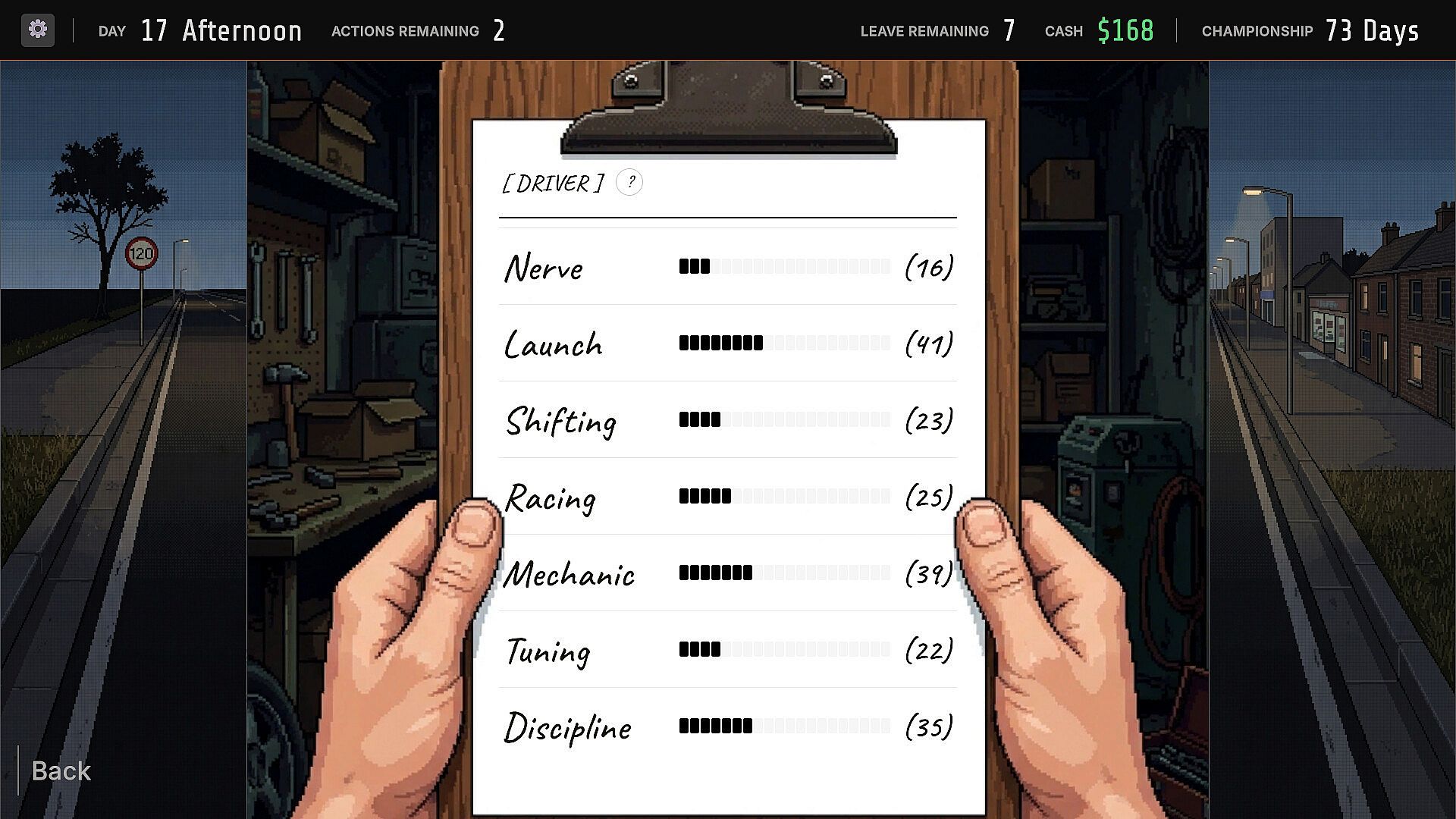
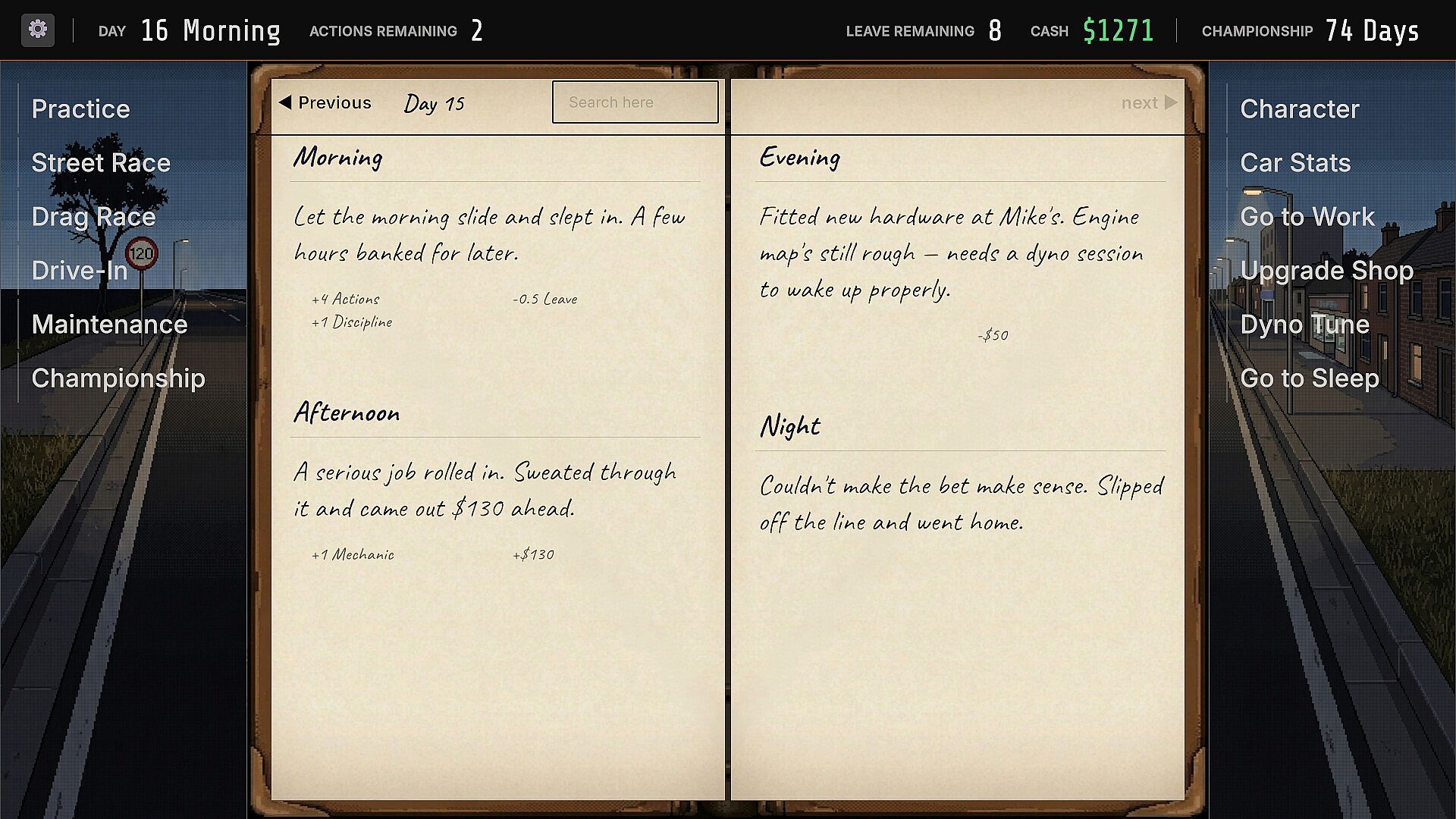
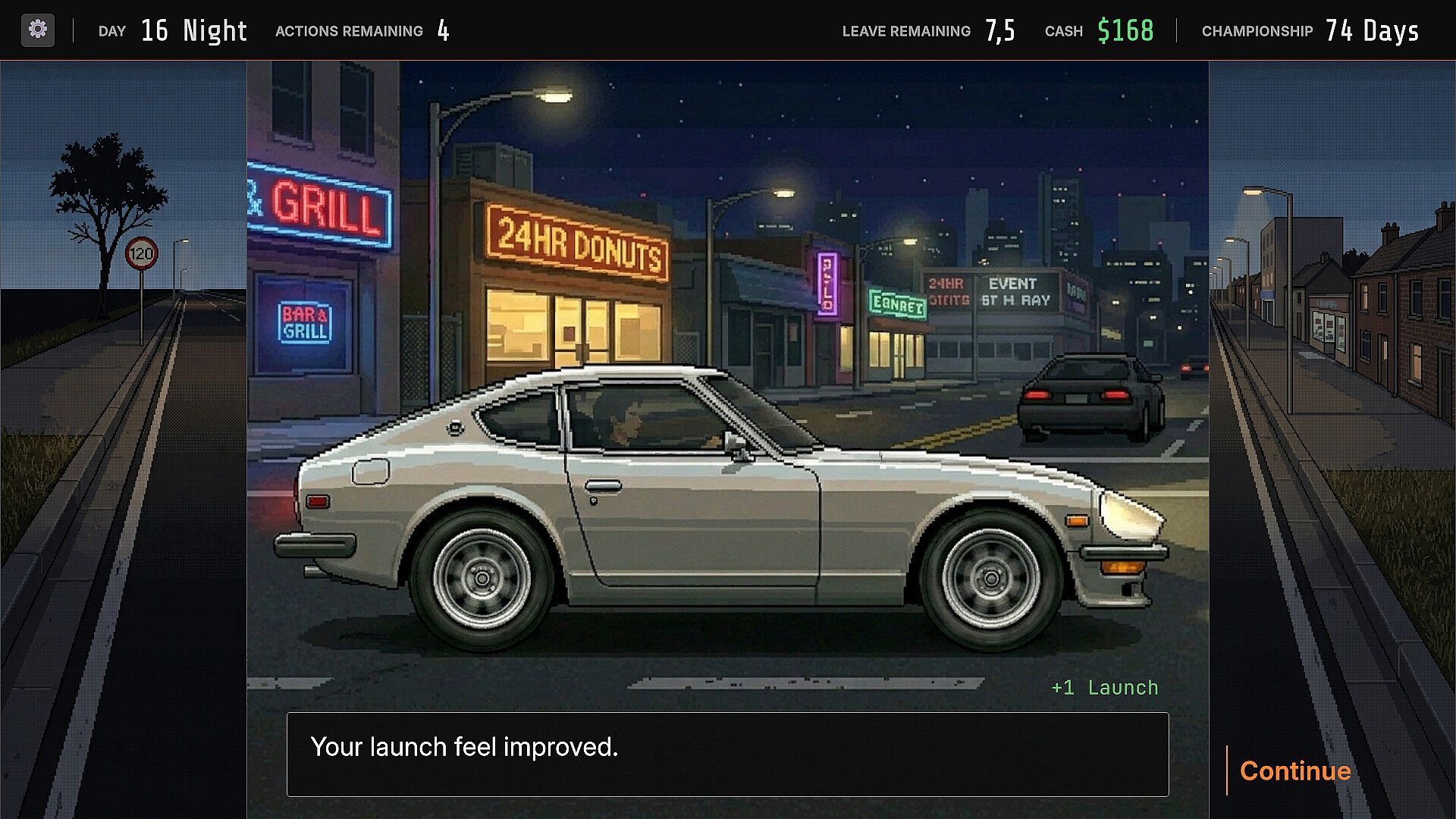
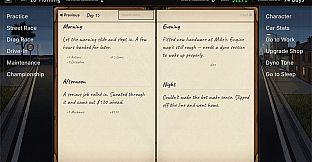
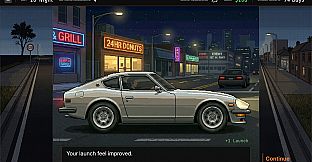
Core progression revolves around seven trainable driver skills: Nerve, Launch, Shifting, Racing, Discipline, Mechanic, and Tuning. These attributes improve only through repeated, specific actions rather than abstract leveling. A dyno session directly informs tuning decisions, while time spent practicing refines launch and shifting precision. Activities such as working shifts provide cash but consume turns that could otherwise advance car performance or driver ability. Street racing introduces variable wagers against NPC opponents who may default on bets or trigger police involvement, adding risk to each outing. The persistent journal automatically records every choice and result, allowing players to review the full sequence of events that shaped their build and performance.
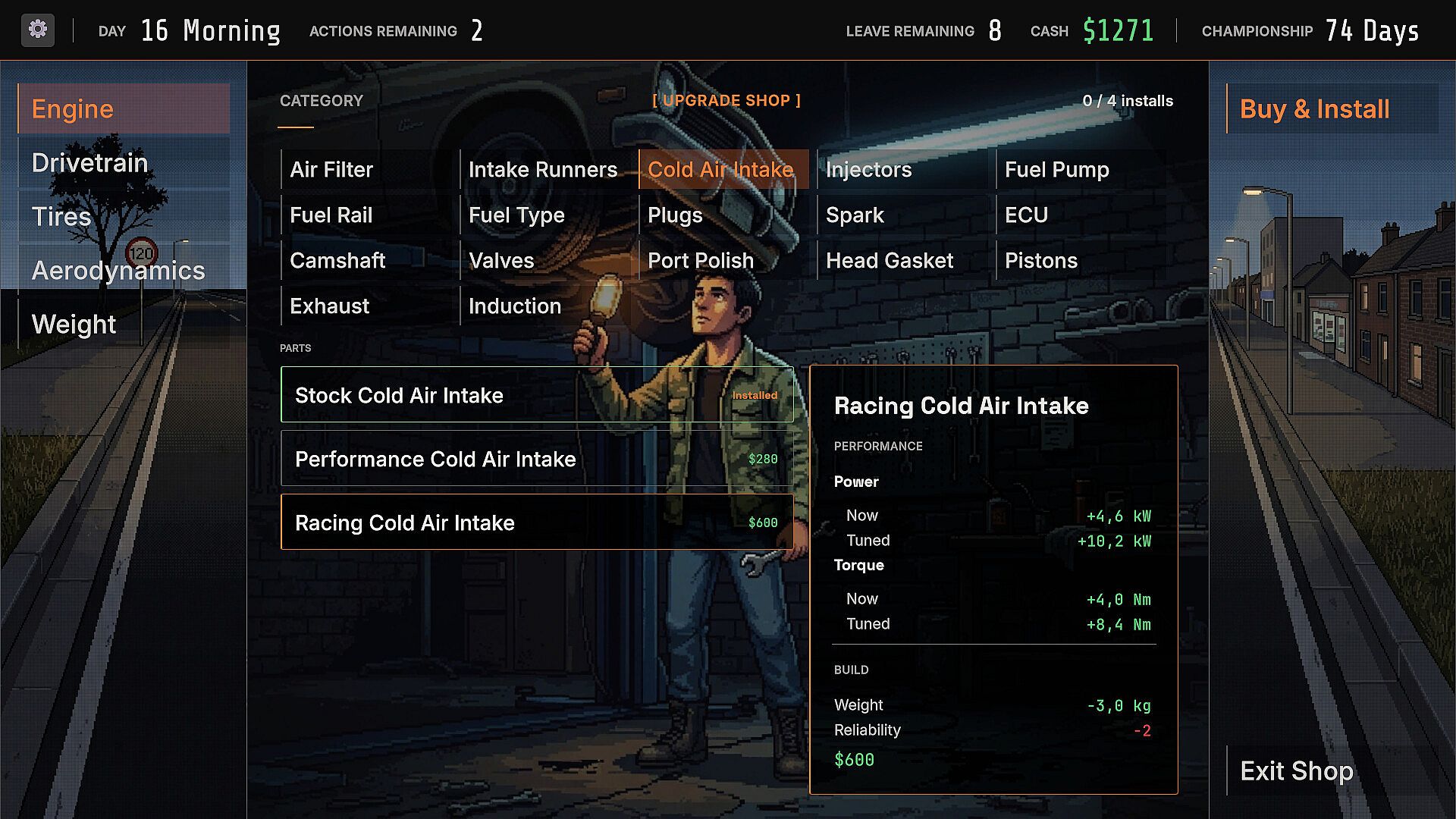
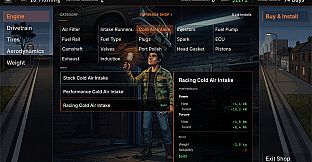
Car customization operates through concrete part selection and tuning adjustments. Installing components without matching the overall power curve or weight distribution produces measurable slowdowns on the strip. Optimal power windows and detuning options require testing to verify real gains. Because the simulation runs on Newtonian principles instead of randomized outcomes, small differences in gearing or turbo selection produce consistent, repeatable effects across multiple runs.
Game Modes
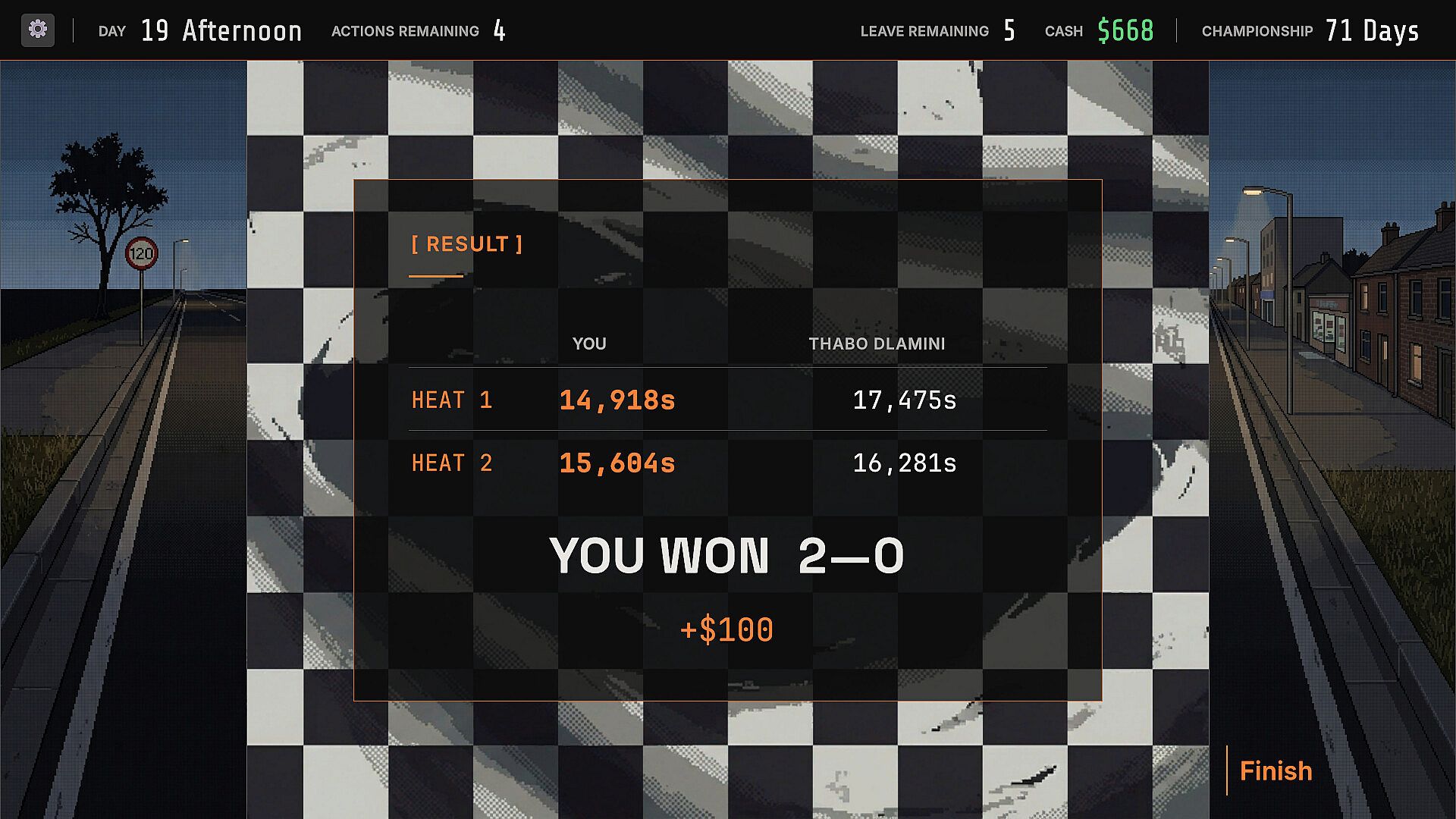
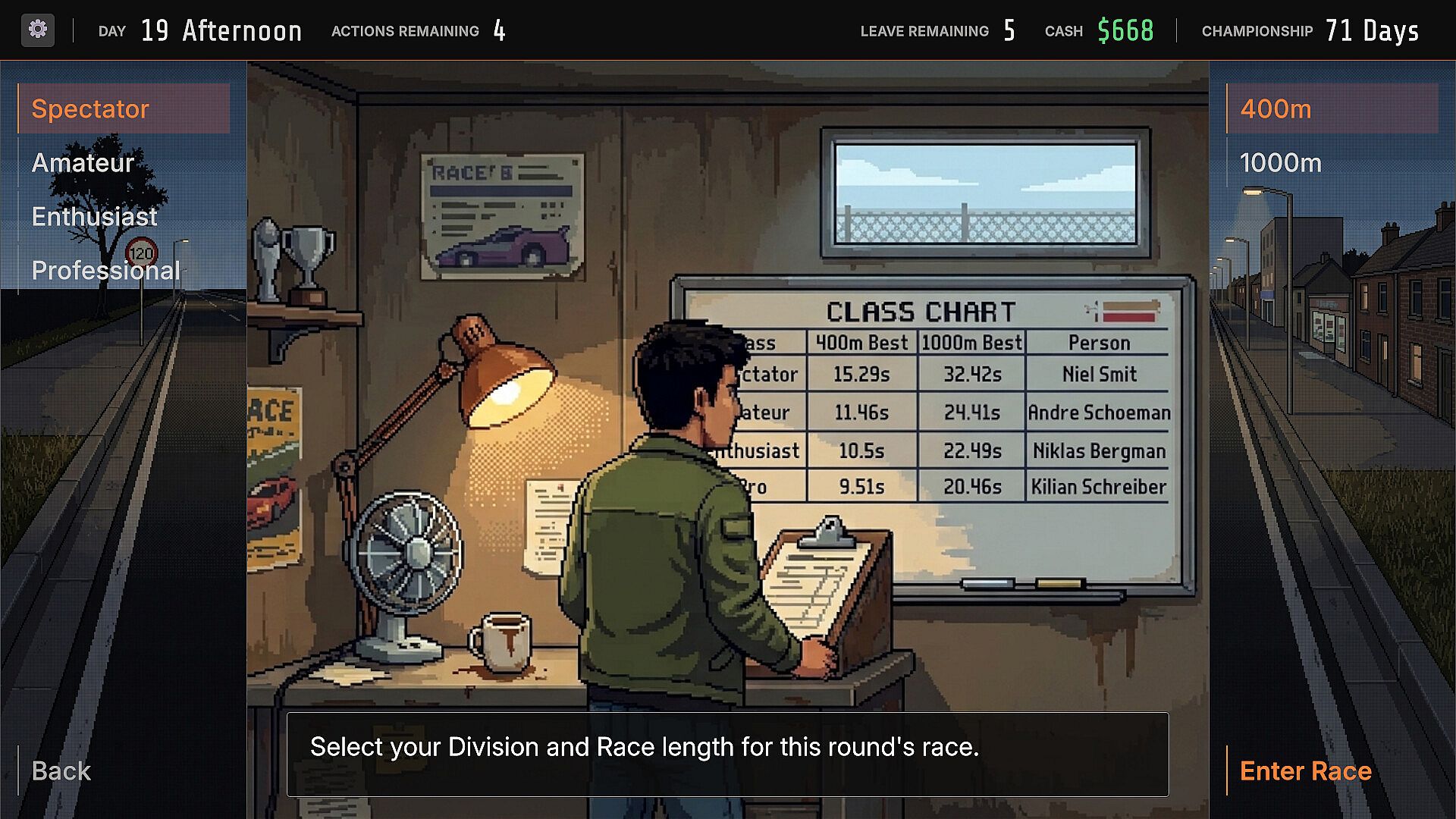
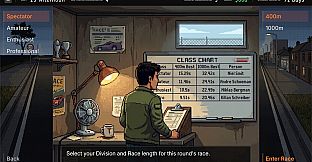
The game structures play as a single continuous career spanning exactly 90 days. Within that framework, players allocate turns across work shifts for cash, practice sessions for skill gains, dyno and tuning work for vehicle refinement, and drag or street races for competition and income. Street events include dynamic wagering against NPC racers with distinct personalities that influence bet acceptance and post-race behavior. The final goal remains the National Championship, reached only by balancing preparation across the fixed time limit. A global leaderboard tracks the best quarter-mile times posted from completed runs, allowing direct comparison of individual builds and driver skill combinations.
Key Mechanics and Systems
Physics calculations determine every race result without reliance on dice or chance tables. Players observe the impact of each modification immediately through timed simulations. The journal system creates a narrative record of the entire campaign, capturing wins, losses, financial swings, and incremental improvements from stock configuration to competitive capability. Leaderboard participation remains optional yet provides a clear benchmark for optimization efforts. All systems operate within the constraints of the 90-day turn limit, ensuring that specialization in one area necessarily limits progress in others.
Is It Worth Playing?
The title targets players who enjoy deliberate, choice-driven simulations where outcomes depend on planning and incremental refinement rather than reflexes or luck. Its Newtonian drag physics and skill-growth mechanics reward careful analysis of car data and activity selection. Because the game remains in a coming-soon state with no user reviews available, prospective players should evaluate the described systems against their preference for text-based management and long-term career building. Those drawn to realistic tuning consequences and persistent progress tracking will find the core loop aligned with those interests. Availability is currently limited to wishlist notifications on the PC platform.