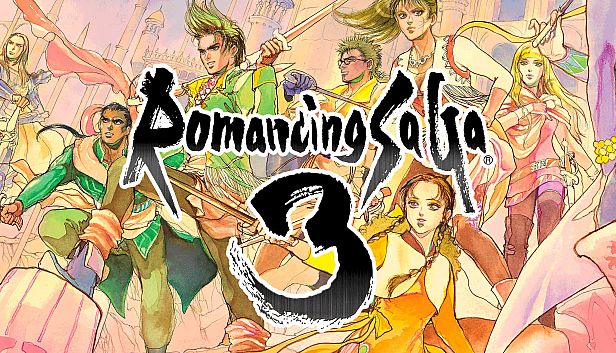



Romancing SaGa 3 is a role-playing game that first appeared in Japan in 1995 and reached Western players through a 2019 HD remaster on PlayStation 4. The title centers on a cycle of world-threatening events that recur every three centuries, with players selecting one of eight protagonists whose individual backstories and decisions steer the course of events.
Gameplay
Combat unfolds in a turn-based format where a party of up to five characters acts after the player assigns commands. Each character possesses HP that fully restores after victory, along with WP for physical techniques and JP for spells. A separate LP pool tracks permanent vitality; reaching zero HP deducts one LP, and a character is removed permanently once LP hits zero. The main protagonist's LP reaching zero ends the game.
Progression avoids traditional experience points. After battles, characters receive random increases to HP, WP, or JP based on actions performed, while proficiency with specific weapon types or magic attributes rises through repeated use. New techniques and spells appear through a glimmer system during fights, with a chance to learn abilities tied to the weapon or magic employed. Once mastered through repeated application, these abilities can transfer to other party members.
Party formations influence combat effectiveness by altering speed, attack power, and defensive capabilities. Certain powerful group maneuvers become available only when the protagonist occupies the reserve slot in Commander Mode, allowing the rest of the party to follow broad directives while unlocking formation-specific attacks and combined spells.
Exploration remains open after the initial protagonist introduction. Players move freely across the world map and individual locations, pursuing quests and events in any sequence. Some protagonists gain access to additional activities that tie into their personal narratives, such as managing resources or directing larger conflicts.
Game Modes
The core experience revolves around single-player exploration and turn-based encounters. Commander Mode serves as an alternate combat approach that automates party actions under general orders while enabling specialized team techniques unavailable in direct control.
Depending on the chosen protagonist, dedicated side systems appear. One route incorporates large-scale command battles where morale affects unit performance and outcomes. Another involves a trading loop of acquiring properties and completing deals to generate currency. These elements integrate with the main progression without replacing standard battles or travel.
New Game+ carries forward accumulated skill levels, learned abilities, money, and certain items into subsequent playthroughs, supporting repeated runs with different protagonists or altered choices.
Remaster Additions
The HD version updates the original pixel art with optimized graphics while preserving the classic aesthetic. A new dungeon called the Phantom Maze provides additional exploration content. Several new scenarios expand available events and character interactions. Updated controls and quality-of-life adjustments ease navigation compared with the 1995 release.
Is It Worth Playing?
Romancing SaGa 3 appeals to players who enjoy non-linear structure, experimentation with combat systems, and multiple playthroughs driven by protagonist choice. The absence of hand-holding and the reliance on discovery reward those willing to test formations, track glimmer opportunities, and manage LP carefully across extended sessions.
Reception has been mixed, with praise for the depth of its mechanics, replay value through varied routes and endings, and the quality of its soundtrack alongside criticism for opaque systems that receive little explanation. Those familiar with earlier entries in the series or similar experimental RPGs tend to find more satisfaction, while newcomers may need patience to grasp the growth and glimmer mechanics.
The remaster remains the primary version available on PlayStation 4, delivering the complete package of eight starting characters, free scenario progression, and the added dungeon and New Game+ features. It suits dedicated fans of classic Japanese RPG design who value player agency over guided narratives.