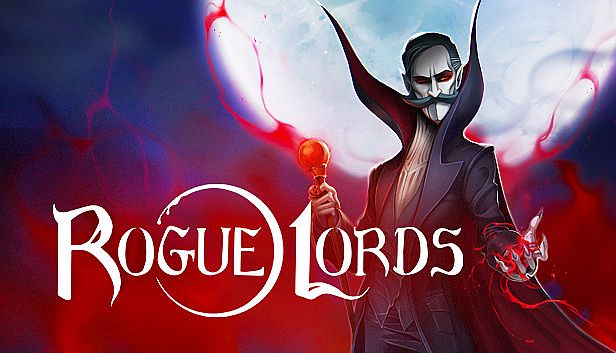



















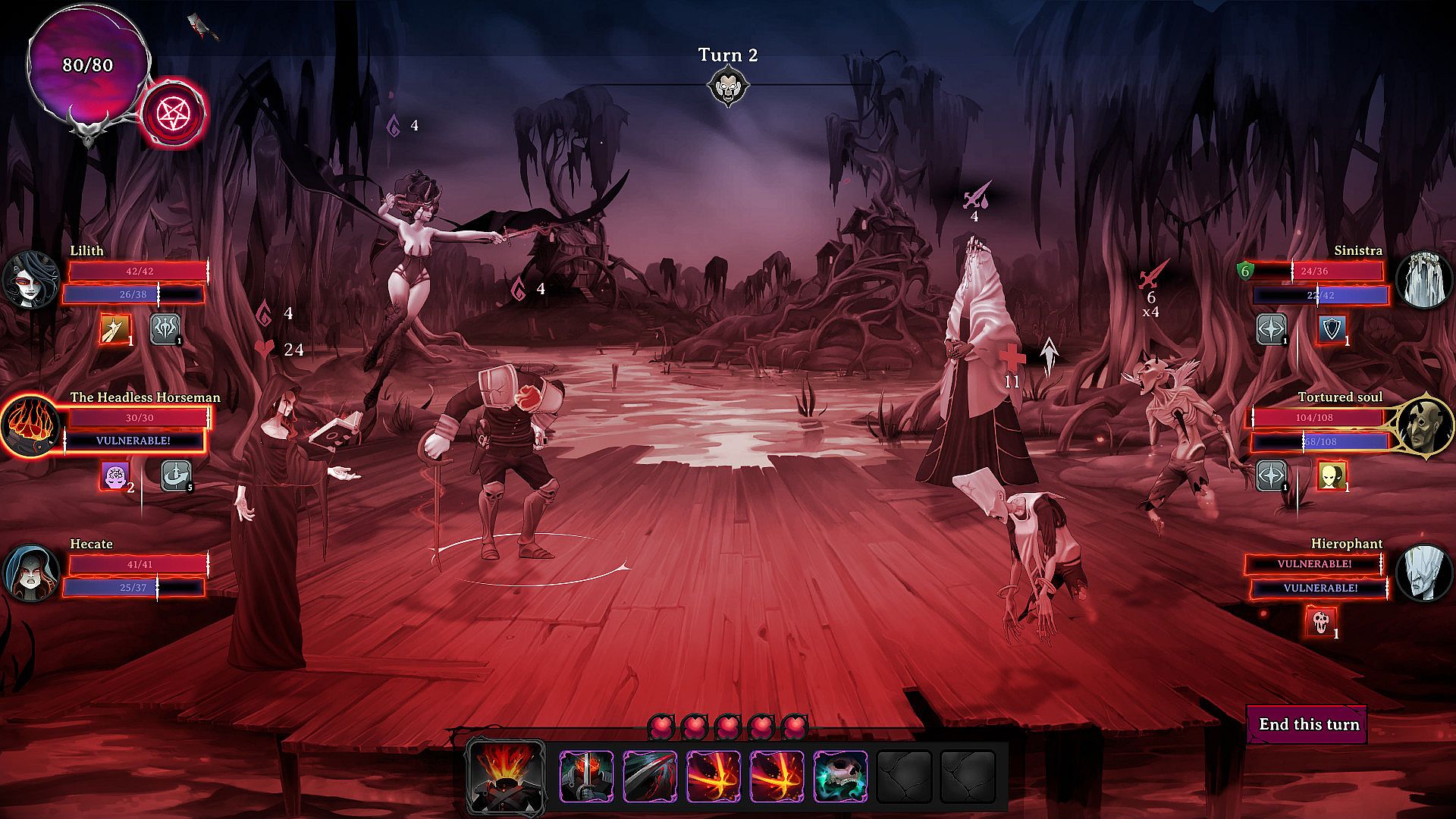
Rogue Lords is a strategy RPG roguelike that places players in the role of the Devil, guiding a team of notorious villains through randomized runs filled with turn-based combat and narrative events. The game emphasizes resource management, team building, and the ability to bend rules in ways that set it apart from standard roguelikes. On PC, it delivers a single-player experience focused on repeated attempts to reclaim power through artifact collection and strategic decisions.
Gameplay
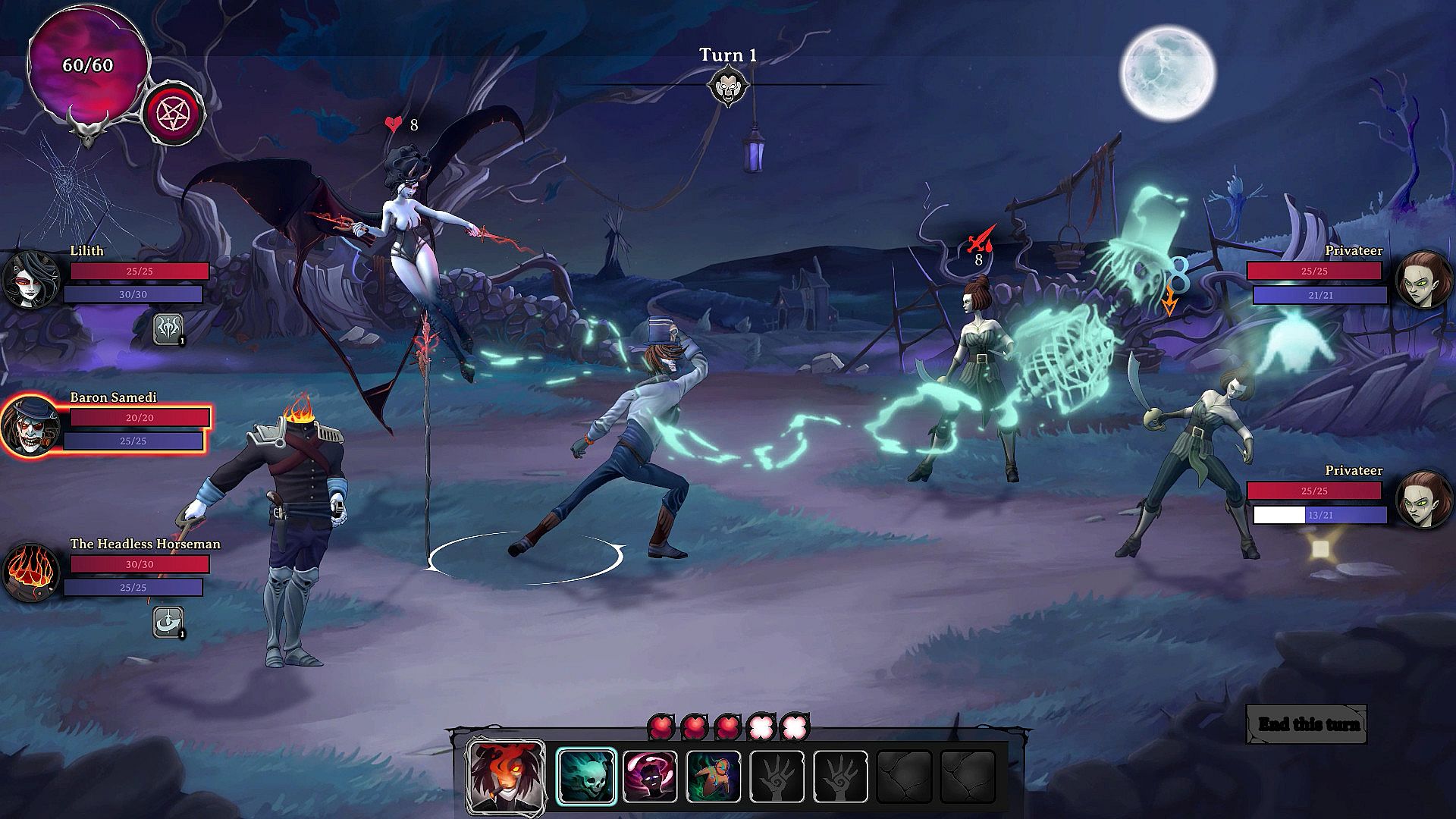
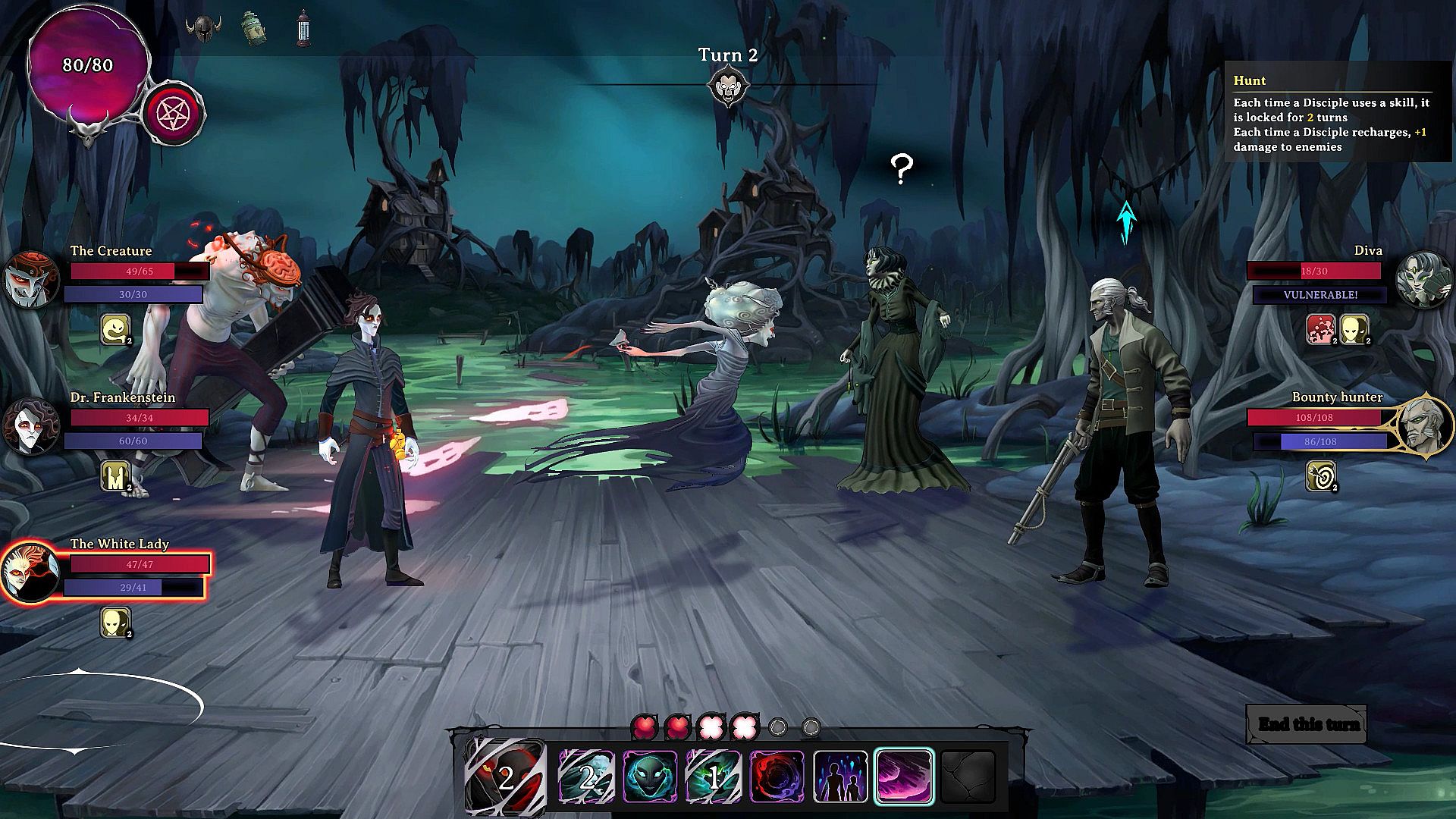
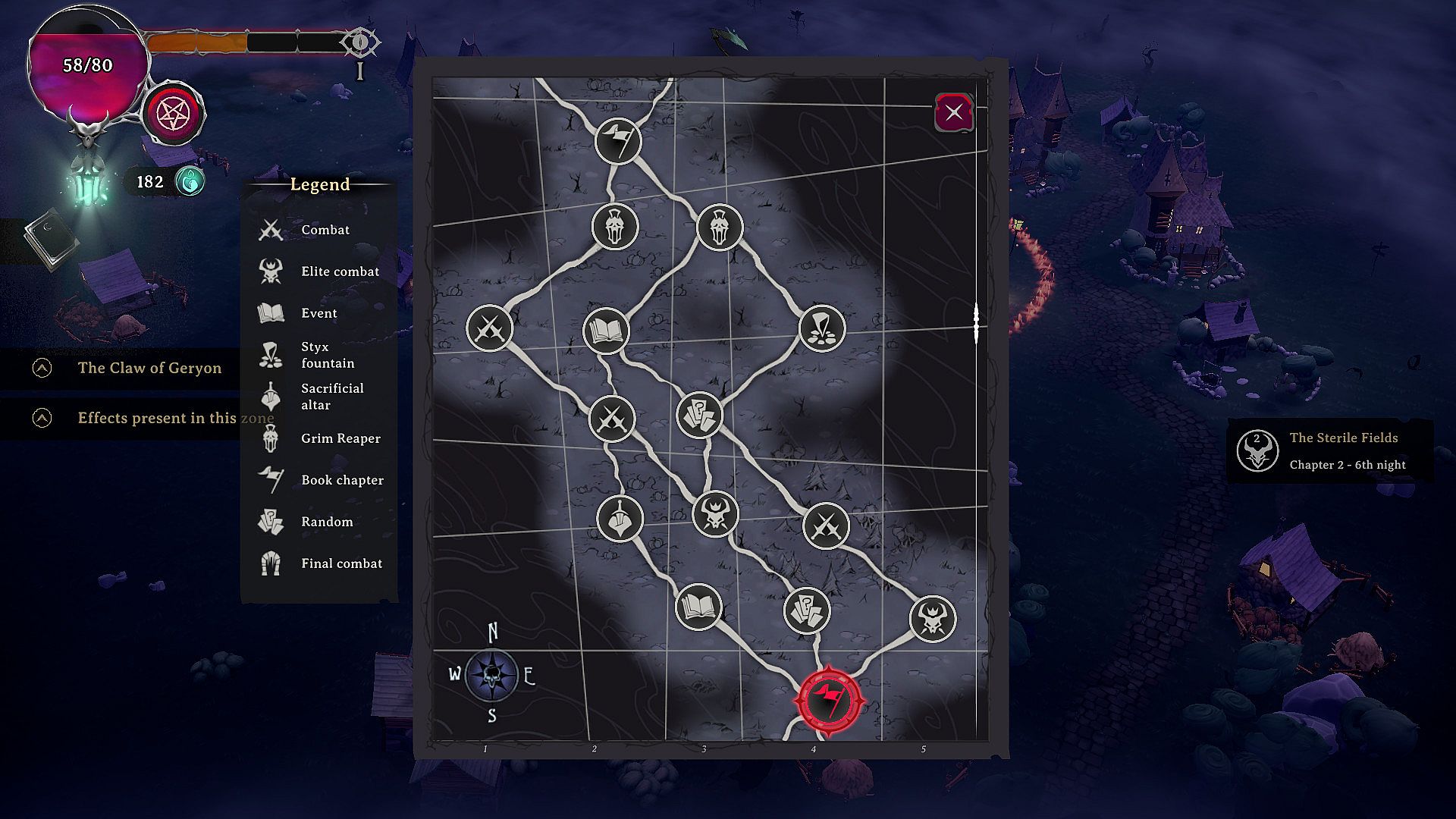
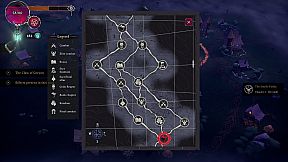
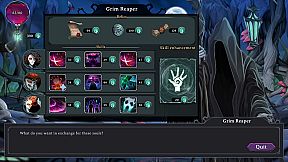
Core gameplay revolves around assembling a team of three Disciples drawn from figures such as Dracula, the Headless Horseman, Bloody Mary, the White Lady, Lilith, Hecate, Baron Samedi, and Frankenstein with his Creature. Each Disciple brings distinct abilities and backstories that players combine into synergies for combat and event resolution. Runs involve navigating a map of nodes that include battles, interactive events, shops, and shrines, with progression structured across six chapters that culminate in boss encounters.
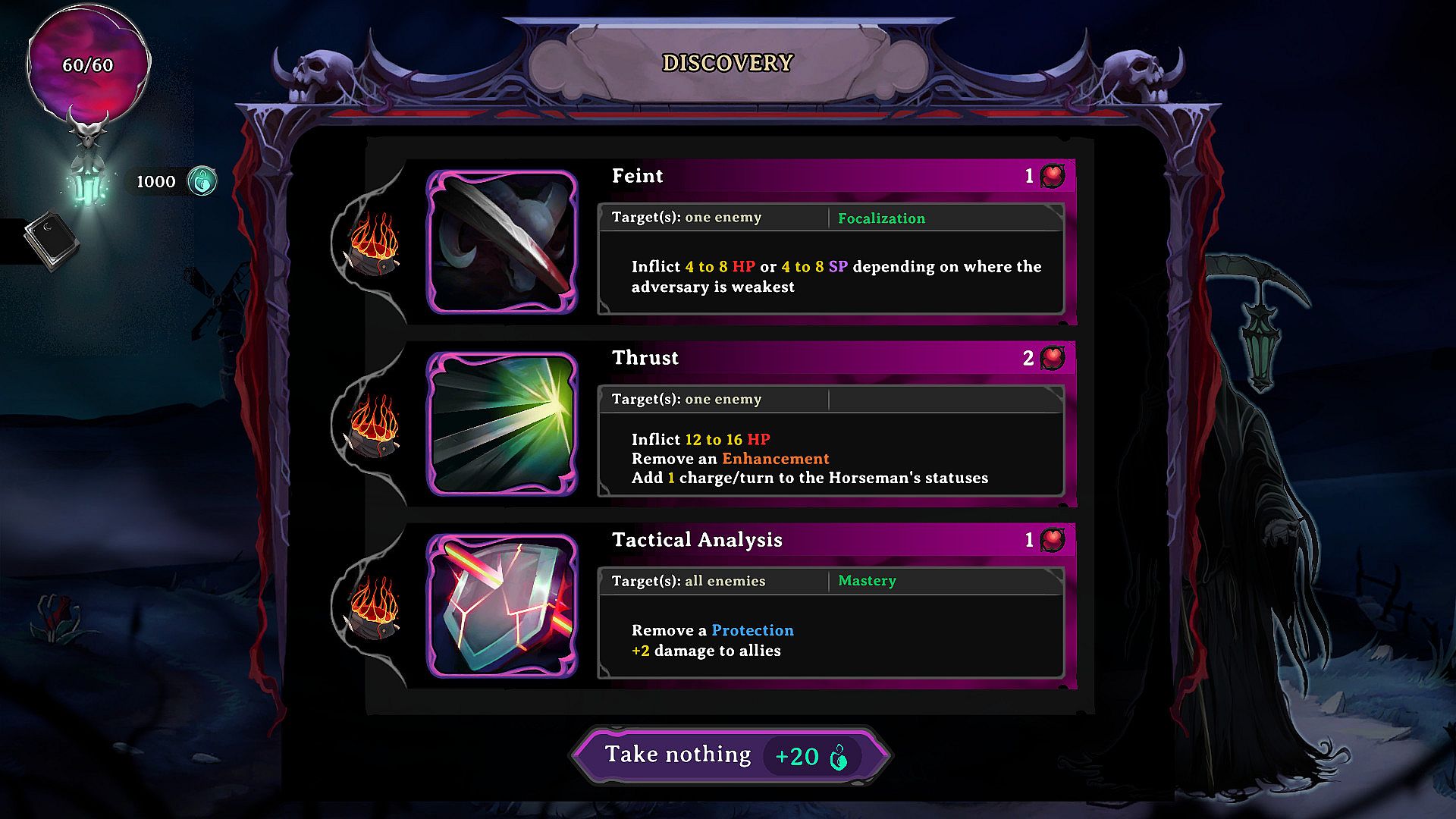
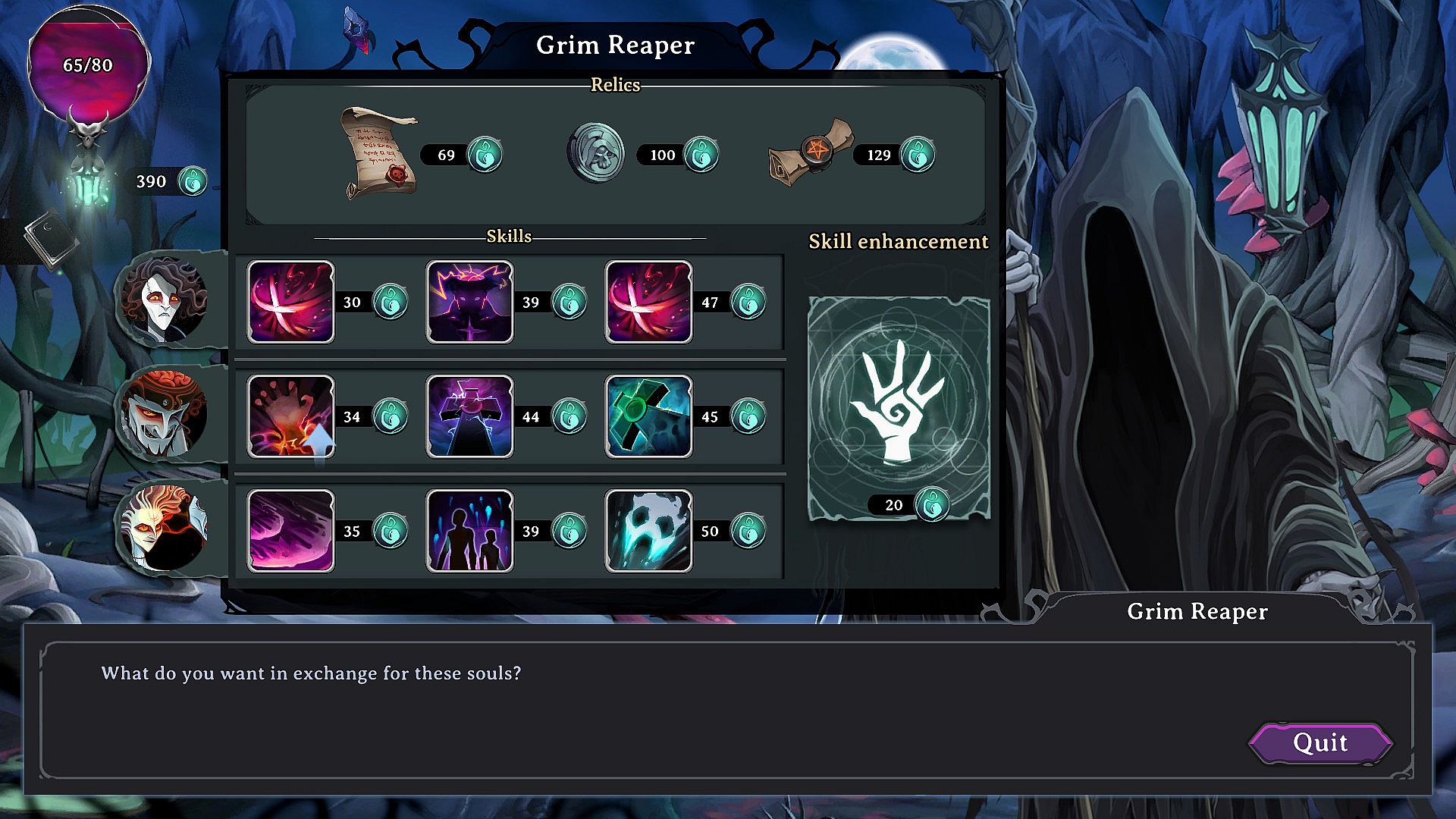
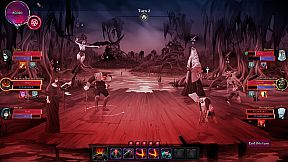
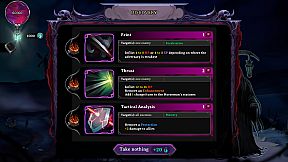
Turn-based combat uses action points for each character to execute attacks, buffs, debuffs, or special skills. Players collect souls to unlock new abilities, upgrades, and relics that enhance the team over the course of a run. The terror gauge rises through victories and event completions, granting bonuses while influencing how events unfold and reducing enemy influence in the world.
A standout system allows the Devil to expend personal health as Diabolic Essence in Devil Mode. This mechanic lets players manipulate health bars for Disciples or foes, adjust status effects, reset skill cooldowns, open map portals, or alter event outcomes. These interventions create opportunities to reverse unfavorable situations without relying solely on standard tactics.
Game Modes
The primary structure consists of roguelike runs where players advance through chapters by clearing nodes and defeating bosses. Each attempt features procedurally arranged paths on the map, forcing adaptation to different sequences of combat, events, and resource opportunities. Success depends on building momentum across multiple chapters while managing limited resources and the risk of permanent setbacks upon failure.
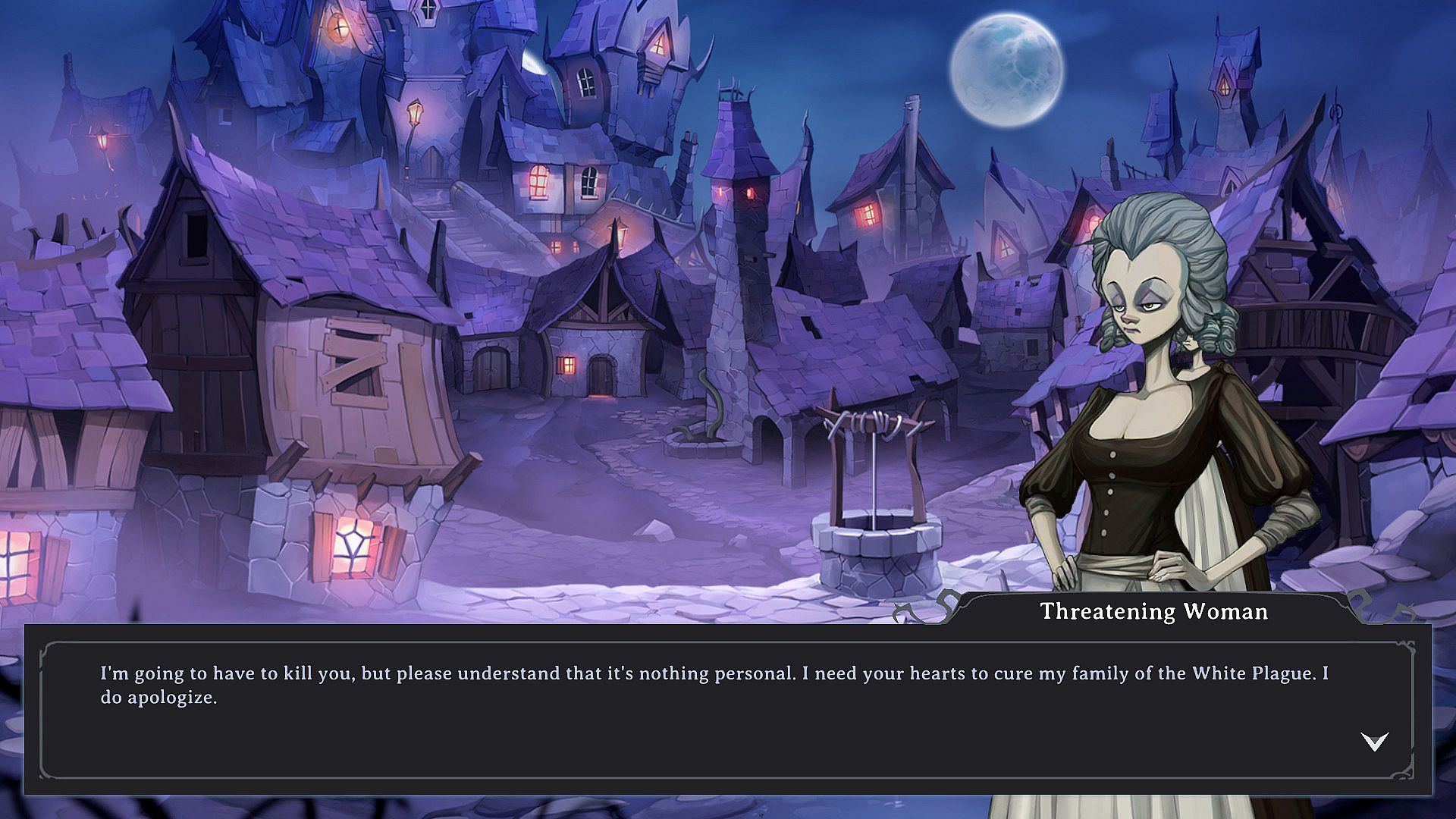
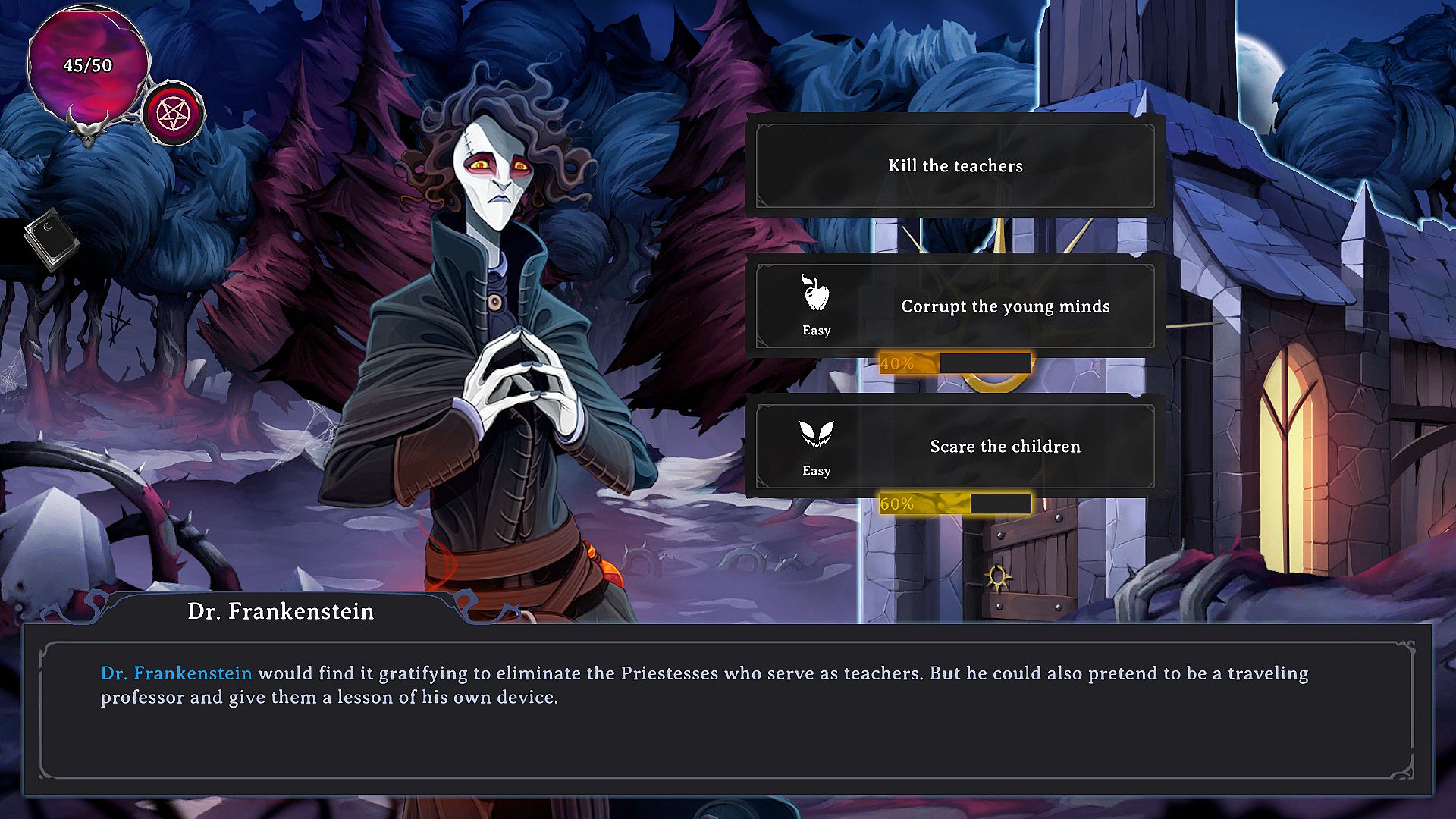
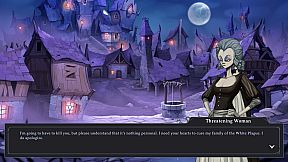
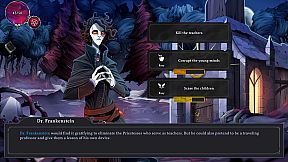
Events present choices that affect the terror gauge and Sanctua Lumen influence, allowing players to shape outcomes in ways that favor their Disciples or punish traitors. Combat encounters vary between standard fights and elite challenges, with rewards tied to performance. The loop encourages experimentation with different Disciple combinations and Devil Mode applications across successive runs.
Key Mechanics and Systems
Artifact collection serves as the long-term objective, restoring the Devil's strength lost in prior defeats. Disciples level up through soul expenditure, creating powerful combinations that evolve run by run. Status effects and synergies play a central role, as optimizing them can turn the tide in extended battles.
The map system offers branching routes with varying node types, promoting replayability through different strategic priorities such as prioritizing elites for better rewards or seeking shops for upgrades. Health management extends beyond standard combat due to the cost of Devil Mode interventions, adding tension to every decision.
Is It Worth Playing?
Rogue Lords suits players who enjoy roguelikes that blend turn-based strategy with unconventional rule-bending mechanics. Its focus on team synergies, event-driven progression, and the Devil Mode system provides consistent depth for those comfortable with repeated runs and adaptation to randomization. The single-player format emphasizes personal strategy over competitive elements.
Reception highlights strong character designs and atmospheric presentation alongside criticisms of balance in later chapters and unlock pacing. The game remains available as a complete experience without ongoing seasonal content or major updates. Those drawn to titles featuring villain protagonists and tactical combat with a twist will find its systems rewarding, while players seeking polished progression or frequent new additions may prefer alternatives in the genre.