


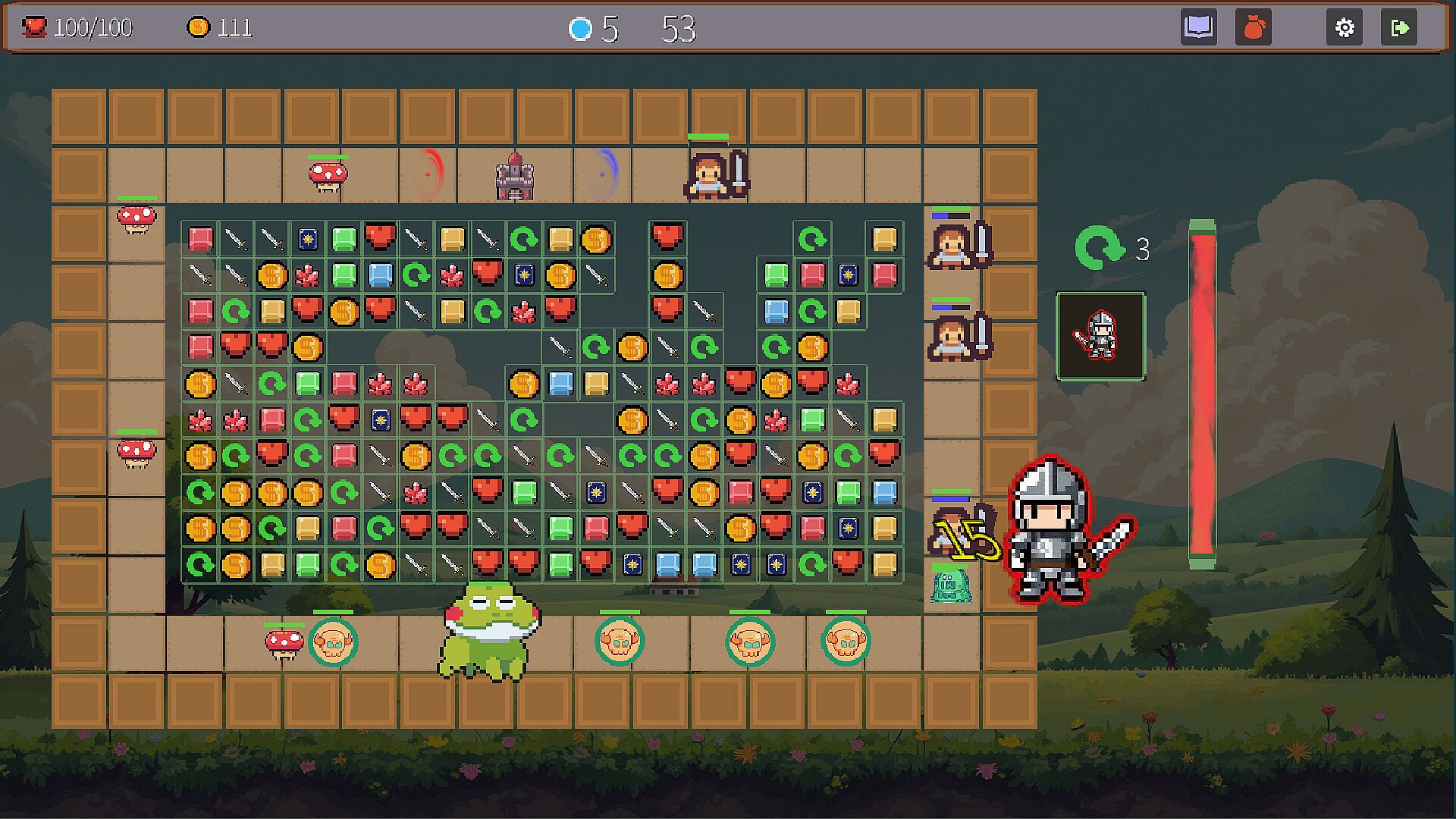
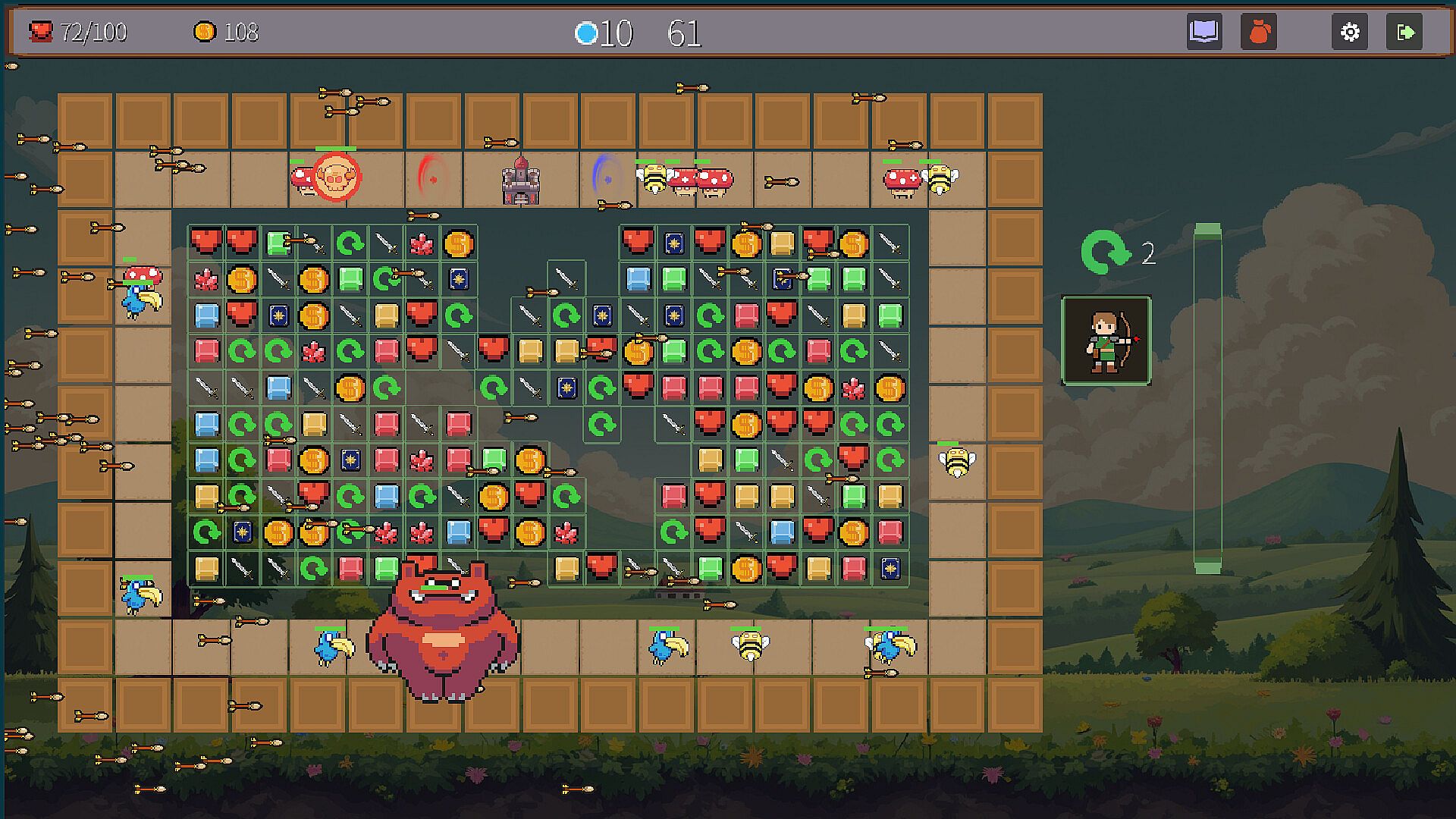
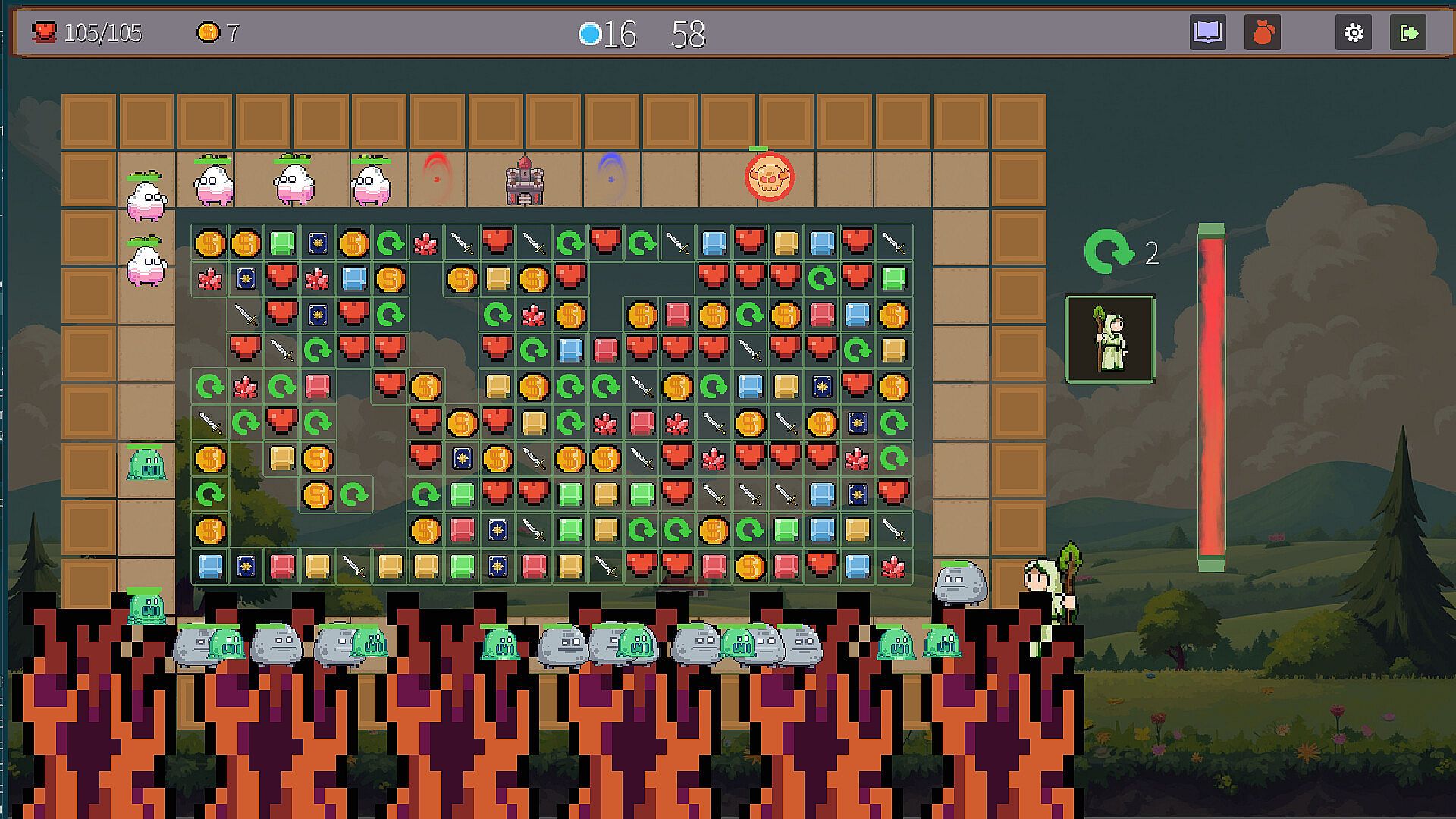
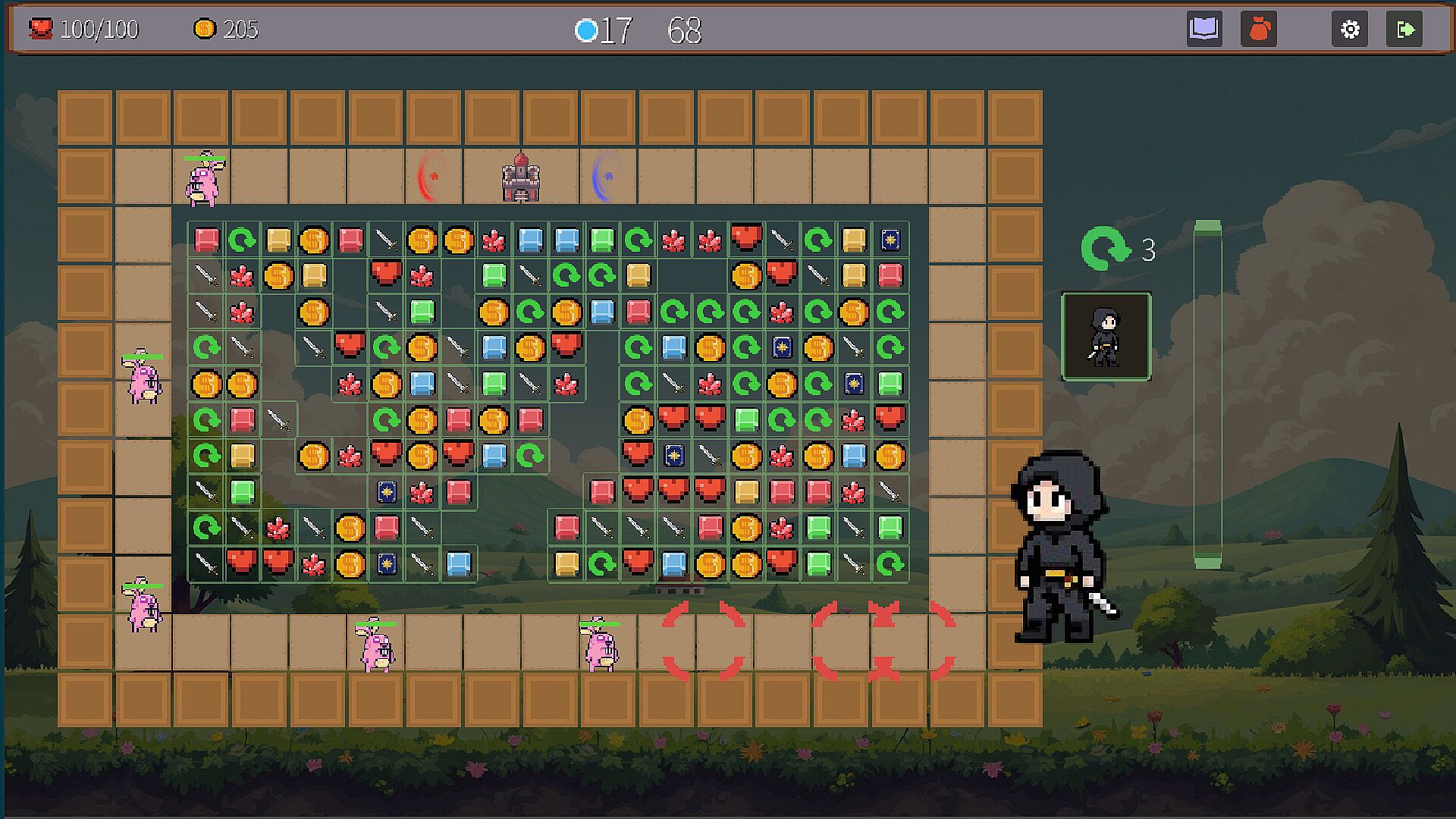
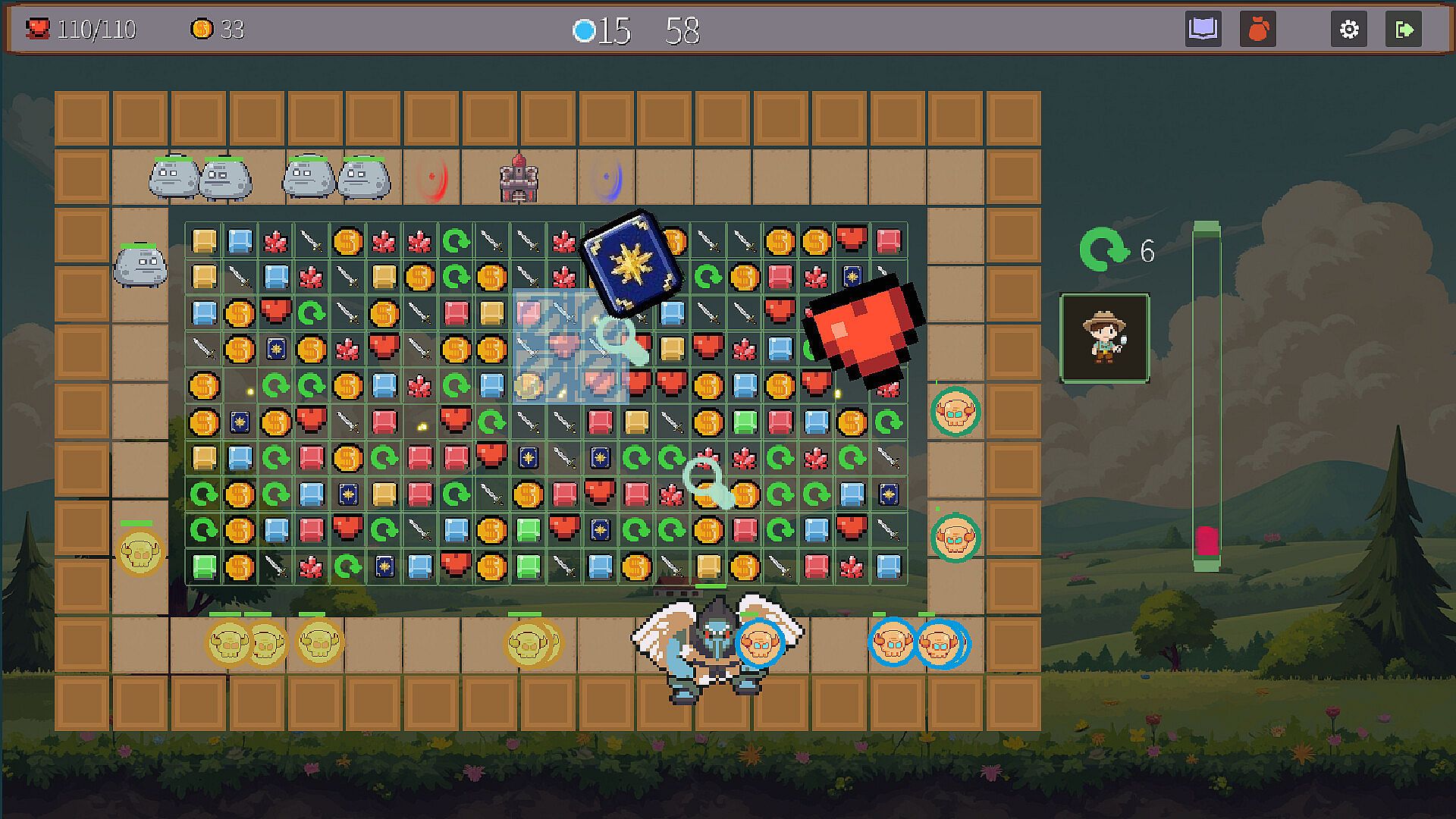
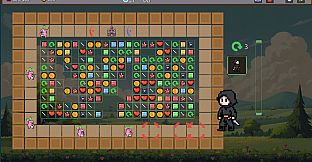
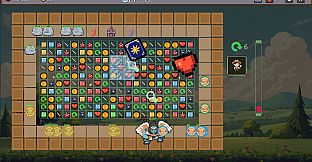
Rogue Link Loop is an indie strategy game on PC that combines match-connect tile elimination with tower defense elements in a roguelike format. Players face enemies advancing along a looping path and use tile matches to generate energy for spells, buildings, and summoned units. The result is a system where each run develops its own tactical identity through different combinations of relics, spells, and characters.
Gameplay
The core loop centers on matching identical tiles that can be linked by a straight line with no more than two turns. Successful matches supply energy that immediately triggers the associated spell. This direct connection between matching and action keeps the pace tight while forcing constant decisions about which tiles to clear and when.
Spells fall into projectile, summoning, and building categories. Projectiles deal direct damage along the path, summons place units that engage enemies, and buildings provide ongoing effects such as area control or resource generation. Relics and character choices further modify these options, allowing runs to emphasize different elemental themes or defensive setups.
Enemies advance in waves, and elite variants introduce specific disruptions. Some create visual interference that obscures tiles, others rearrange the board, and still others apply status effects that limit movement or matching options. These modifiers require players to adapt their matching patterns and spell priorities on the fly.
Game Modes
The game structures its challenges around successive waves of enemies that follow the looping path. Each wave escalates in density and introduces new elite types, pushing players to refine their build while managing the board state. Runs continue until the path is overwhelmed or the player clears the final wave.
Progression occurs through roguelike elements that persist between attempts. Relics collected in one run carry forward in limited ways, while new characters and spells become available as the player unlocks them. This setup rewards experimentation without requiring mastery of every system on the first attempt.
Difficulty scales through the trinity of matching precision, build construction, and real-time battle management. Casual players can focus on straightforward matches and basic spells, while those seeking greater challenge can pursue complex synergies and elite counters.
Build Variety and Progression
A wide selection of relics, spells, and characters supports distinct playstyles across runs. One approach might stack projectile spells for rapid damage output, while another leans on summoning and building combinations to create layered defenses. The variety ensures that no two runs follow identical patterns even when starting with similar characters.
Elemental themes emerge naturally from spell combinations. Fire-focused builds might emphasize area denial, ice builds could slow or freeze segments of the path, and other combinations produce hybrid effects. Relics amplify these themes or introduce new interactions between spells and the board layout.
Is It Worth Playing?
Rogue Link Loop suits players who enjoy blending puzzle mechanics with strategic defense. The matching system provides immediate feedback, while the roguelike structure encourages repeated attempts to discover new synergies. Its casual accessibility allows short sessions, yet the depth of build options and elite disruptions supports longer engagement for those who want to optimize strategies.
Because the game focuses on single-player runs with clear wave progression, it appeals to those who prefer self-paced challenges over competitive multiplayer. The absence of external ratings at this stage means decisions rest on whether the described match-connect and tower defense fusion matches personal preferences for tactical puzzle games.