






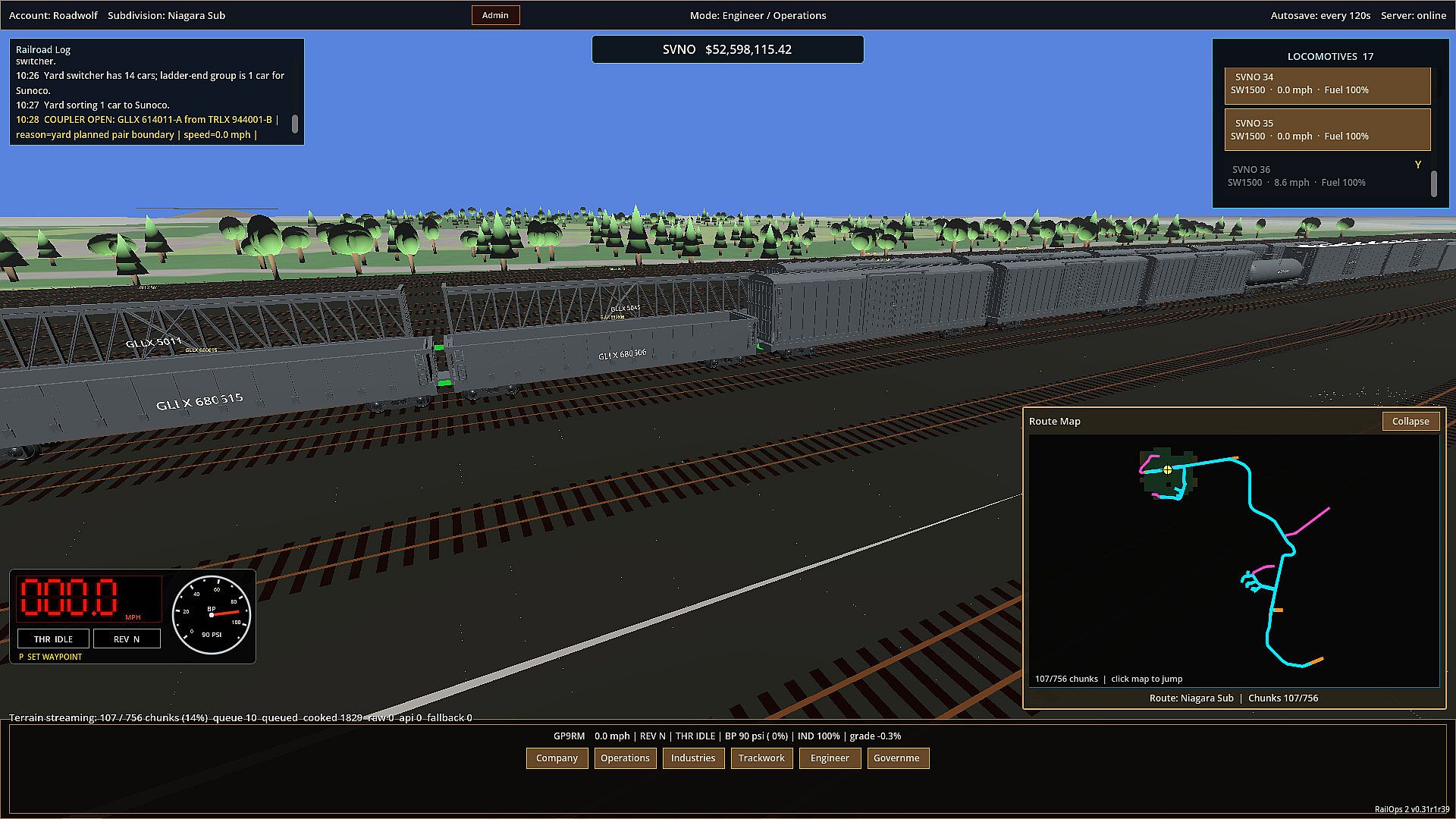
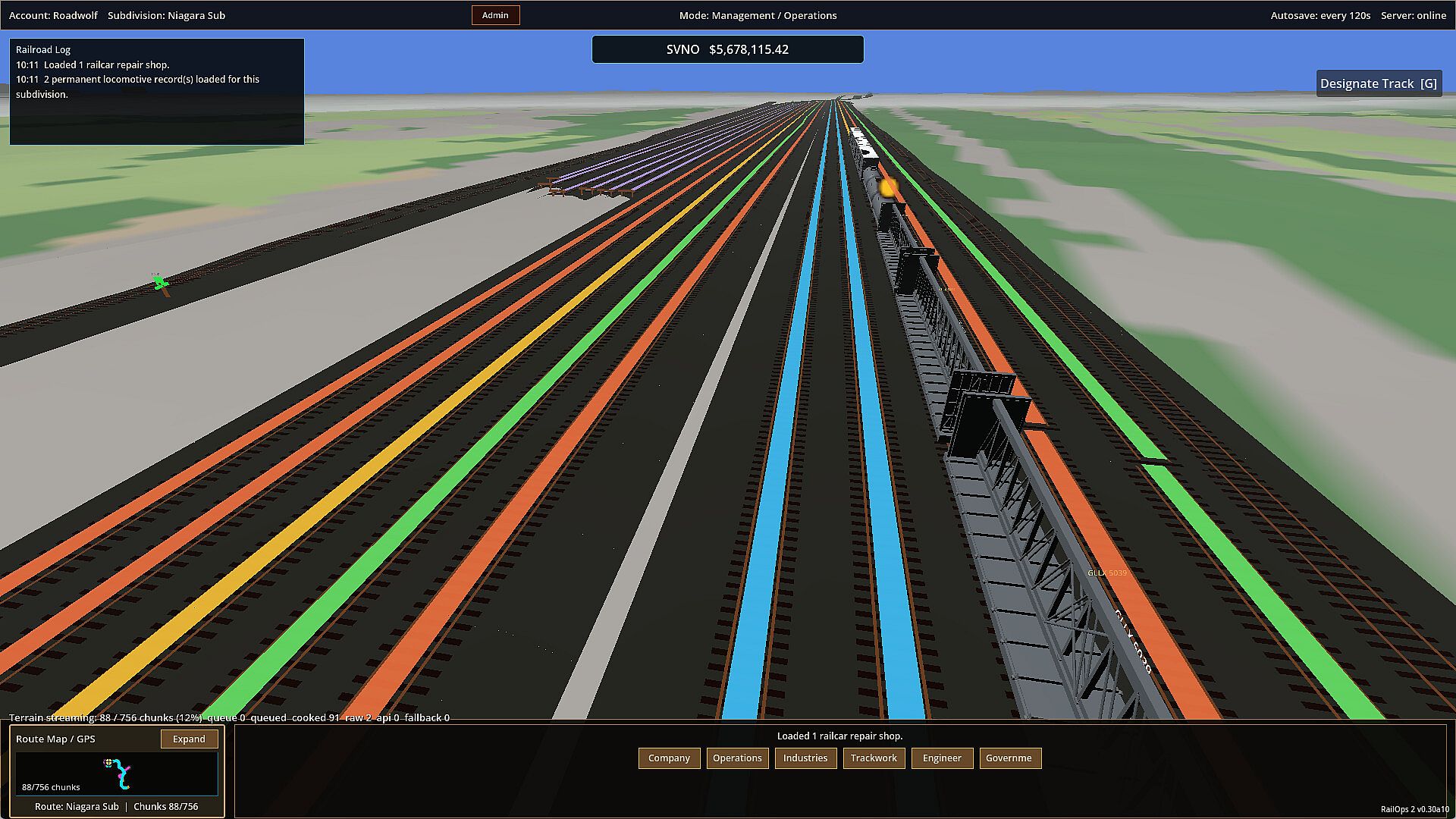
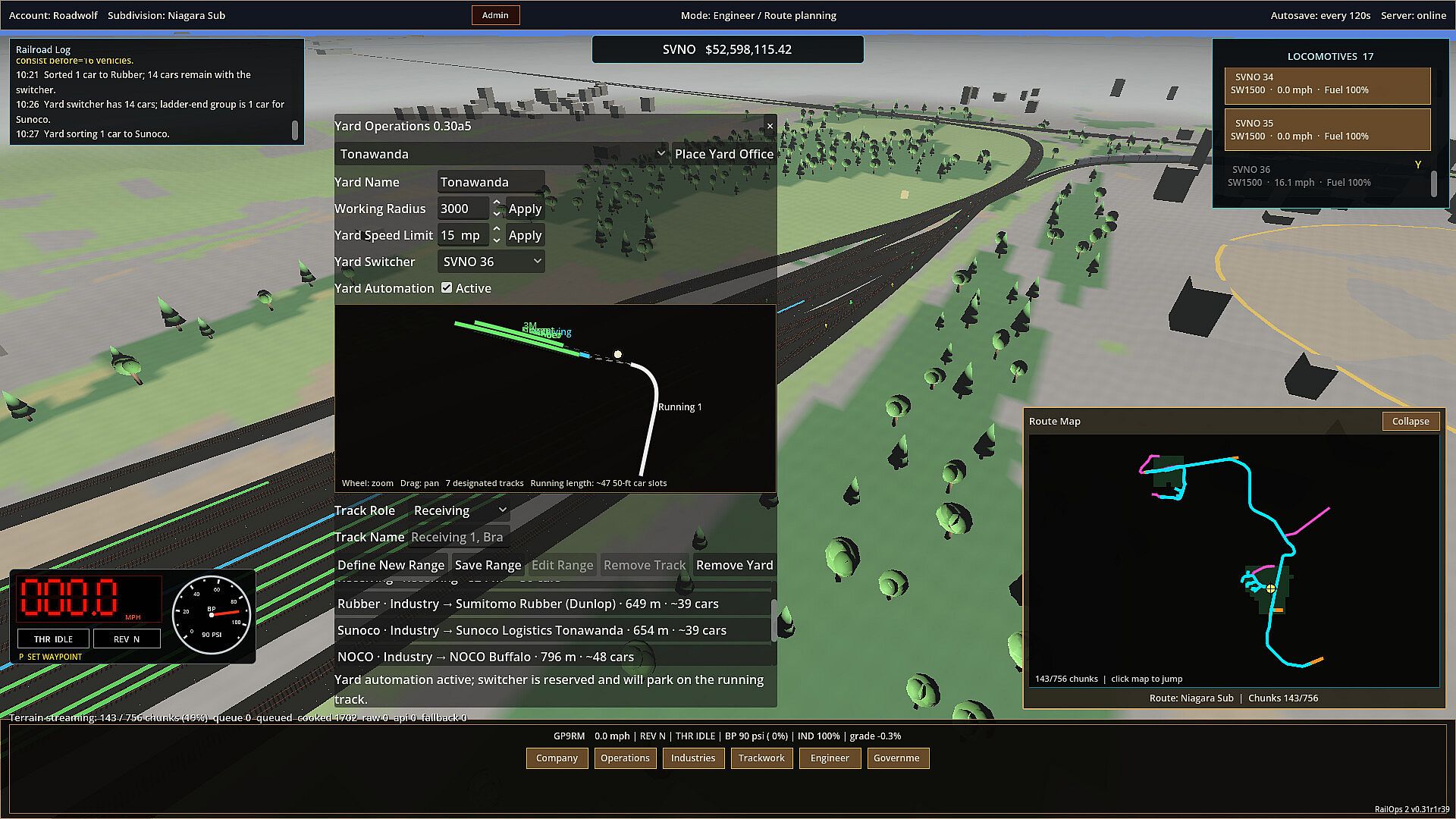
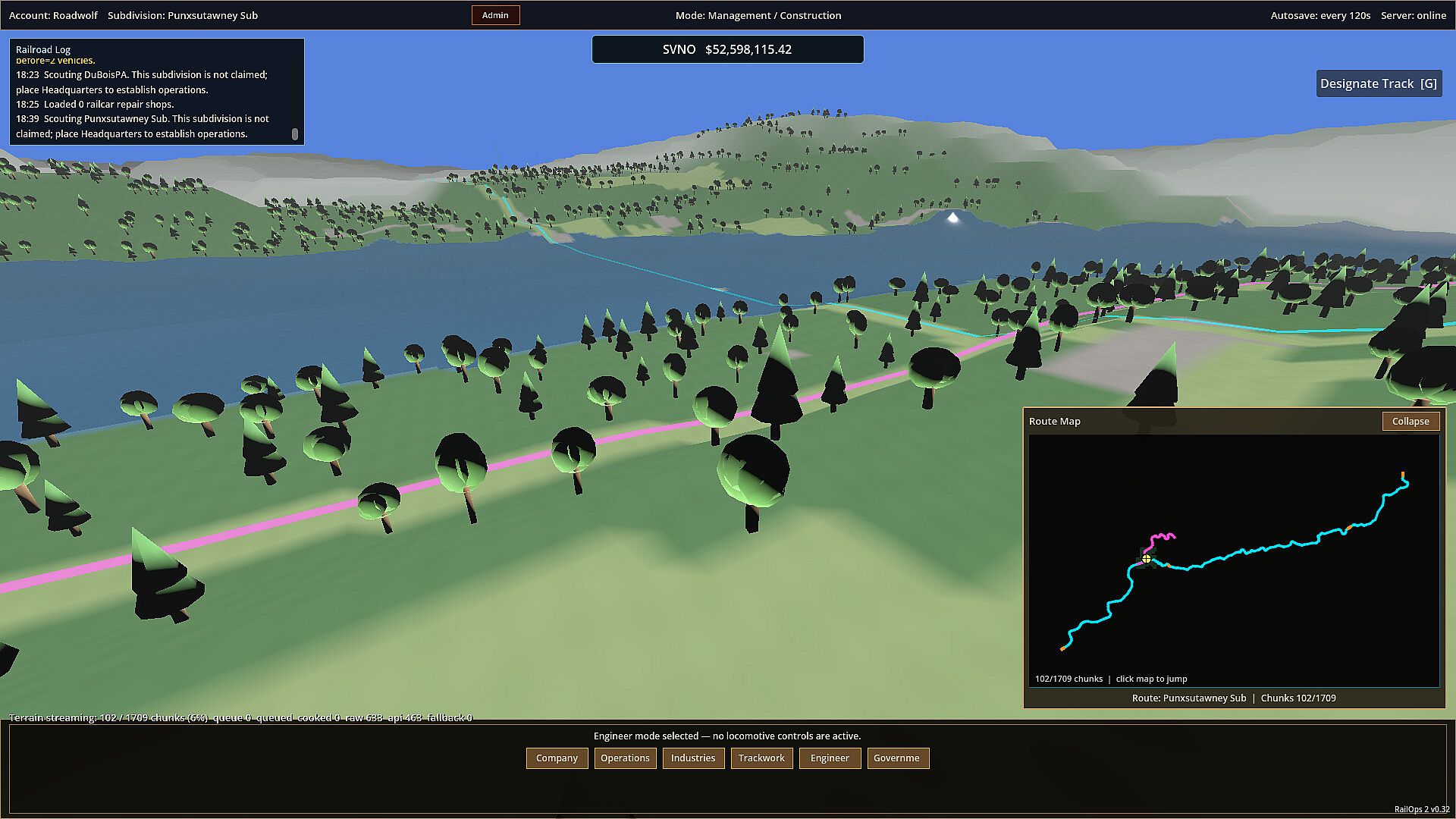
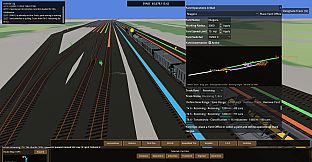
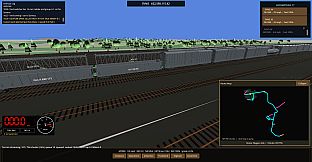
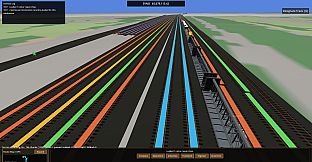
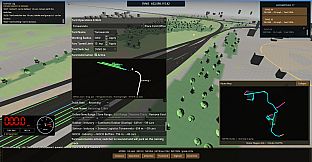
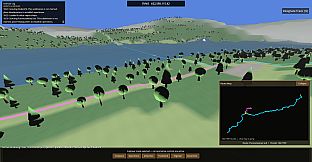
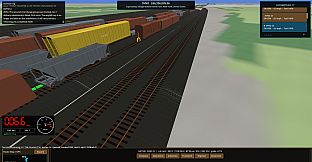
Rail Ops: Subdivisions is a railroad simulation game set in Early Access on PC that centers on managing freight operations across a growing, player-influenced network of North American subdivisions. Players select territory, construct track on generated terrain, acquire locomotives and railcars, and handle the movement of cargo through industries that maintain real inventories and production demands. The experience emphasizes operational realism over simple point-to-point driving, requiring attention to train composition, routing, equipment condition, and the broader economic flow of materials.
Gameplay
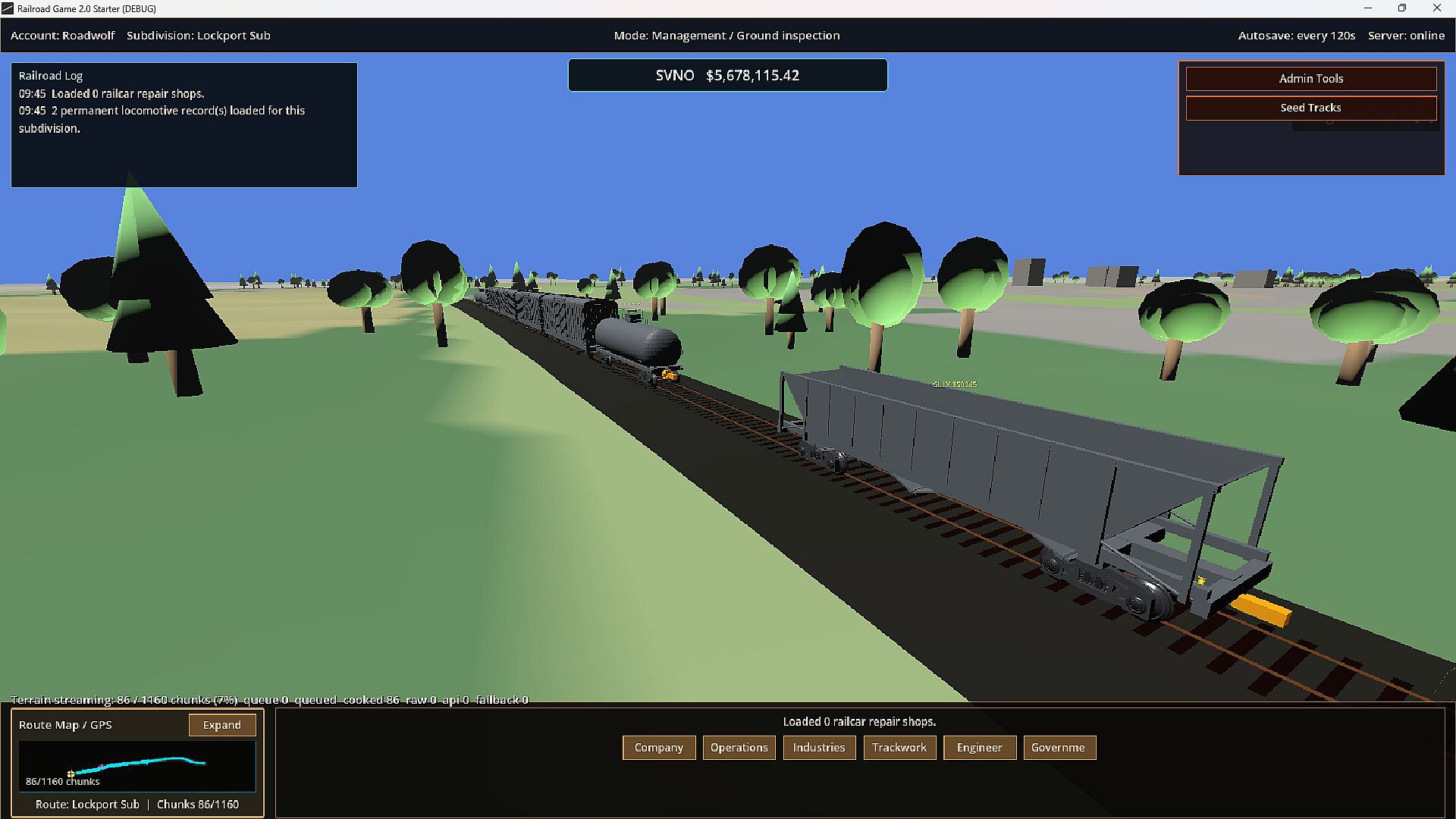
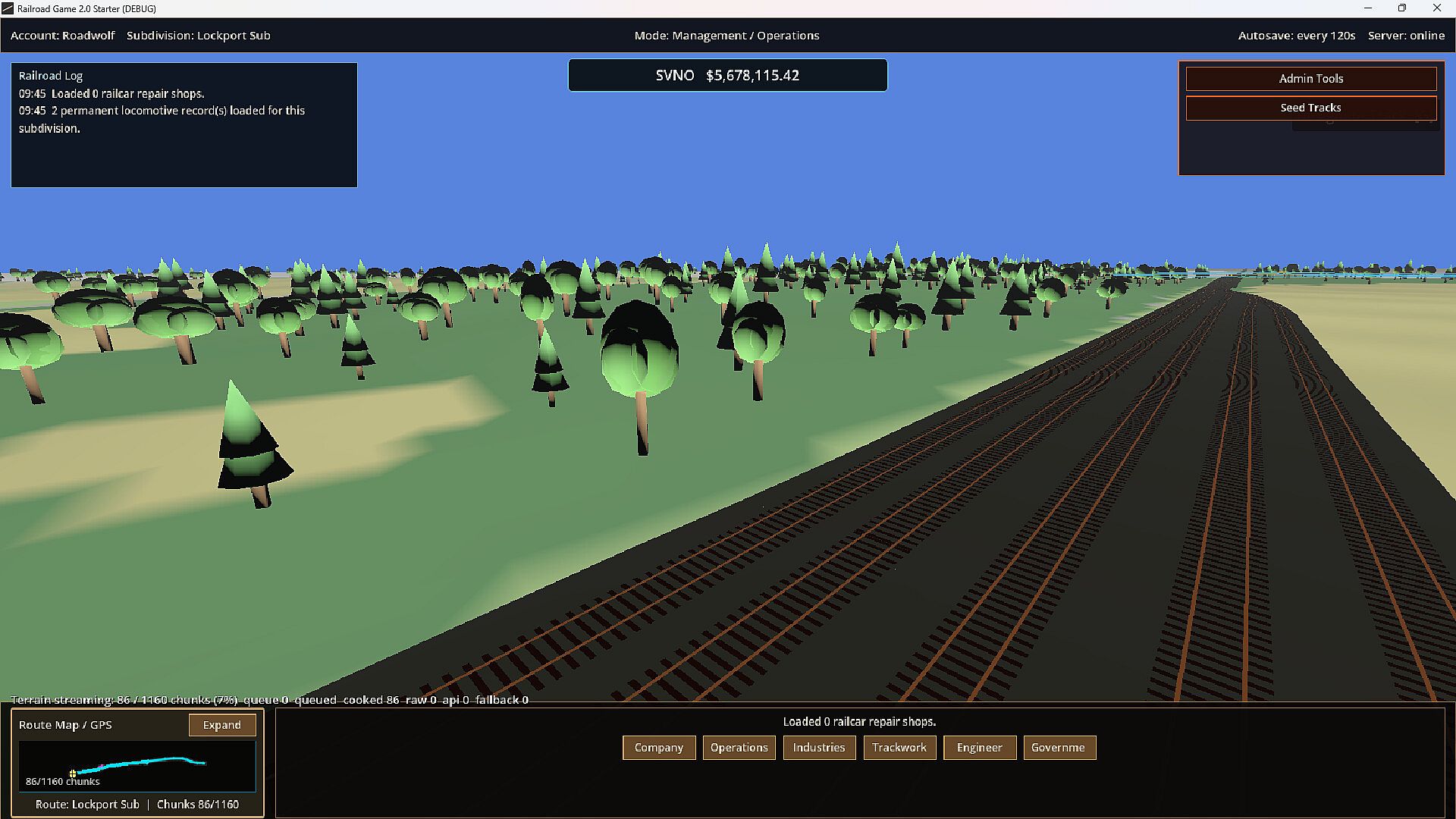
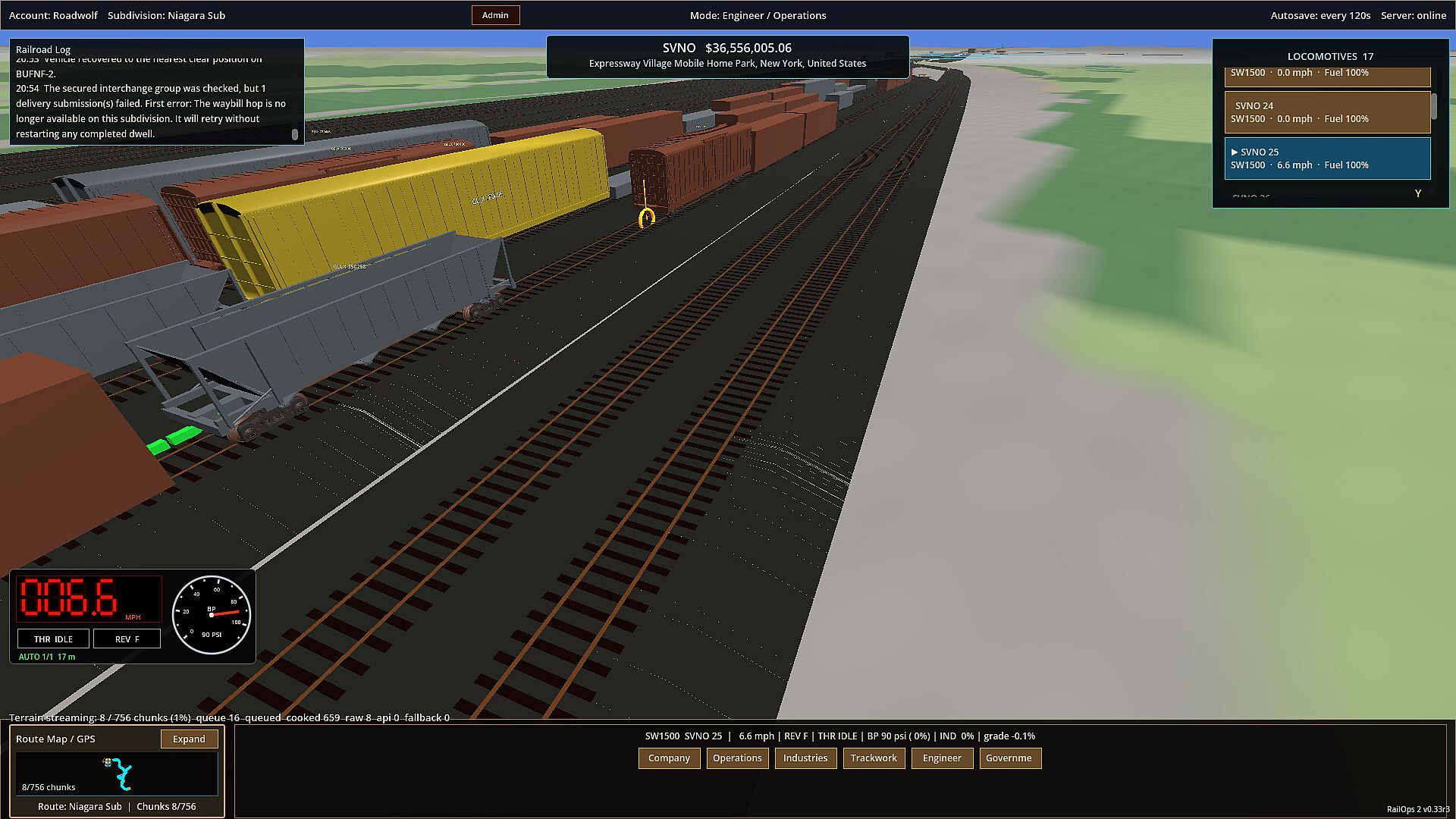
Core play revolves around establishing a headquarters in a chosen subdivision and building out track, switches, and yards to serve local industries. Locomotives can be operated manually from the cab or assigned to assisted or automated movements, while individual railcars carry specific loads matched to their type and capacity. Weight, length, braking, and condition all factor into handling, and players couple or uncouple cars as needed during switching and classification work.
Industries consume inputs and produce outputs according to their own inventories, creating ongoing transportation needs. A steel facility might require ore and scrap while shipping finished goods, and a mill could demand grain before exporting flour. Railcars must be selected appropriately for each commodity, and empty equipment returned for reloading. Failures in service can push industries toward alternative transport, affecting the player's role in the wider system.
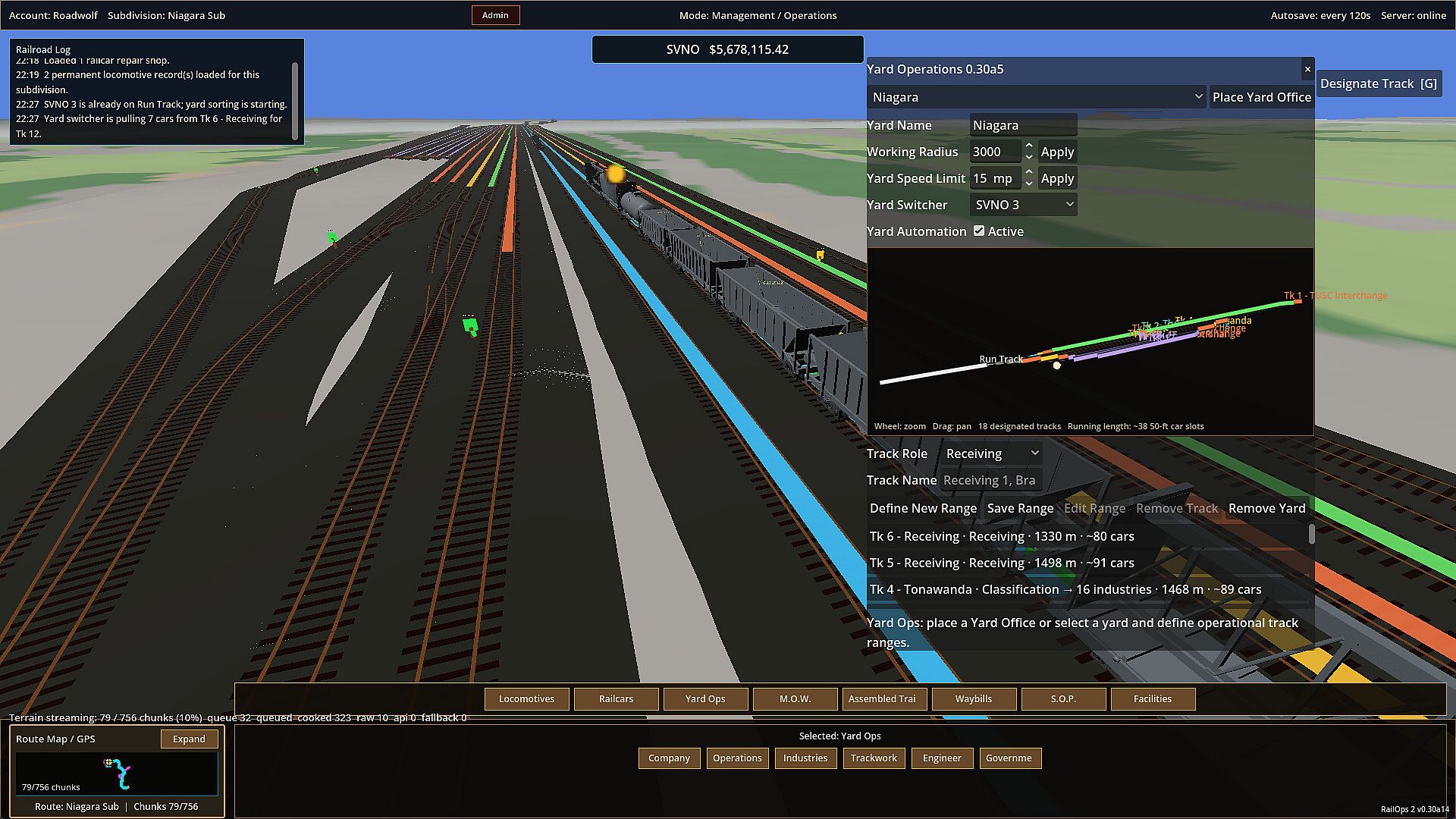
Operations extend beyond a single train. Players manage multiple consists simultaneously, coordinate yard work, plan routes across subdivisions, and oversee persistent freight movements that continue in the background. Equipment ownership, leasing, and maintenance add layers of fleet management, while track construction allows territory expansion and connection to interchange points for inter-subdivision traffic.
Game Modes
The game operates as a persistent single-player simulation with an active internet connection required for network integration. Core activities include subdivision management, train assembly and operation, industrial switching, and freight routing through the shared economy. Background systems keep railcars, loads, and industry demands moving even when the player focuses elsewhere.
Planned expansions during Early Access include cooperative options that would allow hosting friends on a locally operated save, along with deeper dispatching, signaling, and multiplayer contributions to the interconnected network. No separate competitive or time-limited modes are defined at this stage; the emphasis remains on long-term operational and managerial play within the evolving freight system.
Network Expansion and Player Contributions
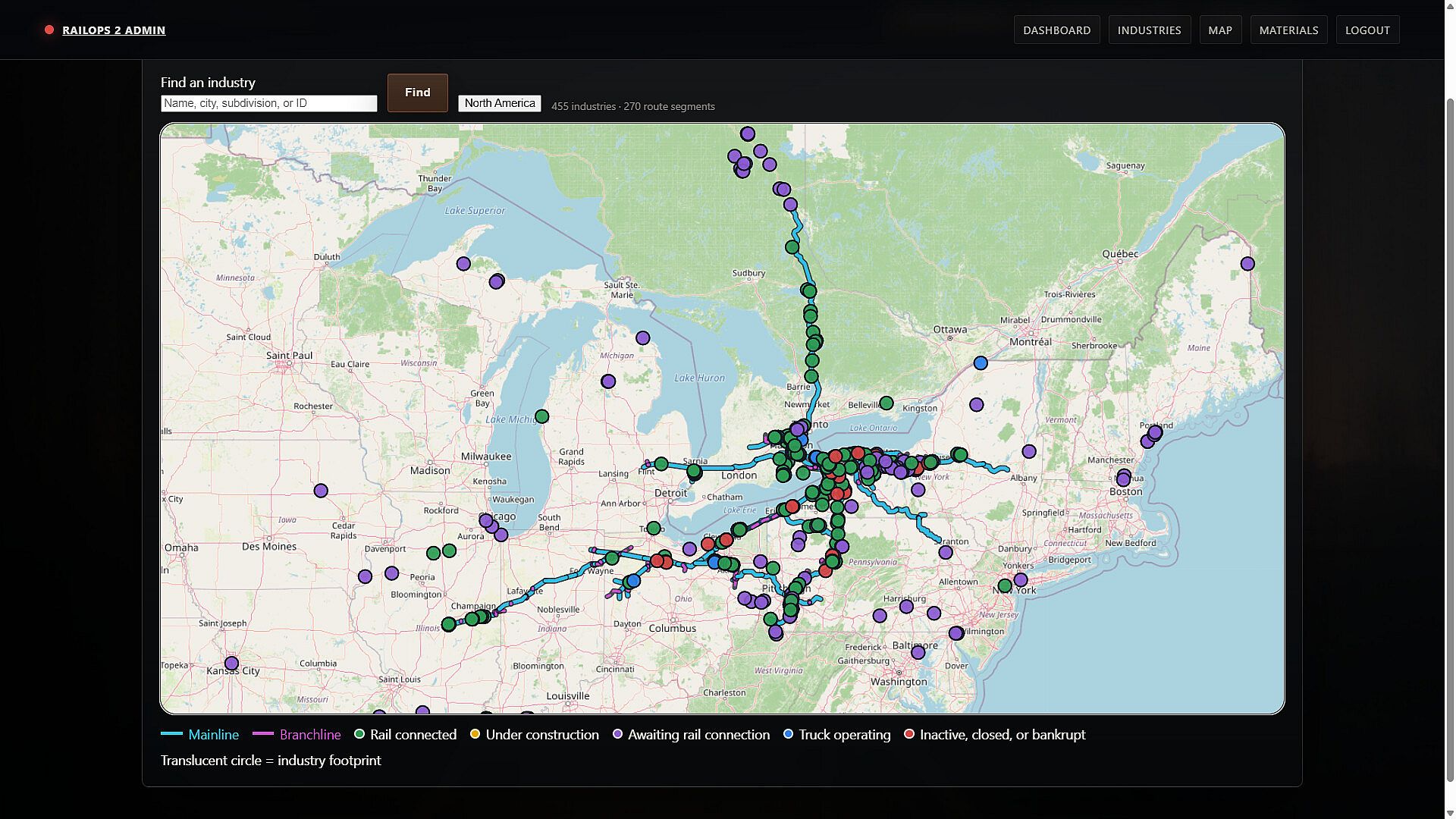
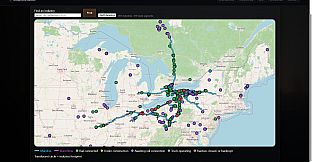
The long-term vision centers on a connected representation of the North American railroad network. Additional subdivisions, junctions, industries, and interchange points are added over time, with players able to propose new content through a web portal. Submissions undergo approval to maintain reasonable alignment with real-world geography while supporting gameplay adjustments.
As the network grows, local operations link into larger freight movements where cargo can originate in one territory, pass through others, and reach distant destinations through collective player effort. This creates opportunities and ripple effects across regions without requiring every participant to manage the entire system.
Is It Worth Playing?
Rail Ops: Subdivisions targets players who enjoy detailed railroad operations, industrial logistics, and persistent economic simulation rather than fast-paced action or visual spectacle. Its single-developer Early Access status means the alpha build focuses on functional core systems for train handling, freight assignment, and territory building, with graphics, interface, and automation still evolving. Those drawn to understanding why specific loads move, managing equipment fleets, and contributing to a shared network may find the depth rewarding once available. The project plans roughly two years in Early Access with regular refinements based on player input, making it suitable for enthusiasts willing to engage with an in-progress simulation. Availability will begin upon Early Access launch, and the price is expected to rise with added content.











