










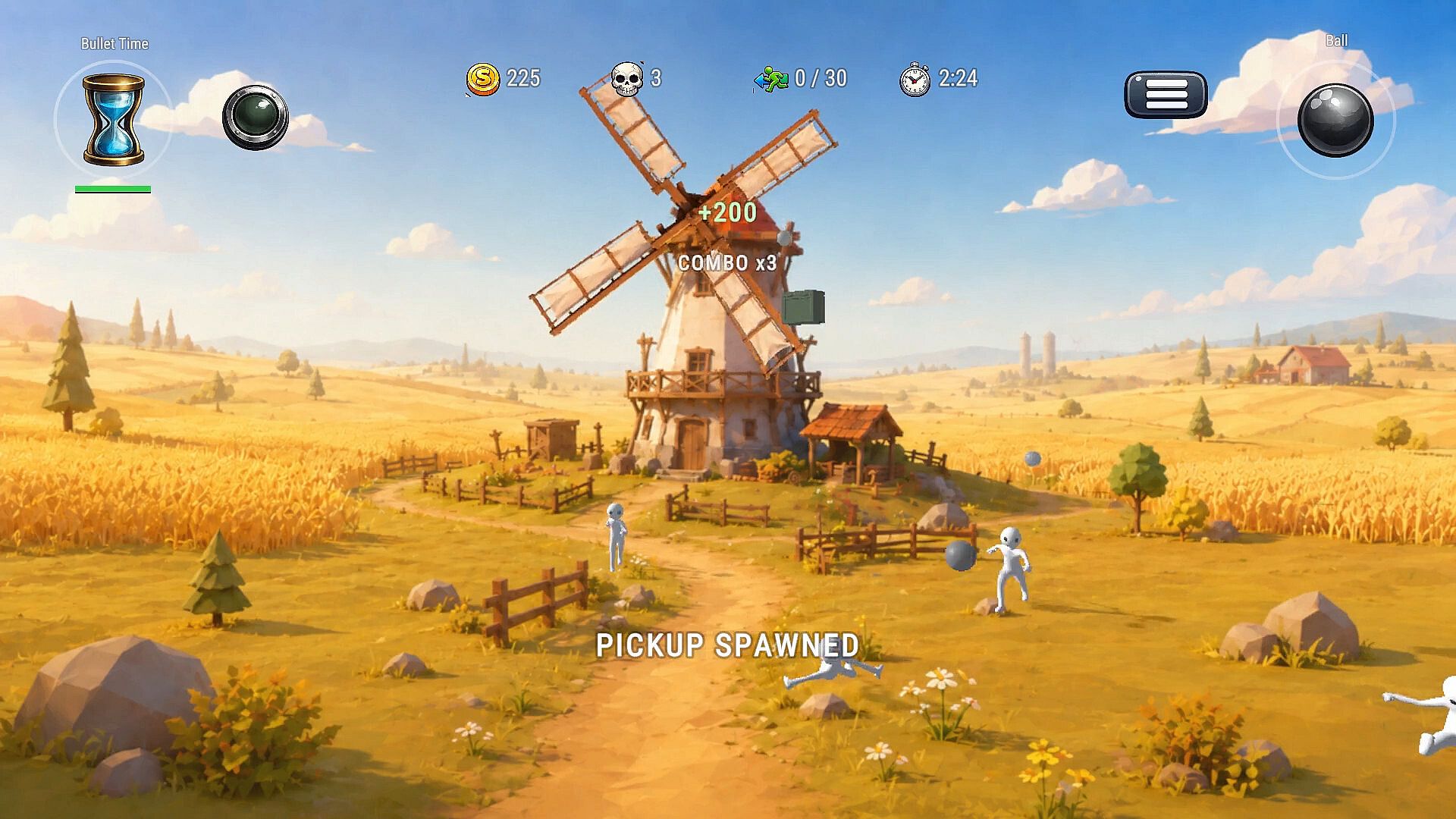











Ragdoll Recoil is a physics-based action game developed for PC that places realistic ragdoll simulation at the center of every encounter. Players control characters whose bodies respond fully to forces from shots, explosions, impacts, and falls, creating varied outcomes based on weapon type, hit location, direction, and intensity.
Gameplay
The core loop revolves around selecting from 19 weapons, each designed with distinct physical behaviors. Some deliver strong backward pushes, others cause knockdowns or high launches into the air, while explosive options generate area effects that scatter bodies across the environment. Every shot registers through the simulation system, so the same weapon can produce different results depending on the exact point of contact and surrounding conditions.
Characters maintain full ragdoll physics at all times, meaning limbs, torso, and head react independently to collisions with surfaces, other objects, or additional projectiles. Falls and impacts follow the same rules, allowing momentum to carry bodies into new positions rather than locking them into preset animations. This setup encourages repeated attempts on each challenge to observe how small changes in aim or timing alter the final outcome.
Fourteen temporary power-ups appear during play and alter core parameters such as gravity strength, weapon push force, reload timing, or enemy movement speed. These modifiers integrate directly into the physics model, so a gravity change might turn a standard launch into a prolonged airborne sequence or cause bodies to tumble in unexpected arcs. Controls remain straightforward, directing focus toward positioning, timing, and weapon choice rather than complex inputs.
Game Modes
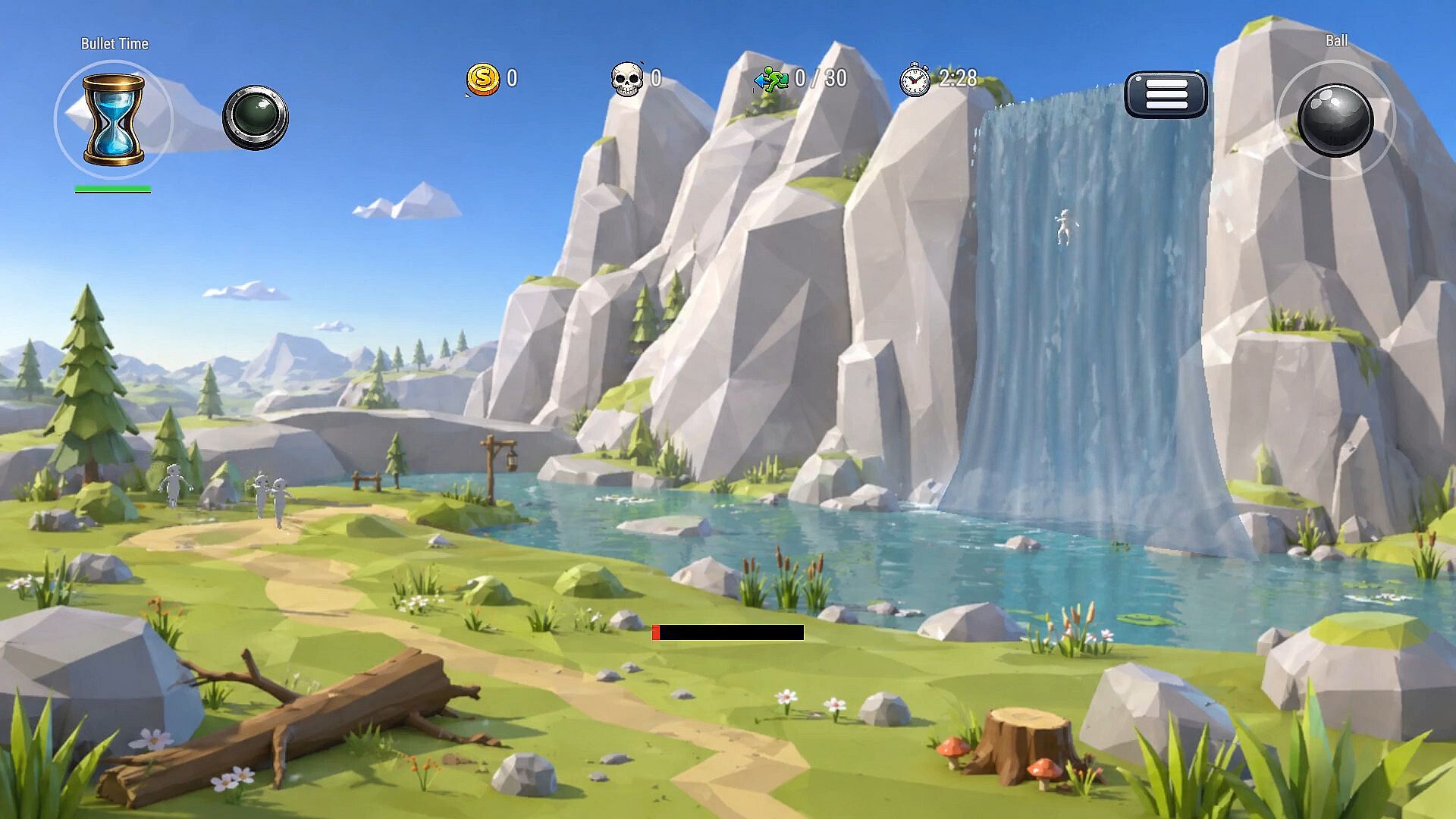
Progression takes place across more than 30 maps that emphasize short, self-contained action sequences. Each map presents a focused objective completed through direct engagement with the physics system, keeping sessions brief while highlighting different environmental layouts and interaction opportunities.
Weapon variety and power-up placement shift the approach on every map. A map with tight corridors might favor weapons that produce controlled knockdowns, while open areas reward those capable of launching targets into hazards or off edges. Power-ups further differentiate runs by temporarily reshaping movement or force dynamics, prompting players to adapt strategies mid-level.
The emphasis stays on immediate feedback from the simulation. Players experiment with hit placement and force application to clear objectives efficiently, observing how collisions propagate through the environment and affect subsequent actions.
Key Features
Realistic collisions extend beyond characters to include interactions between bodies, projectiles, and level geometry. Explosions create chain reactions where one impact can reposition multiple elements, changing the path of later shots or falls.
Dynamic reactions scale with applied force and direction, so glancing blows produce different results from direct center-mass hits. This consistency across all systems allows players to build intuition about how the simulation will respond without relying on scripted events.
Is It Worth Playing?
Ragdoll Recoil suits players who enjoy short, repeatable action sessions centered on physics experimentation rather than long campaigns or competitive ladders. The combination of weapon-specific effects, power-up variety, and fully simulated character responses provides consistent novelty across the map selection.
Those drawn to simulation-focused indie titles will find the emphasis on observable cause and effect rewarding, especially when testing how different weapons interact with the same situation. Casual sessions work well because levels conclude quickly once the intended physical outcome is achieved.
The game delivers its strongest appeal to anyone interested in watching ragdoll reactions unfold in real time and adjusting tactics based on live physics results. Availability on PC makes it accessible for quick playthroughs that highlight the core simulation strengths without additional commitments.