







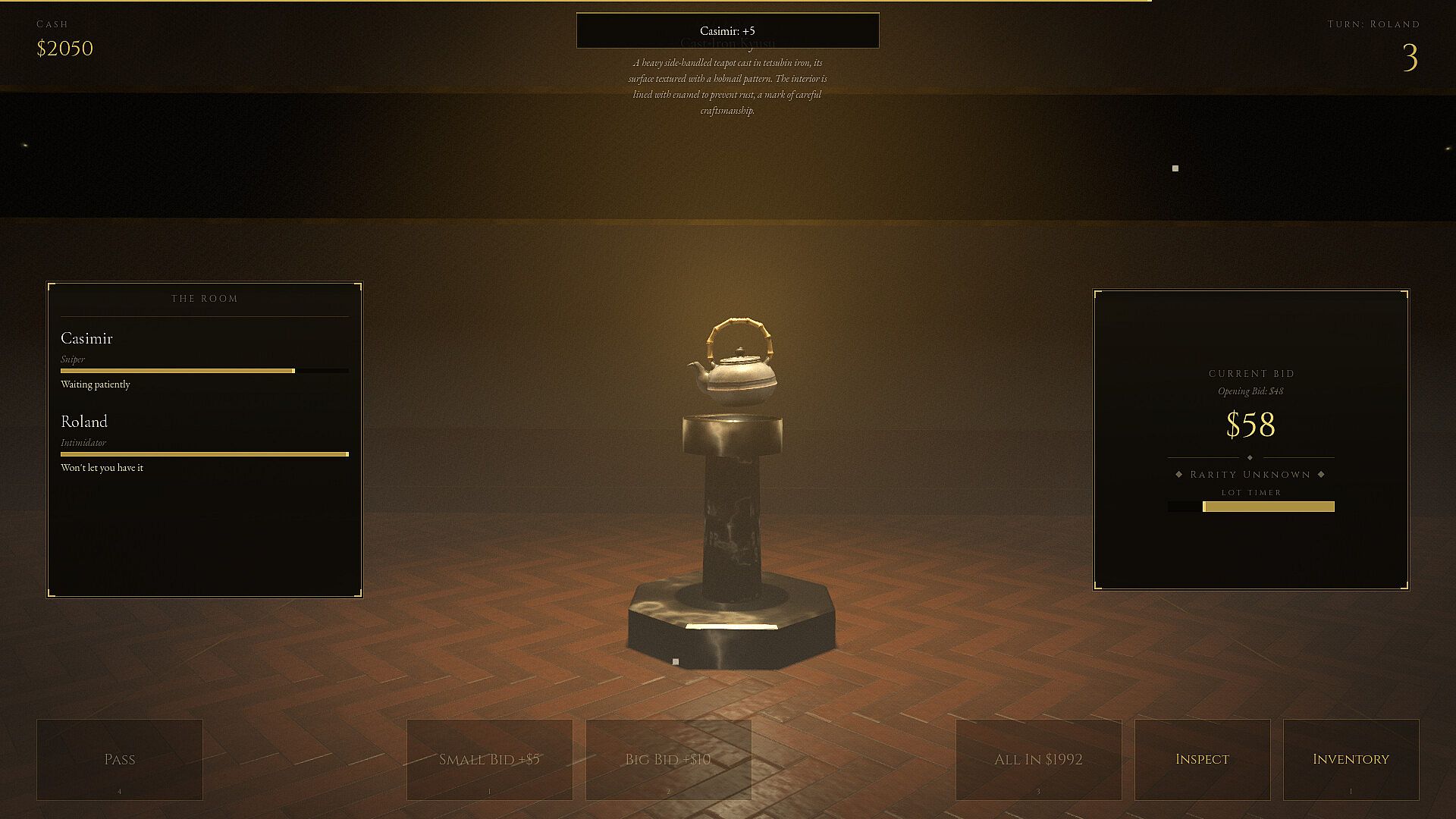



Provenance is an indie simulation game set in the competitive world of 1930s antique auctions. Players take on the role of a dealer navigating salerooms filled with rival bidders, where each lot demands quick judgment under pressure. The core experience revolves around acquiring pieces through timed bidding, examining them in detail, and building a display-worthy collection while managing finances across escalating auction houses.
Gameplay
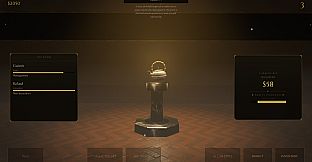
The loop centers on three core phases that repeat across runs: bidding on lots, inspecting items up close, and appraising them for value. Every antique appears as a real 3D object that can be picked up, rotated under light, and examined for details like glaze, gilding, or hidden chips. Rarity remains unknown during bidding, so visual inspection provides the main advantage before committing funds.
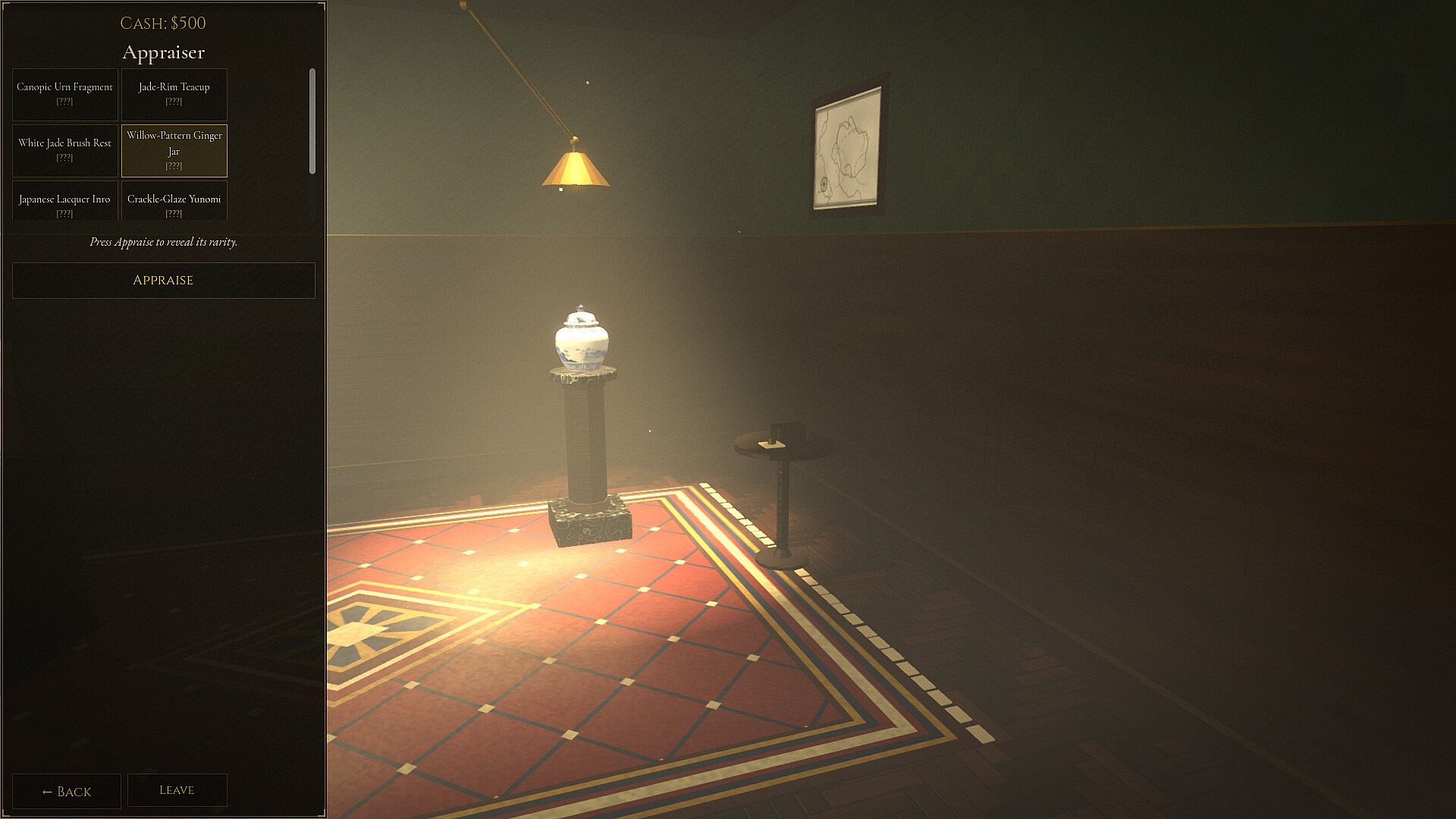
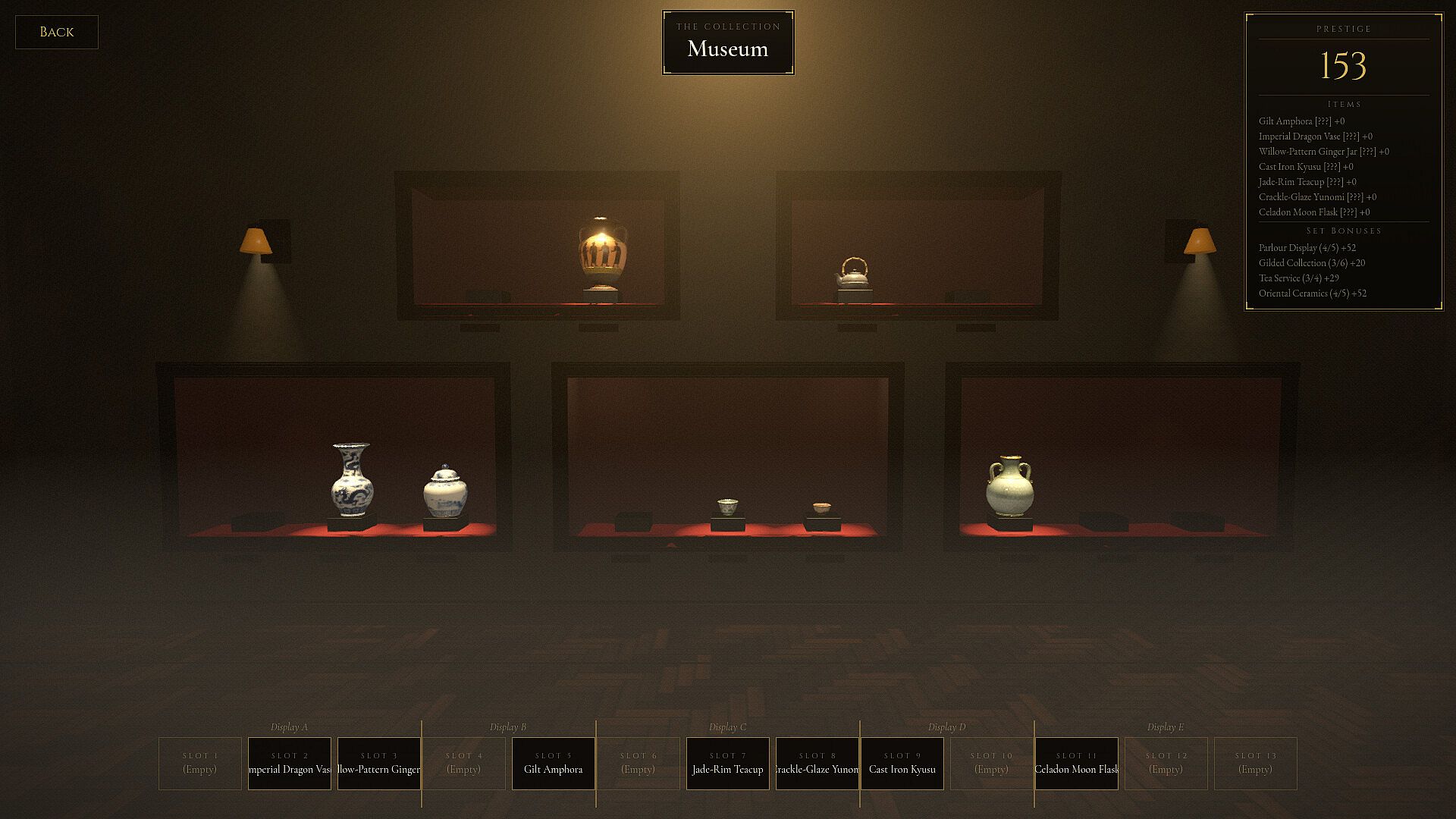
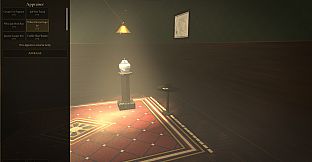
After each sale, two appraisal opportunities reveal the true rarity tier from Common to Legendary, along with an accurate worth and a potential sell quote. Pieces displayed in the collection earn prestige points, with Legendary items contributing far more than Commons. Overlapping sets provide bonuses, and expanding floor space allows more items on show. Only displayed pieces count toward the 150 prestige target needed to complete a run.
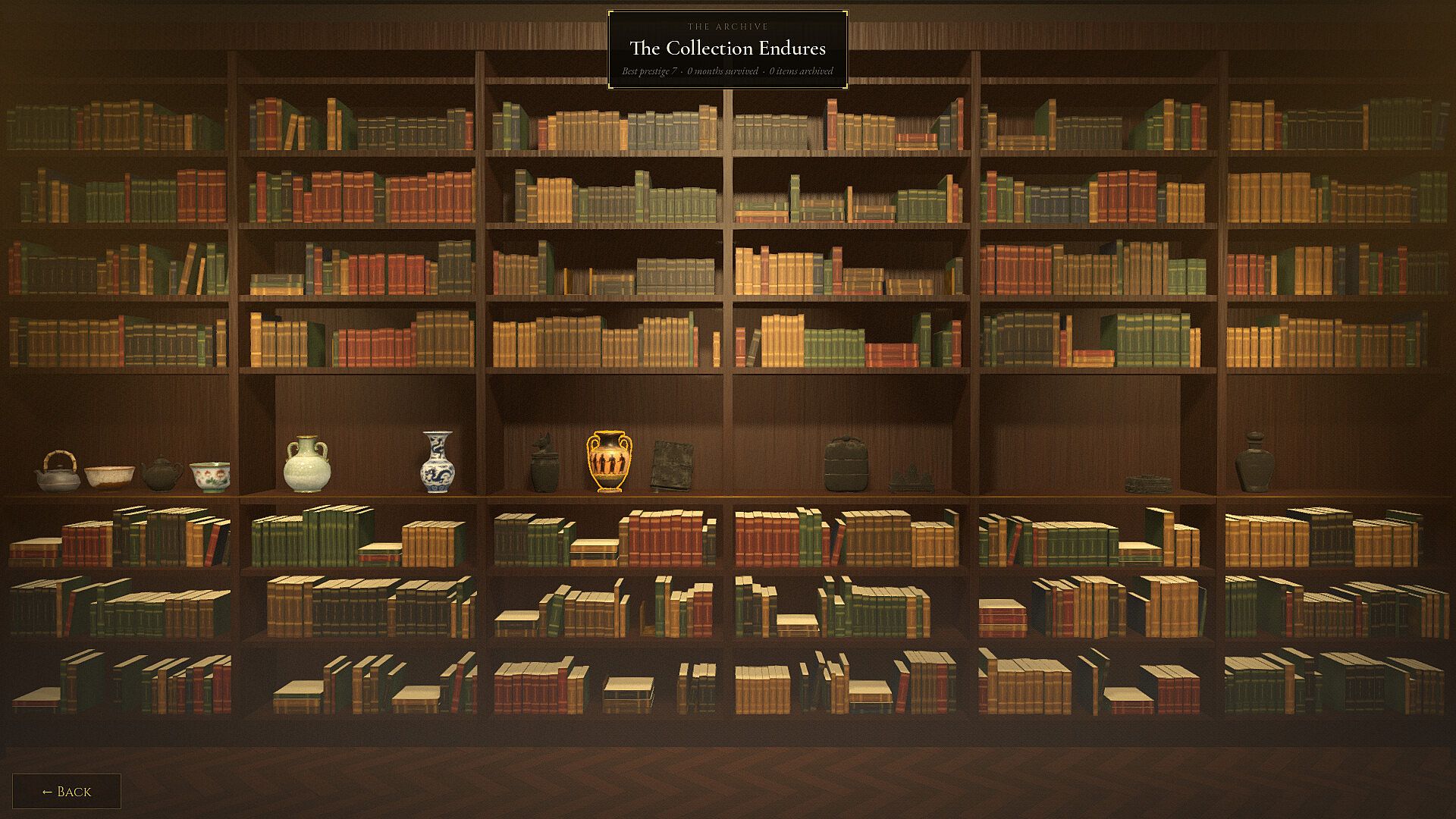
Financial survival adds tension through borrowing at 20 percent interest from a moneylender. Progress moves from Local to City and Elite auction houses, where lots improve but competition intensifies. Bankruptcy ends the current run and disperses the stock, yet the archive preserves every previously displayed piece for reference across attempts.
Game Modes
Three distinct sale formats rotate through the house and shape bidding strategy. Standard sales display every bid openly, allowing players to read the room and adjust raises accordingly. Blind sales hide the current price, forcing decisions without knowing the prior bid until ownership transfers. Dutch sales feature a price that drops each second, requiring a claim before rivals act.
Raises occur in fixed increments of 10 percent or 25 percent, with options to pass or go all in. Two rival dealers compete directly, and their aggression levels only become clear as lots move. These formats encourage different approaches to risk and information management within the same overall auction structure.
Collection and Progression
Prestige builds solely from displayed items, rewarding careful selection of pieces that complete multiple sets at once. Buying additional floor space expands display capacity as funds allow. The persistent archive tracks every appraised and shown antique across all runs, turning repeated bankruptcies into opportunities for long-term learning rather than total resets.
Climbing the auction houses increases both opportunity and difficulty. Better lots appear in higher rooms, yet richer rivals push bids harder. This structure supports repeated playthroughs focused on refining judgment and collection planning.
Is It Worth Playing?
Provenance suits players who enjoy deliberate, observation-heavy simulation without combat or time pressure beyond the bidding window. The emphasis on physical inspection and hidden information creates a focused single-player experience centered on decision-making and collection building. Those drawn to antique themes or economic management will find the mechanics align closely with the described systems.
Without widespread release data or player metrics available, the game appeals most to those comfortable with iterative runs and archive-based improvement. Its indie scope keeps the feature set tight around bidding, inspection, and prestige goals rather than expansive side systems.











