




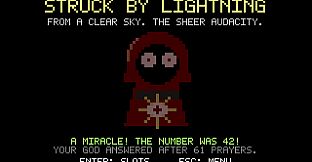

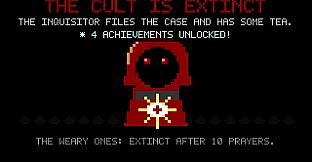
Pray Your God! is an indie casual game developed for PC that blends numerical chance with dark humor and religious satire. Players take on the role of a cult founder who must repeatedly petition a distant deity through a strict numerical ritual overseen by an Inquisitor. The experience centers on short sessions of decision making and consequence, where success depends entirely on matching a randomly selected number after the player commits to one.
Gameplay
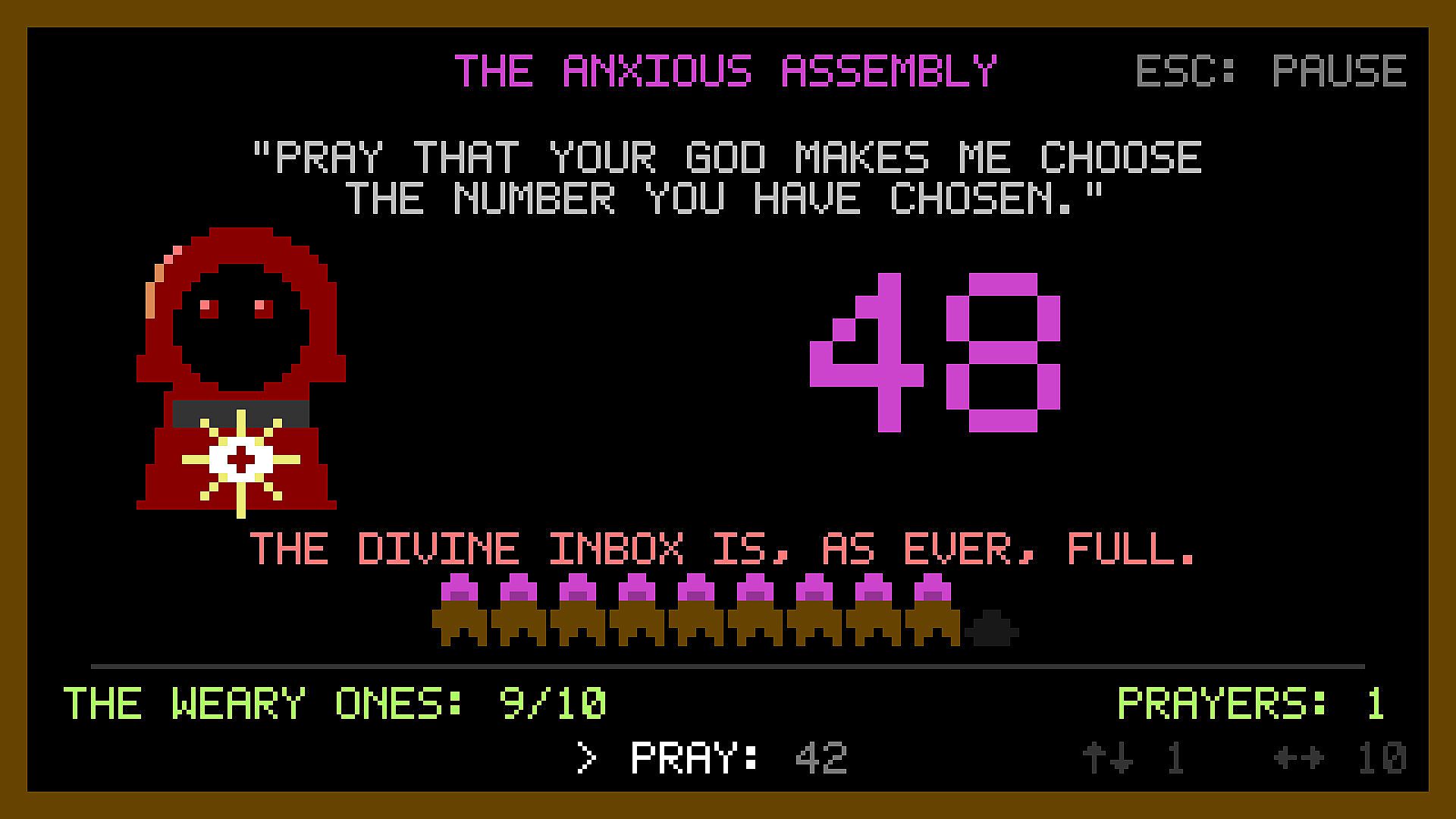
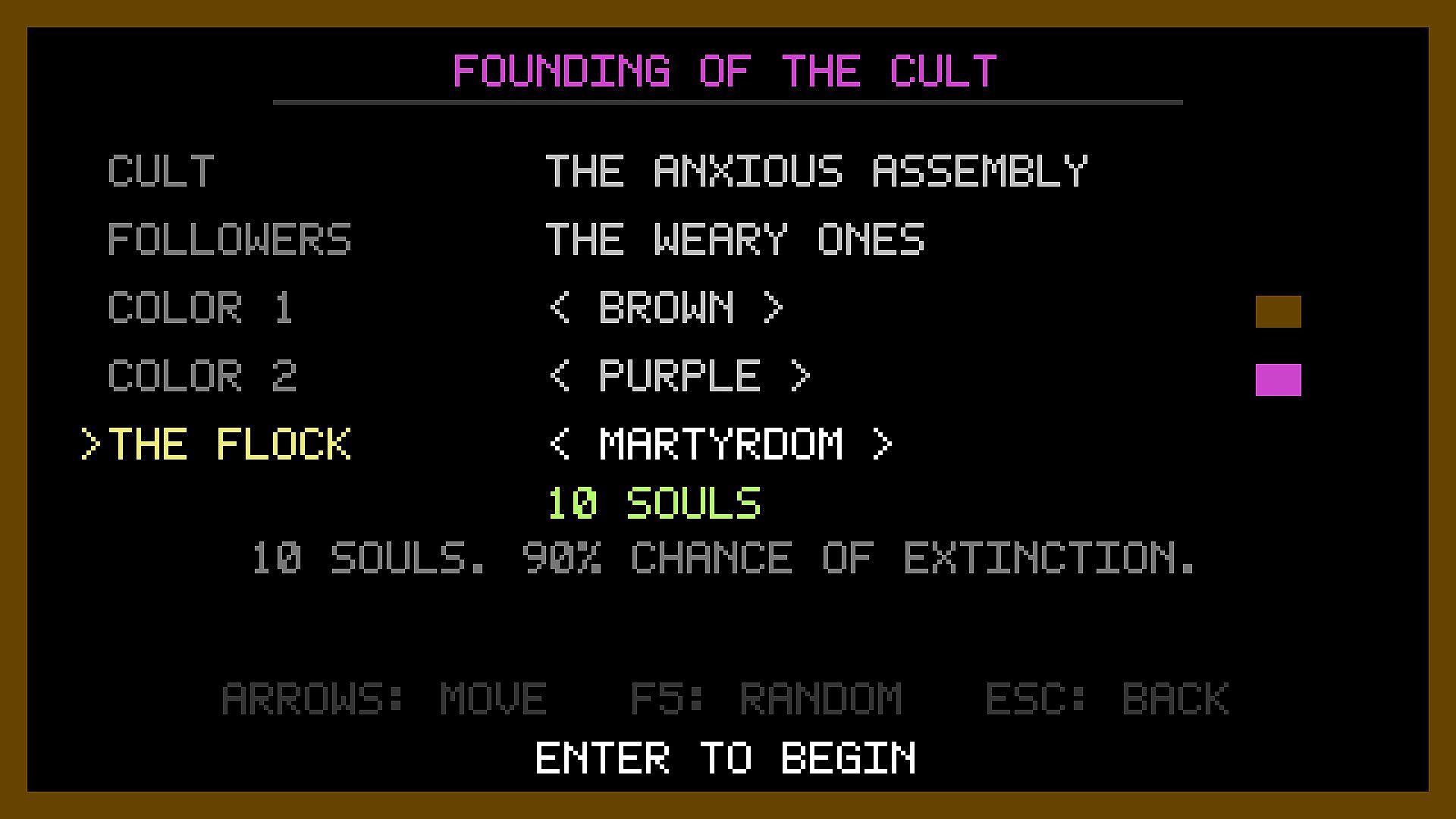
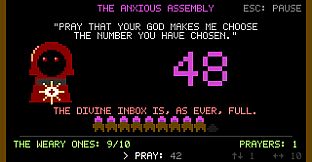
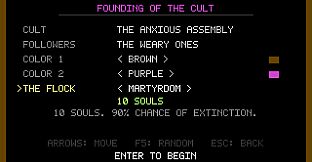
The core loop begins with naming a cult and its followers while selecting two sacred colors and deciding on flock size. Options range from small groups of ten for quicker sessions to much larger numbers that increase the stakes of each attempt. Once the group is assembled, the player selects a number from one to one hundred. The Inquisitor then draws his own number using an honest die that reveals its result only after the choice is locked in.
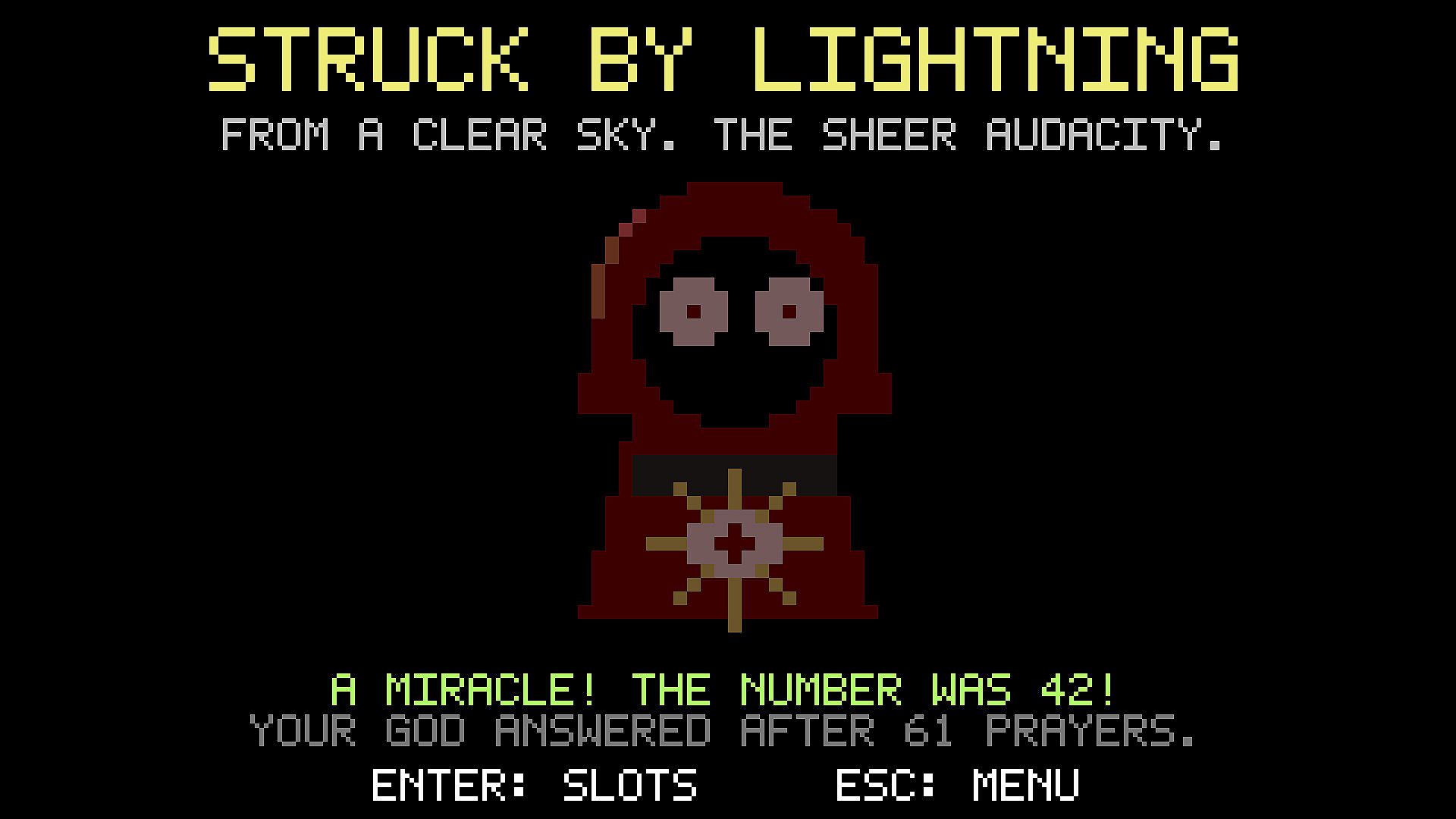
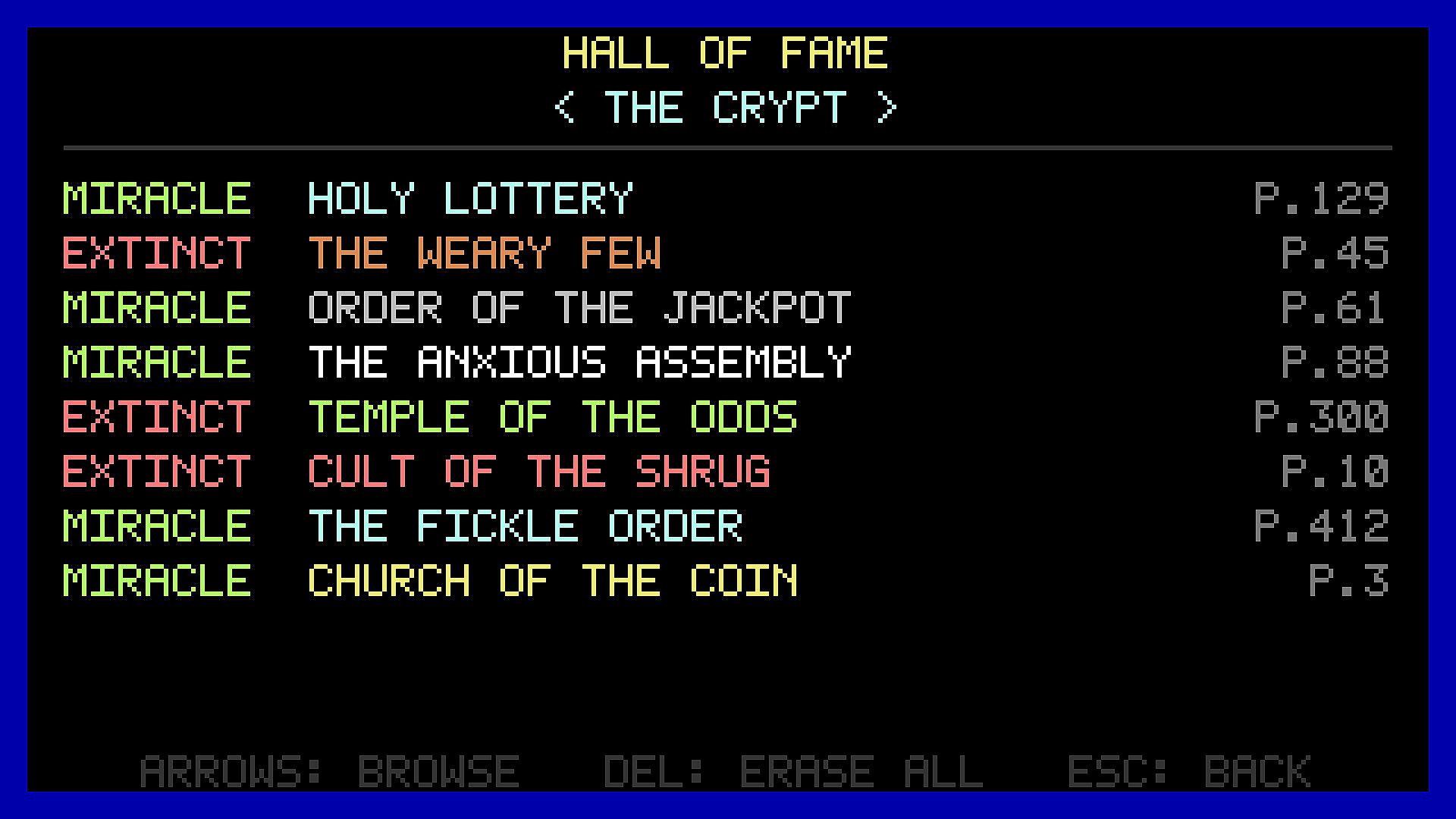
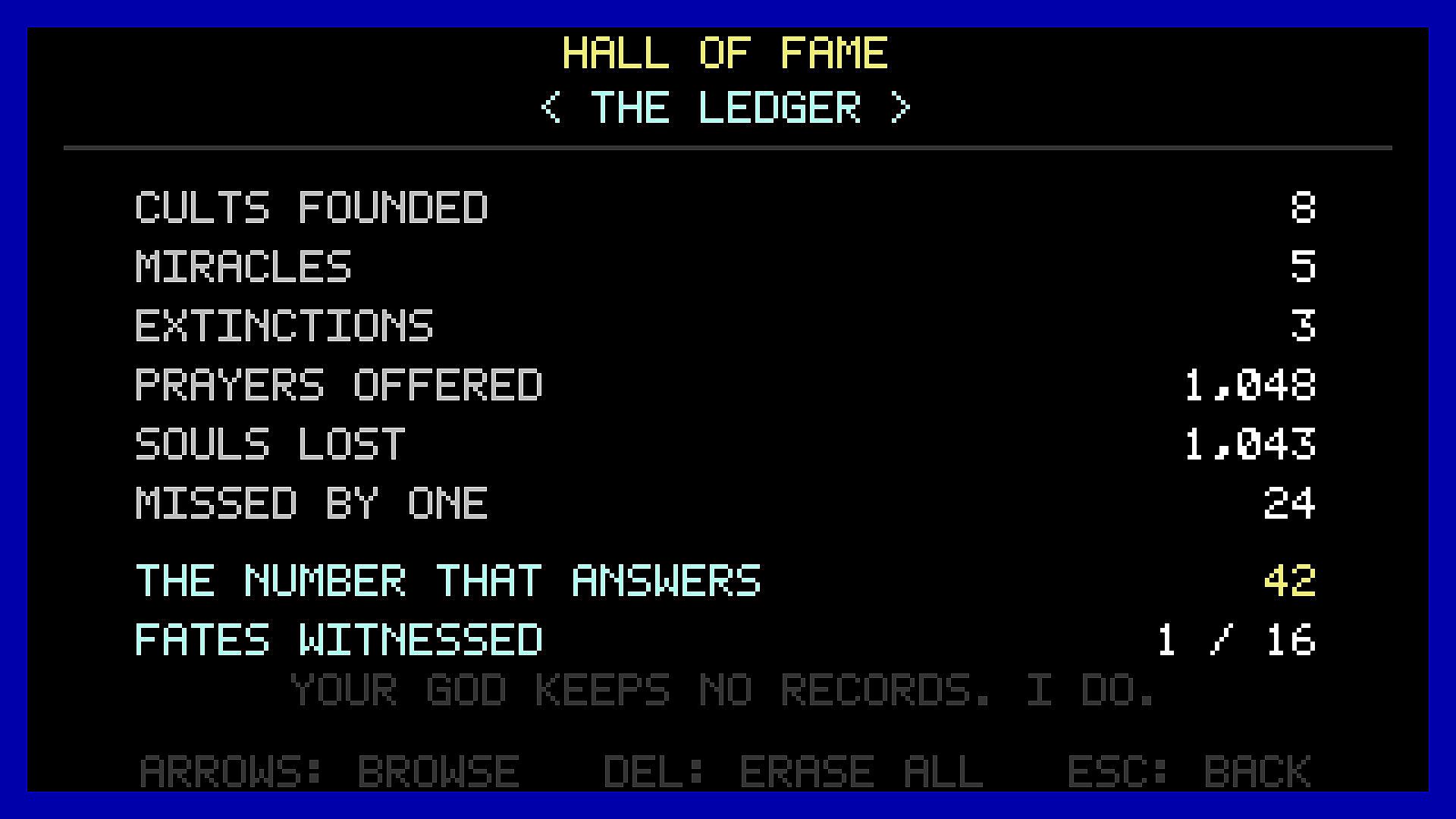
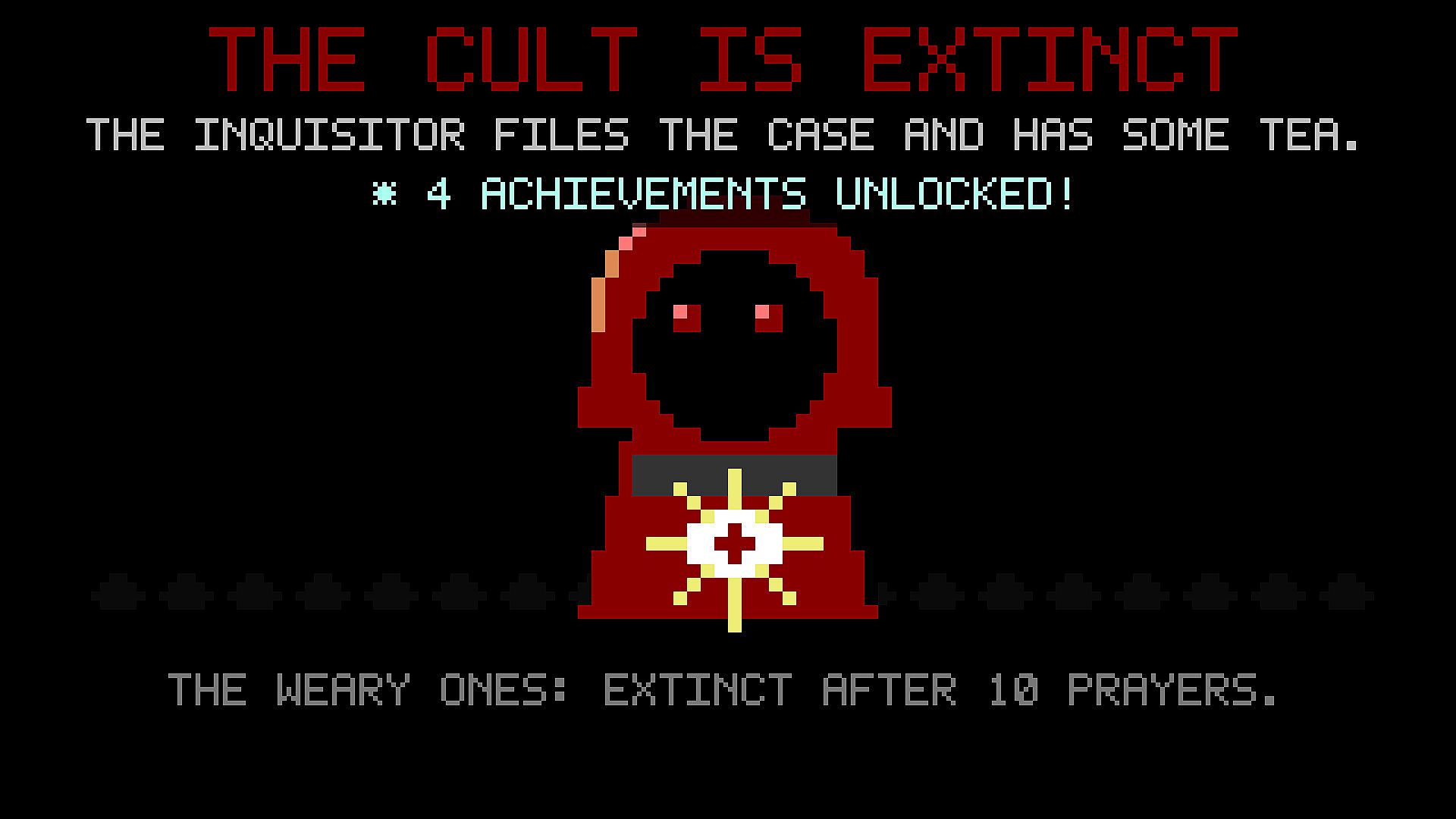
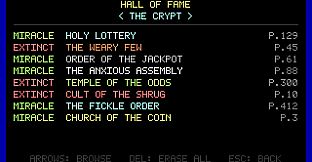
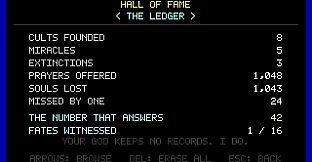
A match removes the Inquisitor through one of sixteen distinct miracle animations, each accompanied by its own obituary text and achievement. A mismatch quietly removes one follower, with repeated misses leading to further losses until the cult collapses. The game records every outcome in a Hall of Fame that tracks six categories of misfortune, including the swiftest miracle, the longest series of failures, and the largest flock lost. These entries appear in the chosen sacred colors and preserve the details of each attempt.
Progression relies on persistence rather than skill modifiers. The die offers no hidden advantages or adjustable difficulty, and reloading a save does not allow a second chance at the same prayer. Sessions typically last two to four minutes per new cult, with most players filing around one hundred prayers before witnessing a successful miracle. An original chiptune organ soundtrack underscores the proceedings with solemn tones that contrast the game's irreverent tone.
Game Modes
The game operates through a single continuous experience built around repeated cult founding and prayer attempts. Players can vary their approach by adjusting flock size at the start of each run, which directly influences how many misses can be absorbed before the cult ends. Smaller groups encourage faster restarts and more frequent attempts at different numbers, while larger groups extend individual runs and heighten the impact of each loss.
Save slots allow multiple concurrent cults to be tracked separately, with automatic saving preserving progress across sessions. There are no separate competitive or cooperative structures, and the focus remains on solitary play against the fixed probability system. Achievements, of which there are thirty six, reward both successful miracles and various forms of failure, encouraging experimentation with different starting conditions.
Key Mechanics and Features
Every element of the system emphasizes transparency and finality. The Inquisitor always chooses after the player, eliminating any perception of rigged outcomes. Over fifty unique lines of dialogue accompany rejections, adding personality to the repeated denials. The Hall of Fame functions as a persistent record that catalogs both triumphs and disasters without allowing edits or resets.
Ten save slots support extended play across multiple parallel cults, each with its own color scheme and history. The absence of any undo feature for prayers reinforces the game's commitment to irreversible results once a number is selected. These systems combine to create a loop where strategy lies mainly in choosing when to start fresh rather than in altering probabilities.
Is It Worth Playing?
Pray Your God! appeals to players who enjoy short, repeatable sessions centered on chance and consequence rather than reflexes or long term progression. Its minimalist structure and focus on fair randomness distinguish it from typical casual titles that include power ups or adjustable odds. The game remains in development by Creedr Studios with no confirmed release date, meaning interested players can follow updates through official channels for future availability.
Those drawn to numerical puzzles, dark comedy, or games that treat failure as a core feature may find the premise engaging. The emphasis on honest mechanics and detailed failure tracking offers a distinct alternative to more forgiving casual experiences. Potential players should consider whether the short session length and single core loop align with their preferences before committing.