




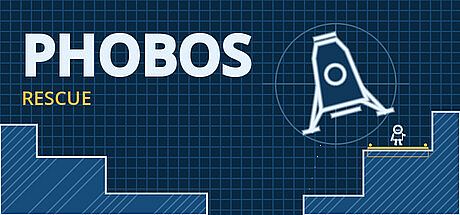




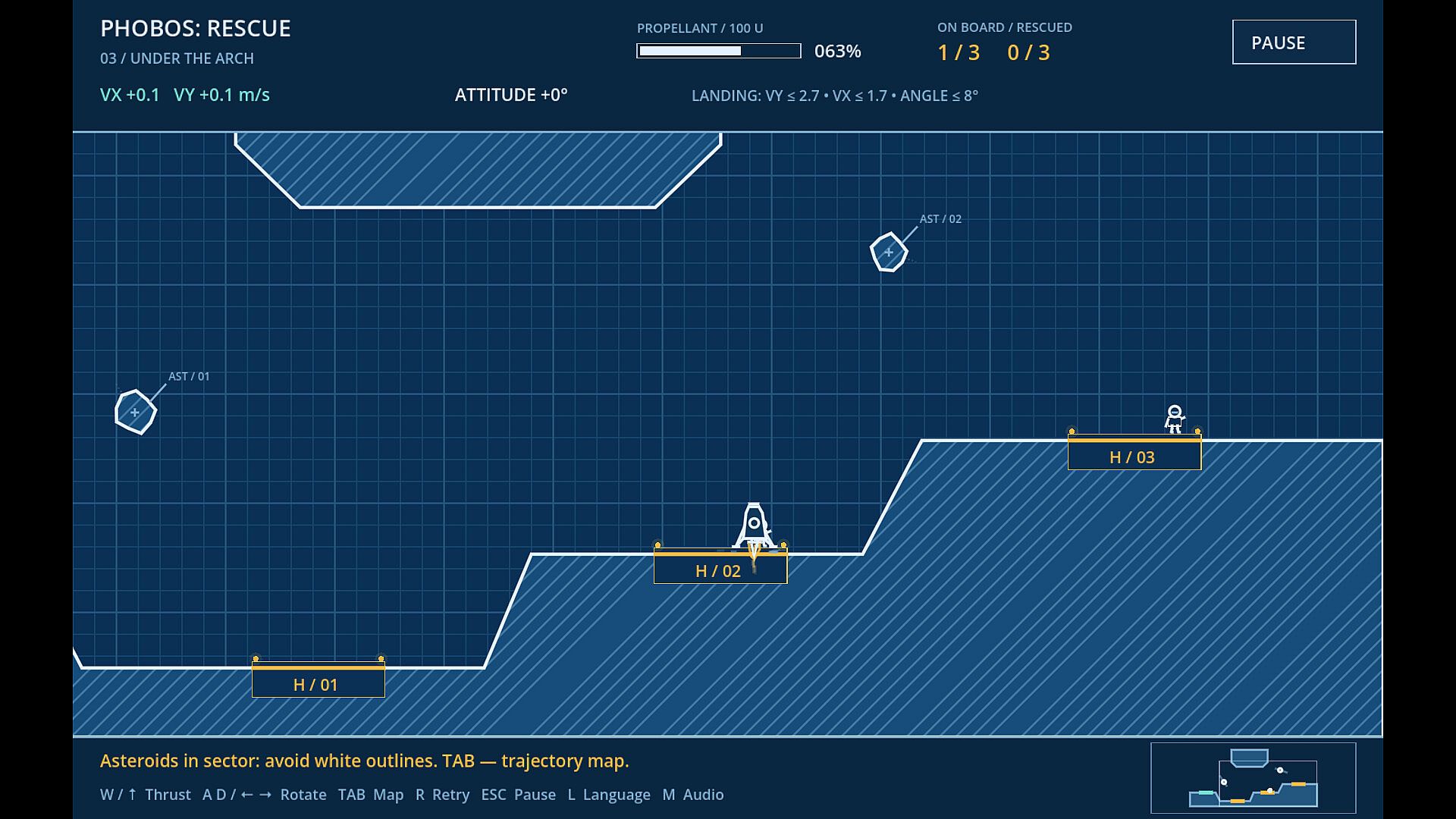
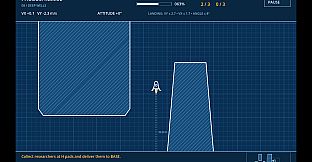
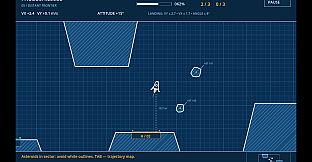
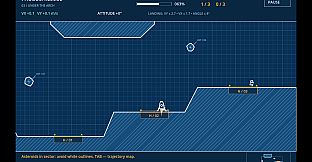
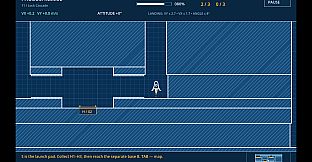
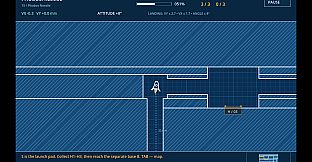
PHOBOS: Rescue is a single-player 2D precision-flight game developed for PC in the indie and casual genres. A micrometeorite strike has isolated researchers from Kepler Station, and players take control of the last rescue module to reach beacons, execute gentle landings, and transport survivors to safety.
Gameplay
The core loop centers on piloting a lander through scrolling sectors using inertia-based flight. Players rotate the entire module and fire its engine along a single axis, so forward momentum builds naturally while turns and stops require deliberate thrust and space to brake. Fuel remains limited across the full mission with no refueling stations available, forcing careful planning of every burn to maintain reserves for later sectors.
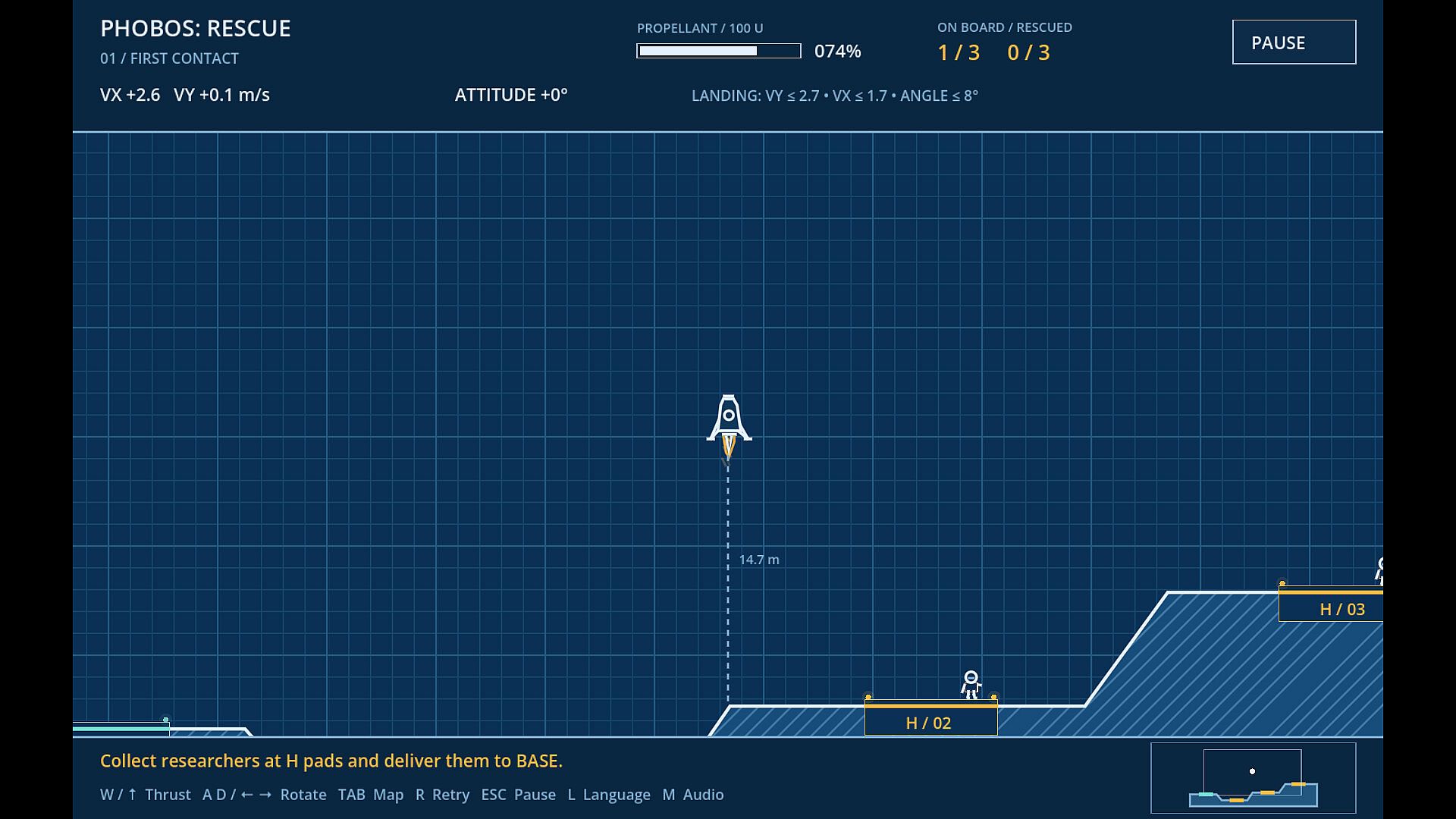
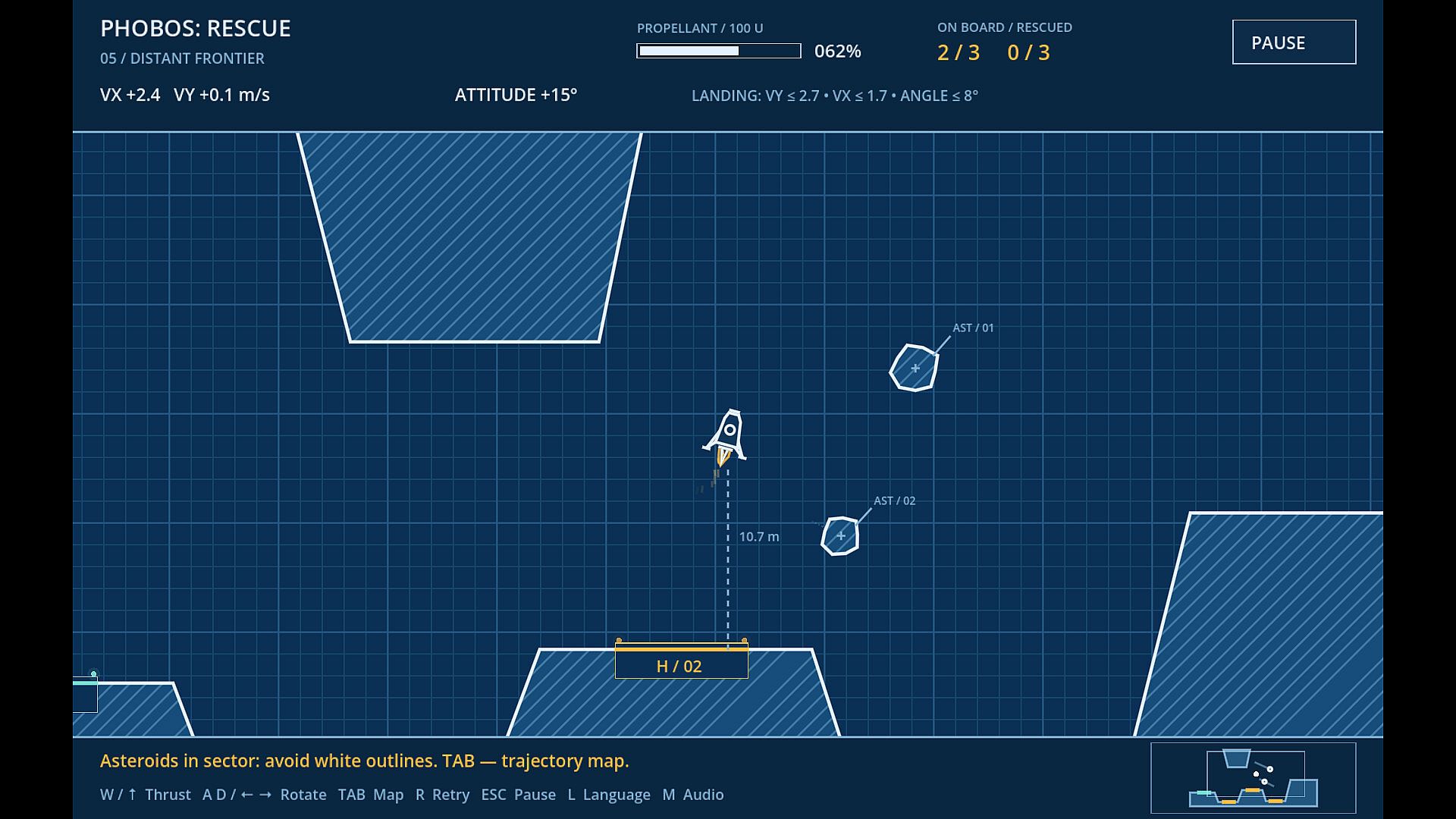
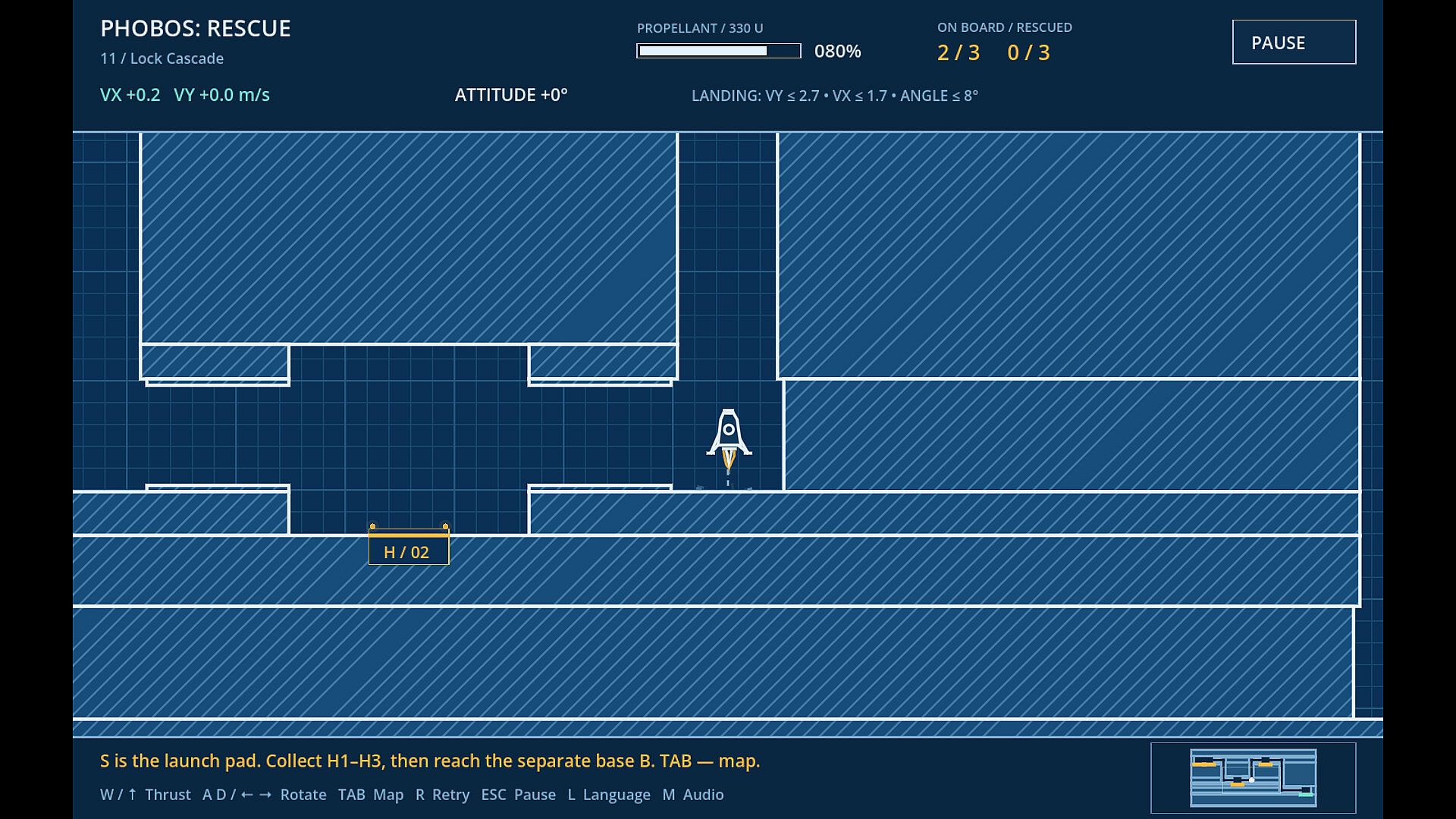
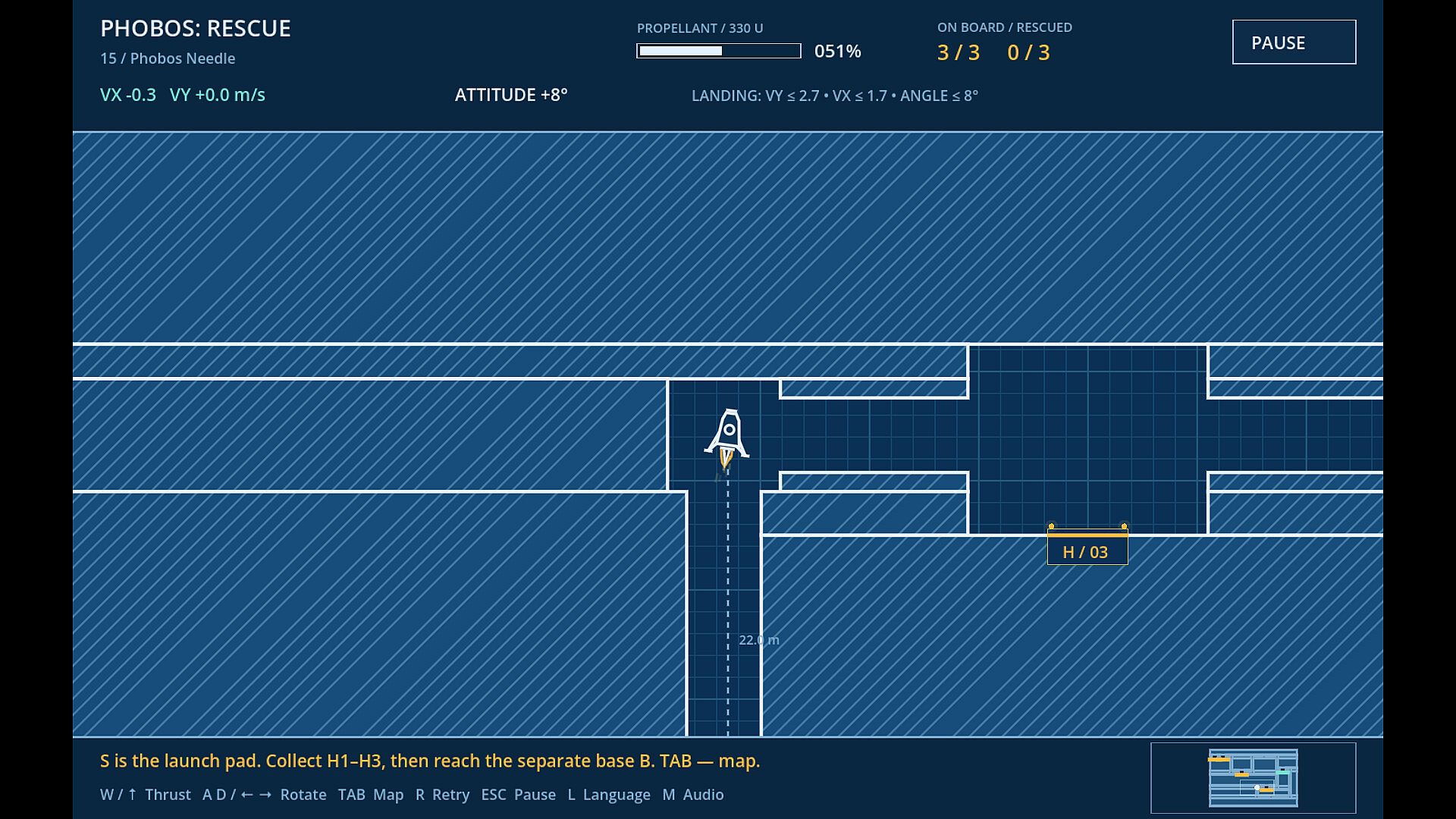
Each mission carries three researchers aboard the module. Landing pads trigger a transfer sequence once the module settles softly enough to meet the limits, after which takeoff becomes possible again. Slow-drifting asteroids appear as hazards in some early sectors, while later ones add narrow passages, switchbacks, and spirals that demand precise timing and positioning. The moving technical blueprint presentation uses white outlines, hatched rock textures, amber beacons, and live flight instruments to keep navigation clear at all times.
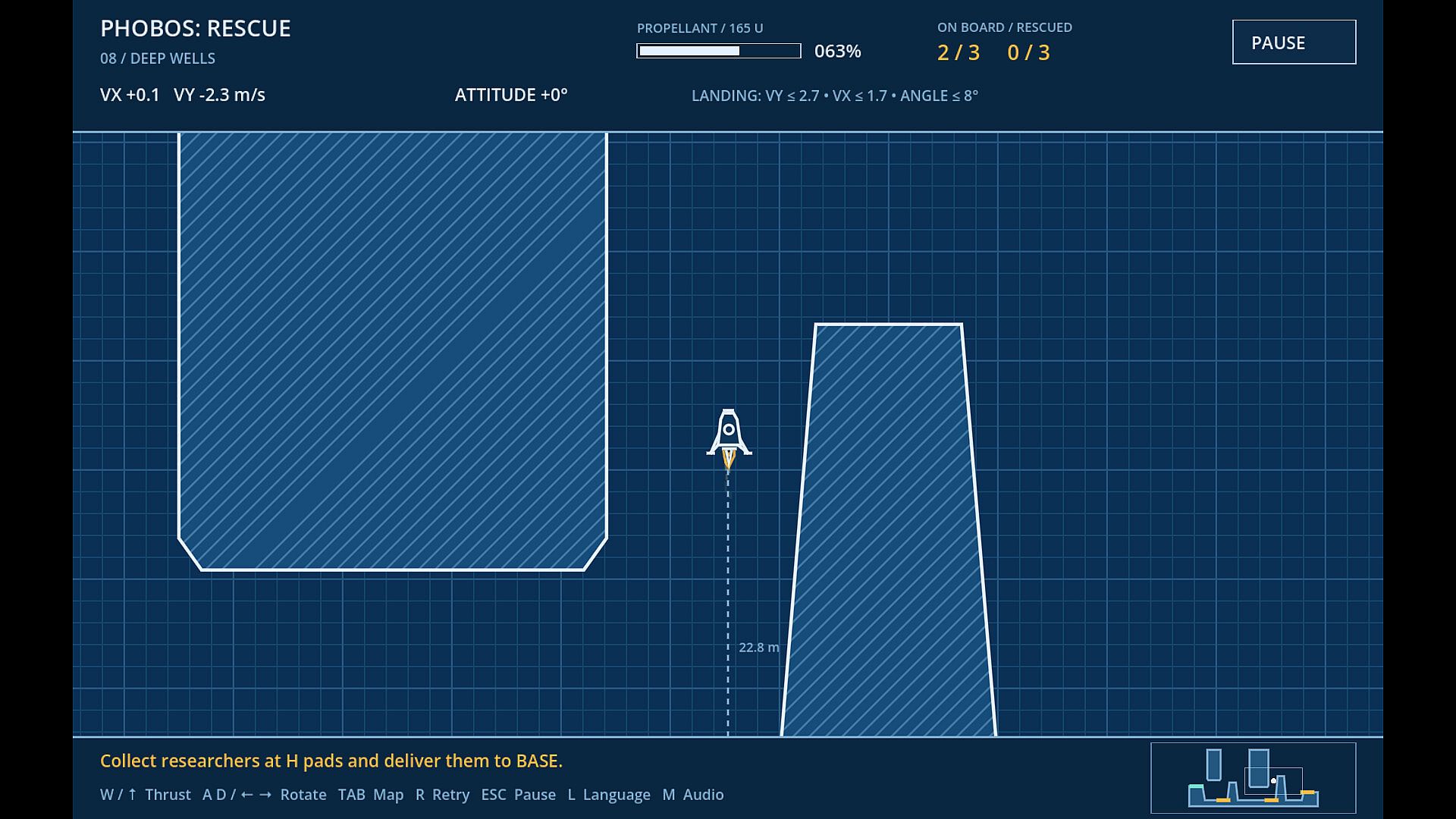
A minimap supports orientation during scrolling levels, and players can pause for a full sector overview to plot the next sequence of burns. Fifteen handcrafted sectors progress in sequence, beginning with open training areas and advancing to enclosed expert routes that test every aspect of the flight model.
Game Modes
PHOBOS: Rescue operates entirely as a single-player experience with no multiplayer options or alternate modes. Progress unlocks the fifteen sectors one after another upon successful completion of the prior rescue run. Each sector functions as a self-contained mission that combines navigation, hazard avoidance, fuel management, and repeated soft landings to extract the three researchers.
The structure emphasizes sequential mastery rather than branching paths or competitive elements. Introductory content covers basic flight controls and the tutorial, while later sectors introduce tighter constraints on space, time, and fuel. Local progress tracking records completed sectors, and audio settings for music and sound effects remain independently adjustable throughout.
Core Mechanics and Challenges
Directional thrust and momentum conservation form the foundation of every maneuver. Players must account for the time and distance needed to reverse course or slow down, which becomes critical when threading narrow passages or aligning with small landing pads. Soft-landing limits add another layer of precision, as excessive speed or angle prevents the transfer from starting.
Fuel scarcity ties the entire campaign together. Early sectors allow more margin for error, but the final five demand efficient routing through complex layouts while preserving enough propellant to reach the separate evacuation bases. Asteroid hazards in selected areas require timing burns to slip past without collision or excessive fuel use.
The blueprint-style visuals maintain readability even during fast movement, with instruments updating in real time to show orientation, velocity, and fuel levels. This presentation supports both quick reactions and deliberate pauses for route planning.
Is It Worth Playing?
PHOBOS: Rescue suits players who enjoy methodical precision challenges and the satisfaction of mastering inertia-based controls. The fifteen-sector campaign builds steadily from accessible training grounds to demanding expert routes, rewarding consistent planning and fine adjustments. Those drawn to single-player experiences focused on navigation, resource limits, and repeated attempts at clean landings will find a focused loop that emphasizes skill over spectacle.
The game provides a clear progression system with unlocked sectors and local completion marks, making it straightforward to return for improved runs or to tackle later content. Adjustable audio options further support extended sessions without distraction. For anyone seeking a compact, technically oriented flight game on PC, the mechanics deliver a consistent test of timing and foresight across its handcrafted levels.












