




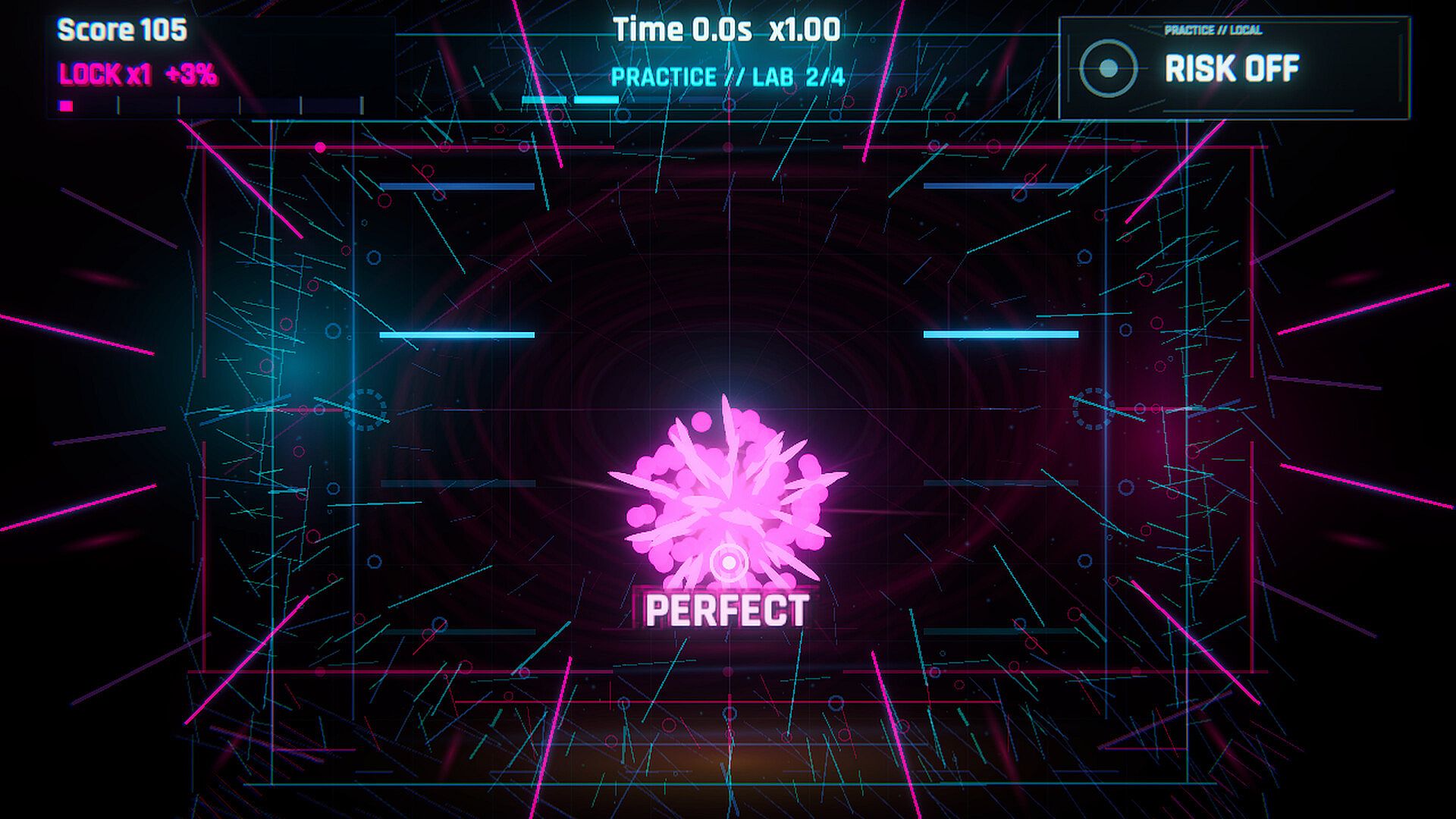
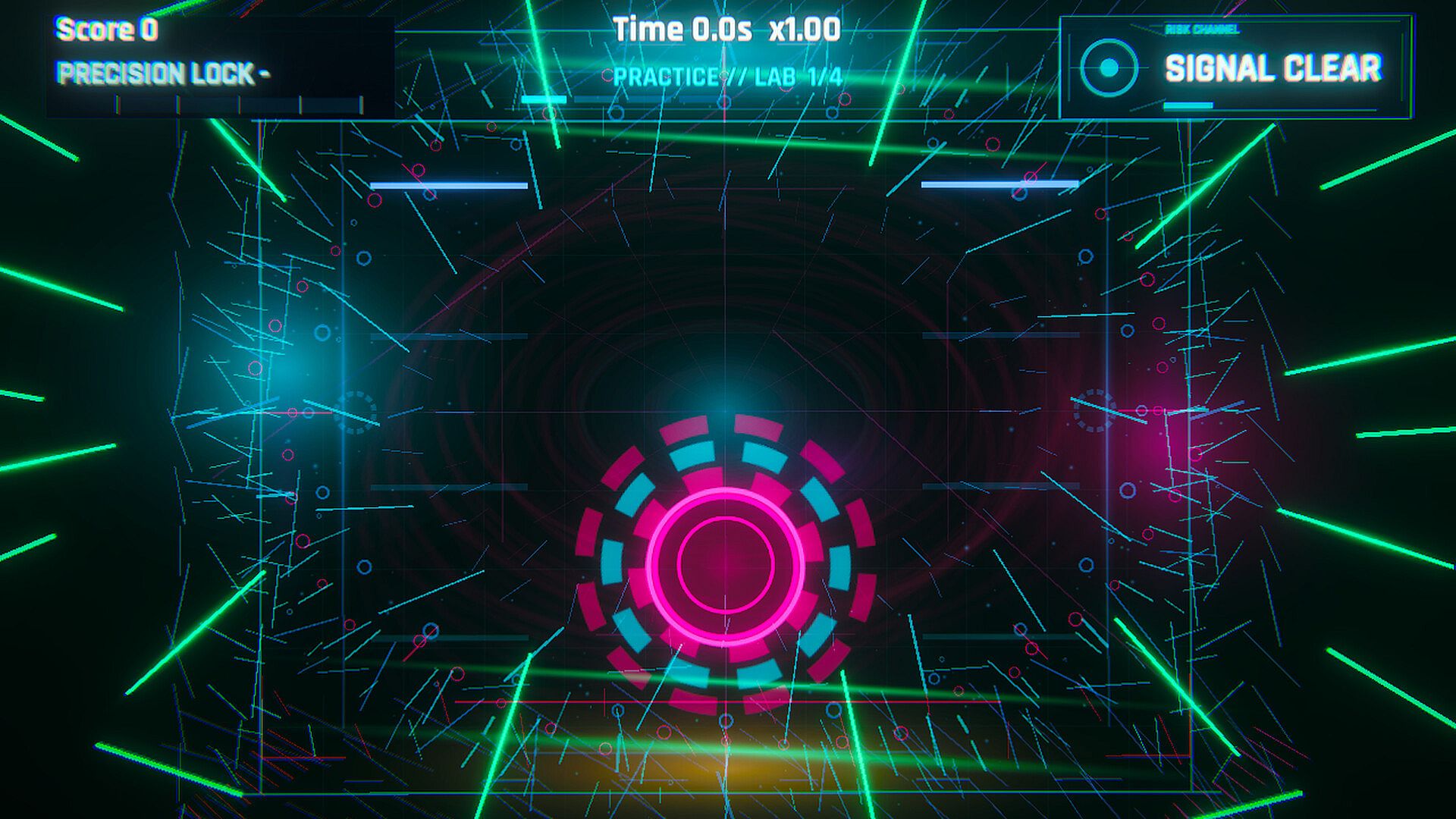
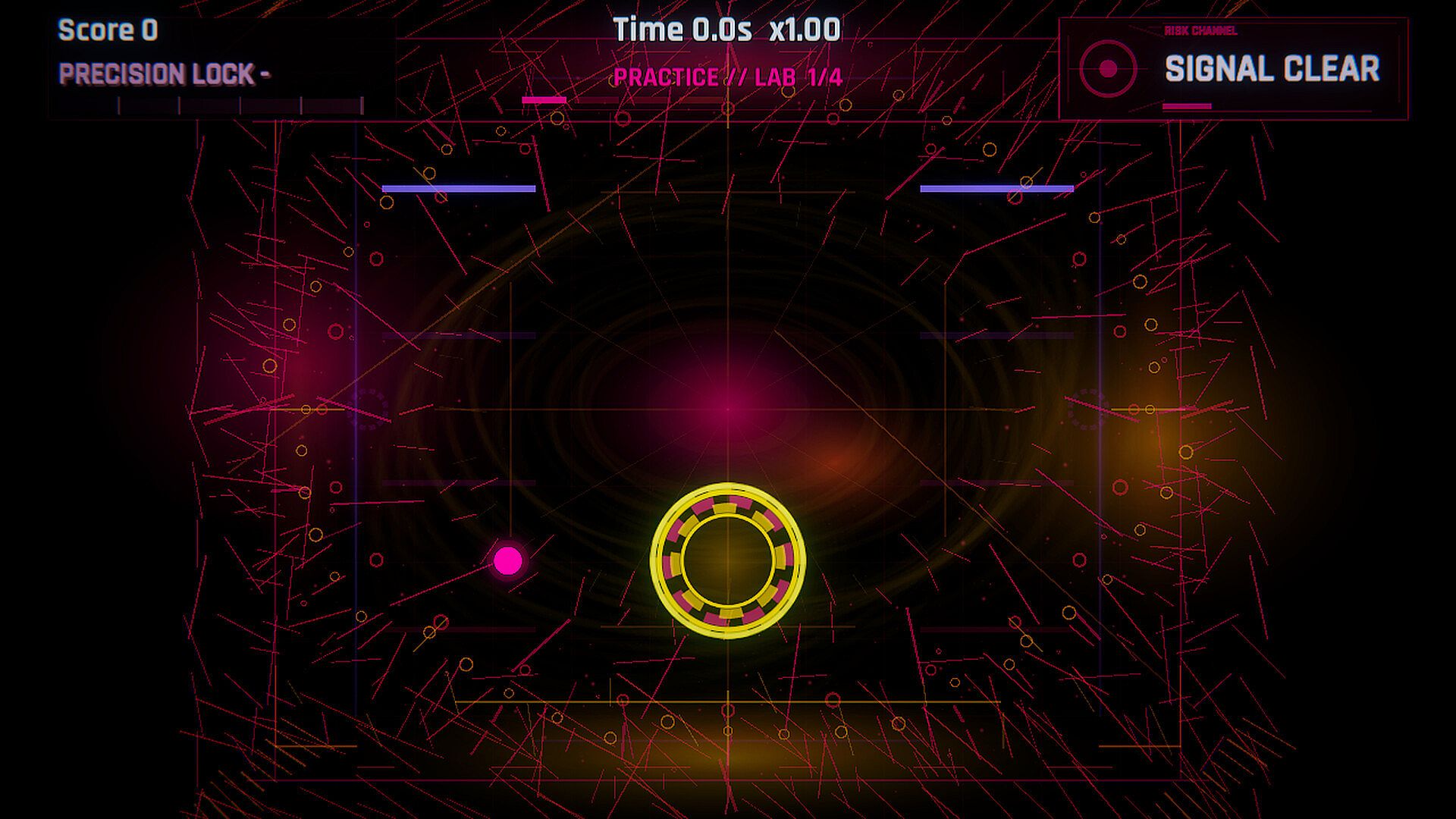
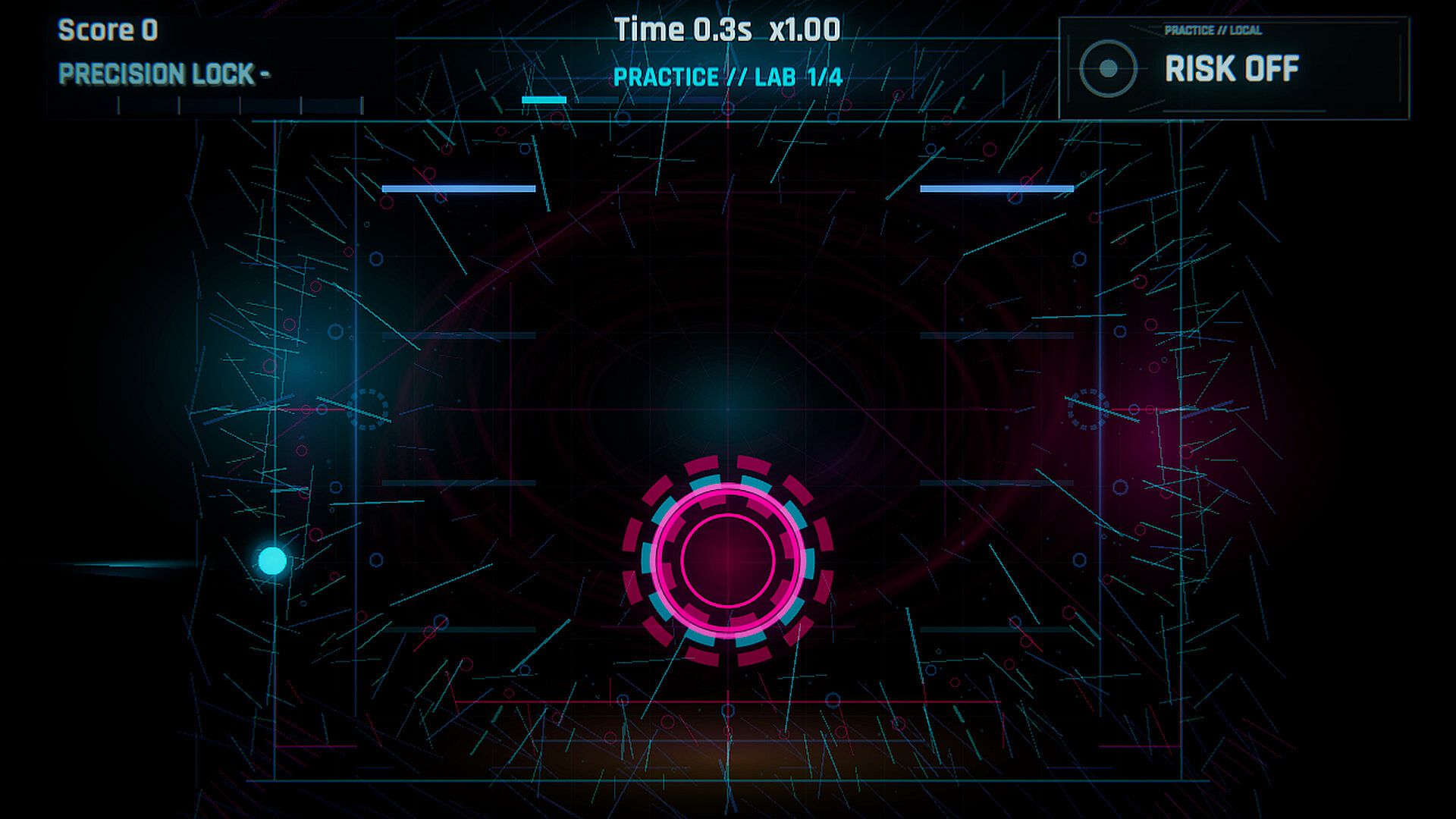
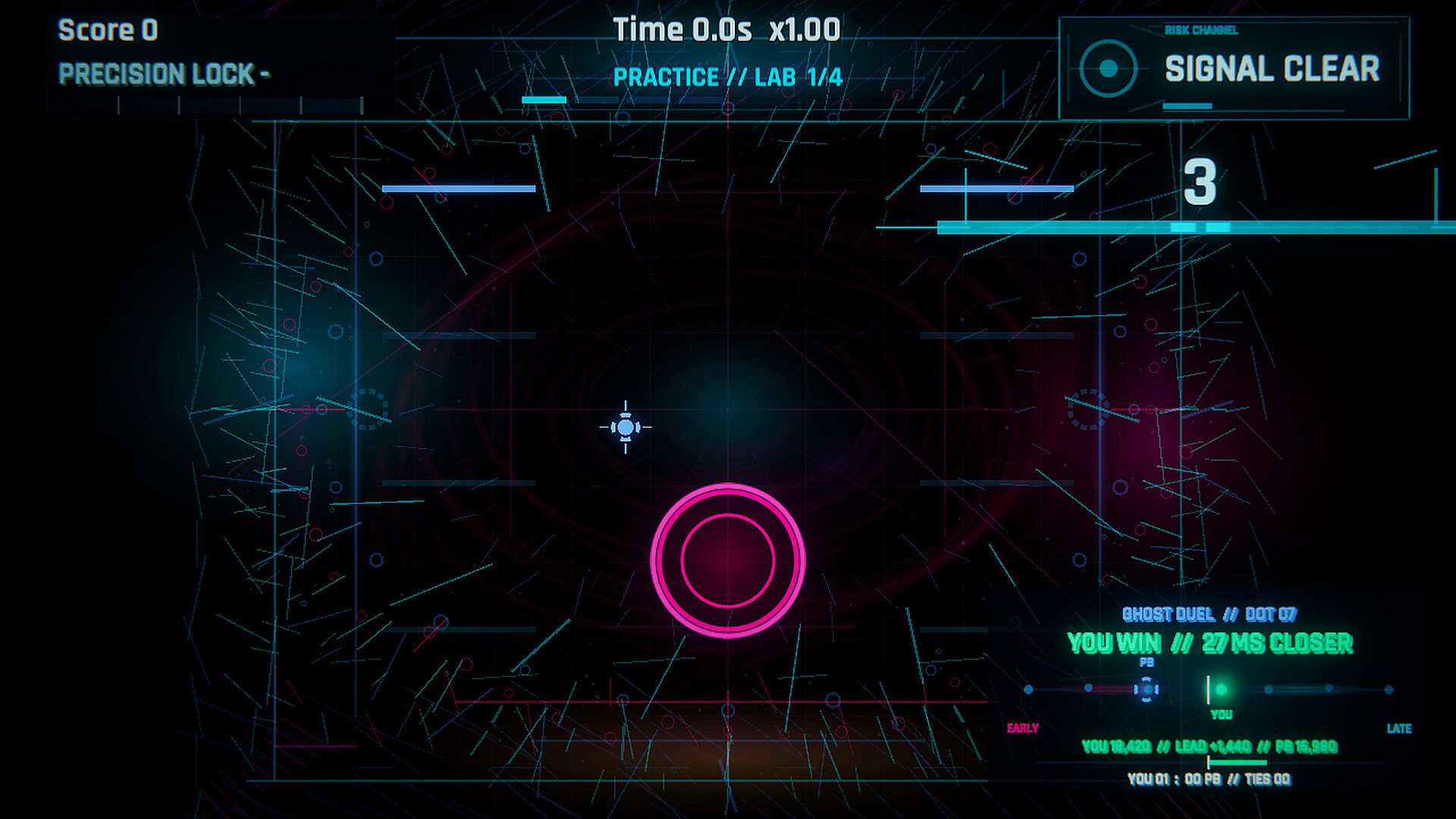
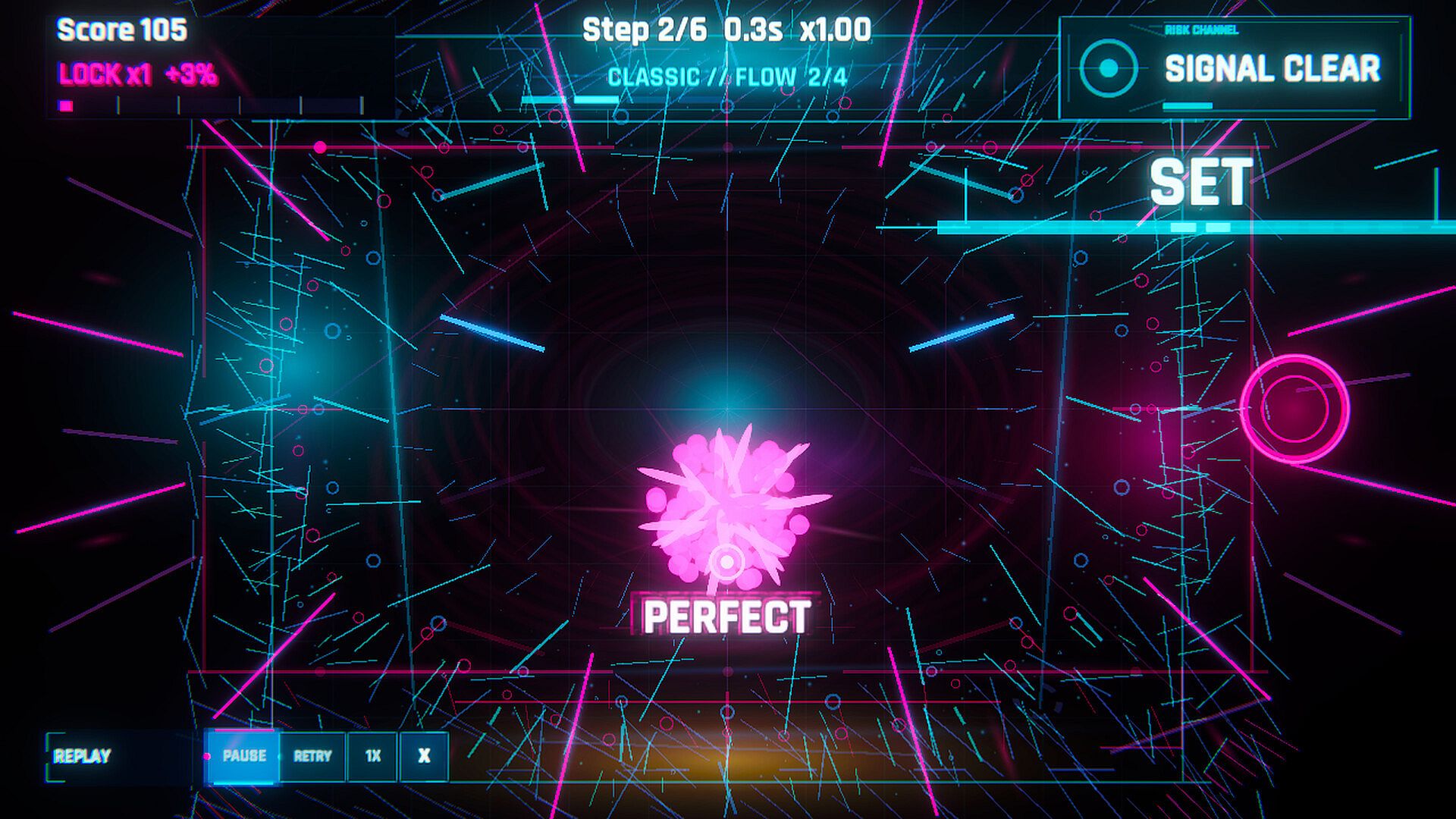

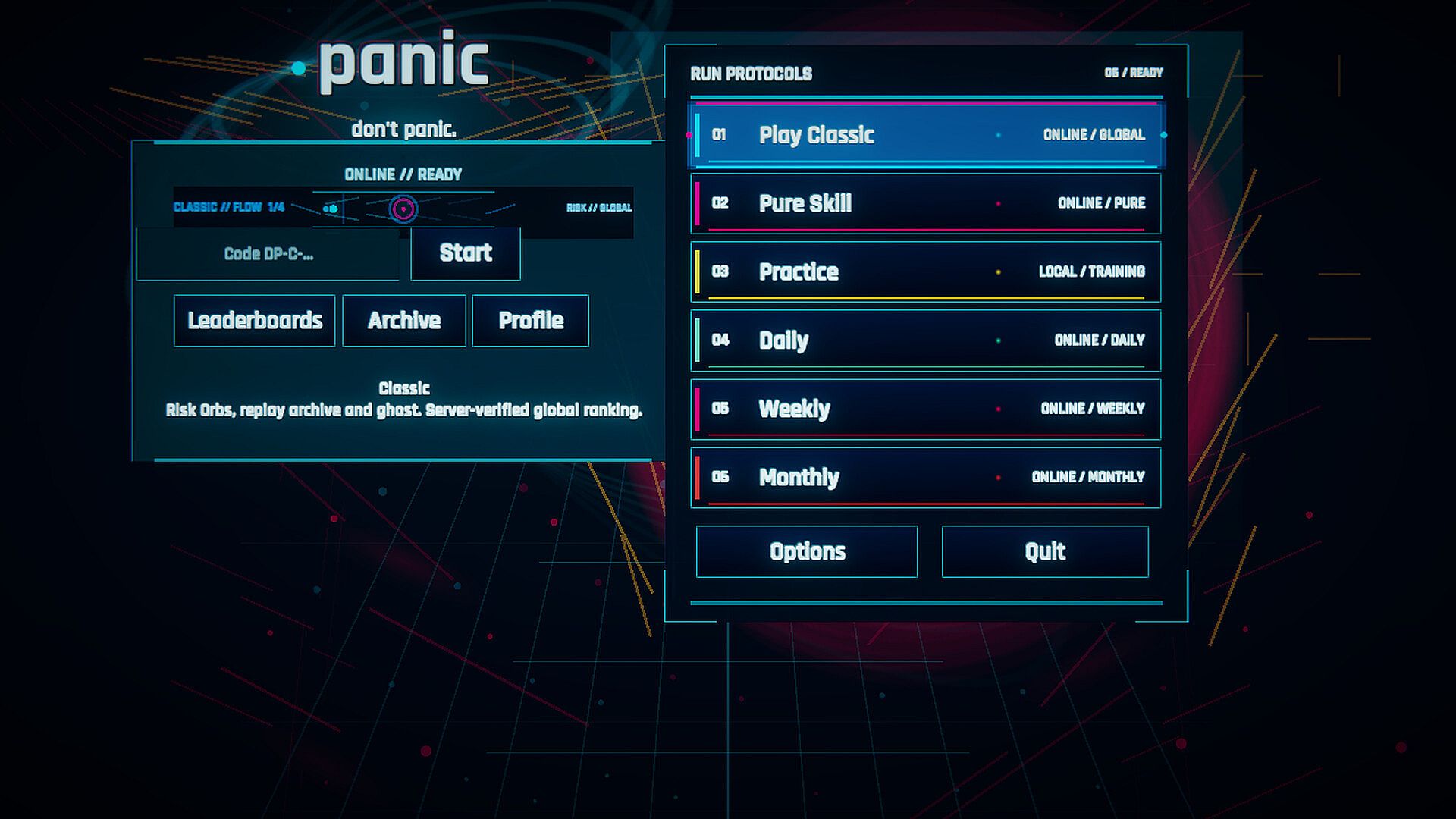


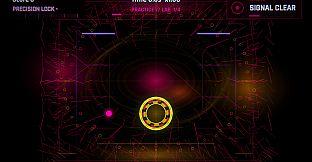
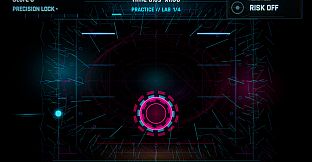
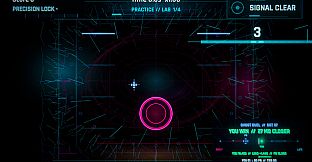

.panic is an action indie precision timing arcade game for PC that distills competition down to a single tap. A moving dot approaches a target, and success hinges on pressing at the exact moment it crosses. The core loop starts simple yet escalates rapidly as speed increases and timing windows shrink. Every input registers in milliseconds, revealing whether the press landed early, late, or perfectly on time. One miss can end the run, turning each attempt into a test of focus and consistency.
Gameplay
The mechanics center on signal timing across sequences that demand repeated accuracy. Successful presses receive grades of Perfect, Great, Good, or Barely. Maintaining the same grade builds Precision Lock, which multiplies the score. Switching grades resets the lock, and any miss breaks it entirely. This system rewards steady performance over sporadic survival, pushing players toward repeatable high-level execution rather than lucky streaks.
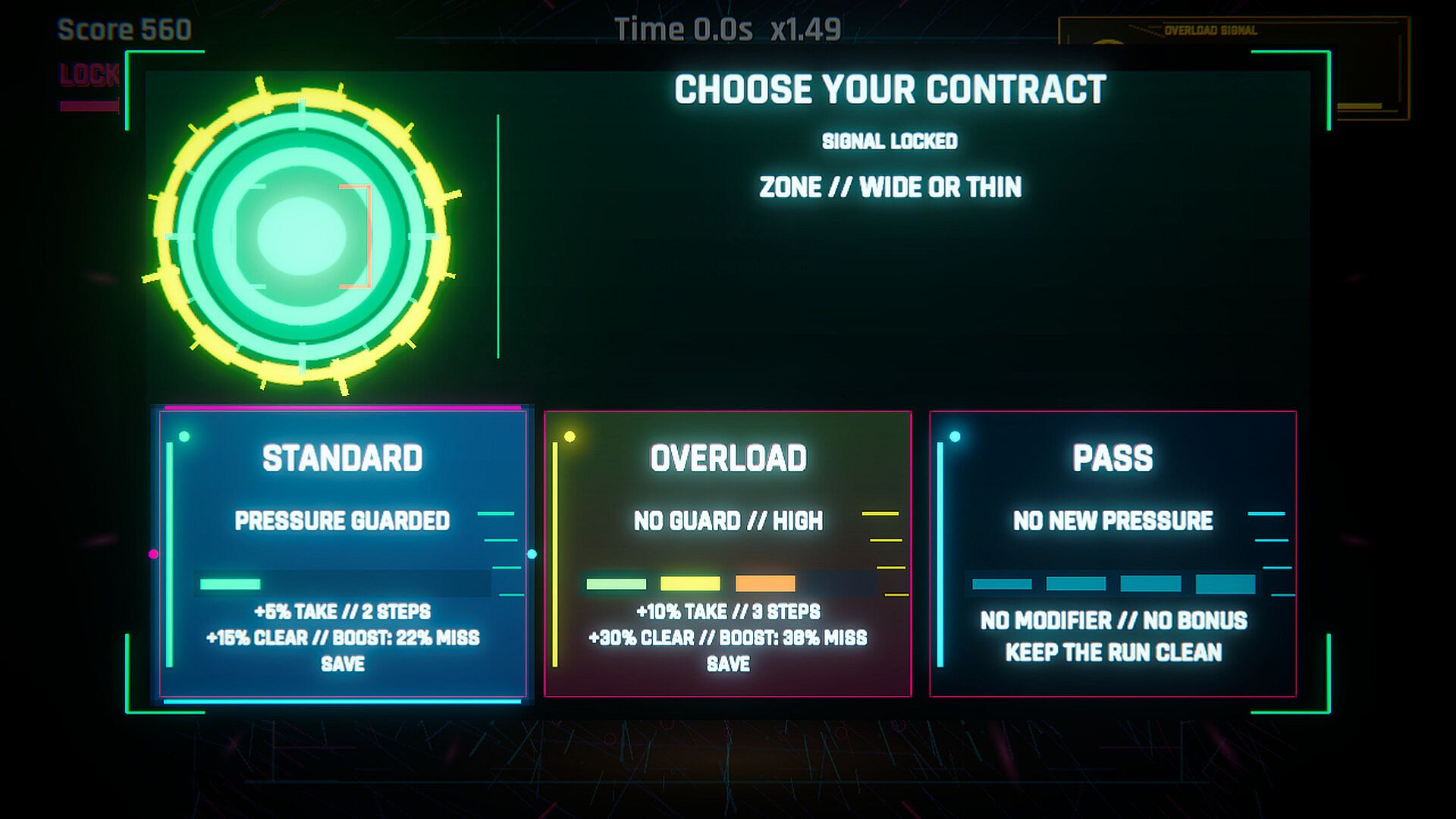
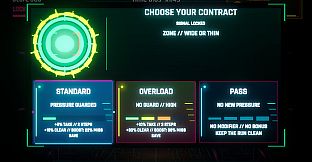
Runs incorporate optional Risk contracts that alter upcoming signal speed or timing windows. Standard contracts introduce moderate changes, Overload increases pressure for higher rewards, and Pass avoids the risk to protect an ongoing attempt. A successful Risk outcome can provide one Miss Save, though the saved mistake still counts as zero points and disrupts Precision Lock. These choices add layers of decision-making without removing the fundamental need for precise inputs.
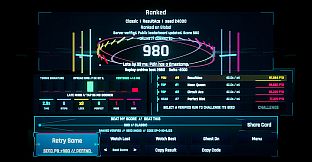
Additional tools support improvement and analysis. Saved runs appear in the Replay Vault for frame-by-frame review of failures or comparisons against personal bests. Ghost Duel allows compatible personal bests or verified rivals to appear as opponents during attempts, showing real-time progress toward beating a target score. Practice Lab offers targeted training on movement directions, starting difficulty, and run length, with a No Fail option that continues after errors while a timing coach displays millisecond offsets for correction.
Game Modes
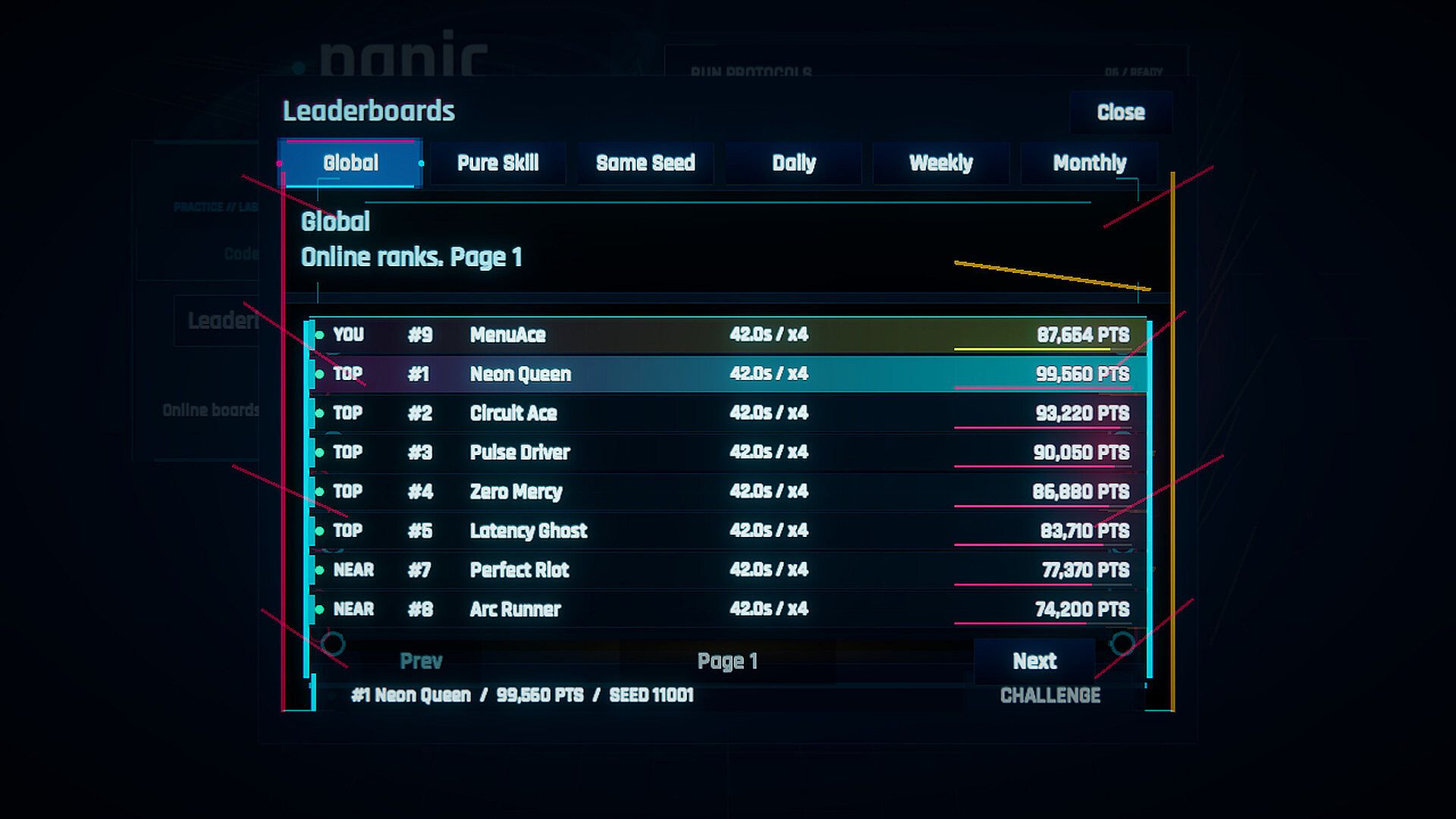
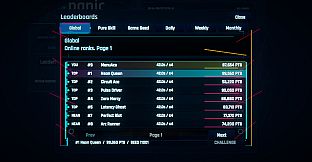
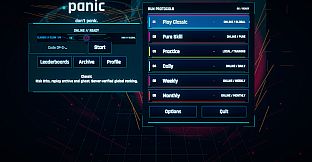
Classic runs form the baseline experience and may include Risk contracts. Pure Skill runs remove those variables for direct timing tests. Daily, Weekly, and Monthly challenges provide rotating competitions with separate leaderboards. Each mode tracks verified scores on global rankings, allowing players to see exact point gaps between positions and challenge specific rivals on identical seeds.
Full Circuit requires completing all 512 signals in a standard competitive run without a single miss. Achieving this doubles the final score. One saved Miss still registers as a failure, so the requirement remains absolute. Challenge Codes generate deterministic seeds that recreate identical sequences for direct friend comparisons on the Same Seed leaderboard, eliminating variables and focusing rivalry on execution alone.
Competition and Progression
Global rankings aggregate the best verified runs across all modes. Players track their position and the precise score margin to the next rank. Rival challenges allow direct seed-based rematches against eligible leaderboard entries. This structure supports ongoing competition without requiring simultaneous play, as codes can be exchanged and results compared asynchronously.
Replays and ghosts reinforce the competitive loop. Any saved run can be revisited to study exact failure points or benchmark against prior attempts. Ghost Duel integrates directly into live runs when compatible data exists, providing visual feedback on whether the current performance leads or trails the target. These features encourage repeated attempts on the same seed until a new high score emerges.
Is It Worth Playing?
.panic suits players who enjoy pure timing challenges and measurable skill progression in short, intense sessions. The deterministic seed system enables fair, repeatable competition with friends through Challenge Codes and Same Seed leaderboards. Global rankings across Classic, Pure Skill, Daily, Weekly, and Monthly modes provide clear benchmarks for improvement, while Precision Lock and Risk contracts reward consistency and calculated decisions.
The game emphasizes immediate rematches and direct score comparisons rather than narrative or exploration elements. Practice tools deliver concrete millisecond feedback, supporting deliberate skill development. With a release date of September 22, 2026, and no user reviews available yet, its appeal rests on the described mechanics for those seeking high-precision arcade competition on PC. The structure supports both solo refinement and ongoing rivalries without additional content requirements.