












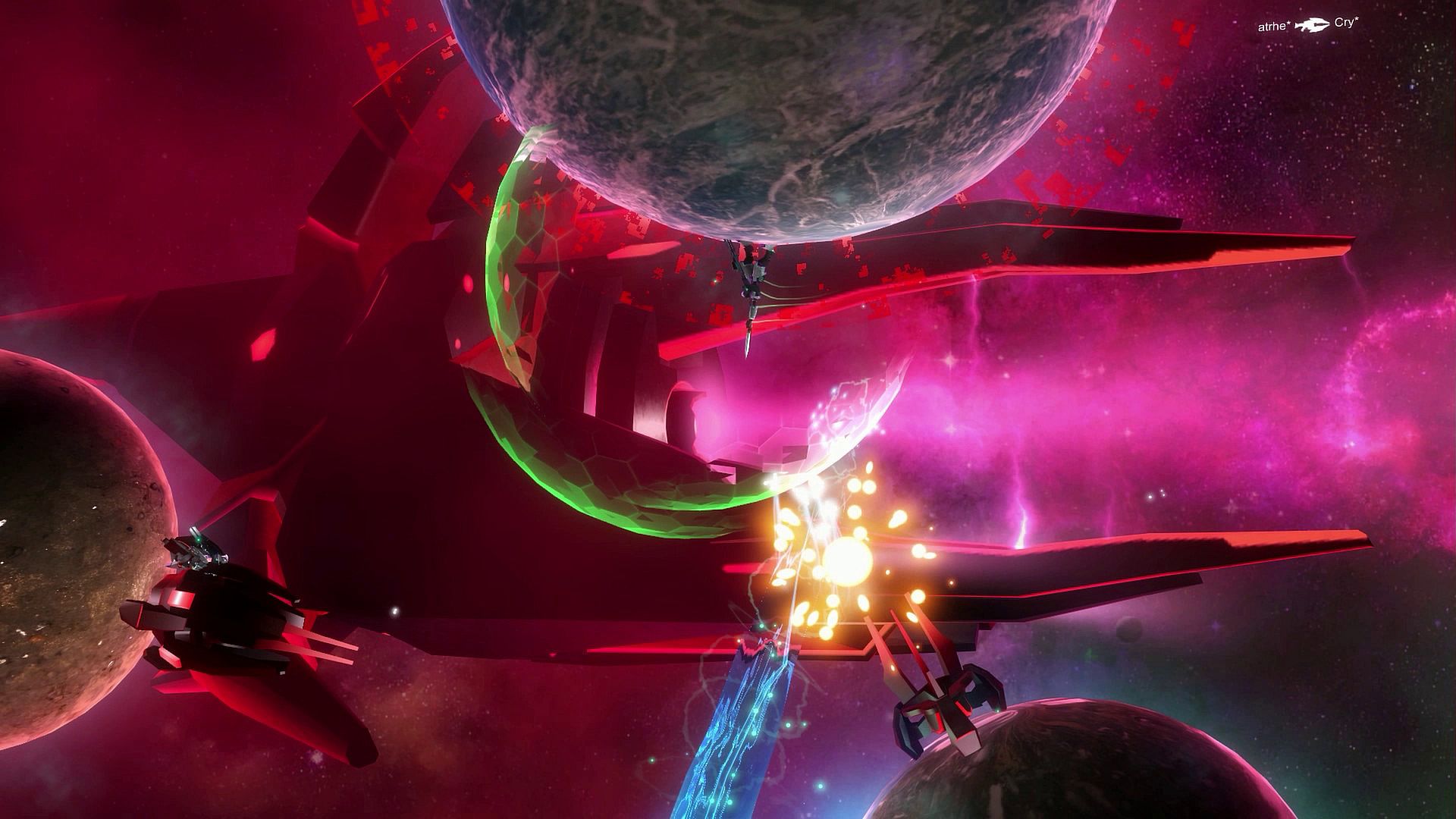
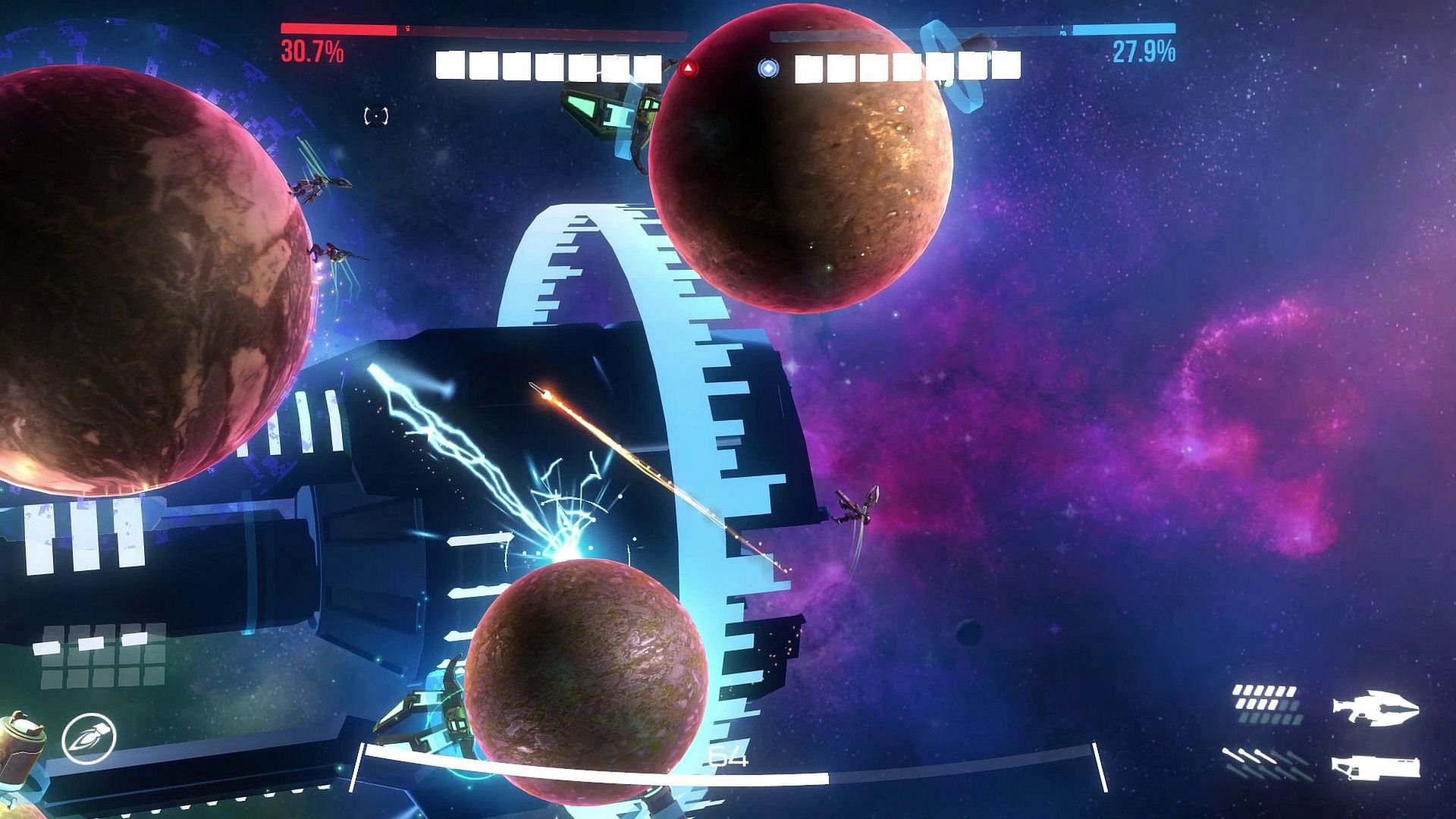
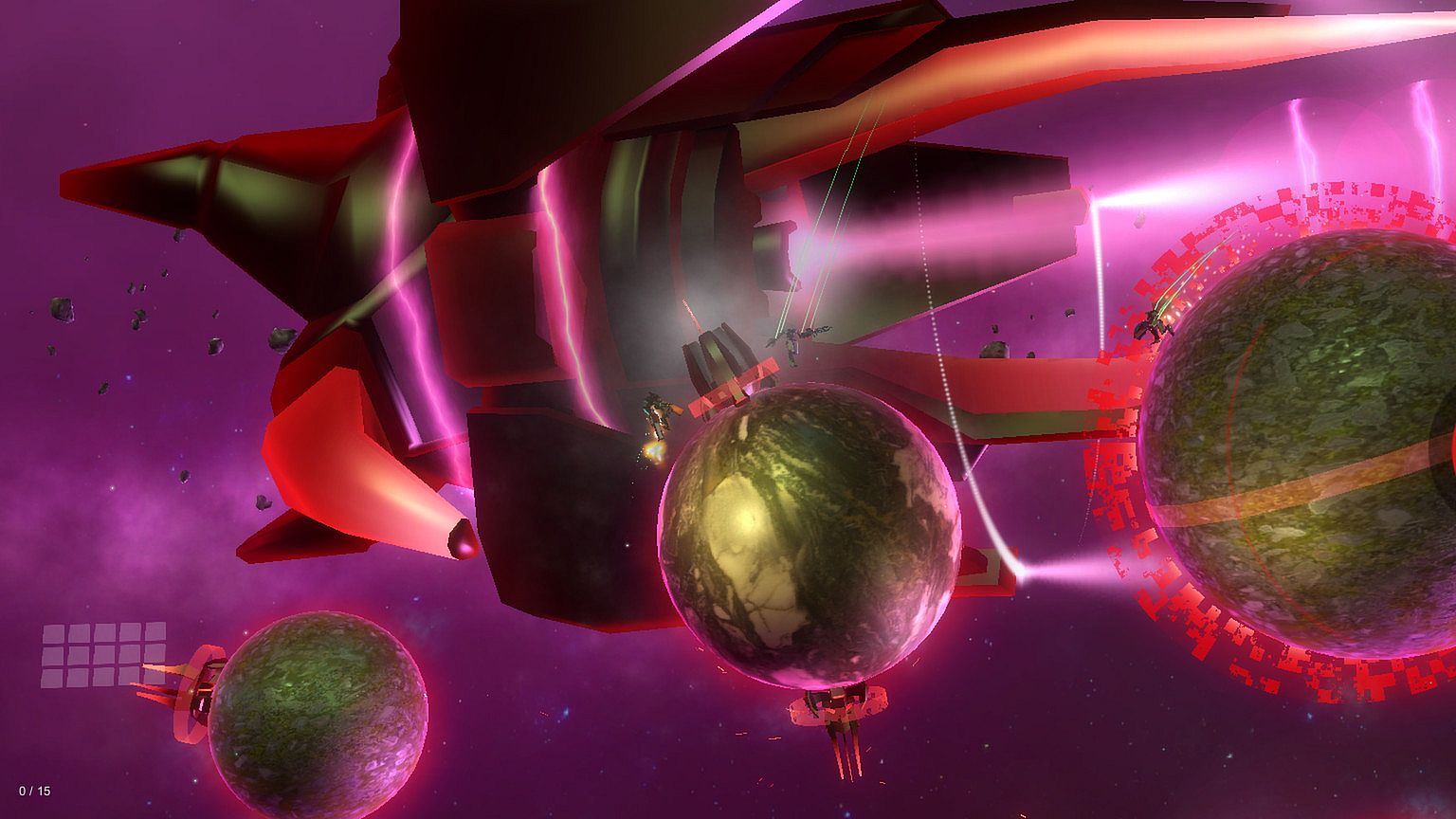
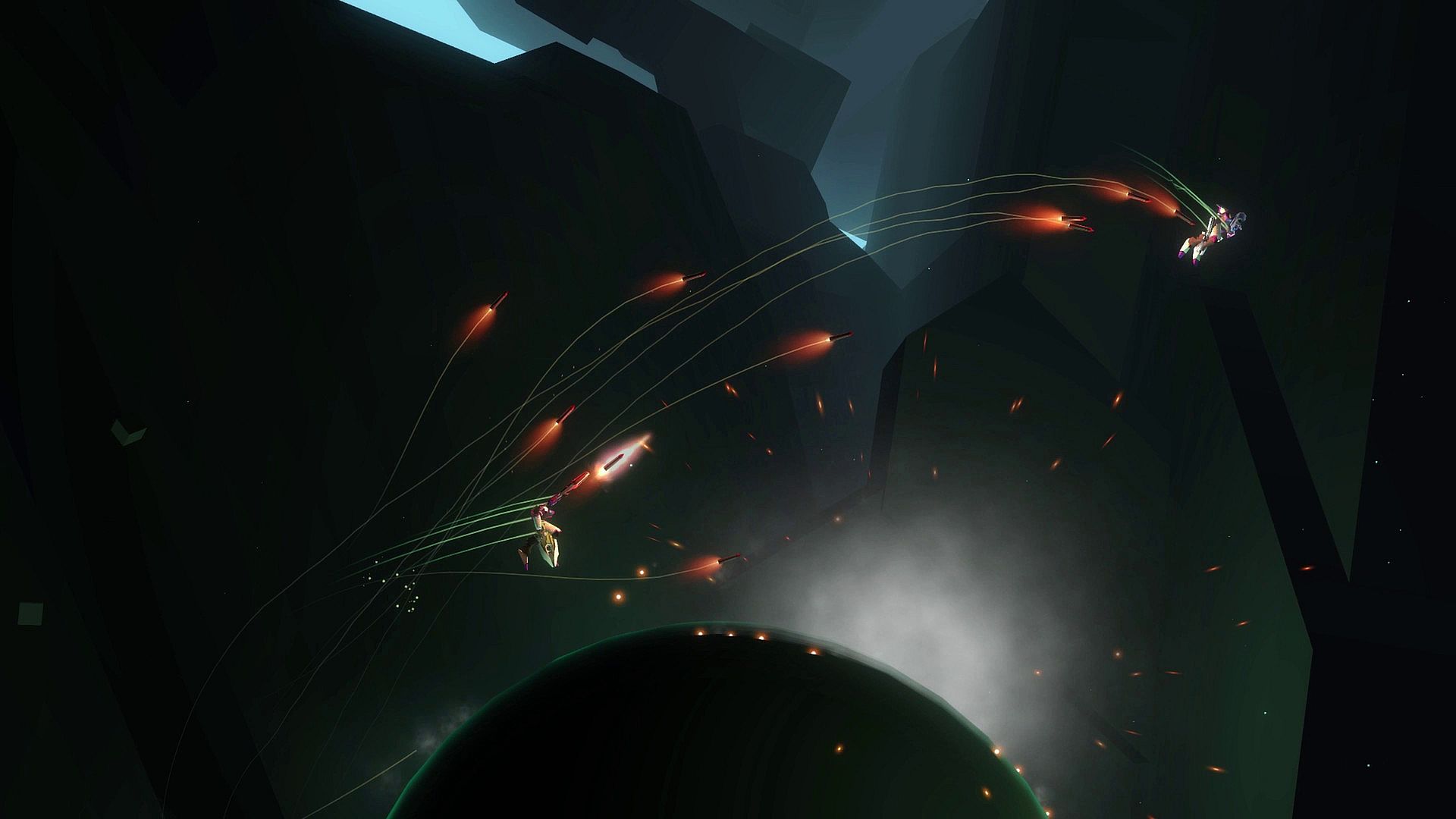
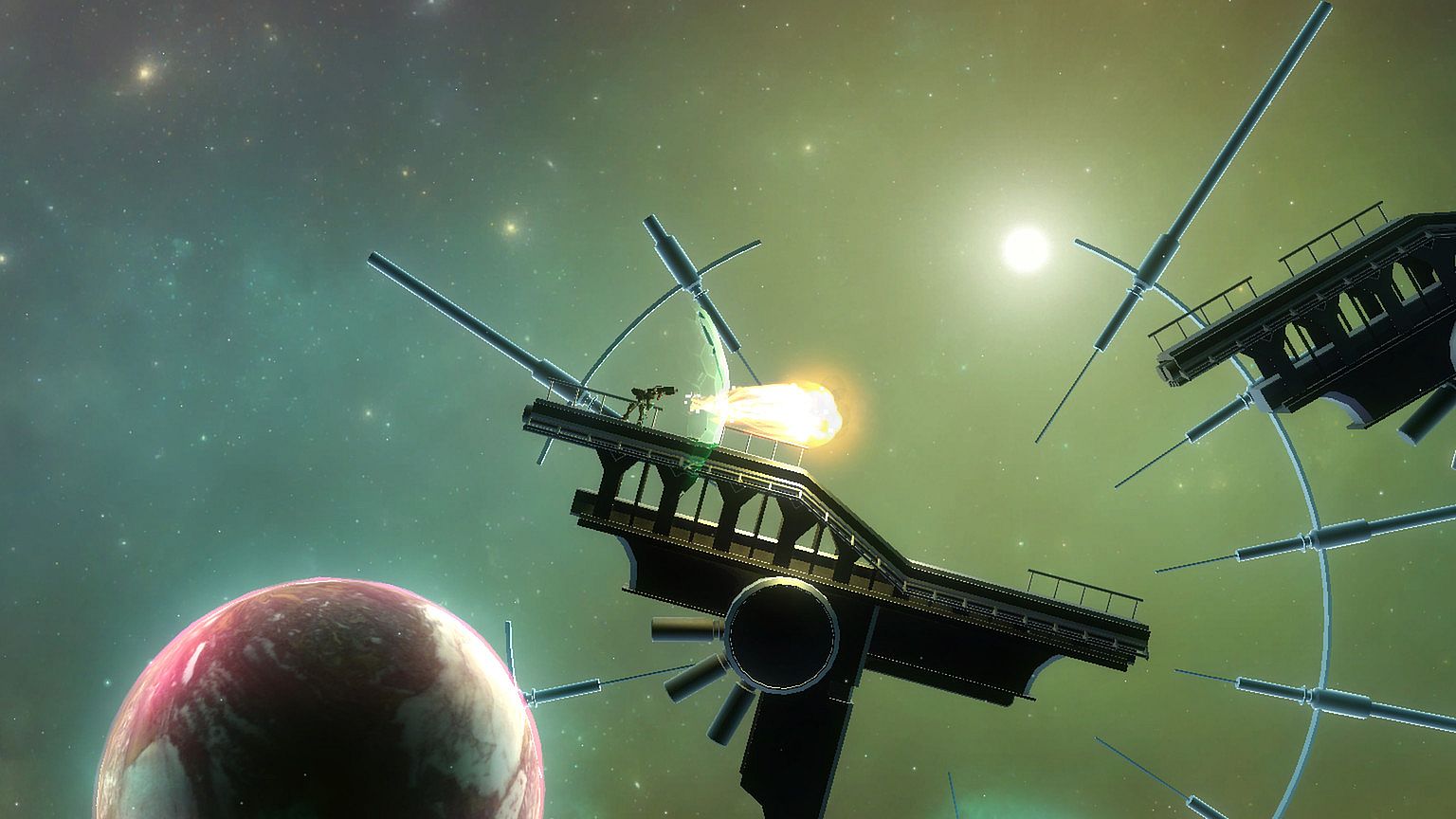
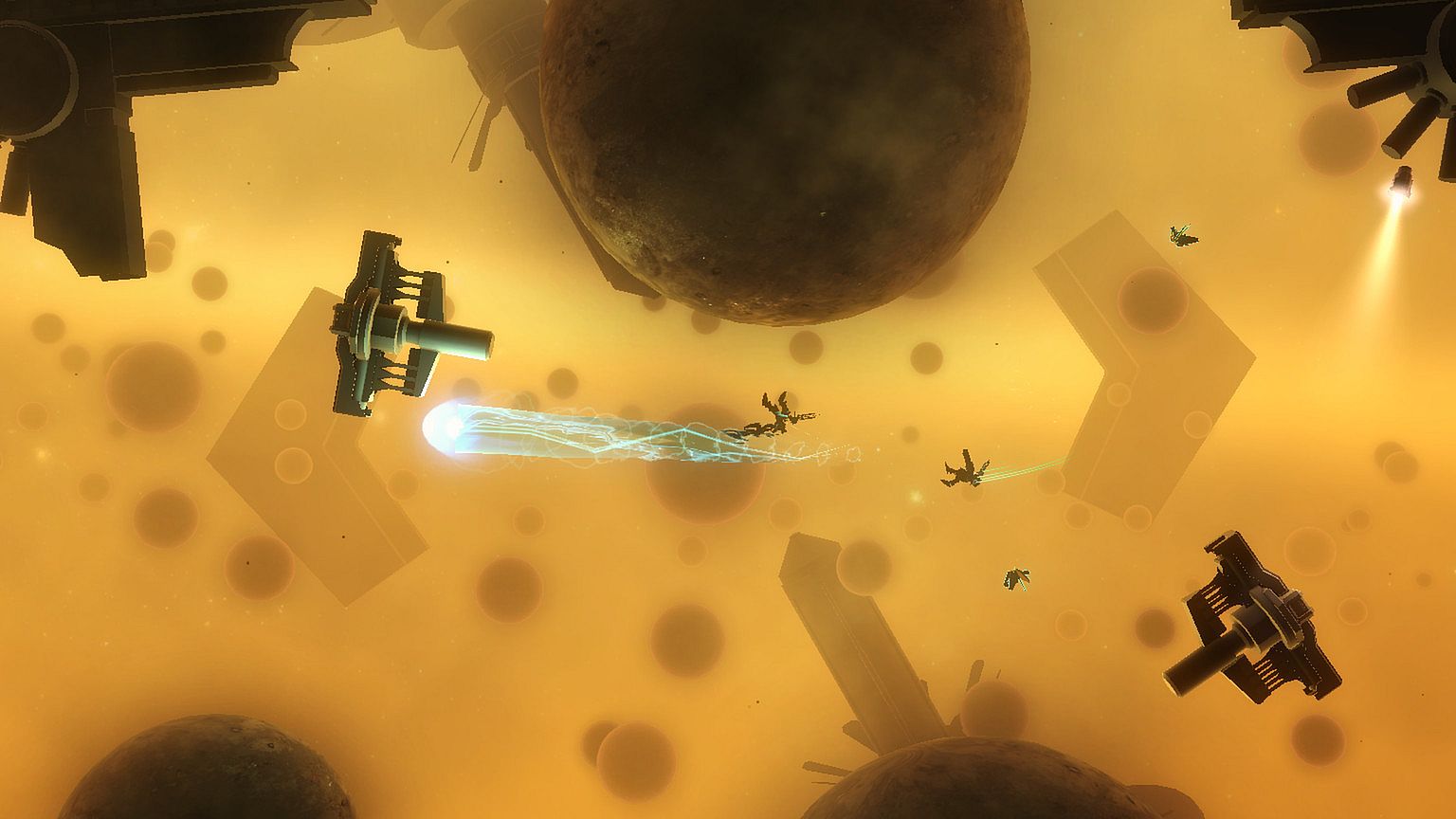
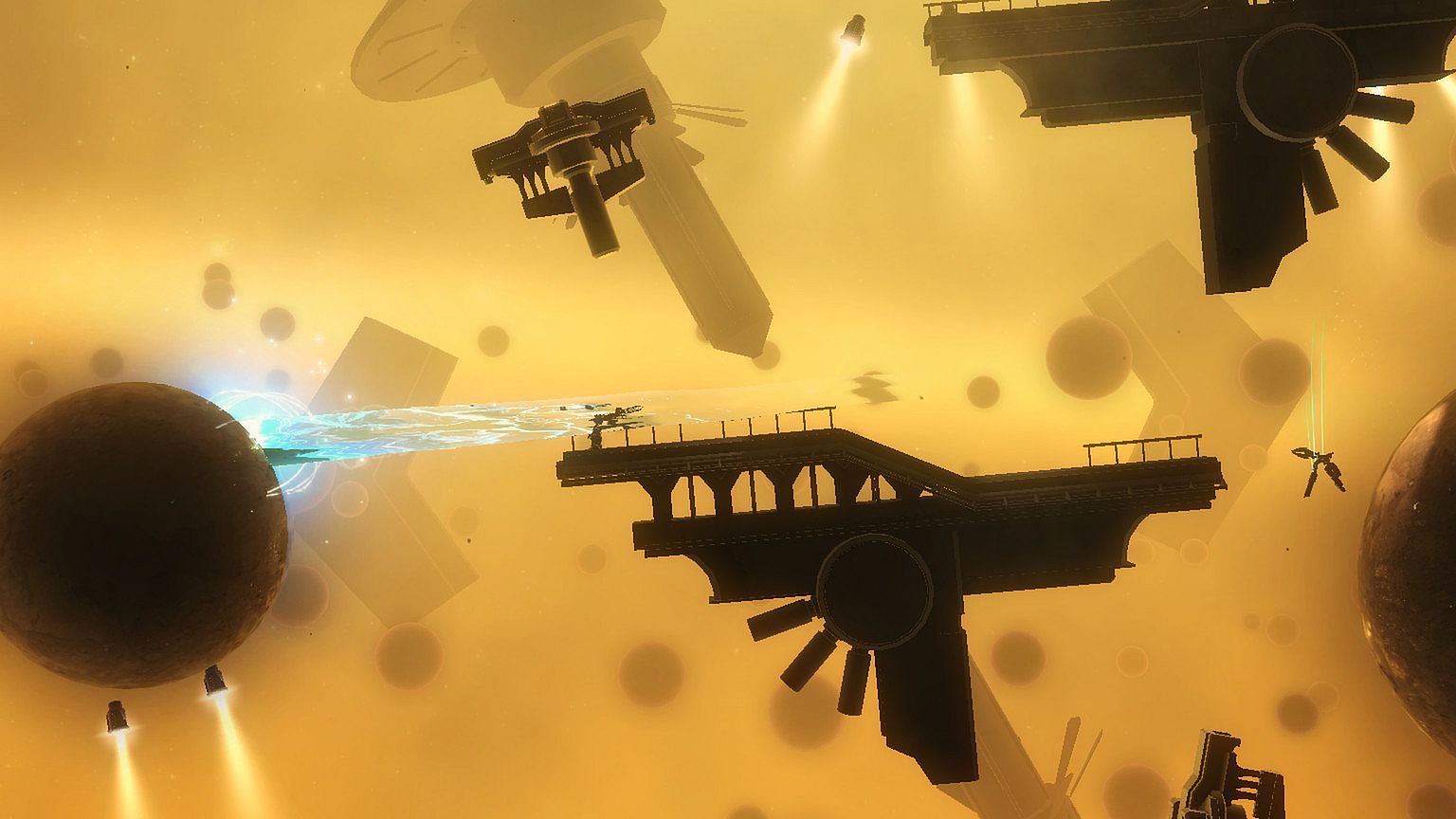
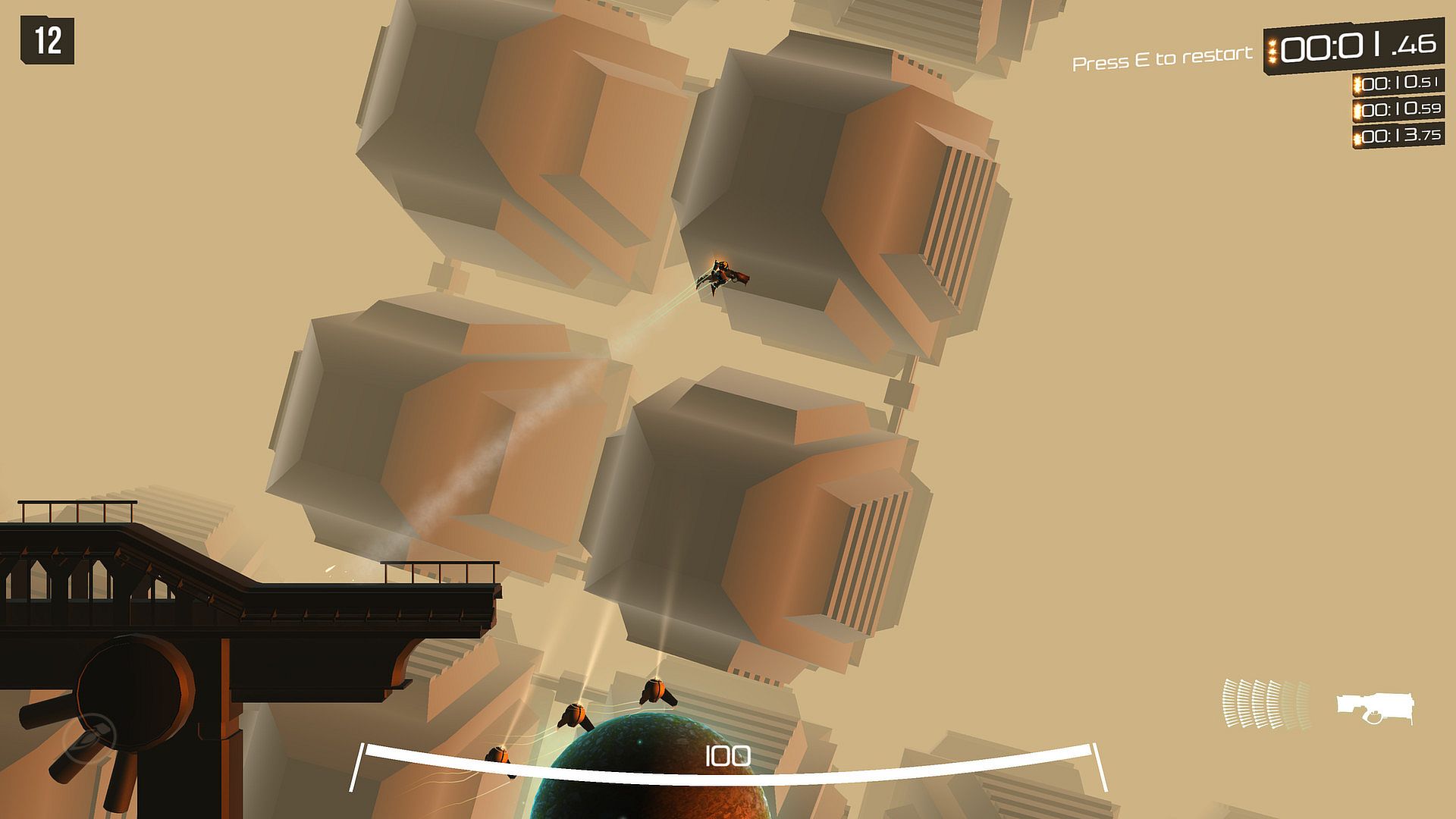
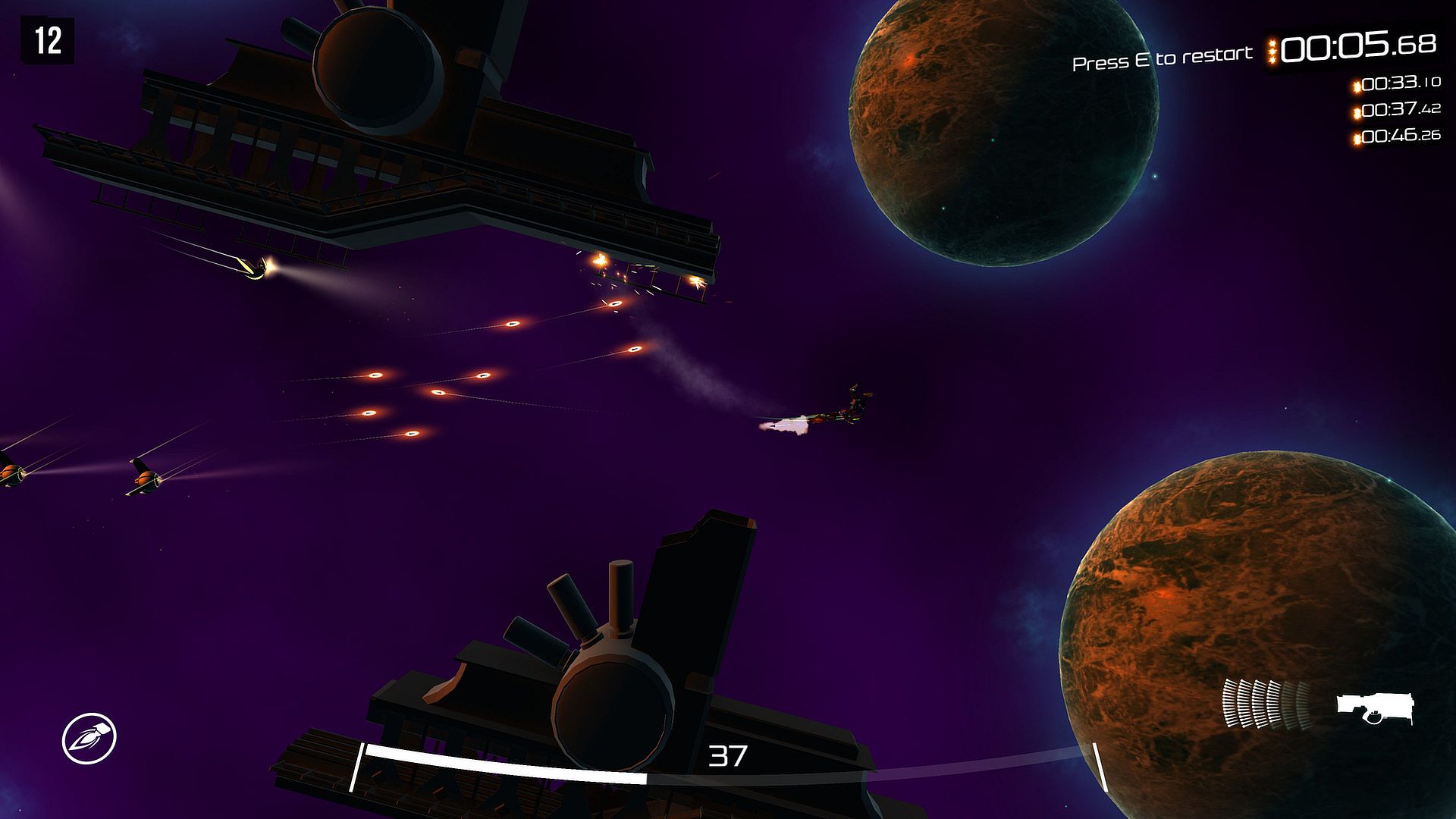
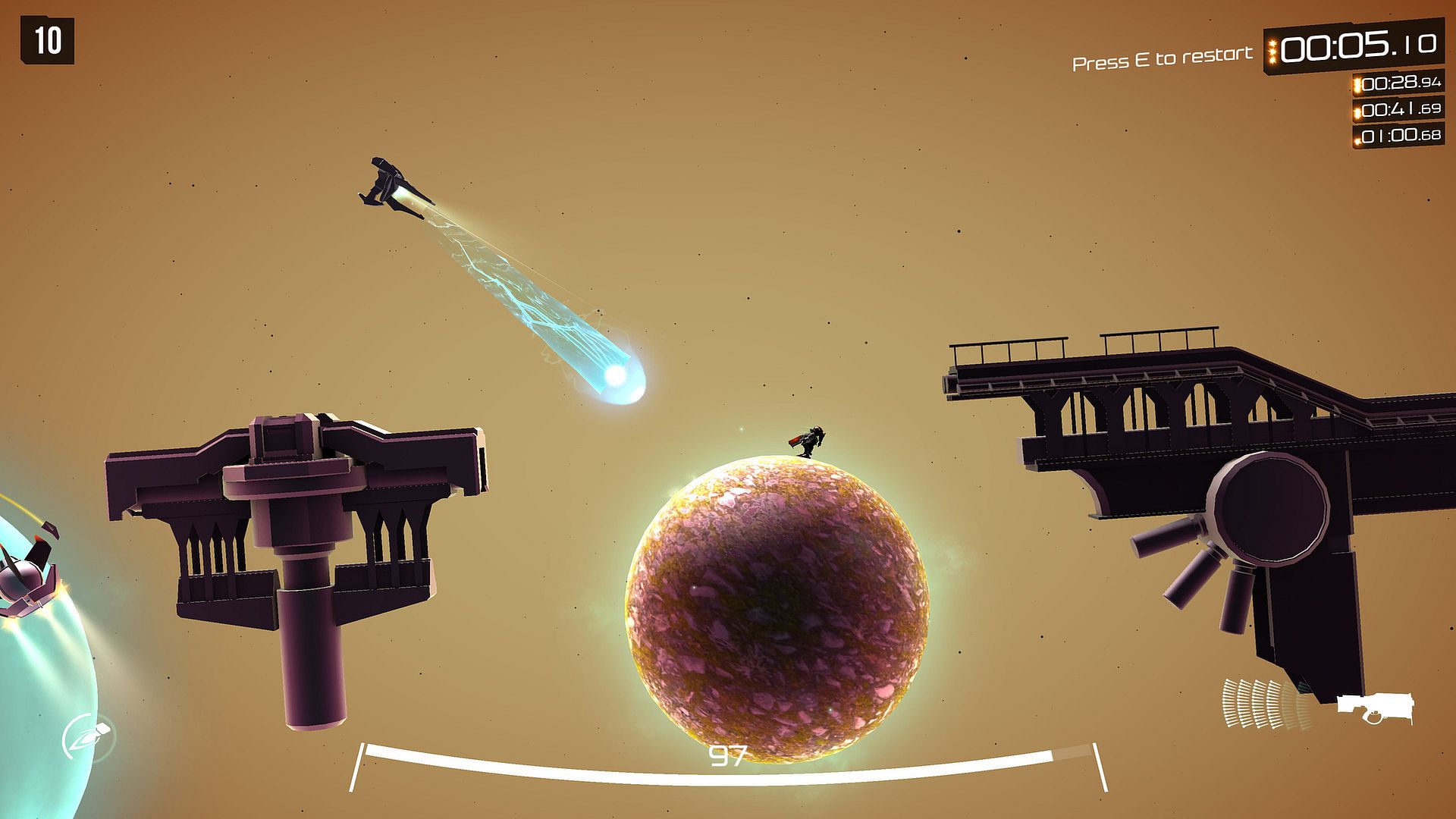
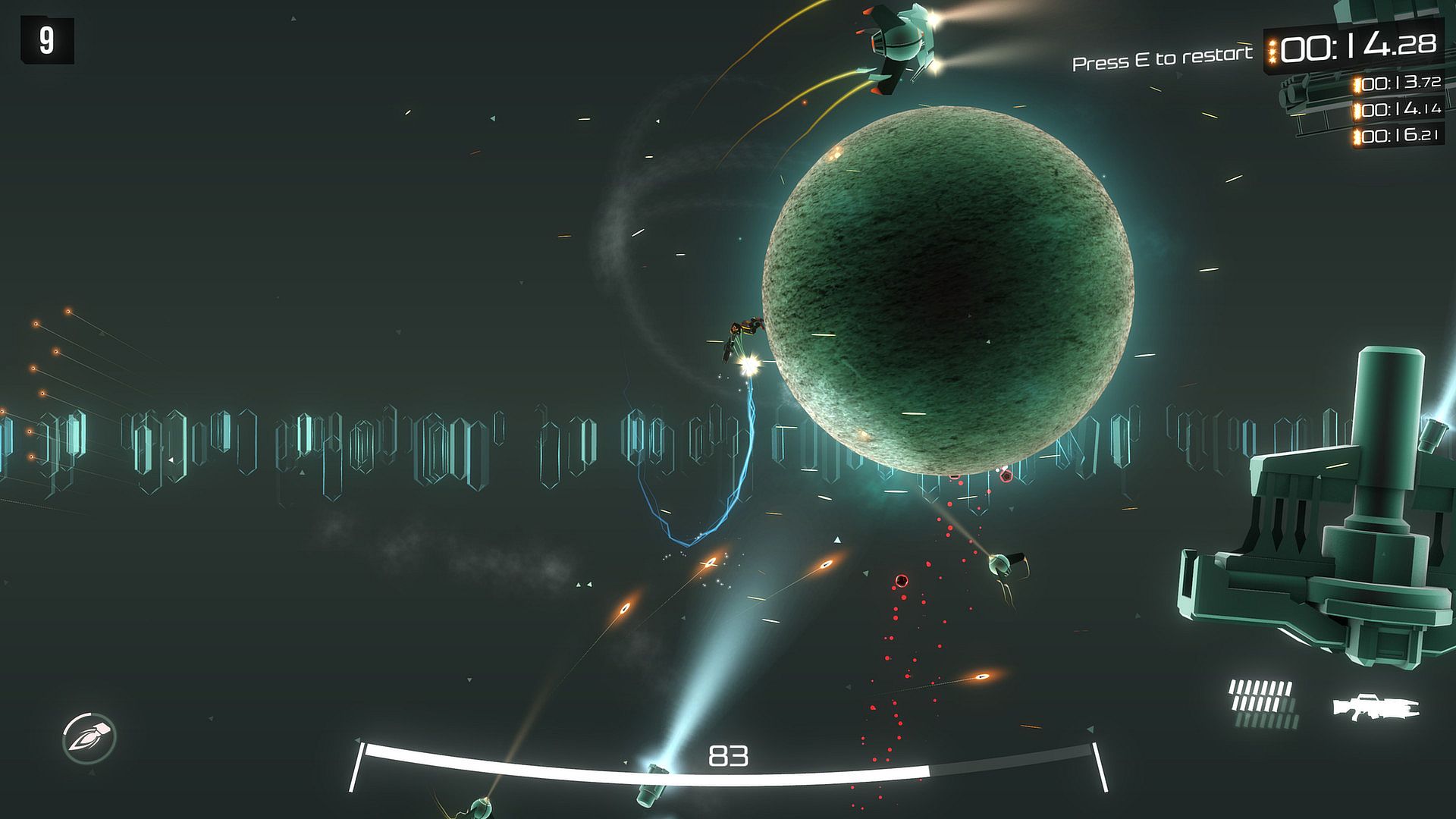
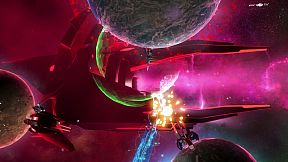
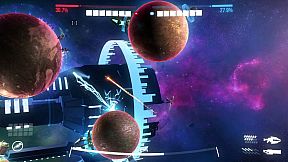
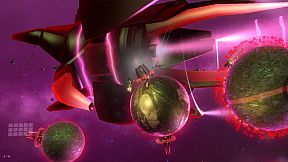
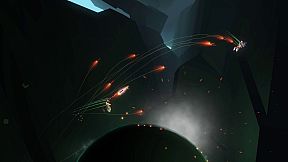
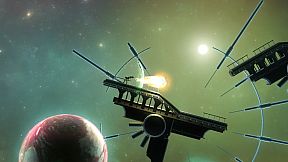
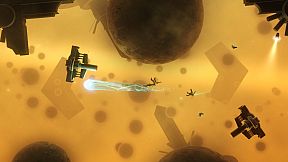
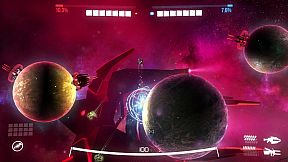
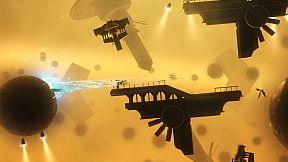
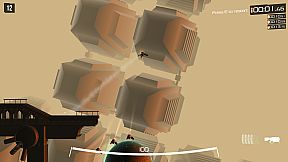
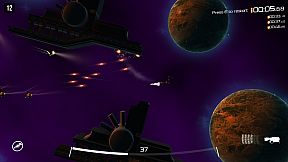
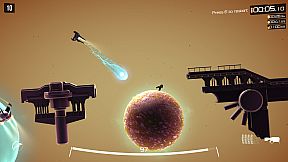
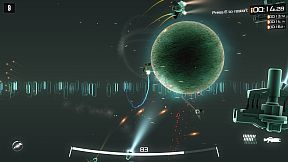
Orbital Gear stands out as a free-to-play sidescroller shooter that blends classic action elements with simulation-style physics. Players control mechs in space environments where celestial bodies create gravitational pulls that influence movement and combat. The core loop revolves around maneuvering through these forces while selecting and firing from a roster of weapons to eliminate opponents.
Gameplay
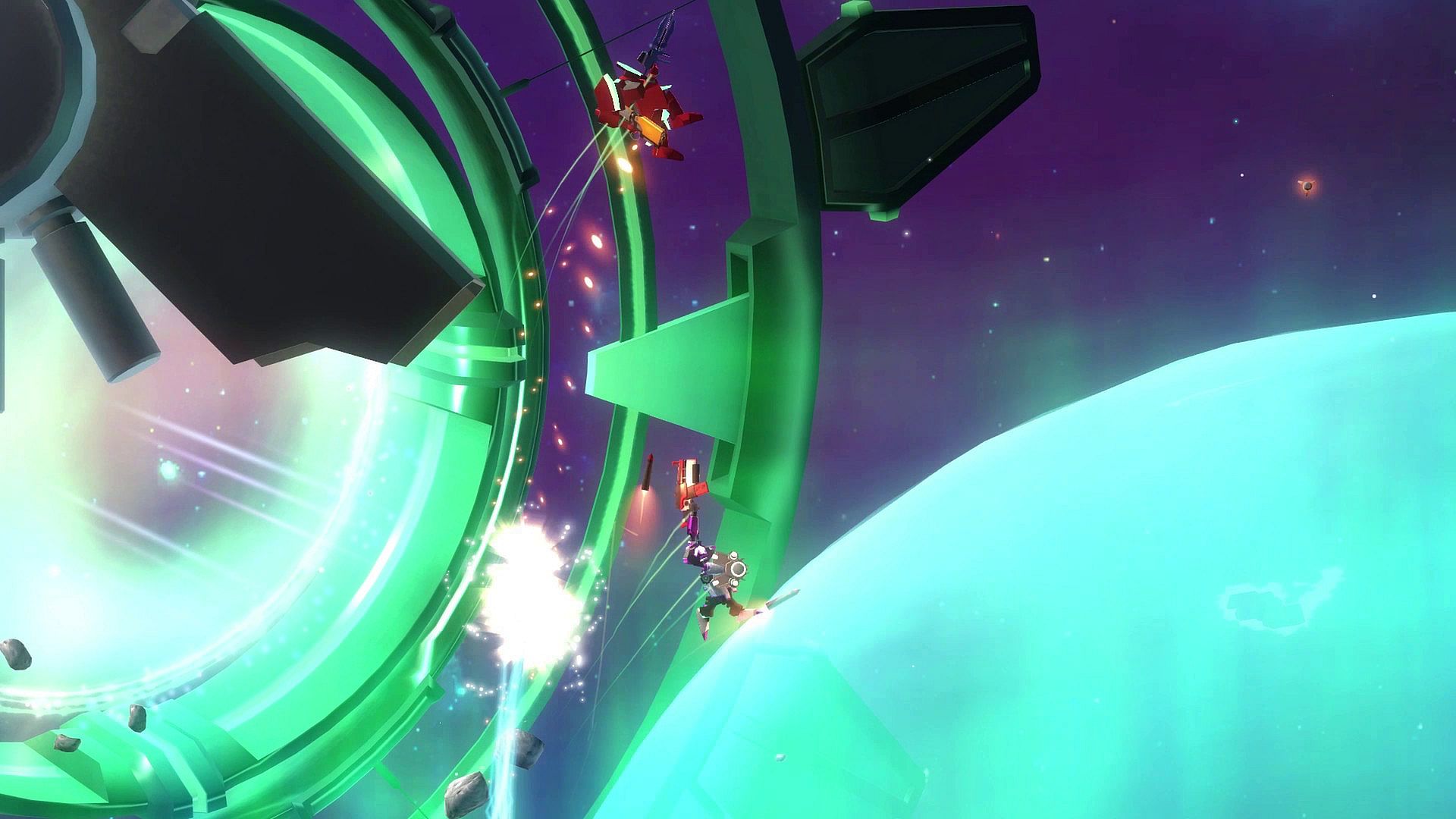
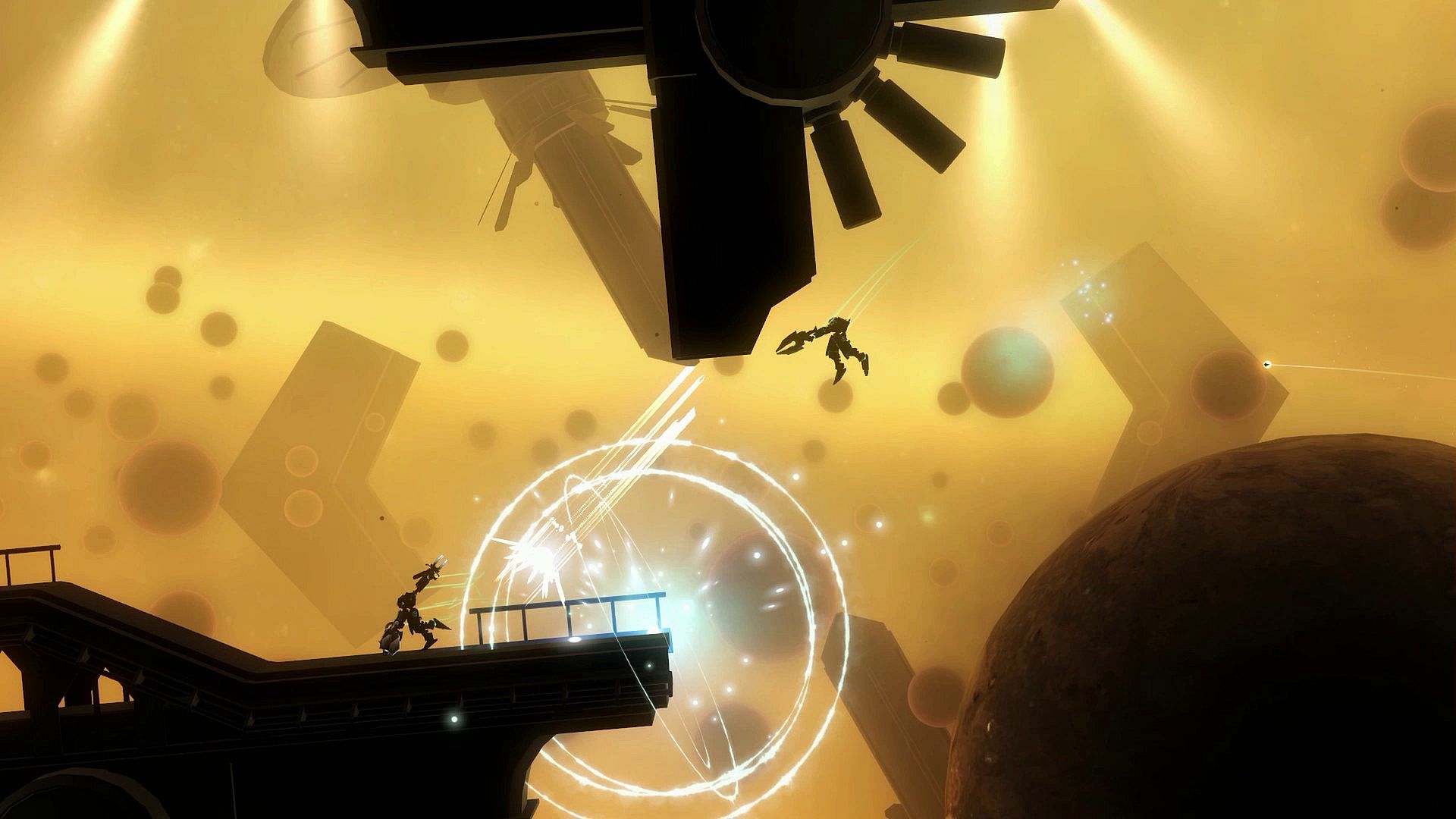
The movement system relies on gravitational momentum rather than traditional thrusters alone. Mechs gain speed and trajectory by orbiting planets and other objects, which creates fluid yet challenging navigation across levels. This physics layer affects both positioning and projectile paths, forcing players to account for orbital arcs when aiming or dodging.
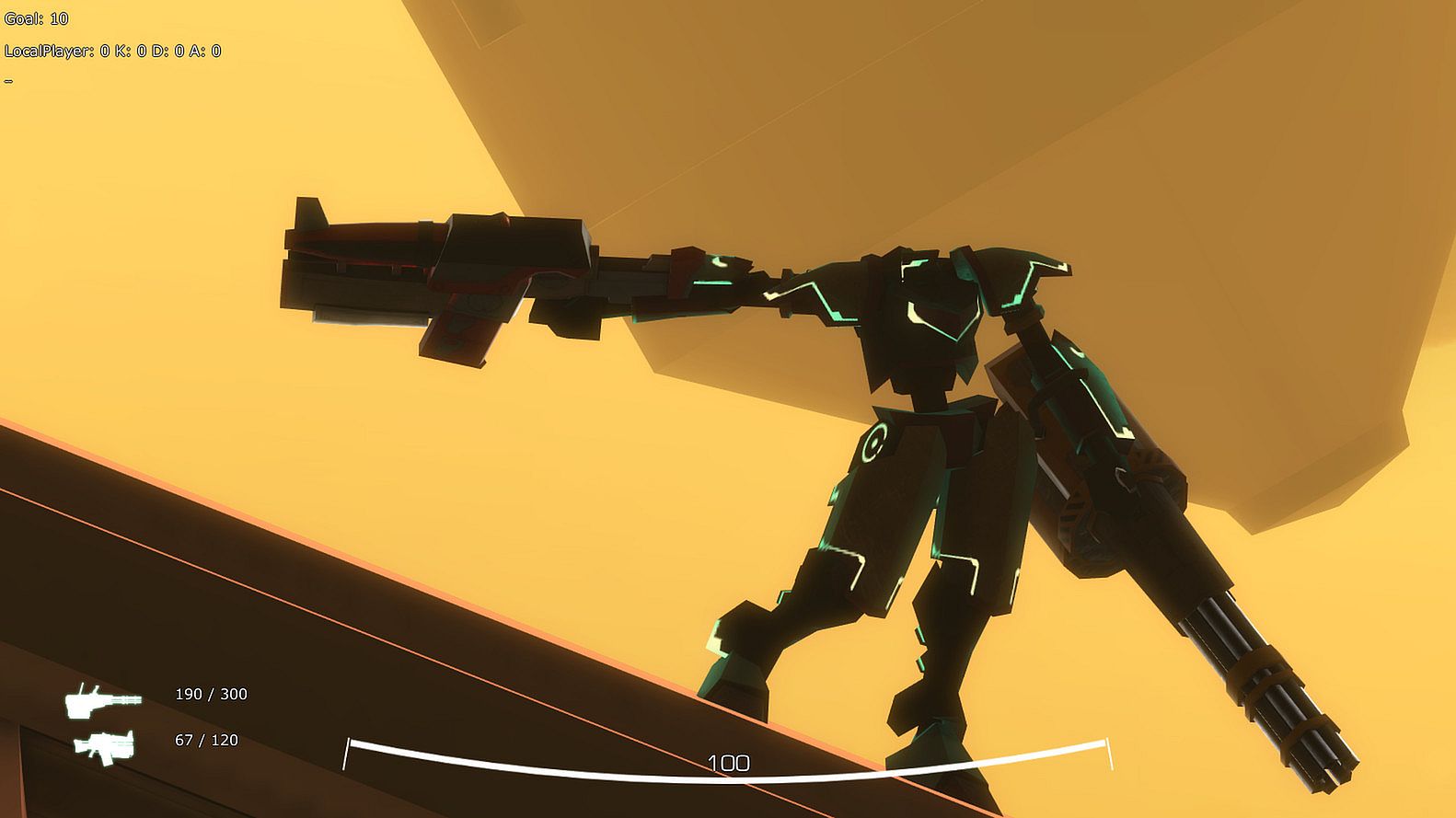
Combat centers on equipping two weapons out of twelve available options. Each weapon carries distinct properties, and several interact directly with the gravitational field. Some scatter effects across surfaces, while others deliver close-range impacts or area denial that shifts with planetary rotation. Ammunition and repairs come from energy cores dropped by defeated foes, adding a resource management layer to sustained fights.
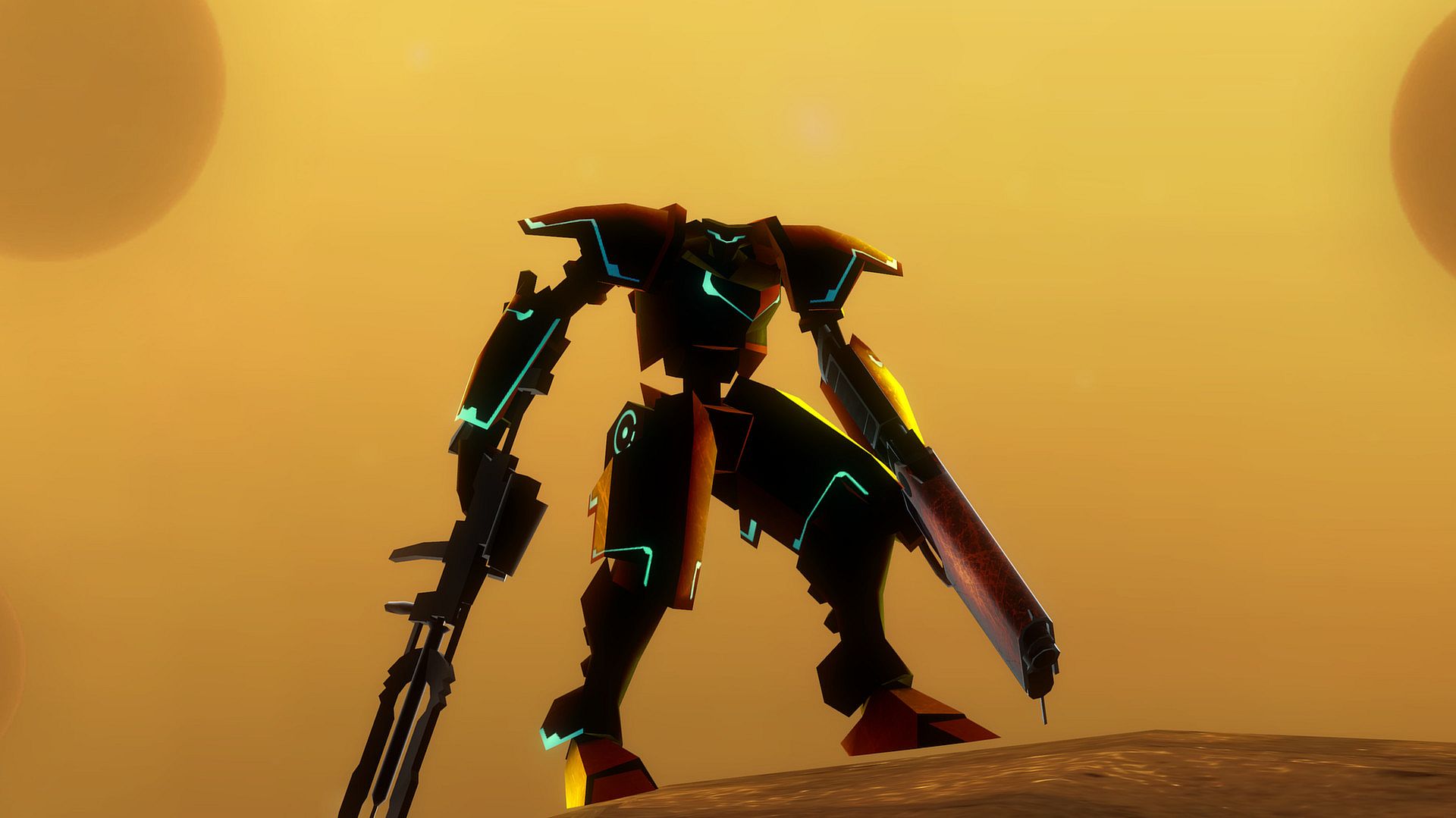
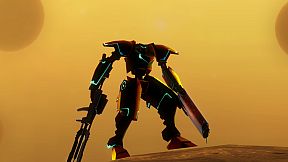
Four utility items expand tactical options. These include deployable turrets for automated defense, energy shields for protection, and boosters for quick repositioning between gravitational wells. Mechs themselves come in four visual variants that do not alter performance but allow personalization.
Game Modes
Orbital Trials serves as the single-player component. This mode presents a series of timed challenges where players face waves of enemies and must complete objectives before the clock runs out. It functions as a training ground to master gravity-assisted movement and weapon timing without multiplayer pressure.
Multiplayer builds on classic deathmatch rules. Participants compete in free-for-all or team formats, using the same gravitational mechanics to outmaneuver rivals. Matches emphasize quick reflexes and spatial awareness as players slingshot around planets to gain advantageous firing positions.
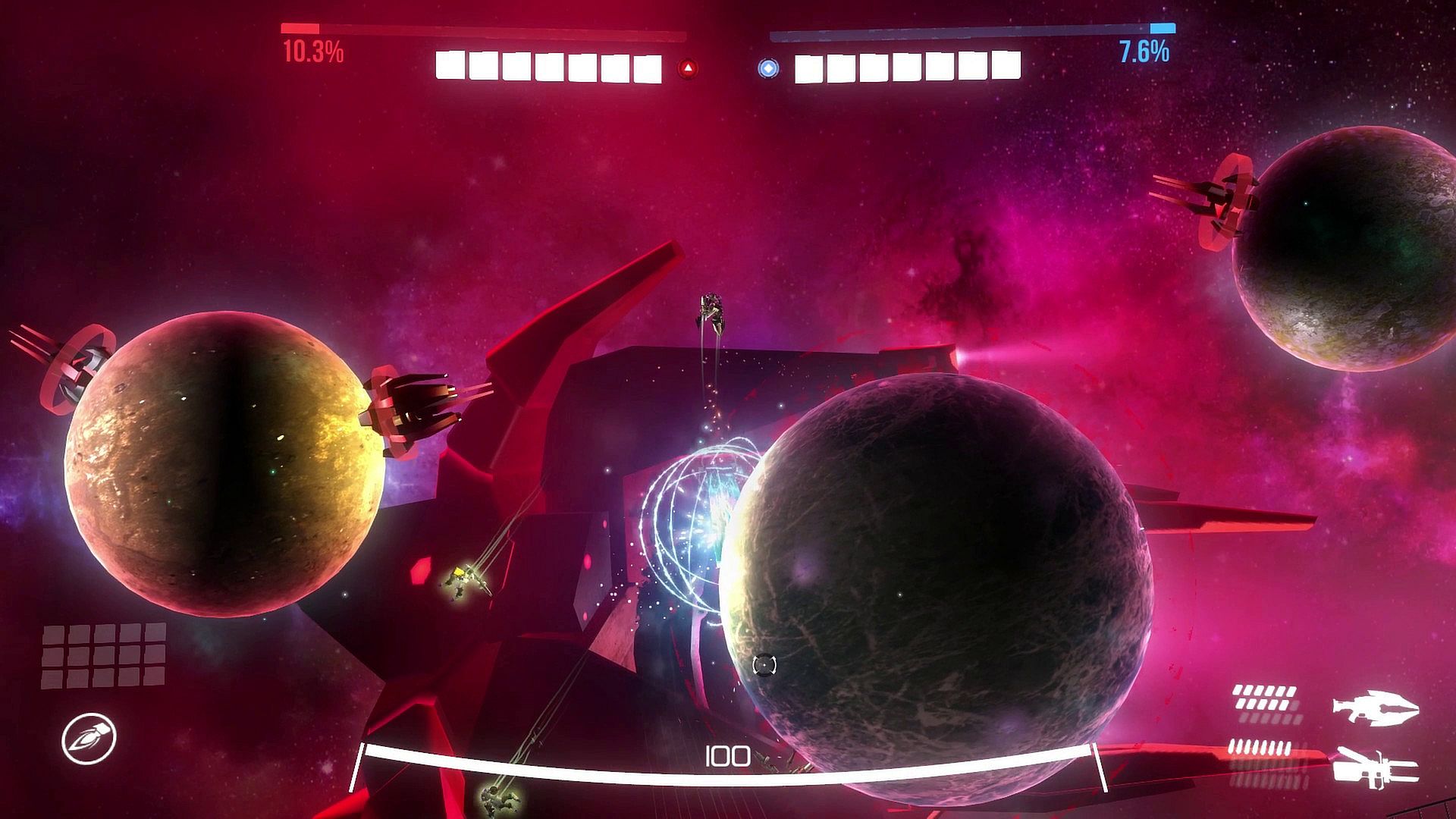
Orbital Warfare introduces an objective-driven team mode. Two sides battle to eliminate the opposing base, either through direct mech firepower or by collecting energy cores to charge a planet-destroying super weapon. The mode rewards coordinated pushes and defensive setups around core collection points.
Multiplayer and Accessibility
Local play supports up to four players on a single screen through split-screen functionality. Online options extend the experience to remote matches, maintaining the same physics-driven combat. The game runs on standard PC hardware and includes cross-platform multiplayer support for broader matchmaking.
Energy cores play a consistent role across modes by replenishing health and ammunition. In team scenarios they double as progress toward the super weapon, creating risk-reward decisions about whether to spend or save them.
Is It Worth Playing?
Orbital Gear delivers a distinctive take on sidescroller action through its gravity mechanics, which set it apart from standard shooters. The combination of twelve weapons, four utilities, and varied mech appearances provides enough variety for repeated sessions. Players who enjoy physics-based movement and classic multiplayer formats will find the systems rewarding after a short learning curve.
Reception remains positive overall, with the title holding a Very Positive rating from thousands of user reviews. Its free-to-play model removes any upfront barrier, allowing interested players to test the gravitational combat loop directly. Those seeking fast-paced indie action with simulation depth rather than large-scale campaigns will likely appreciate the focused design. The game continues to offer its core modes without additional seasonal content or major expansions.