




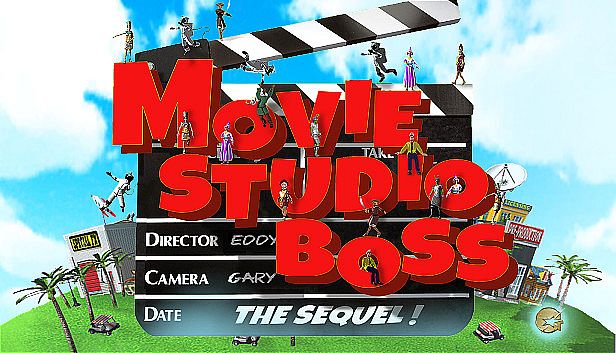










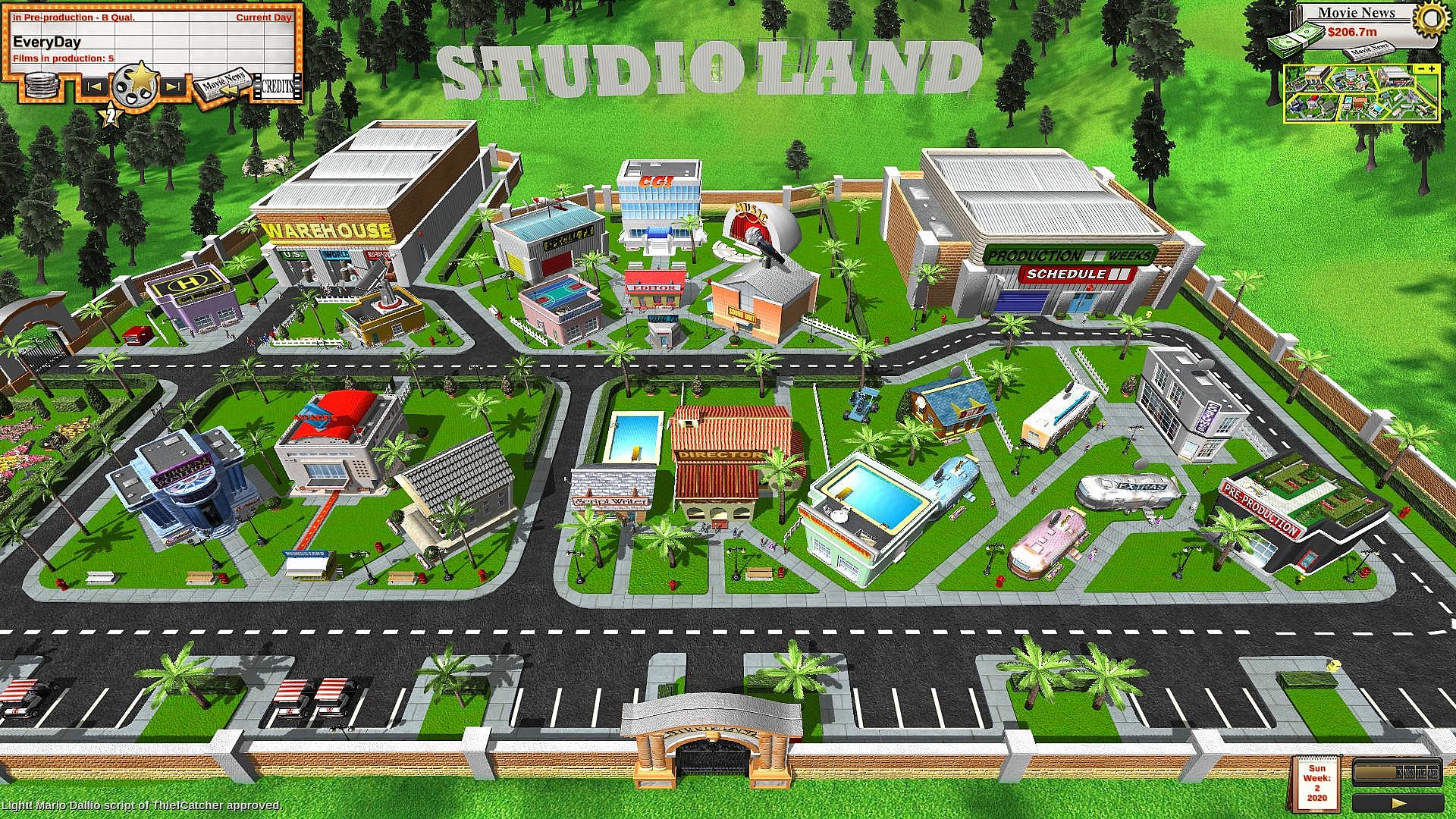
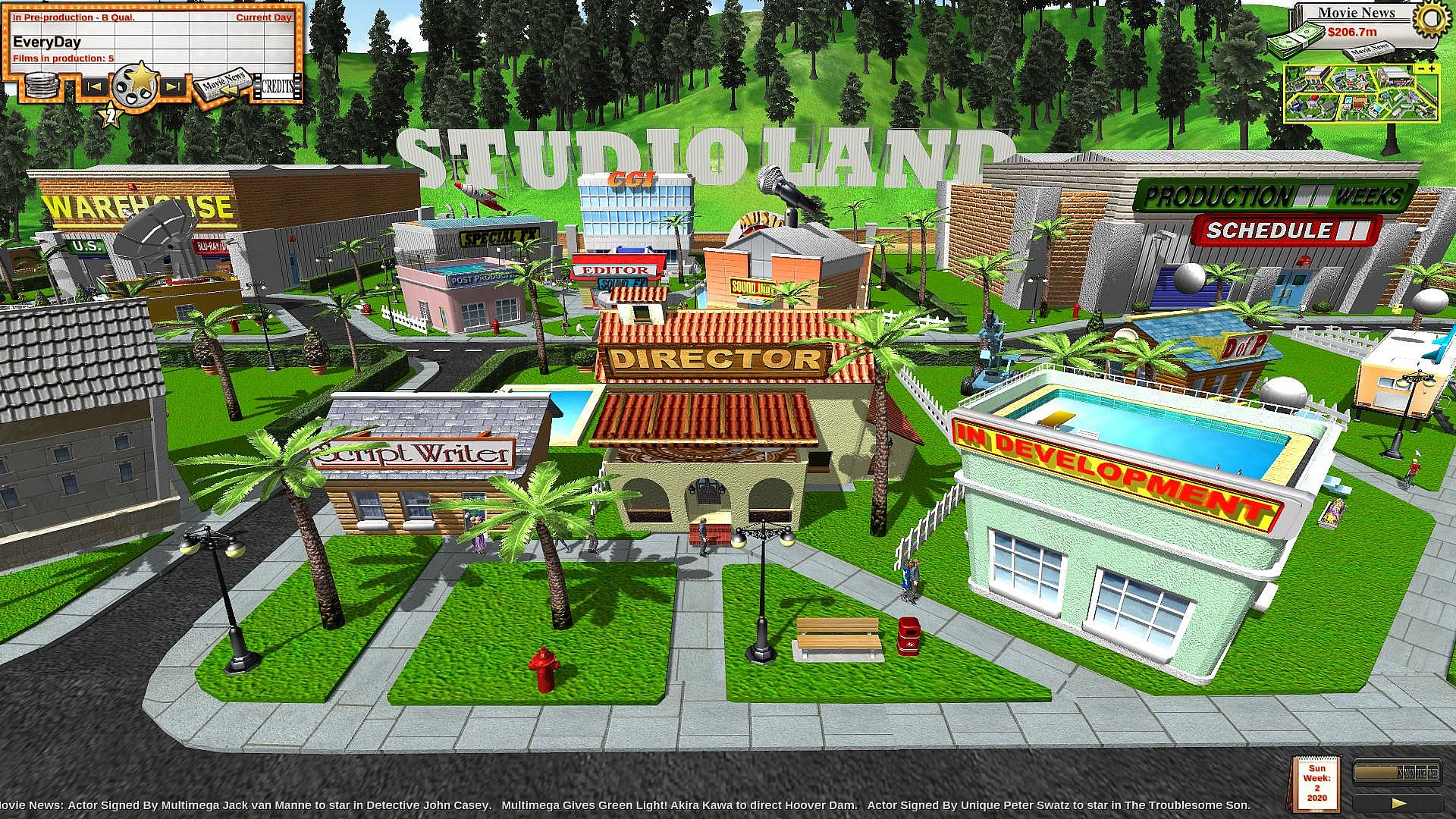
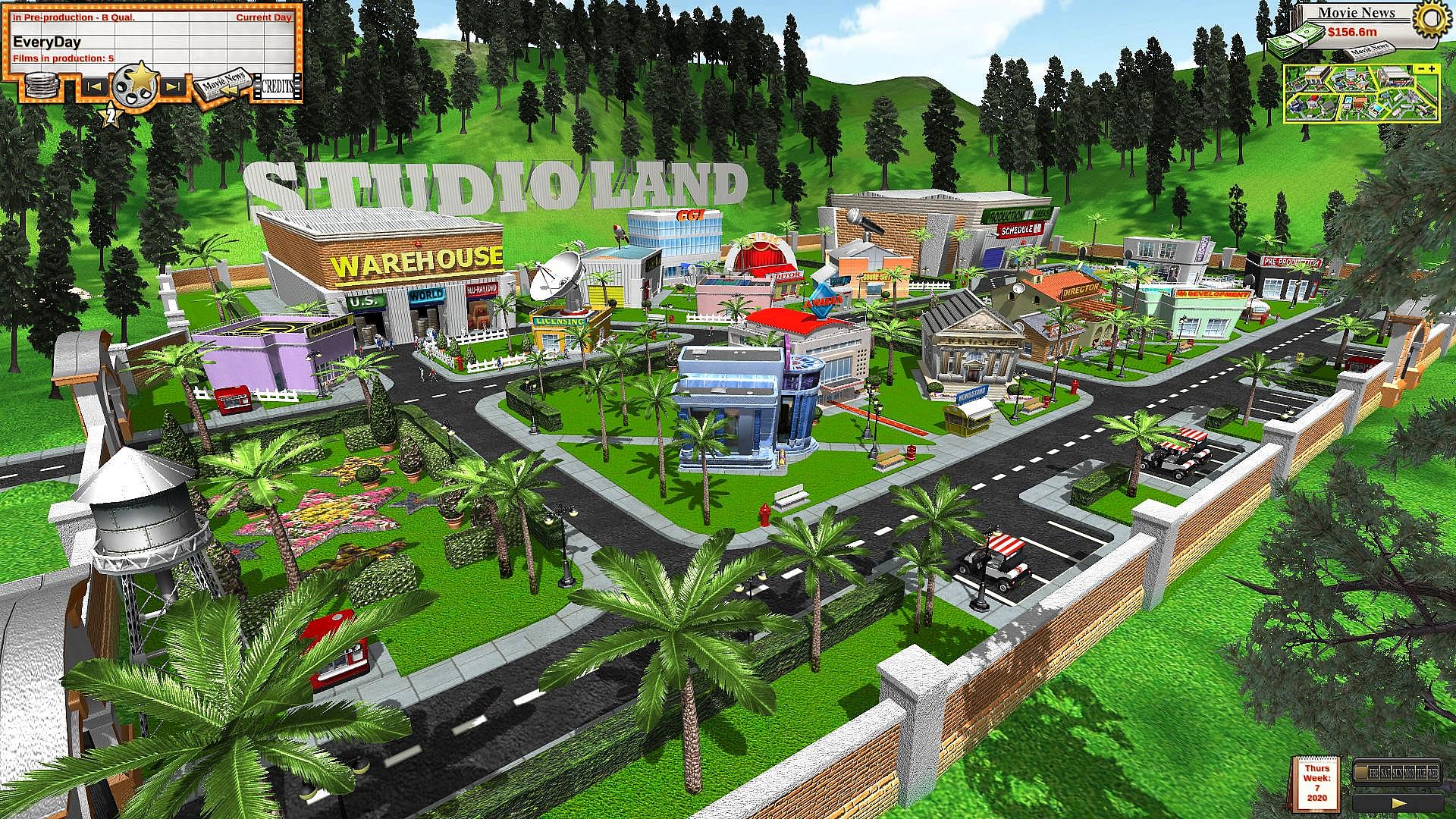







Movie Studio Boss: The Sequel is a single-player simulation game in which players take charge of a new movie studio and compete against seven computer-controlled rivals over a span of up to fifty years. The objective centers on building the most successful studio through three measurable criteria: highest turnover, greatest profit, and the largest number of awards. Each decision directly influences box-office performance, and the game presents the full cycle of film production as a series of interconnected choices rather than abstract numbers.
Gameplay
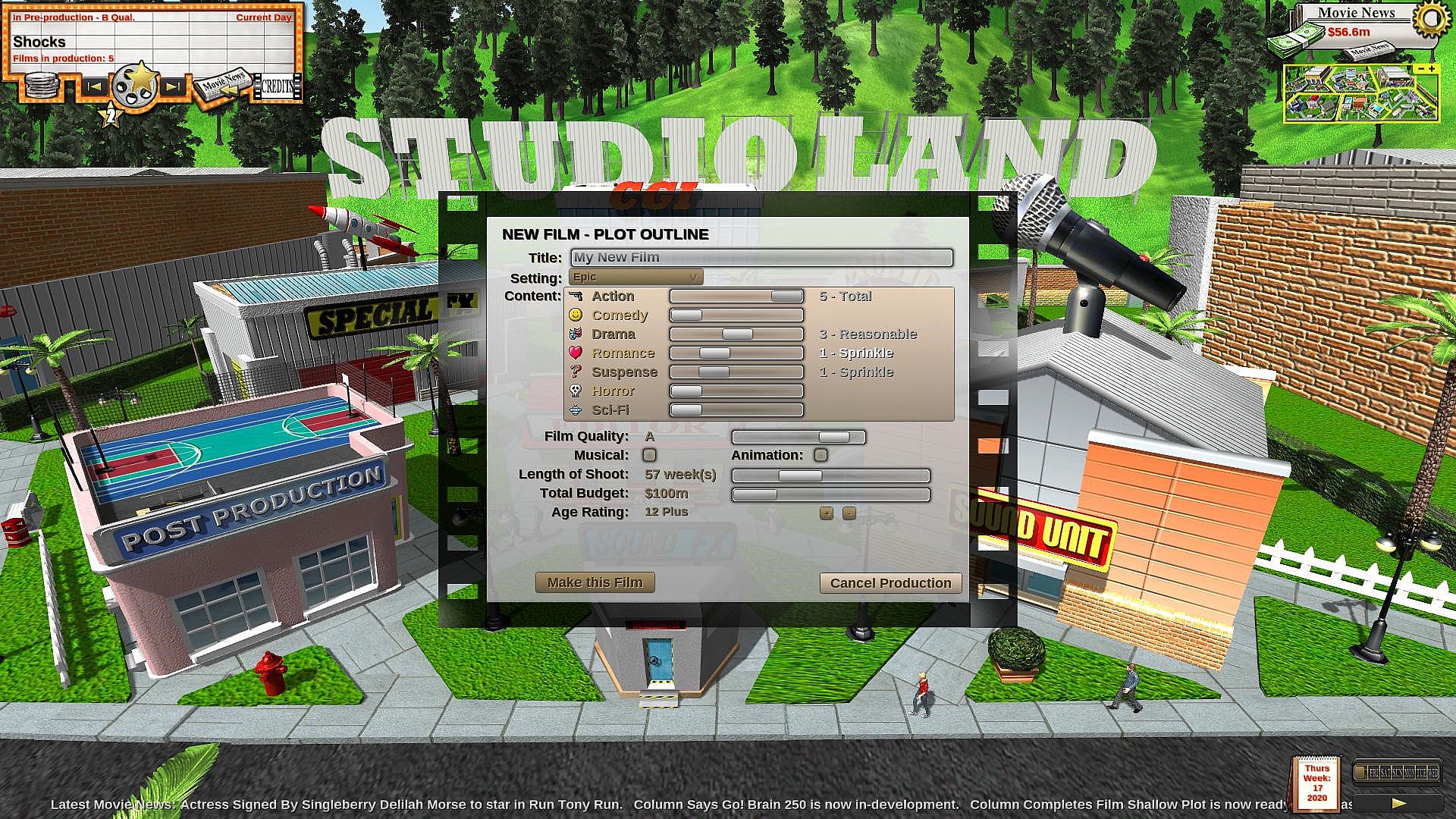
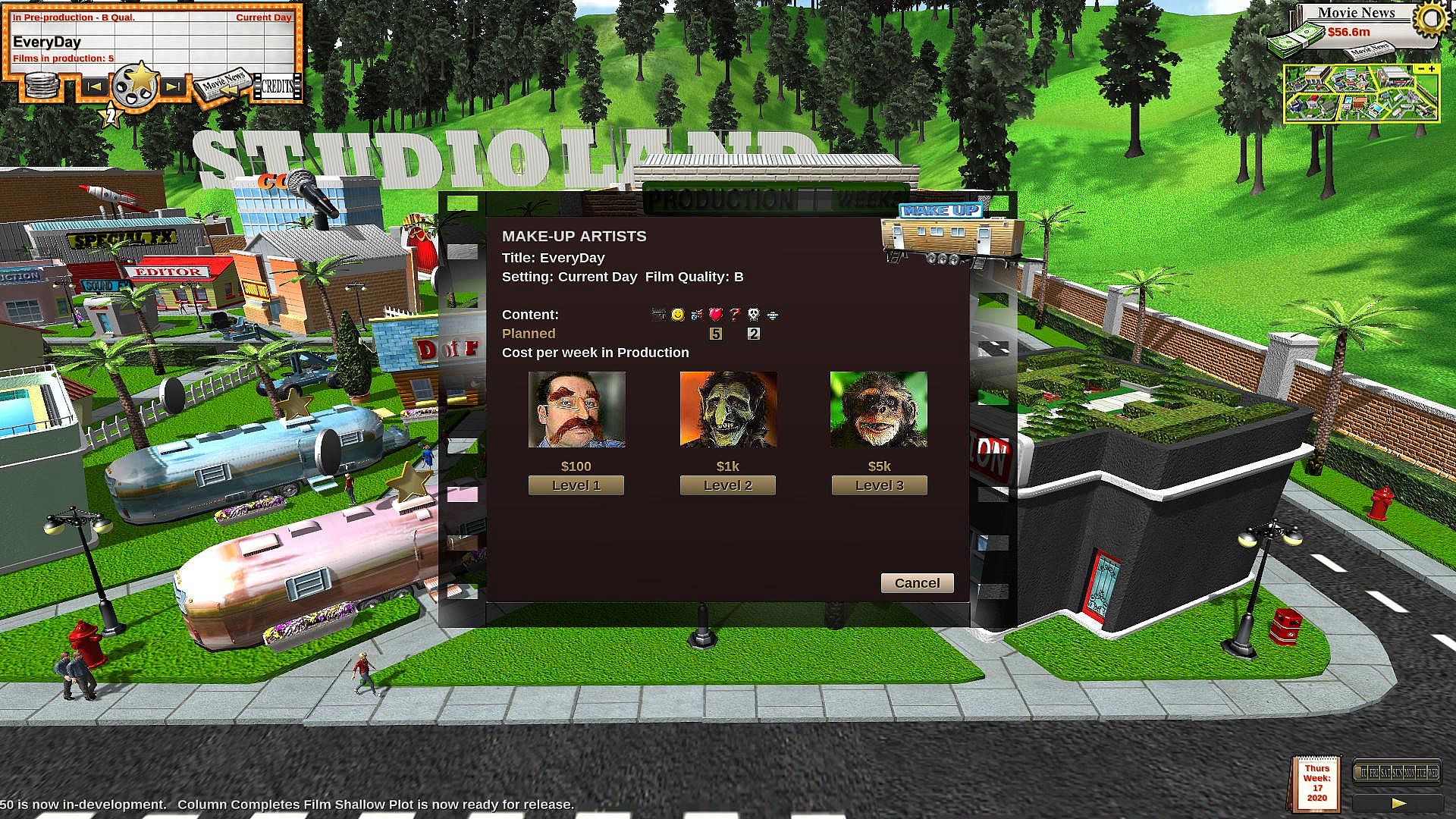
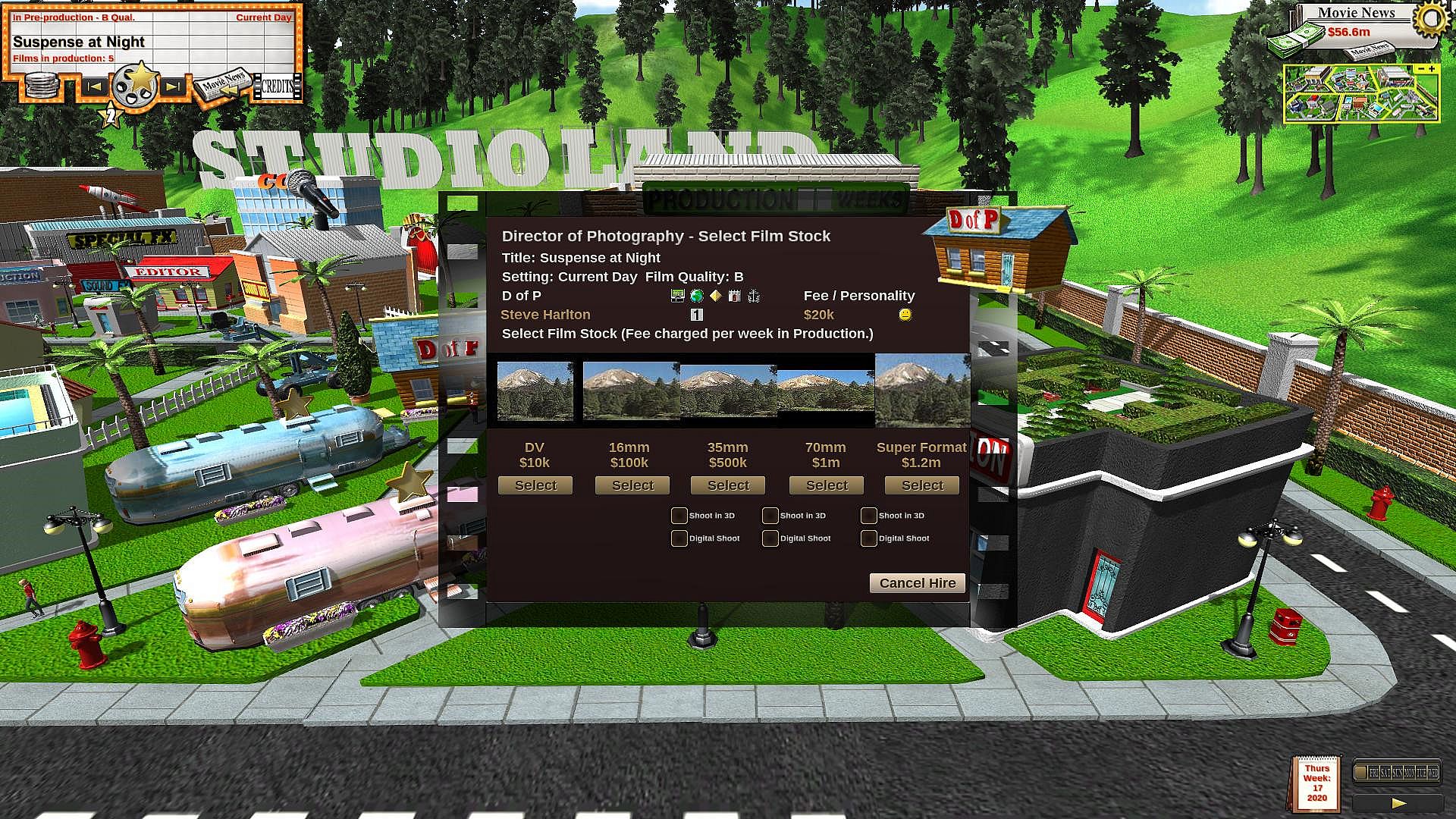
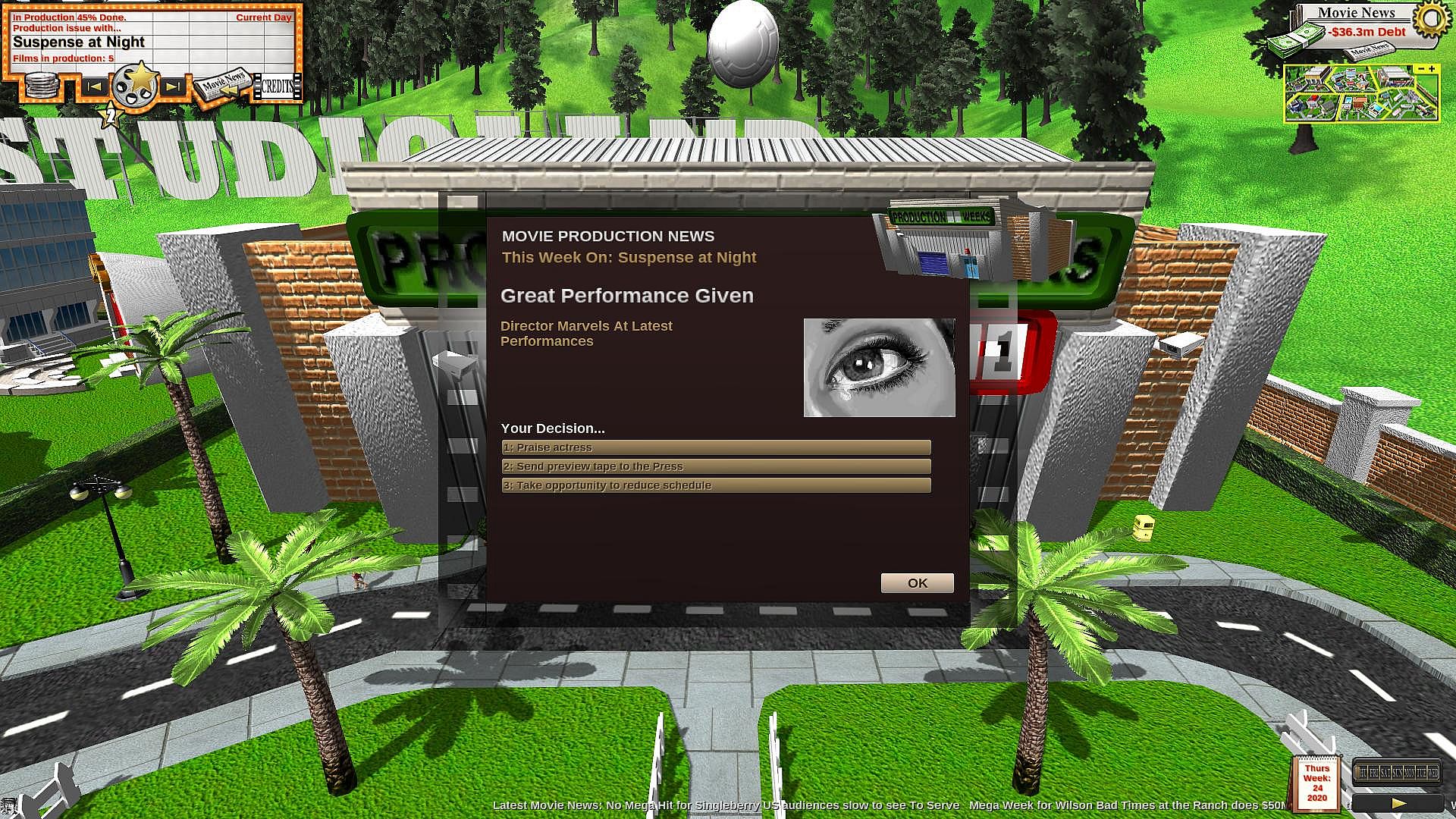
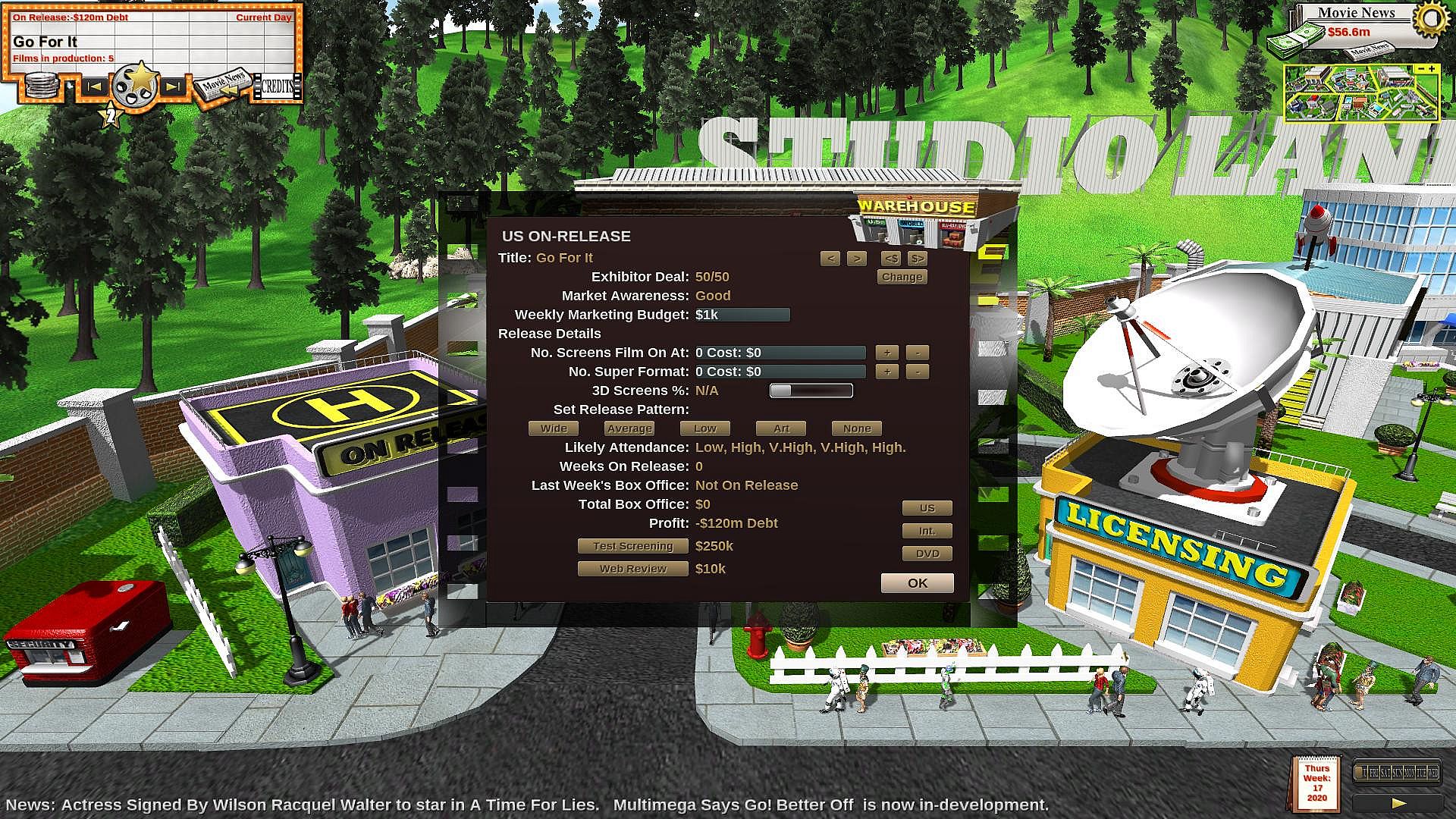
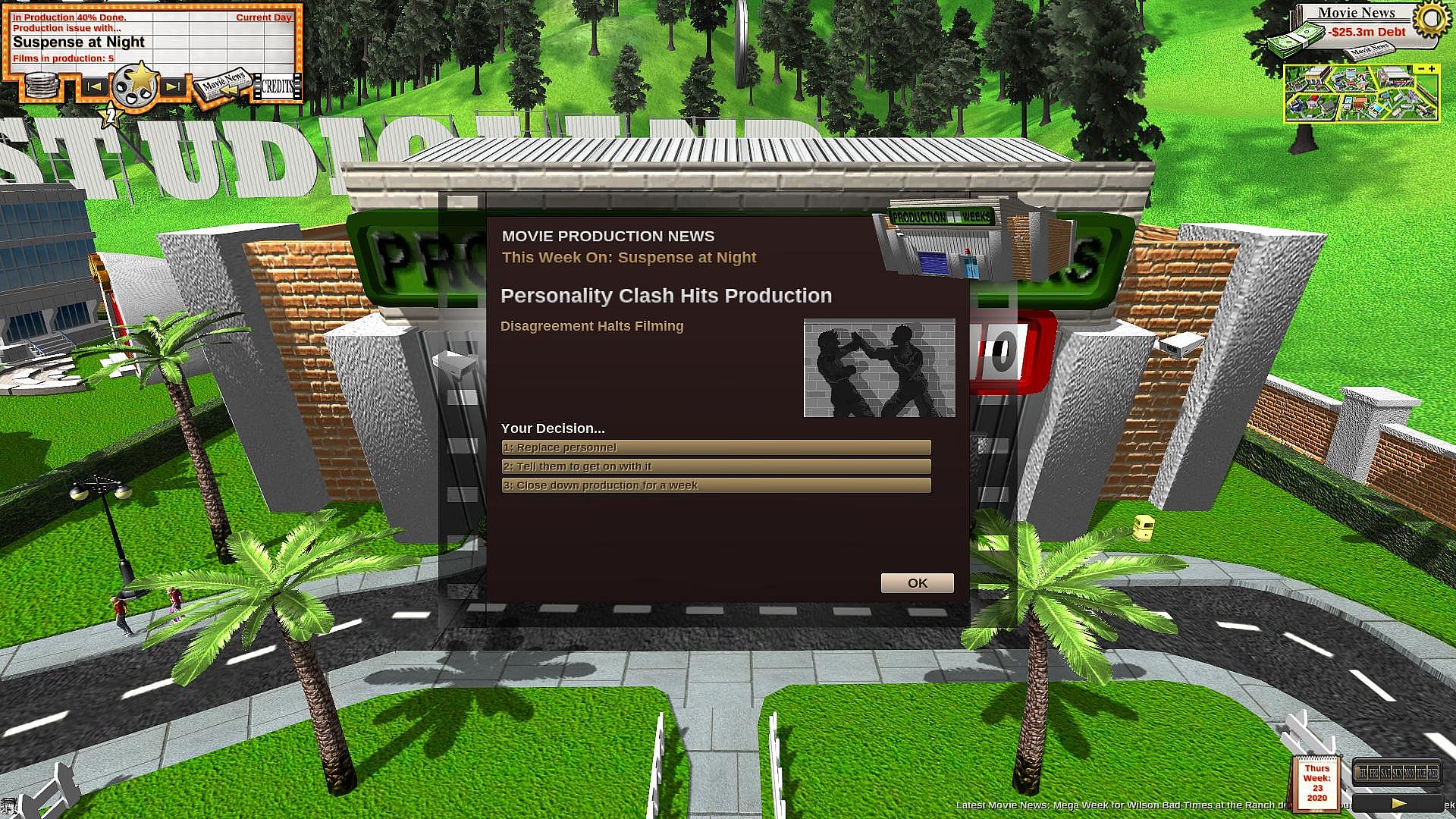
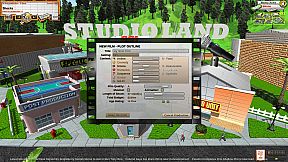
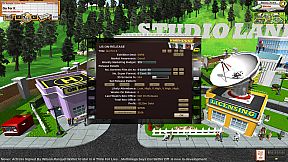
The core loop unfolds in weekly turns, with each turn granting roughly ten minutes for all decisions before the week advances. Players can conclude the turn early if they prefer. Budget allocation comes first, followed by selecting the film type, hiring a scriptwriter, securing a director, refining the screenplay, negotiating contracts with actors, resolving on-set issues, and completing post-production. Marketing expenses, web campaigns, test screenings, screen counts, international release timing, television sales, and DVD windows all factor into the final outcome. Every stage functions as a self-contained mini-game, so success depends on careful sequencing rather than random events.
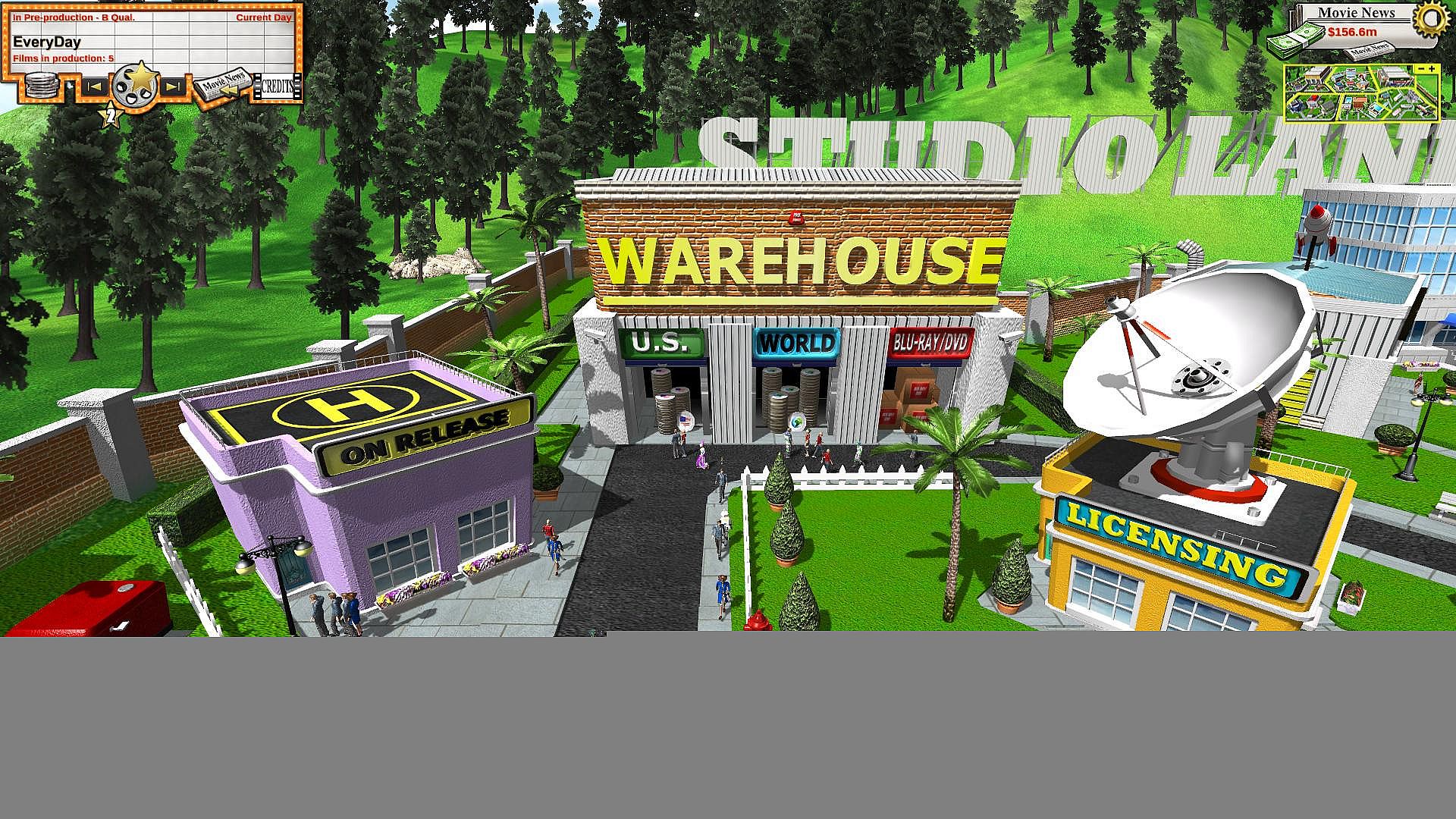
Financial tracking stays straightforward, rounding figures to whole millions to avoid spreadsheet clutter. Animated films and musicals appear as distinct options, while age ratings and detailed personnel profiles add layers to hiring choices. Production assistants move across the studio lot in costumes matching the current project, providing visual feedback on progress. Credits lists expand with more names, and additional reports track performance across different markets. Notification icons highlight urgent matters without overwhelming the interface. The time pressure encourages focused planning each week, yet the turn-based structure allows deliberate evaluation of trade-offs between short-term costs and long-term returns.
Game Modes
The game operates exclusively in single-player mode against seven artificial opponents. Victory conditions remain flexible: a player can aim for maximum revenue, strongest margins, or the greatest critical acclaim through awards. No separate campaigns or alternate scenarios exist beyond the central studio-management experience. The competition persists across the full fifty-year horizon, with each rival studio pursuing its own strategy in parallel. This setup rewards consistent decision-making across multiple film projects rather than isolated successes.
Key Mechanics and Features
Negotiation with talent, problem-solving during production, and distribution strategy form the backbone of progression. Test screenings reveal audience reactions that can prompt last-minute adjustments. International markets open at different points, and timing the shift from theatrical runs to television or physical media affects overall earnings. The updated presentation supports higher screen resolutions, includes a new musical score, and displays more characters on screen compared with earlier versions. These elements keep the focus on the business side of filmmaking while providing clearer visual cues for ongoing projects.
Is It Worth Playing?
Player reception on the primary distribution platform stands at mostly negative, with only twenty-two percent of reviews positive across fifty-four total entries. The title appeals most to enthusiasts of older management simulations who value direct control over every production step and do not mind a deliberately paced, text-and-menu-heavy interface. Its niche focus on the complete movie-making pipeline distinguishes it from broader business simulators, yet the dated presentation and limited variety in outcomes limit broader appeal. Those seeking a straightforward, single-player experience centered on repeated film projects against consistent AI opposition may find satisfaction in mastering the decision chains. Newer players accustomed to modern visuals or deeper narrative elements will likely find the mechanics too rigid and the feedback too sparse to sustain long sessions. The game remains available for purchase on PC, though its small concurrent player base indicates limited ongoing community activity.















