







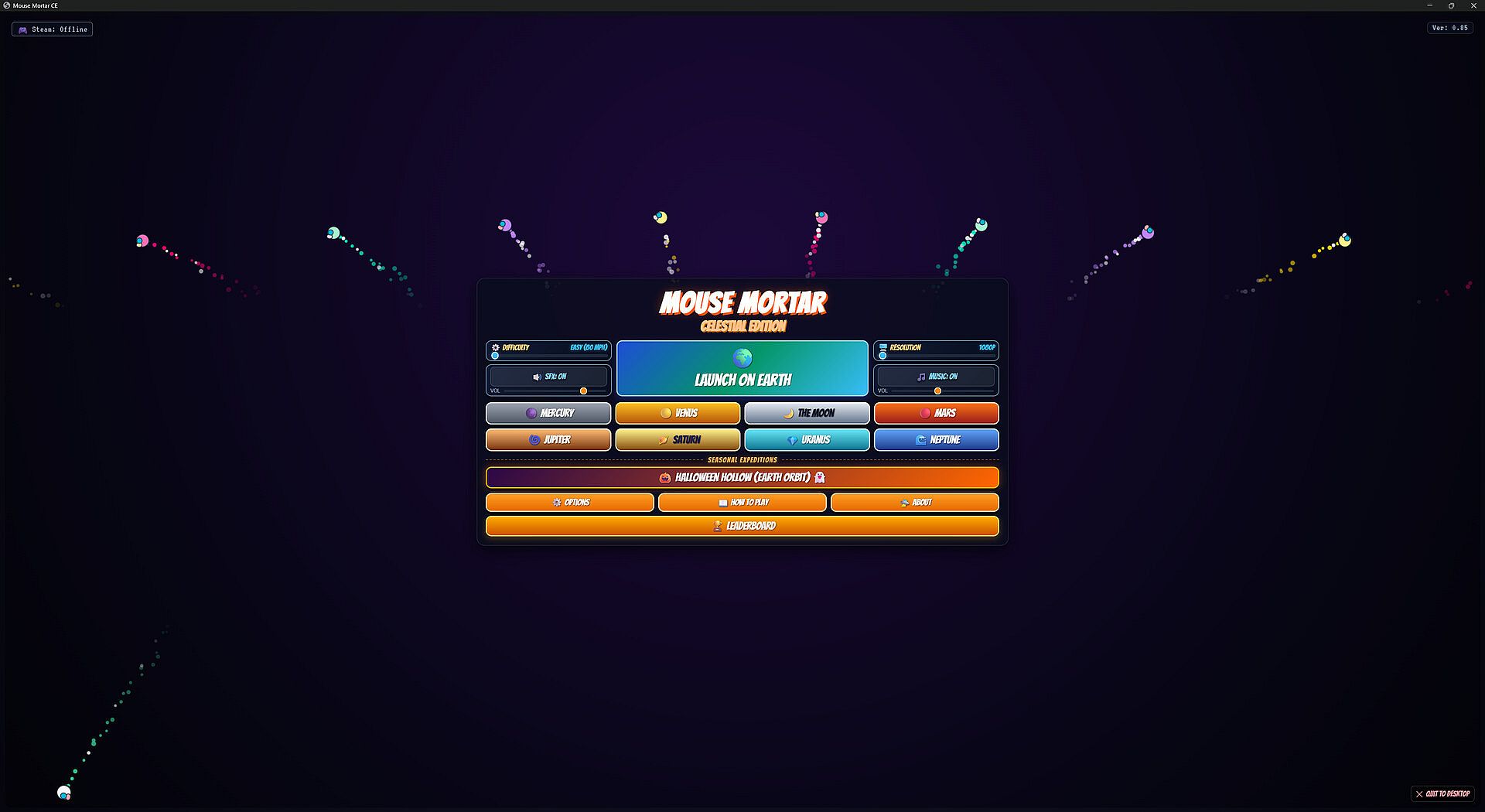
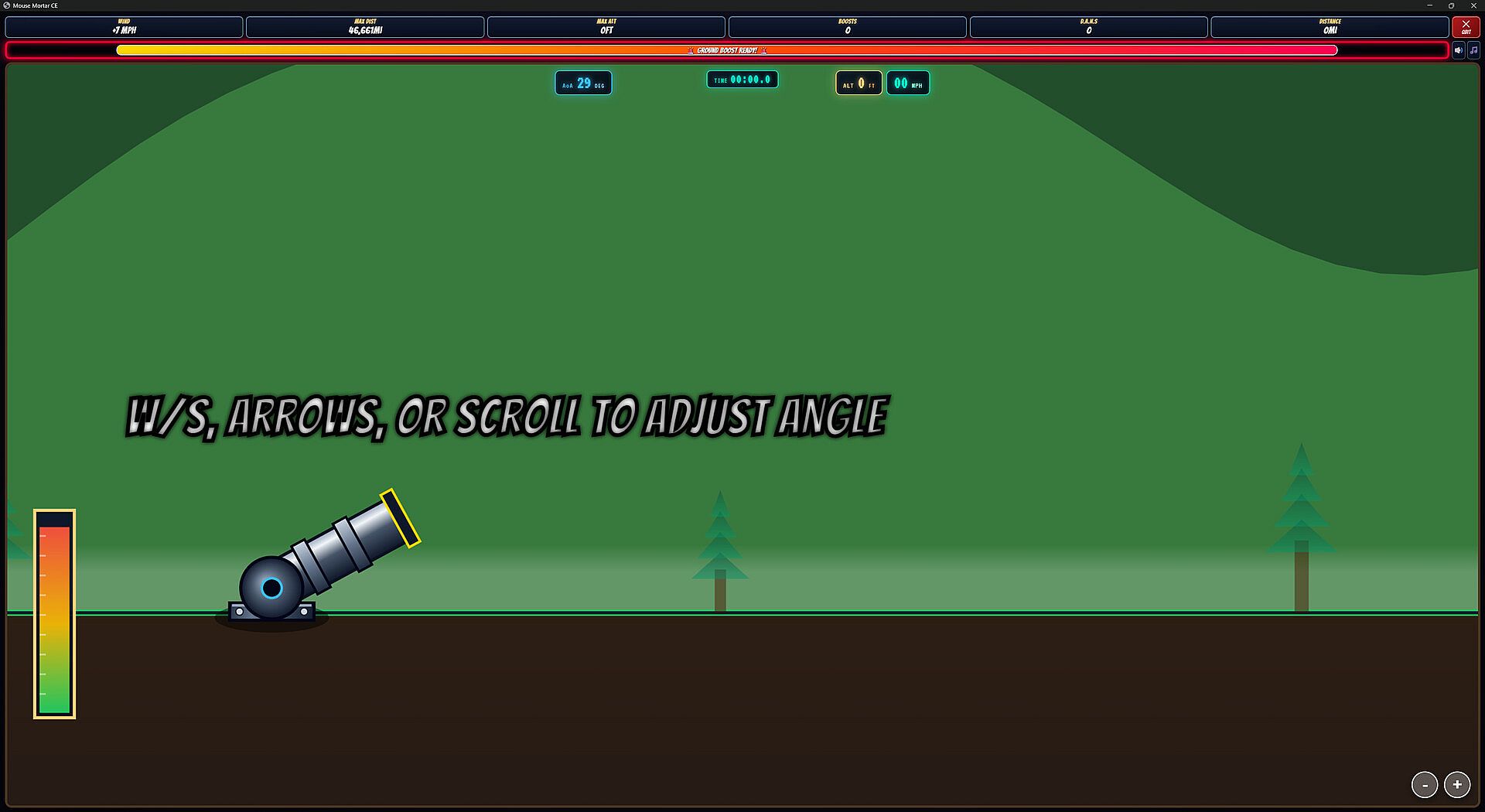
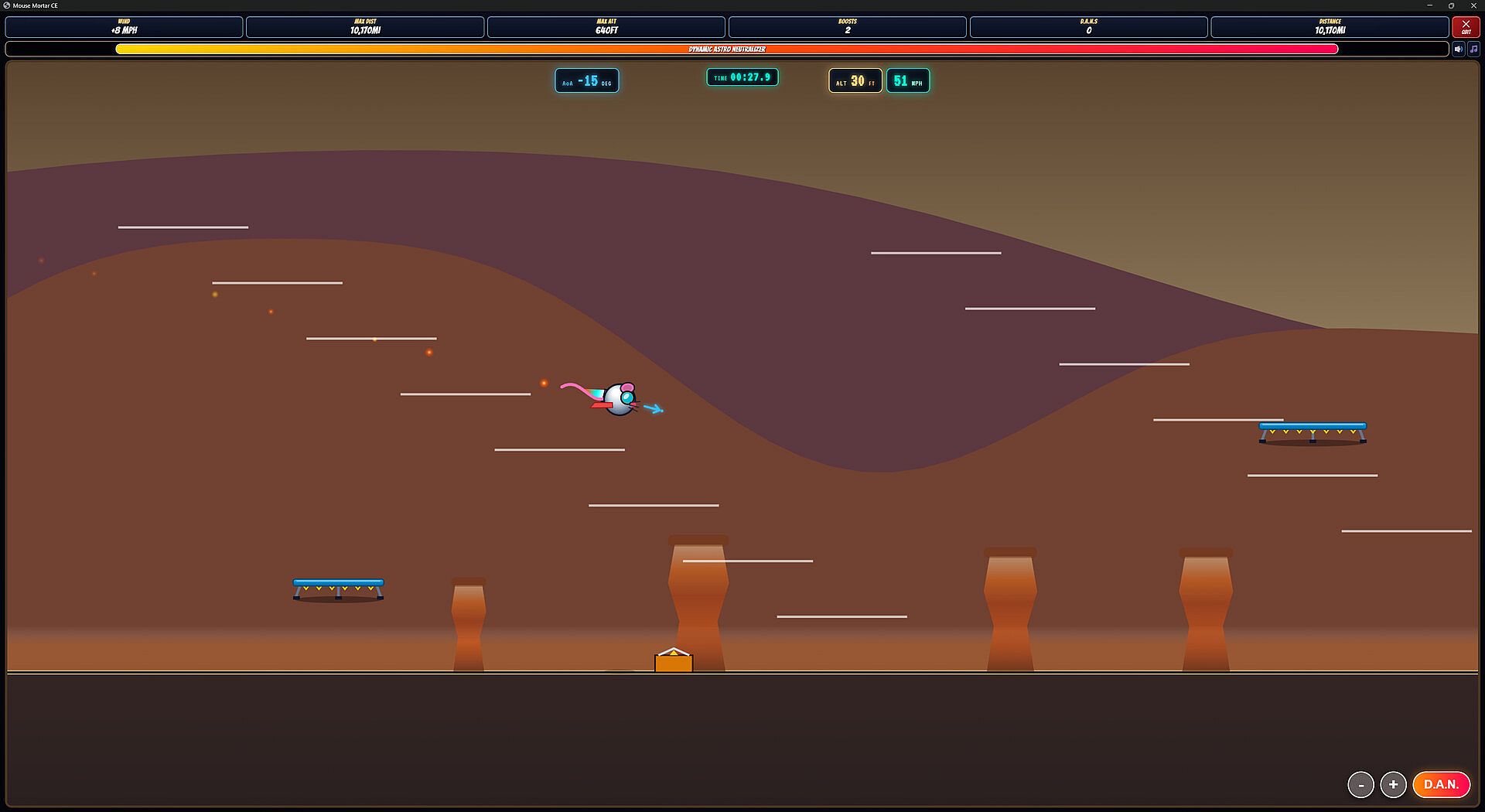
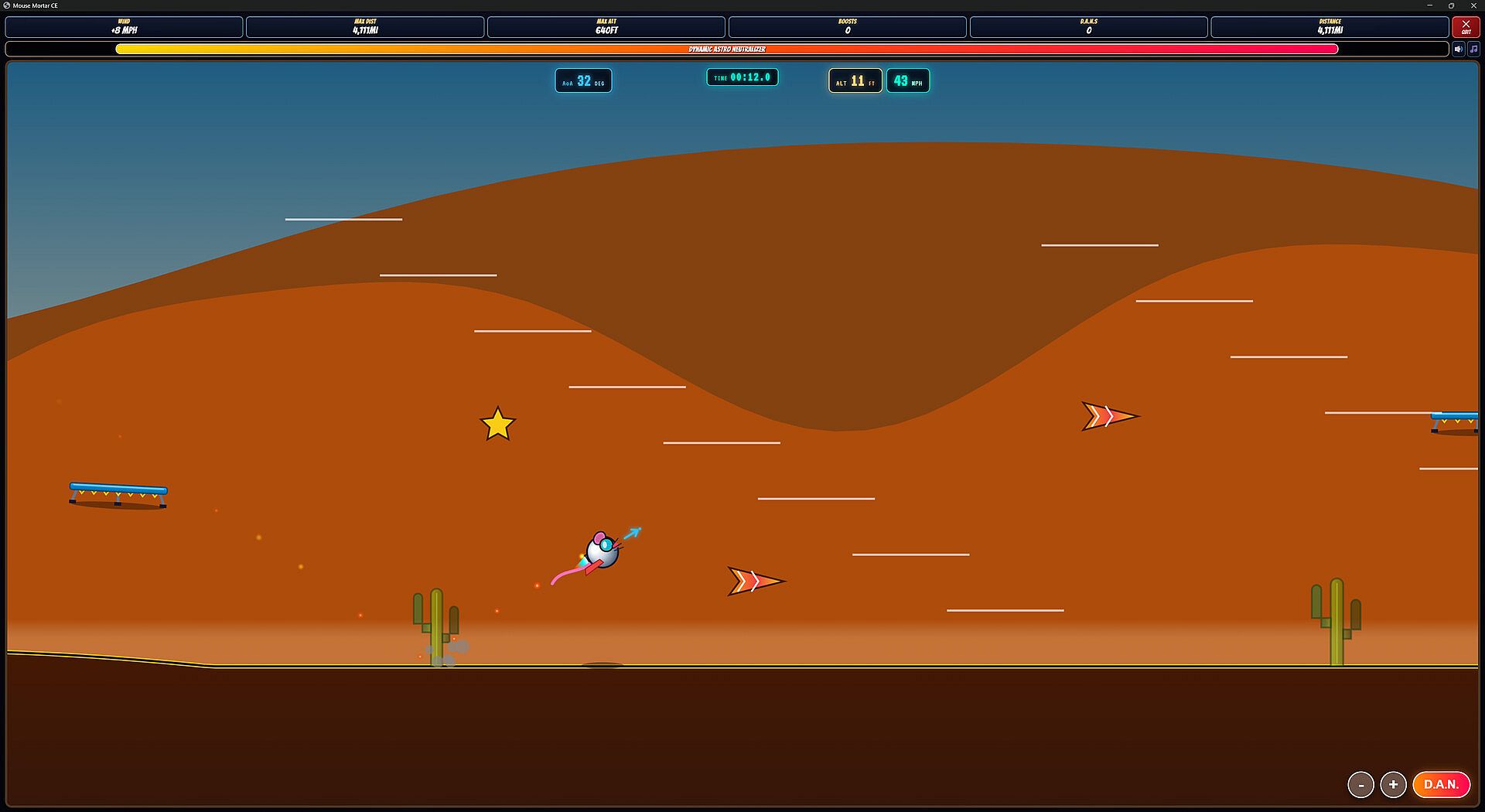
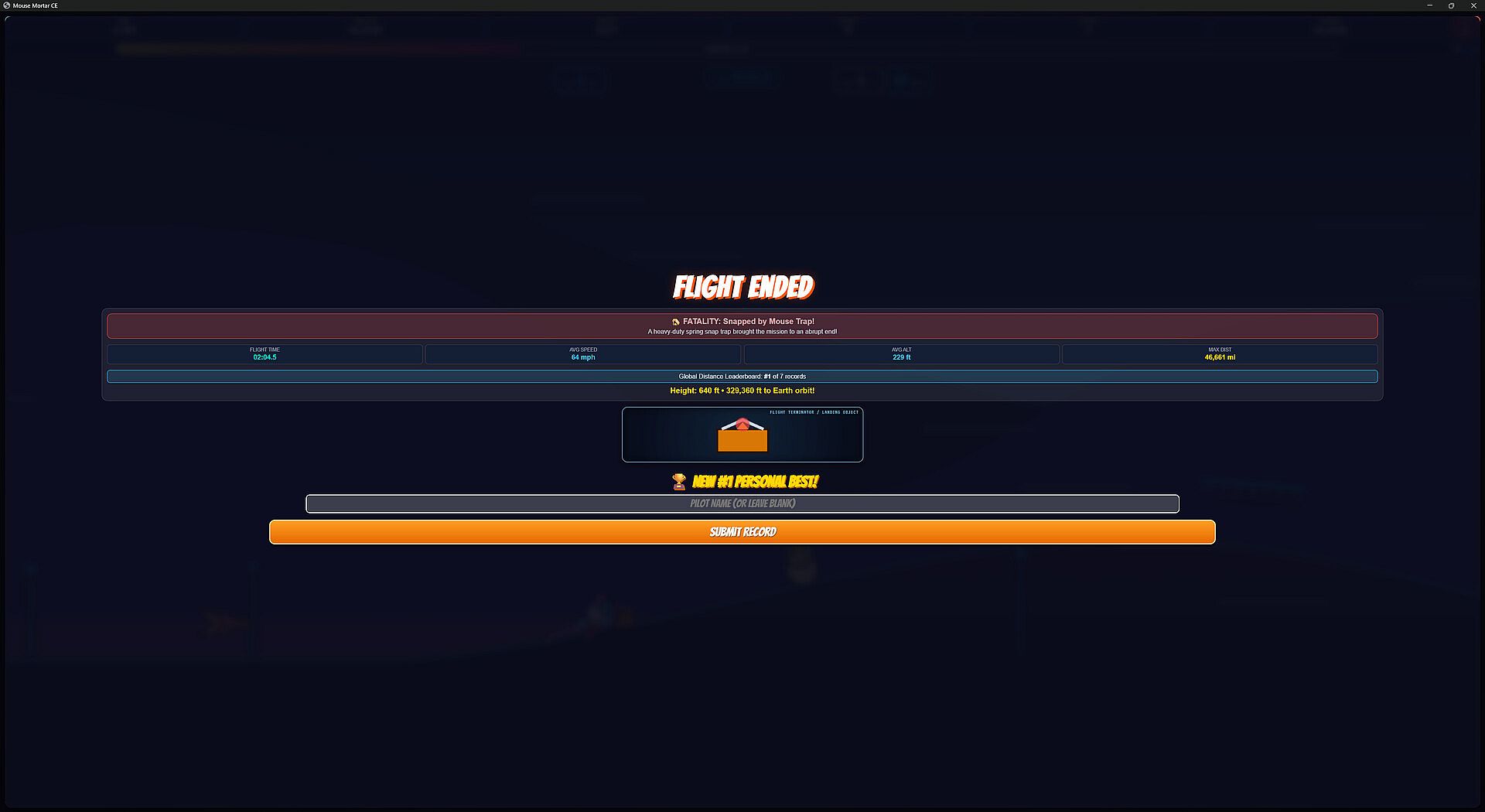
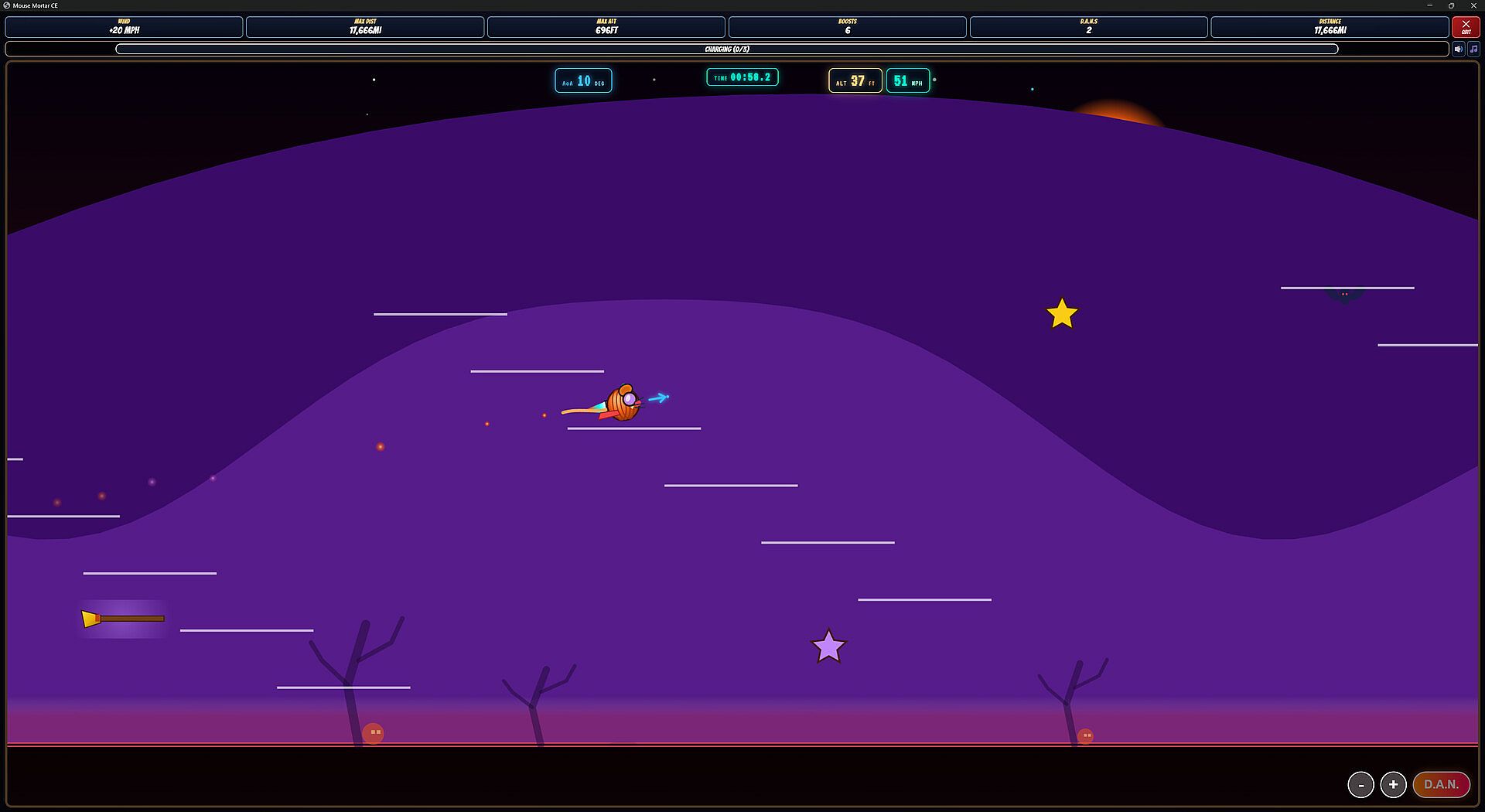
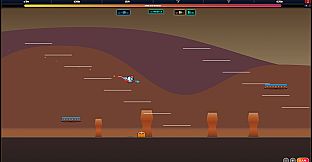
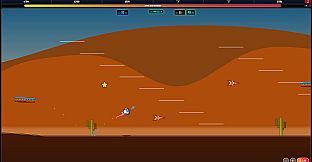

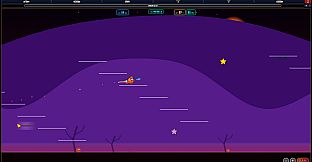
Mouse Mortar CE is a physics-based arcade action game for PC that puts players in control of a cannon launching an aviator mouse across planetary surfaces. Developed as a single-player experience with online leaderboards, it blends precise aiming, momentum management, and environmental hazards in a casual yet skill-intensive format. The core loop revolves around calibrating launch angles and power to send the mouse flying through varied celestial environments while collecting boosts and avoiding instant-fail obstacles.
Gameplay
Players begin each attempt by adjusting the mortar's trajectory with keyboard, mouse wheel, or touch inputs before timing an oscillating power meter to achieve maximum velocity. Once airborne, the mouse follows realistic gravitational pulls and atmospheric effects unique to each of the nine planetary bodies, which include Earth, the Moon, Mercury, Venus, Mars, Jupiter, Saturn, Uranus, and Neptune. These differences influence flight paths, requiring constant mid-air corrections using the W and S keys or arrow inputs to maximize distance.
The D.A.N. Rocket Thruster provides on-demand forward surges in flight or emergency ground boosts during surface skids to regain altitude. Additional momentum comes from kinetic boost chains triggered by trampolines, speed chevrons, boost stars, UFO tractor beams, and the stratospheric POW. Real-time telemetry displays altitude in feet, speed in MPH, flight timers, and reverse-flight warnings, with an automated panoramic zoom that tracks the action. Hazards such as cheese traps, acid pools, ammonia ice, solar flares, basalt pillars, and waving lucky cats end runs immediately upon contact. The adaptive retro MIDI soundtrack shifts tempo in response to flight speed, reinforcing the high-velocity feel across evolving biomes that transition from surface plains to volcanic zones and stratospheric space.
Game Modes
Mouse Mortar CE operates as a single-player title centered on individual flight attempts across the nine planetary bodies. Each world functions as a distinct challenge with its own gravity, wind resistance, and terrain layout, encouraging repeated runs to refine technique and extend distance. Cloud leaderboards track per-planet records for distance, average speed, maximum altitude, air time, and boost efficiency, turning personal bests into competitive benchmarks against other pilots. No separate multiplayer or co-op options exist, keeping the focus on solitary mastery of the launch mechanics and boost collection systems.
Progression and Features
Biome progression unfolds dynamically within each flight, moving through emerald plains, desert canyons, volcanic rifts, and high-altitude transitions that introduce new hazards and boost opportunities. The system rewards efficient boost management to sustain momentum over long distances, with in-flight pickups recharging the D.A.N. thruster for continued surges. Telemetry data captured during runs feeds directly into the leaderboards, providing detailed performance breakdowns that highlight areas for improvement such as boost timing or trajectory adjustments. The game's casual accessibility stems from straightforward controls, while the indie action elements demand precision and timing to navigate lethal traps successfully.
Is It Worth Playing?
Mouse Mortar CE suits players who enjoy physics-driven arcade challenges that reward practice and optimization over narrative or combat complexity. Its single-player structure with competitive leaderboards appeals to those seeking personal improvement and global ranking pursuits in short, repeatable sessions. The combination of authentic celestial mechanics, boost chaining, and hazard avoidance creates a focused loop that scales in difficulty with each planetary environment. Since the game remains in a coming-soon state with no released player reviews or update history available, potential buyers should monitor its launch for confirmation of performance and content depth. Those drawn to precise aiming, momentum-based movement, and retro-styled presentation on PC will find the verified systems align closely with that preference.













