




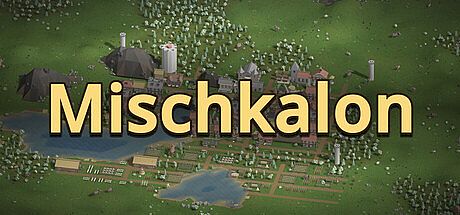


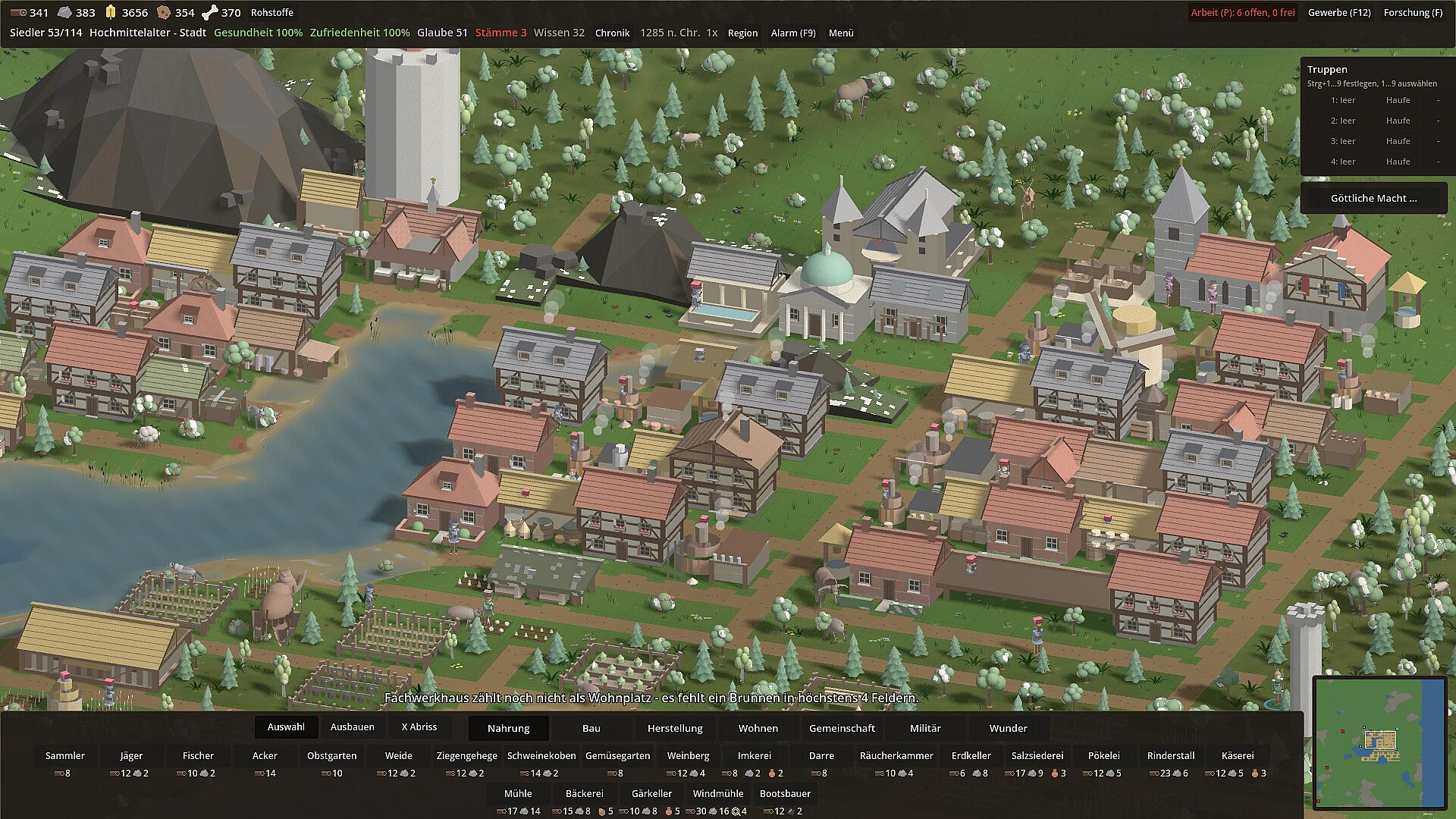
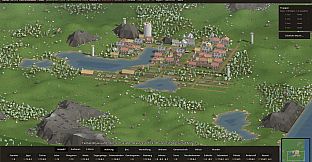
Mischkalon is a strategy indie simulation game set on PC in which players take the role of a god guiding a tribe of settlers through thousands of years of development. The core loop centers on managing a living community where individuals perform tasks like chopping trees, collecting resources, constructing buildings, raising families, and aging over time. Faith generated by satisfied settlers powers divine interventions that shape the settlement and defend it from threats.
Gameplay
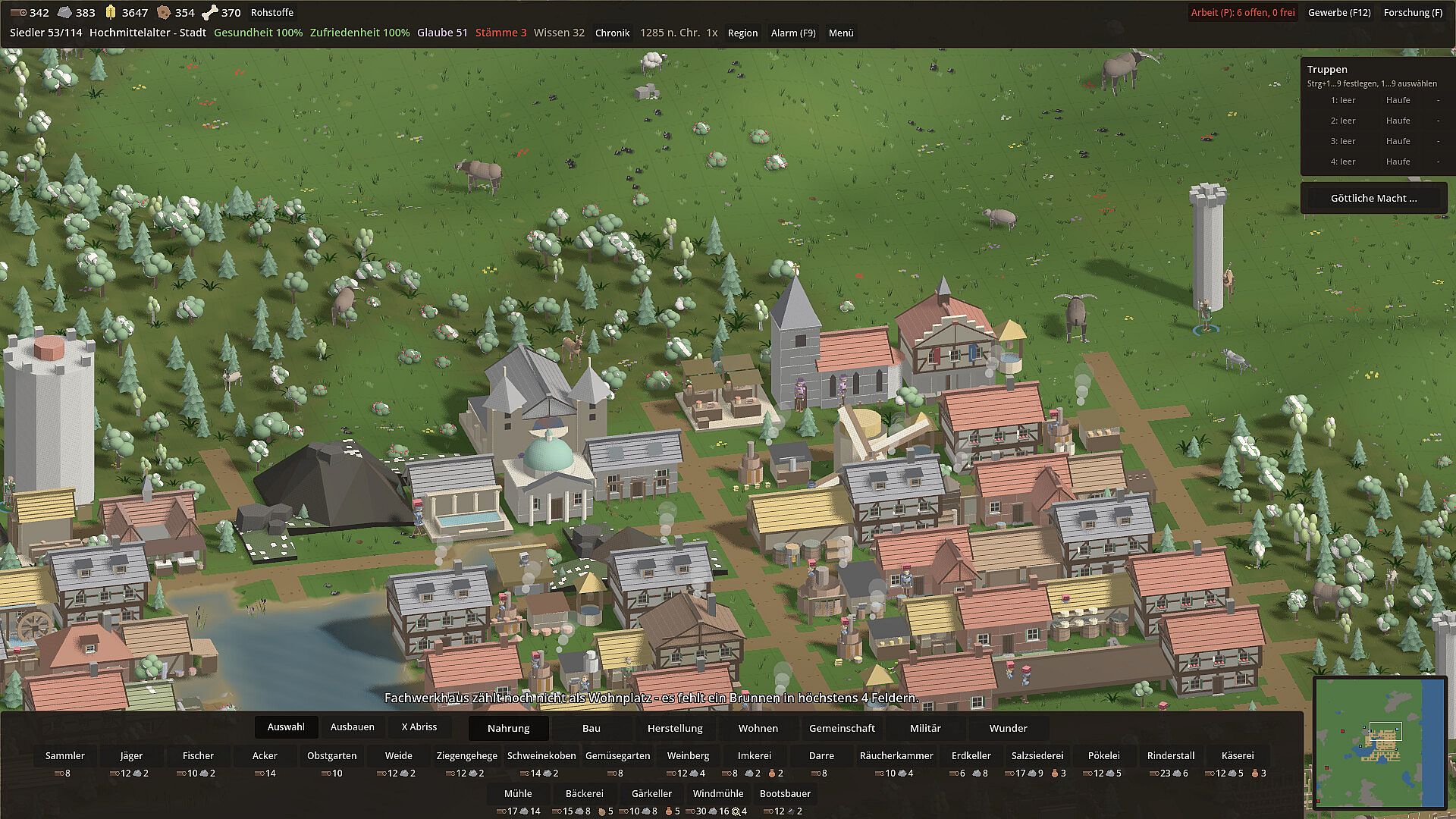
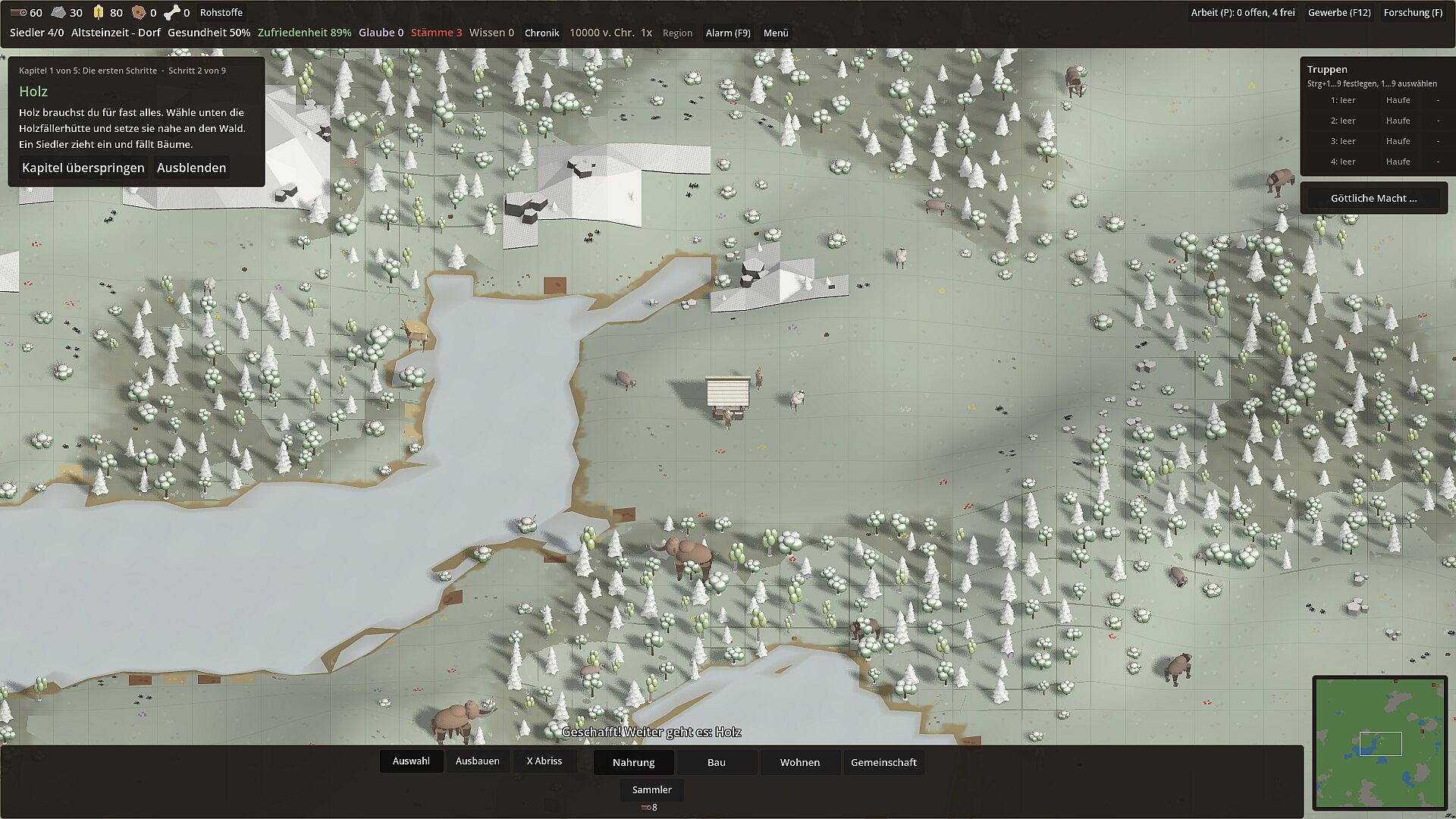
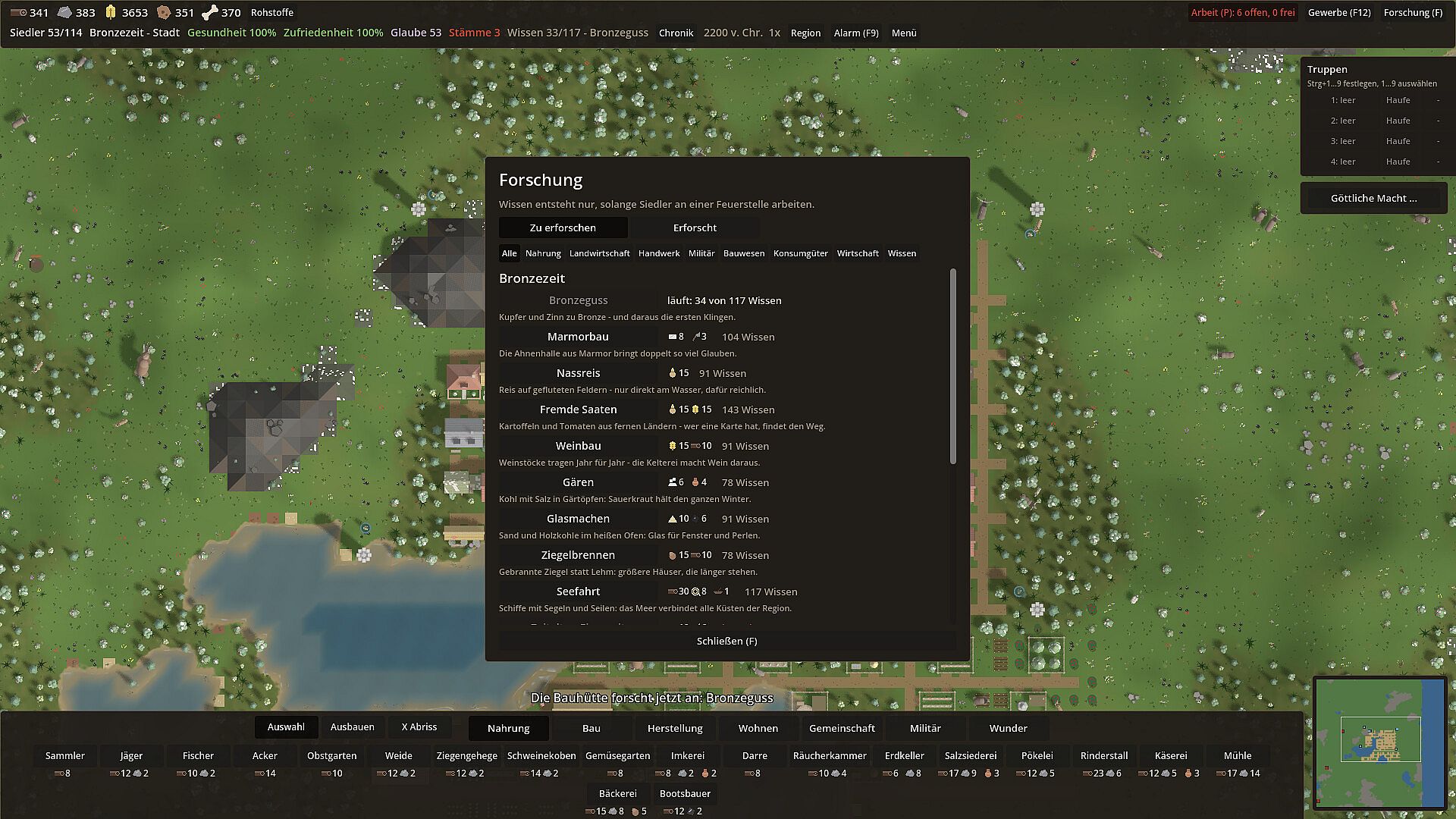
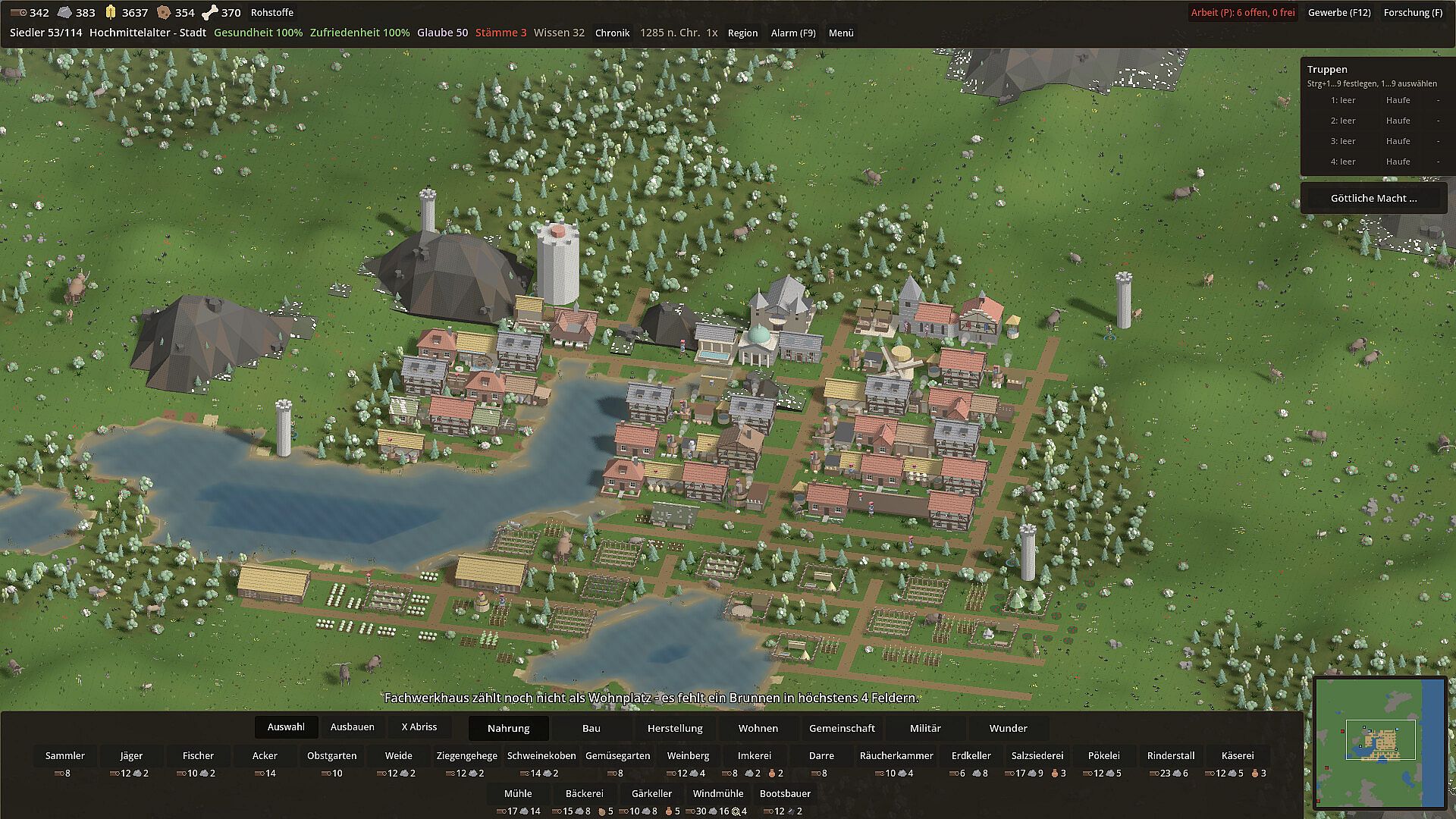
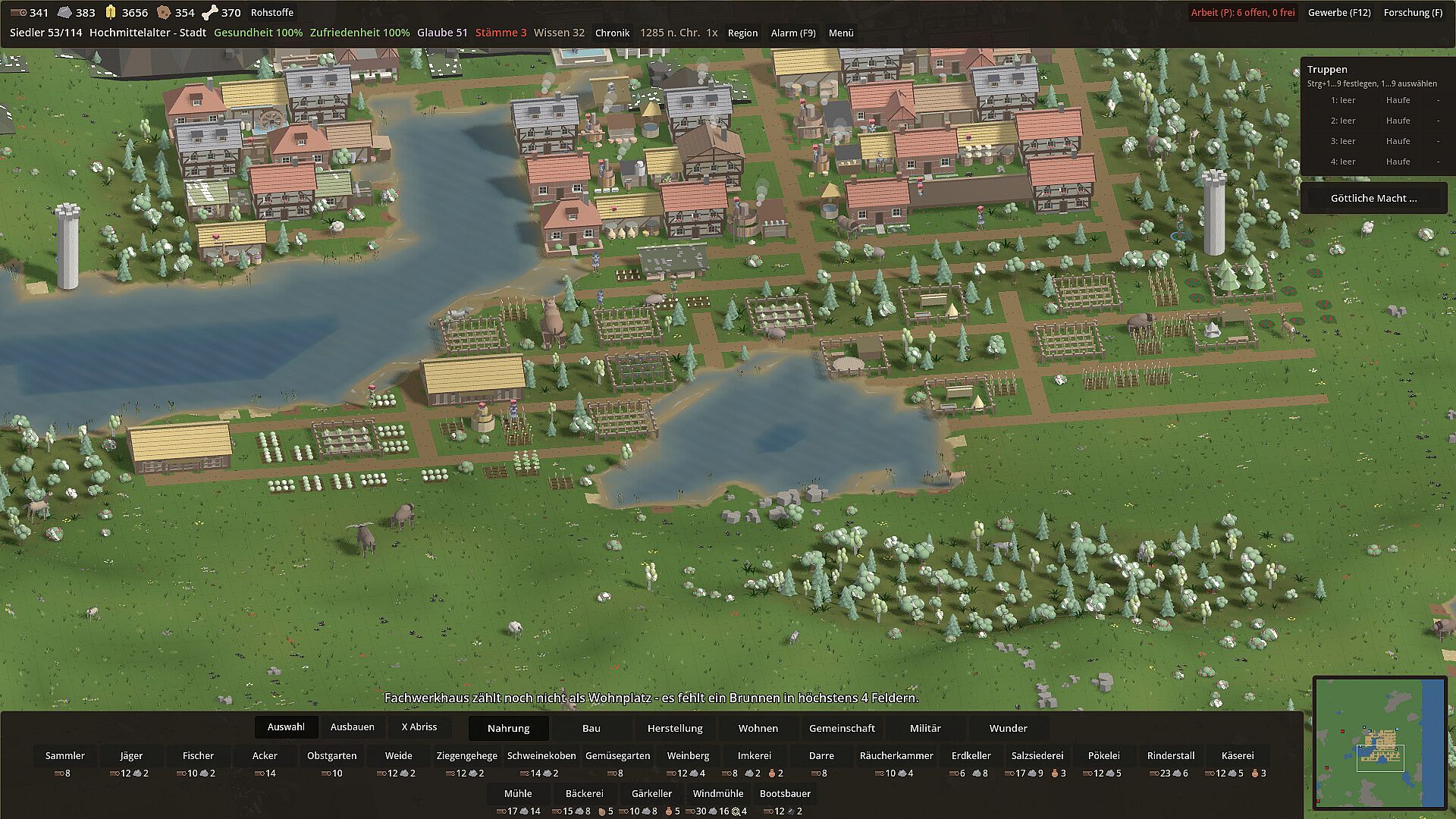
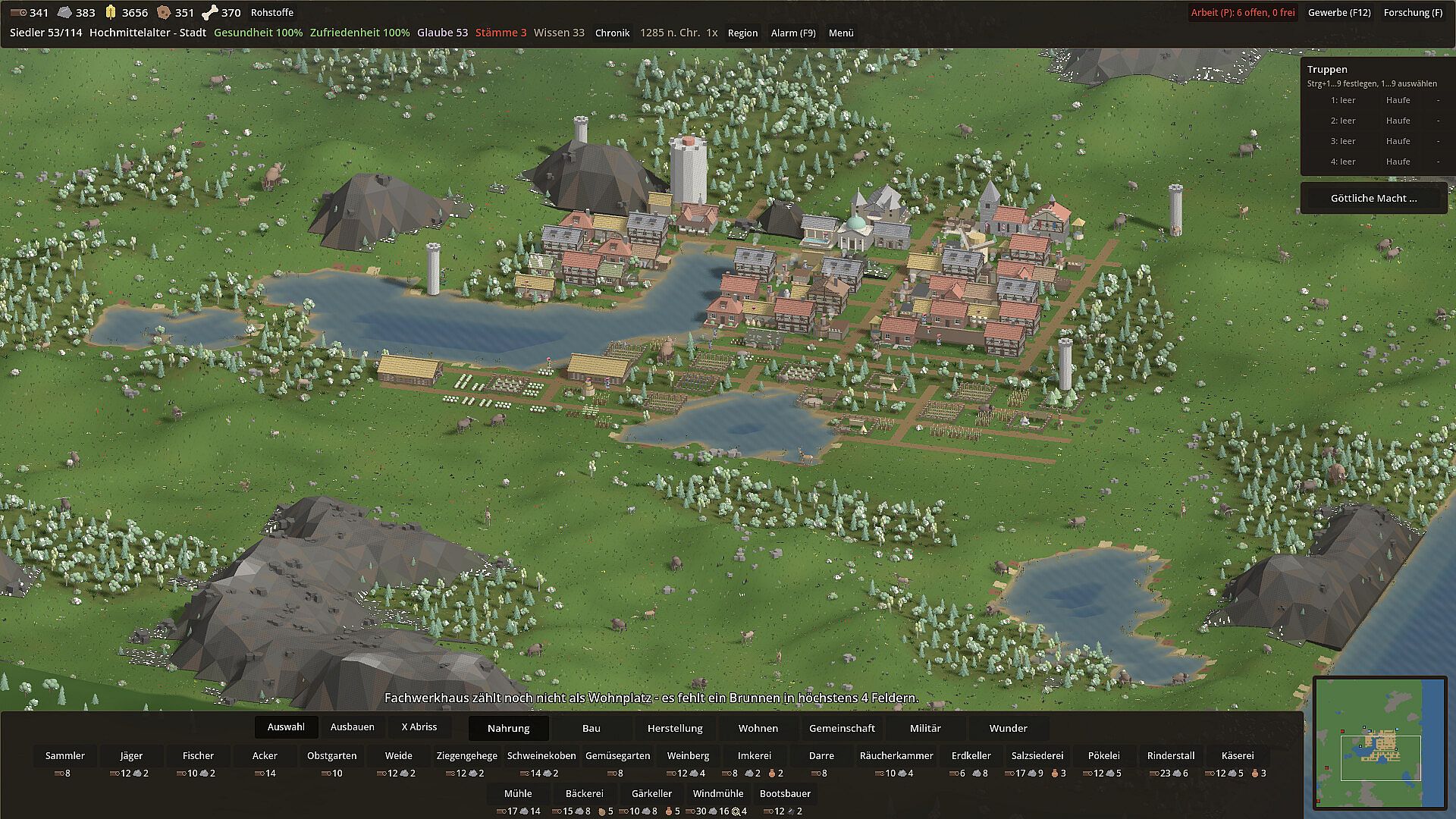
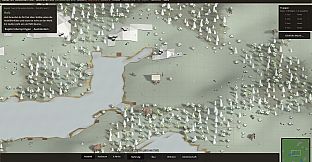
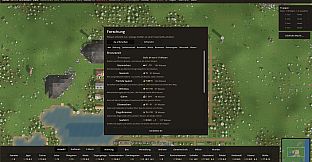
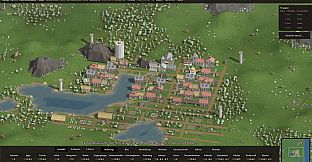
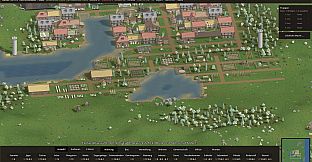
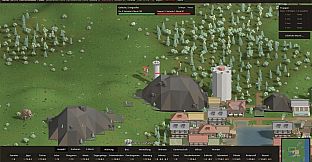
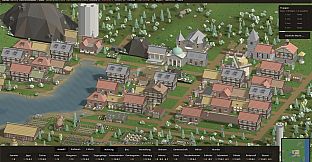
Settlers operate independently once basic needs are met, carrying materials to sites and maintaining production lines that span multiple steps. Players advance through nine distinct eras beginning in the Old Stone Age around 10,000 BC and progressing to the High Middle Ages, unlocking more than 90 technologies across eight interconnected research branches. Agriculture includes fields, gardens, orchards, and vineyards alongside livestock such as sheep, goats, pigs, cows, and horses. Longer chains turn raw goods into finished items like bread from grain or weapons from ore. Settler well-being depends on factors including health, contentment, and faith, supported by items such as shoes, books, and bathhouses. The three-dimensional landscape features hills, rivers, reeds, and distant forests, with a freely rotatable and tiltable camera for detailed oversight.
Divine powers allow direct influence over the world. Eight abilities, funded by accumulated faith, include blessing settlements, summoning rain, healing the injured, attracting animals, and striking enemies with lightning. External pressures come from nearby tribes and roaming raiders. Diplomacy options range from gifts and tribute payments to military clearance of camps. Defensive structures such as walls, towers, and gates, along with later siege equipment like catapults, help protect the growing community.
Game Modes
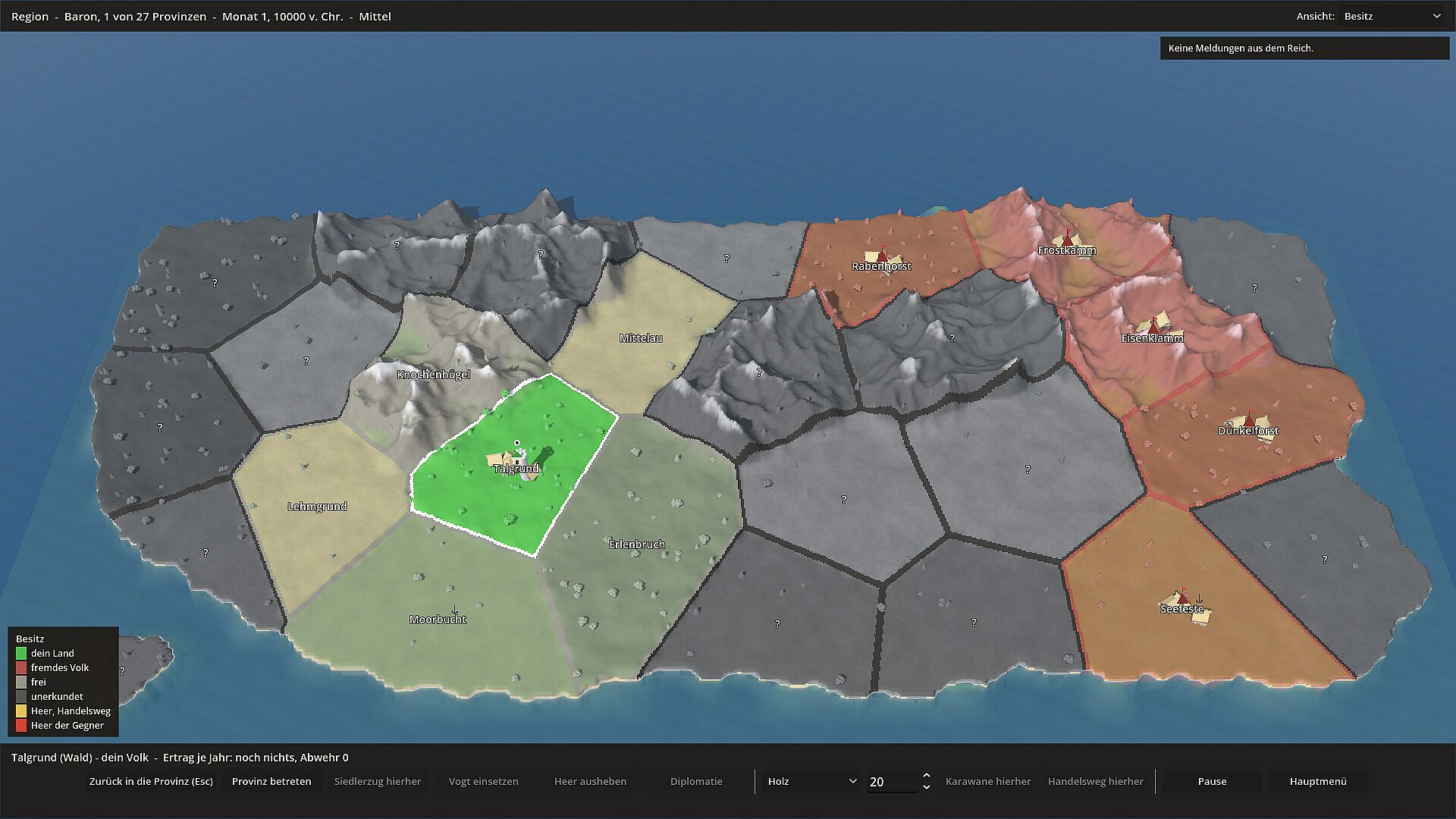
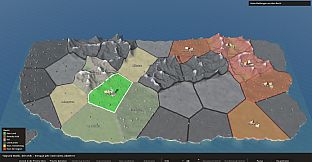
The single-player experience follows a campaign that spans 27 regions displayed on a relief-style map with mountains, forests, and sea. Players liberate provinces from other groups, command multiple armies using waypoints, manage supply lines or allow plunder, and negotiate relations including peace, alliances, trade, and tribute. Each faction tracks its history with the player. Three difficulty settings adjust the challenge level. A five-chapter tutorial introduces core systems for new players.
Multiplayer supports shared sessions on the same region map, either through direct network connections or Steam lobbies. Armies can advance on rival provinces, and conquest transfers control of the actual settlement to the victor. Graphics and music are generated within the game itself, and the title supports English and German languages.
Combat and Defense Systems
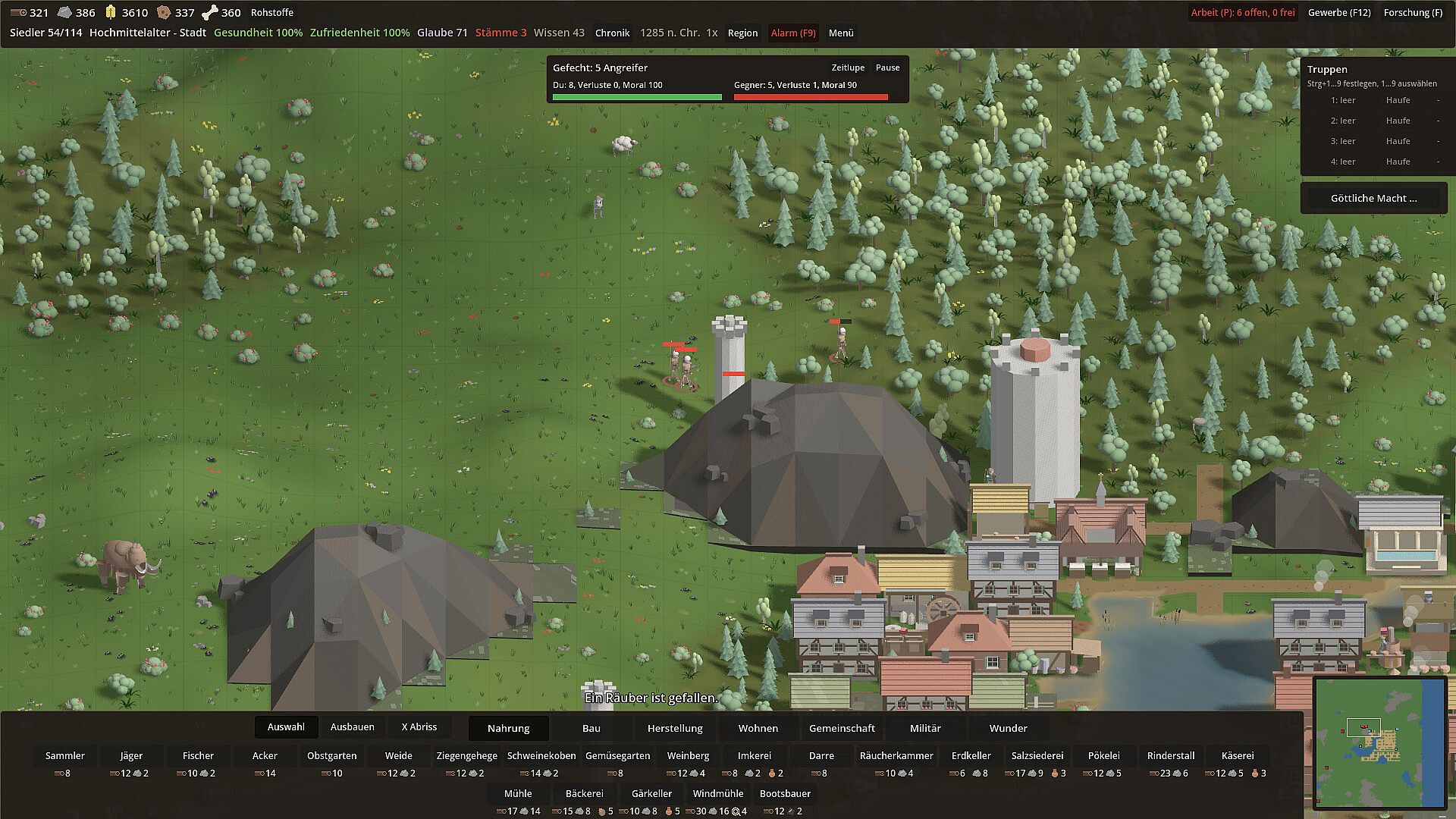
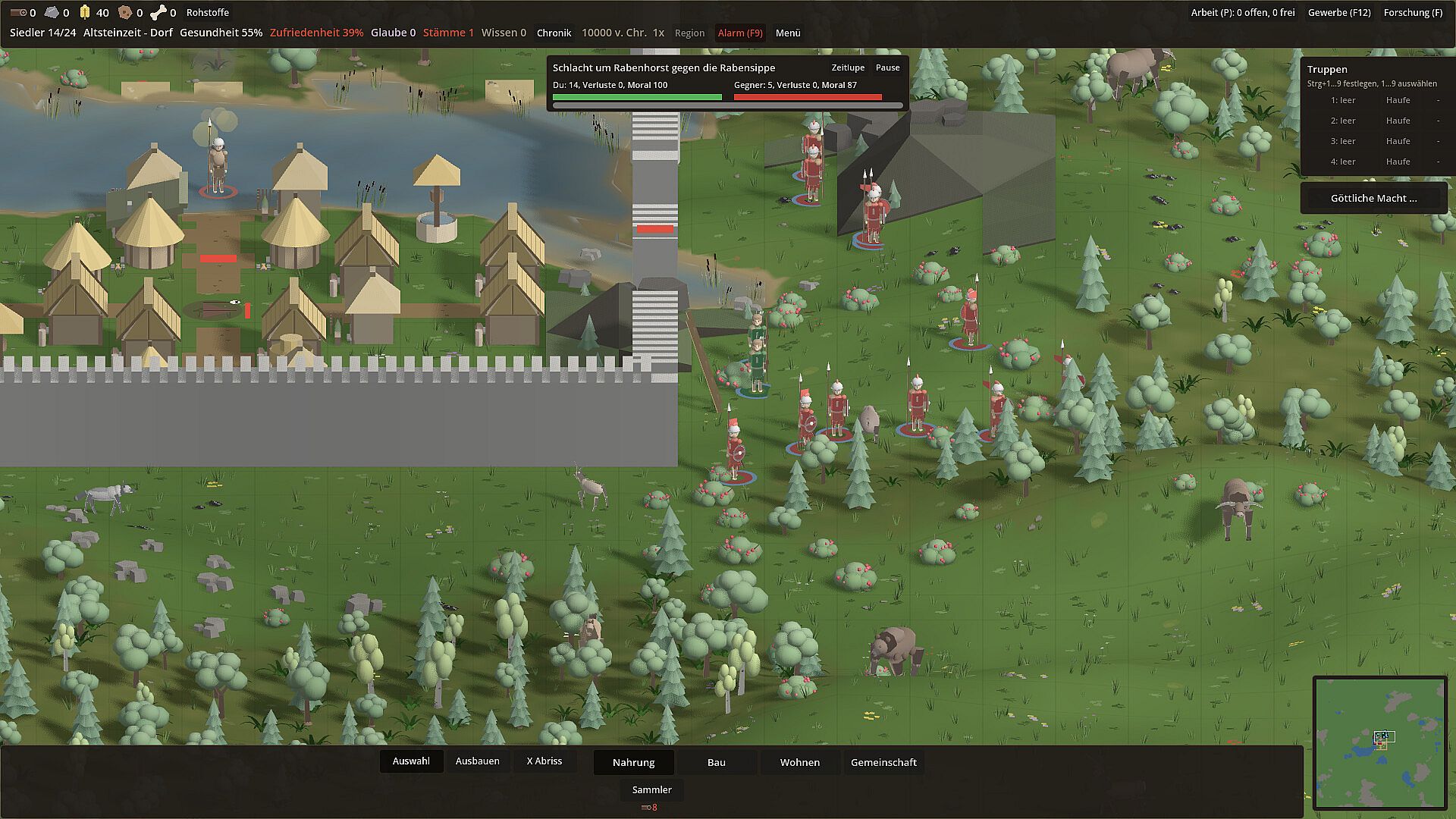
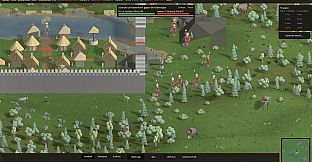
Battle requires direct command of troops with options for stances, preset squads assigned to number keys, and formations that position spearmen forward and archers behind. Morale determines outcomes against opposing forces of warriors, archers, and shield bearers; heavy losses can cause a side to break and flee. Siege mechanics feature ladders raised against walls, fire arrows targeting gates, and defenders capable of toppling ladders. Pause and slow-motion functions provide time to issue precise orders during engagements.
Is It Worth Playing?
Mischkalon suits players who enjoy god-view city builders combined with simulation depth and tactical combat. The emphasis on autonomous settler behavior and long-term technological progression creates a distinct loop focused on gradual societal advancement rather than rapid expansion. Multiplayer conquest adds competitive layers for those interested in shared campaigns. With a planned release in October 2026 and no reviews available yet, the game appeals most to fans of detailed strategy titles that blend construction, research, and real-time battle management. Those seeking straightforward building without combat or diplomacy elements may find the scope narrower than expected.











