




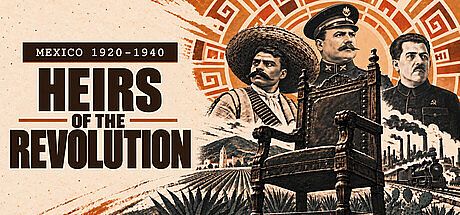



Mexico 1920-1940: Heirs of the Revolution is a strategy, indie, and simulation title that places players in the role of governing Mexico during a turbulent two-decade period. This turn-based narrative political simulator lets users steer the country from the presidency, with each turn representing one quarter from 1920 to 1940. The core premise explores alternate outcomes to real historical events, such as the survival of key revolutionary figures or shifts in electoral results that never occurred in reality.
Gameplay
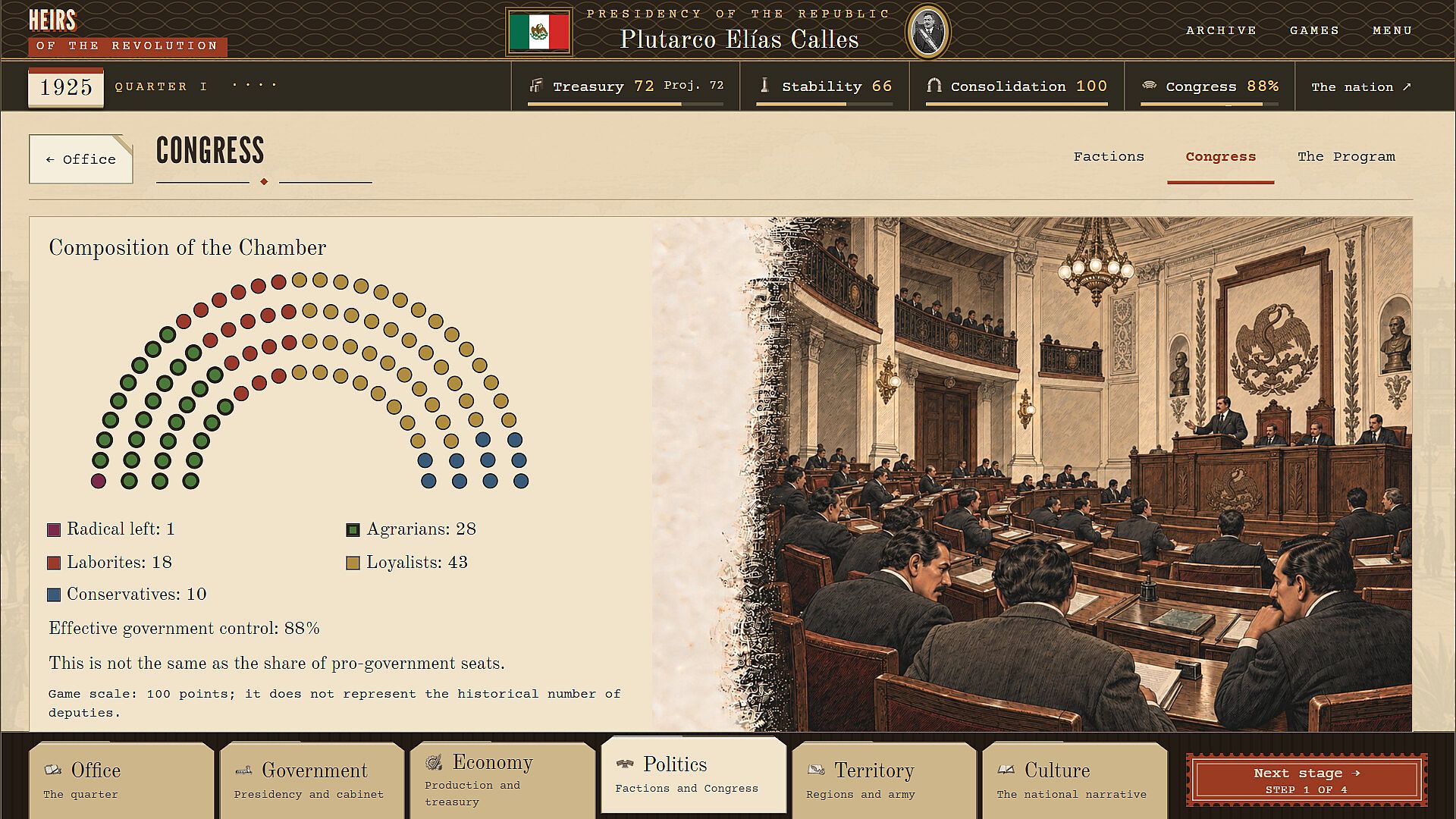
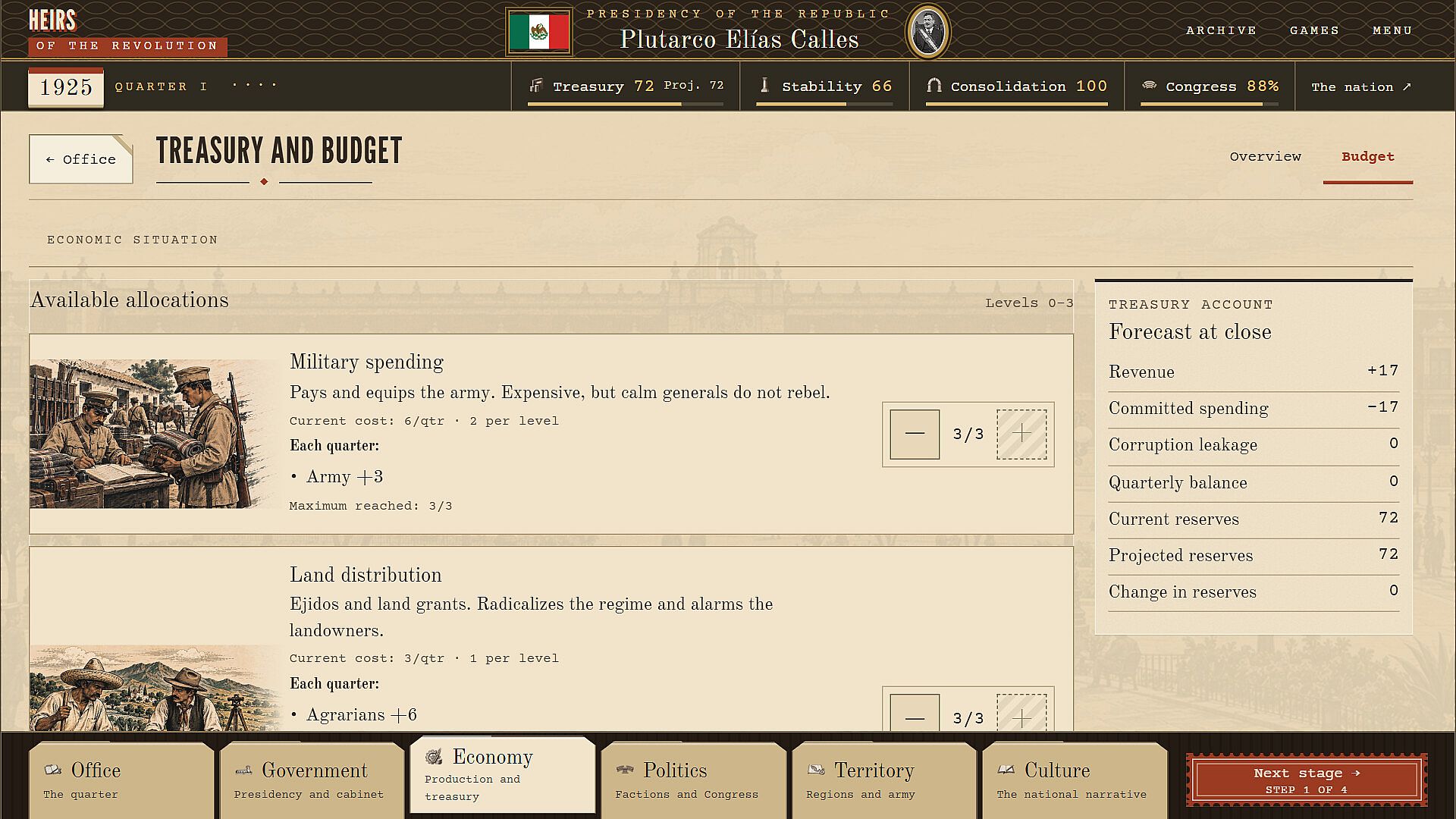
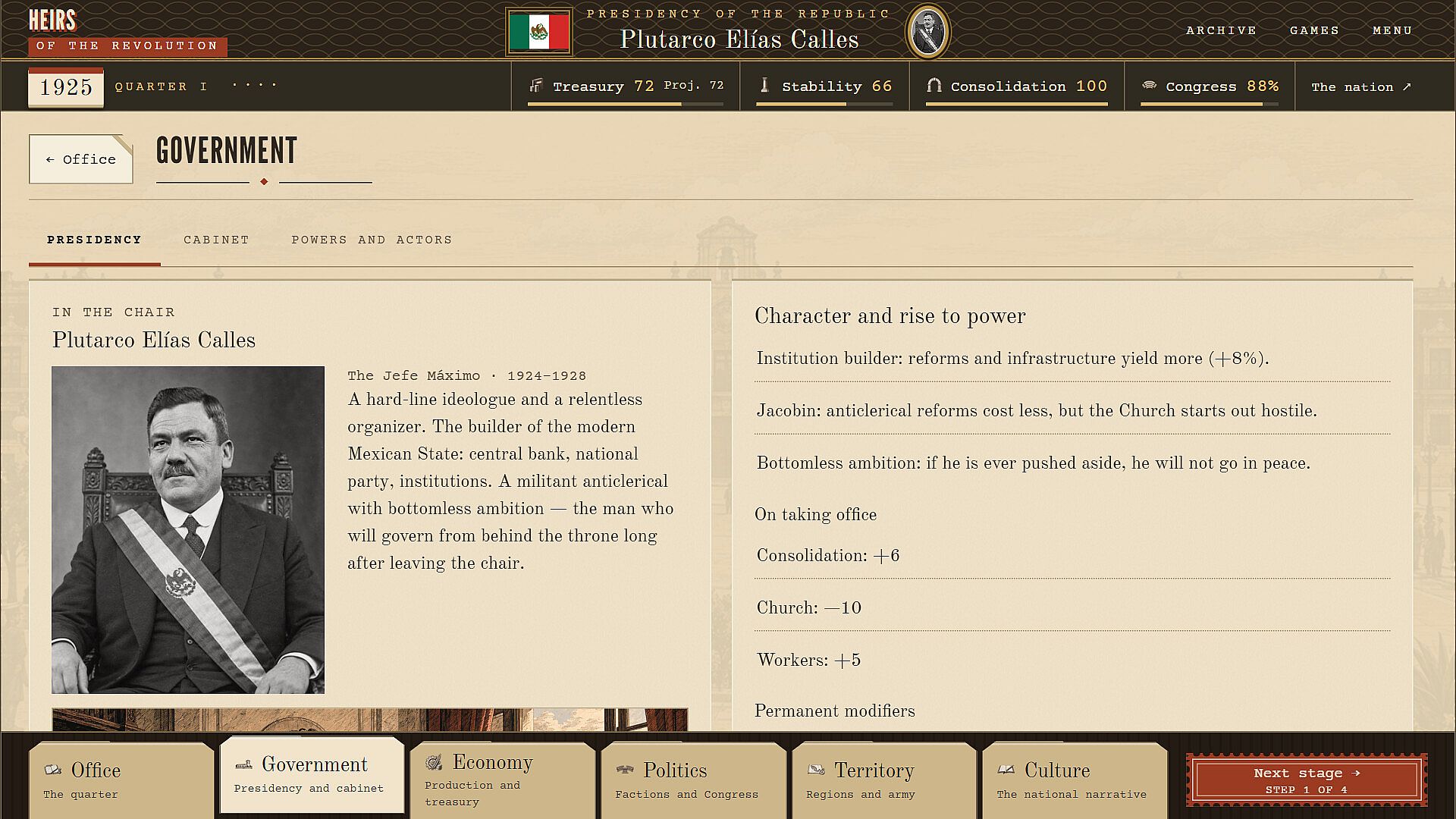
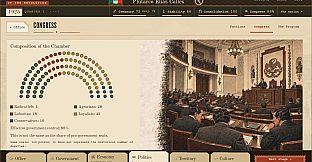
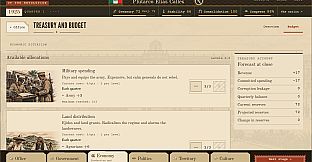
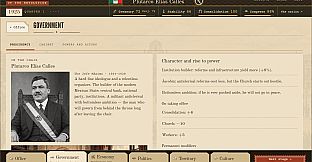
Players manage a range of interconnected systems that reflect the challenges of leading a post-revolutionary nation. Cabinet appointments require filling every ministry position by the end of each quarter, while Congress involves negotiating with five distinct blocs to advance policies. Economic decisions cover treasury management, agriculture development, industrial growth, infrastructure projects, and maintaining investor confidence amid external pressures.
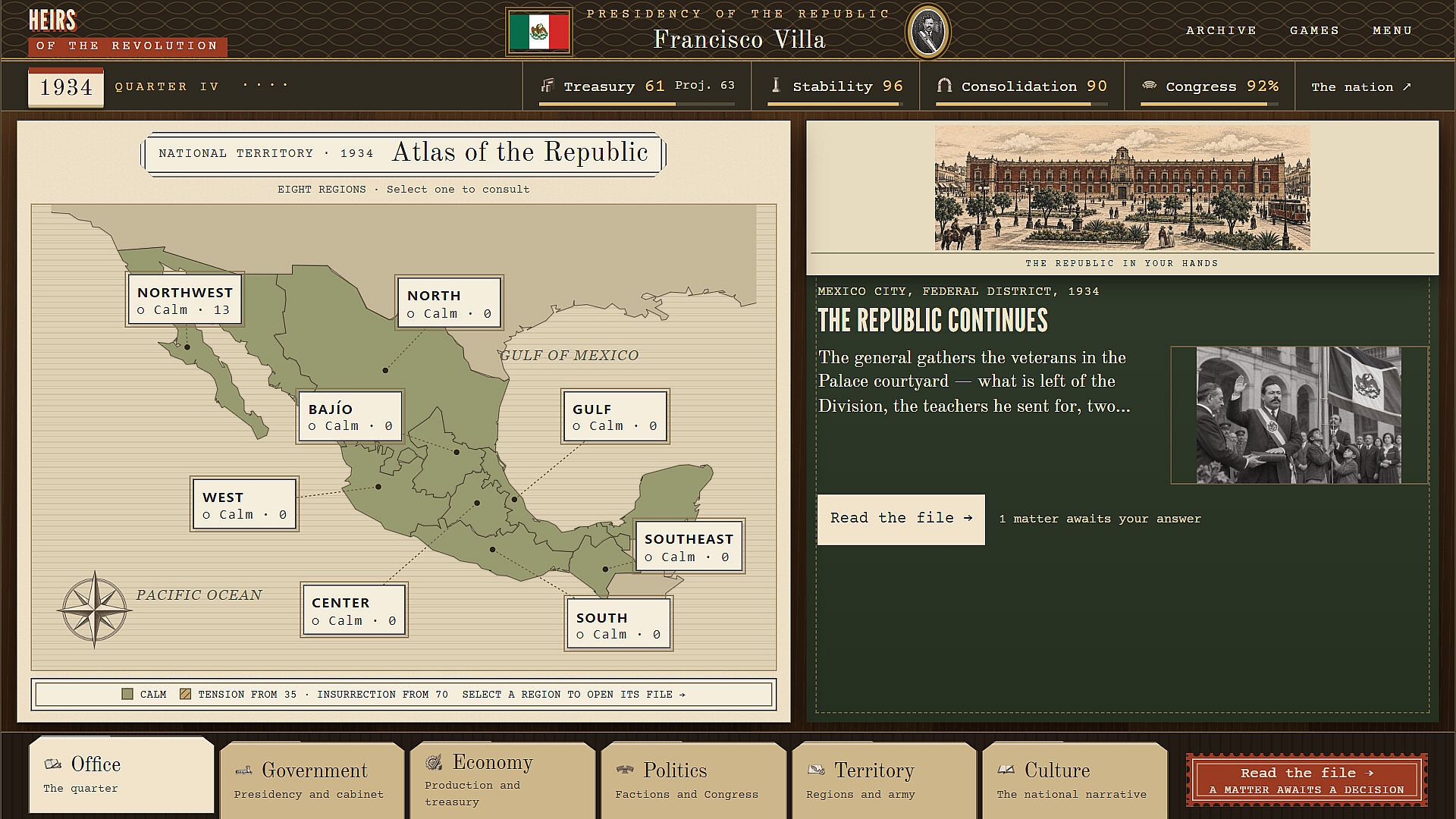
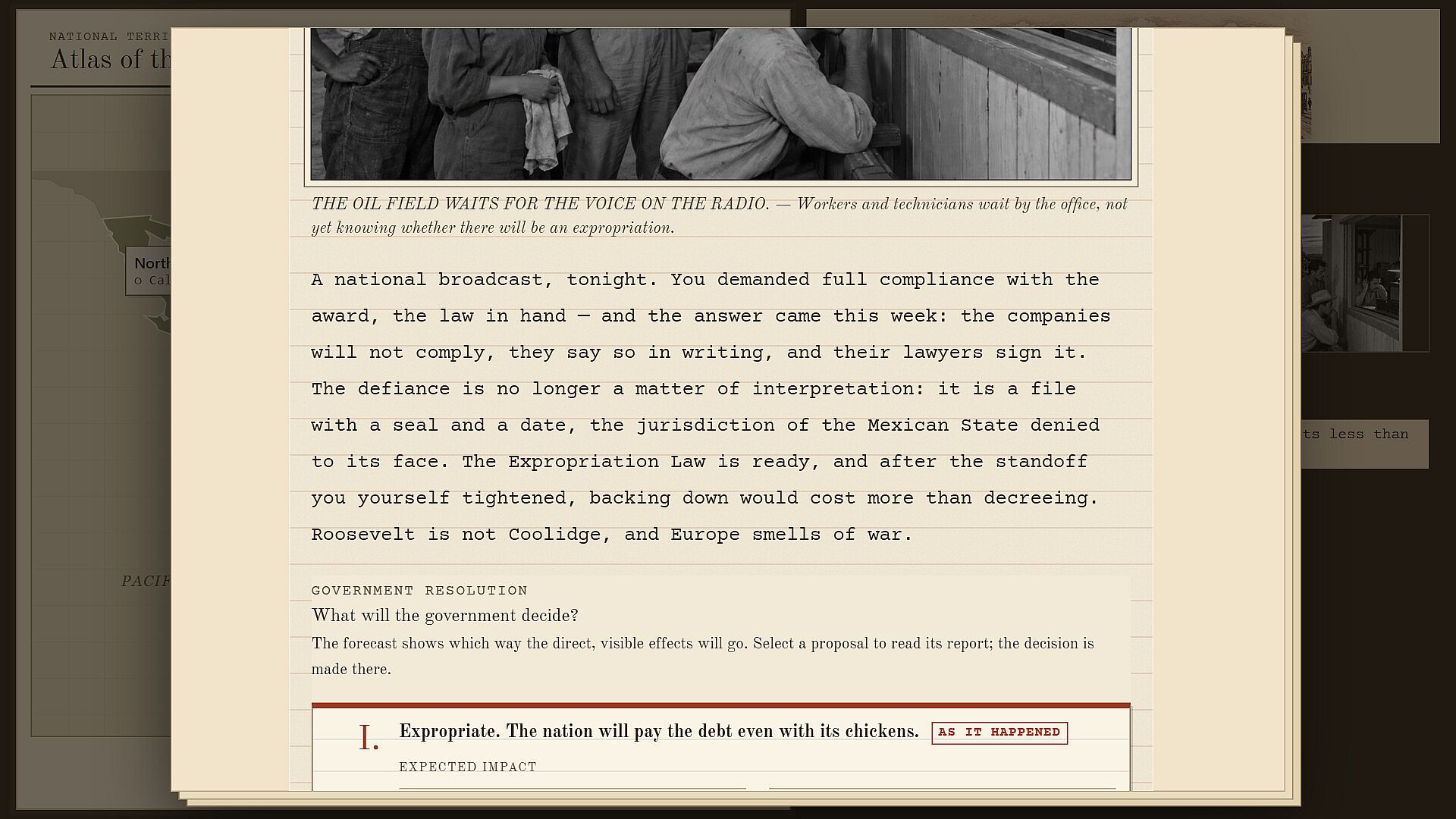
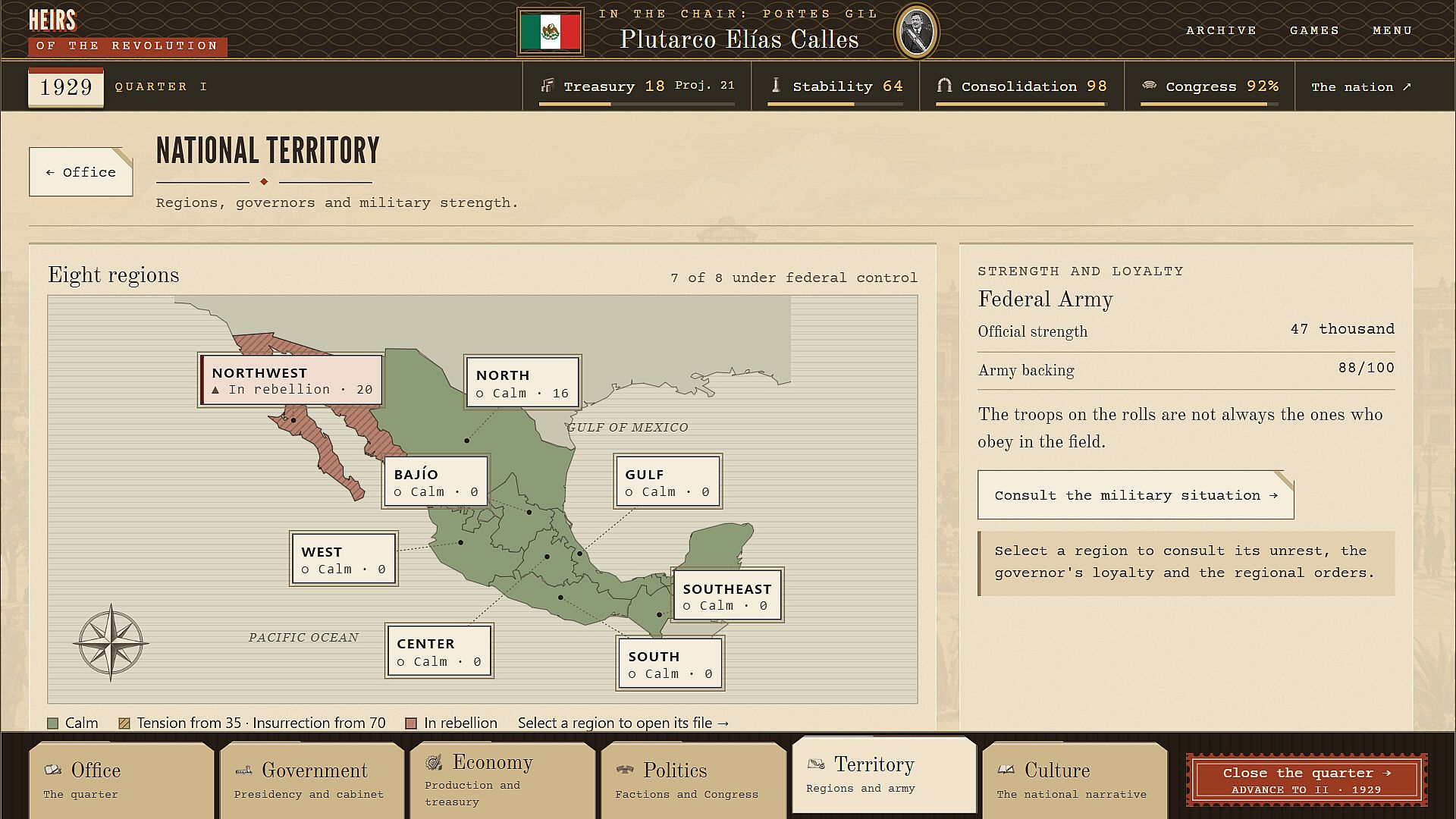
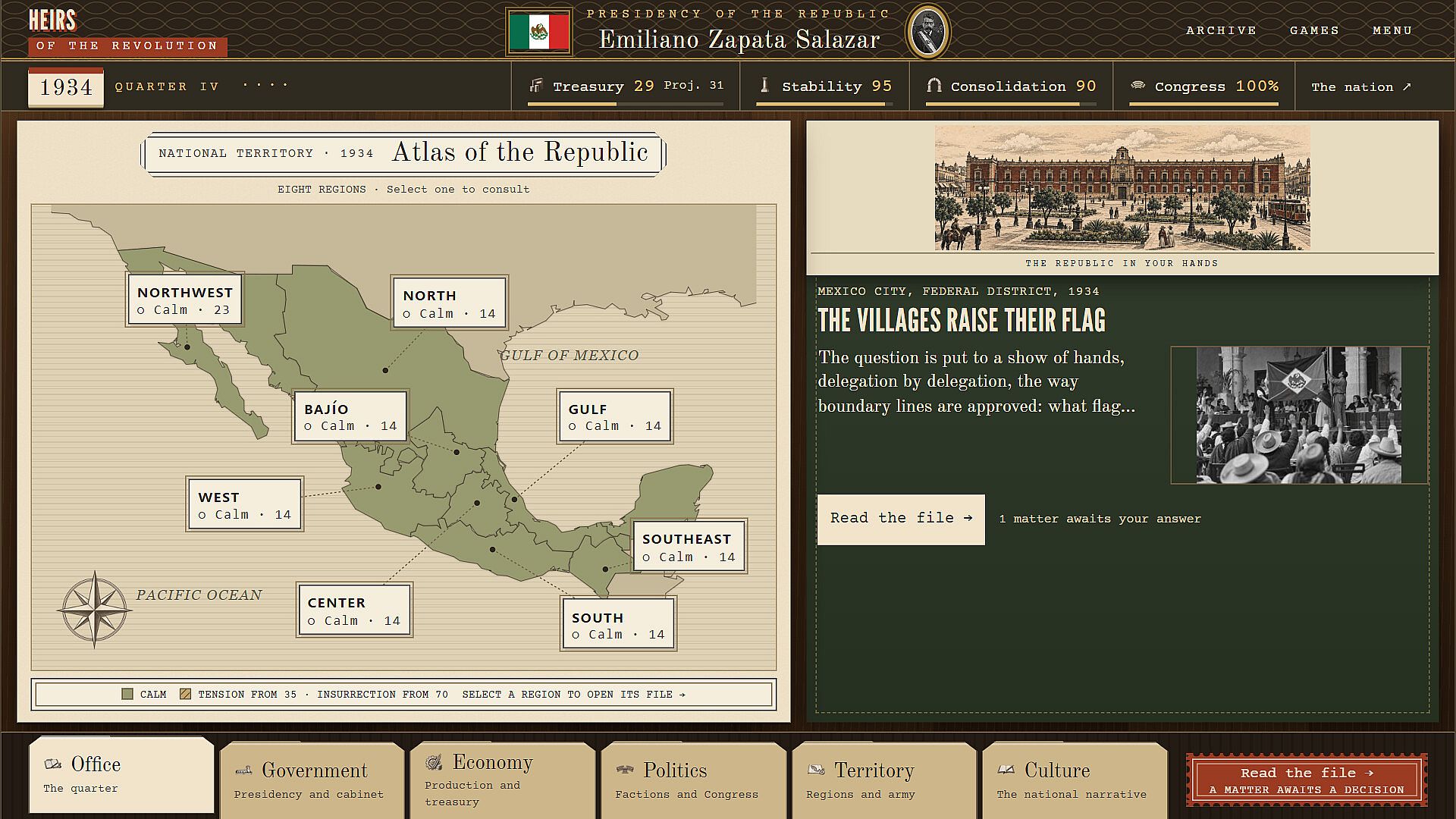
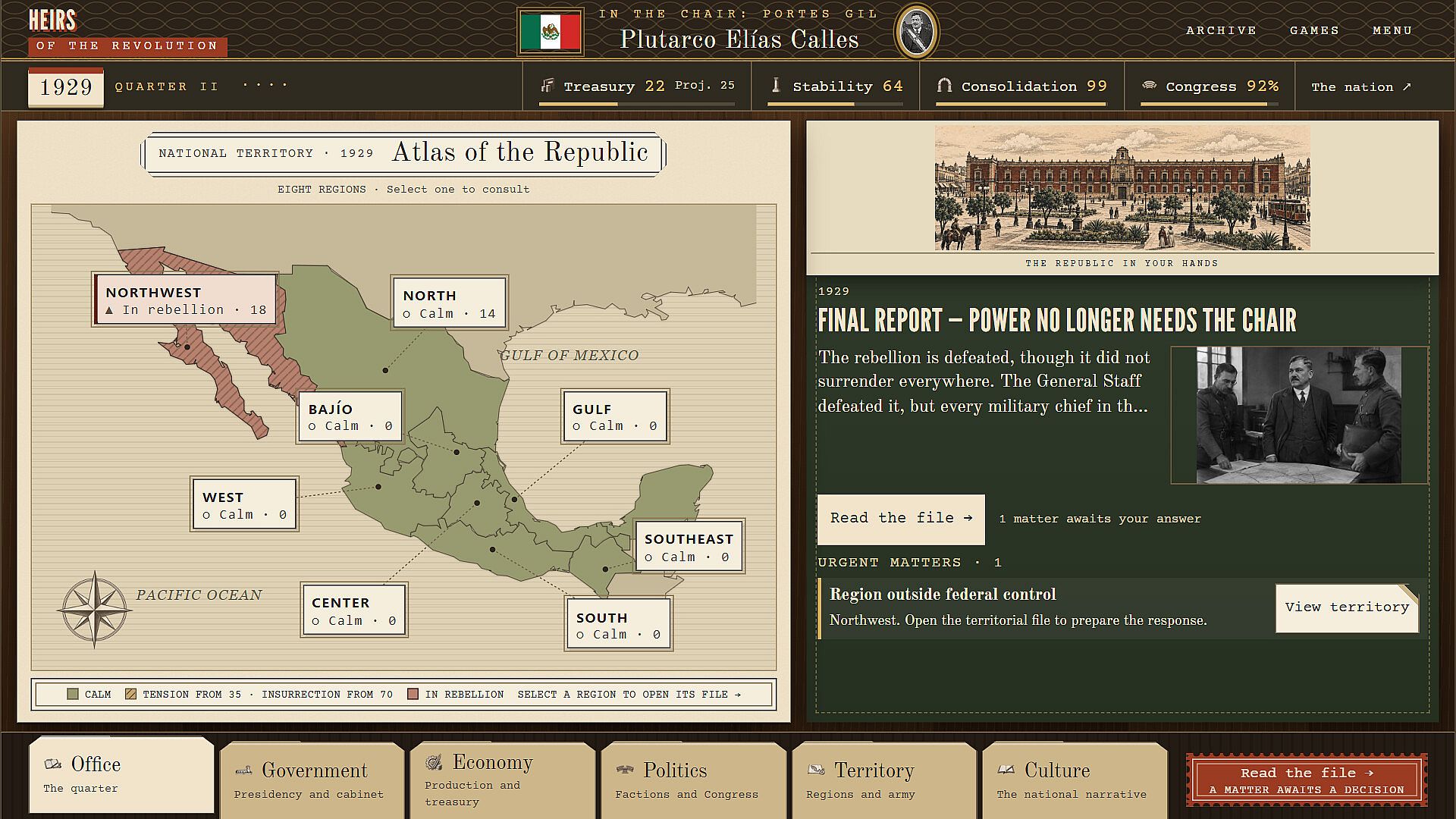
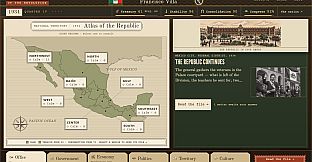
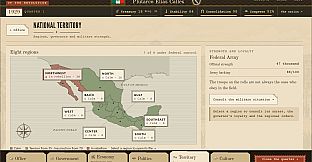
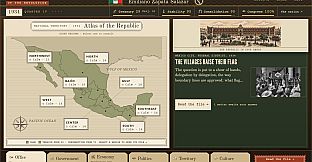
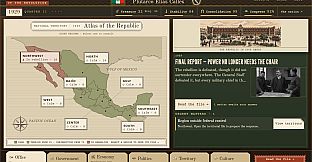
Territory control spans eight regions, where rebel takeovers demand either military reclamation or diplomatic negotiation to restore order. Combat unfolds front by front, with troop loyalty only revealed during actual engagements. Cultural initiatives include promoting muralism and literacy campaigns, all while monitoring press coverage from outlets across the political spectrum that react to every major choice.
Faction interactions shape long-term stability, drawing in the Army, agrarians, workers, the Church, and business interests. Relations with the United States introduce ongoing tension that risks escalating to armed intervention under certain conditions. The simulation draws from documented events like the de la Huerta rebellion, the Cristero War, the Maximato, the Great Depression, and oil expropriation, yet allows deviations such as Zapata or Villa reaching the presidency or a more radical path under Cárdenas.
Game Modes
The experience centers on a single-player campaign structured around quarterly turns and branching decision trees. Players can begin at the standard 1920 start or opt for an earlier entry point tied to the events at Chinameca. No separate multiplayer or competitive modes exist; the focus remains on one cohesive narrative journey through the presidency across two decades.
Progression emphasizes repeated playthroughs to explore different leadership styles and policy combinations. Each run tracks detailed metrics in areas like capital accumulation, labor conditions, schooling access, resource extraction from the subsoil, and military readiness, culminating in a comprehensive end-of-game evaluation.
Alternate Histories and Key Figures
History serves as the foundation, but the simulator permits significant divergences. Zapata can survive to claim the presidency, Obregón can consolidate power beyond his historical fate, Vasconcelos can win the 1929 election and pursue an educational or Hispanist direction, Villa can assume the office, or Cárdenas can implement widespread collectivization with closer ties to Moscow. These paths influence faction relations, economic outcomes, and territorial control in distinct ways.
Press headlines and cultural developments respond dynamically to player actions, while US interactions add a layer of geopolitical risk. The system rewards careful balancing of domestic priorities against external threats and internal power struggles.
Endings and Evaluation
Seventy-five distinct endings are available, each categorized as historical, plausible, or far-fetched. Possible national outcomes include titles such as The Presidency of March 18, The Republic of the Pueblos, Early Democracy, The Republic of the Spirit, All State, No Party, or The Occupation. A final balance sheet breaks down performance across multiple sectors, providing concrete feedback on the long-term consequences of decisions made over the twenty-year span.
Is It Worth Playing?
This title suits players who enjoy detailed political strategy simulations and alternate-history scenarios grounded in early 20th-century Mexican events. The depth of cabinet management, congressional lobbying, economic tracking, territorial defense, and faction balancing creates a layered decision space that rewards experimentation across multiple runs. With its focus on text-driven narrative outcomes and no graphic violence beyond historical textual references, it appeals to those seeking thoughtful engagement with governance mechanics rather than action-oriented play. As an upcoming release scheduled for November 2026, it offers a specialized experience for fans of indie strategy titles centered on real historical periods and their possible variations.











