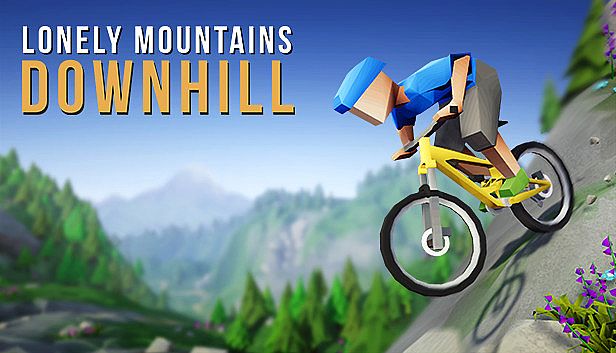














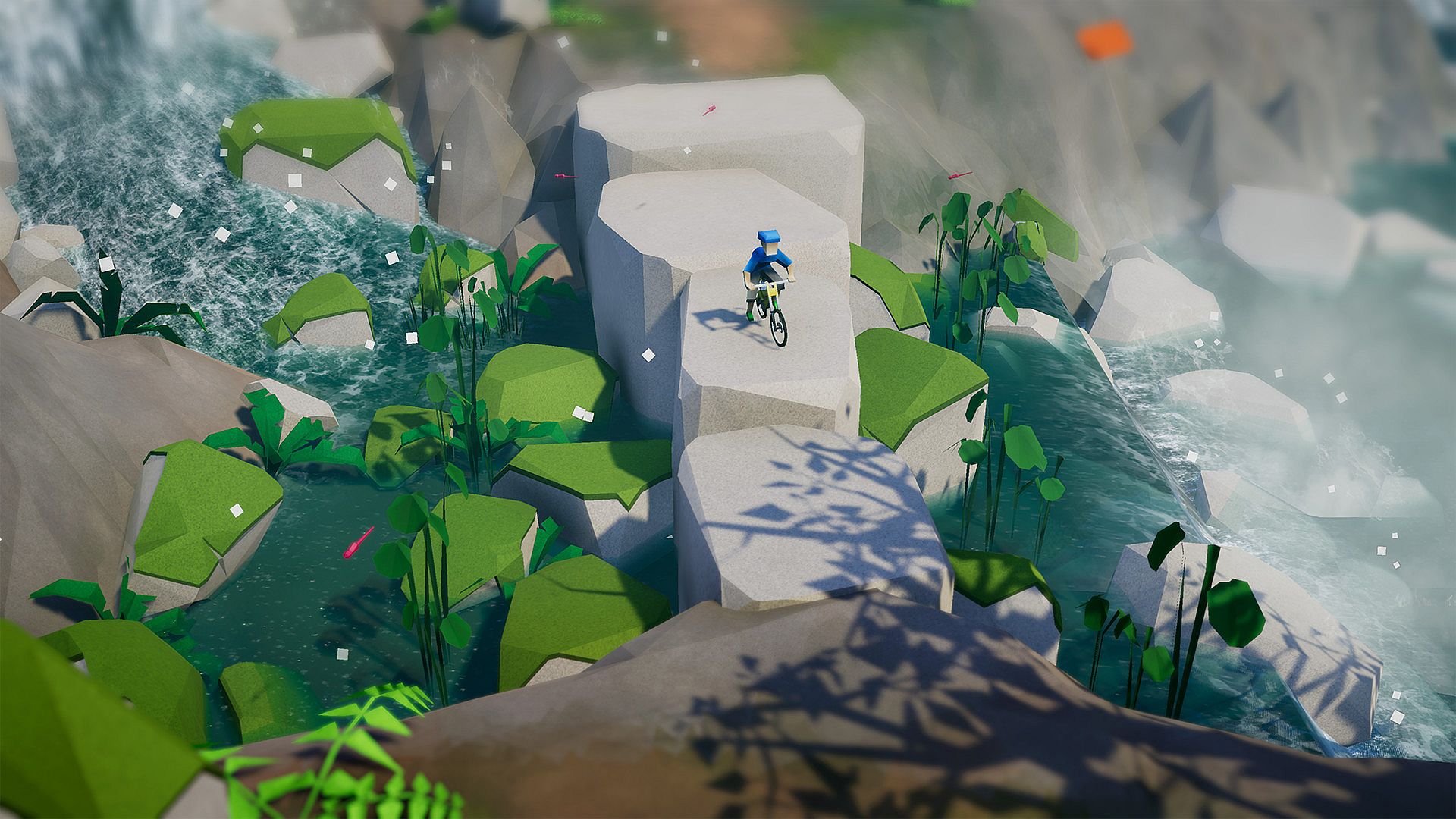
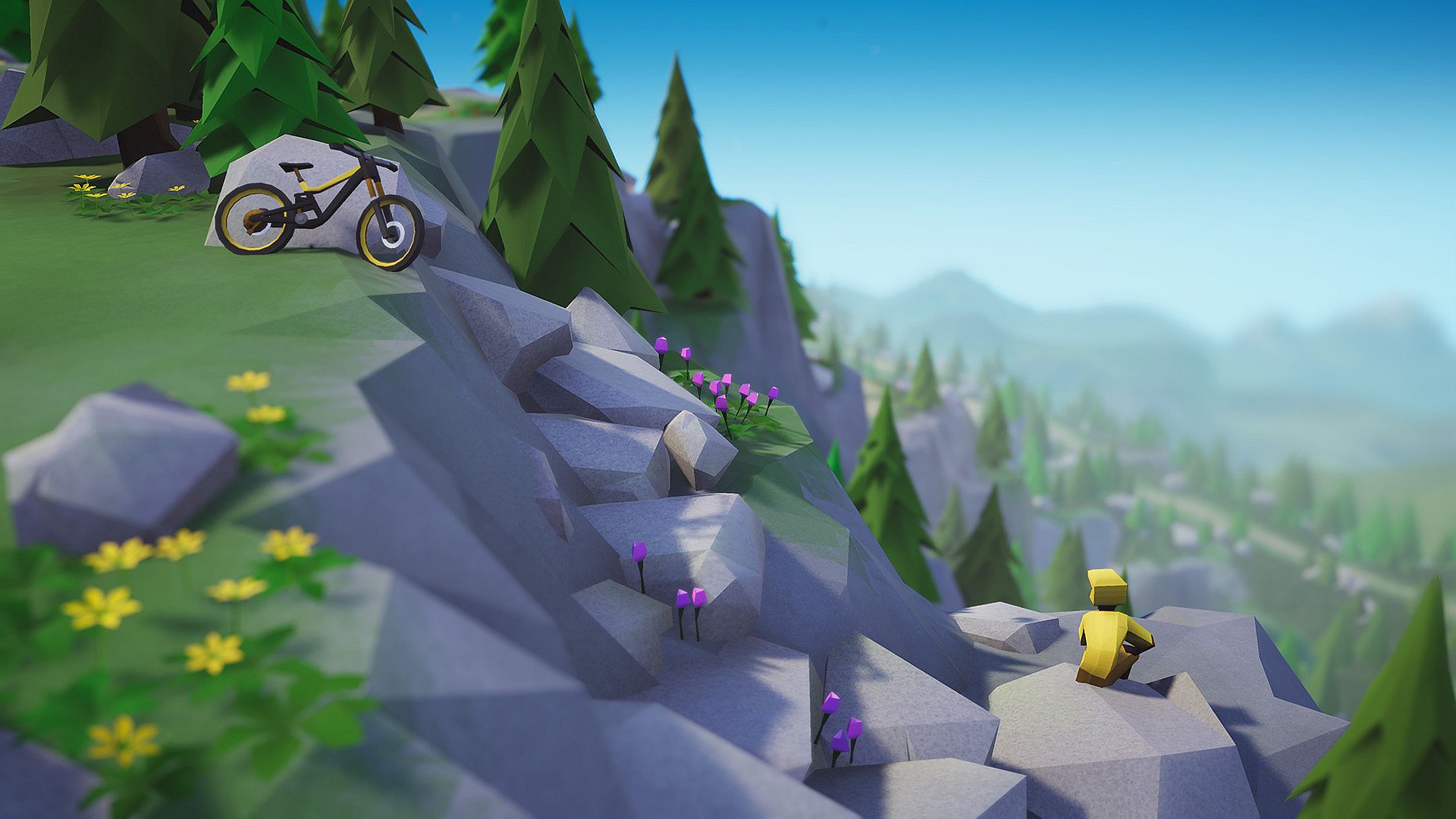
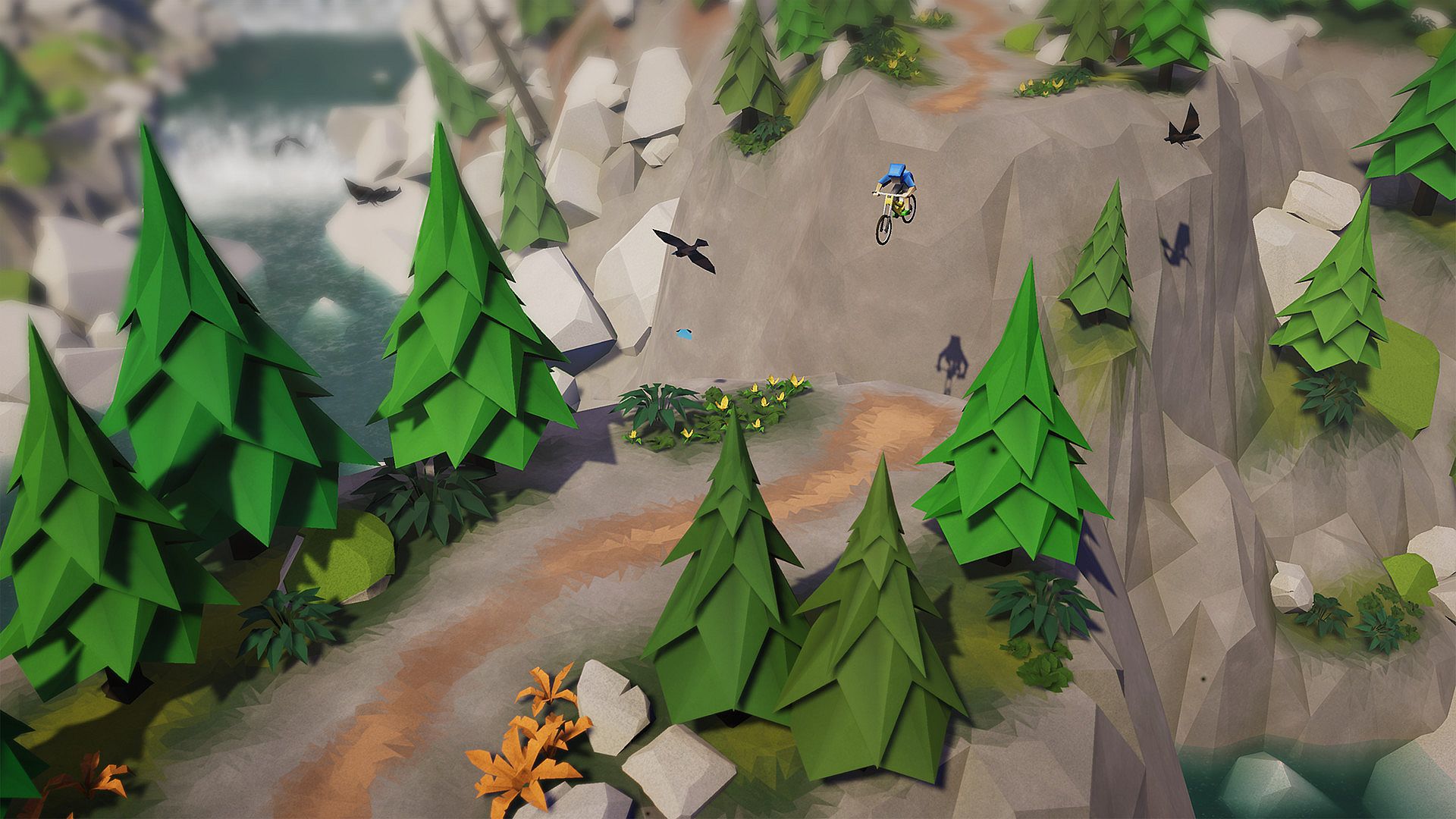
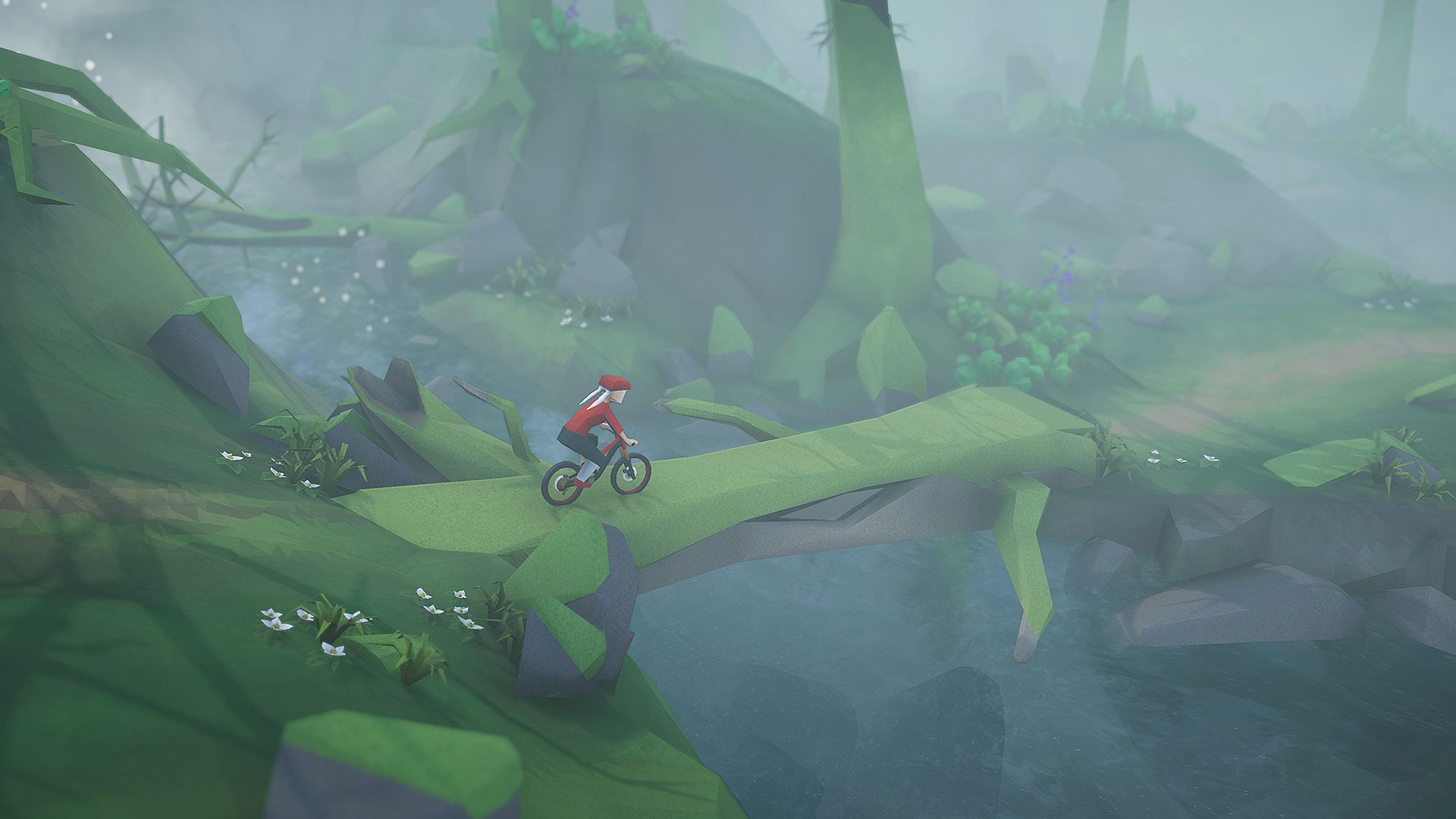
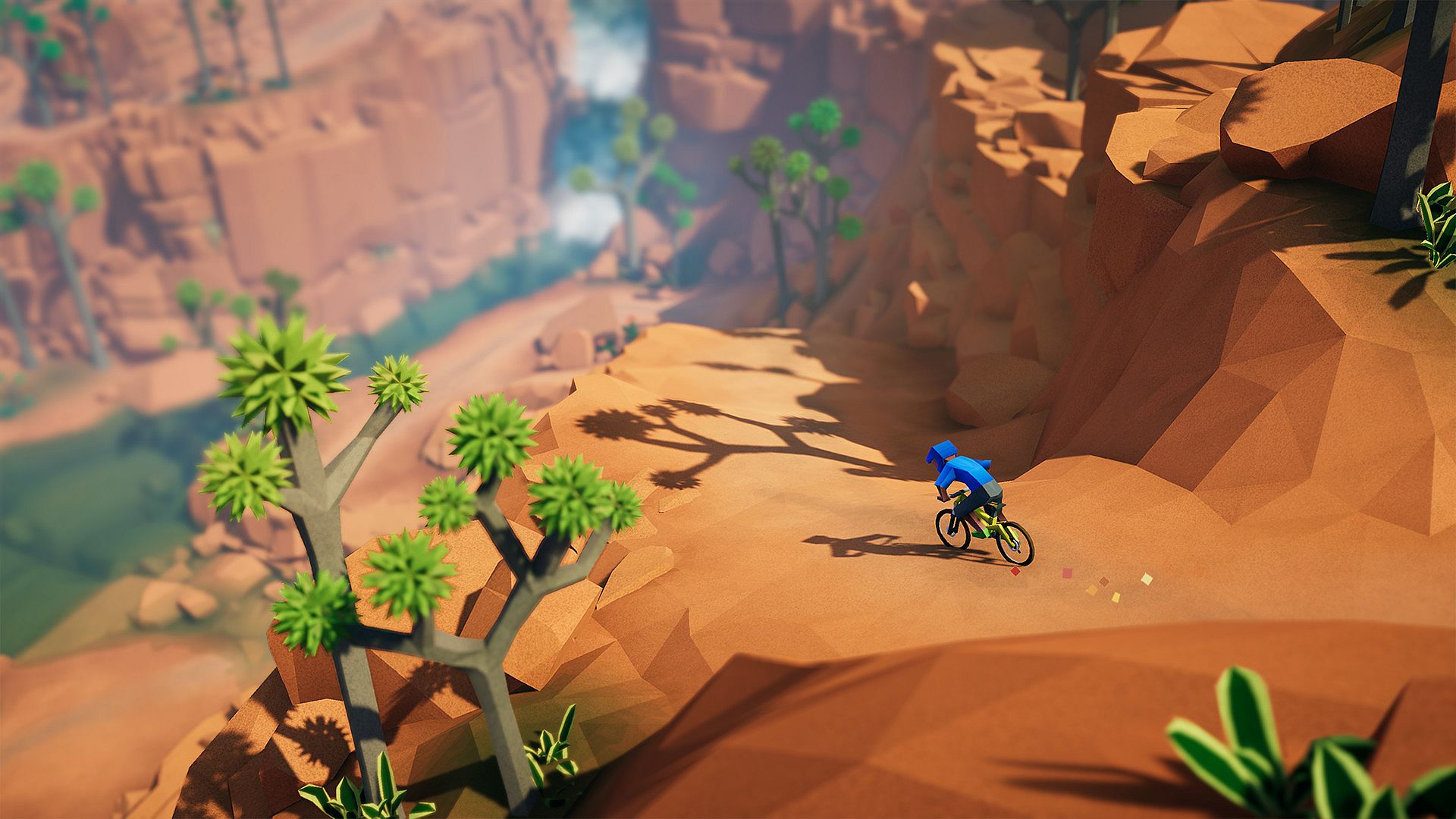
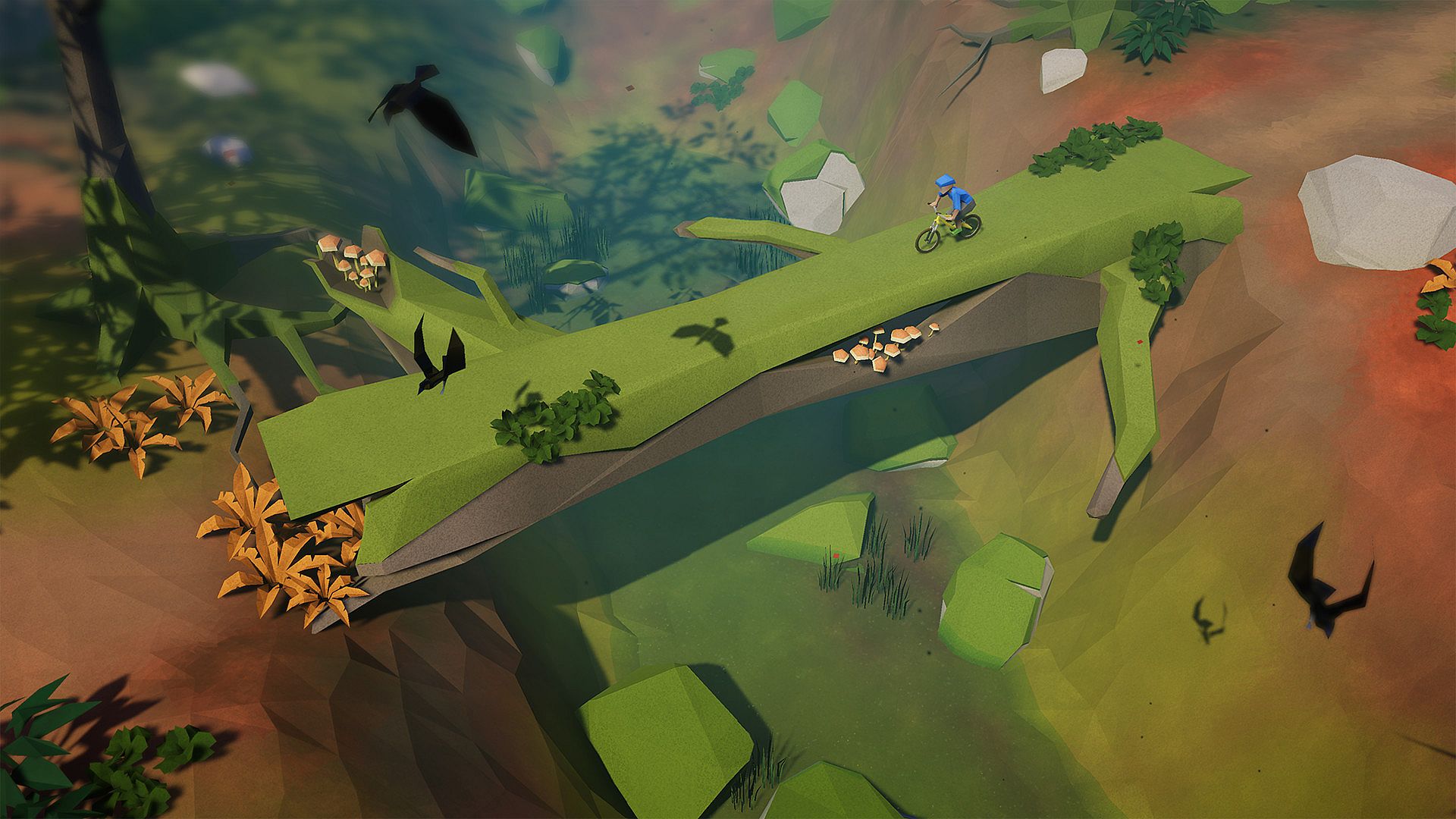
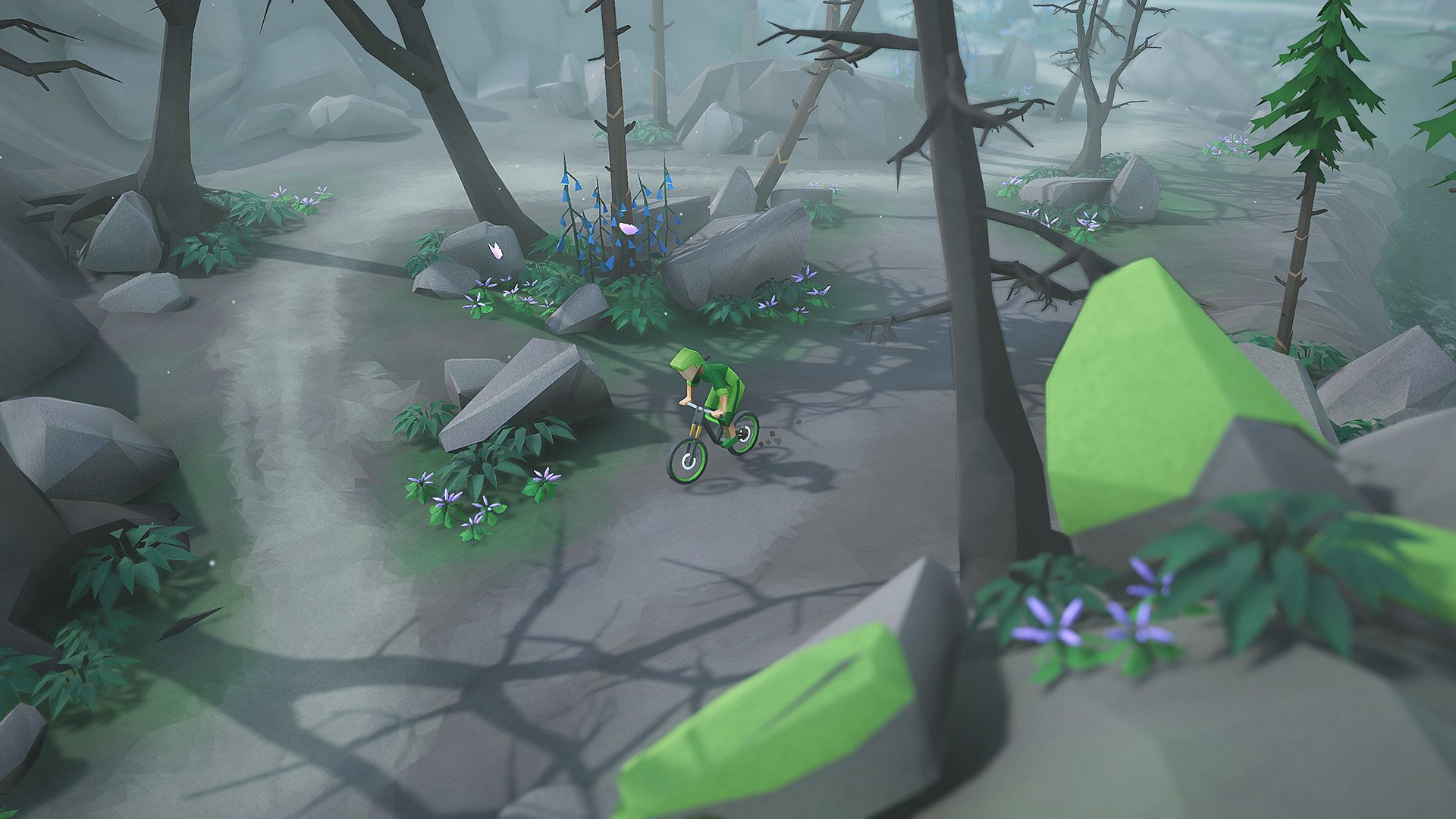
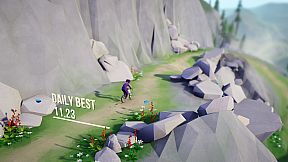
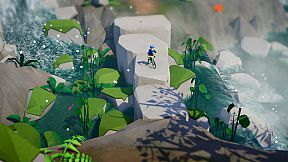
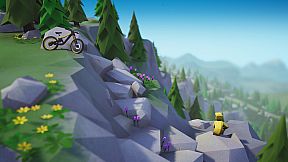
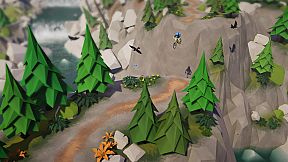
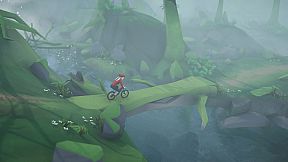
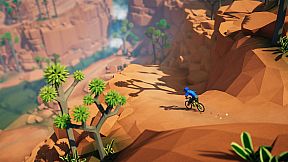
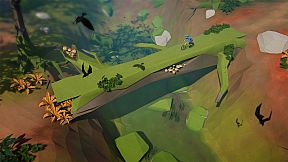
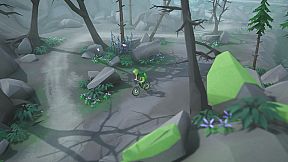
Lonely Mountains: Downhill is a single-player downhill mountain biking game that blends simulation, racing, and sports elements into a focused experience of descending rugged terrain on a bicycle. Players control a rider navigating unspoiled mountain environments filled with forests, rivers, canyons, and trails, relying on precise handling rather than speed boosts or external aids.
Gameplay
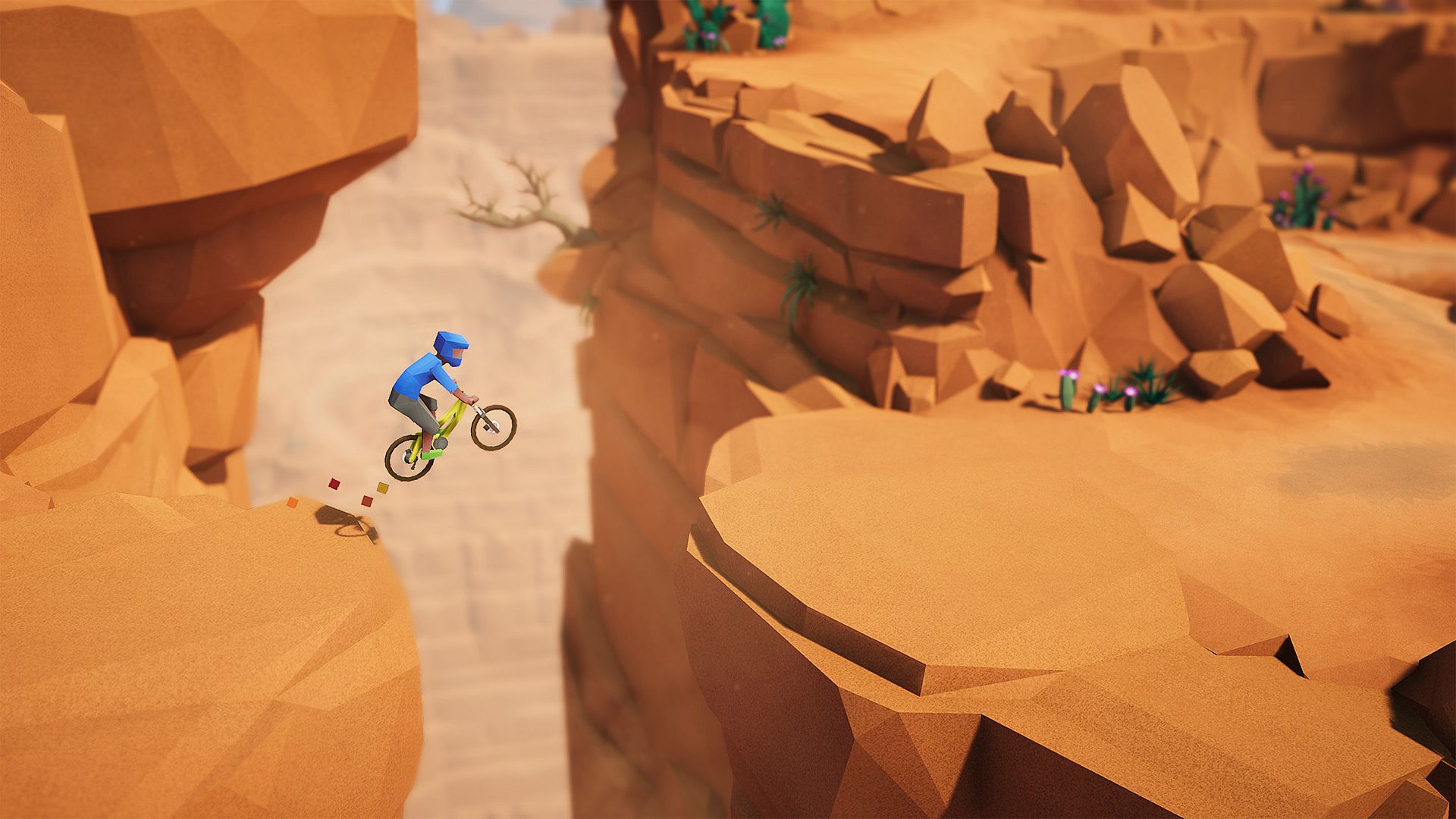
The core loop centers on descending from peak to valley while managing momentum, balance, and terrain interactions through a custom physics system. Riders drop between boulders, sprint across gaps, slide through mud, and recover from impacts without automated assistance. Controls emphasize responsiveness, allowing careful navigation or aggressive shortcuts that risk crashes. Each bike offers distinct handling characteristics, so selection influences how the rider approaches steep drops, tight turns, and uneven surfaces. Exploration reveals hidden resting spots and alternate paths, while the absence of barriers or spectators keeps the focus on the natural landscape and personal skill progression.
Day and night cycles add variety to visibility and atmosphere during repeated runs. The system rewards practice in reading the mountain, timing jumps, and choosing lines that balance risk with progress. Paint jobs and outfits serve as visual rewards unlocked through continued play, but they do not alter core mechanics.
Game Modes
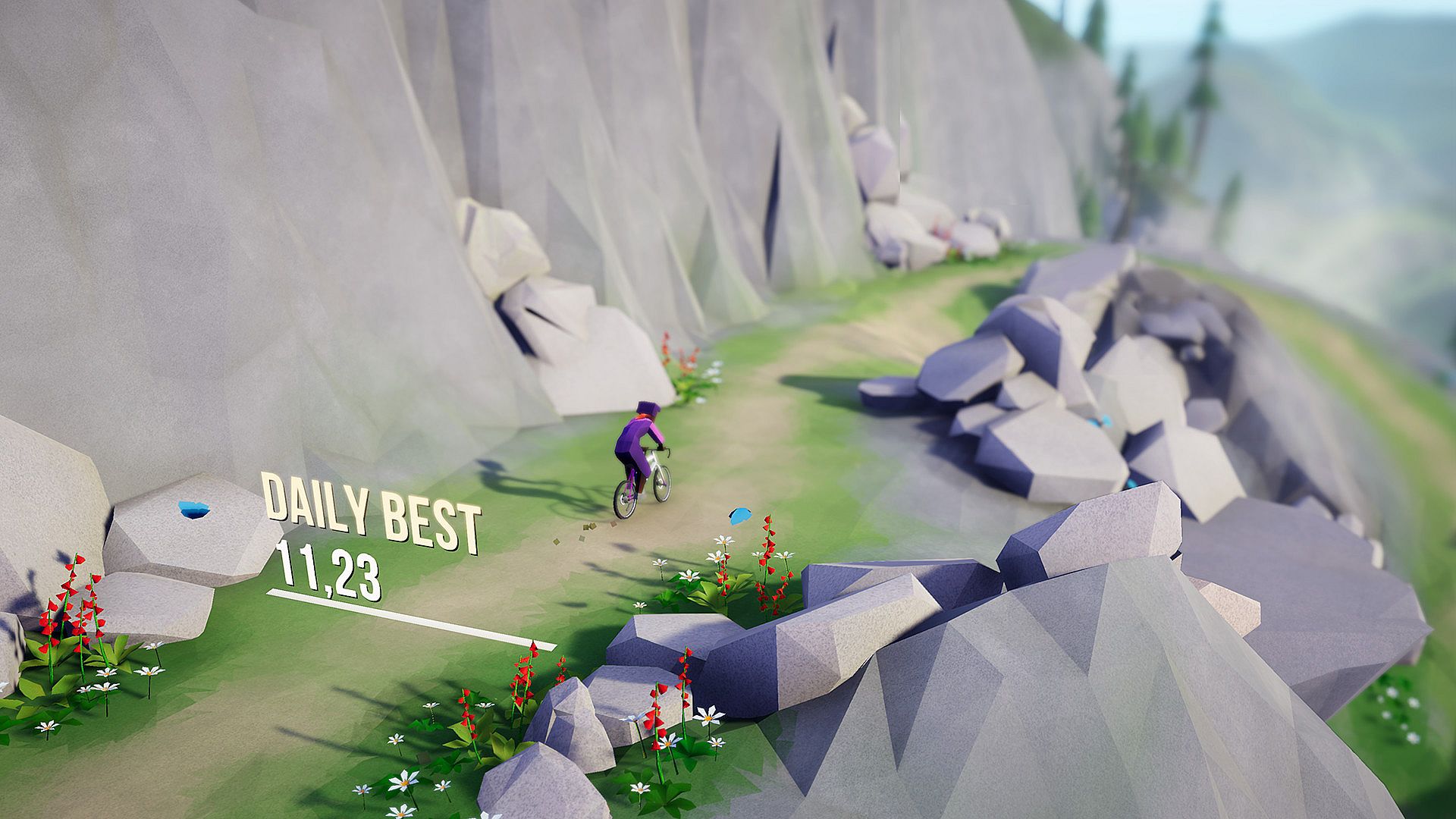
Two primary approaches define the experience. Players can ride at their own pace, following scenic routes along lakes and through woods to discover the environment without time pressure. Alternatively, they face the clock on timed descents that test consistency and route efficiency across multiple trails per mountain.
Unlockable difficulty modes increase the challenge by tightening requirements for clean runs and faster times. Leaderboards track performance for speed-running comparisons. Free Ride mode removes checkpoints entirely, creating an open descent where riders must reach the bottom without falling, emphasizing route creativity and endurance under risk of reset on crashes.
Controls and Progression
Tight, controller-friendly inputs handle acceleration, braking, leaning, and tricks that maintain flow or recover from errors. Progression involves mastering each mountain's trails before advancing, with new difficulty tiers and bike options opening as skills improve. The structure encourages repeated attempts on the same paths to shave seconds or uncover safer alternatives through off-road sections.
Is It Worth Playing?
Player reception remains strongly positive years after release, with the game praised for its satisfying physics, atmospheric presentation, and replayable descent challenges. It suits those who enjoy skill-based single-player experiences over competitive multiplayer or narrative-driven titles. The combination of relaxed exploration and high-stakes timed runs provides depth without overwhelming complexity, making it a strong choice for fans of simulation racing or mountain biking themes. Ongoing availability on PC with controller support and leaderboards supports long-term engagement for those seeking personal improvement and route mastery.