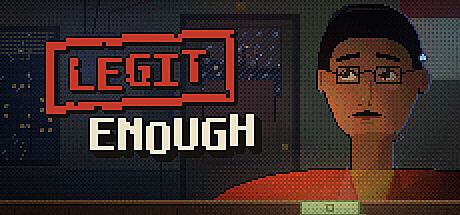


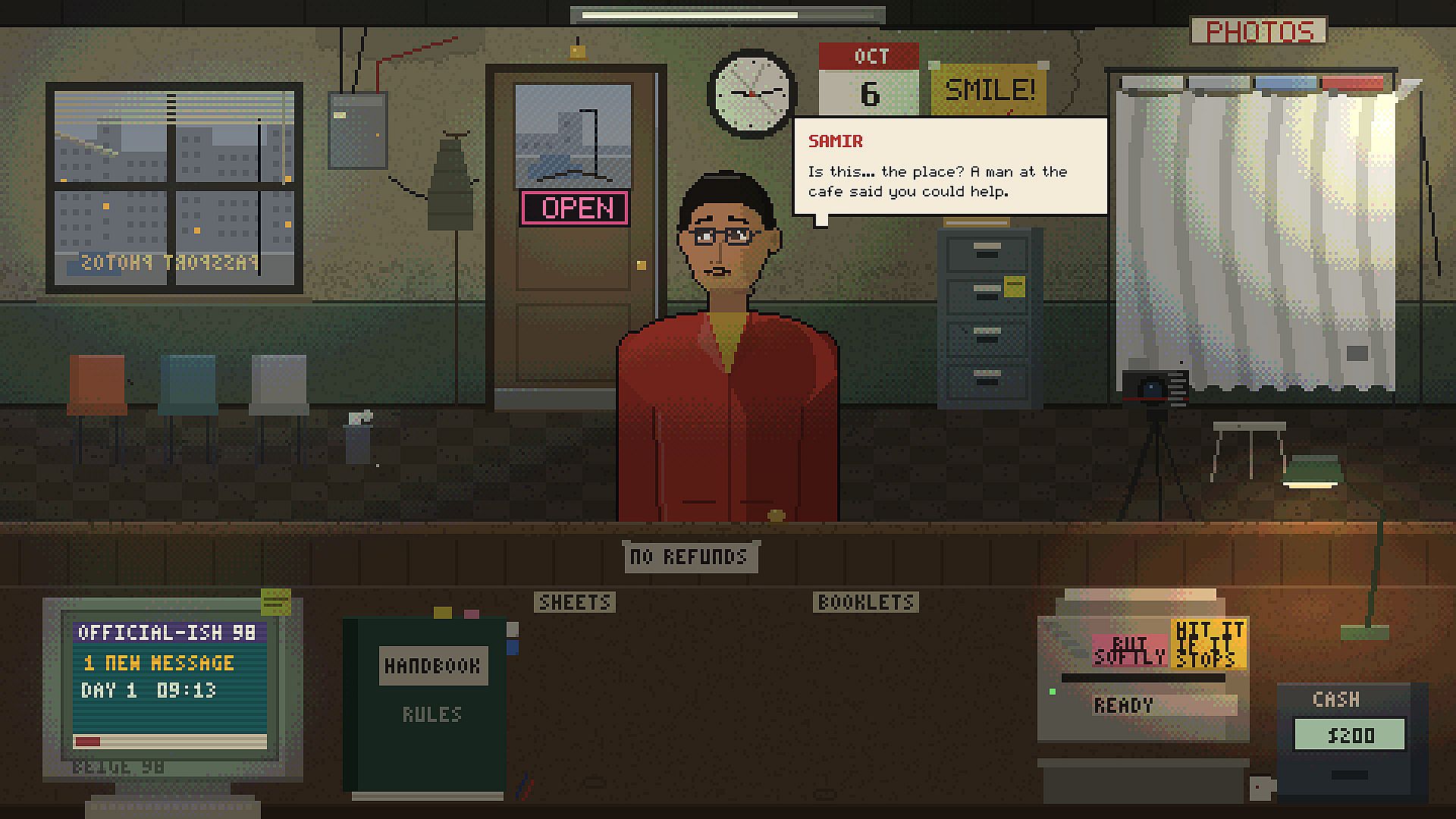
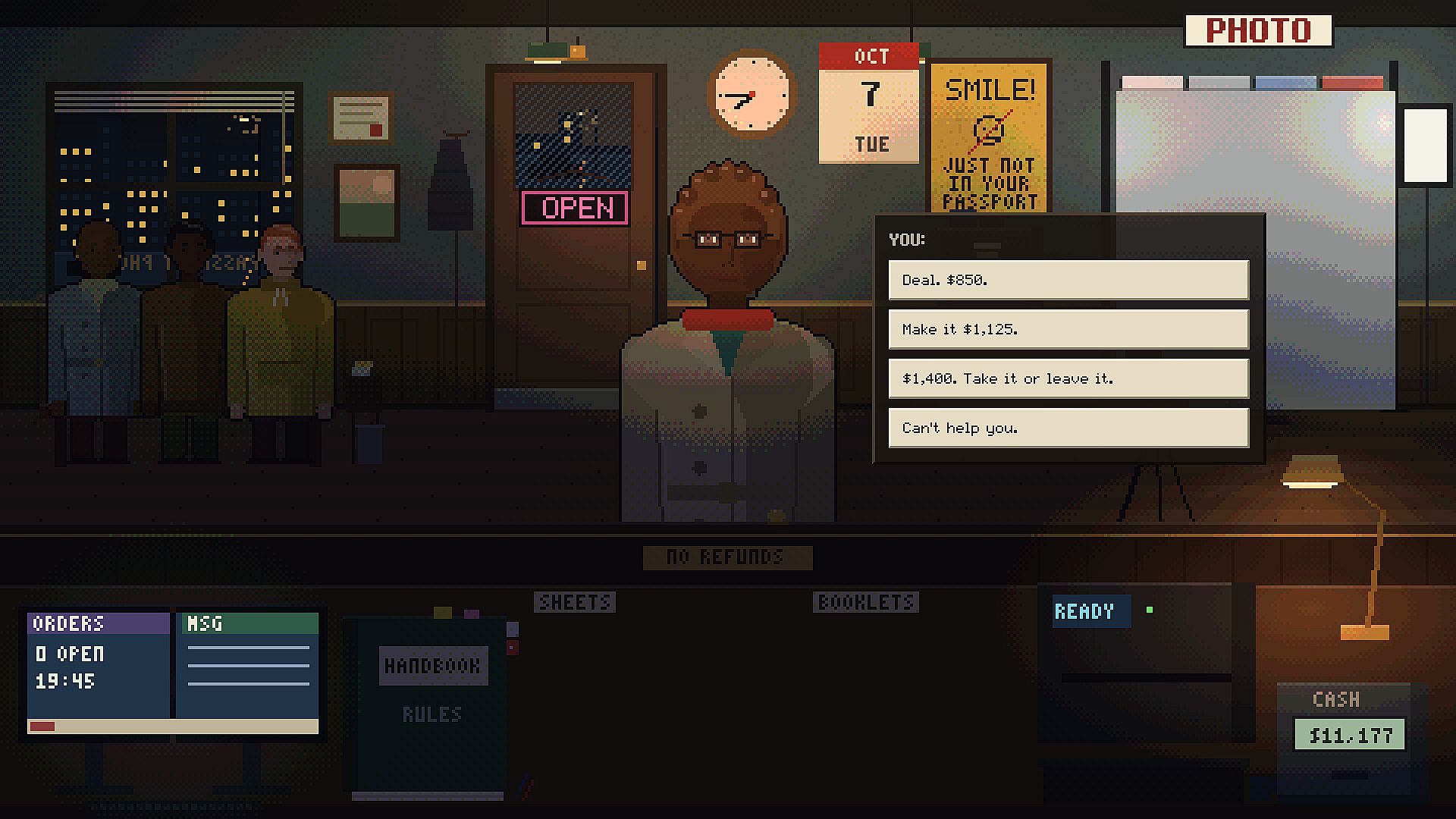
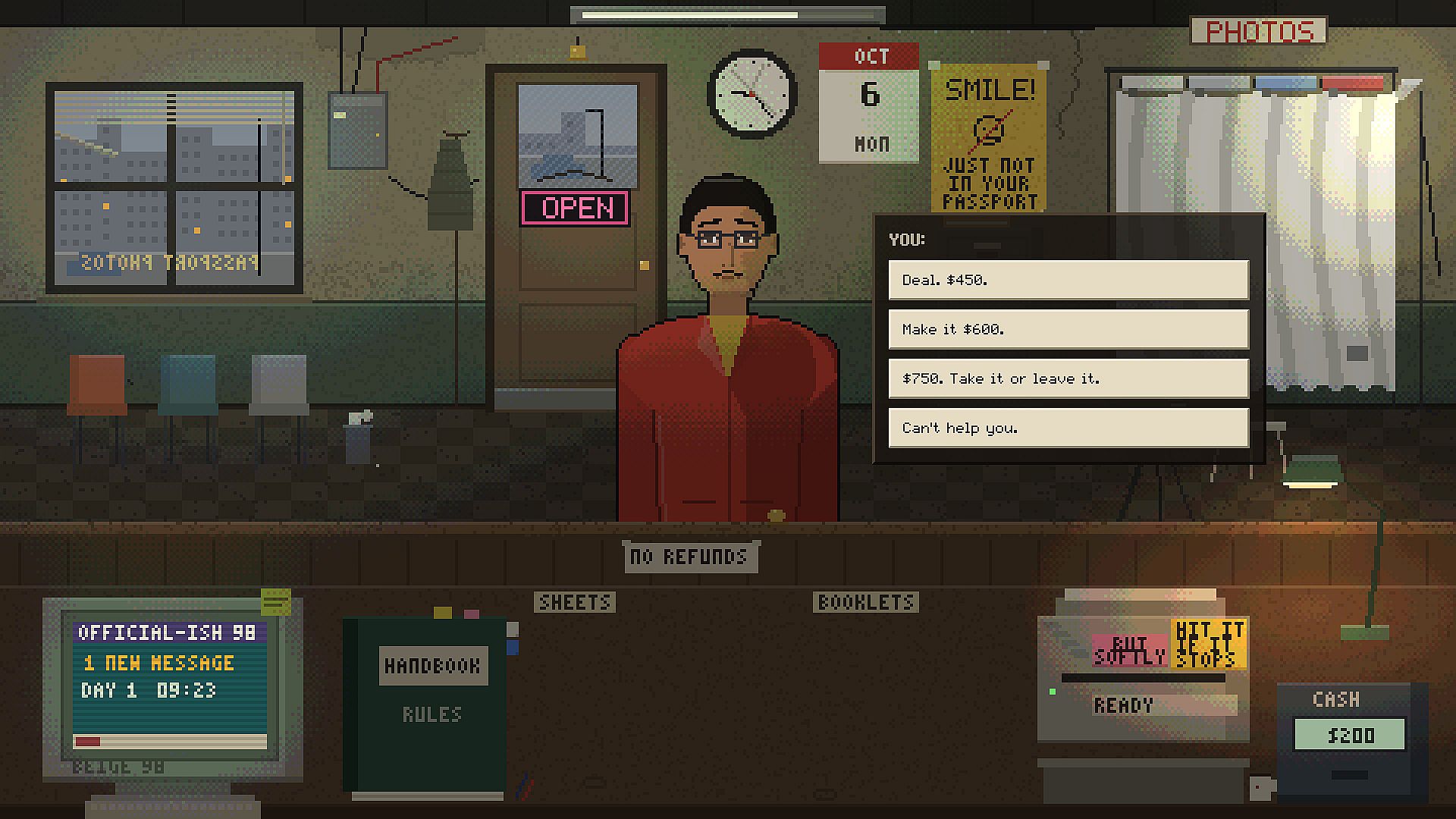
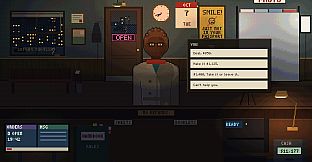
Legit Enough is an indie simulation game for PC that puts players in charge of a modest passport photo and document shop during October 2008. The premise centers on running a small business where customers seek more than simple photographs, often needing assistance with identity documents for travel, work, or personal reasons. The experience emphasizes careful attention to detail in a low-tech environment, blending photography sessions, document assembly, and day-to-day shop operations into a cohesive loop.
Gameplay
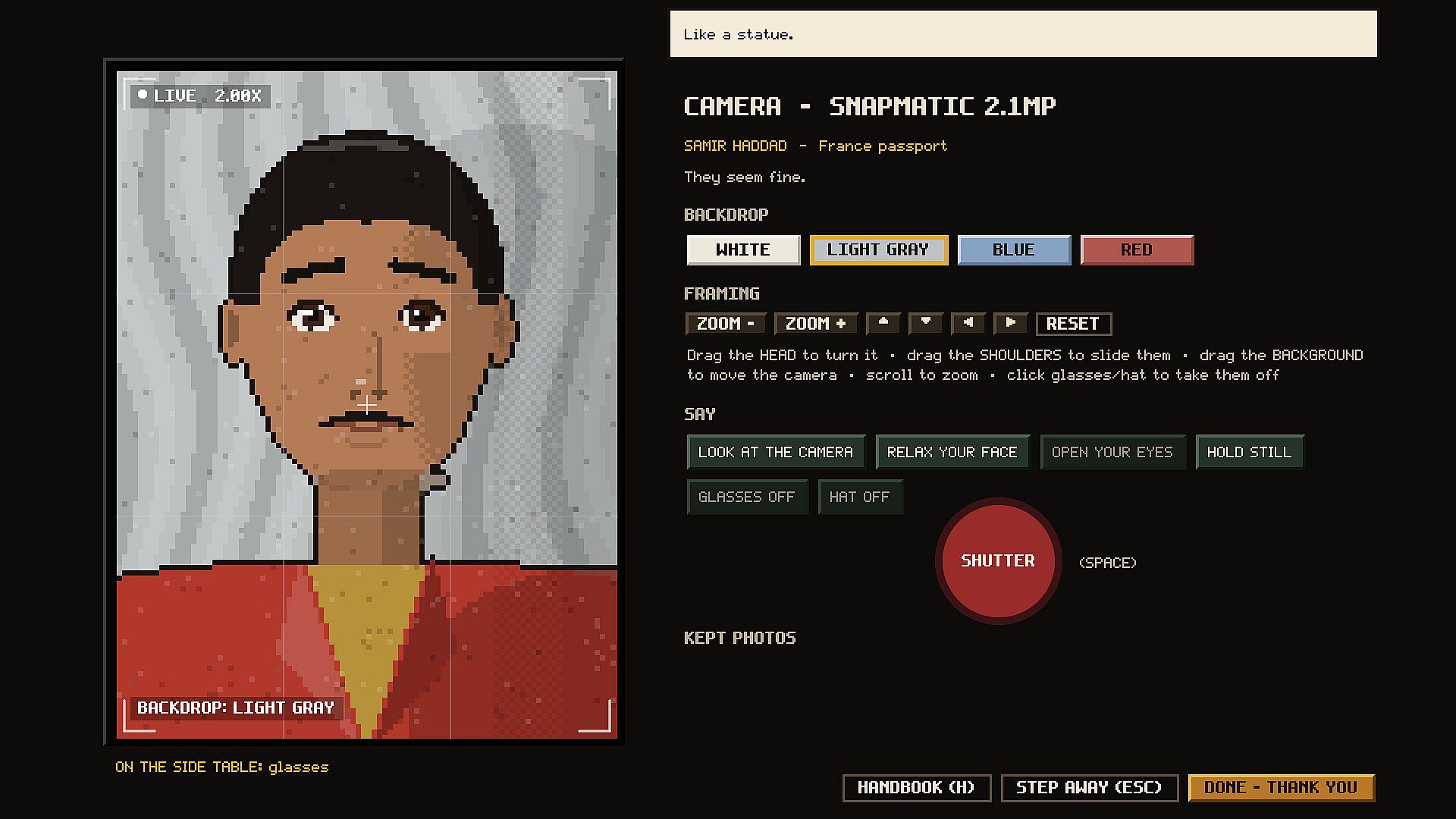
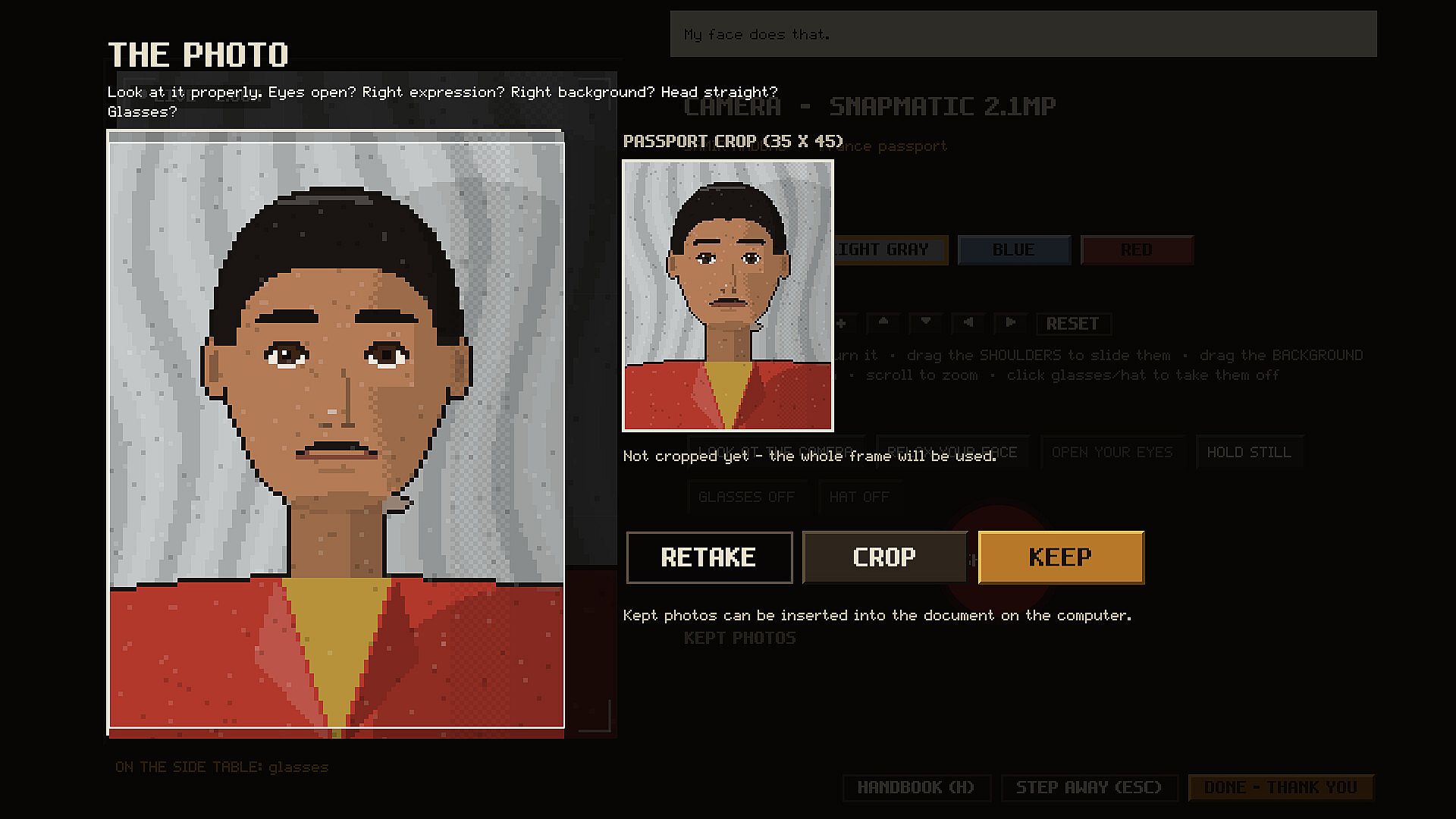
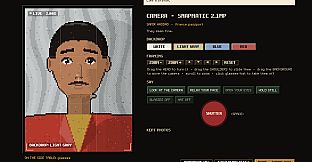
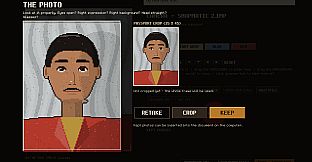
The core loop begins with seating customers on a stool in front of a basic camera setup. Players adjust head position, shoulders, zoom, and framing while directing expressions, eye contact, and posture to meet varying country requirements. Accessories such as glasses or hats must be removed where rules demand it, and the cheap equipment introduces challenges like shutter lag and fidgeting subjects. Multiple shots allow review and cropping before selecting the best result.
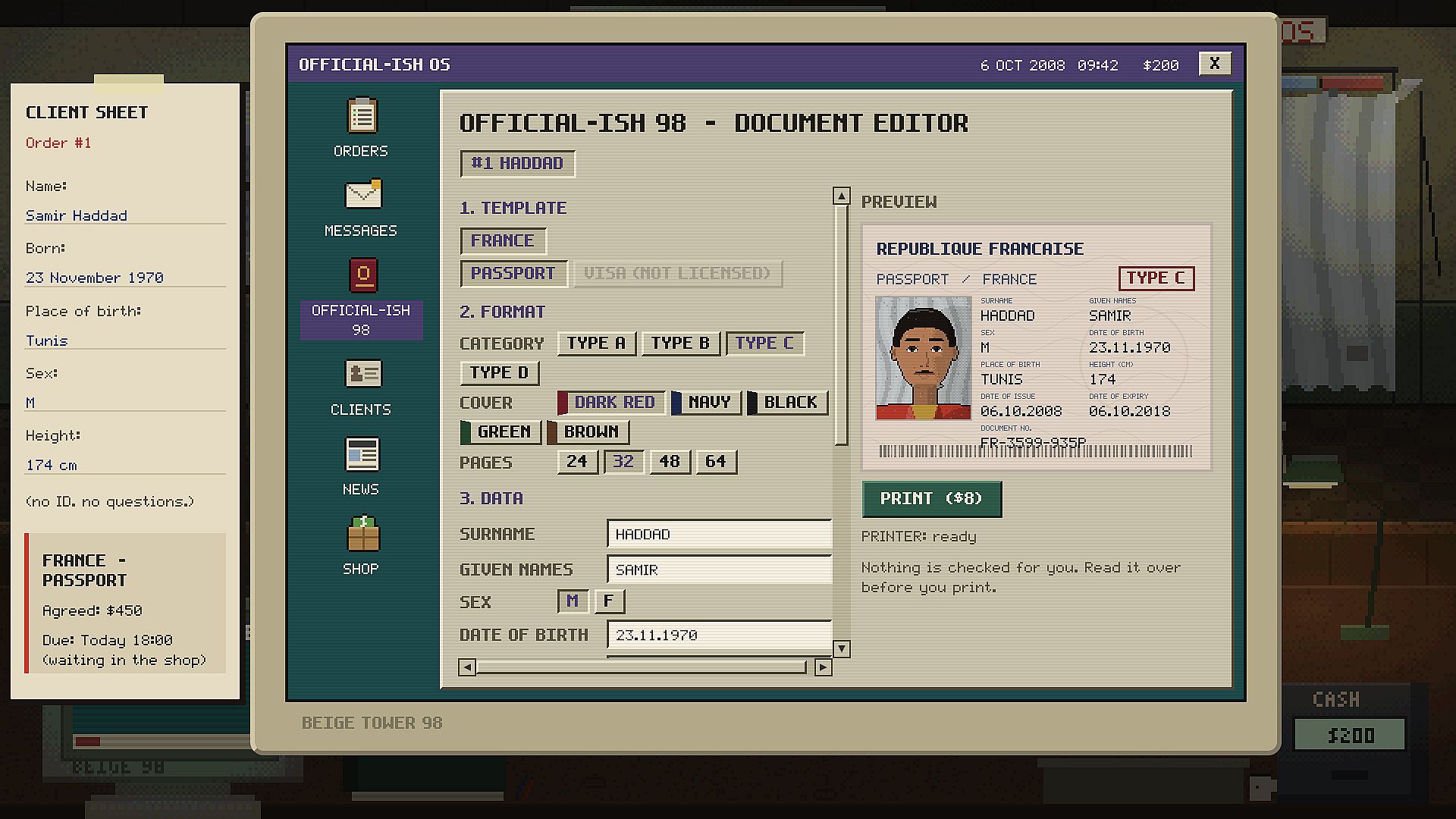
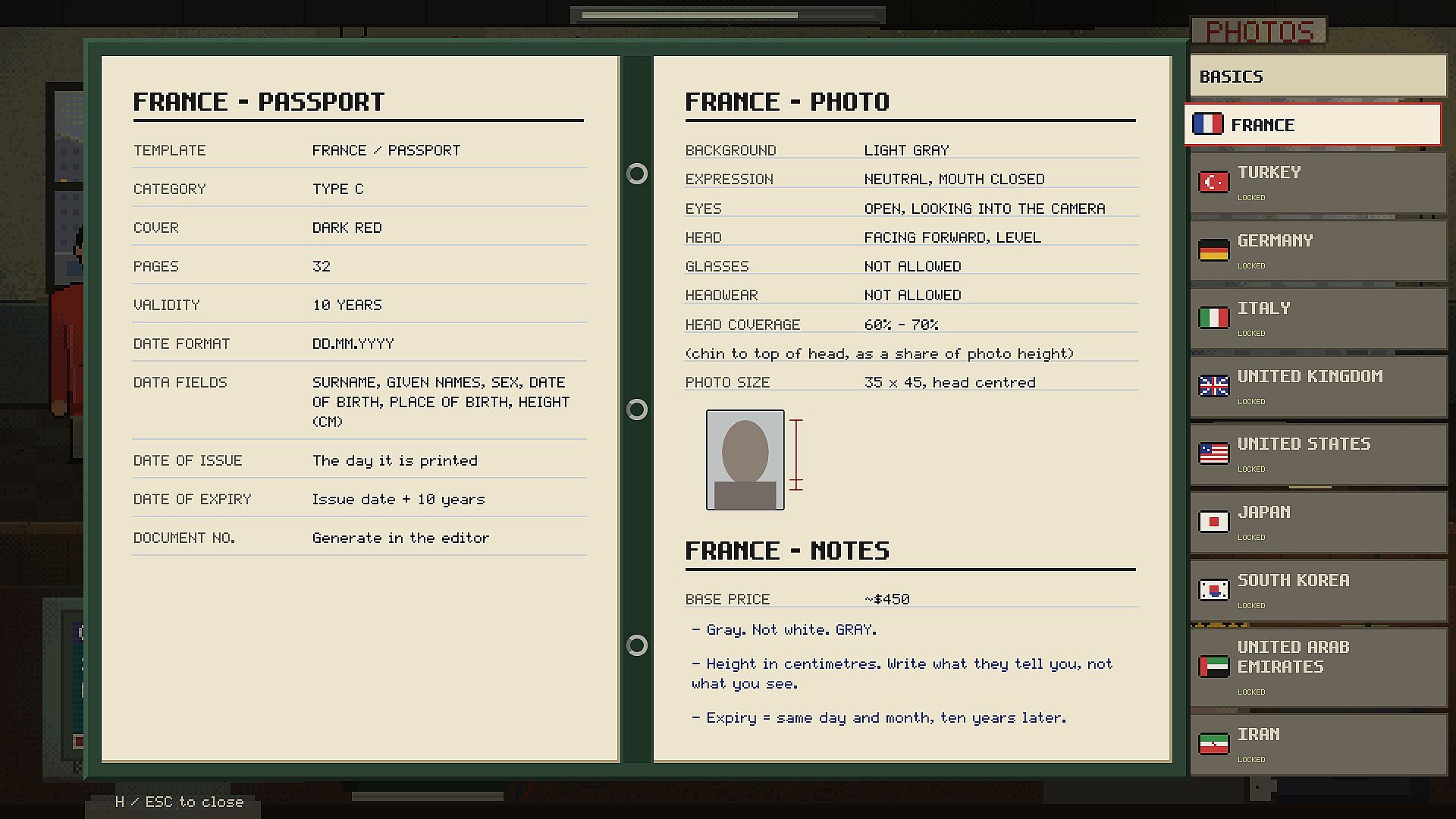
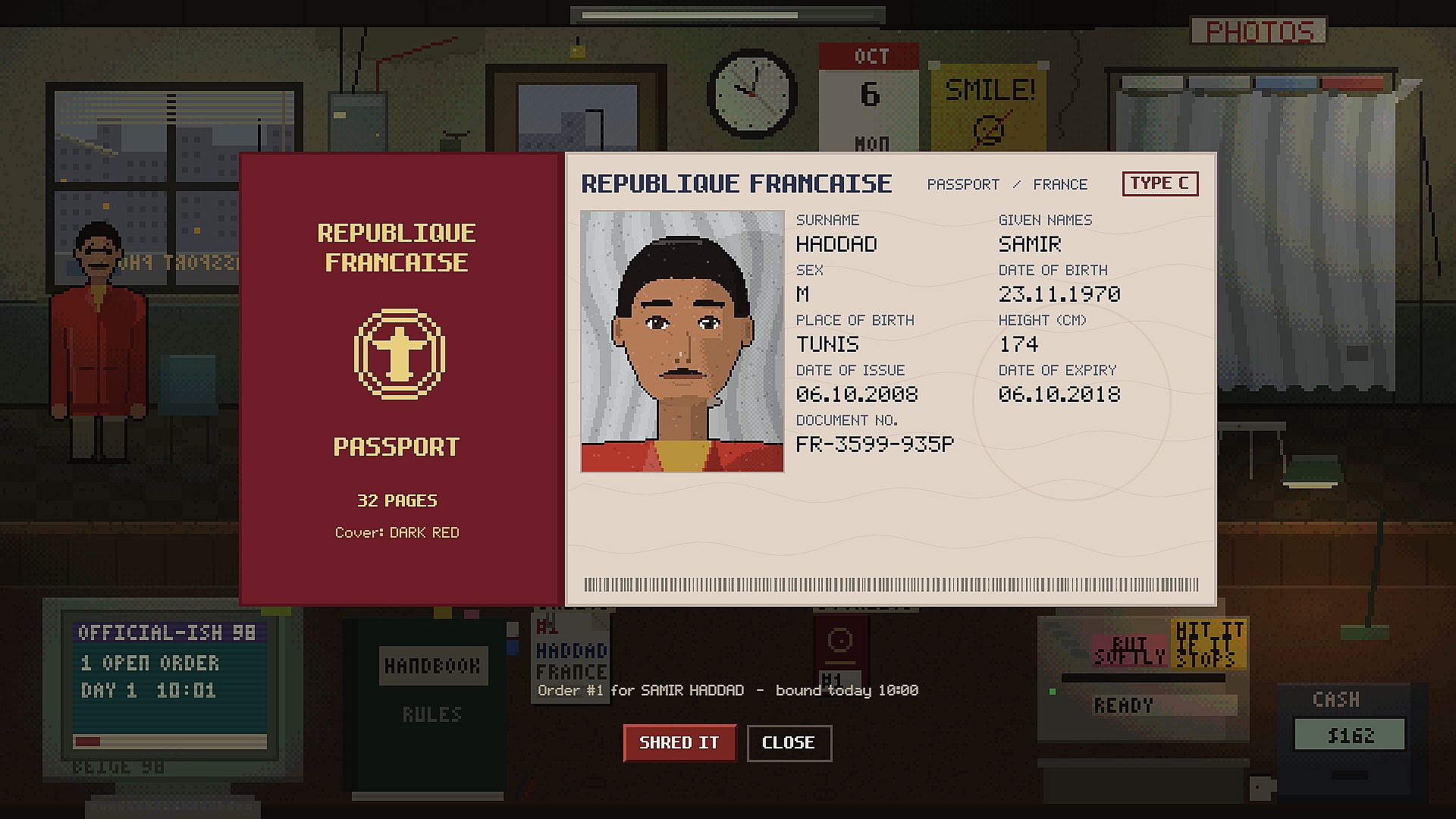
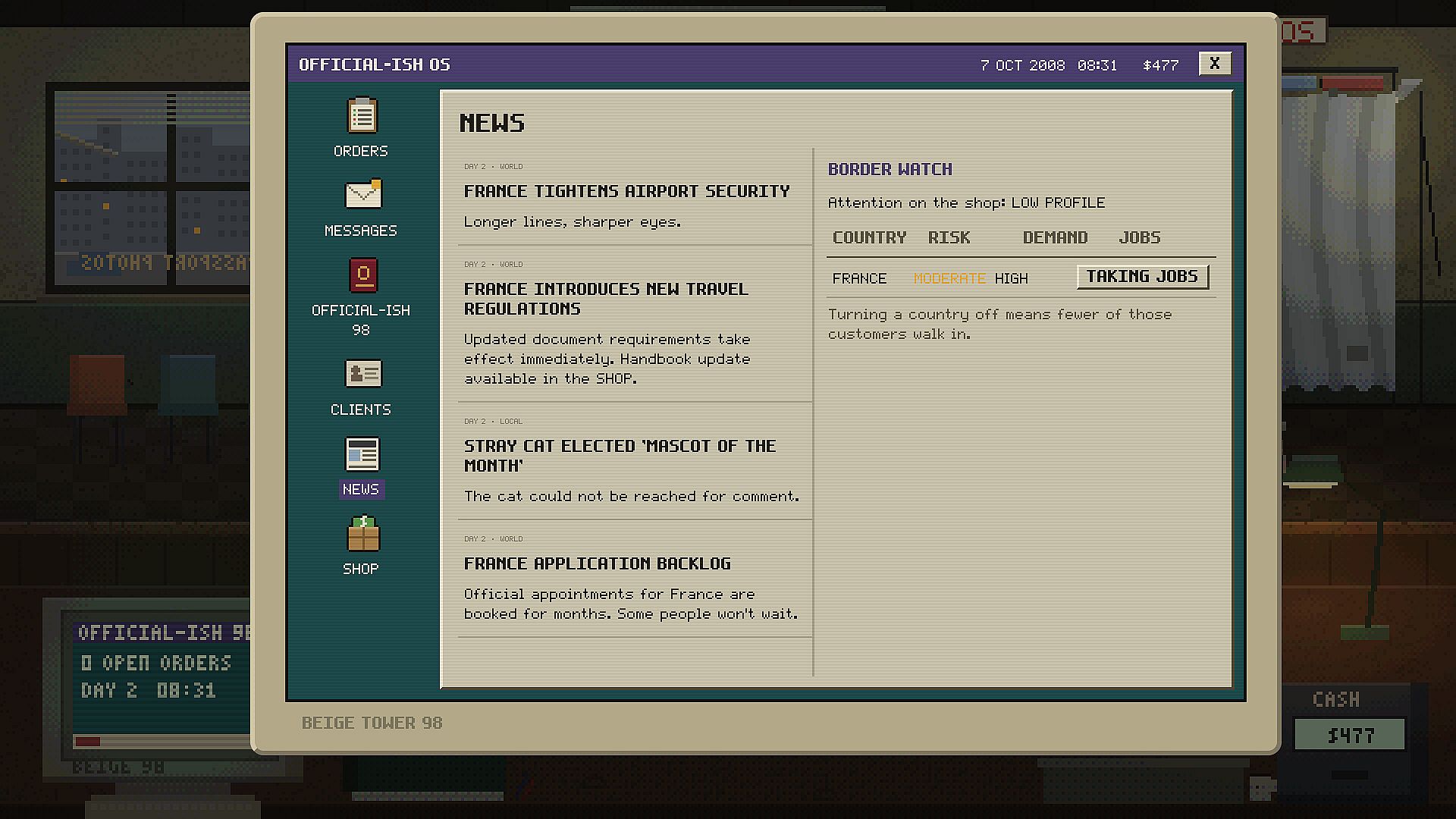
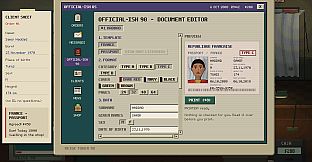
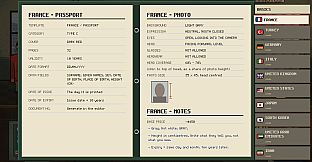
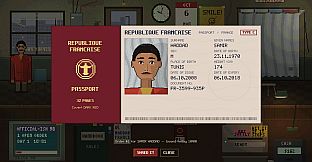
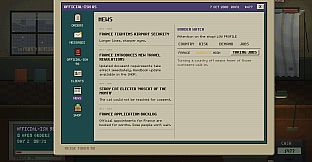
Document creation follows on an aging beige computer nicknamed OFFICIAL-ISH 98. Fields for templates, categories, cover colors, page counts, names, dates, and numbers are filled manually with no automated checks. Printed pages require binding, and mistakes in photo quality, information accuracy, or formatting can lead to hidden consequences revealed only later. Ten countries feature distinct rules that evolve with in-game news, forcing players to update their handbook periodically.
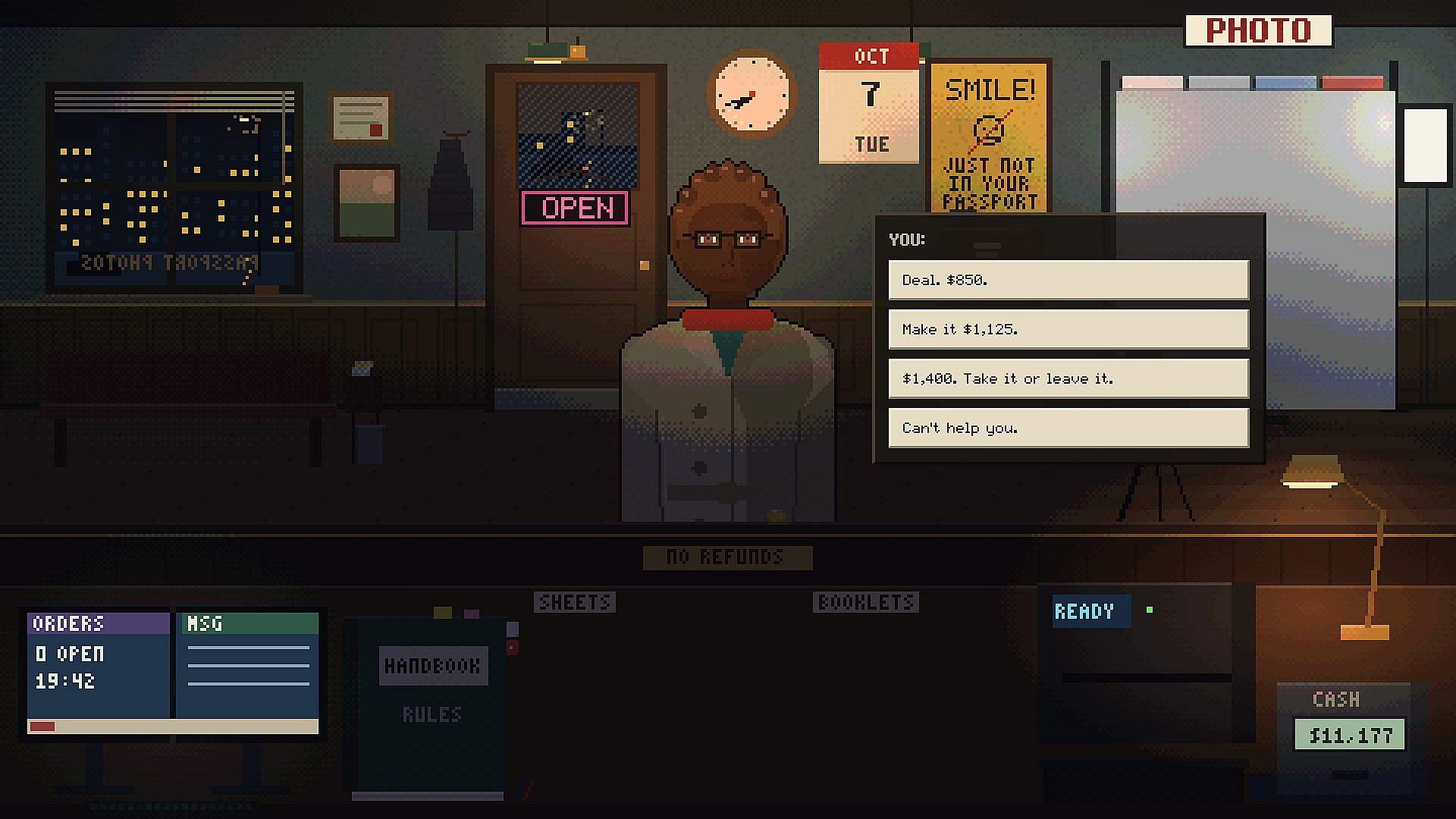
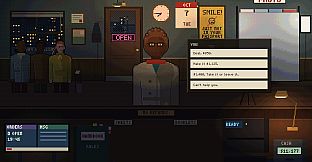
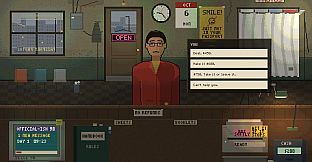
Shop management adds layers of decision making. Haggle with each customer over price without driving them away. Balance rush orders against waiting customers while covering daily rent and supply costs. Reputation influences the flow of new clients, yet increased visibility can attract unwanted attention. External events such as airport crackdowns, power outages, or printer failures disrupt routines and test adaptability.
Progression starts with minimal equipment including a low-resolution camera and a bedsheet backdrop. Earnings fund upgrades to cameras, printers, computers, and eventually a proper studio setup. These changes visibly alter the shop environment and improve workflow efficiency over time.
Game Modes
Legit Enough operates as a single continuous simulation without separate named modes or multiplayer components. Procedural customers arrive with varied personality traits, hidden attributes, and motivations for seeking new documents. Some return across sessions, creating continuity within the single-player experience. A recurring narrative thread follows one particular client named Samir, whose outcomes depend on player choices during interactions.
The full photo session for every visitor incorporates nine head poses, dynamic expressions, blinking, and accessory handling. Outcomes remain delayed, with document quality tested at unseen borders. This structure encourages repeated playthroughs focused on refining technique and managing resources rather than competitive or cooperative variants.
Shop Upgrades and Progression
Early sessions feature basic tools that limit precision and speed. Saving funds unlocks better hardware that reduces errors and expands service options. The shop itself transforms gradually from makeshift arrangements to a more professional space with improved seating and lighting. Each upgrade directly influences how customers are handled and how efficiently documents are produced.
Procedural generation ensures variety across visits through 14 personality traits and 12 distinct reasons for needing documents. Hidden stats affect customer behavior during sessions, adding unpredictability to the photography and negotiation phases. Environmental factors like time of day and weather further modify the pixel-art shop atmosphere.
Is It Worth Playing?
Legit Enough suits players who enjoy methodical simulation games centered on precision tasks and resource management. The emphasis on manual document building and customer interaction creates a steady rhythm of small decisions with lasting effects. Those drawn to indie titles that simulate niche professions will find the late-1990s desktop interface and procedural customer encounters engaging for extended sessions.
The game rewards patience with its focus on quality control and adaptation to changing rules. Shop upkeep and reputation tracking introduce ongoing tension without overwhelming complexity. For anyone interested in a grounded, detail-oriented experience rather than action or narrative-driven adventures, the title offers a distinctive take on business simulation. Availability on PC makes it accessible for those seeking something outside mainstream genres.