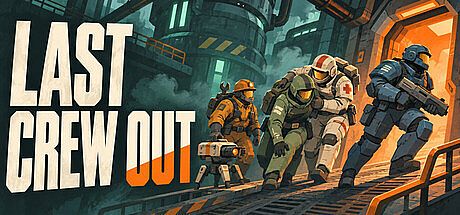


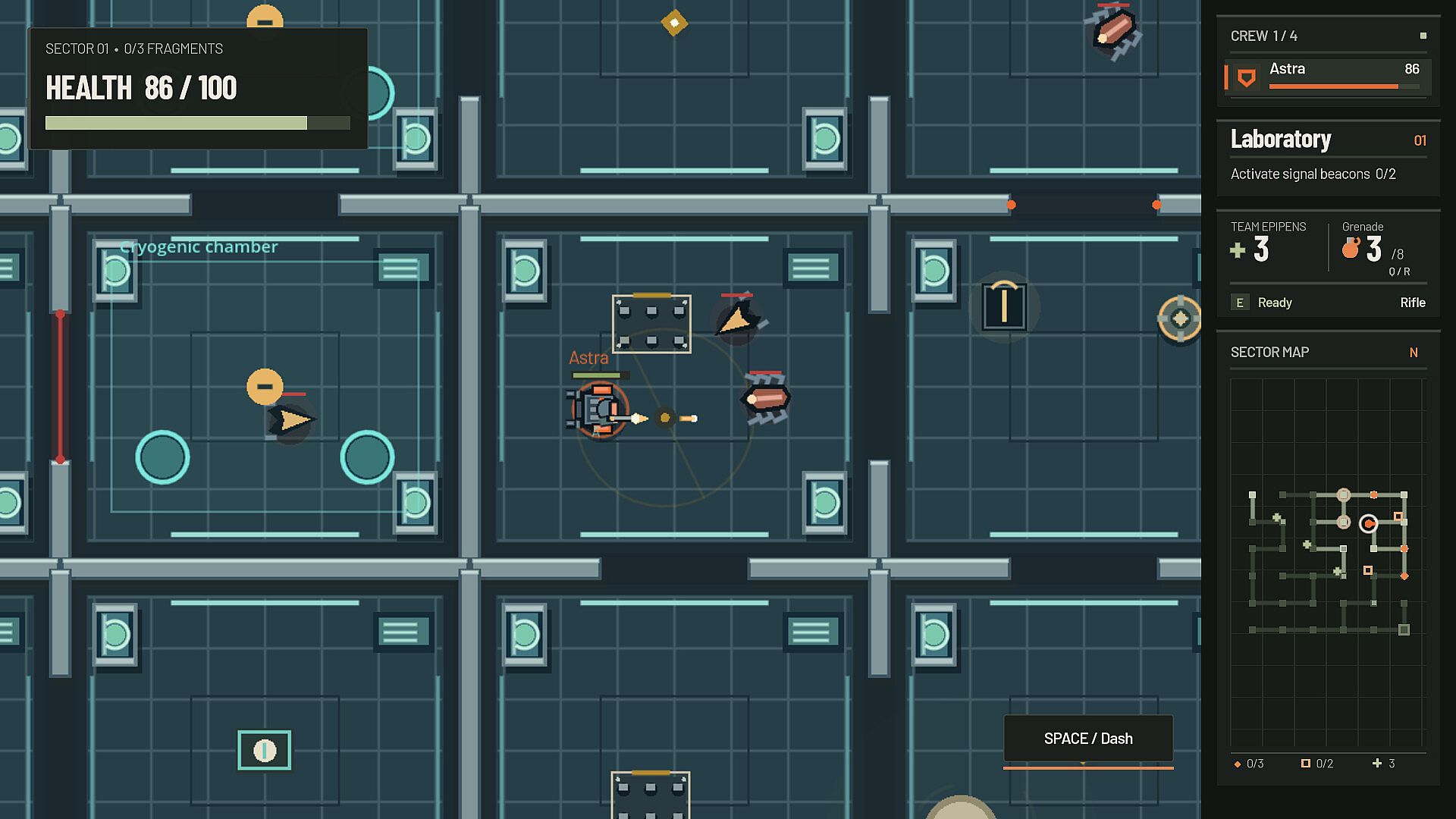
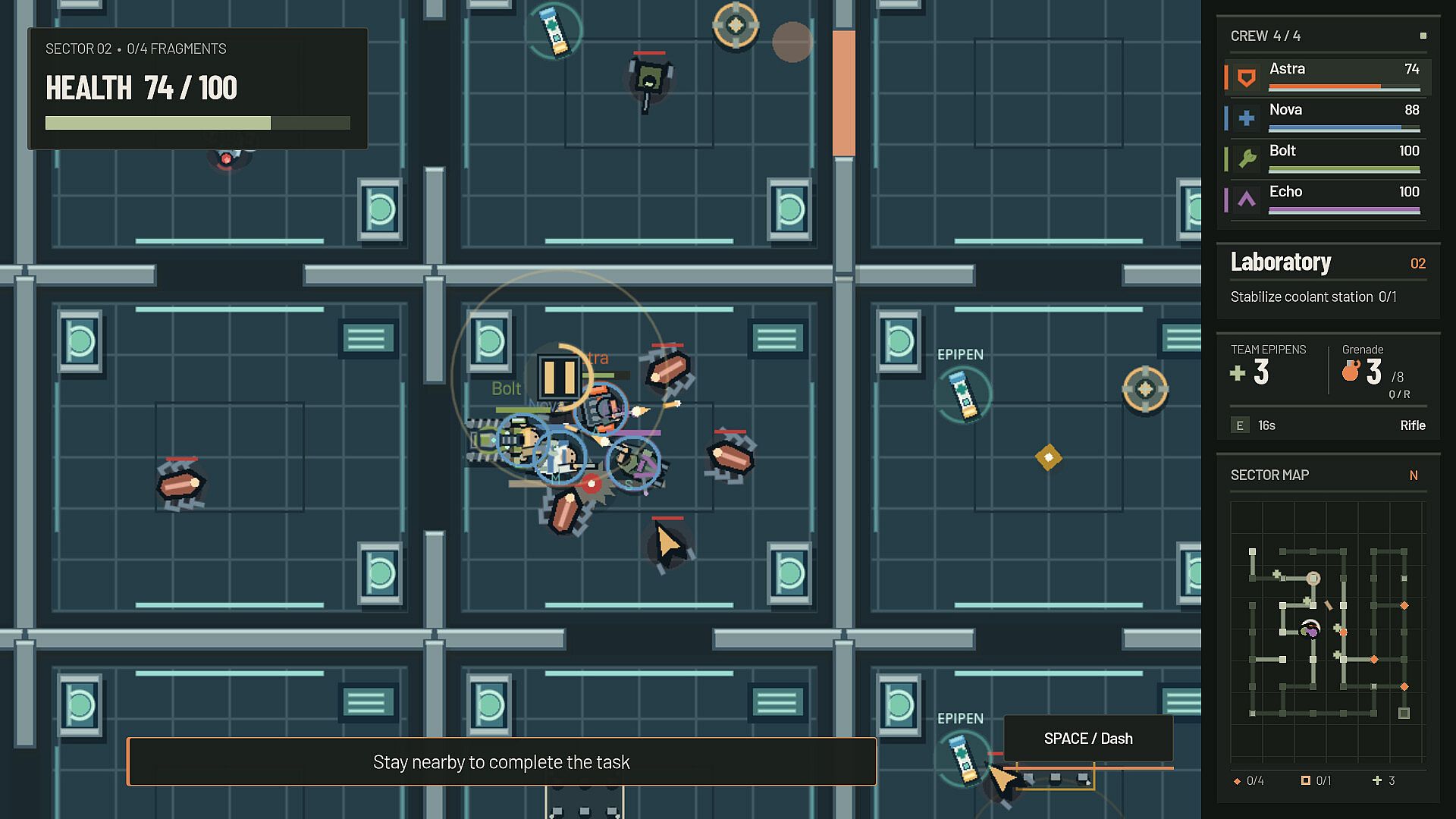
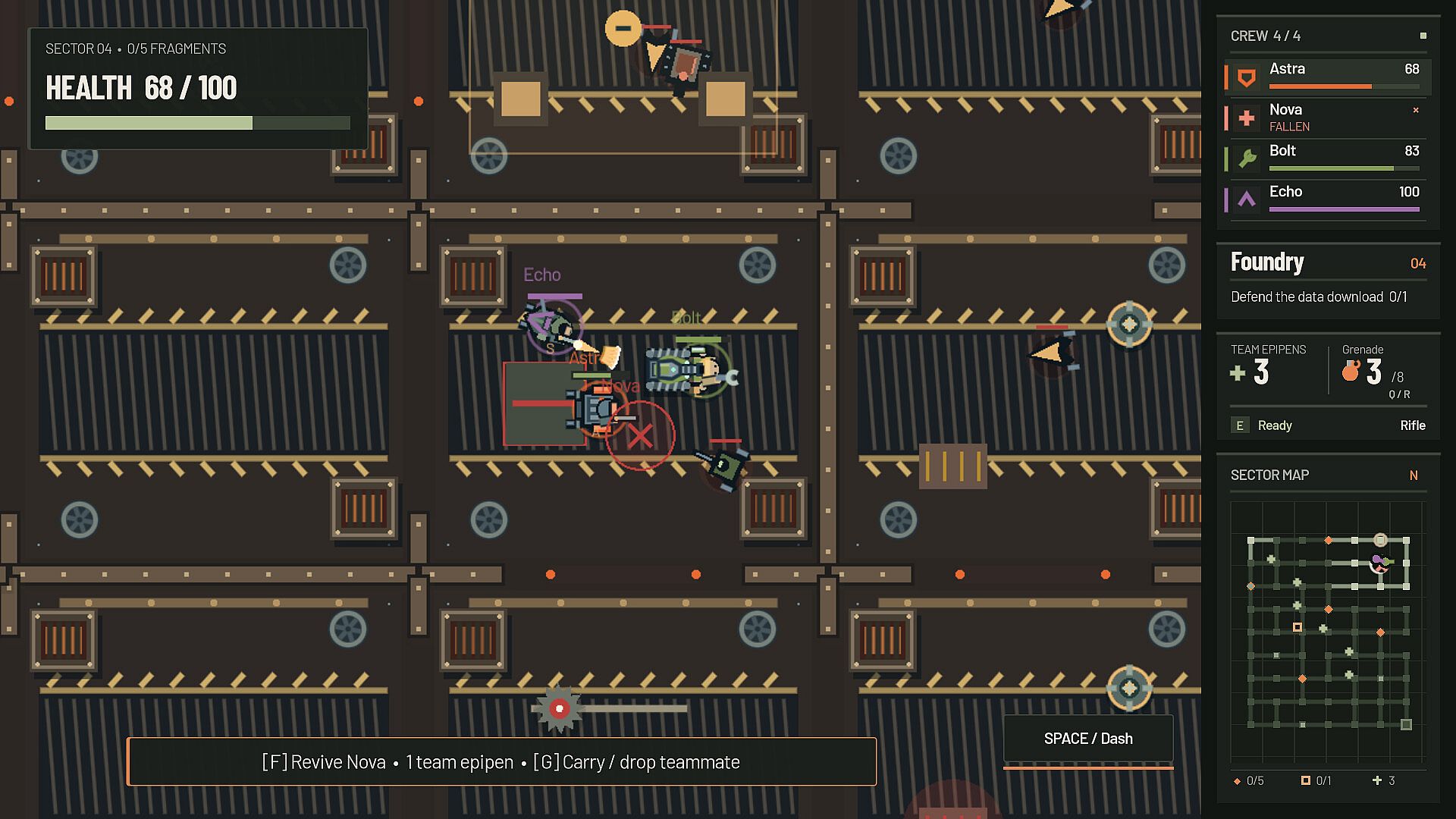
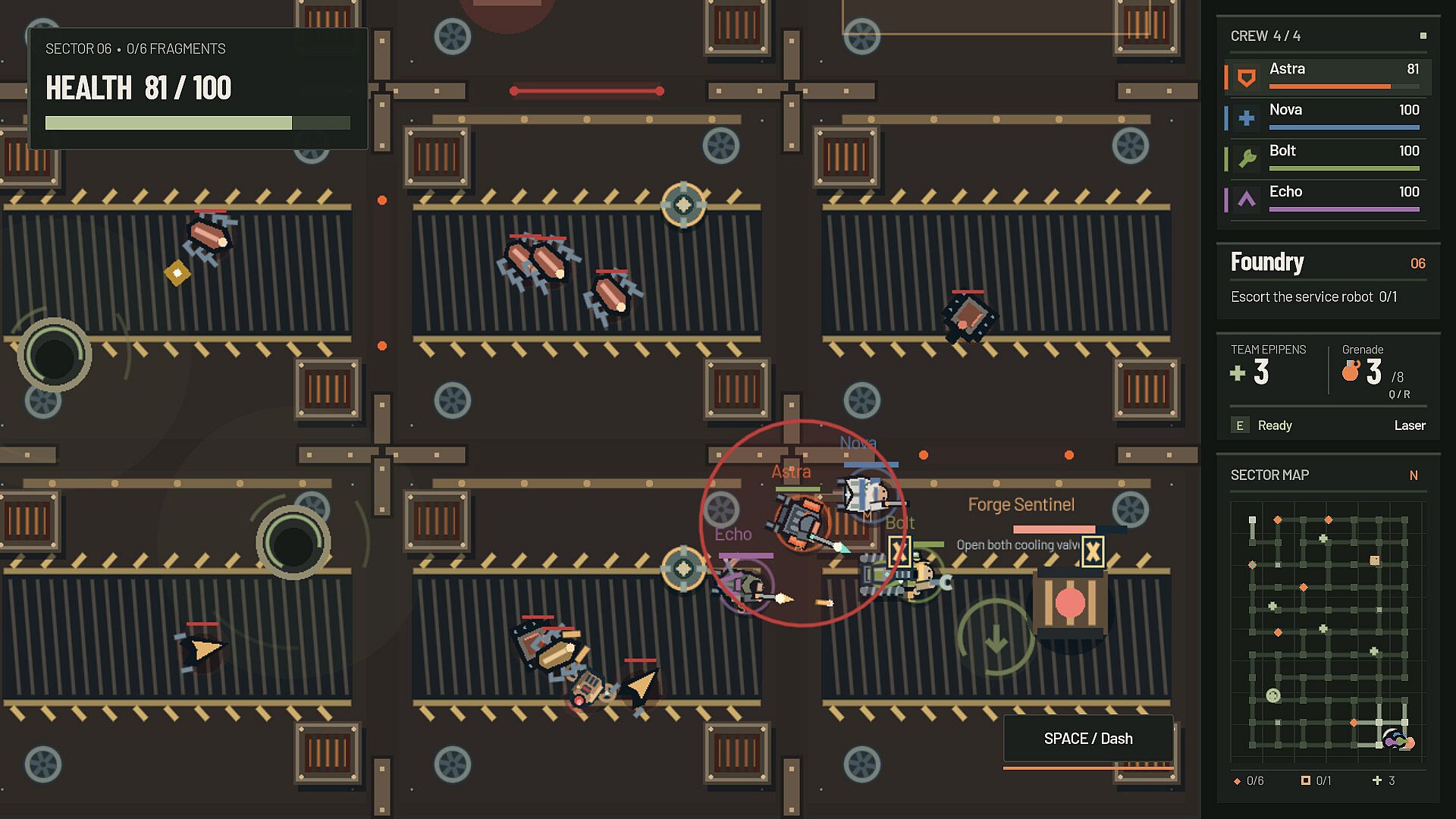
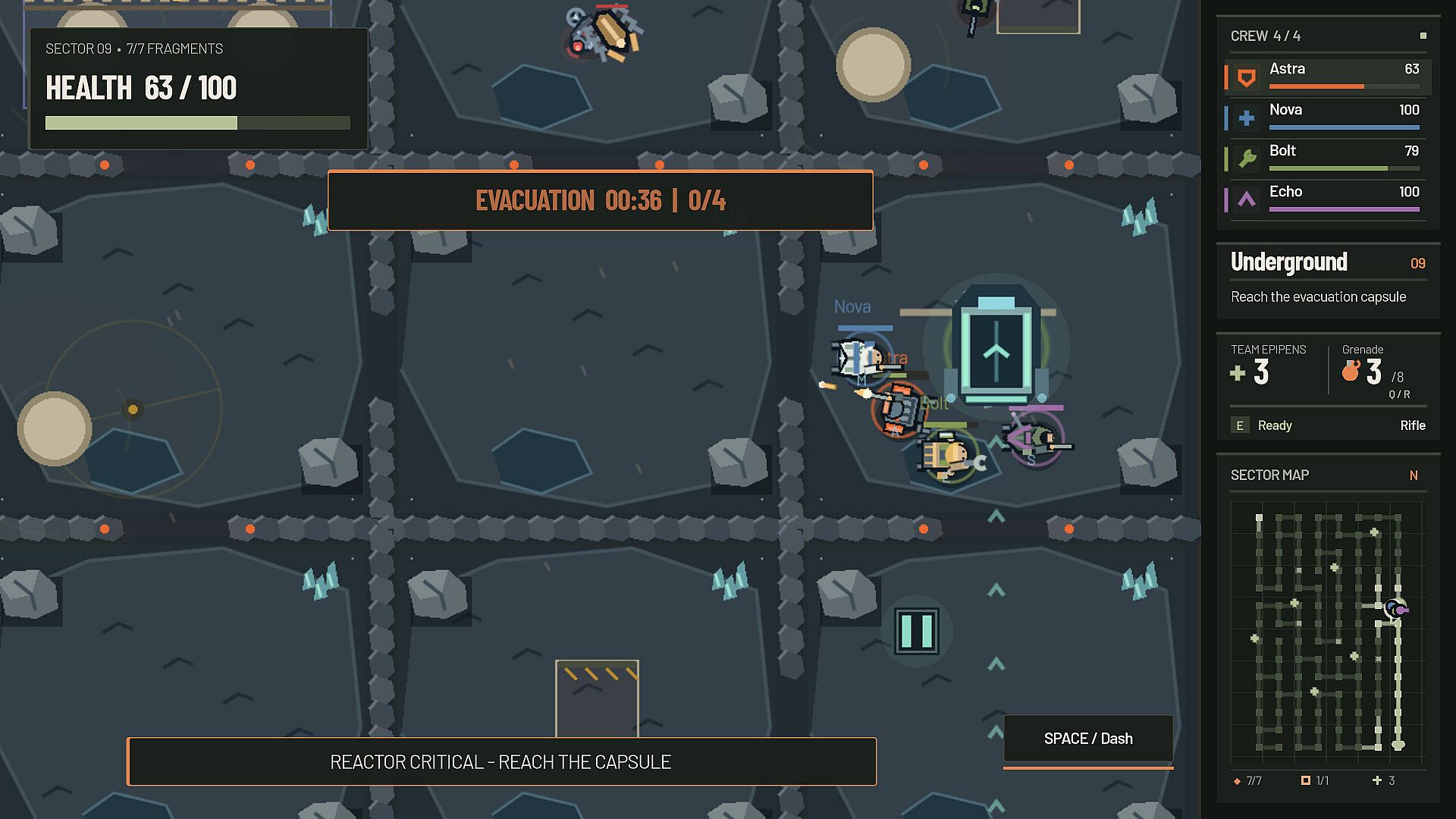
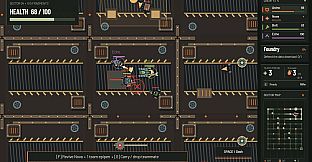
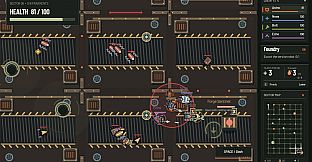
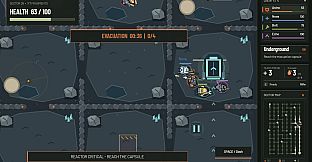
Last Crew Out is a 2D action roguelite built for solo runs or online crews of up to four players on PC. The core loop centers on exploring procedurally generated facilities, completing sector objectives, and surviving waves of enemies along with deadly traps. Reaching the exit counts for nothing unless every living crew member makes it through.
Gameplay
Players select one of four distinct roles at the start of a run. Assault focuses on direct combat pressure. Medic handles healing and support. Engineer trades a personal weapon for a deployable turret and tools that disable traps. Scout emphasizes mobility and reconnaissance. These specializations shape how a crew approaches threats and objectives.
Revival mechanics tie the team together. Epipens stored in a shared supply let players revive downed teammates or carry them to safety. When supplies run low, the remaining crew must push forward to the next sector to restore fallen members. This system rewards coordination and careful resource management across the entire group.
Between sectors, each player independently selects upgrades. Weapon options carry different effects, grenades add area control, and role-specific tools expand tactical options. Loadouts evolve run by run, allowing crews to combine strengths without forcing identical builds.
Game Modes
Standard campaigns send crews through nine sectors across three changing environments. Objectives shift each run, new enemy types appear, and boss encounters test group coordination. The final push requires powering evacuation terminals, regrouping, and racing to the escape capsule before the countdown expires.
Successful campaigns unlock Endless mode. Here the same core systems continue without a fixed sector limit, letting crews measure how far coordinated play and accumulated upgrades can carry them against escalating challenges.
Progression and Systems
Procedural generation ensures facilities never repeat exactly. Trap layouts, enemy placements, and objective details vary, while the three environments introduce distinct visual and mechanical differences. The nine-sector structure provides a clear campaign arc that still supports repeated attempts through fresh layouts and upgrade paths.
Role choices and shared revival tools create meaningful interdependence. A lone player can complete runs using careful positioning and role strengths, yet the systems scale naturally when friends join. Upgrade decisions remain personal, so one crew member's choices do not override another's.
Is It Worth Playing?
Last Crew Out suits players who enjoy roguelite structure combined with light extraction and co-op demands. The emphasis on getting the entire crew out alive adds tension that solo runs and small groups both feel. Role variety and independent upgrade paths keep sessions distinct without requiring perfect synchronization.
Those who prefer pure single-player experiences will find the solo option viable, while crews looking for repeatable short-to-medium sessions benefit from the sector-based structure and Endless extension. The game rewards learning enemy patterns, trap interactions, and efficient revival timing more than raw reflexes.
Availability on PC makes it accessible for groups already using the platform for similar indie titles. The combination of procedural variety, role specialization, and team-revival pressure creates a focused loop that stands on its own mechanics rather than relying on external progression systems.