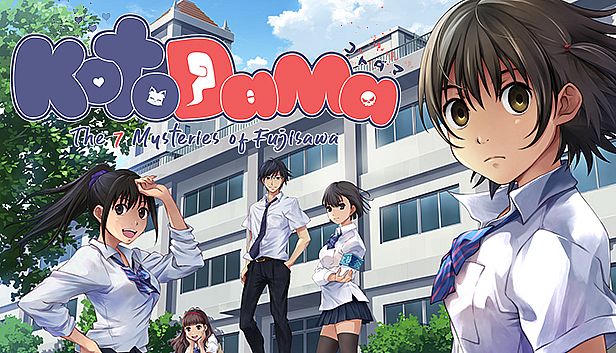














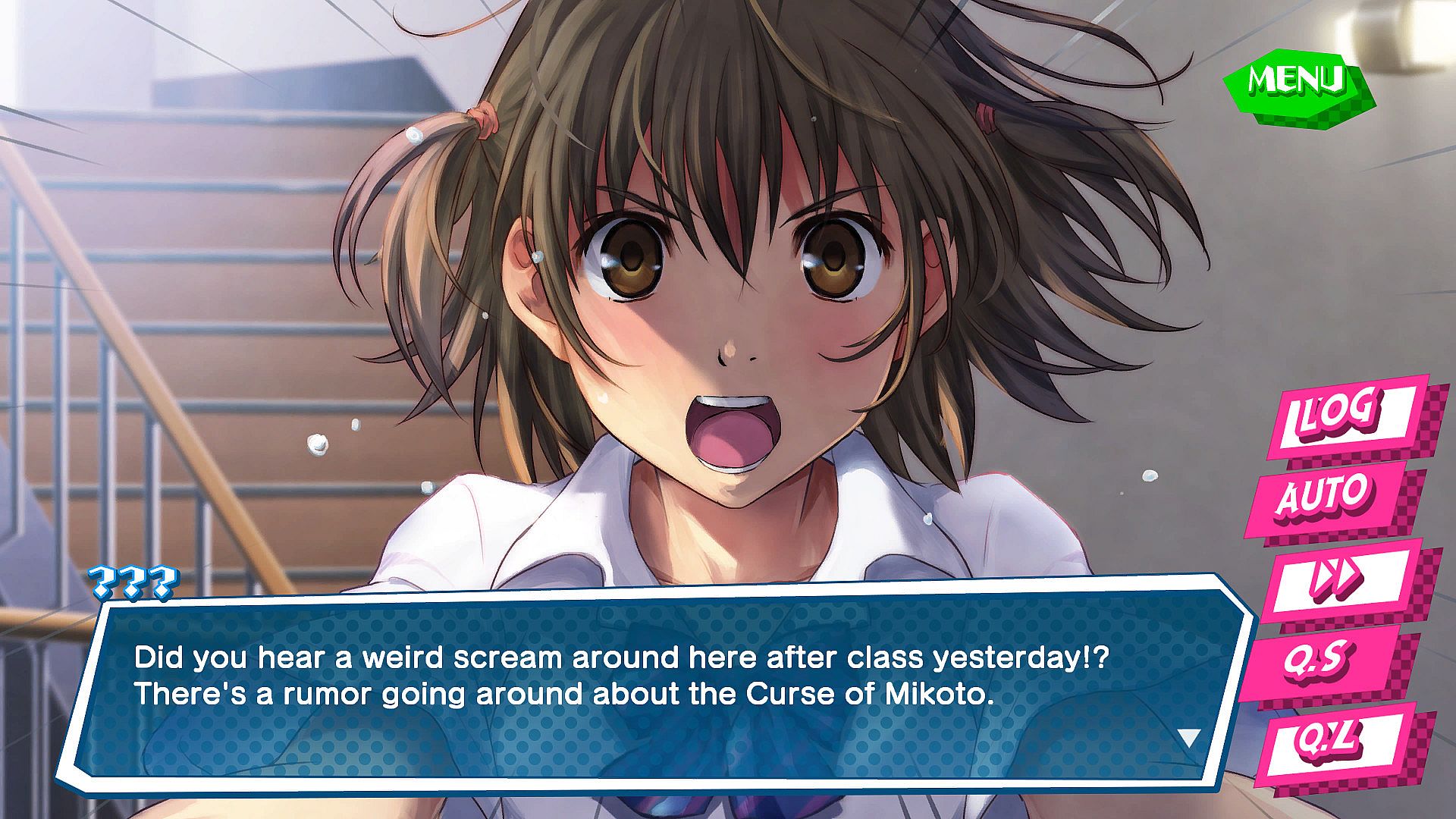


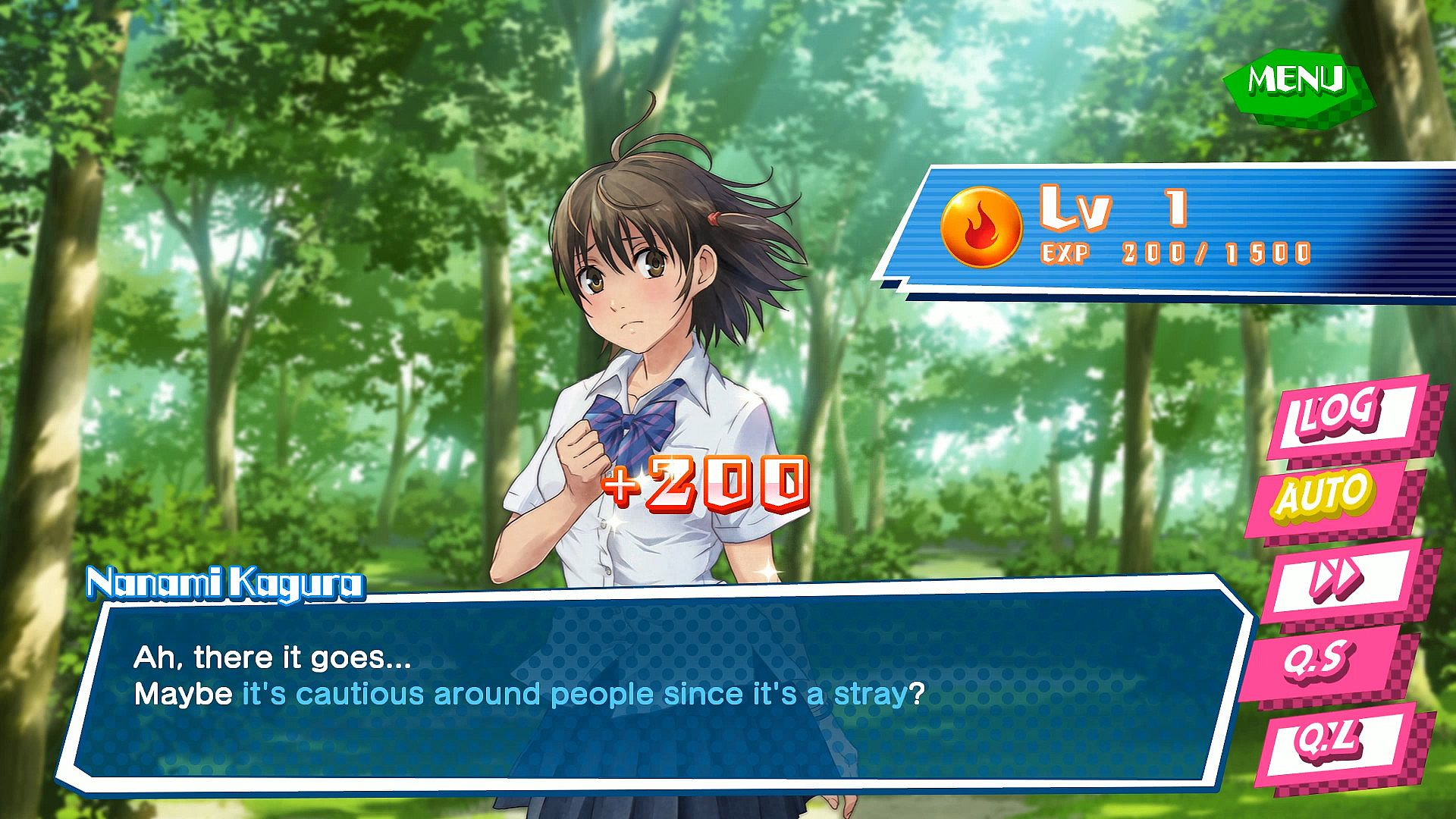








Kotodama: The 7 Mysteries of Fujisawa is a single-player adventure visual novel set at Fujisawa Academy, a fictional Japanese educational institution. Players step into the role of a student investigator who must unravel seven distinct mysteries across separate chapters. The narrative draws on familiar high-school tropes only to subvert them repeatedly, creating a story that rewards careful attention to dialogue and clues.
Gameplay
The core loop alternates between investigation segments and word-based interrogation sequences. During investigations, players explore academy locations and conversations to collect keywords and supporting clues. These elements directly strengthen the protagonist's abilities in the subsequent puzzle phase.
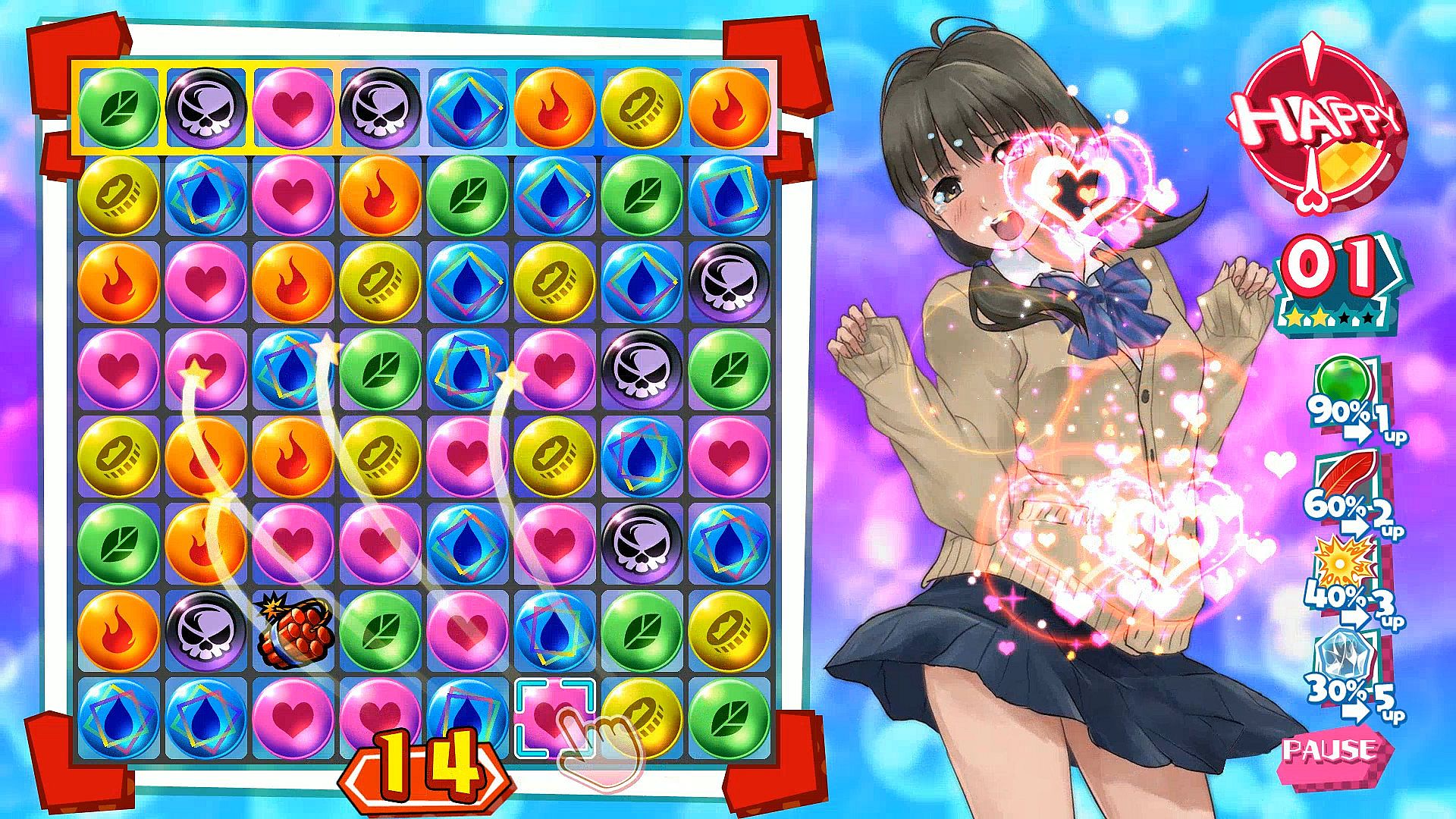
Interrogation battles rely on the Kotodama mechanic, where players select and combine words to challenge a target's statements. Successful choices gradually expose contradictions until the full truth emerges. The system incorporates a visual stripping motif that represents the removal of layers of deception rather than literal content.
Each chapter builds on prior discoveries, yet the story deliberately plants red herrings and false leads. Players must decide which clues to pursue and which statements to contest, shaping how much information becomes available for later confrontations.
Game Modes
The primary experience unfolds across seven story chapters, each dedicated to one mystery at the academy. These chapters follow a linear structure with branching dialogue options that influence immediate outcomes but feed into a larger overarching plot.
Fantasize Mode serves as the dedicated puzzle challenge. It isolates the word-combination mechanics from the narrative, allowing players to replay specific interrogation sequences with the goal of achieving higher scores and perfect clears. Progress in the main story unlocks additional puzzle variants and difficulty options within this mode.
Multiple playthroughs are required to access every piece of information. New details surface on subsequent runs, leading to an alternate true ending and an expanded collection of artwork once all routes reach completion.
Story Structure and Twists
The seven mysteries function as self-contained episodes while contributing to a broader conspiracy. Characters initially appear to fit standard archetypes, yet repeated interactions reveal hidden motivations and connections that alter earlier assumptions.
Keyword collection influences both battle effectiveness and narrative depth. The more thorough the investigation, the stronger the Kotodama responses become, which in turn unlocks additional story branches and character insights.
Voice acting and artwork support the shifting tone, moving between light school-life moments and darker revelations without relying on external references or prior series knowledge.
Is It Worth Playing?
This visual novel suits players who enjoy mystery-driven stories combined with interactive puzzle elements. The interrogation system adds a layer of engagement beyond standard dialogue trees, while the emphasis on replaying for the complete picture appeals to completionists.
Steam user reviews sit at mixed status based on a modest number of ratings, with praise often directed at the plot twists and character writing. Those seeking a straightforward linear tale may find the requirement for multiple runs less appealing, whereas fans of word-puzzle mechanics and trope-subverting narratives tend to appreciate the focused design.
The game remains available as a complete single-player package without ongoing seasonal content or additional modes beyond the verified story chapters and Fantasize Mode. Its length and structure make it a solid choice for dedicated visual novel enthusiasts looking for a self-contained experience with mechanical variety.