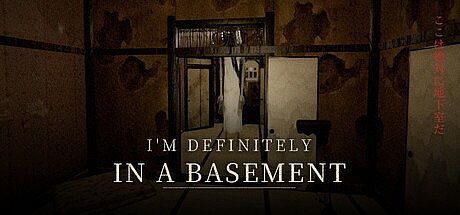


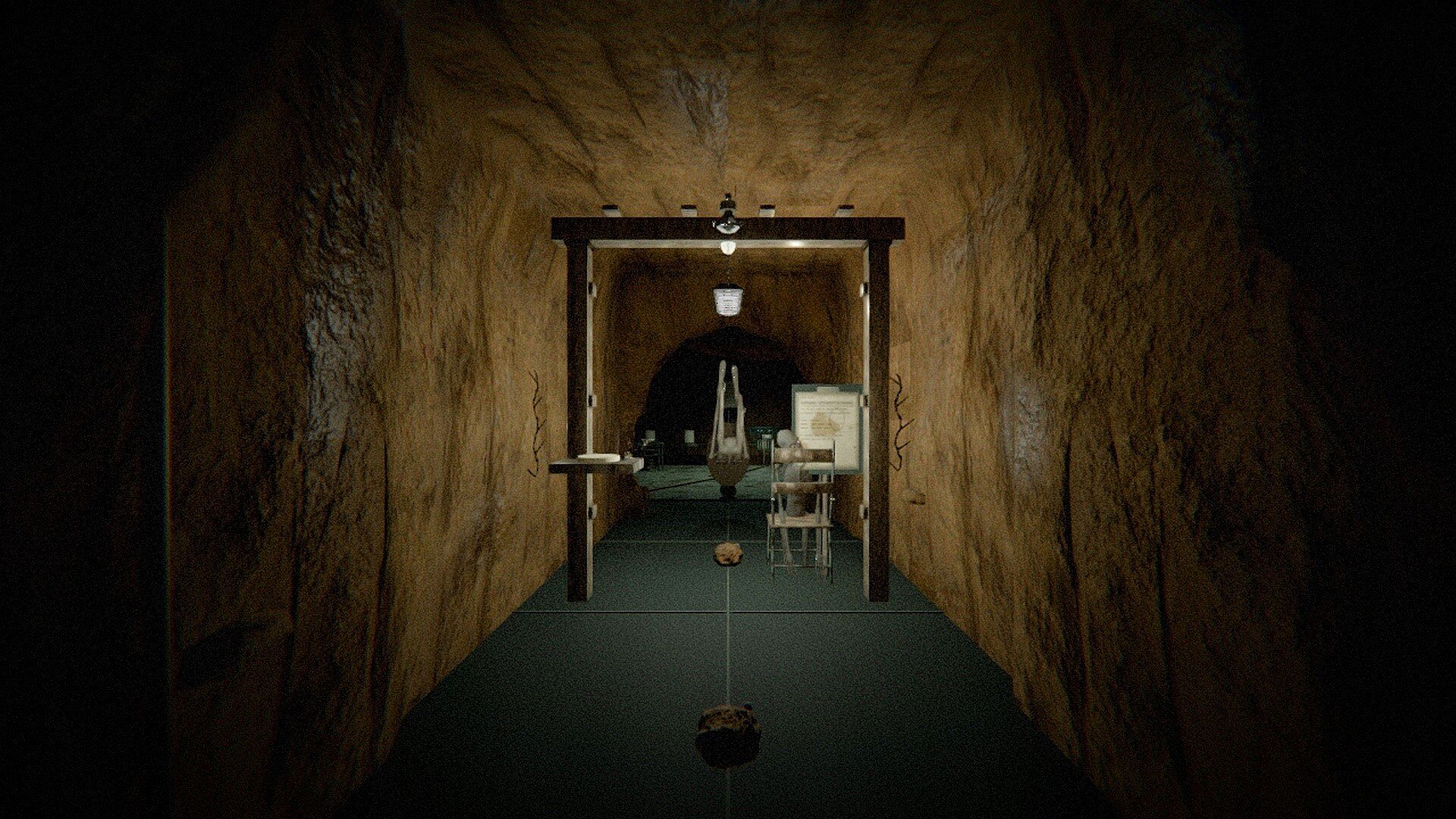
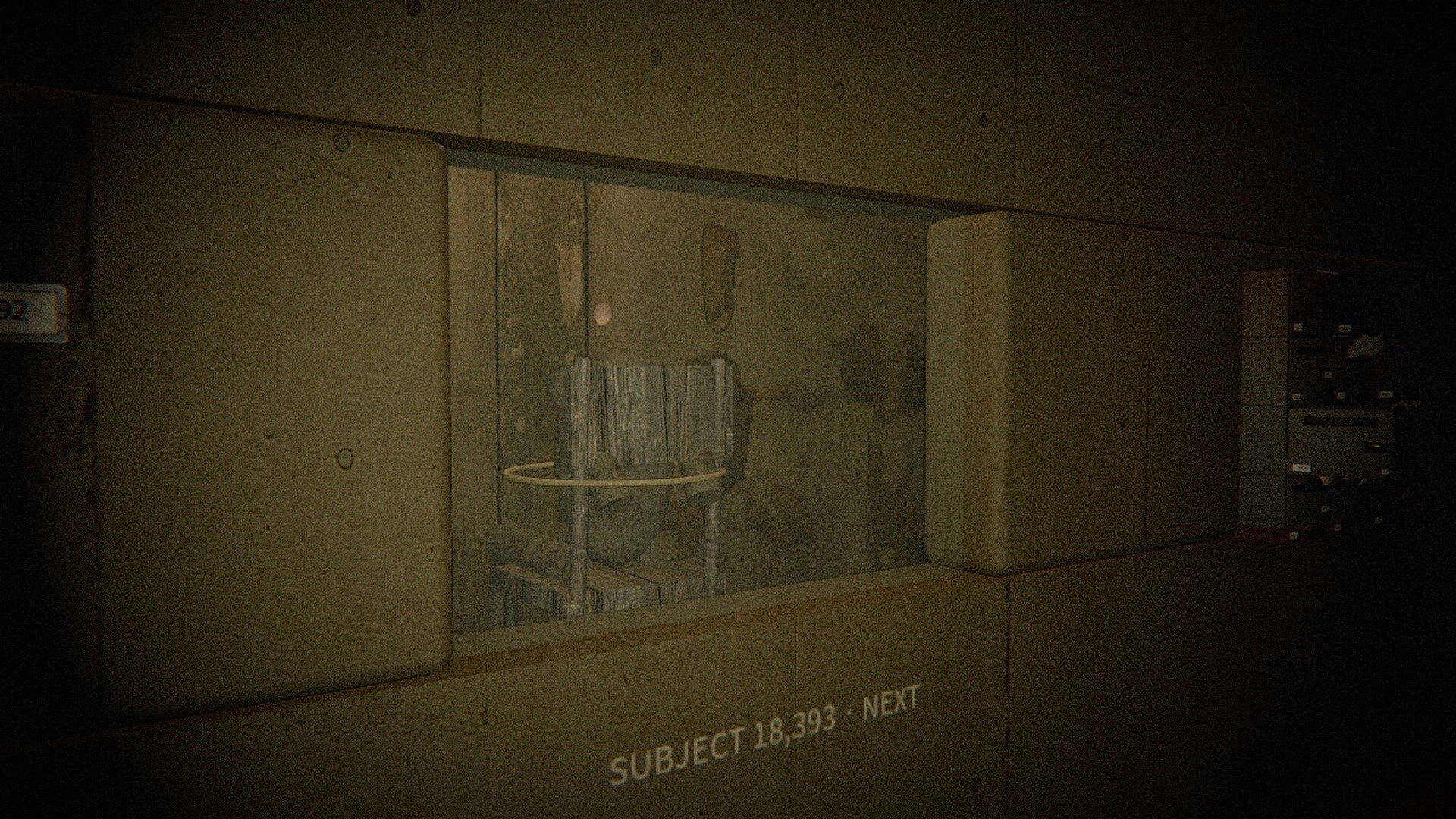
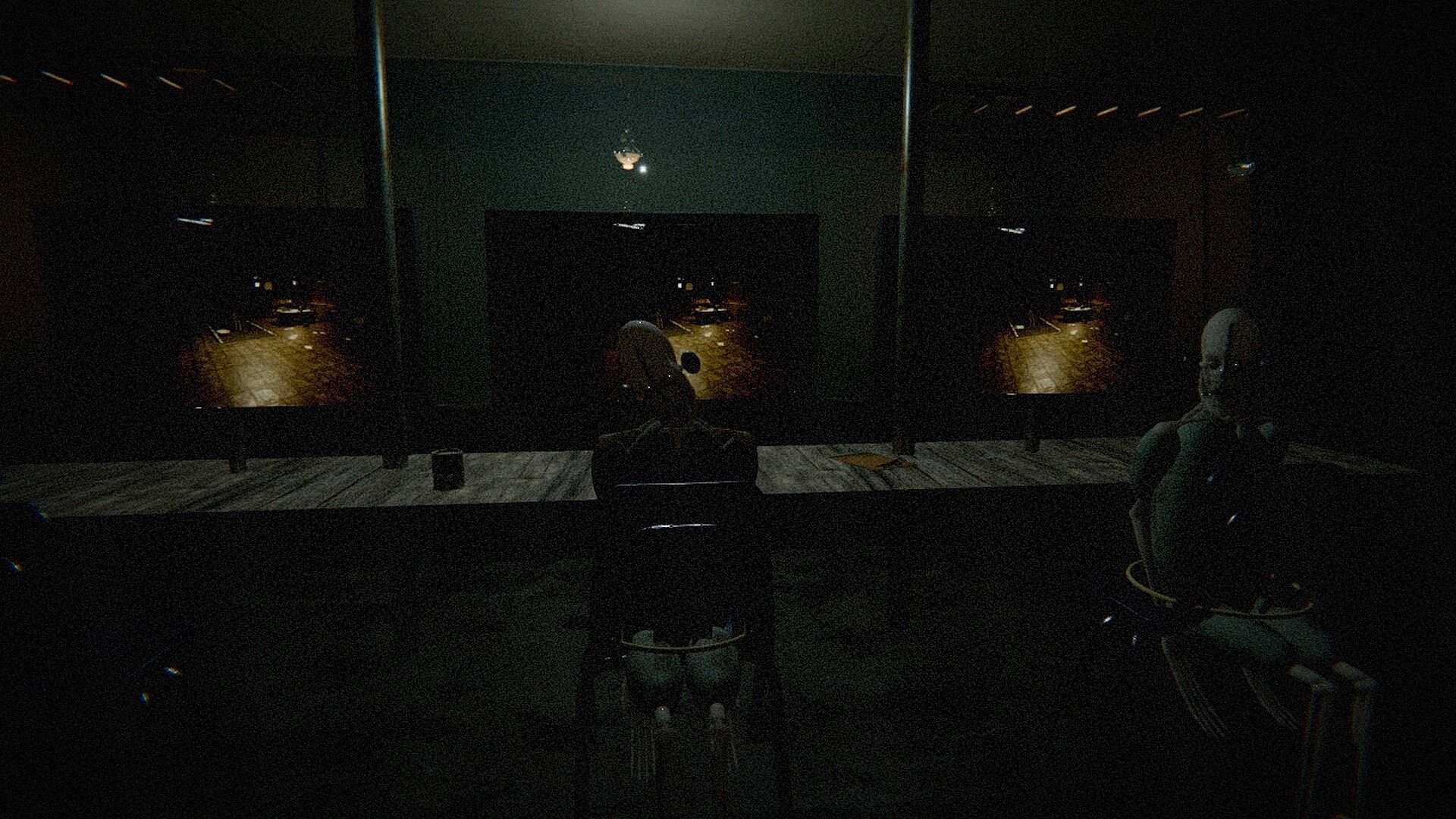
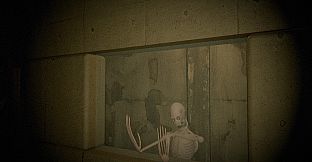
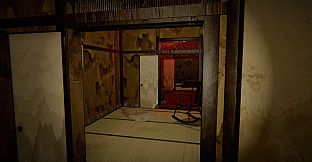



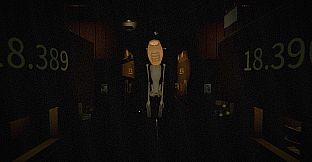
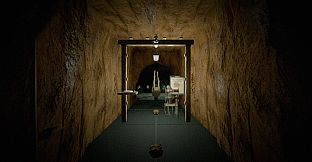
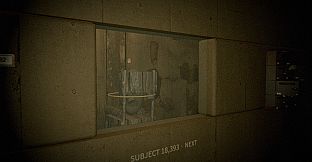

I'M DEFINITELY IN A BASEMENT is a first-person indie action adventure horror game set on PC. Players wake up restrained in an underground space and must navigate a shifting environment filled with digging, climbing, and evasion against entities that respond to sound and attention.
Gameplay
The core loop centers on volumetric digging through real geometry and collision. Players carve tunnels around obstacles, create personal passages, and return through them later. Climbing uses handholds left by excavation to ascend through five distinct strata, each with unique properties. A red thread mechanic activates on demand to guide toward objectives while a hand-drawn map records explored areas.
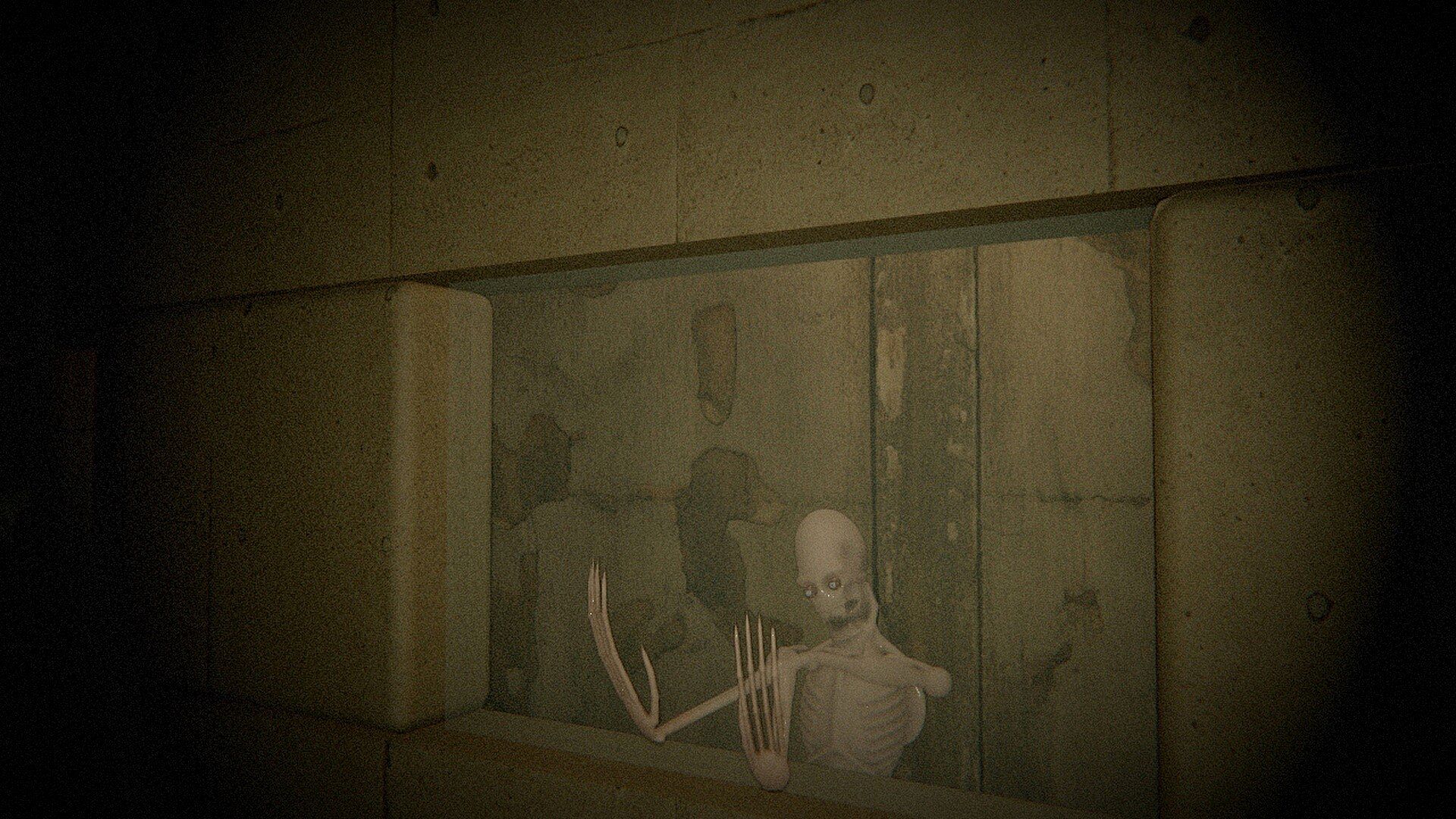
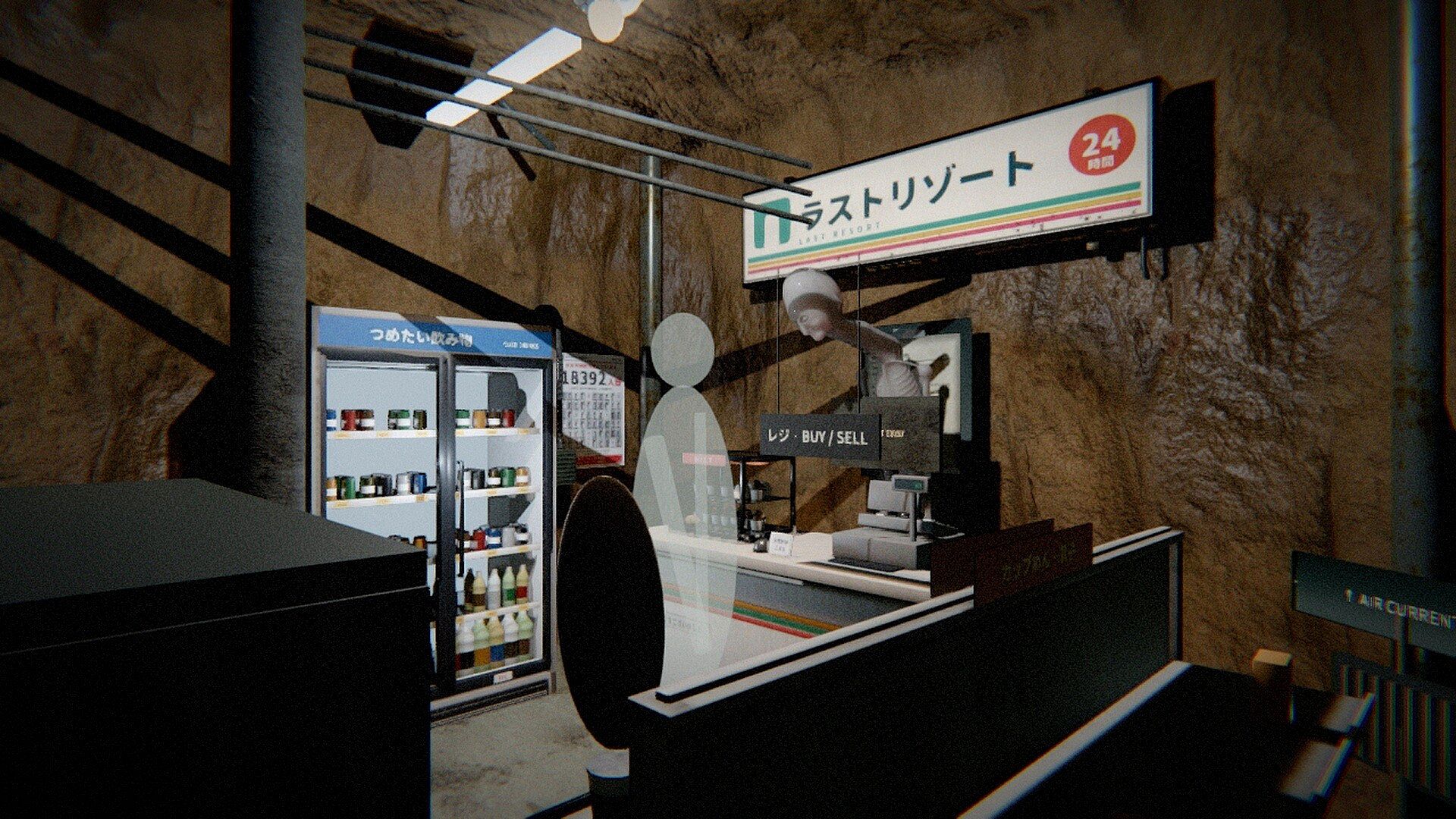
Sound draws attention from The Digger, a blind pursuer that opens its own routes based on cuts, footsteps, and vocalizations. It remains motionless under direct observation but advances when ignored. Stone jizō statues shift position when not watched, and an underground konbini offers unexpected items from a vending machine amid announcements that echo through the galleries.
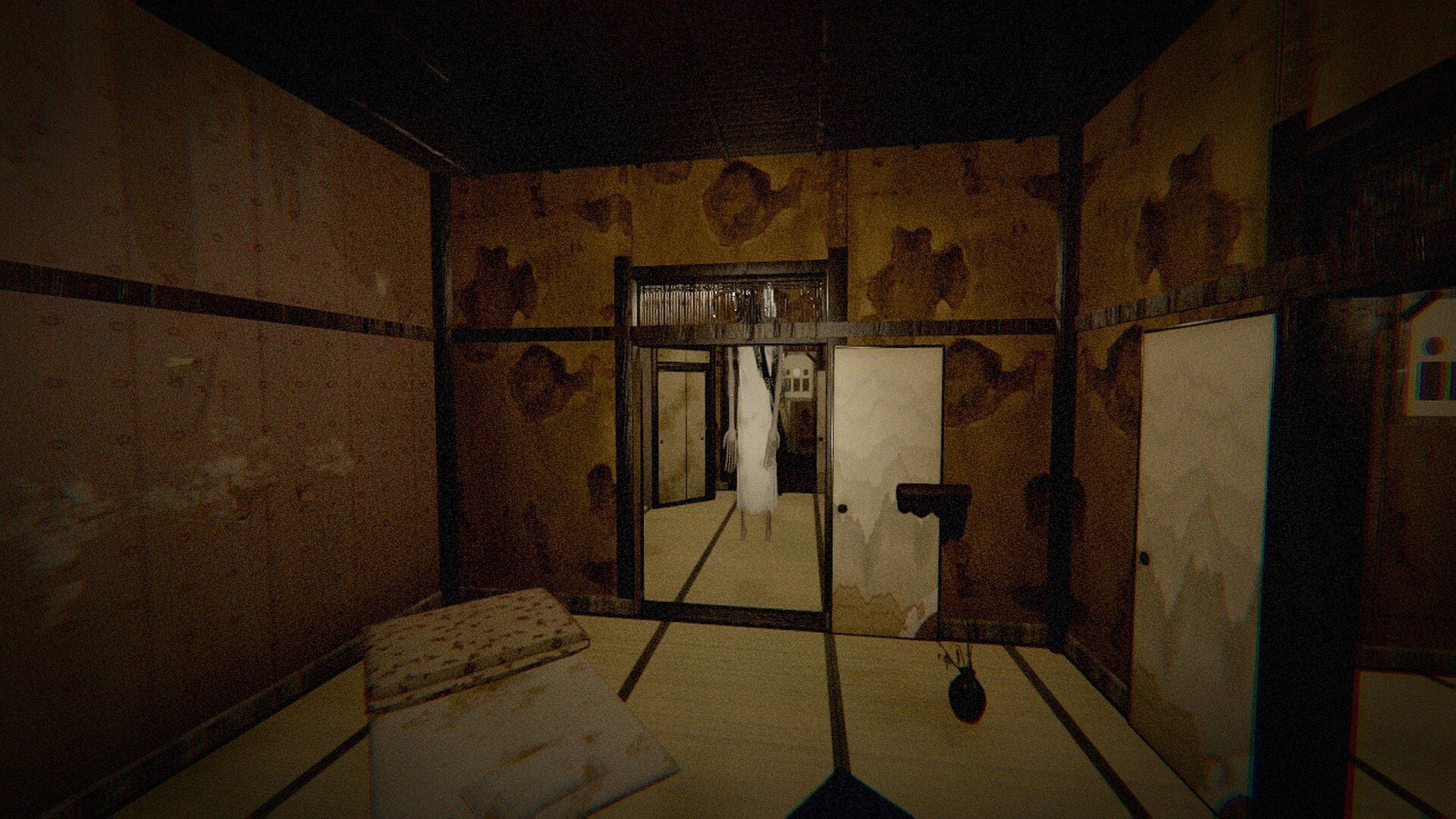
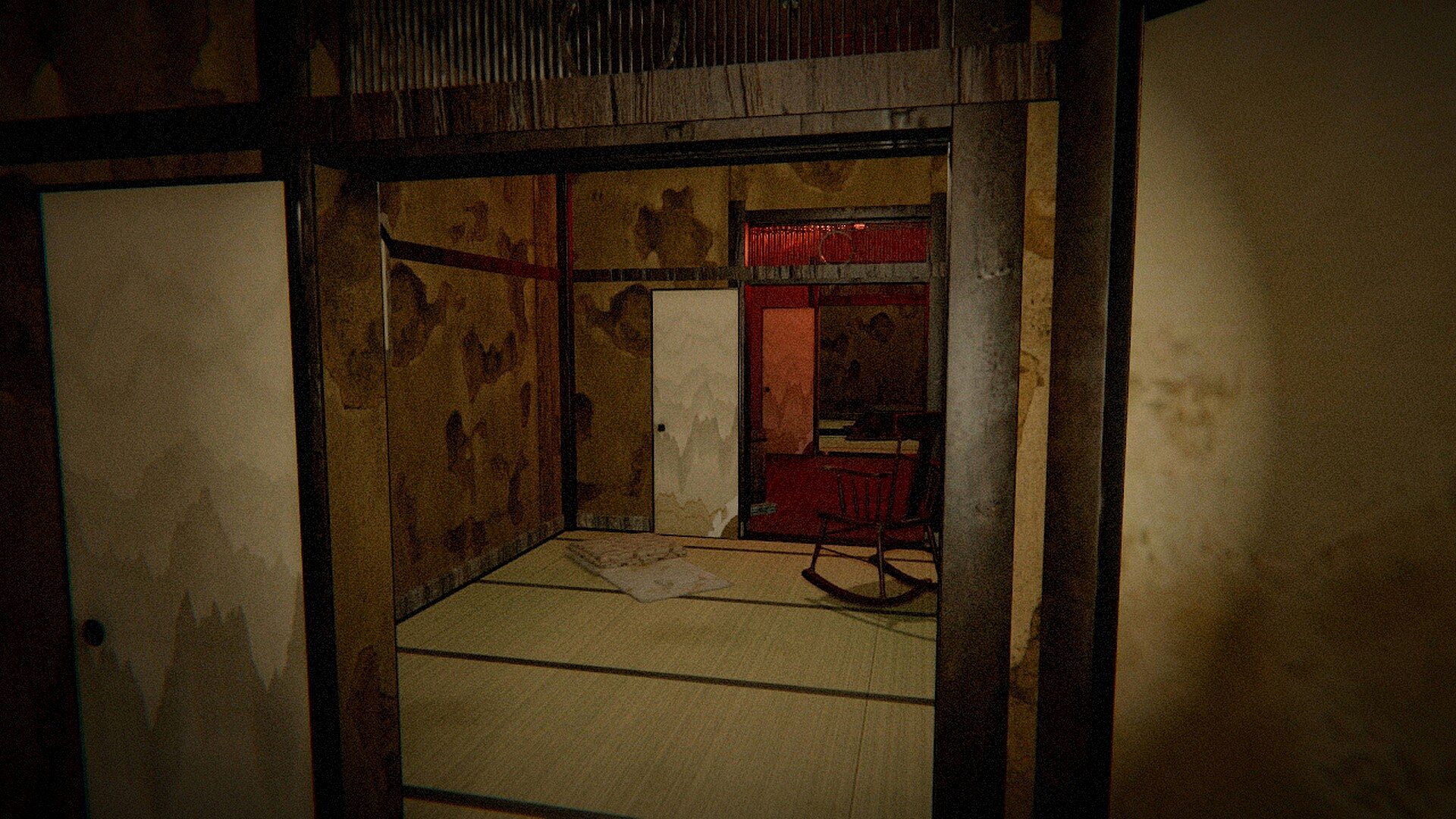
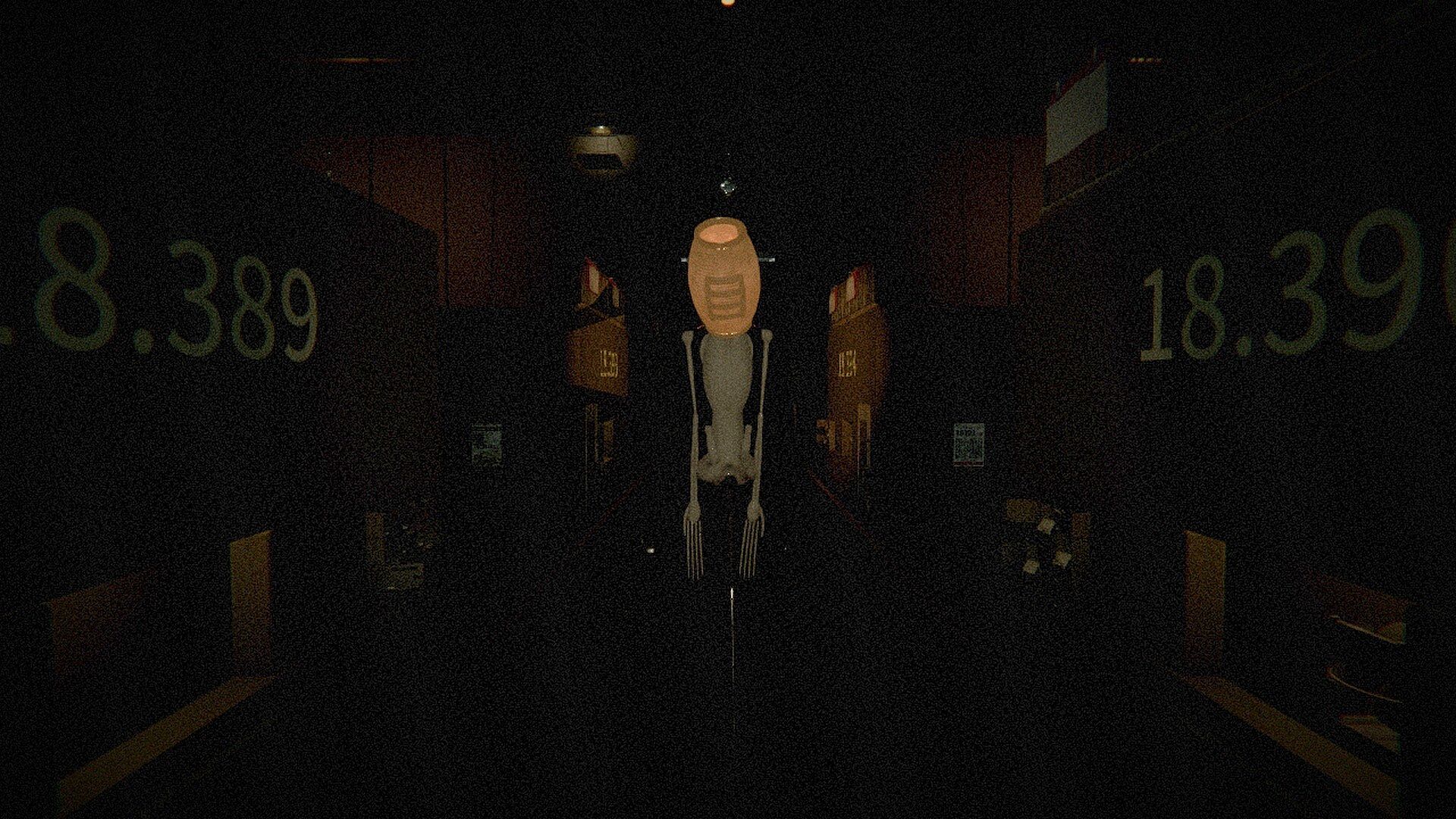
The buried house section requires locating fuses while avoiding The One Who Waits, a woman in a white kimono who searches methodically. Hiding spots include closets, with salt thresholds and ofuda providing temporary barriers. The environment adapts to repeated choices, directing threats toward previously used locations. Additional encounters involve a legless entity climbing from behind, a nonexistent train station, and a lantern-headed Warden whose light triggers pursuit.
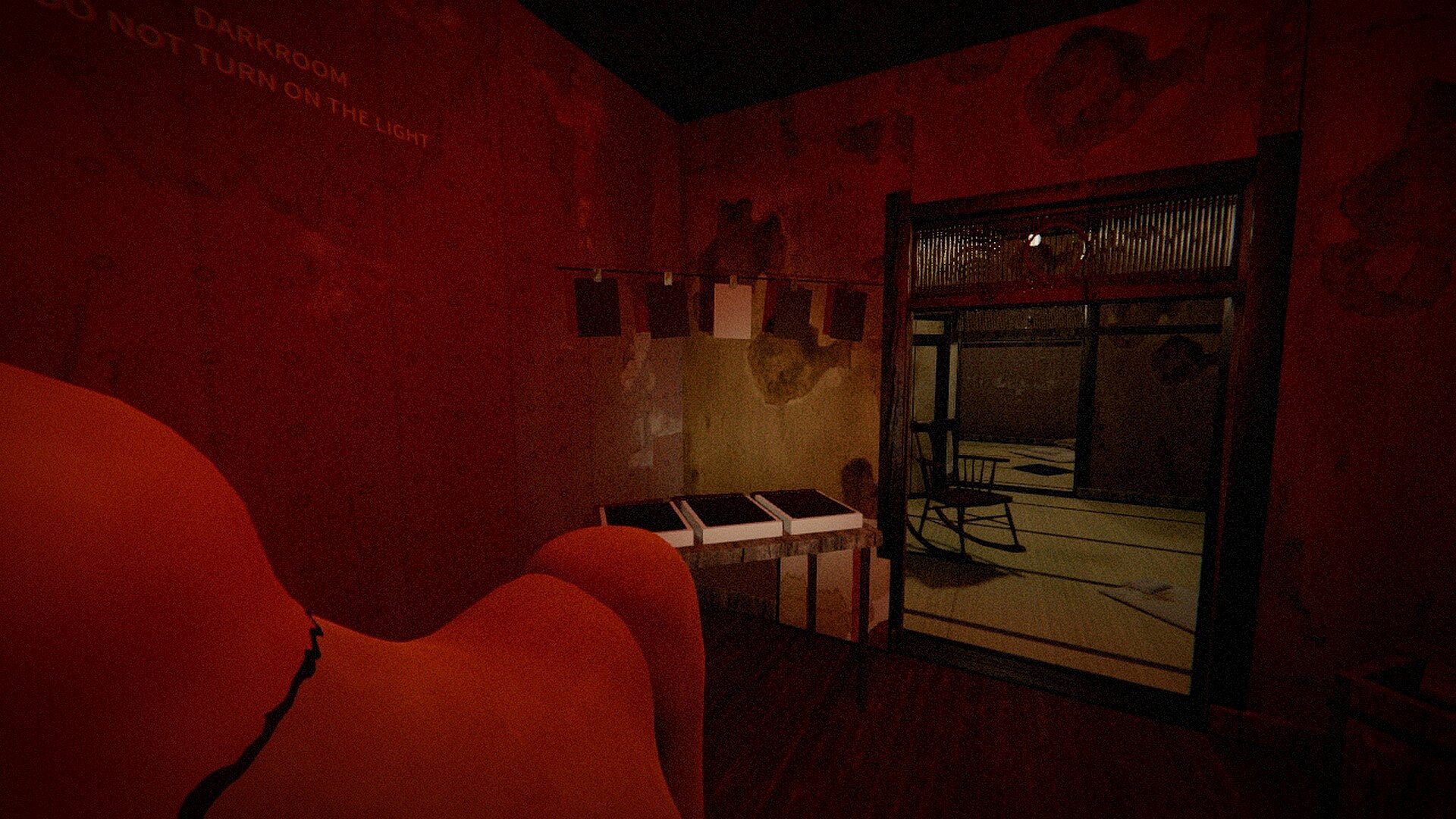
A film camera serves as the primary tool, with its flash providing brief defense. Developed photos sometimes reveal figures that later appear in the environment. Every attempt leaves persistent traces such as prior tunnels, discarded tools, and handwritten notes that reference past actions.
Game Modes
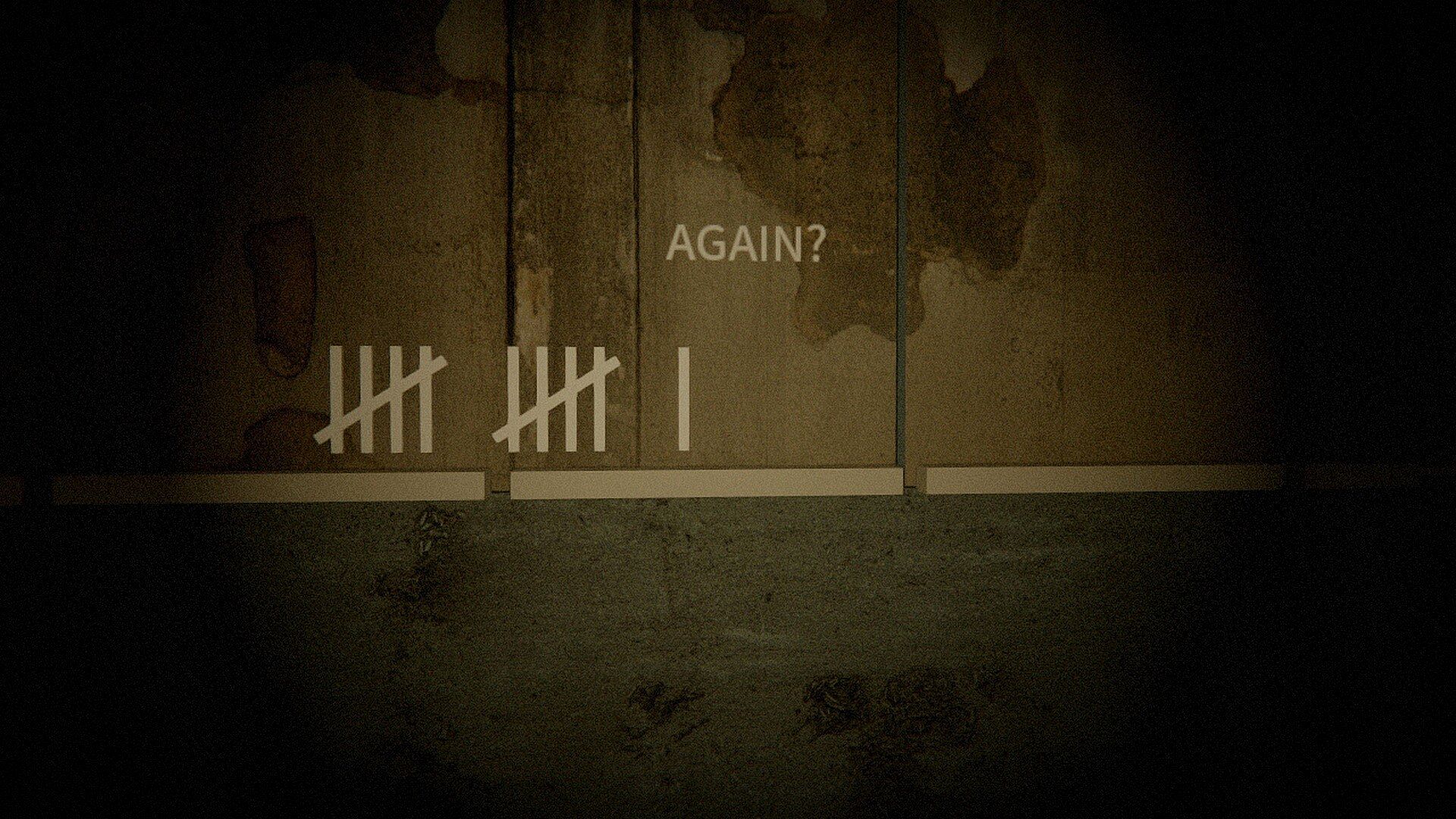
The experience runs entirely in single-player. There are no separate competitive or cooperative modes. Progression relies on repeated attempts that carry forward environmental changes and player marks rather than traditional checkpoints or restarts from scratch. Settings allow disabling sudden scares for those sensitive to tension spikes.
Key Mechanics and Atmosphere
Japanese horror influences appear through specific cultural references including Kisaragi Station, the kagome kagome song, and ritual elements like knocking on the third stall. The game emphasizes careful observation and sound management over direct confrontation. Persistent memory across attempts creates a sense of continuity where prior failures inform future navigation without resetting the world entirely.
Exploration mixes deliberate tunneling with evasion sequences. The red thread and map tools support navigation in the carved spaces, while the house section demands timing and environmental awareness to progress without detection.
Is It Worth Playing?
This title suits players who enjoy deliberate, observation-based horror with unique movement systems like volumetric digging and hand-climbing. The single-player structure and persistent world elements reward careful play and multiple attempts. With a planned release on October 30, 2026, and no reviews available yet, interest depends on tolerance for atmospheric tension and experimental mechanics rather than established multiplayer loops or seasonal content. Those drawn to first-person indie adventures with Japanese horror styling and non-lethal reset systems may find the described systems engaging once available.