


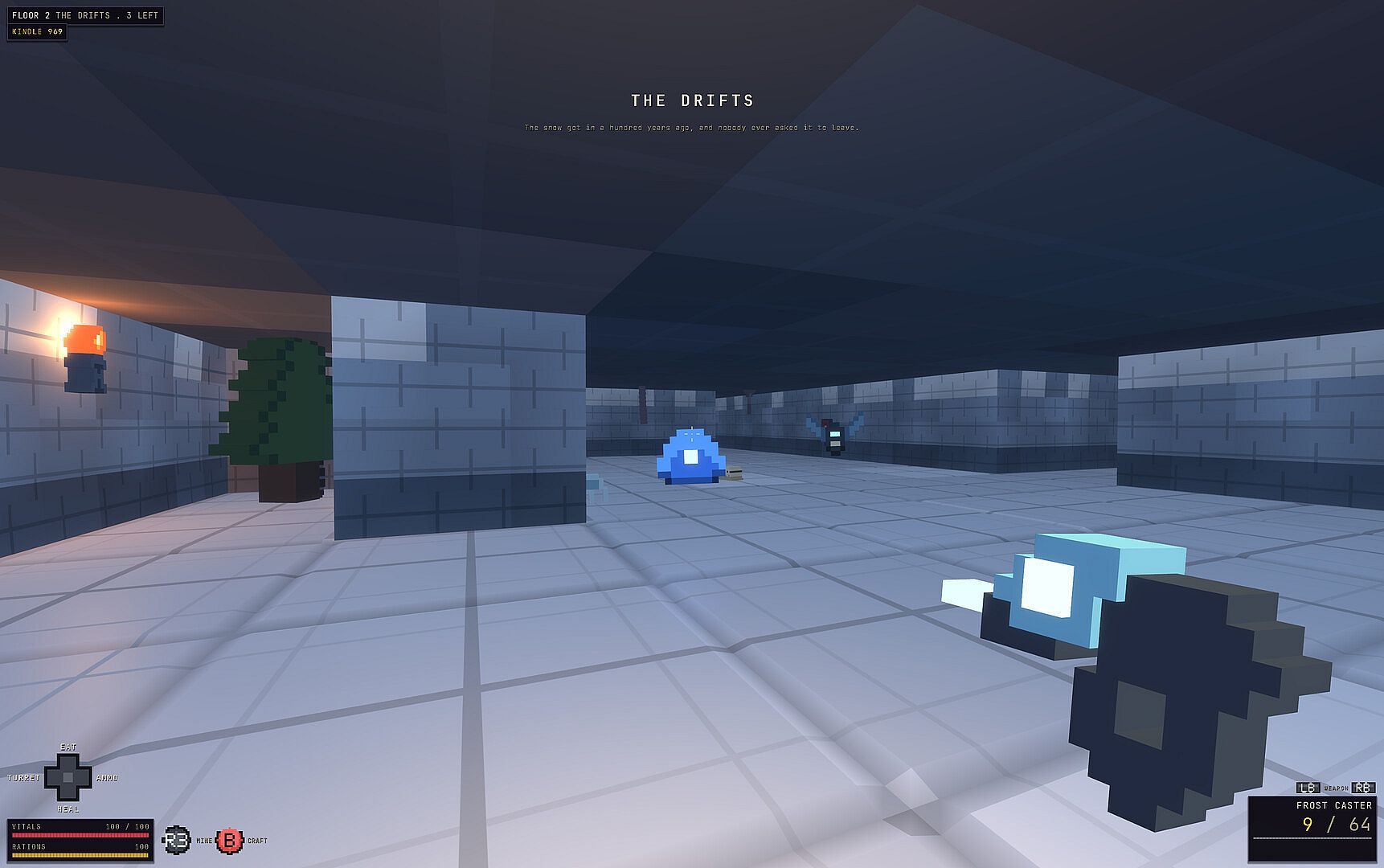
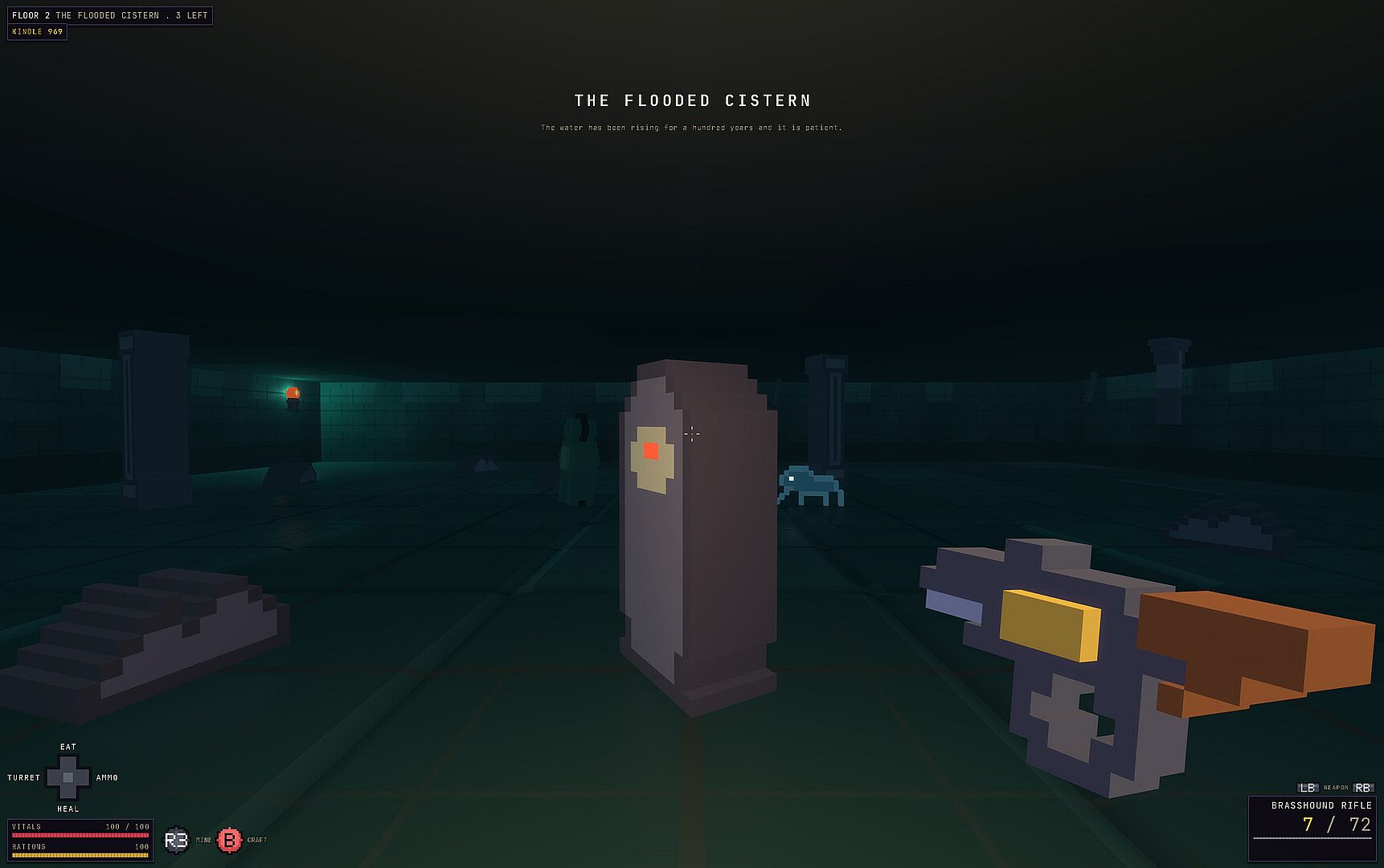
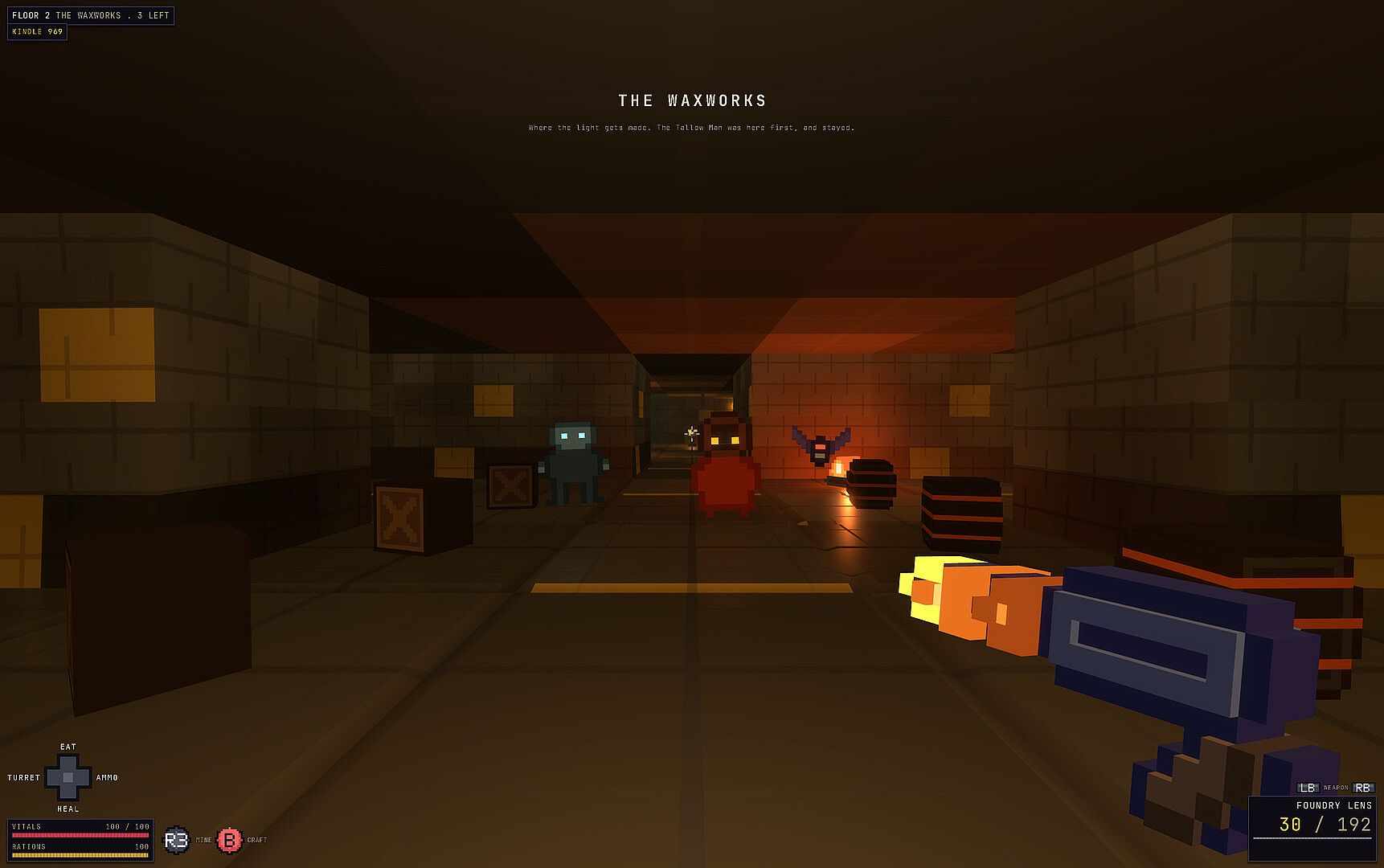
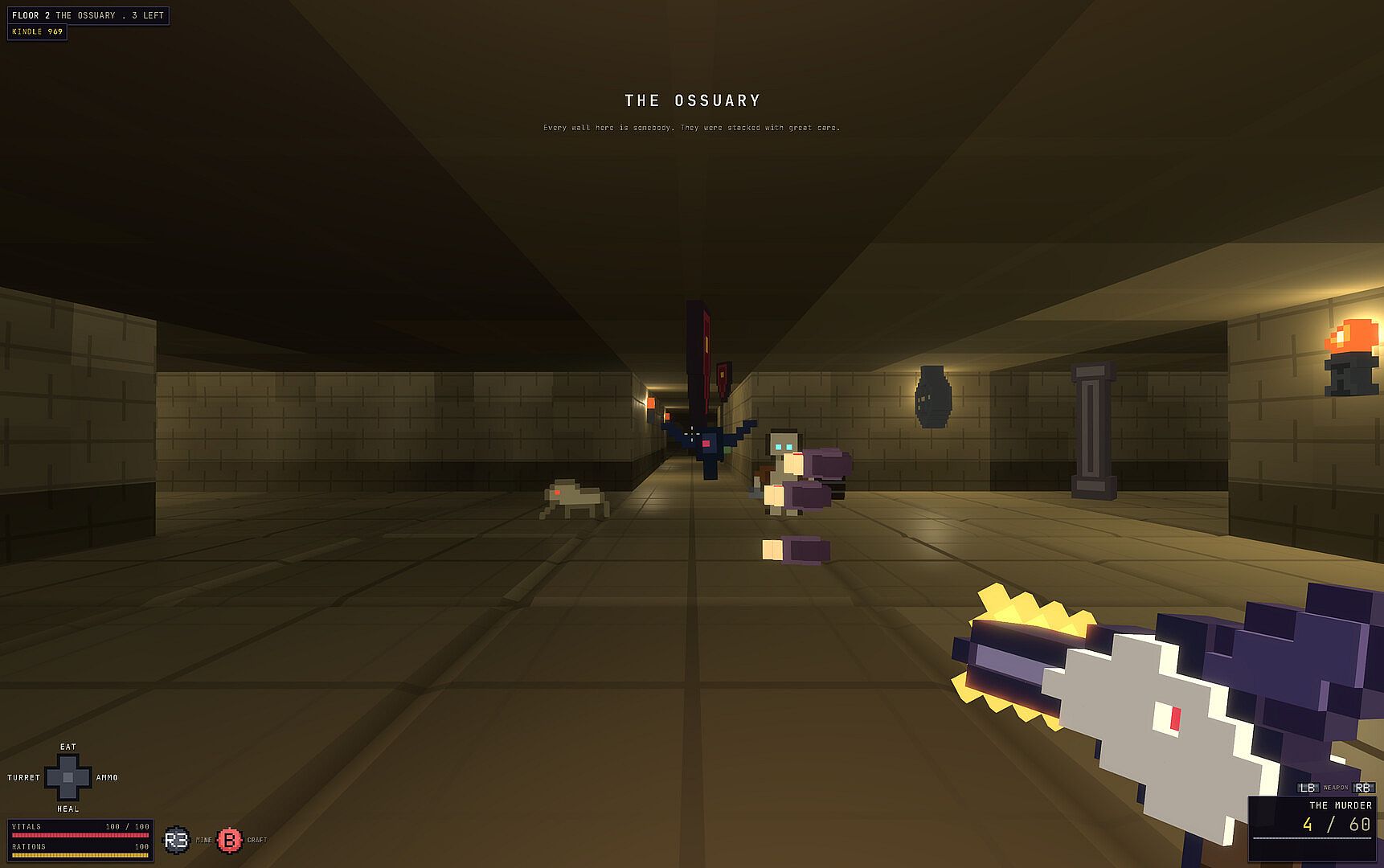
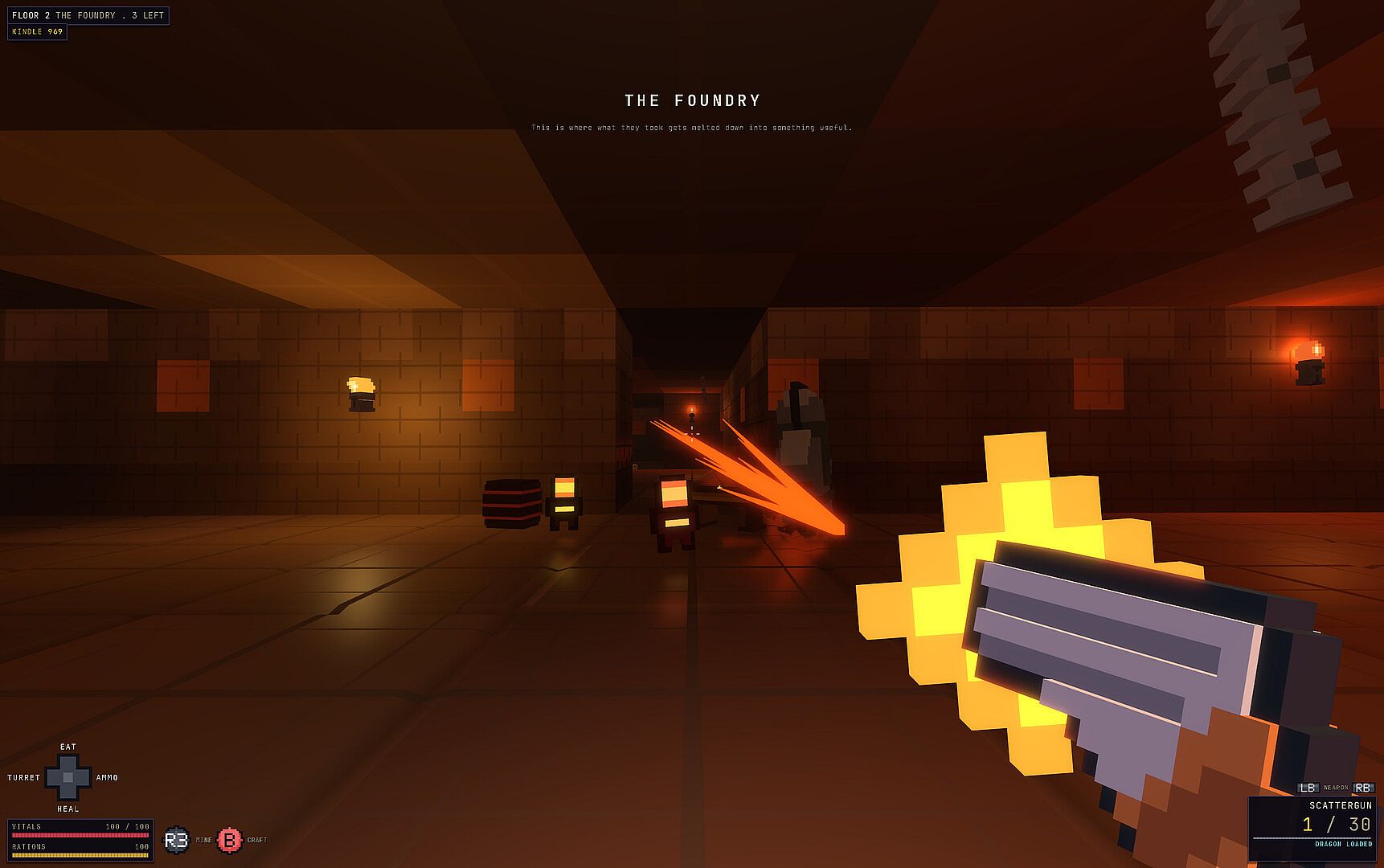
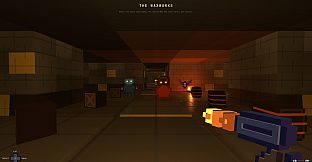
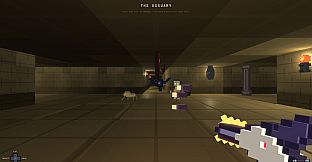
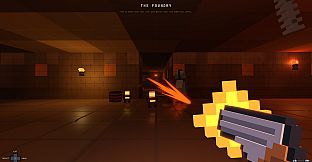
GunGlyph is a first-person voxel roguelite shooter set on PC that centers on deliberate descent through layered underground spaces. Players craft and modify firearms from discovered schematics, manage limited durability on every weapon, and navigate shifting environments filled with distinct enemy types and environmental hazards. The core loop involves gathering resources, forging equipment at workbenches, and pushing deeper while balancing risk and reward on each run.
Gameplay
The experience revolves around weapon construction and adaptation. Schematics appear in varied handwriting styles, allowing creation of revolvers, scatterguns, arc coils, cinder cannons, and additional variants at benches and forges. Once built, guns can be tempered to apply quirks through repeated rolls, though overuse risks breakage. Durability declines steadily during use, forcing players to prepare replacements before a weapon fails mid-fight. A millstone mechanic offers temporary relief from the constant grind but does not halt wear entirely.
Ammunition functions through chemical interactions rather than simple depletion. Shock rounds chain across multiple targets and conduct through water. Burning rounds ignite spore clouds and tar surfaces while in flight. Explosive effects can reveal hidden passages or destroy barriers that block progress. These interactions encourage experimentation with loadouts suited to specific floor conditions.
Progression occurs floor by floor. Each level presents unique biomes such as crypts, flooded cisterns, and burning foundries. Boss encounters guard stairwells, and defeating them alters the surrounding area through flooding, structural shifts, or other changes. Players may opt for standard descent or risk cursed stairs that lead to more rewarding yet dangerous floors. Environmental details like cracked walls, hanging cages, and locked vaults add layers of optional objectives and secrets that reward careful observation and targeted shots.
Game Modes
GunGlyph supports single-player runs focused entirely on solo descent and resource management. Online co-op allows two players to coordinate through shared sessions over a connection. Local splitscreen provides couch co-op on the same device with controller support for a second participant. These options maintain the same core systems across all formats, with no separate competitive or versus modes confirmed.
The Descent and Its Challenges
Every run emphasizes vertical exploration and adaptation. Floors change shape during combat as enemies bleed or environmental triggers activate. Unique enemy designs appear across biomes, and the dungeon itself reacts to player actions. Secrets remain consistent in their placement logic but vary in accessibility, often requiring specific ammunition types or precise shots to unlock. Camp management between floors involves feeding a brazier, rescuing caged entities, and making upgrades that improve future expeditions. Altars present choices involving blood, wagers, or other costs, each with explicit terms that players must evaluate before committing.
Traders and other figures populate the depths, offering goods at varying prices or selling curses in exchange for kindle. These interactions layer risk assessment into the resource economy alongside gun crafting and looting.
Is It Worth Playing?
GunGlyph targets players who enjoy roguelite shooters that combine weapon crafting with procedural descent and light co-op support. The voxel presentation and emphasis on gun tempering and ammunition chemistry create a focused loop around preparation and improvisation. Single-player suits those seeking solitary runs, while the online and local splitscreen options appeal to pairs who want to share the experience without additional modes or complexity. As the title remains in a pre-release state with no published user reviews or post-launch updates available, suitability depends on interest in the described mechanics of self-built firearms, environmental interactions, and repeated floor-by-floor progression. Those drawn to indie action titles with roguelite structure and voxel aesthetics will find the verified systems align closely with that preference.