

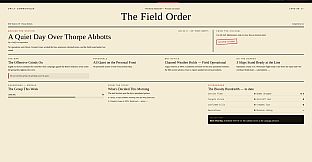
Group Commander is a strategy and simulation game set on the PC where players take on the role of the commanding officer for an Allied heavy bomber group during the air campaign over occupied Europe in World War II. The experience centers on making deliberate choices about targets, crew assignments, and resource allocation without any pressure from timers or a running clock. Every raid begins with a field order from higher command that provides a limited pool of aircraft and personnel, and the outcomes of those decisions shape the ongoing war effort as well as the condition of the base itself.
Gameplay
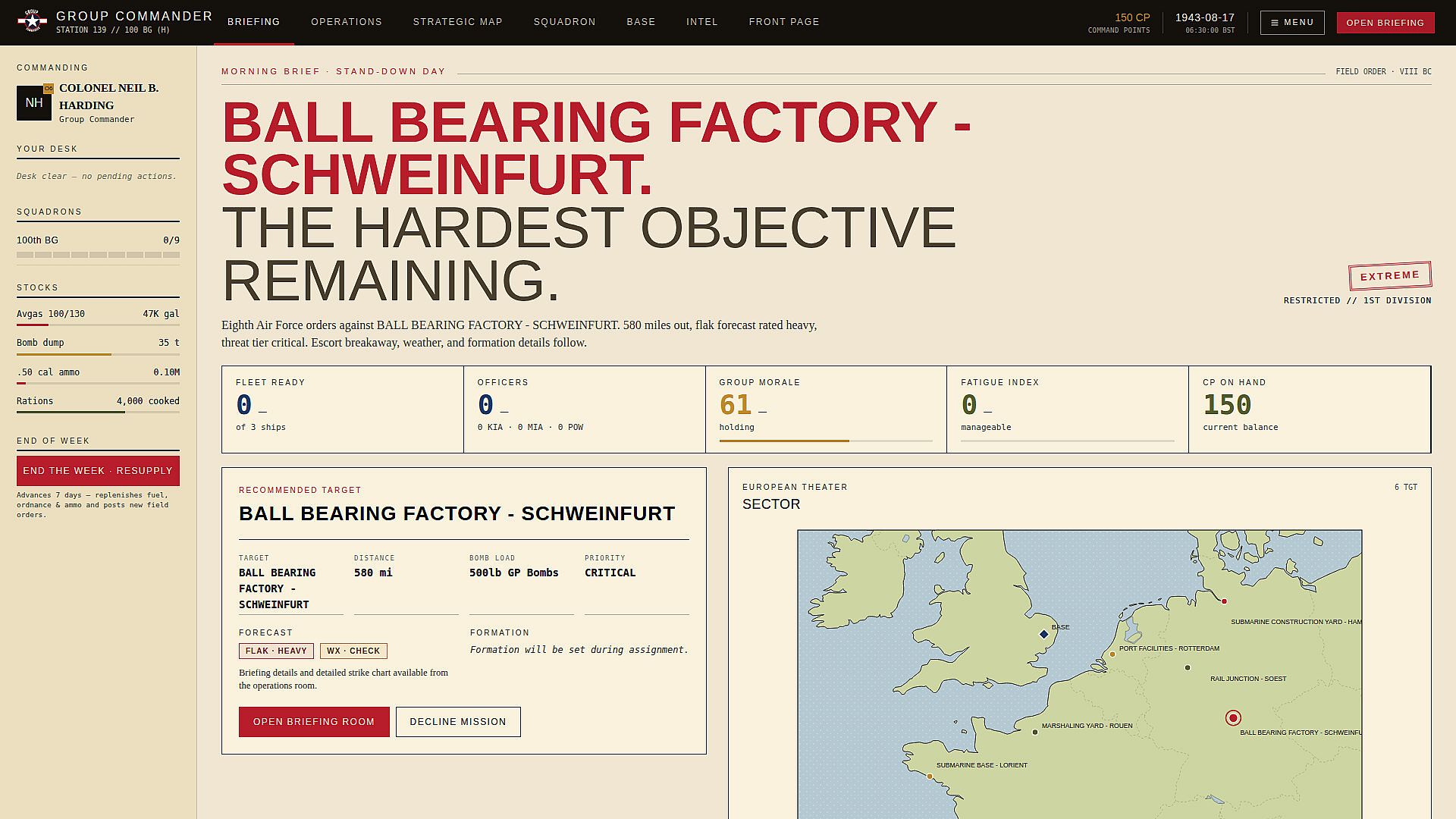
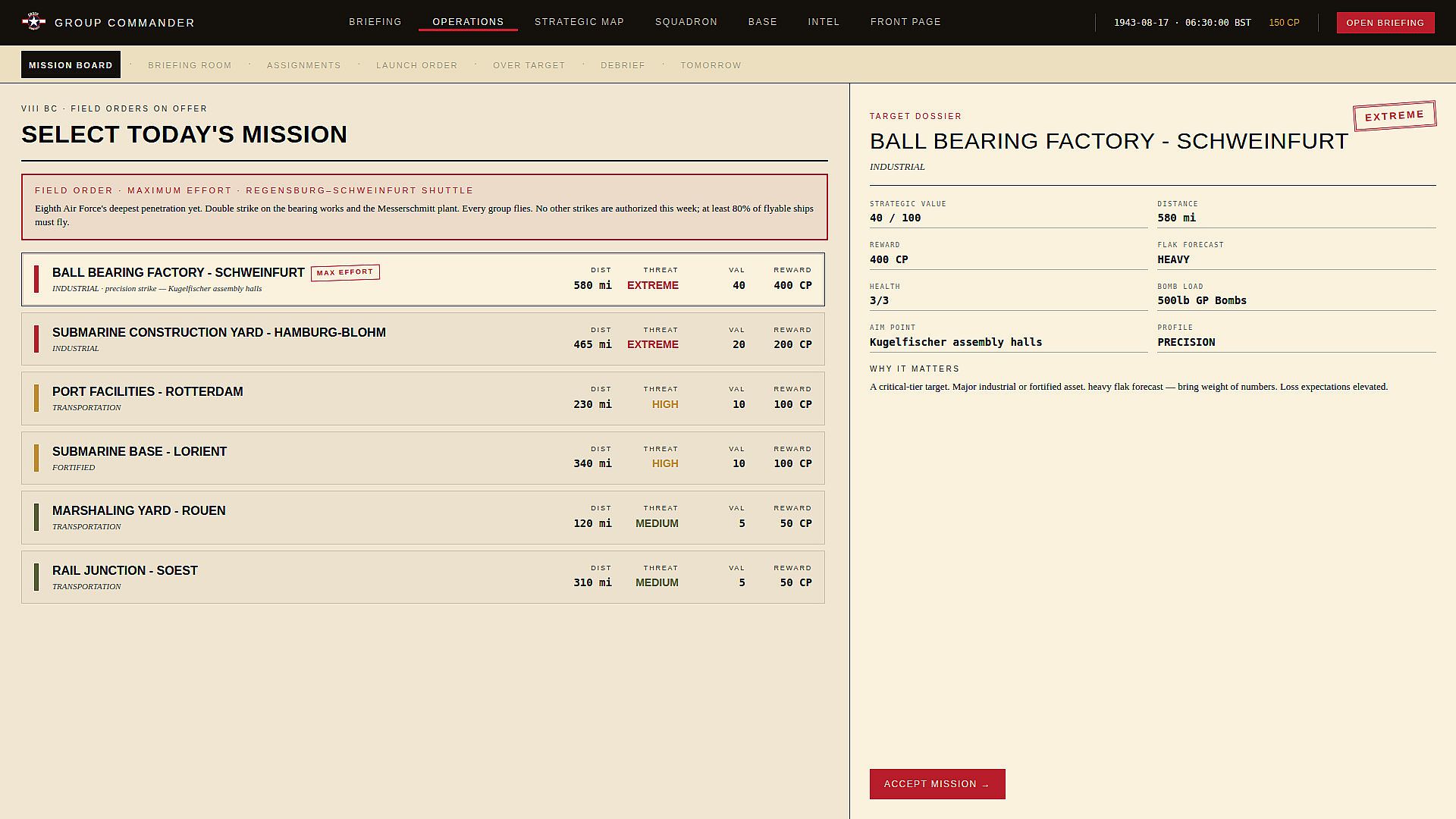
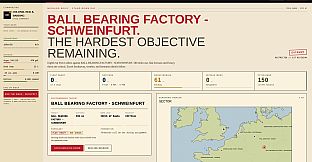
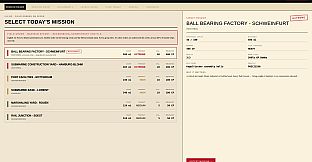
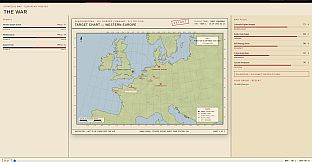
The core loop revolves around weekly planning sessions where new targets appear on a board. These include industrial sites such as ball-bearing factories, submarine pens, rail yards, and aircraft production facilities. Players review intelligence on enemy defenses like flak concentrations and fighter patrols before selecting which formations to commit. Once the mission launches, the raid plays out through a series of individual decisions visible on a mission profile that tracks the formation in real time.
During the flight phase, threats arrive in sequence. Enemy fighters attack in waves, antiaircraft fire sweeps across the bomber stream, and mechanical issues can arise such as engine failures, oxygen system malfunctions, or navigation errors caused by crew losses. At each critical moment the commander decides whether to continue toward the primary objective, switch to a secondary target, or order a return to base. These choices directly influence how many aircraft and crews make it back.
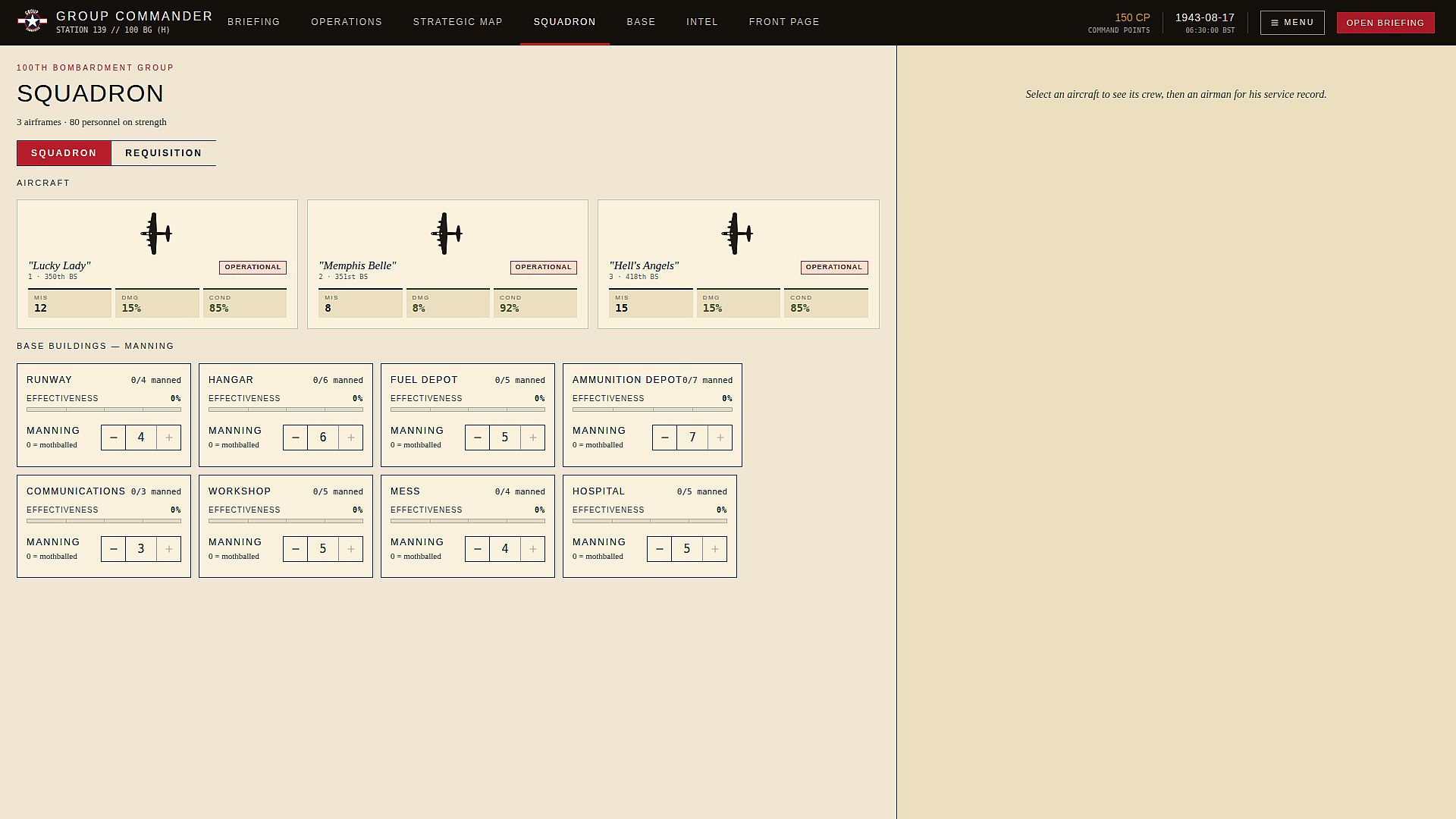
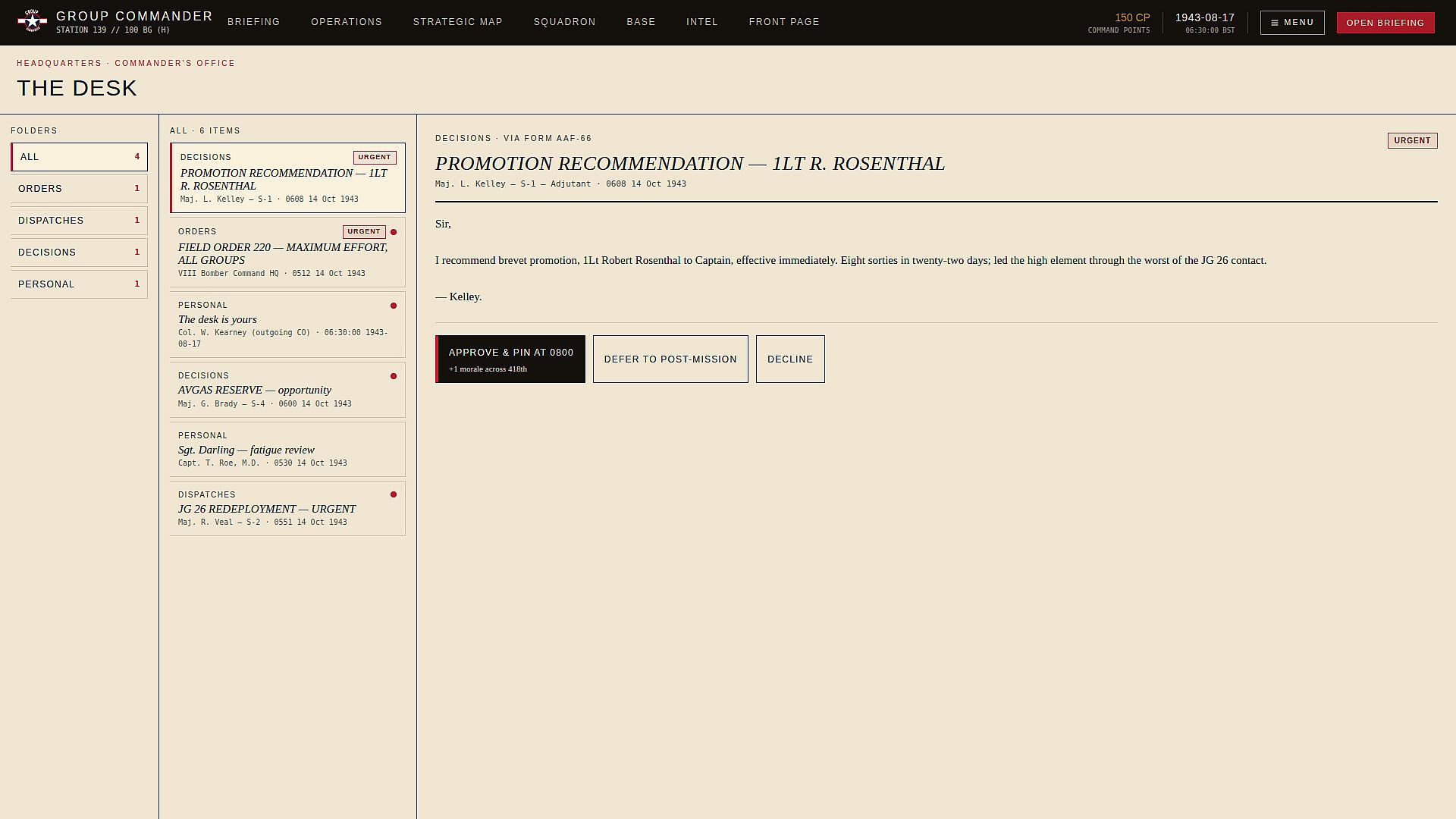
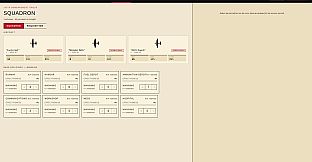
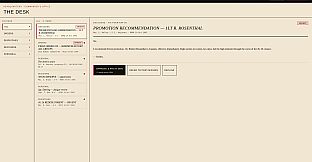
After each mission the focus shifts to recovery and preparation. Losses remove specific named crew members who may be killed or listed as missing, triggering grief among surviving teammates and requiring the integration of new replacements. Fatigue accumulates across multiple sorties, affecting performance and increasing the risk of breakdowns. Crews that survive long enough can complete their tour and rotate home, though shortening tours to improve morale risks drawing disapproval from higher command.
Game Modes
Group Commander operates as a single continuous player-paced command simulation rather than offering separate named modes. The entire campaign unfolds through a series of linked weekly raids that players advance at their own speed. There is no background timer forcing rapid decisions, allowing full attention to each phase of planning, execution, and aftermath. The structure ties every element back to prior choices, creating a persistent record of successes, losses, and base developments that carries forward across the war calendar.
Historical dates anchor certain maximum-effort operations, placing real events on the in-game schedule. This approach keeps the focus on one overarching experience where strategic oversight, tactical adjustments during flights, and long-term station management all interconnect without interruption from unrelated side activities.
Base Operations and Logistics
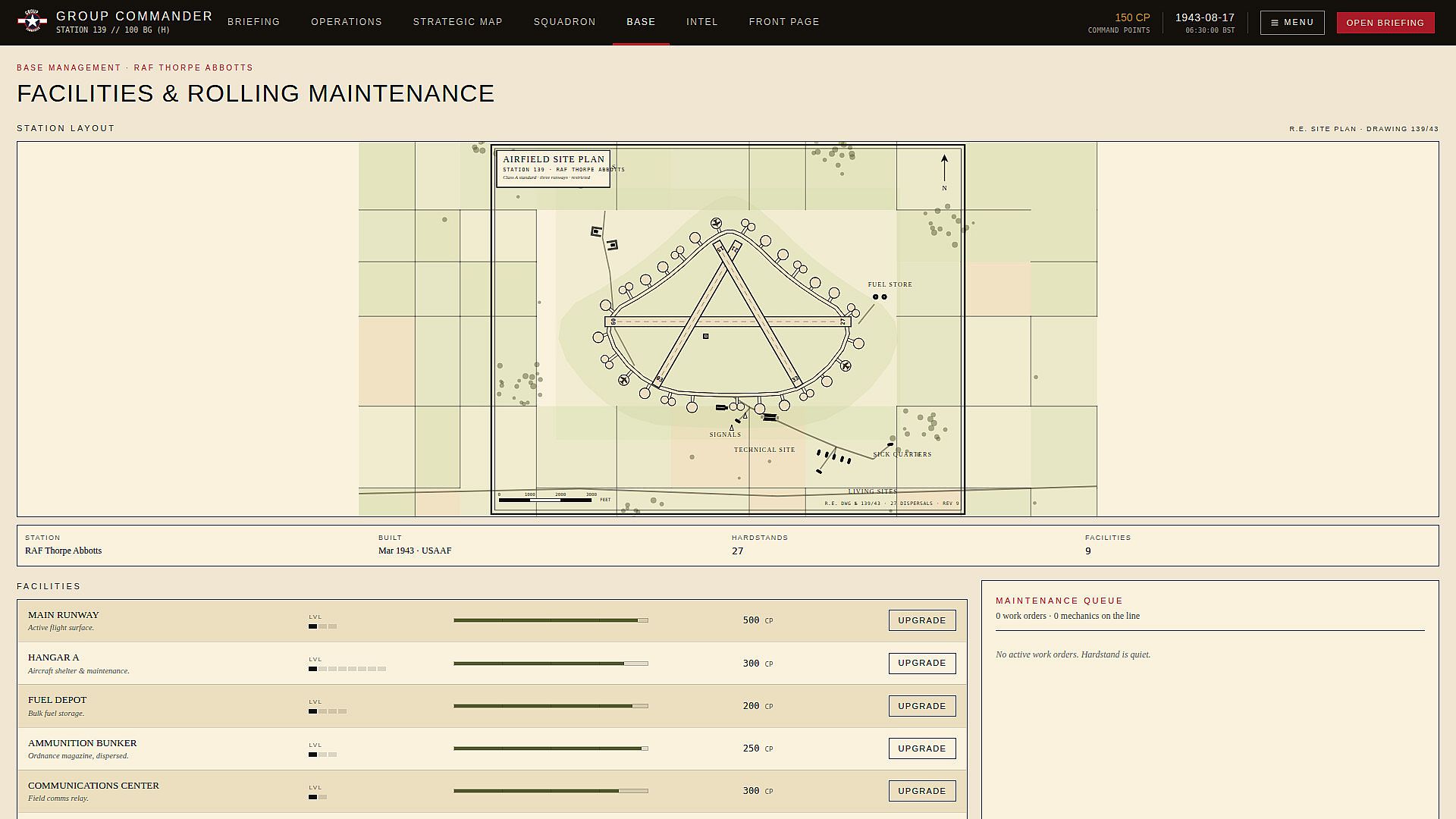
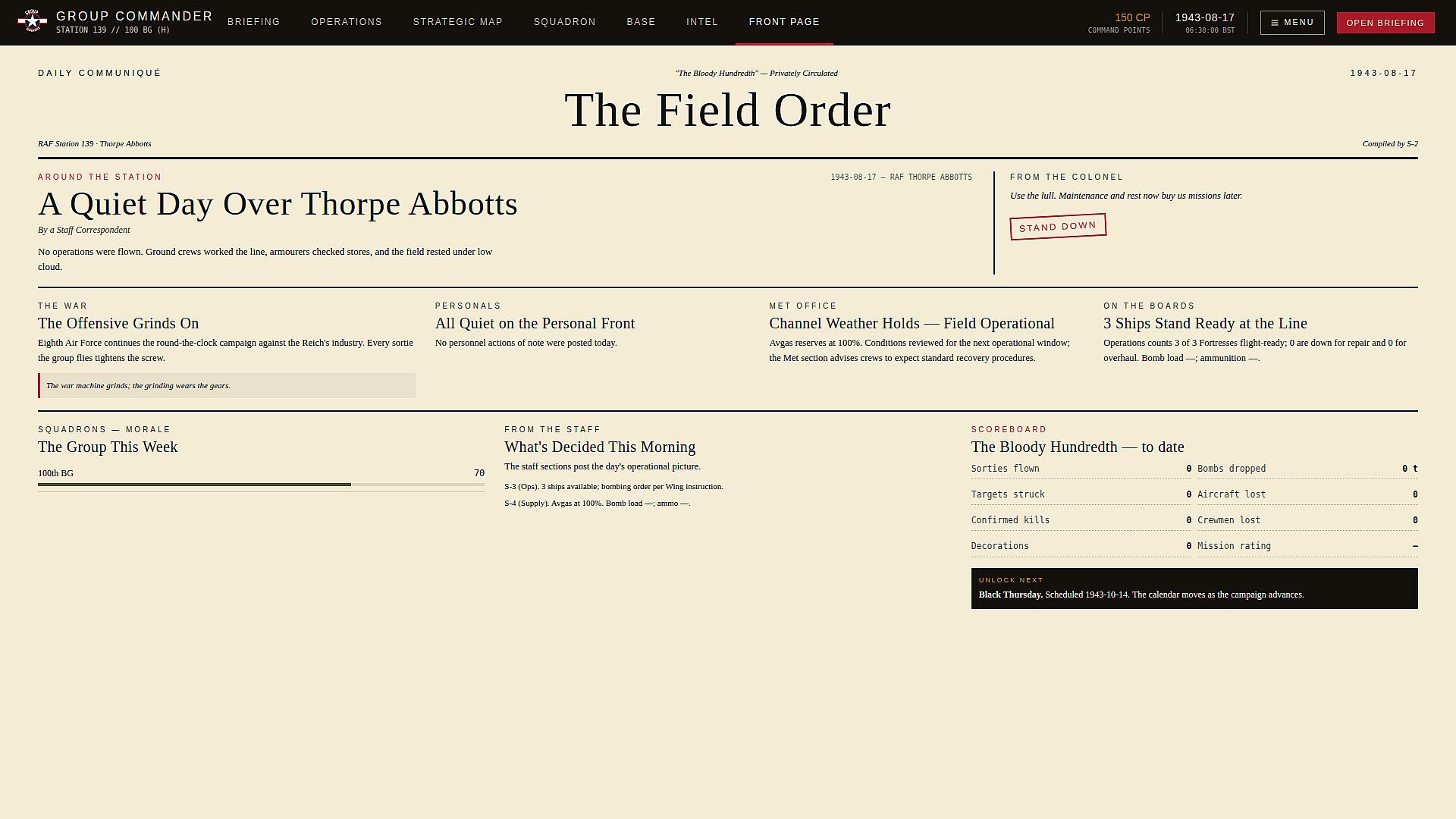
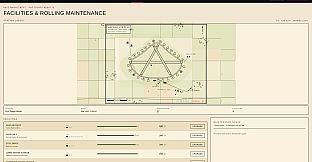
Running the bomber station requires attention to multiple interconnected systems. Food quality in the mess hall affects overall morale, while the bomb dump must be stocked with appropriate ordnance such as incendiaries for industrial targets or armor-piercing bombs for hardened submarine facilities. Mechanics handle repairs on battle-damaged aircraft across four axes of damage, and fuel plus replacement airframes must be requisitioned regularly.
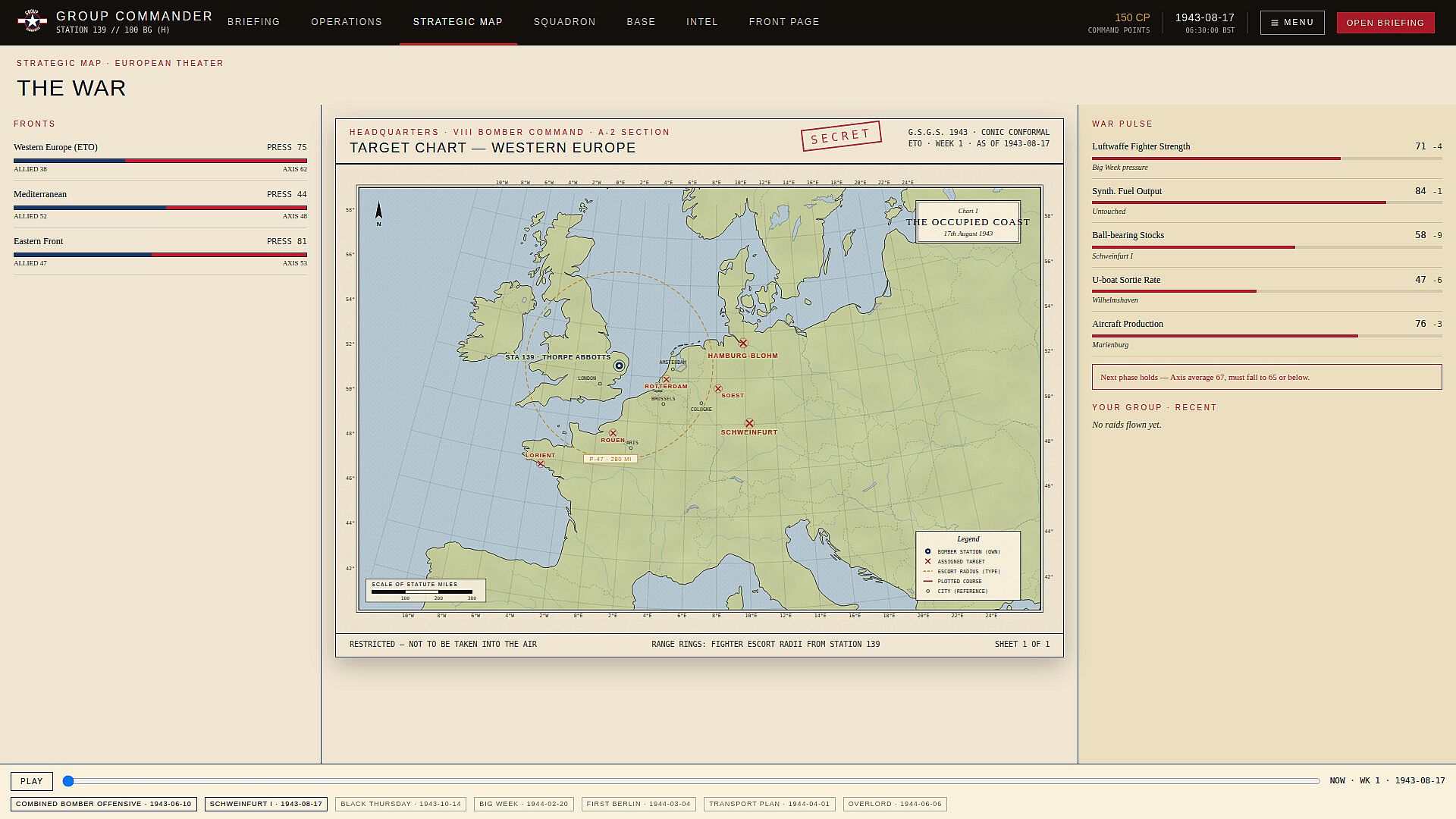
Fighter escort planning evolves as the air war progresses, beginning with shorter-range P-47 Thunderbolts and advancing to longer-range P-38 Lightnings and finally P-51 Mustangs capable of accompanying bombers all the way to distant targets. Facilities can be built or upgraded to support these growing demands. Wing confidence serves as a key metric; sustained poor performance leads to replacement of the commander.
Resource Management and Command Points
Command Points form the central currency for nearly every action. These points cover recruitment of new personnel, construction of facilities, purchase of supplies, and even second chances for damaged crews or aircraft. Points are earned primarily through successful mission outcomes, yet they remain chronically limited, forcing constant trade-offs between immediate needs and future readiness. This scarcity shapes every aspect of decision-making from crew rotations to equipment priorities.
Is It Worth Playing?
Group Commander suits players who enjoy methodical strategy simulations that emphasize long-term consequences over fast action. The detailed handling of crew morale, fatigue, and personal losses creates a grounded portrayal of command responsibilities that rewards careful planning and acceptance of difficult choices. Those interested in historical air operations and base management will find depth in the interconnected systems of target selection, escort coordination, and station upkeep. Because the game remains in development with a planned release in late 2026, interested players can follow its progress through official channels while anticipating a focused single-player experience centered on deliberate decision-making rather than reactive gameplay.