

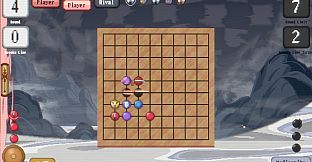

Gomoklear is a strategy indie game for PC that reimagines the classic board game Gomoku as an asymmetric roguelike experience. Players form lines of five pieces to clear sections of the board while racing against a round limit and escalating targets. The core loop blends placement strategy with deckbuilding elements, where each run introduces new pieces and permanent upgrades that carry forward across matches.
Gameplay
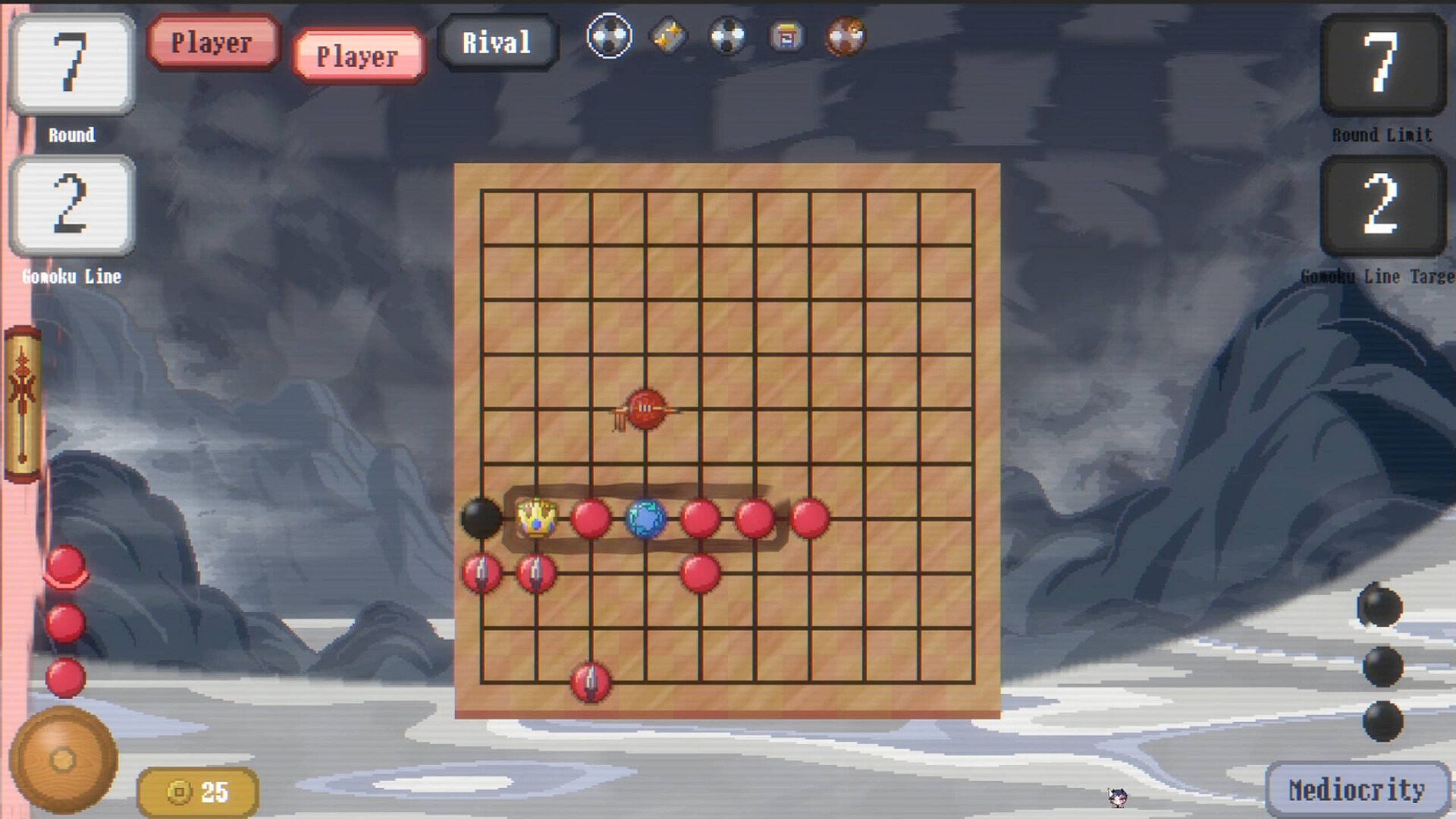
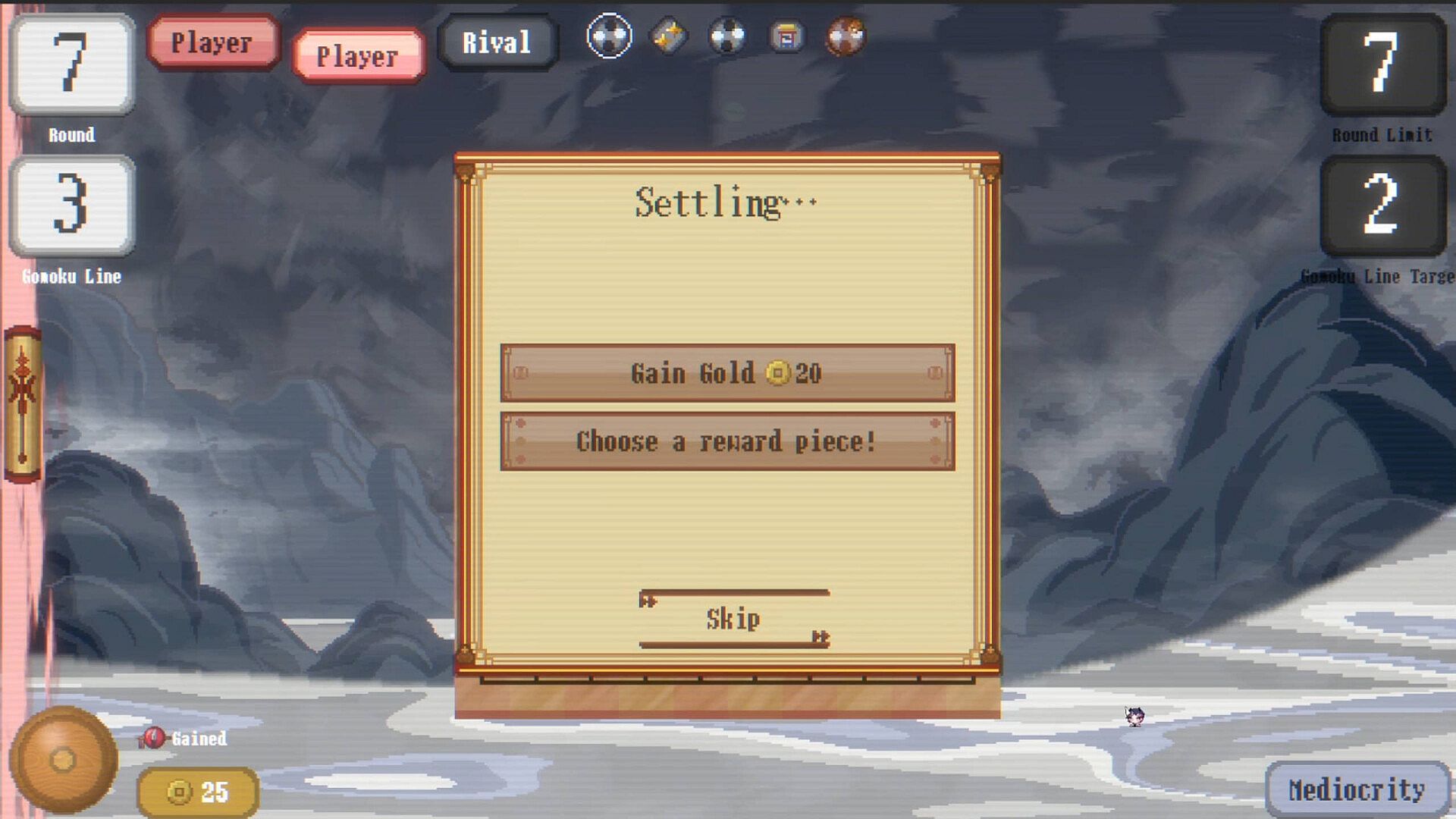
The central mechanic revolves around forming Gomoku lines that immediately remove the involved pieces from the board. This clearing action can dismantle defensive setups and trigger chain reactions that open new opportunities or expose vulnerabilities. Unlike traditional turn-based alternation, each round grants the player two placements while the rival receives one. The round limit imposes constant pressure, forcing decisions between aggressive line formation and defensive positioning against the rival's spawns, removals, and shifts.
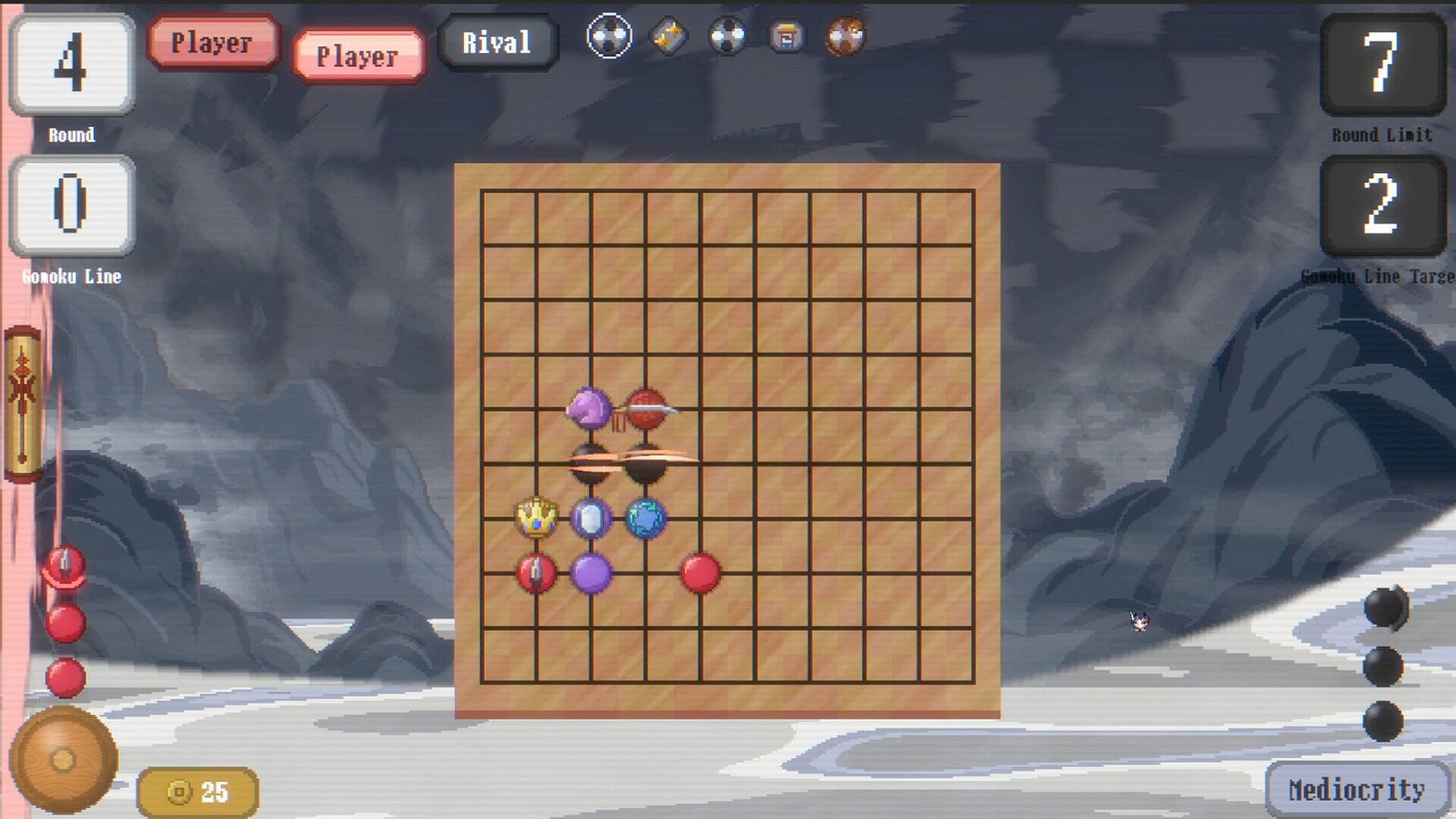
Over one hundred unique pieces replace the standard black and white stones. These pieces introduce specialized effects such as spawning additional units, pinpoint removals of enemy stones, repositioning existing pieces, granting extra turns, converting rival pieces, or altering board tiles with field effects. Every placement requires reassessment of the shifting layout because a single clear can collapse an established formation or create openings for further lines. The roguelike structure ensures that no two runs play identically, as piece availability and rival behaviors vary.
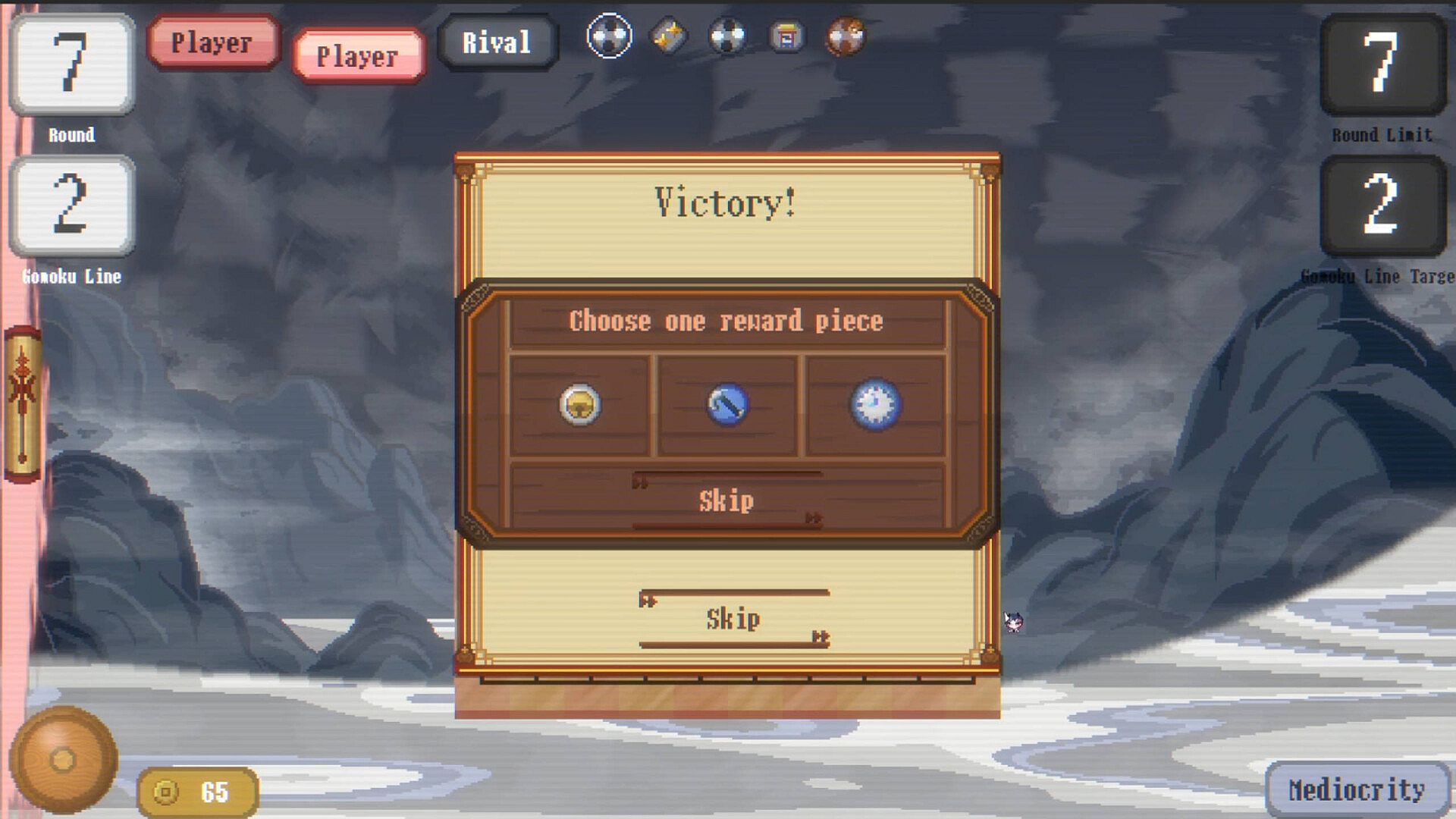
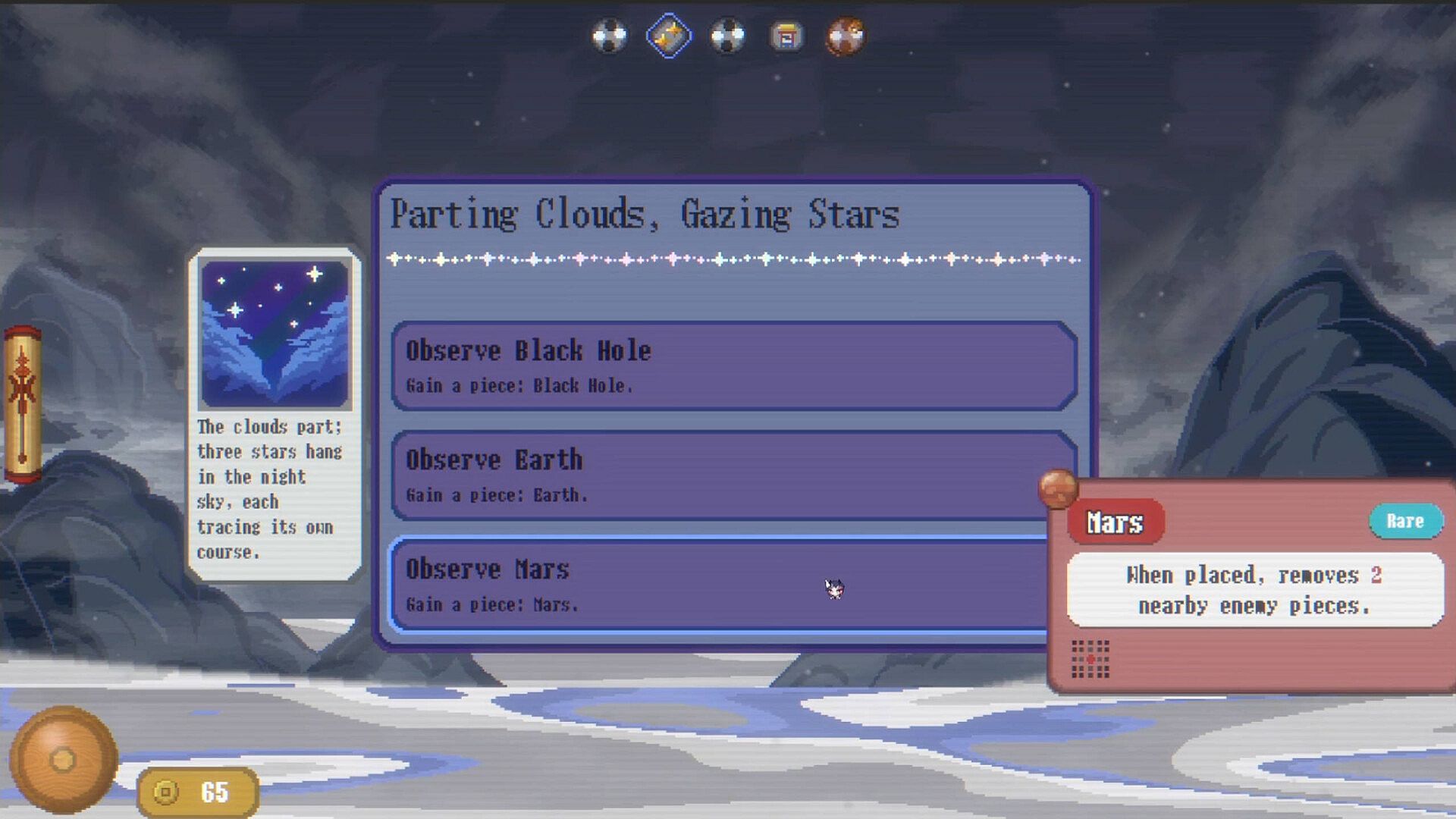
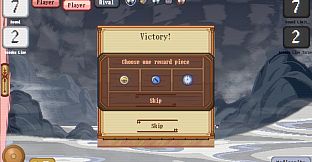
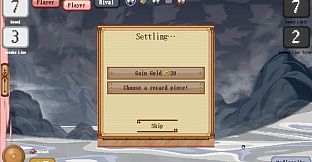
Progression ties individual matches into a larger campaign. Successful runs unlock new pieces for the player's library, while random encounters present branching choices. Manuscripts provide run-wide bonuses, and the stall serves as a marketplace for targeted acquisitions. This system rewards adaptation, as players refine their collection and playstyle through repeated attempts rather than relying on a fixed set of tools.
Game Modes
Gomoklear operates as a single-player roguelike where each session functions as a self-contained run toward a line target within the round limit. The structure emphasizes iterative improvement across multiple attempts, with victories expanding available options for subsequent runs. Core play centers on the asymmetric placement rhythm and line-clearing consequences, without separate competitive or cooperative variants confirmed at this stage.
The progression system integrates directly into the run format. Wins grant access to additional pieces, and choices during encounters shape the immediate session while building long-term resources. This creates a unified experience focused on adaptation rather than distinct modes with separate rulesets or objectives.
Key Mechanics and Progression
Board reshaping stands as a defining feature. Line clears remove pieces and can cascade into larger disruptions, turning static defenses into dynamic battlegrounds. Rival actions add layers of opposition, including setups that counter player advances or introduce new threats mid-round. The combination of two player turns per round against one rival turn alters pacing and encourages proactive rather than reactive strategies.
Piece variety drives replayability within the roguelike framework. High-risk options coexist with reliable tools, requiring players to evaluate board state and remaining rounds before committing placements. Global bonuses from manuscripts and library growth encourage experimentation across runs, as new combinations emerge from accumulated pieces and upgrades.
Is It Worth Playing?
Gomoklear suits players who enjoy strategic board games with roguelike progression and asymmetric mechanics. The single-player focus allows uninterrupted experimentation with piece synergies and board manipulation. Release is planned for Q4 2026 with no user reviews available yet, so expectations should center on the described systems of line formation, clearing, and run-based building rather than established community feedback.
Those drawn to Gomoku variants or indie strategy titles with deckbuilding elements will find the core loop of placement, clearing, and adaptation a natural fit. The emphasis on reshaping the board through clears and specialized pieces provides depth for repeated play, particularly for those comfortable with learning curves around unique piece effects and escalating targets.