




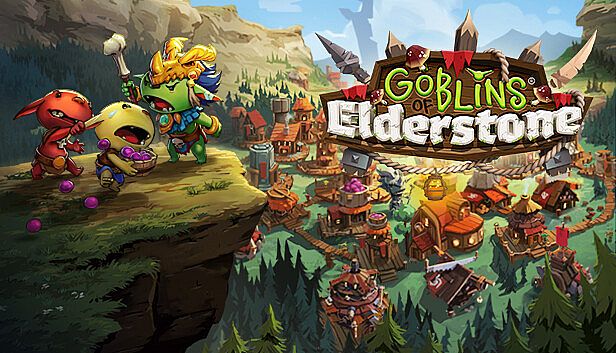





















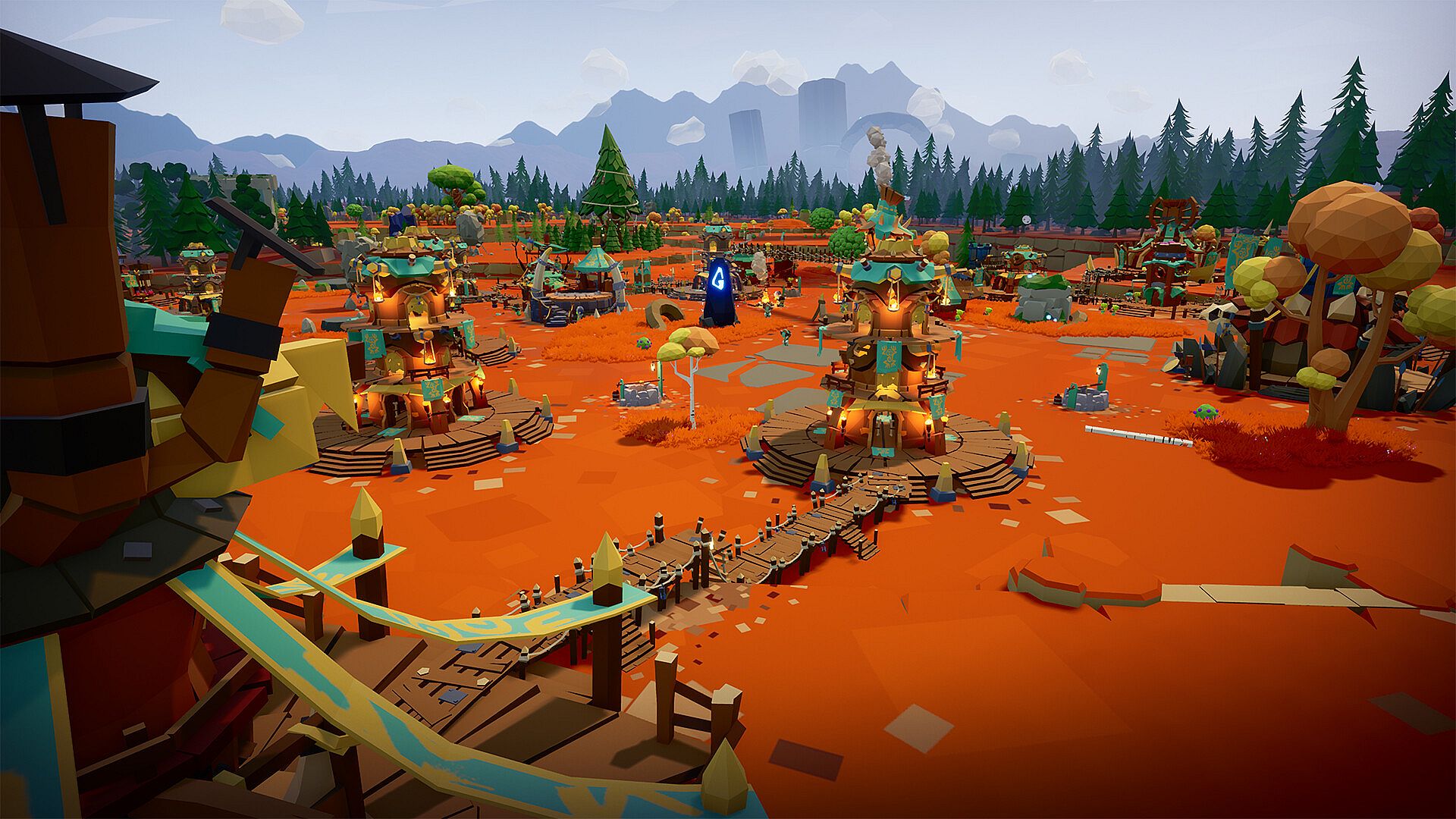
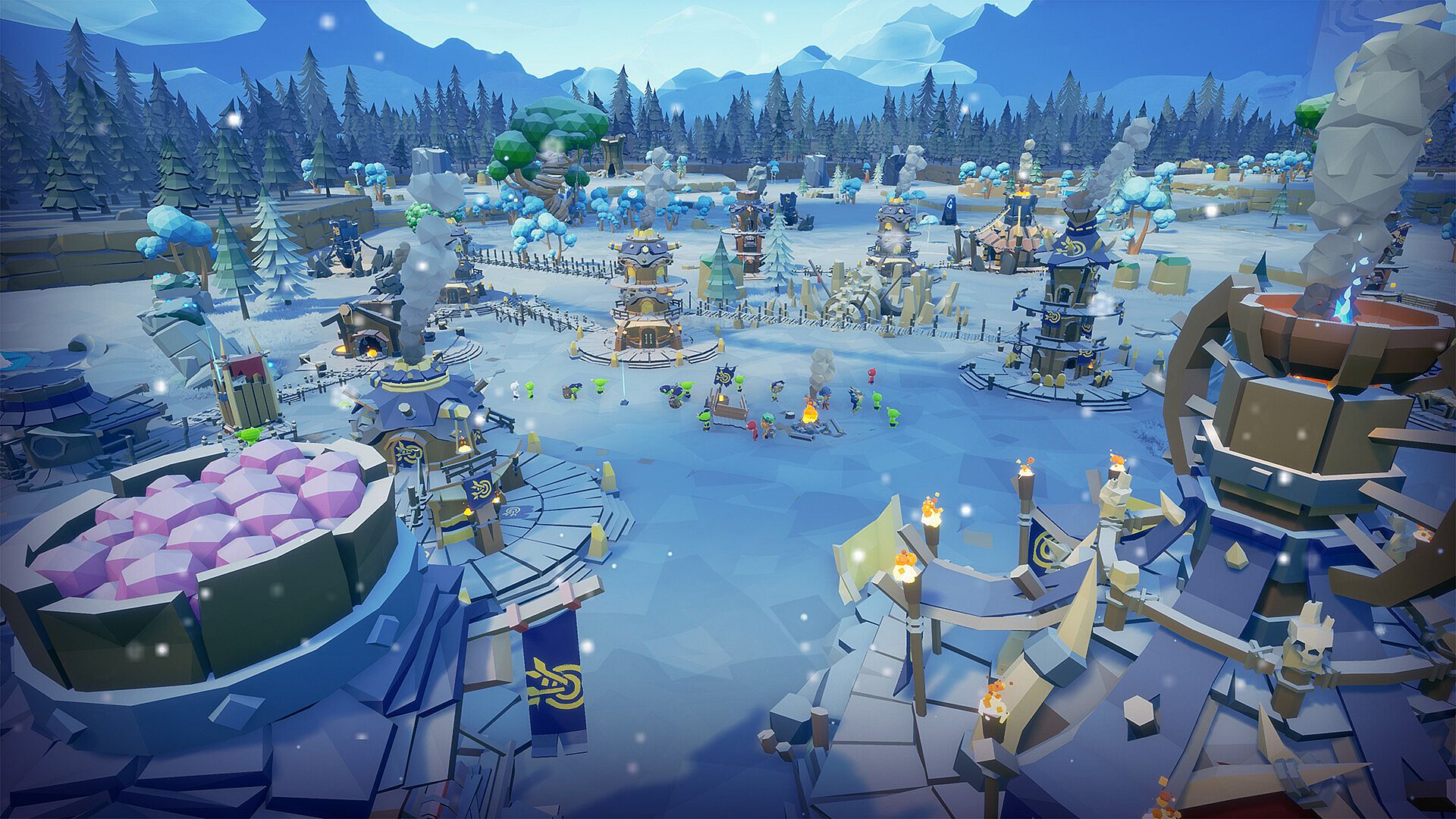
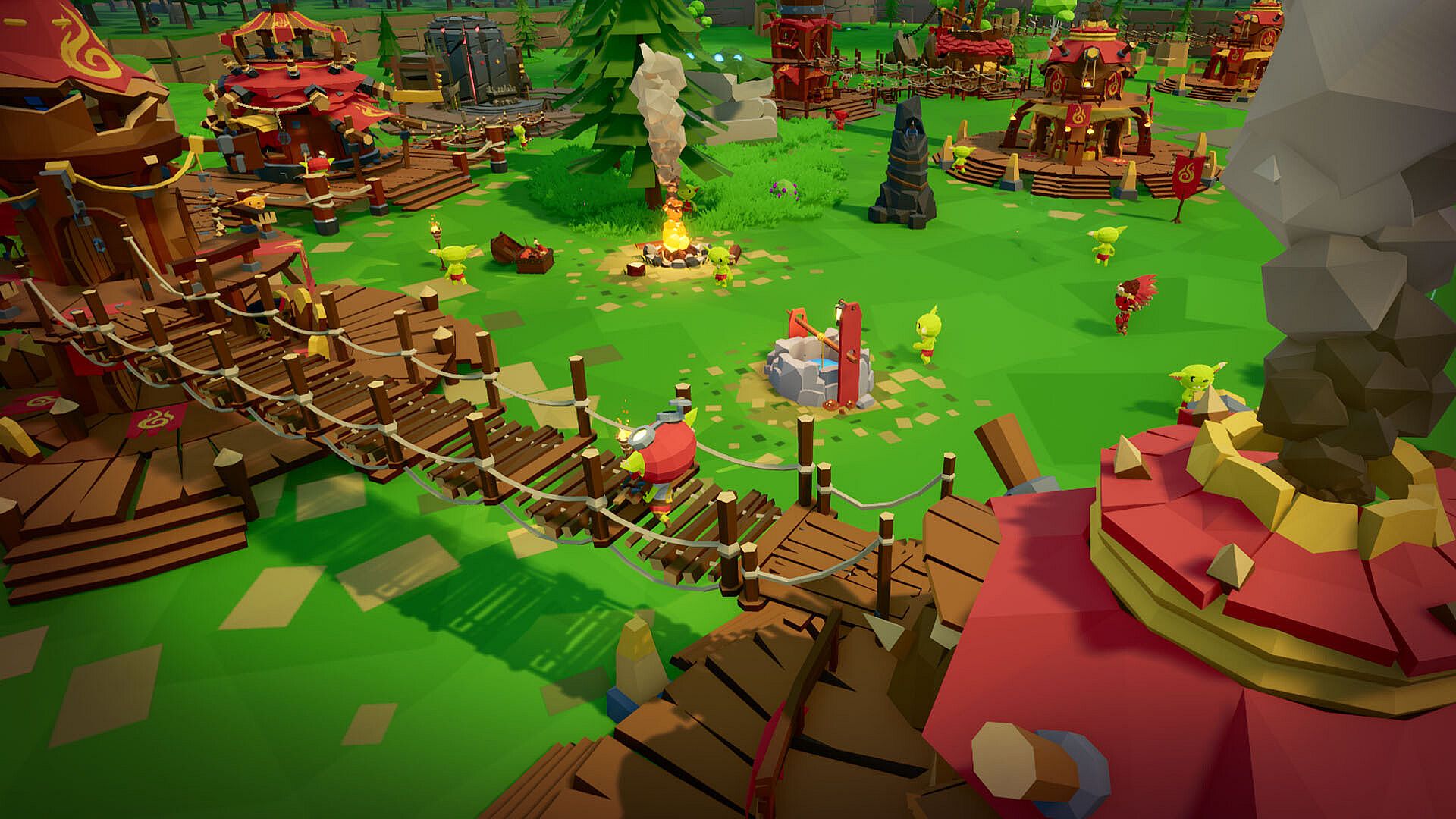
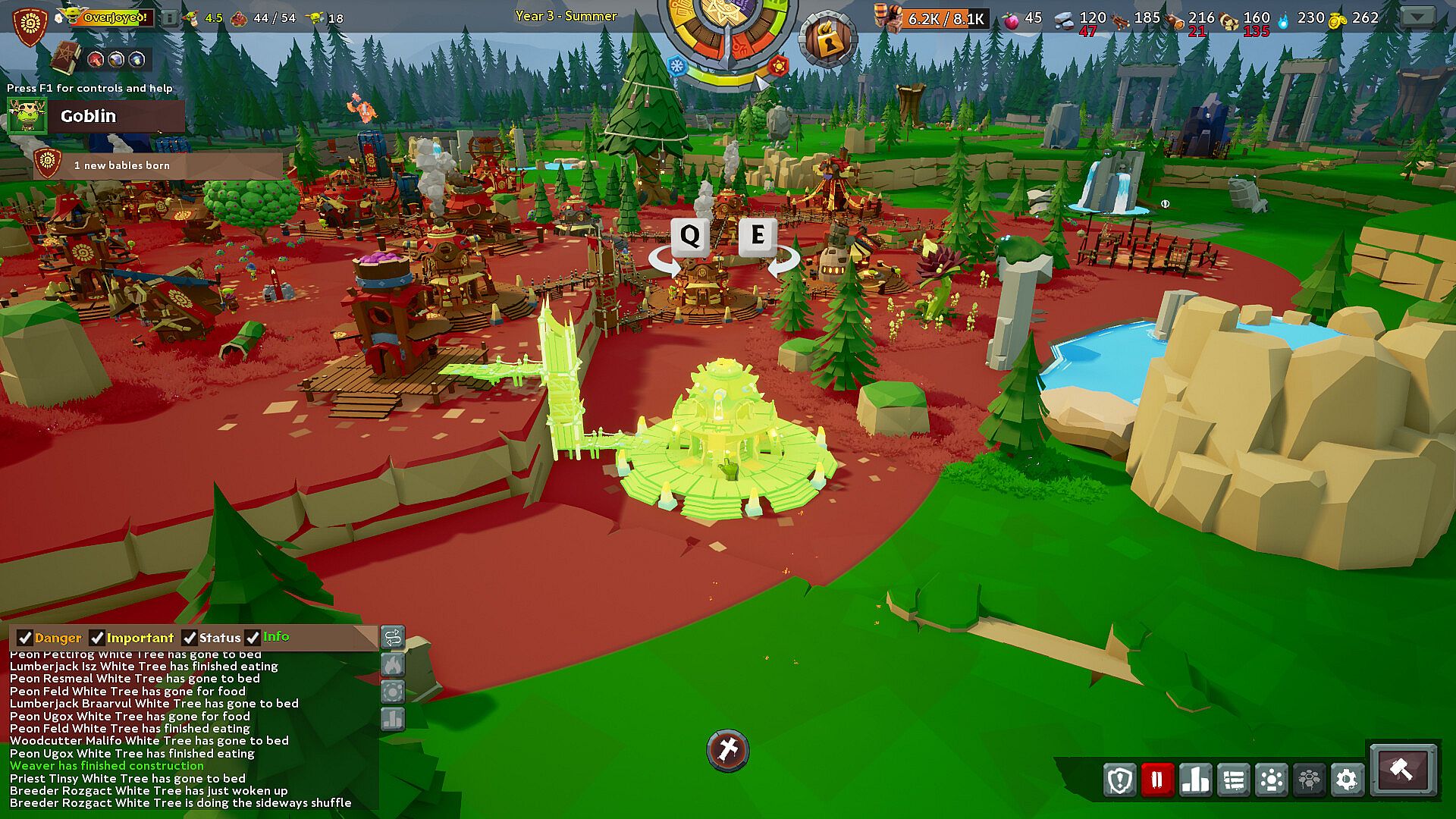
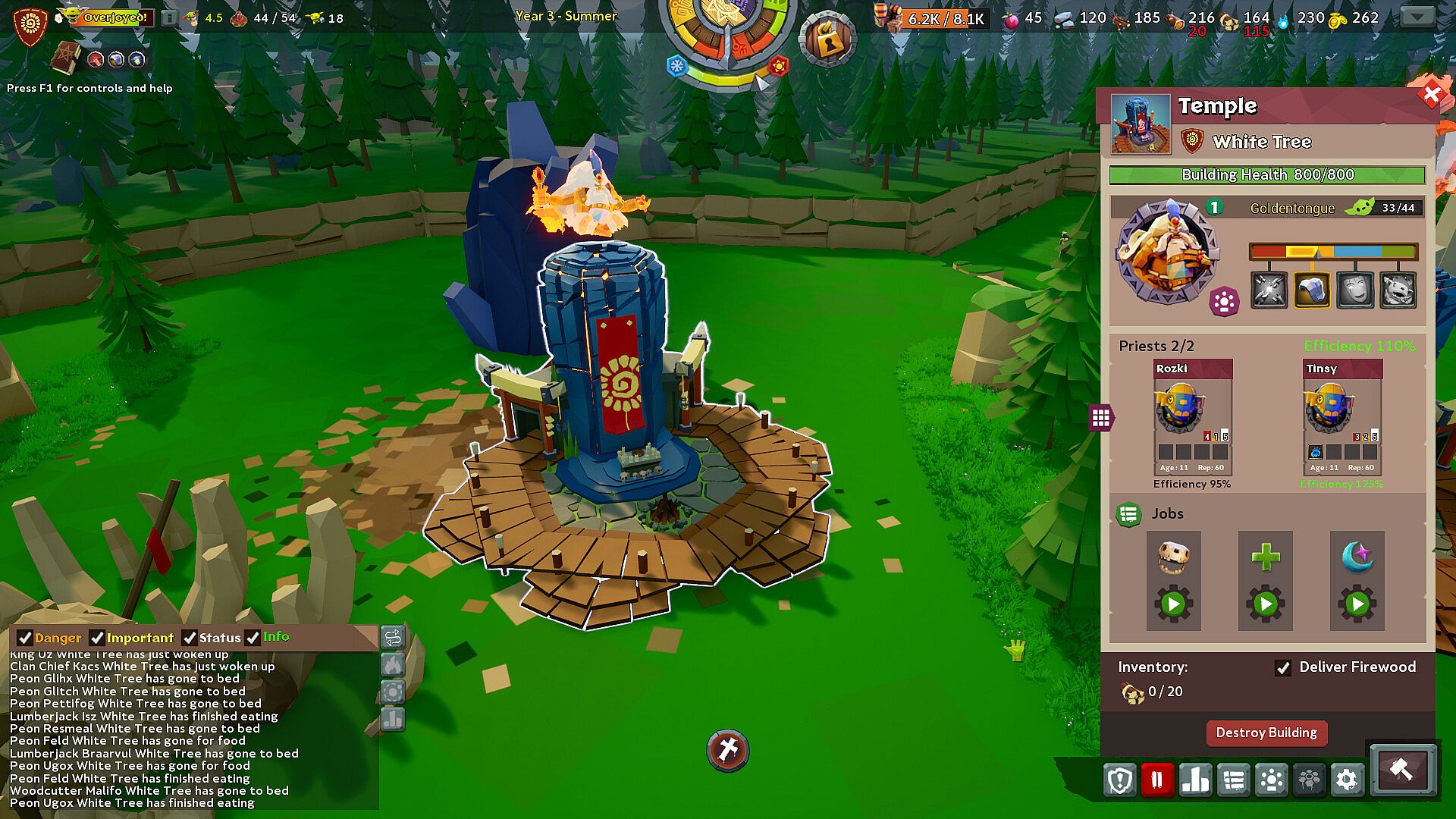
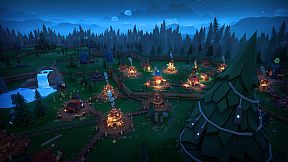
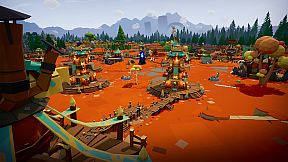
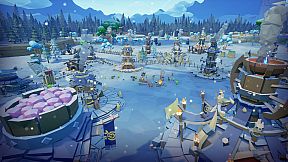
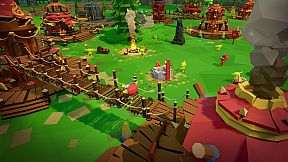
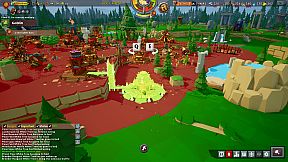
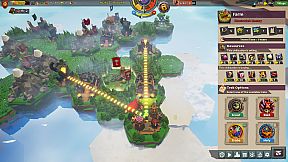
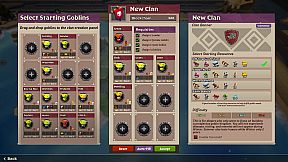
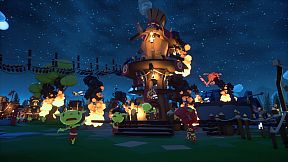
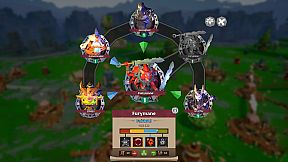
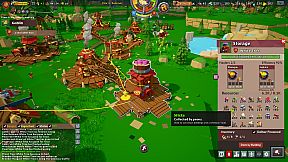
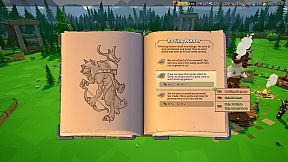
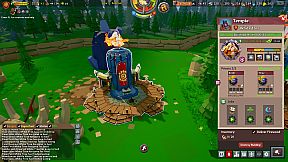
Goblins of Elderstone is a single-player strategy and simulation game that places players in charge of a goblin tribe in a city-building setting. The core experience revolves around constructing a village, managing resources, handling the unpredictable behavior of goblins, and navigating threats from the surrounding world. Released in full on PC in March 2023 after several years in early access, the title emphasizes free-form construction and reactive tribe management rather than rigid planning.
Gameplay
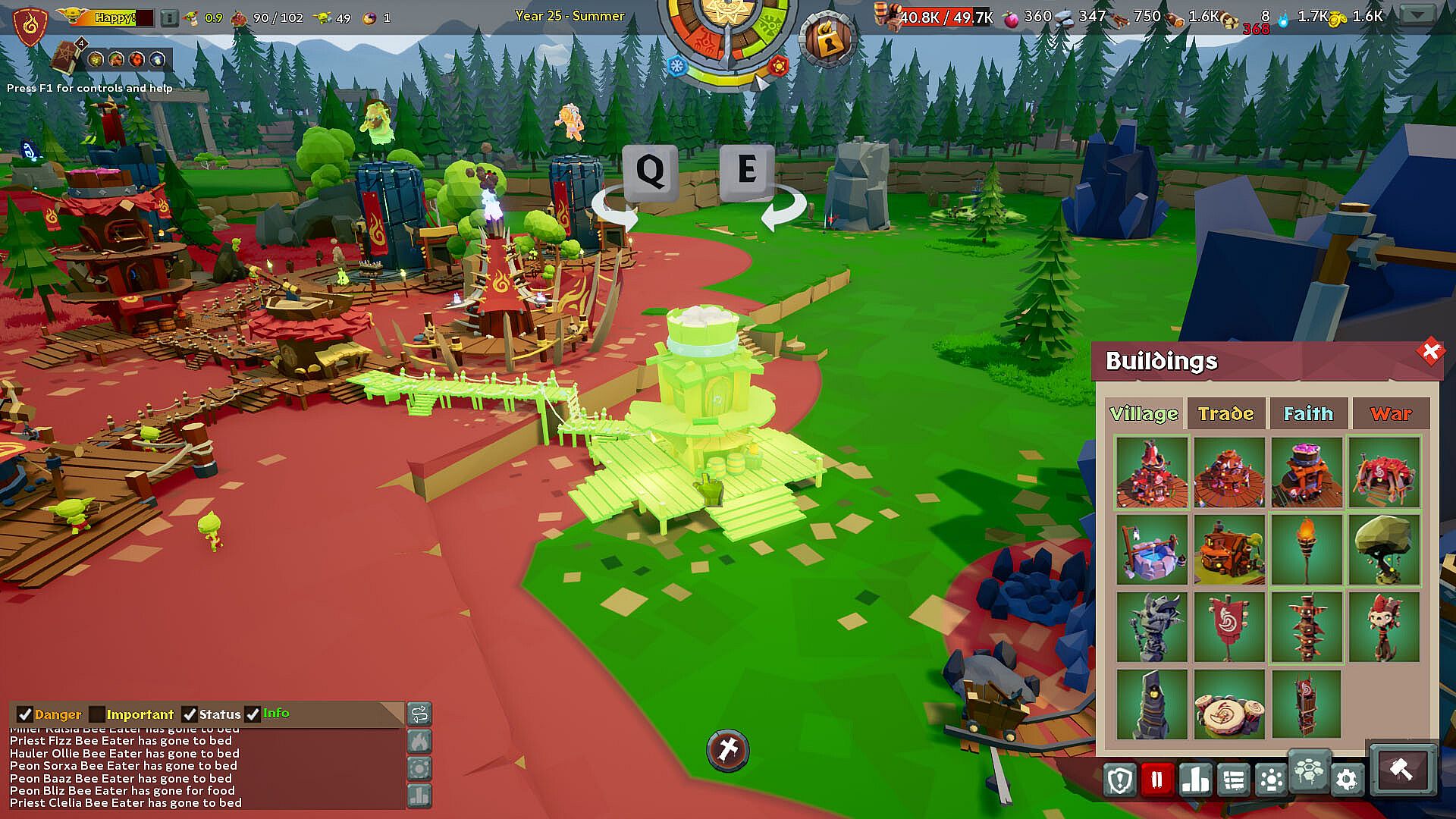
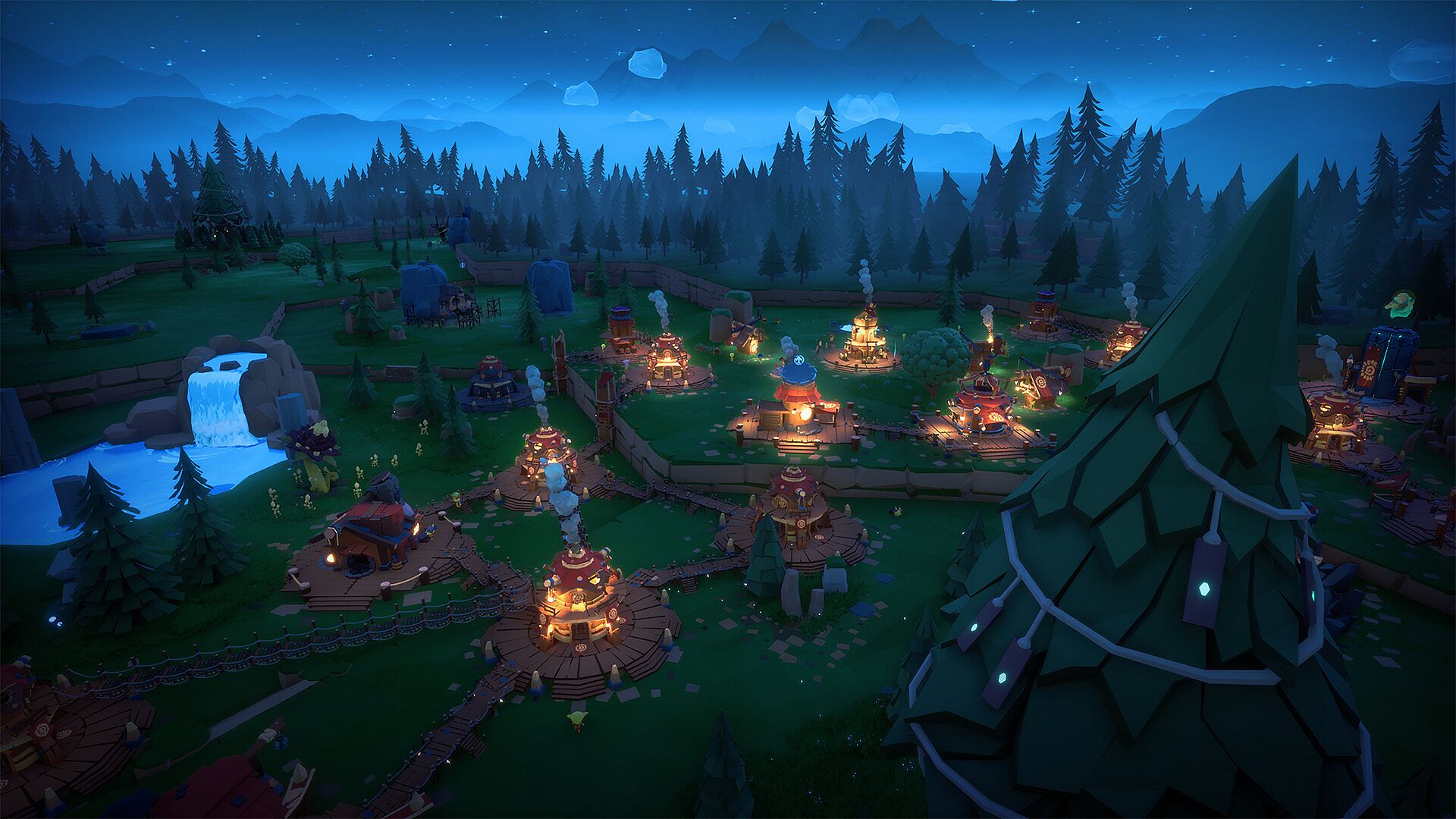
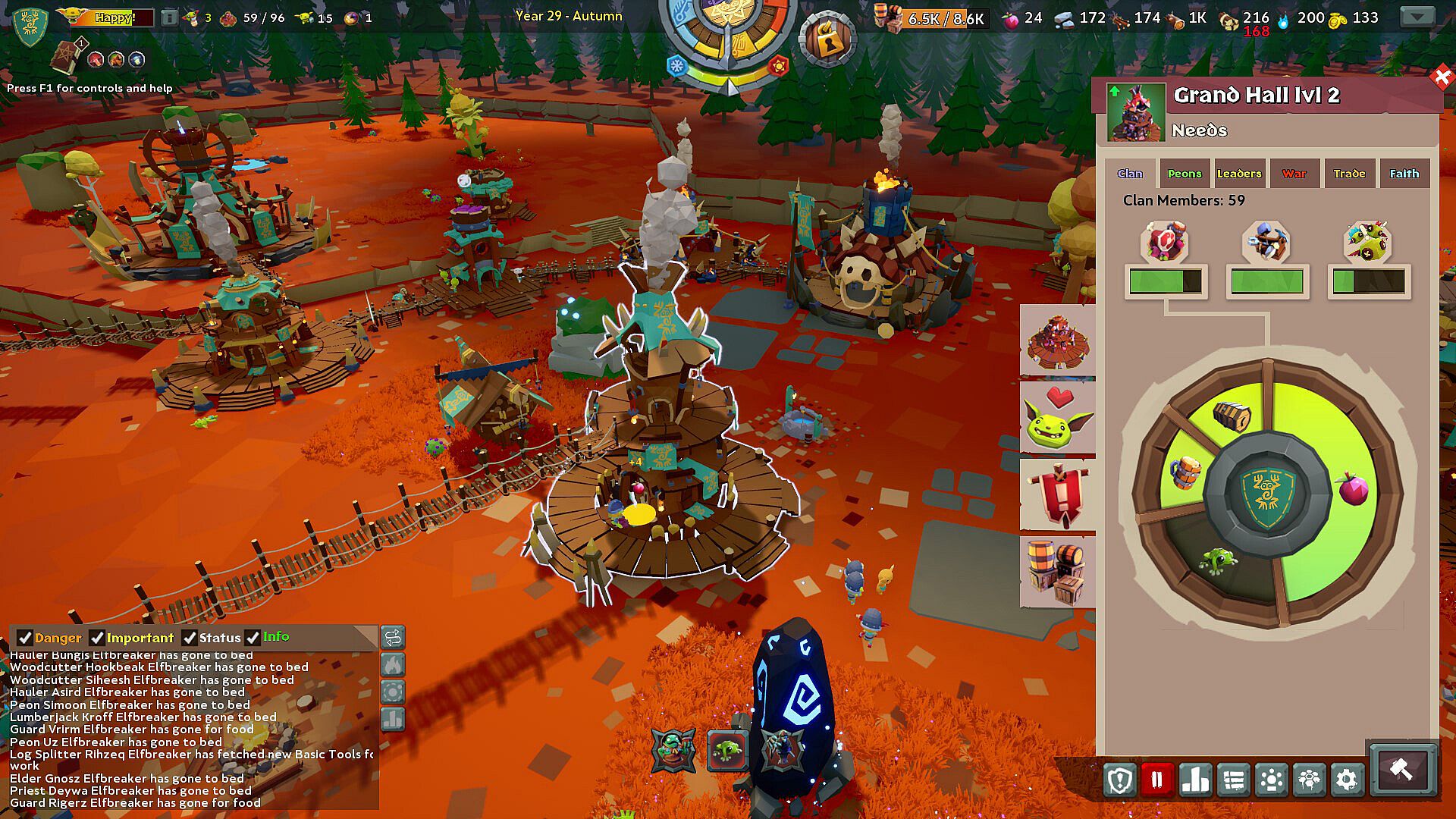
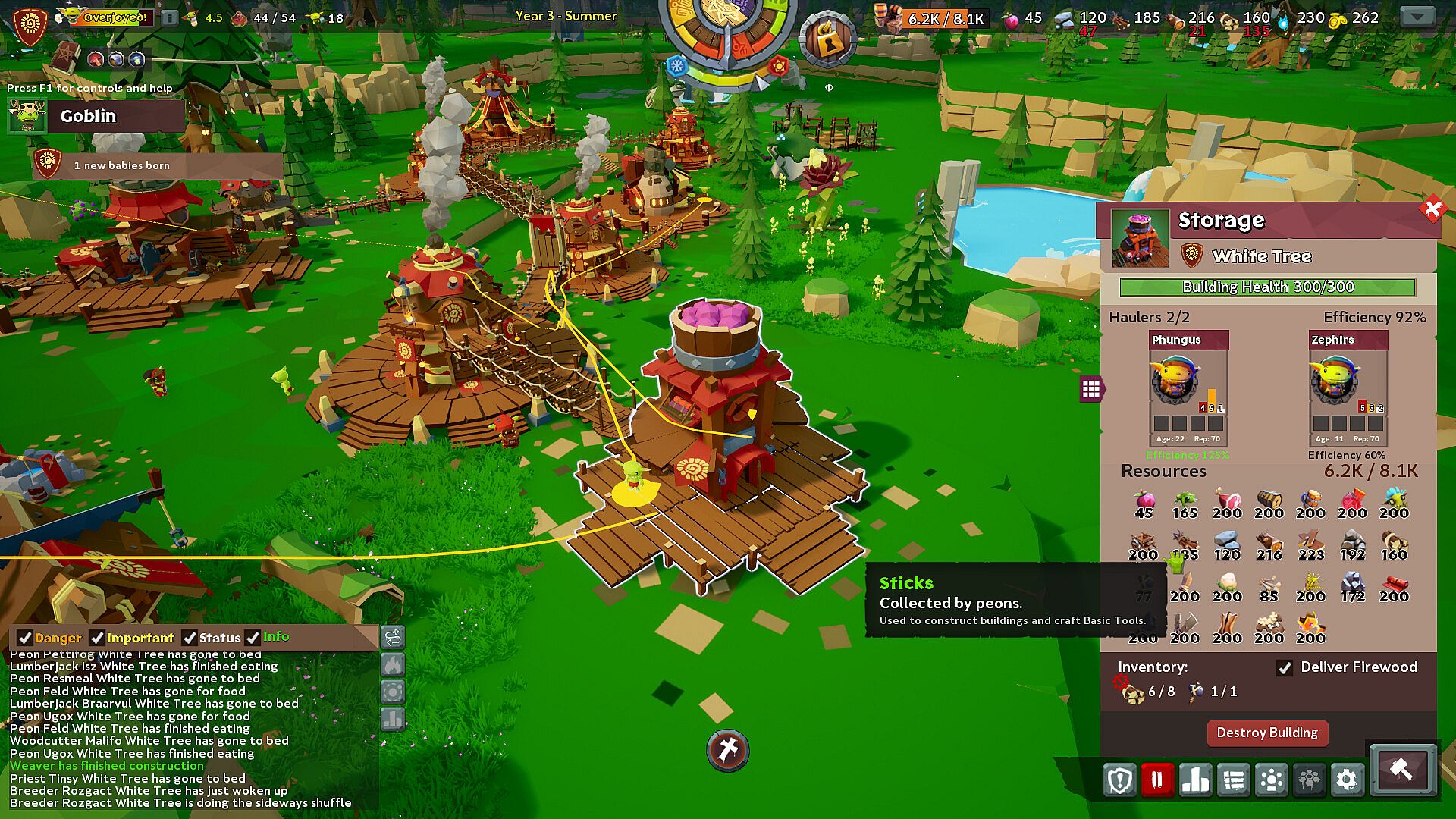
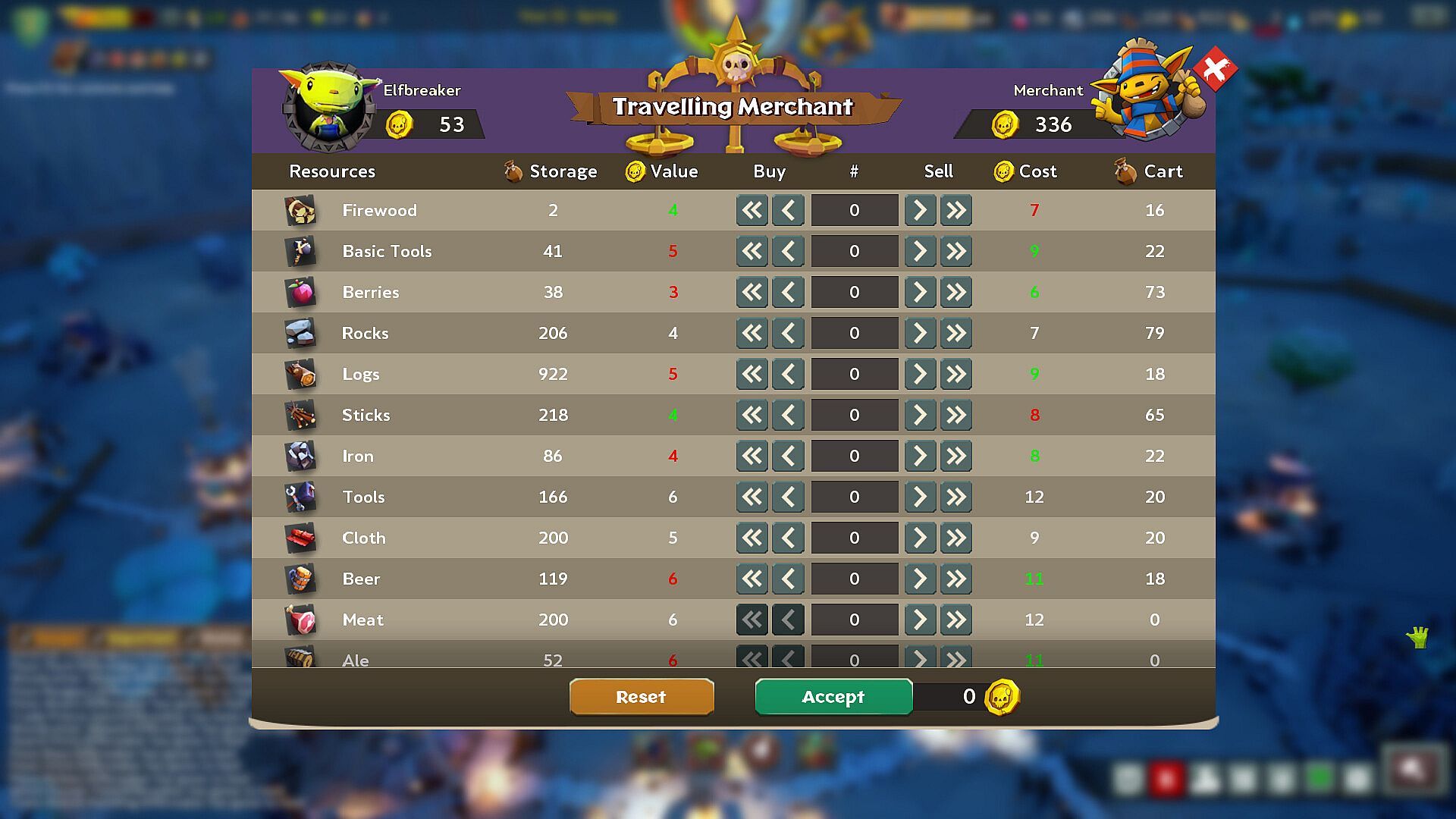
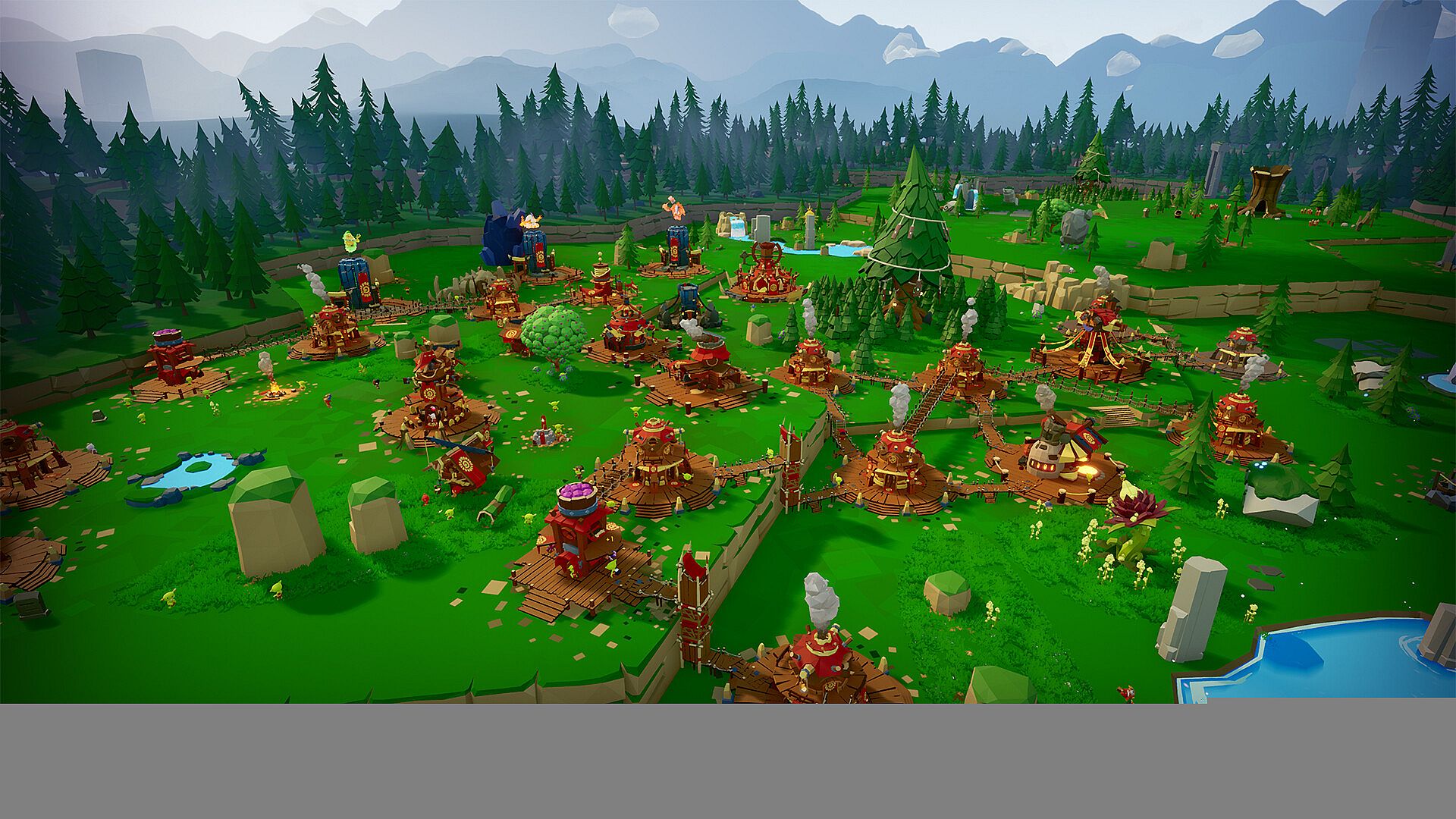
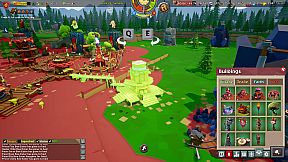
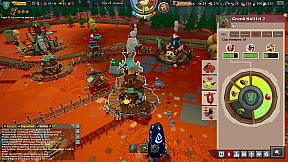
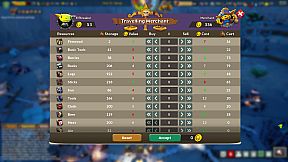
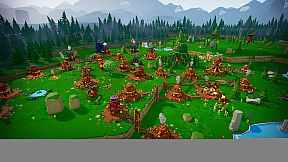
Players construct buildings without a grid system, allowing structures to appear in organic clusters while pathways and bridges form automatically to maintain connections. Over thirty resources support gathering, crafting, trading, and raiding activities, with goblins assigned to roles based on individual traits. Enforcers help maintain productivity among the tribe members.
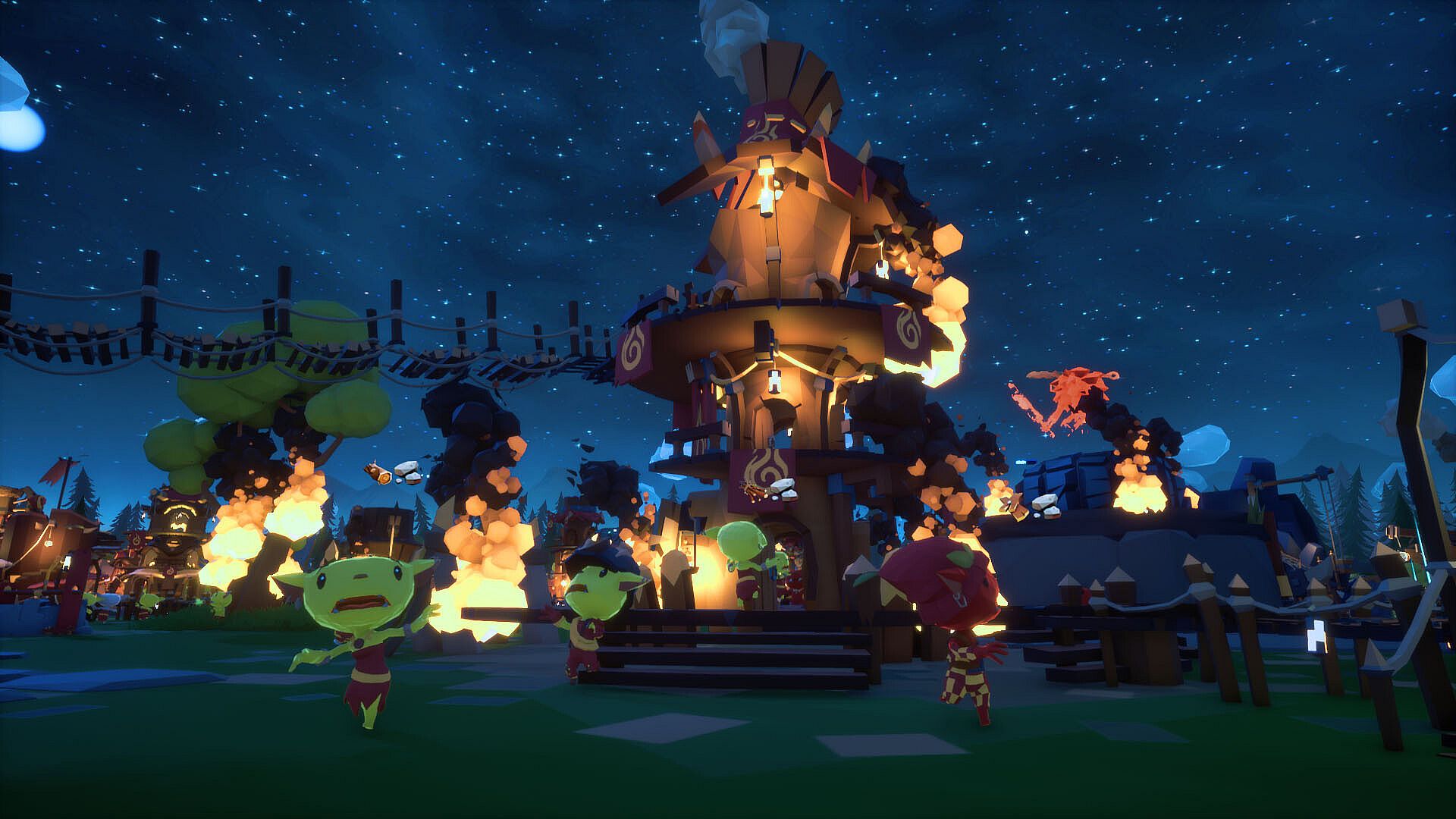
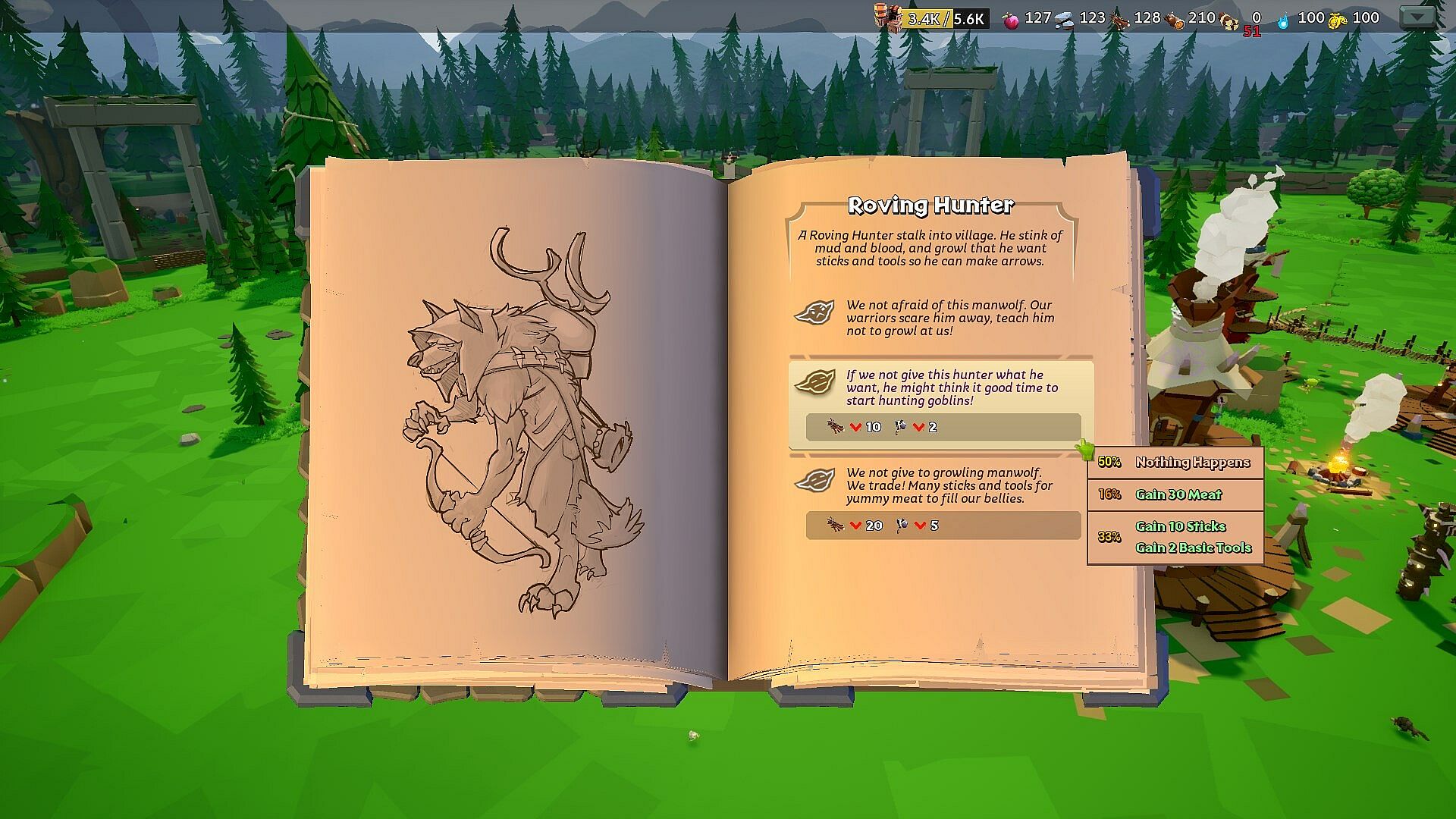
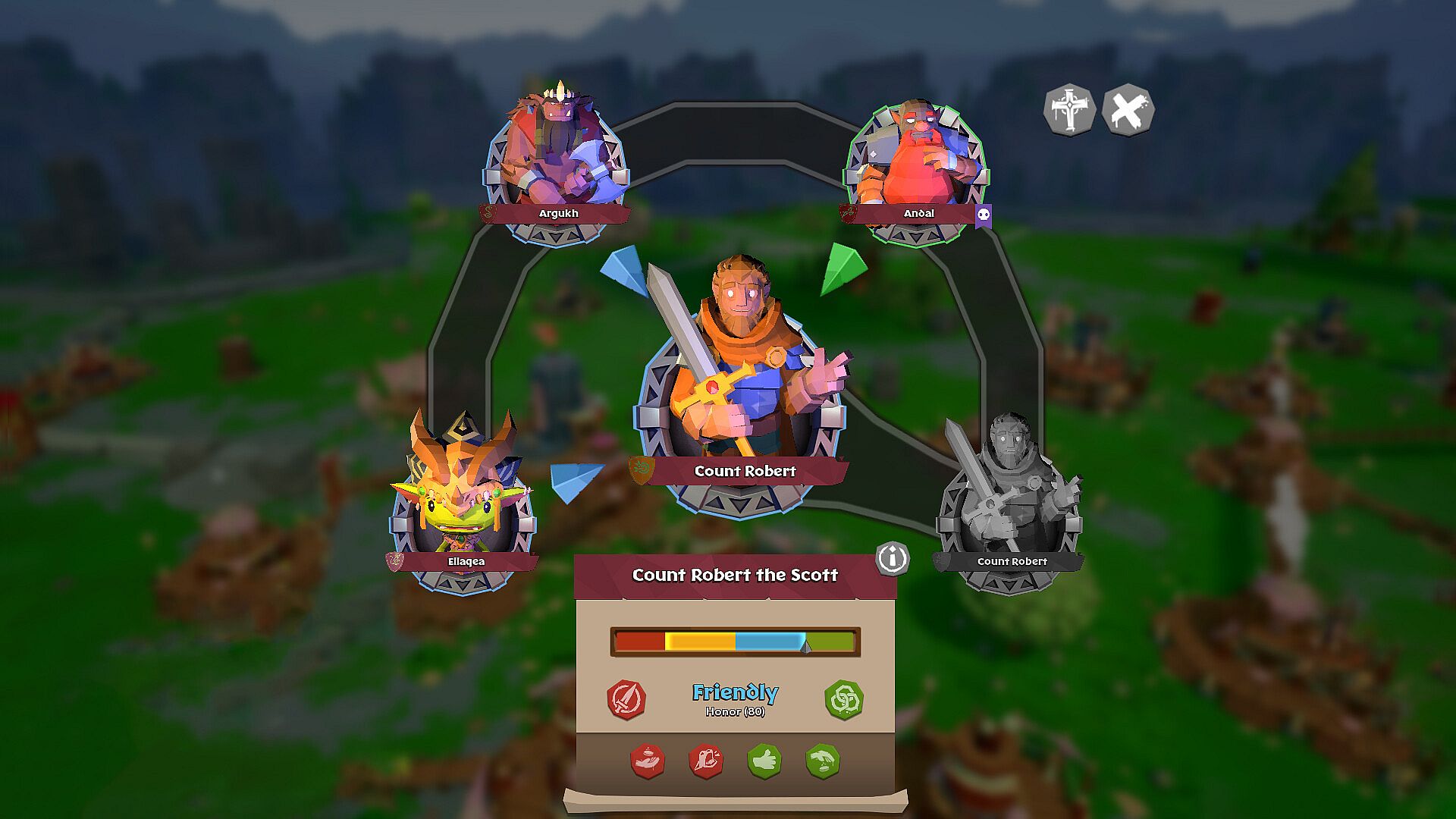
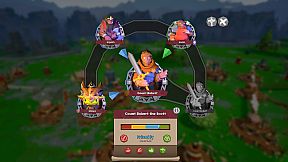
Defense requires positioning watch towers and guard towers to counter monsters, skeletons, and other threats. In critical situations, a defend mode sends workers and children into hiding while fighters respond. Diplomacy extends to other races such as humans, elves, dwarves, and orcs, where alliances or conflicts arise through negotiation, gifts, or force. Story moments present choices involving travelers, overlords, dragons, and gods that influence village progress.
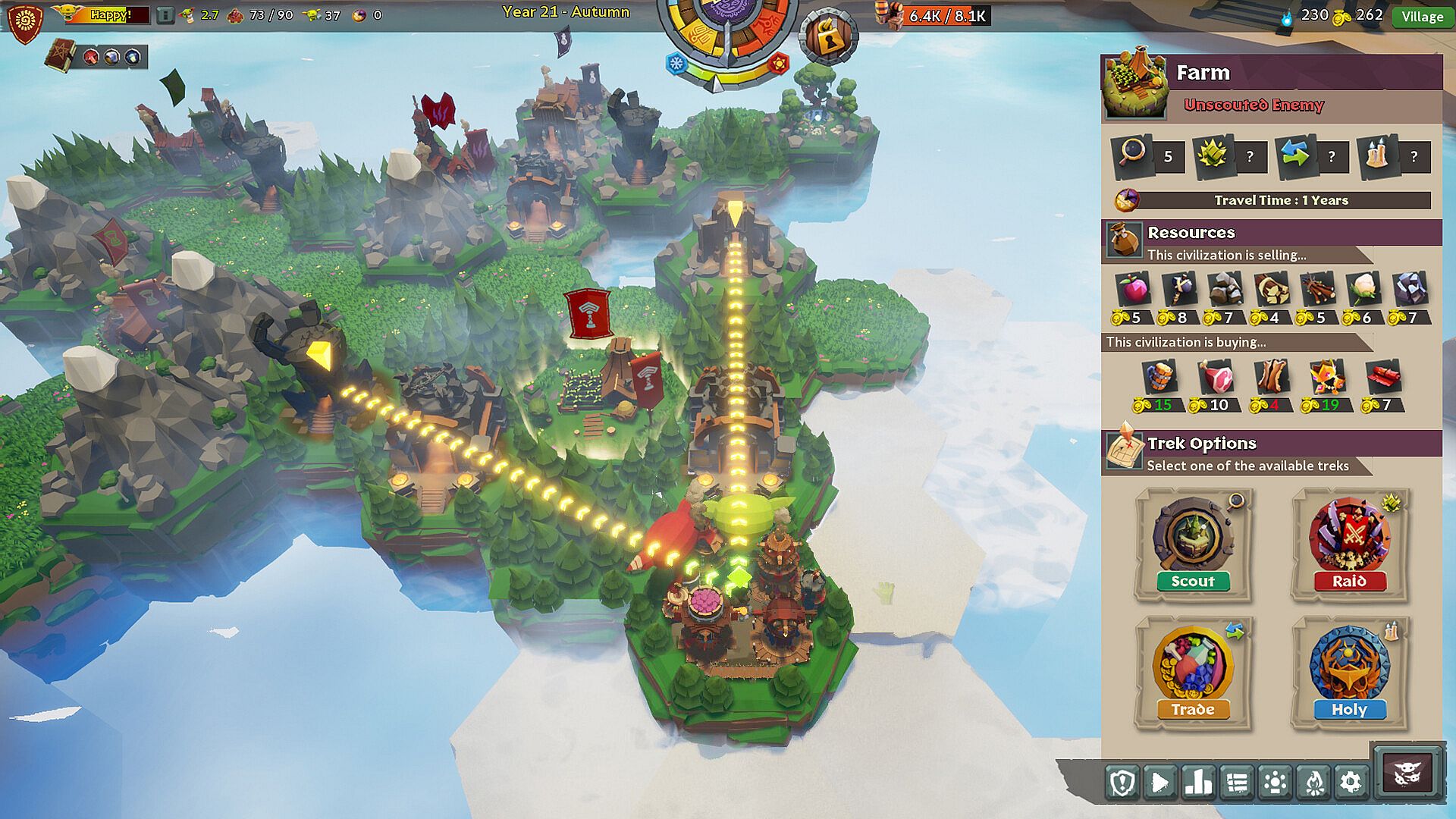
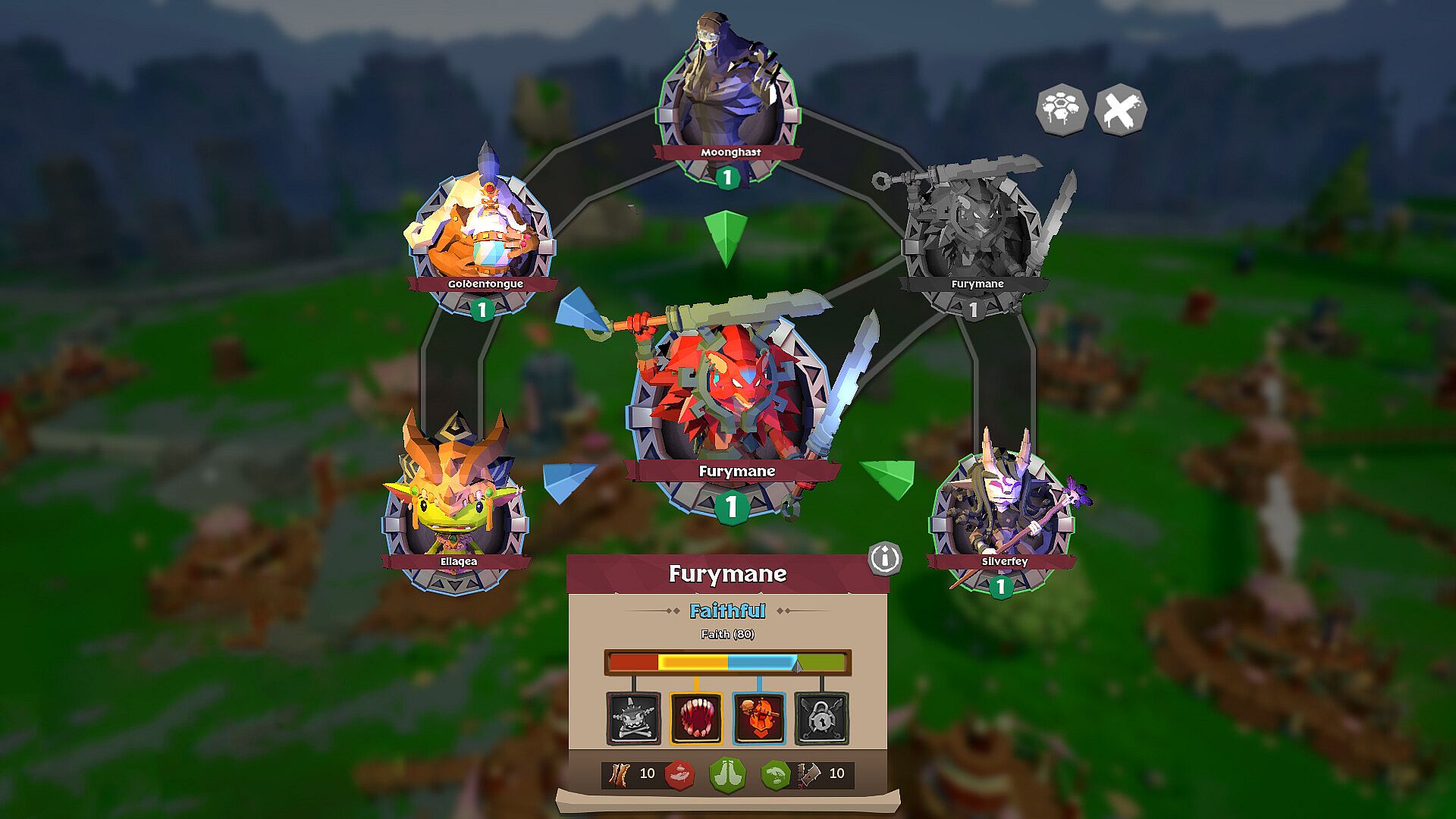
The 2.0 update introduced raids as a streamlined system for acquiring loot and supporting village survival, replacing earlier trek mechanics. Seasons, including harsh winters, received rebalancing to affect resource needs and tribe behavior more consistently. Gods require appeasement through faith activities, unlocking additional needs and interactions for the goblins.
Game Modes
The game operates entirely in a single-player sandbox format focused on long-term tribe development and world interaction. No separate multiplayer or competitive modes exist. The central loop combines building, resource allocation, defense, and external expeditions through raids, trade, or faith-based activities. Players shape outcomes by choosing how to engage with discovered locations and factions, leading to varied village trajectories within the same overarching experience.
Key Mechanics and Systems
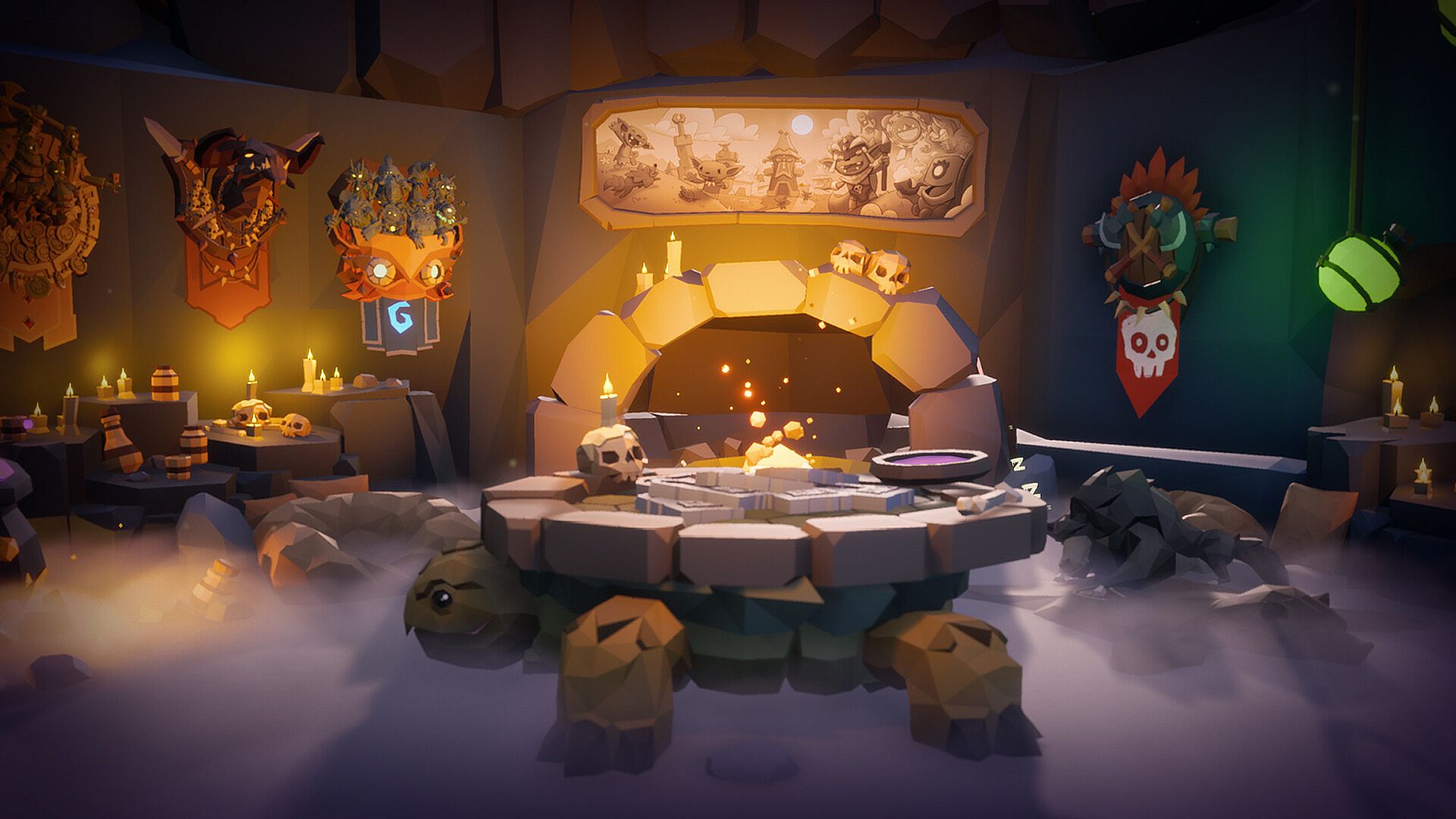
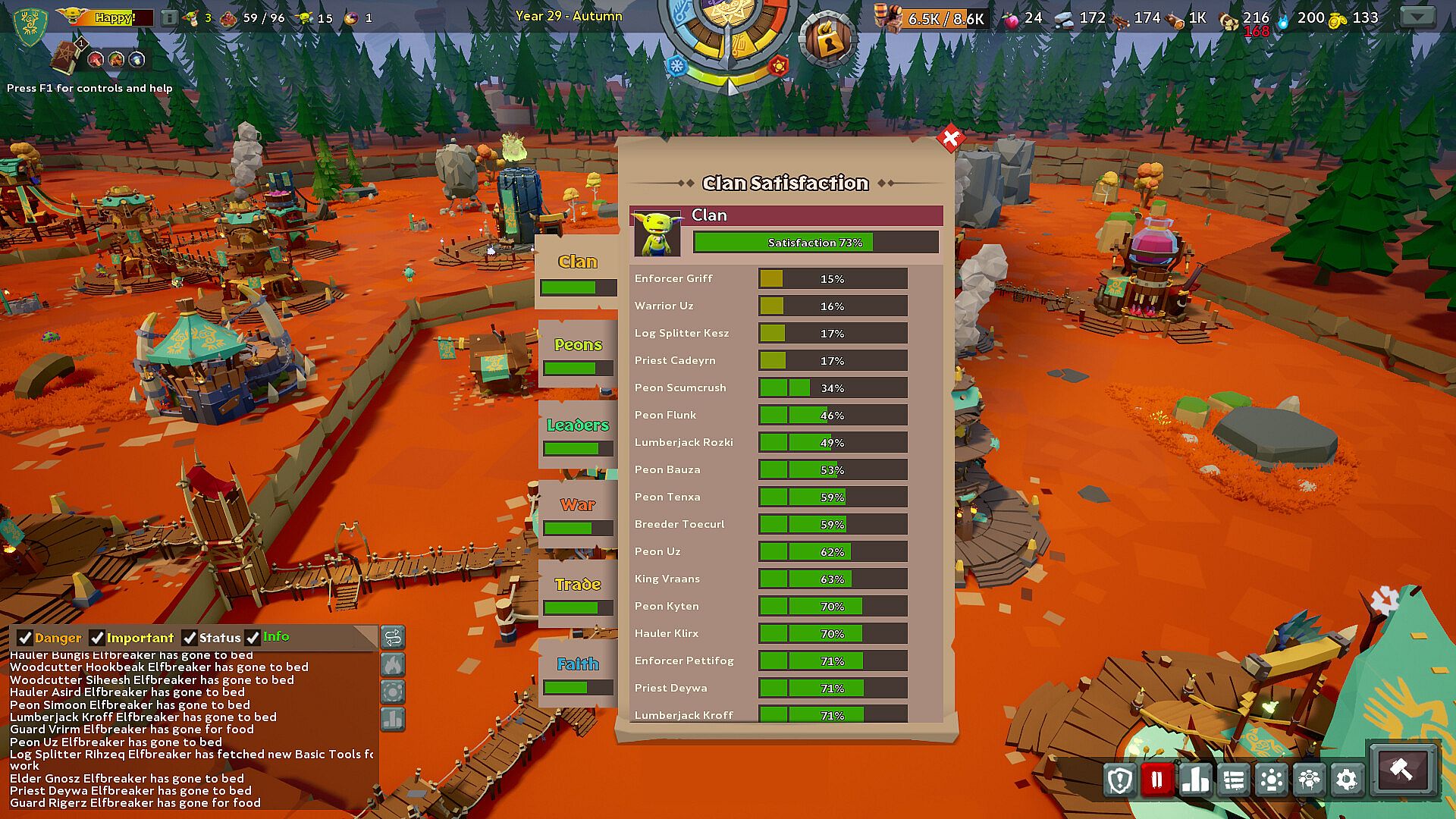
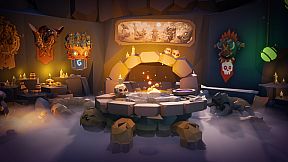
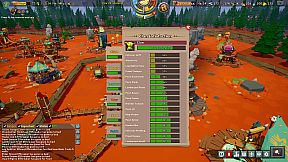
Resource management forms the backbone, with goblins performing tasks across a large crafting tree that supports both internal production and external acquisition. Political systems allow influence over the tribe through a mix of incentives and enforcement, while external relations involve similar tactics with neighboring races and divine entities. Hiring heroes from a tavern provides specialized support for defense or expeditions. The absence of grid-based placement encourages creative layouts that reflect goblin preferences for disorder.
Exploration parties now center on raids that deliver faster results tied directly to village needs. Faith mechanics integrate with the pantheon, requiring ongoing attention to prevent unrest. These elements combine to create a reactive simulation where player decisions on allocation and diplomacy determine whether the tribe expands or collapses under internal or external pressure.
Is It Worth Playing?
Reviews on the primary distribution platform stand at mixed, with 69 percent positive from over 300 user submissions. The title suits players who enjoy managing chaotic systems in a city-building context and appreciate the freedom of non-grid construction alongside tribe oversight. Ongoing support includes the major 2.0 overhaul that refined building, introduced raids, and adjusted seasonal elements, indicating continued development into 2026. Those seeking a focused single-player experience with goblin-themed simulation and strategic depth may find the current version aligns with that preference, particularly after the recent updates that streamlined several core systems.















