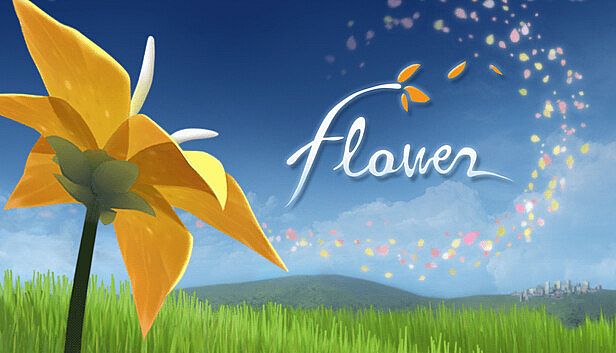




















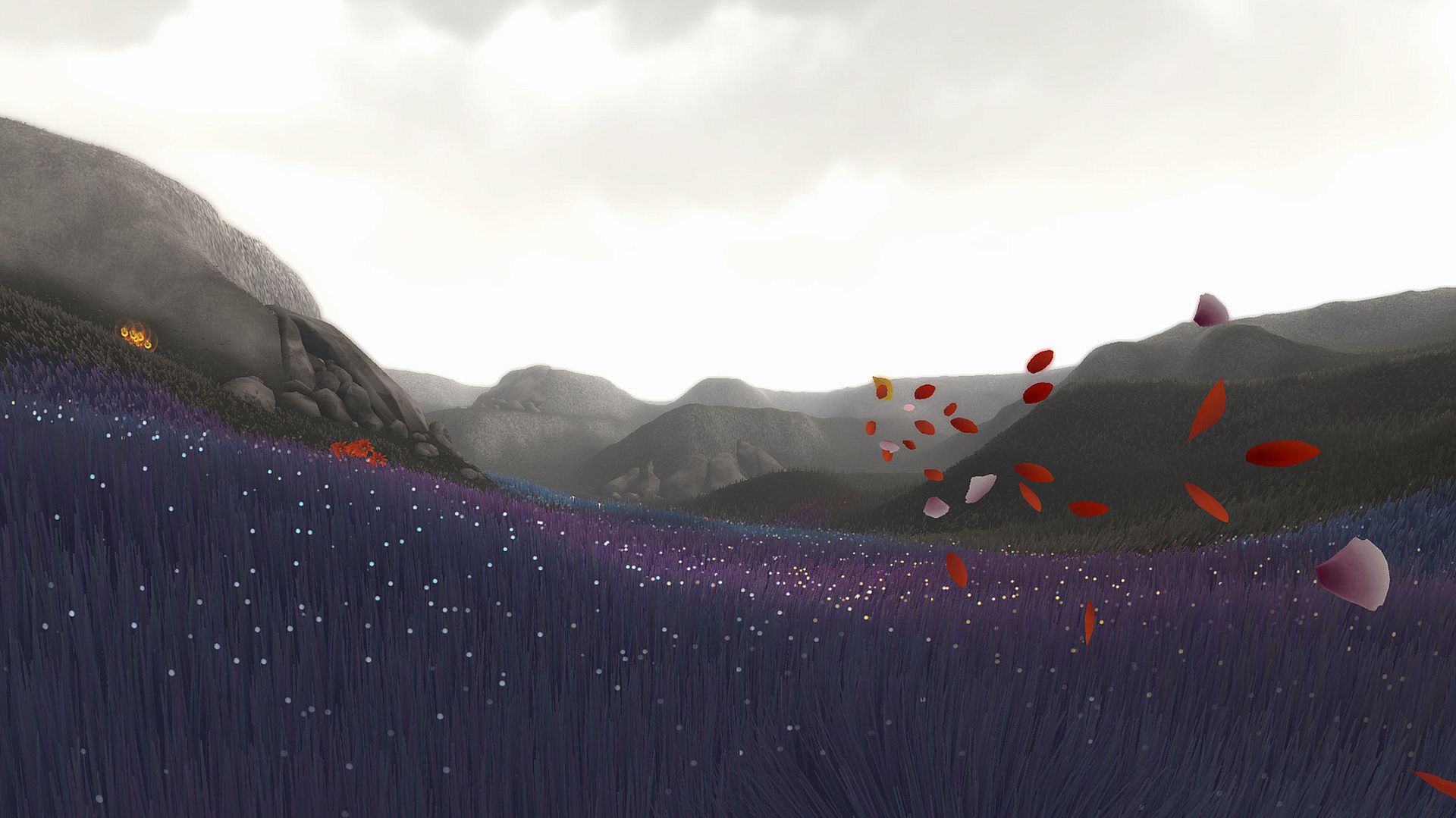
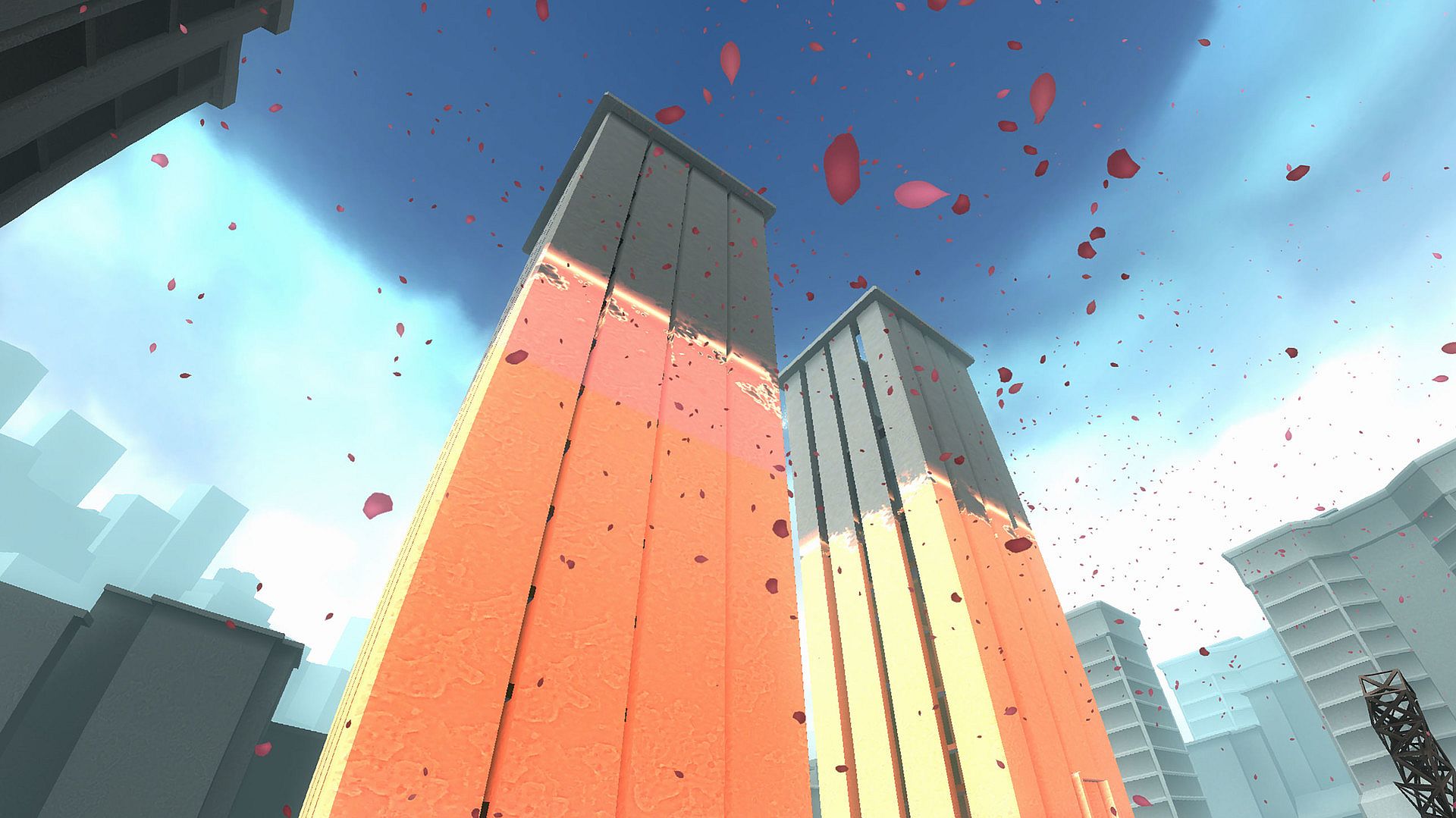
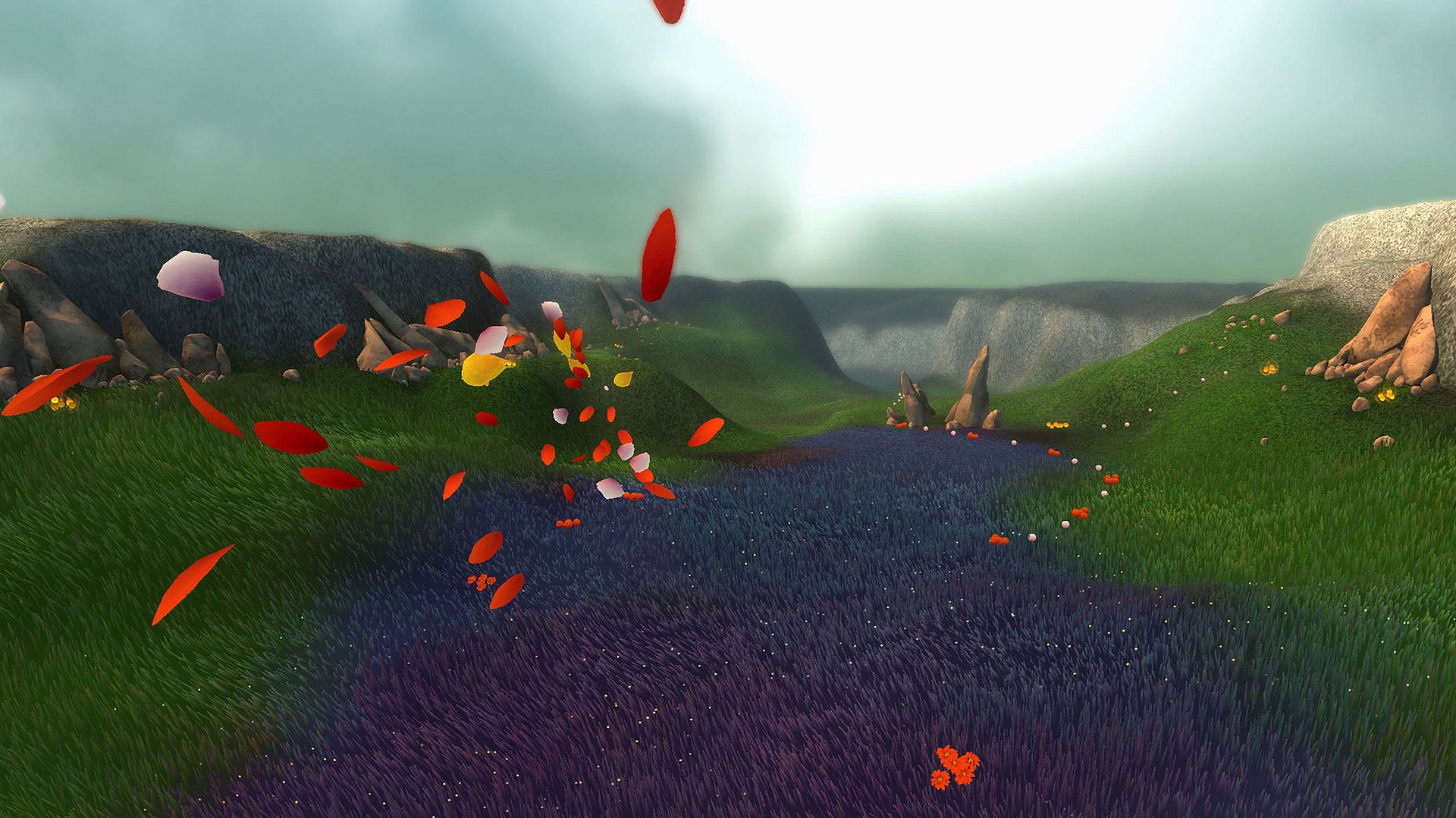
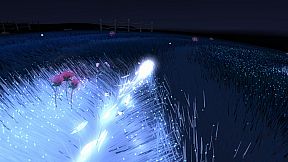
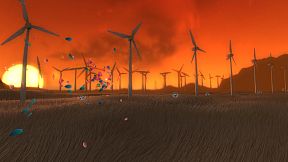
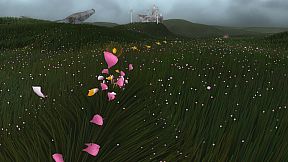
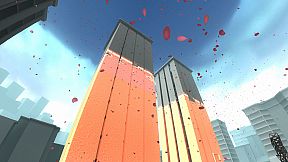
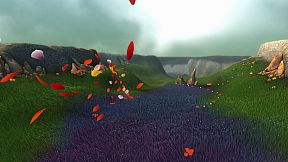
Flower is a casual adventure game that places players in control of the wind to guide flower petals across serene landscapes. Developed by thatgamecompany and now available on PC, the experience emphasizes exploration and environmental interaction over traditional objectives or conflict. Players move through fields and other settings by directing the breeze, collecting petals from blooming flowers to increase speed and influence the surroundings. The game unfolds across a series of distinct levels, each representing a flower's dream, where the focus remains on restoring color and life to the world.
Gameplay
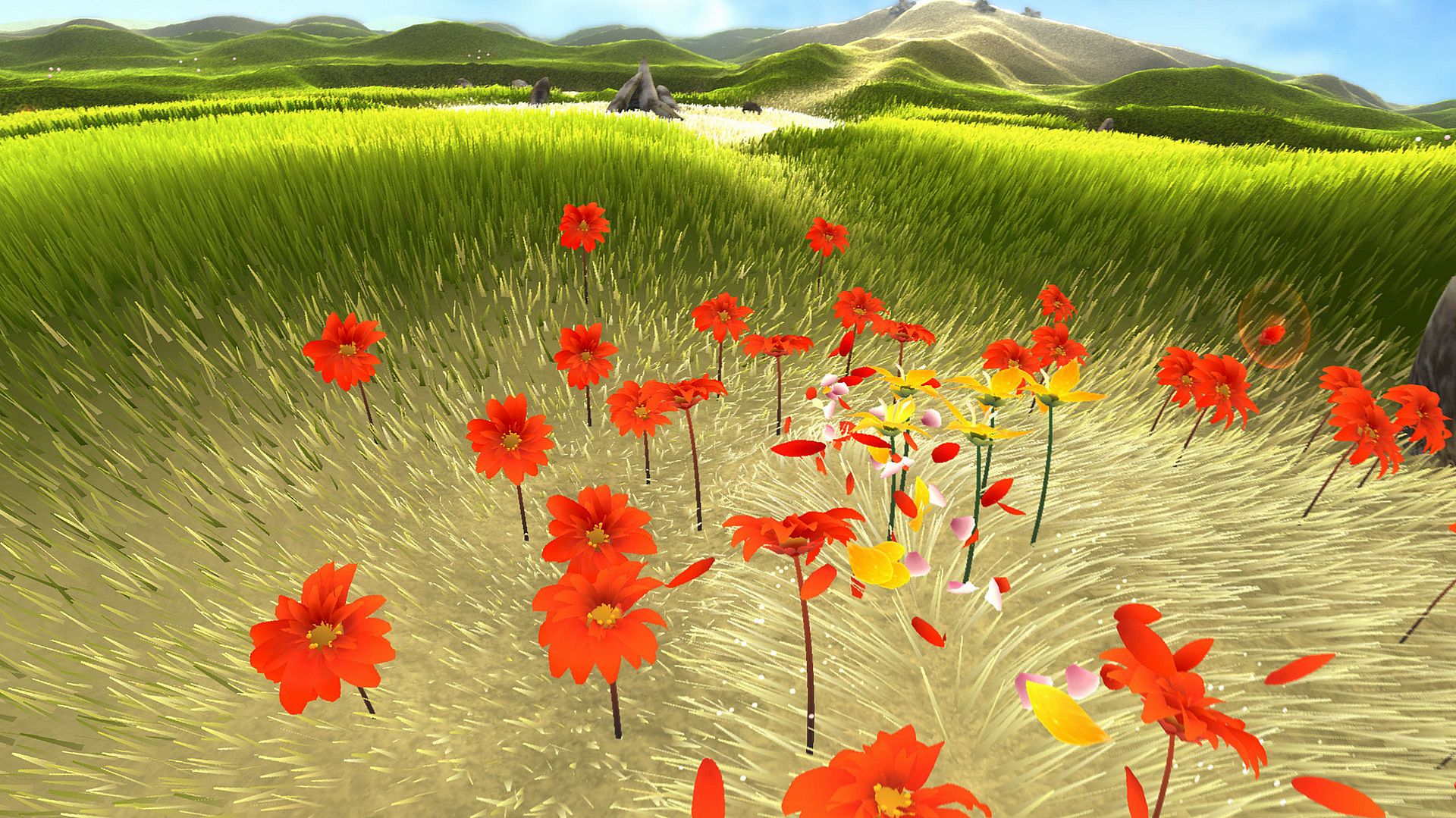
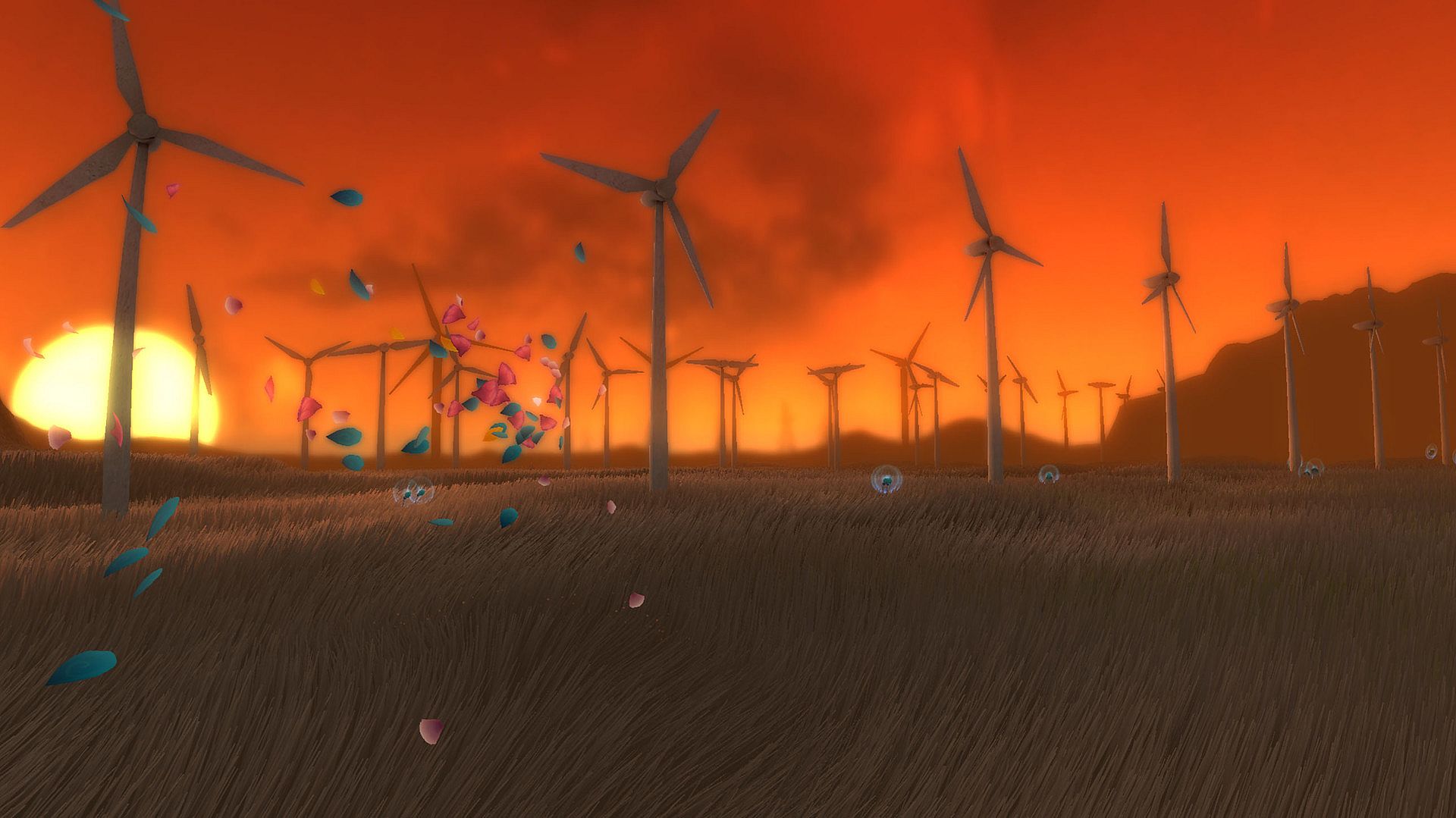
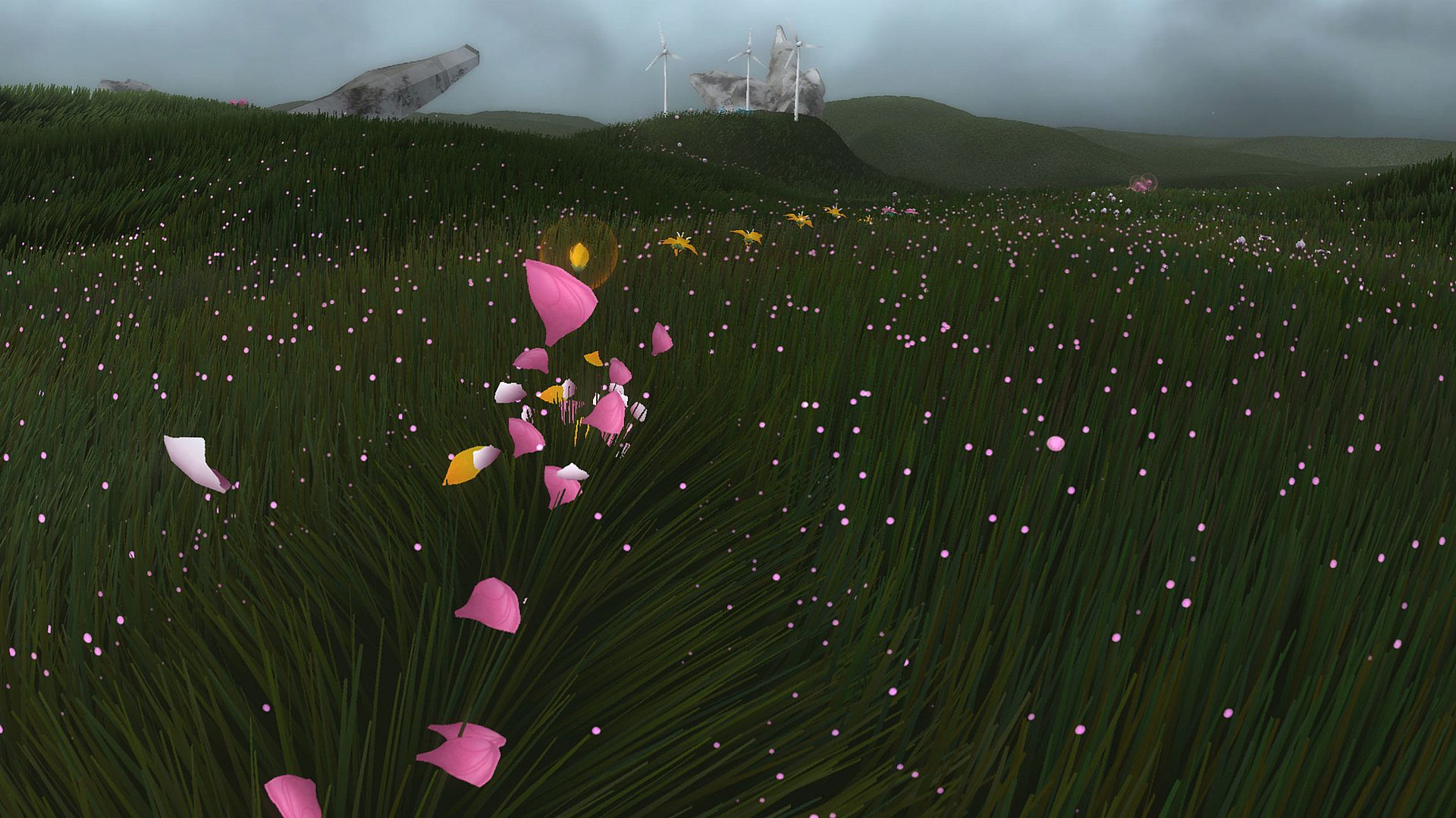
The core loop centers on steering a single petal through open spaces while touching clusters of flowers to gather additional petals. Each new petal joins the group, allowing faster movement and greater reach across the terrain. This mechanic encourages players to weave through the environment at a deliberate pace, revitalizing patches of dry grass or activating elements like windmills that alter the scene. The absence of health systems or failure states means progress depends entirely on player curiosity and timing rather than precision under pressure.
Controls remain straightforward on PC, relying on directional input to steer the wind and a simple action to increase forward momentum. The camera follows the petal closely but shifts to highlight distant features or changes triggered by the player's path. Levels feature varied backdrops that transition from open meadows to more structured urban areas, with each one building on the previous through gradual environmental shifts. Exploration rewards attention to detail, as scattered flowers and hidden elements respond directly to the wind's passage.
Game Modes
Flower operates entirely as a single-player experience with no multiplayer components or competitive elements. The structure consists of six primary levels plus a final credits sequence, each accessible from a central selection screen featuring potted flowers on a windowsill. Selecting a level transports the player into that flower's dream world, where the objective involves breathing life back into the landscape by interacting with every available plant.
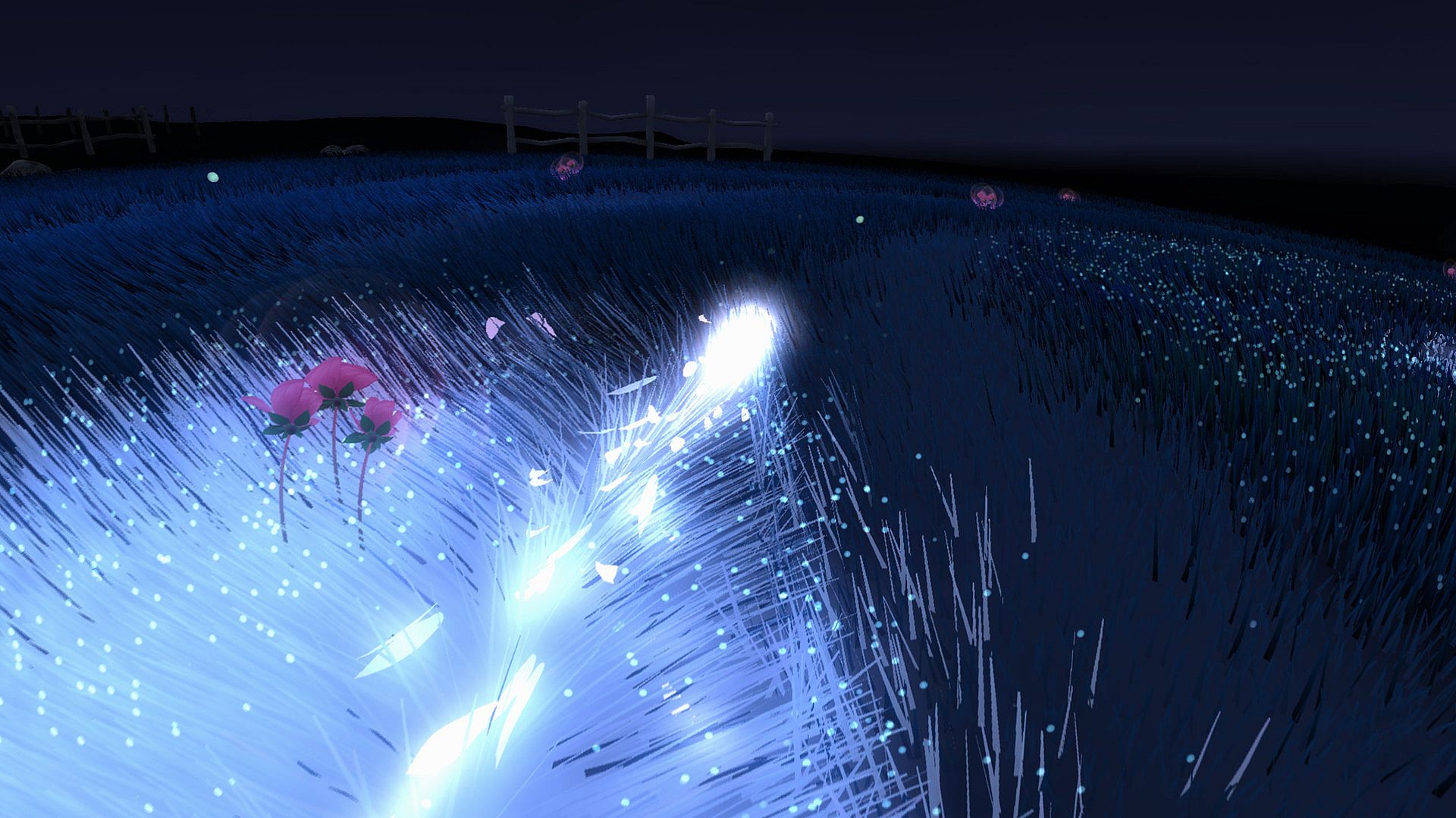
Progression follows a linear sequence, though each level permits free movement without time restrictions or required paths. The first levels emphasize natural settings and basic collection, while later ones introduce nighttime elements and cityscapes that require activating lights or other fixtures. No alternate modes, difficulty settings, or branching narratives exist; the entire game revolves around these sequential dream sequences that players complete at their own speed.
Visual and Audio Design
Environments rely on flowing grass, vibrant color palettes, and particle effects that respond to the player's movements. Petals trail behind the controlled wind in graceful formations, and revitalized areas shift from muted tones to full bloom as interactions occur. The design avoids cluttered interfaces, keeping focus on the natural elements and the gradual transformation of each scene.
Sound design complements the visuals with ambient wind effects and subtle musical cues that swell during moments of collection or environmental change. The audio remains understated, allowing the sense of motion and growth to take precedence. This approach supports the game's emphasis on atmosphere and personal pacing across all levels.
Is It Worth Playing?
Flower suits players seeking a calm, reflective single-player adventure without combat or complex systems. Its accessible controls and lack of failure conditions make it approachable for newcomers and experienced players alike who want to experiment with movement and observation. The six levels provide a complete journey that highlights environmental restoration through simple interactions, appealing to those interested in art-focused experiences.
Reception centers on its relaxing qualities and emotional resonance, with many noting the satisfaction of watching landscapes transform under the wind's influence. The PC version preserves the original design while offering convenient access, and the game stands alone without ongoing updates or additional content. Those who value deliberate exploration and visual harmony over action or competition will find the experience rewarding from start to finish.