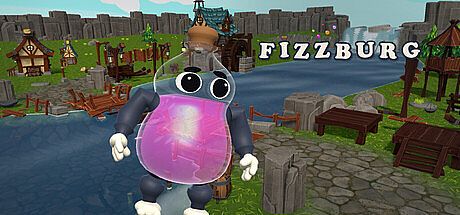


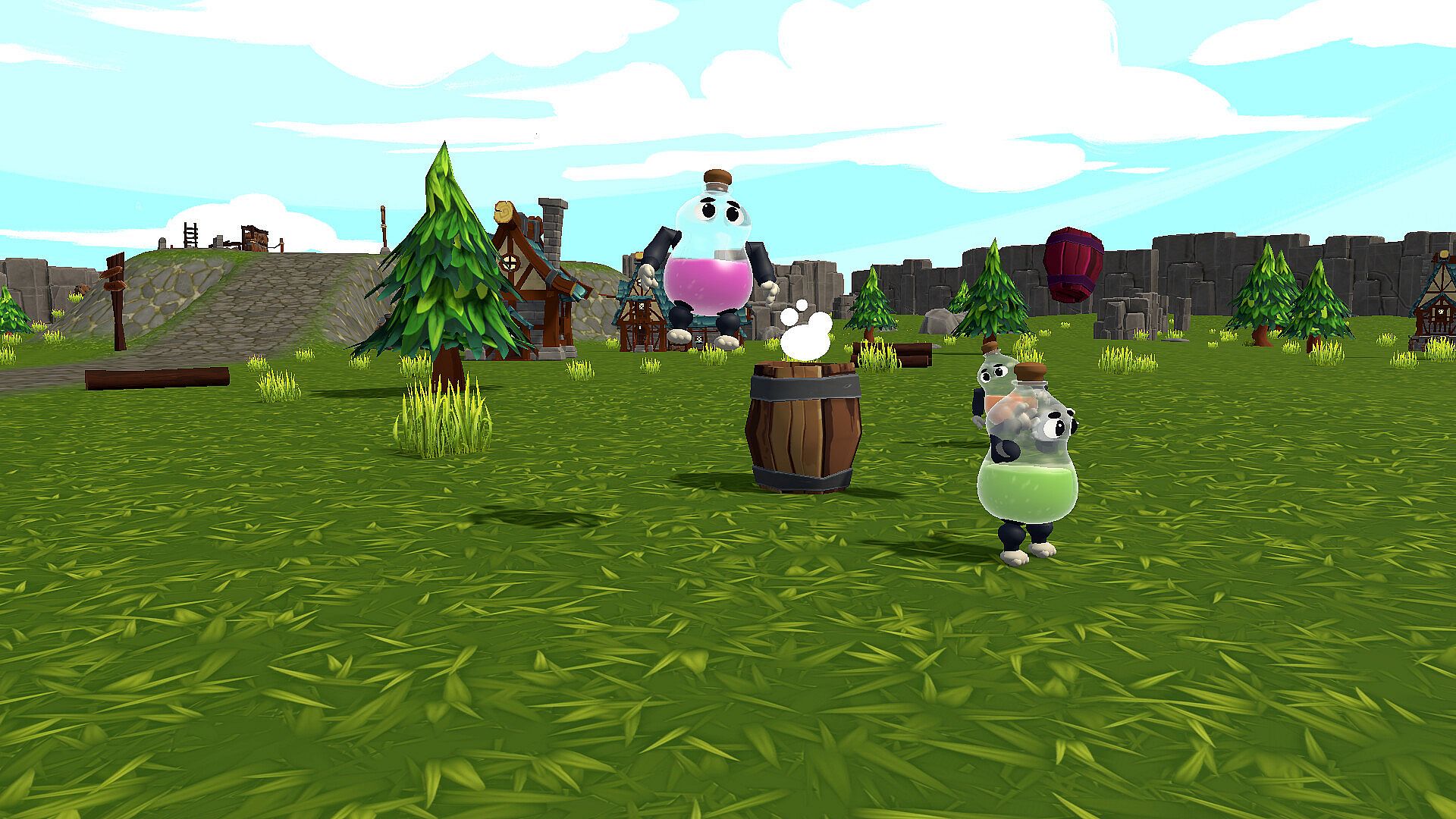
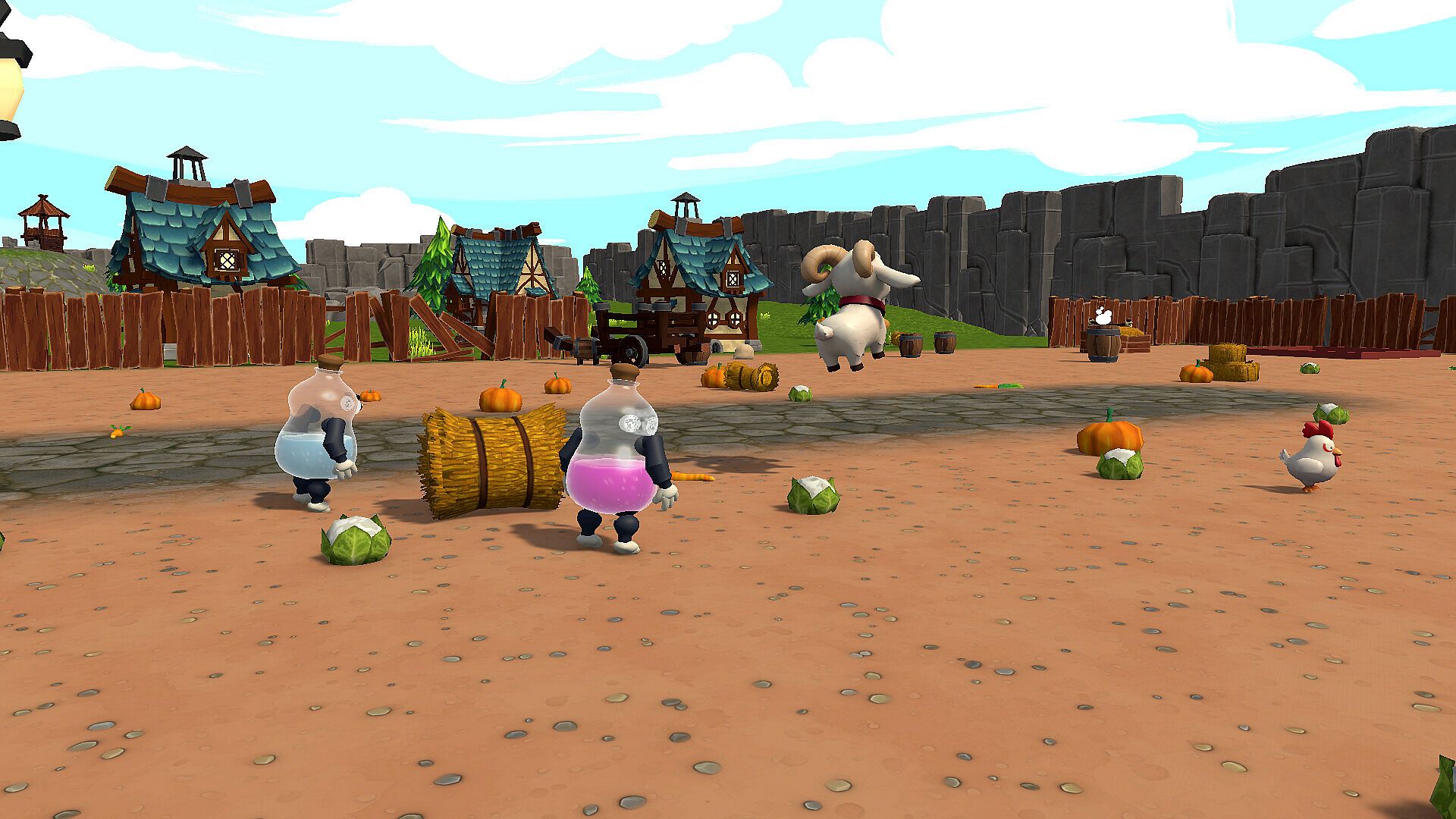
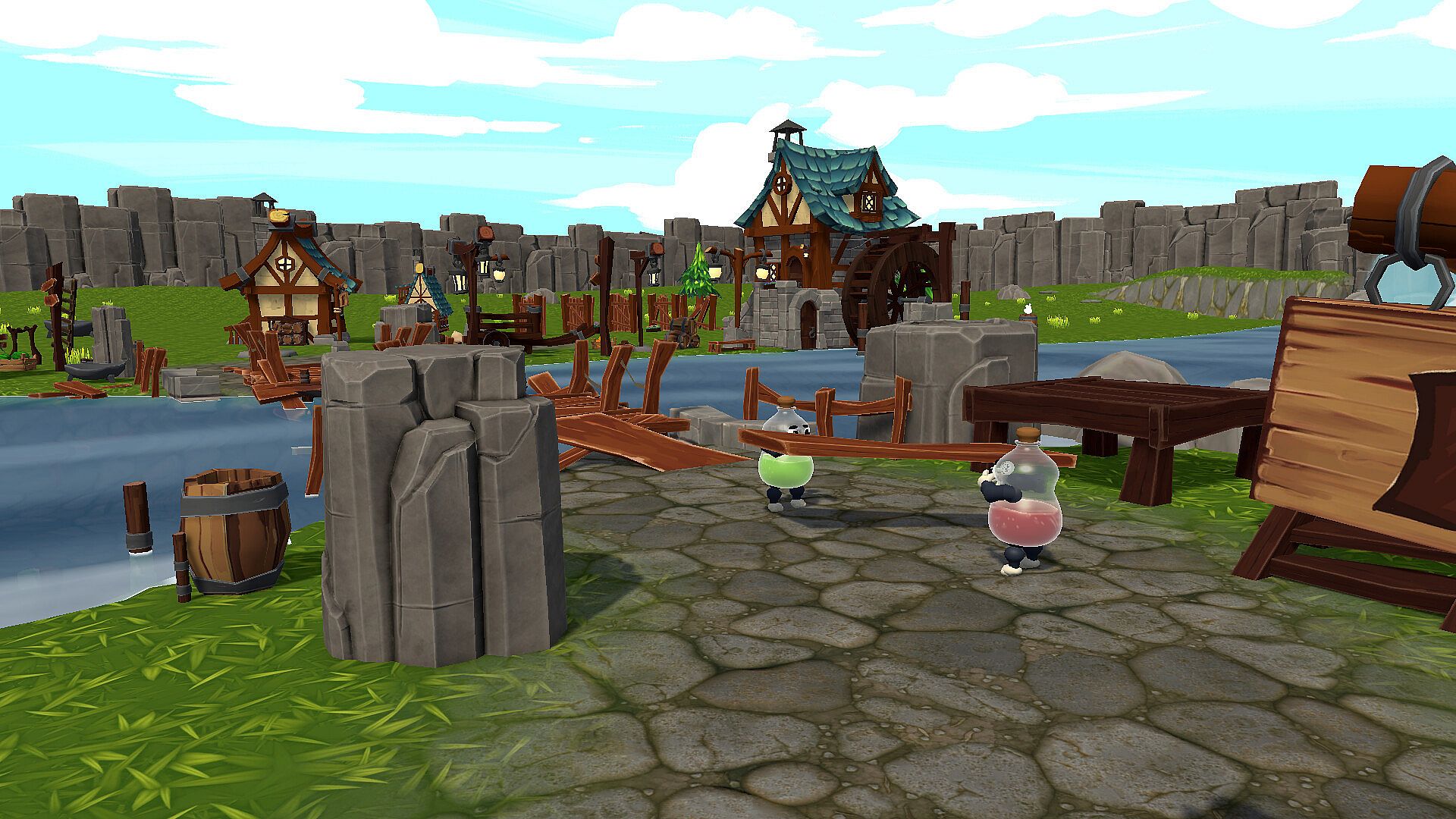
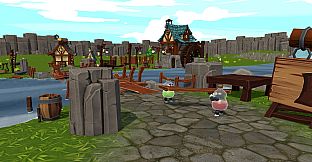
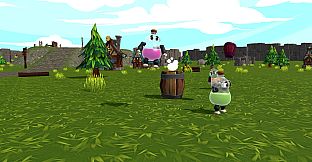
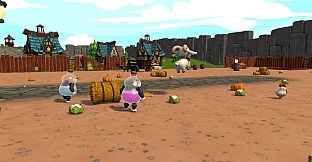
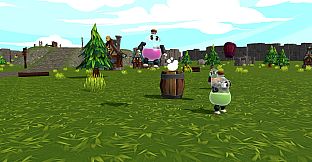
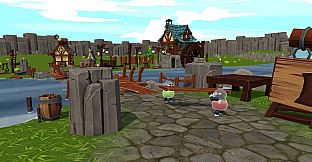
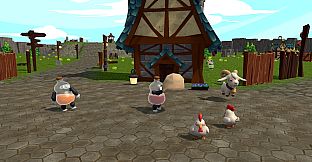
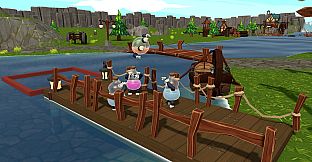
Fizzburg is a multiplayer action game with indie and casual elements that puts players in charge of a town where physics rules spread like a contagion. Participants apply five distinct rules to everyday items and animals, turning ordinary objects into tools or hazards while completing communal projects. The experience blends cooperative building with hidden sabotage, all resolved through physical interactions rather than menus or votes.
Gameplay
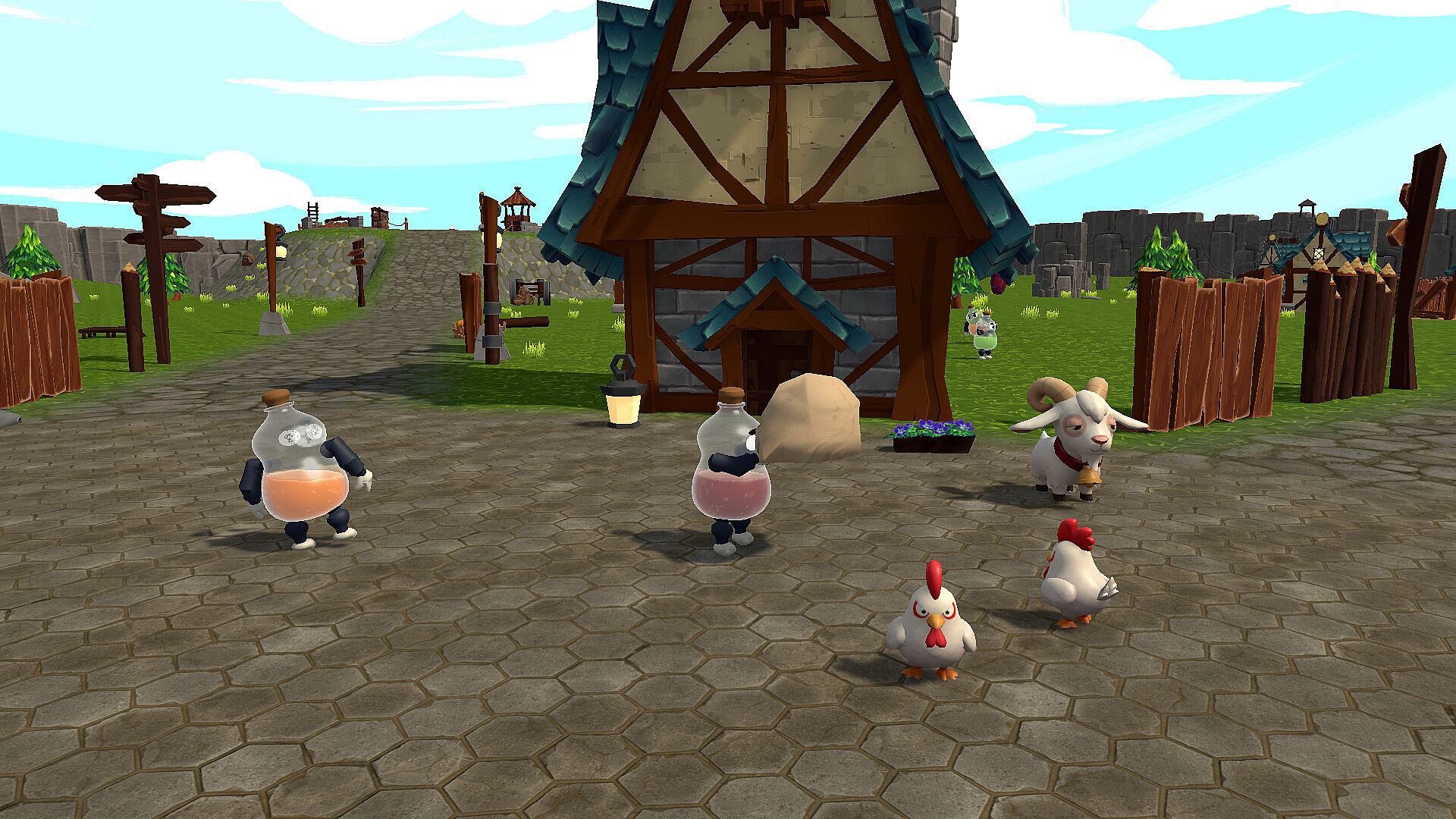
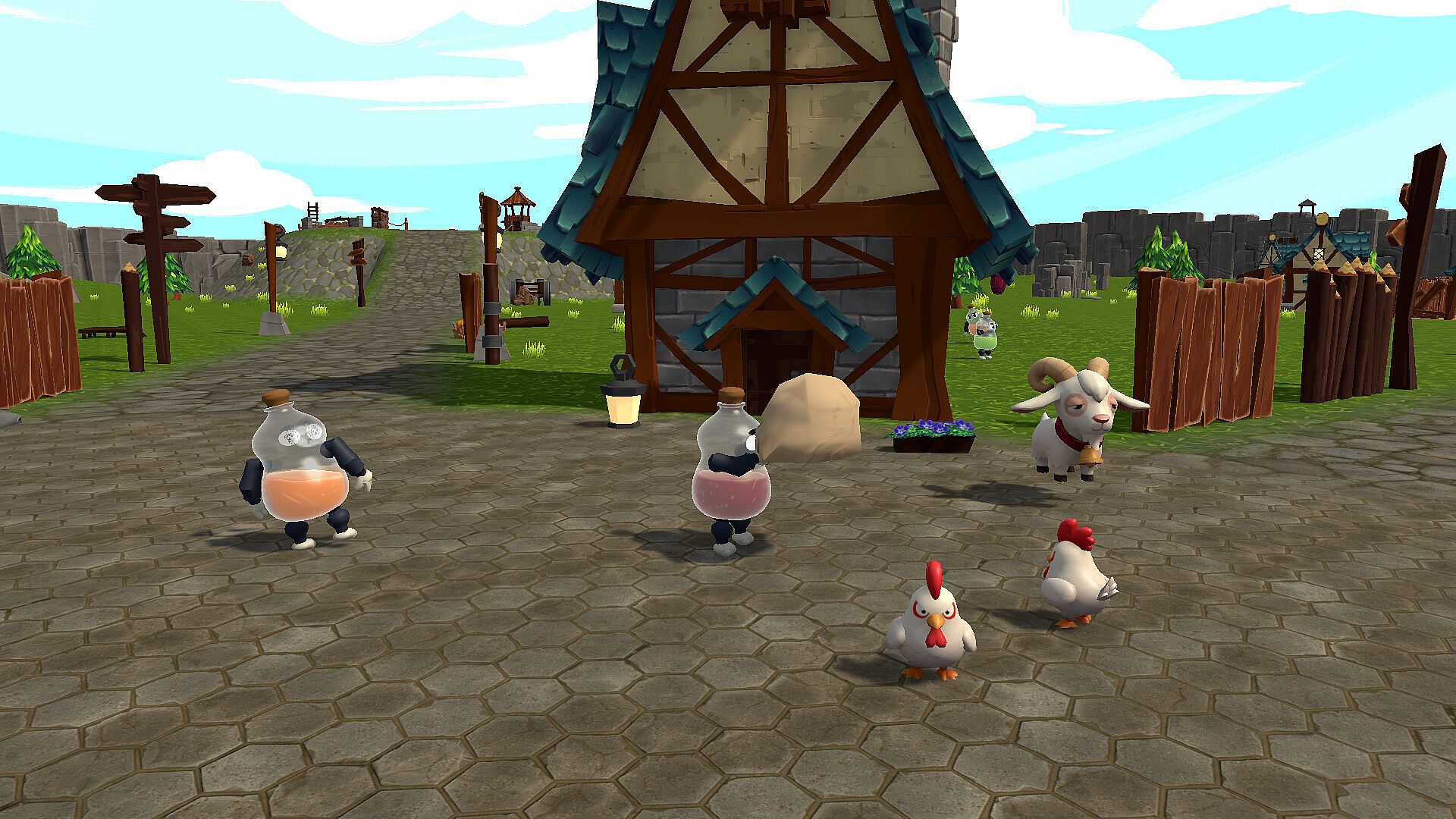
Five rules circulate through the environment: Bounce, Slippery, Sticky, Light, and Heavy. Players collect these rules from vents and transfer them to barrels, beams, chickens, pigs, goats, or other town elements. A barrel coated in Bounce begins to hop on its own. A chicken smeared with Slippery glides across surfaces like an ice rink. Light reduces the weight of heavy beams so fewer players can move them, while Heavy increases mass and makes tasks more demanding. These changes create unpredictable chain reactions that affect how projects progress.
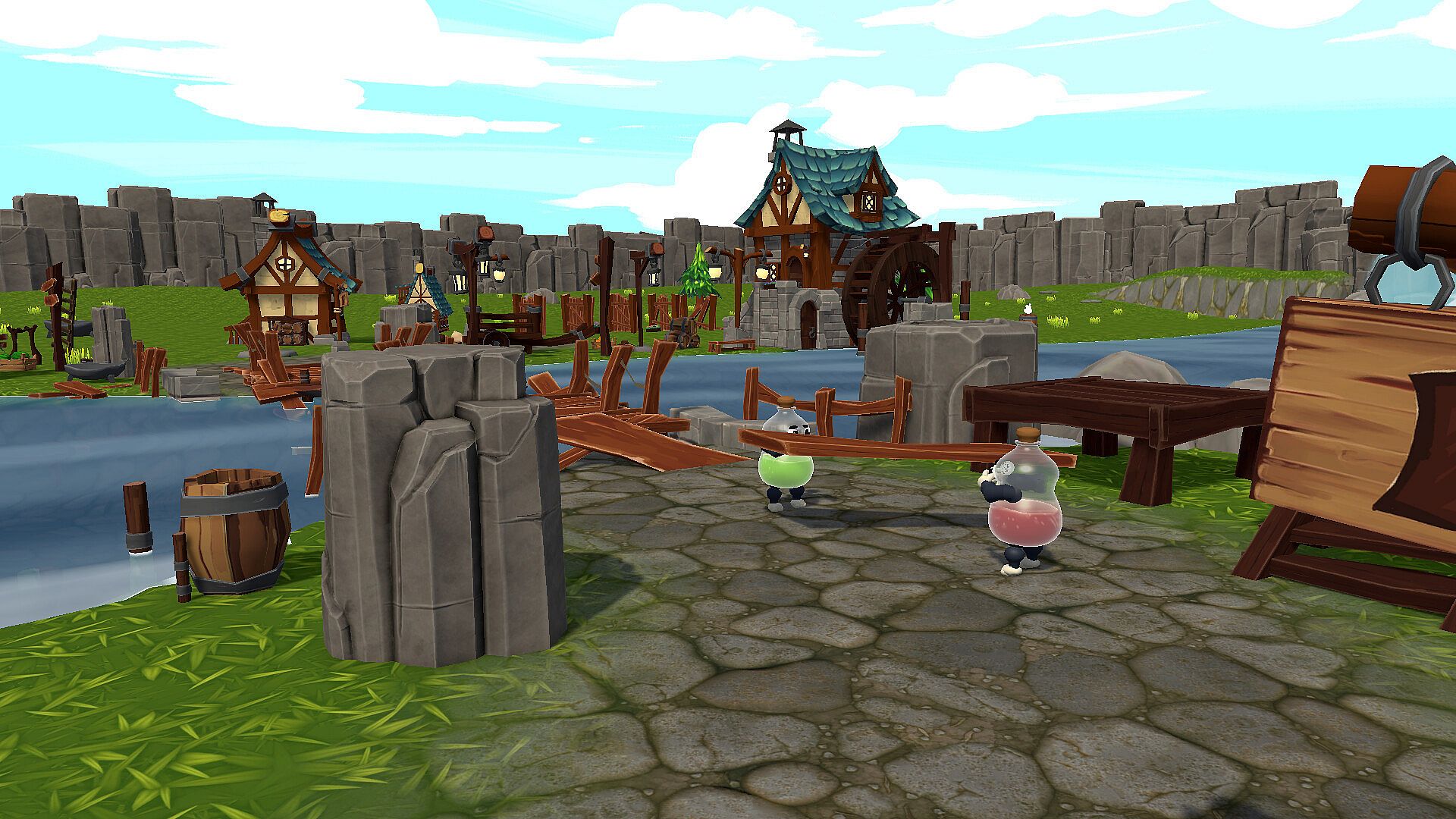
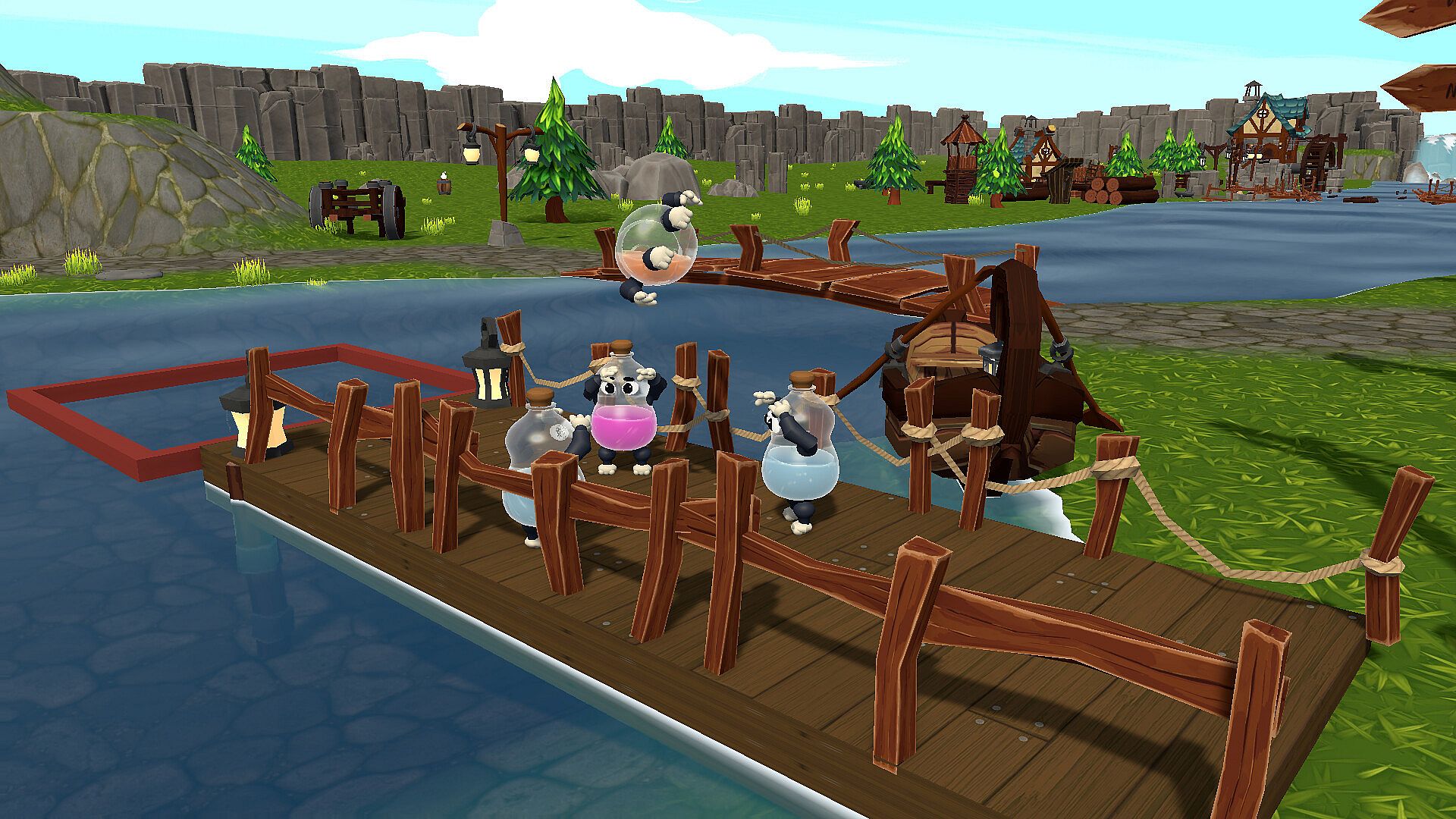
Each round centers on one of six town projects that require collective effort. Examples include repairing a broken bridge, hauling a giant plug to seal a hole, or filling a cauldron. Beams and other materials demand multiple carriers unless a Light rule is applied. Solutions rely entirely on physics manipulation, and every application risks creating new problems that the group must solve on the fly.
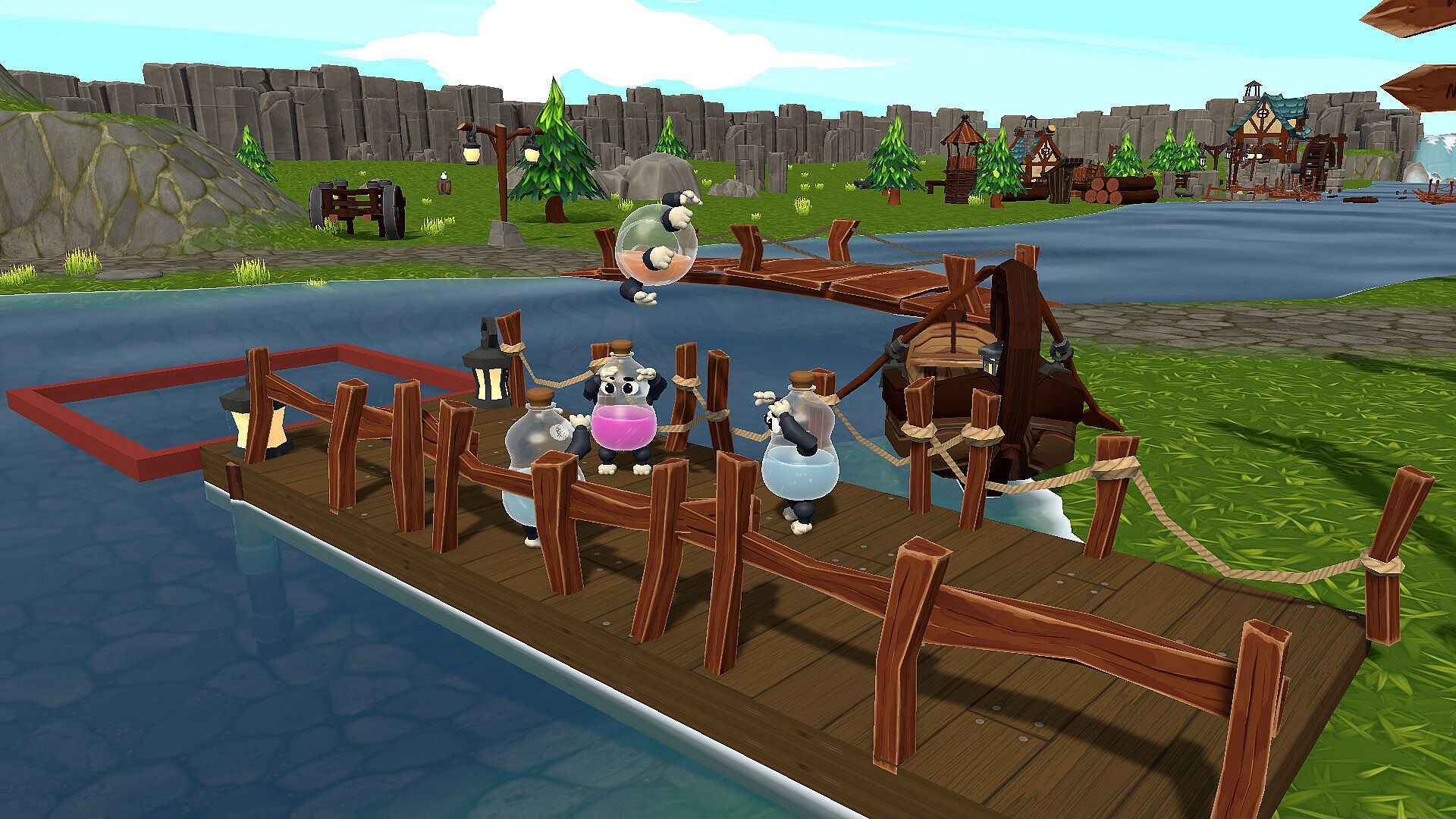
Saboteurs operate within the same group without any formal voting system. Suspicion builds through observed actions, such as a beam repeatedly falling into a creek. When enough players agree on a suspect, they physically grab the individual, carry them to the judgment pier, and throw them into the lake. Three holders are required for a successful throw. Wrong guesses simply remove a useful worker from the current round.
Game Modes
The core experience revolves around short rounds lasting fifteen to twenty minutes. Each round begins with a town project that must be completed using the available physics rules. Players work together on the main objective while monitoring one another for signs of interference. At the end of the round, a reveal screen displays who carried which roles and which actions caused specific setbacks. The process then repeats with a fresh project and new opportunities for the same or different players to act as saboteurs.
Matches support four to eight participants. Groups can form through friend lobbies or room codes. Public matchmaking becomes available after the Early Access period. The loop remains consistent across rounds, emphasizing quick setup and immediate physical experimentation rather than lengthy preparation phases.
Customization and Environment
Players customize their character, referred to as a Kap, across three base forms. Additional options include different lids, labels, and liquid effects that appear on the character model. The town itself features infectable creatures such as a goat, a duck gang, chickens, and pigs. These animals respond to the same five rules as inanimate objects, creating additional variables during project work.
Personal contracts provide individual goals that run alongside the main town projects. Forty such contracts exist, offering varied side objectives that encourage experimentation with rule combinations. The overall setting remains bright and daytime, with no horror elements or permanent consequences for characters.
Is It Worth Playing?
Fizzburg remains in Early Access, so its feature set and stability continue to evolve. The game suits groups that enjoy short, repeatable sessions built around physics experimentation and light social deduction. The absence of traditional voting or elimination screens keeps the focus on direct physical actions and the end-of-round reveal. Players who prefer cooperative tasks with the constant possibility of hidden interference will find the core loop distinctive. Those seeking polished matchmaking or extensive single-player content may prefer to wait for further updates.