


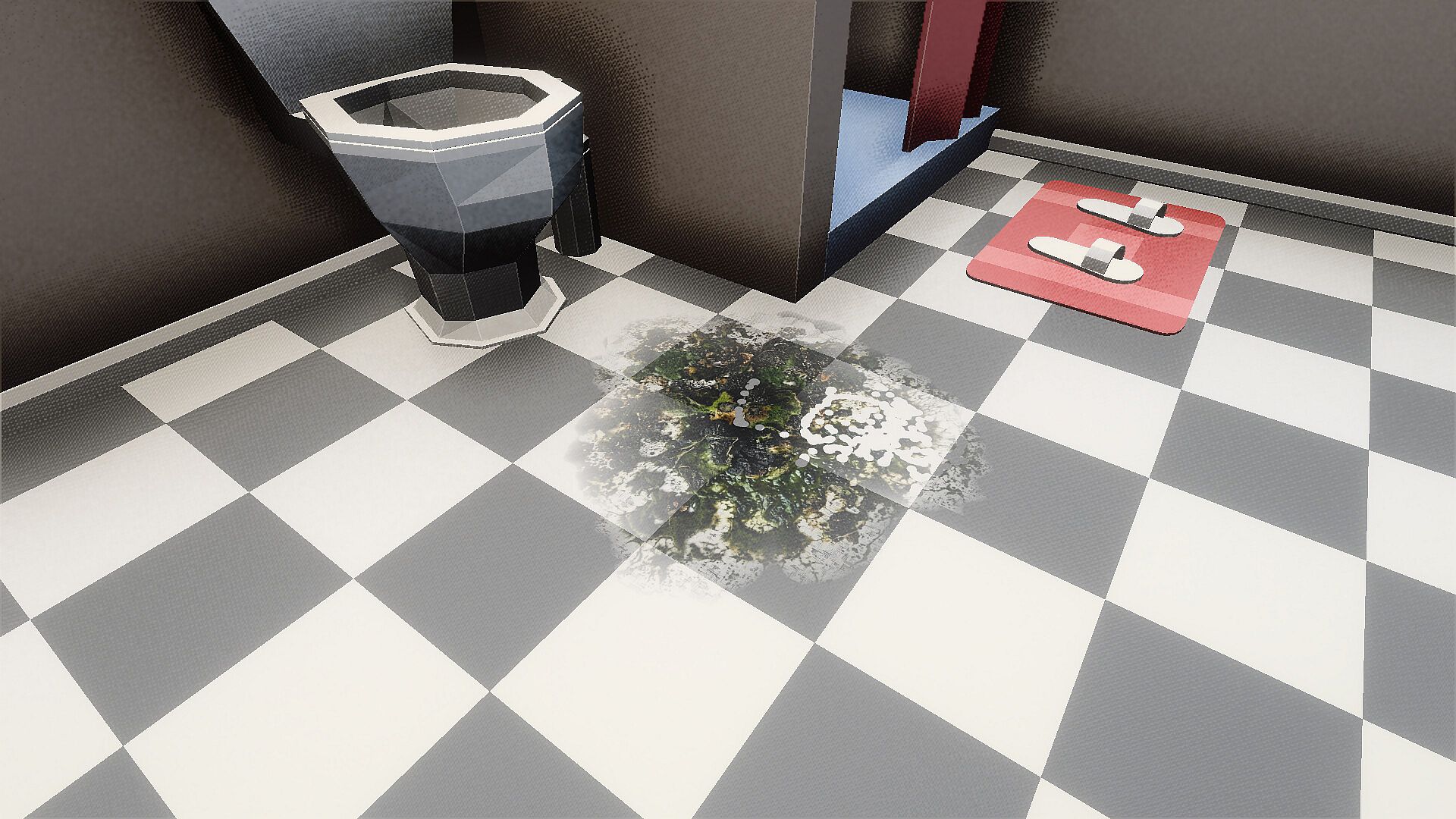





Filthy Liars is a multiplayer social deduction game that mixes action, indie, casual, and adventure elements on PC. Players join a cleaning crew responsible for restoring a disorganized facility, yet one participant is a shape-shifting traitor working against the group.
Gameplay
The central loop requires the crew to tackle assigned cleaning jobs using water guns and other tools to clear away accumulated grime. Teams must finish these tasks before the clock expires while staying alert for signs of interference from within their ranks. Suspicious behavior, such as incomplete work or unusual movement patterns, signals the presence of the impostor and prompts closer observation.
Coordination matters because every member contributes to the shared objective of facility restoration. Tools serve dual purposes in some situations, supporting both cleaning progress and defensive positioning against sudden threats. The shape-shifting ability of the traitor adds layers of uncertainty, forcing players to question every action observed during a session.
Game Modes
Matches center on the crew versus traitor dynamic in tense, time-limited rounds. Crew members focus on completing tasks collectively while monitoring teammates for inconsistencies that reveal the hidden adversary. The traitor role involves creating additional messes, navigating secret routes, and removing crew members one at a time without drawing immediate attention.
These sessions emphasize quick decision making and verbal exchanges once suspicions arise. Bluffing and counterarguments help clarify who belongs to which side before the timer ends or the group is reduced too far. The structure supports repeated playthroughs as roles shift between rounds and new opportunities for deception emerge.
Core Mechanics
Task completion forms the foundation, with water guns and cleaning equipment serving as primary instruments for progress. Players track teammate performance closely, noting any deviations that suggest sabotage rather than simple errors. Hidden paths available only to the traitor enable stealthy repositioning and surprise encounters during active rounds.
Social deduction elements activate through discussion phases where arguments and evidence presentation help identify the impostor. Detective-like observation skills prove essential for distinguishing genuine effort from deliberate disruption. The overall system rewards both efficient teamwork and sharp awareness of individual behaviors throughout each match.
Is It Worth Playing?
Filthy Liars suits groups that enjoy cooperative task management combined with deception and deduction in a casual action-adventure framework. The cleaning theme provides a distinct backdrop for the traitor mechanics, creating sessions that alternate between productive teamwork and sudden confrontations. Players who prefer lighter, replayable multiplayer experiences with clear role separation will find consistent engagement across multiple rounds.
The game appeals most to those comfortable with social deduction elements and short, intense matches rather than extended campaigns or solo play. Its indie scale keeps the focus on core interactions without unnecessary complexity, making it accessible for regular sessions with friends or online groups. Those seeking straightforward multiplayer action paired with betrayal elements often return for the fresh tension each round brings.